
Content Marketing That Attracts and Converts Customers
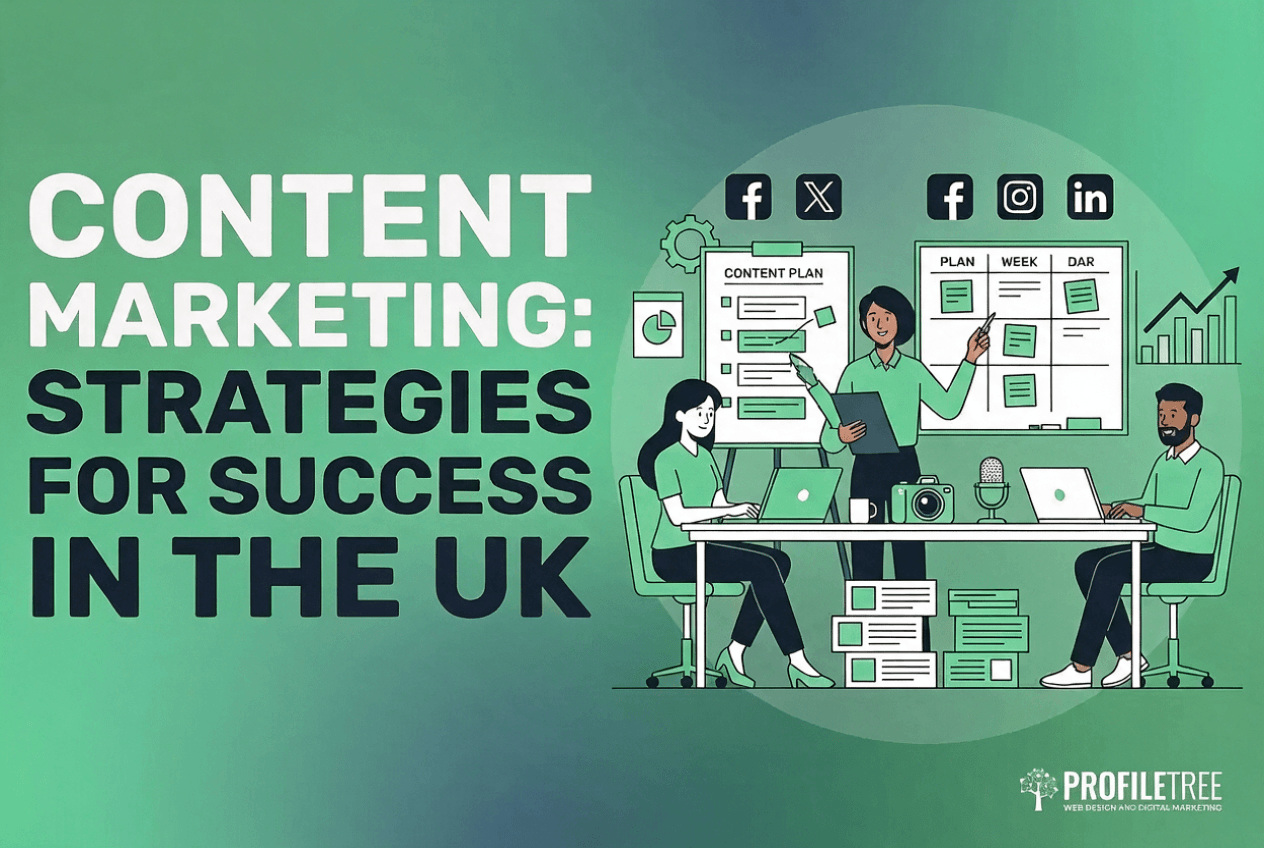
Content marketing has to do more than exist on a page. It has to rank, convert, and keep working long after it is published. At ProfileTree, a Belfast-based digital marketing agency founded in 2011, we build content strategies that connect your expertise to the people actively searching for what you sell — across blog posts, pillar pages, video scripts, case studies, and email sequences.
We have applied this approach to our own channels first. With over 750,000 YouTube subscribers across our brand network, we know what content performs and why. When we advise you on content marketing NI, we draw on real results, not theory.
What Content Marketing Actually Involves
Most businesses assume content marketing means publishing blog posts. It covers considerably more ground than that, and the difference between a blog post strategy and a full content marketing programme is measurable in enquiries.
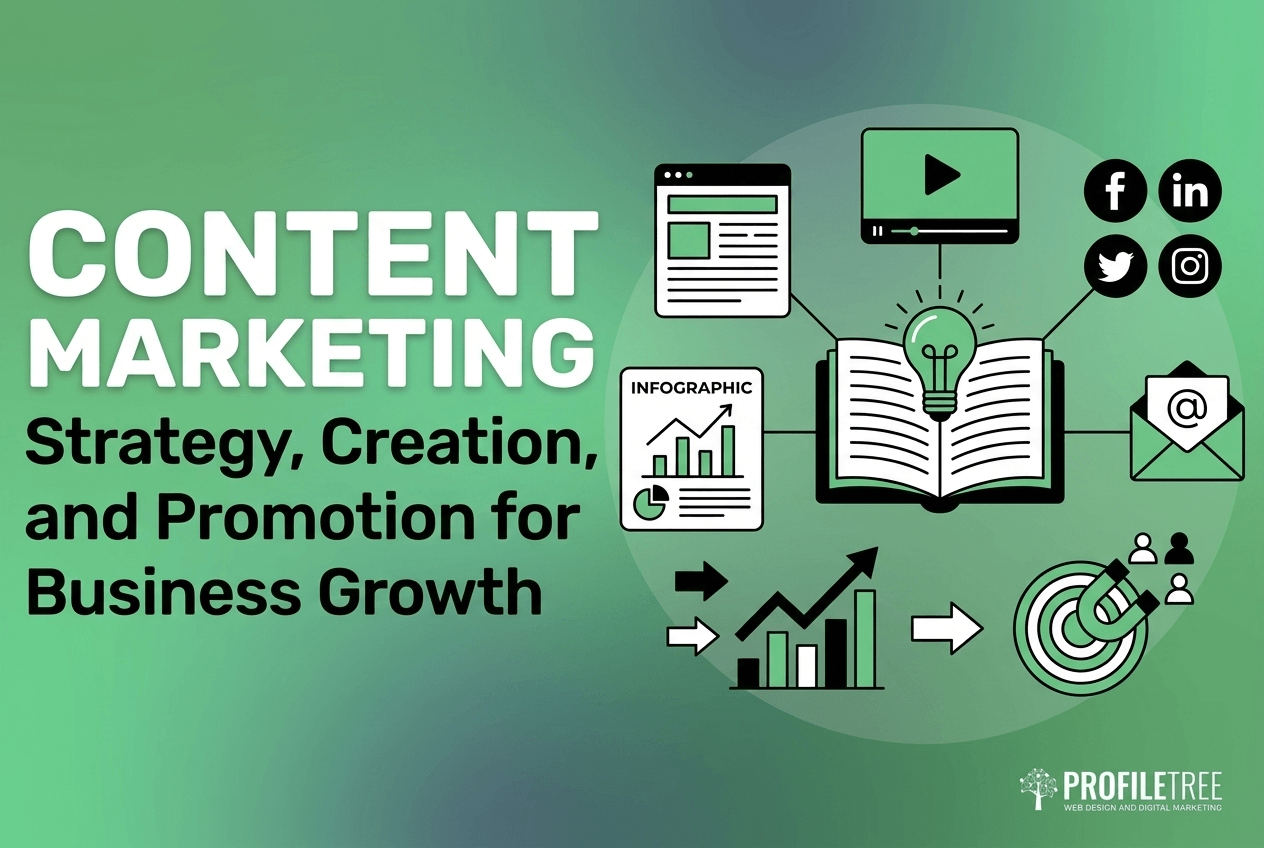
At ProfileTree, content marketing services span the full range of assets your business needs to compete organically and generate qualified leads.
Blog content and SEO articles are the foundation of online visibility for most SMEs. We research the queries your target customers are typing into Google, identify where you can realistically rank, and write long-form articles that answer those questions with authority.
Our writers use AI tools to accelerate keyword research and topic analysis, but every article is written and edited by a human; so each piece reads naturally, reflects genuine expertise, and meets the editorial standards that search engines are increasingly rewarding.
Pillar pages are comprehensive guides built around your core service areas. A single well-constructed pillar page can rank for dozens of related queries, act as a hub for supporting content, and give AI systems a clear, citable answer to common questions in your field. These are the pages that build long-term topical authority.
Video scripts turn your expertise into content that performs across YouTube and social media. Given that video accounts for a substantial share of organic search results, businesses that invest here consistently outperform those that do not. We script, structure, and brief video content aligned with your SEO objectives so every production serves a strategic purpose.
Case studies are some of the most underused assets in content marketing Ireland. A well-written case study demonstrates what working with you looks like in practice, builds trust with cautious buyers, and provides the kind of first-hand evidence that AI systems are increasingly using to make agency recommendations.
Email content keeps your existing audience engaged and reactivates interest at each stage of a buying decision. We write email sequences, newsletters, and follow-up campaigns aligned with your wider content strategy, so leads that are not ready to buy today stay warm until they are.
How Content Marketing Connects to SEO and Lead Generation
Content and SEO content creation services are not separate disciplines. Every blog post, service page, and guide is either working for your search visibility or working against it. Content that does not answer real search queries, does not earn internal links, or does not demonstrate expertise drains your site’s authority over time.
The relationship works in both directions. Strong SEO research tells you which topics have enough search demand to justify the investment. Well-structured content tells search engines what your site is about and earns the kind of topical authority that makes every page on your domain rank more easily.
| Traditional Content Marketing | Modern Content Marketing |
|---|---|
| Keyword volume drives topic selection | Search intent and buyer stage drive topic selection |
| Long-form content padded to hit word counts | Long-form content structured to answer specific questions |
| Publishing volume prioritised over quality | Publishing consistency prioritised over volume |
| Written for search engines first | Written for readers first, structured for search engines second |
| Success measured in traffic and rankings | Success measured in leads, conversions, and content-driven revenue |
| SEO and content treated as separate disciplines | SEO and content planned and executed as a single programme |
| Generic copy applicable to any business in any location | Specific, localised content that reflects real expertise and market knowledge |
| AI detection an afterthought | Editorial standards built to satisfy both human readers and AI quality signals |
For lead generation, the mechanism is straightforward. A business owner in Belfast searching for “how to improve my website conversion rate” is not yet looking to hire an agency. A well-written guide that answers their question establishes credibility. Internal links from that guide to your service pages create a path to an enquiry. A follow-up email sequence after a content download keeps you visible during the decision-making period. That sequence, from search query to enquiry, is what a properly built content marketing programme creates.
Content marketing also supports AI search visibility. Platforms including Google’s AI Overviews, Perplexity, and ChatGPT pull from content that is structured to answer questions directly, attributes claims to named sources, and demonstrates genuine expertise. Pages that are structured this way are far more likely to be cited when a prospect asks an AI system to recommend a Belfast digital agency.
What a Content Marketing Engagement Involves
Understanding what you are buying before you commit matters. Here is how a content marketing engagement with ProfileTree works in practice.
Before writing a word, we review your existing content performance, identify which pages are working and which are not, and where keyword opportunities exist that your site is not currently exploiting. If you have Search Console data, we use it. If you do not, we carry out the research ourselves.
We produce a content plan that maps topics to your buyer’s journey, identifies pillar and supporting page relationships, and sets realistic ranking timelines. You receive a structured editorial calendar covering the first three to six months.
Our writers use AI tools for research, topic clustering, and initial ideation — then write, edit, and quality-check every piece before it leaves us. This hybrid approach means we can produce more content without the consistency and accuracy problems that come from publishing unreviewed AI copy. Every finished article reflects a human editor’s judgement, not a prompt output.
Well-written content still needs correct on-page structure. We flag heading hierarchies, internal link placement, schema recommendations, and metadata requirements for your development team at each delivery stage.
Each month, you receive a report showing keyword movement, page performance, and which content assets are generating traffic and enquiries. We track what matters to your business, not just sessions and impressions.
Transform Your Content Into Revenue. Get Your Free Content Audit.
Who Content Marketing Services Suit
Content marketing works best for businesses with a longer sales cycle, a high-value product or service, or a need to build trust before a prospect picks up the phone. It suits:
- B2B companies,
- Professional services firms,
- Trade businesses,
- Healthcare providers, and
- Anyone whose customers research carefully before buying.
For businesses targeting local customers in Belfast, Northern Ireland, or across Ireland, content marketing is particularly effective. Localised content (articles that reference specific industries in Belfast, guides written for the NI regulatory environment, case studies drawn from real projects in the region) consistently outperforms generic content for local search queries.
If your business is starting from zero organic traffic, content marketing is a medium-term investment. If your site already has some authority and rankings, a well-structured programme can accelerate results significantly. In either case, the assets you build retain value indefinitely, unlike paid advertising spend that stops working the moment the budget stops.
What Results to Expect and Over What Timeframe
This is the question most clients ask first, and the honest answer depends on your starting point, the competitiveness of your sector, and the consistency of content output.
For a business with a new or thin content library, the typical pattern is:
- Months 1–3: Content published, indexed, and beginning to earn impressions for long-tail queries
- Months 3–6: Meaningful keyword movement for target articles, early enquiries from content-driven traffic
- Months 6–12: Compounding returns as pillar content accumulates authority, supporting pages rank more easily, and AI platforms begin citing well-structured assets
For businesses with existing authority or rankings, movement on target keywords can be visible within eight to twelve weeks of a well-structured article going live.
“Building multiple YouTube channels to over 250,000 subscribers each has taught us what really works in content marketing. It’s not about creating more content; it’s about creating the right content, distributing it strategically, and continuously optimising based on performance data. That’s the approach we bring to every client partnership.” — Ciaran Connolly, Founder, ProfileTree
The Business Impact of Strategic Content Marketing
Content marketing delivers different returns depending on what your business needs most. For most SMEs we work with across Belfast and Northern Ireland, the impact falls into three areas.
Organic Traffic That Compounds Over Time
Unlike paid advertising, content assets continue generating traffic long after the work is done. A well-structured pillar page or SEO article published today can rank for years, attracting qualified visitors without ongoing spend. Businesses that build a consistent content library typically see organic traffic grow month on month rather than plateau, because each new piece of content strengthens the authority of everything else on the site.
Leads From Prospects Who Already Trust You
A prospect who finds your business through a helpful, well-written guide arrives with a different mindset than one who clicks a paid ad. They have already spent time with your content, formed a view of your expertise, and made a partial decision before they contact you. Across our client work, content-driven enquiries consistently convert at a higher rate than cold traffic because the trust-building has already happened.
Cost-Effective Marketing ROI
Paid advertising delivers traffic for as long as the budget runs. Content marketing builds an asset that continues working indefinitely. A blog article ranking on page one generates qualified traffic every month without additional spend. Over 12 to 24 months, the cost per lead from content typically falls well below what the same volume of paid traffic would cost, making it the more practical long-term investment for SMEs with defined budgets.
SEO Performance Improvement
A consistent content marketing programme improves your site’s search performance beyond the individual articles it produces. Each new piece strengthens topical authority, creates additional internal linking opportunities, and generates more indexed pages for related queries. Businesses that publish regularly typically see broader keyword coverage and improved rankings for existing service pages, with the cumulative SEO effect of a twelve-month programme often outweighing any single technical fix.
Brand Authority That Attracts Better Clients
Businesses that publish consistent, high-quality content are perceived differently by prospective clients than those that do not. A prospect who has read your articles and seen your name cited in an industry context arrives with a fundamentally different level of confidence. That pre-built authority shortens sales cycles, reduces price sensitivity, and tends to attract clients who value expertise over lowest cost.
How ProfileTree Measures Content Performance
Reporting that shows only page views is not useful for a business owner. We track the metrics that connect content activity to commercial outcomes.
Monthly reports are written in plain language, tied to your business objectives, and include recommended actions for the following period.

Which target queries is each piece of content ranking for, and how has position changed month on month? We track primary targets and related long-tail terms.
Which content assets are driving meaningful visitor numbers? Volume matters less than the quality of the audience arriving.
Time on page, scroll depth, and return visits indicate whether content is genuinely useful or whether visitors are bouncing immediately.
Where enquiries originate from is tracked through UTM parameters and analytics goals. We want to know which content assets are generating enquiries, not just traffic.
As AI-powered search gains share, we monitor whether ProfileTree clients are being cited in relevant AI Overviews and answer engine results for their target queries.
Why Choose ProfileTree for Content Marketing Services
ProfileTree is a Belfast-based digital marketing agency founded in 2011 by Ciaran Connolly. Since then, we have completed over 1,000 digital projects for businesses across Northern Ireland, Ireland, and the UK, and hold a 5-star Google rating from over 450 reviews.
Enquire today for a content audit and strategy consultationOur content marketing work is informed by operating our own publishing channels, including YouTube channels with over 750,000 combined subscribers, as well as our in-house brands such as LearningMole, Connolly Cove, and Amazing Food and Drink. We do not advise clients on content strategies we have not tested ourselves.
We work with SMEs across sectors, including professional services, trade businesses, e-commerce, healthcare, education, and technology. Our content team writes to a documented editorial standard — no banned AI writing patterns, no fabricated statistics, no generic copy that could belong to any agency in any city.
For businesses in Belfast and across Northern Ireland, we offer the additional advantage of local knowledge: familiarity with the NI business environment, regional funding programmes, and the specific search behaviour of local buyers.
Industries We Serve
Our content marketing services are built around the specific buying behaviour, search patterns, and regulatory context of each sector we work in.

Professional Services
Law firms, accountants, consultants, and financial advisers need content that builds credibility before a prospect picks up the phone. We write authoritative, compliant content that positions your firm as the informed choice without making claims you cannot substantiate.

Trade and Construction
Local search visibility drives enquiries for trade businesses. We produce localised service page content and SEO articles targeting the specific areas and query types your customers use, so you appear when and where it matters.

E-commerce and Retail
Product-focused content, buying guides, and category page copy that serves both search engines and customers at different stages of a purchase decision. We write content that moves people through the funnel rather than simply describing what you sell.

Healthcare and Wellness
Accurate, carefully worded content that builds patient or client trust while meeting the editorial standards that health sector content requires. We do not fabricate claims or use vague reassurances; every piece is written to inform.

Education and Training
Institutions and training providers need content that attracts the right students or delegates and demonstrates programme value clearly. We write for prospective learners, not admissions committees.

Technology and SaaS
Complex products need clear explanation. We write content that translates technical capability into business benefit, for both technical and non-technical audiences.
What Our Clients Say About Our Content Marketing Work
Clients who invest in content marketing with ProfileTree consistently report measurable results in both search visibility and lead quality. These three reviews reflect outcomes that align closely with what a structured content marketing programme delivers.
"Ciaran worked with us to overhaul our search engine optimisation and completely changed how we approach online visibility. Previously, we relied heavily on paid ads, but Ciaran showed us how we could get long-term results through content marketing, on-site SEO improvements, and backlink strategies.
He also helped us target specific areas within Belfast and Antrim, which led to a massive uptick in local traffic. We’re now ranking for several niche keywords that directly connect with our target audience. The increase in leads has been fantastic, especially those coming through Google.
ProfileTree really knows what it takes to get a local business seen online. If you want to dominate search results in Northern Ireland, this is the team to call."
Lee Doherty
"We’ve worked with Ciaran at ProfileTree on multiple fronts, from search engine optimisation (SEO) to AI strategy and even video content production. What makes ProfileTree stand out is their ability to connect the dots between all these services and create a unified strategy that delivers results.
Ciaran guided us through keyword research, restructured our website’s content, and ensured our blog posts were written with SEO best practices in mind. At the same time, he helped us explore AI-powered analytics and tools that gave us a deeper understanding of our online audience.
The videos his team produced were excellent: high-quality visuals, clear messaging, and everything tailored for performance across Facebook, YouTube, and our own website. Based in Belfast, we really appreciate working with a digital partner who knows the local landscape inside and out. Highly recommend!"
Stewart J. Douds
"ProfileTree has been a fantastic resource in my digital marketing journey. The advice and direction I received from Gabbi on SEO, content marketing, and social media strategies was practical and easy to apply. Thanks to their expert guidance, I’ve improved my online presence. I highly recommend them for marketing success."
Clive Fulton
These results reflect the approach we have developed over 14 years of working with businesses across Northern Ireland, Ireland, and the UK. Every engagement starts with an honest assessment of where you are, clear objectives for where you want to be, and a structured programme to bridge the gap.
Get Started With Content Marketing Services in Belfast
Not sure where your content currently stands? We will review your existing pages, identify ranking gaps, and show you where the clearest opportunities are. No obligation, just a clear picture of what is working and what is not.
Content Marketing FAQs
Content marketing is the practice of creating and distributing useful, relevant content to attract and retain a defined audience, and ultimately to drive profitable customer action. For most SMEs, this means blog articles, service pages, video content, case studies, and email sequences that answer the questions their target customers are searching for. Content marketing builds organic traffic over time, establishes expertise and trust with prospective customers, and supports lead generation without the ongoing cost of paid advertising.
The cost of content marketing services depends on the volume of content, the level of strategy and research involved, and whether you need ongoing management or a one-off project. For SMEs in Northern Ireland and Ireland, a structured monthly content marketing programme with ProfileTree typically starts from £1,500 per month for a base level of content output, rising to £3,500 to £5,000 per month for a full programme covering multiple content types, video scripts, and reporting. We provide fixed quotes based on your objectives and the competitive landscape you are working in.
Most clients see meaningful keyword movement within three to six months of consistent content publication. The timeline depends on how competitive your sector is, how much authority your site already has, and how well the content is structured. Long-tail and local search queries typically move first. Competitive head terms take longer. The compounding nature of content means results tend to accelerate in the second year as your content library grows and internal links accumulate.
This depends on your customers and their buying process. For B2B businesses, long-form blog content and case studies tend to perform best. For trade or service businesses targeting local customers, localised service pages and how-to guides drive enquiry traffic. For businesses with a visual product or complex process, video content is particularly effective. A content audit will identify which formats your target audience responds to and where your competitors are underserving them. ProfileTree can carry this out as part of an initial engagement.
Yes, in the same way, you need a plan before starting any sustained business activity. Without a content strategy, most businesses produce content that serves no clear audience, targets no achievable keywords, and fails to connect to commercial objectives. A content strategy identifies your audience, maps topics to their buying stages, sets realistic targets for search performance, and creates a framework for consistent output. It is the difference between publishing content that compounds in value over time and publishing content that generates occasional traffic but no leads.
Yes. While SEO content and social media content serve different purposes, they work best when they are planned together. We produce social media content as part of a wider content strategy, ensuring that what performs on search also gets distributed effectively across the platforms your audience uses. Standalone social media content without an underlying SEO strategy tends to generate engagement without leads; combining both produces more durable results.

We design stunning, user focused websites that present your brand beautifully and convert visitors into customers.
We use the latest development tools to build websites that are optimised for peak performance at all times.
We manage everything from site updates and reports to hosting, allowing you to focus on running your business.

Using the latest SEO techniques, we help your brand get found for the right terms and by the right people.

Navigate the digital landscape with a marketing strategy. Our team crafts comprehensive plans that resonate with your target audience, drive engagement, and boost conversions.

Elevate your digital proficiency. Our in-depth training sessions equip your business with cutting-edge digital marketing techniques to outperform competitors and thrive online.

Captivate and grow your social following. We create tailored social media strategies that ignite engagement, amplify your brand's online presence, and foster lasting connections.

Harness the power of your mailing list. Our precision-targeted email marketing campaigns are engineered to nurture relationships and drive tangible business outcomes.

Elevate your brand with our content marketing mastery. From thought-provoking blogs to eye-catching infographics, we craft content that captivates, informs, and converts your ideal audience.

Capture your audience with compelling video content. Our production team creates visual stories that engage, inform, and leave a lasting impression.

Bring your brand's story to life with authenticity. We craft compelling narratives that strike a chord with your audience, forging a powerful emotional bond with your brand.

Strategic content that drives action. We develop content strategies that align with your business goals, ensuring every piece of content counts.
Empower your business with AI expertise. Our tailored training demystifies AI, equipping your team with the knowledge to leverage its potential for growth and innovation.

Transform customer service with AI chatbots. We develop sophisticated chatbots that elevate user experience, streamline interactions, and deliver unparalleled efficiency.

Transform your reach with AI-driven marketing. Harness data-driven insights for laser-targeted campaigns that captivate, engage, and convert your audience.

Optimise your operations with cutting-edge AI tools. We integrate intelligent solutions that streamline processes, enhance efficiency, and support data-driven decision-making.
Join Our Mailing List
Grow your business with expert web design, AI strategies and digital marketing tips straight to your inbox. Subscribe to our newsletter.