Skip to content

Email Marketing Resources for SMEs

ProfileTree’s email marketing resources are practical guides for small business owners in Belfast, Northern Ireland and across the UK and Ireland. They cover the rules on consent, choosing a platform, setting up automated emails, reading your results honestly and writing messages people want to open, so you can run email marketing that brings in repeat customers.

Email still matters because it is a channel you own. A list of people who asked to hear from you does not depend on a search algorithm or a social platform deciding who sees your post, and the cost of sending one more message is close to nothing. Each guide on this page is written for a firm without a dedicated marketing department.

If you would rather have the words written for you, the content marketing Belfast team at ProfileTree writes newsletters, welcome sequences and email copy alongside the website content we produce for clients. The guides below explain how to do the work yourself, and the last section explains where outside help is worth paying for.

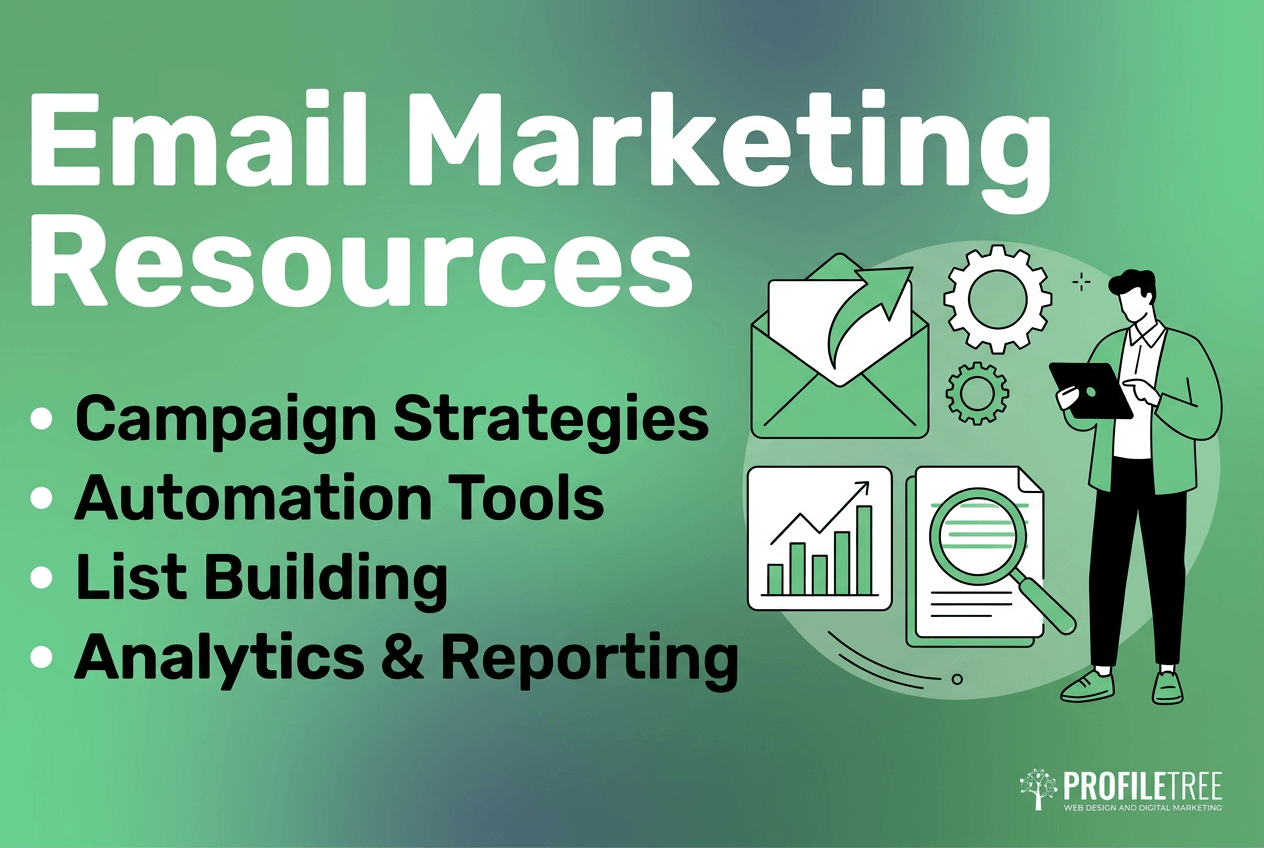
Infographic on Email Marketing Resources including campaign strategies, automation tools, list building, and analytics, shown with a person viewing digital marketing icons.

Learn to write emails your customers open

Get in touch

What These Email Marketing Resources Cover

The guides fall into five areas, and most businesses need them in roughly the order below. Compliance comes first, because a list built on the wrong kind of consent cannot be fixed later by better design or clever subject lines. Platform choice follows, then the automation that saves your team time. Measurement comes next, and finally the writing itself.

Where you areWhat to read firstWhy it comes first
Starting a list from nothingConsent and the soft opt-inEvery address you collect needs a lawful basis from day one
Sending from a personal inboxChoosing a platformPlatforms handle unsubscribes, records and bulk sending properly
Sending a newsletter by hand each monthAutomation and segmentationWelcome and follow-up emails can run without anyone pressing send
Unsure whether email is workingBenchmarks and measurementOpen rates now mislead, so clicks and sales tell you more
Getting opens and few clicksWriting and designThe message, not the list, is usually the problem

The articles listed further down this page change as we publish new guides and update older ones. Start with the area that matches your situation, then work through the rest as your list grows.

Staying Compliant with UK GDPR and PECR

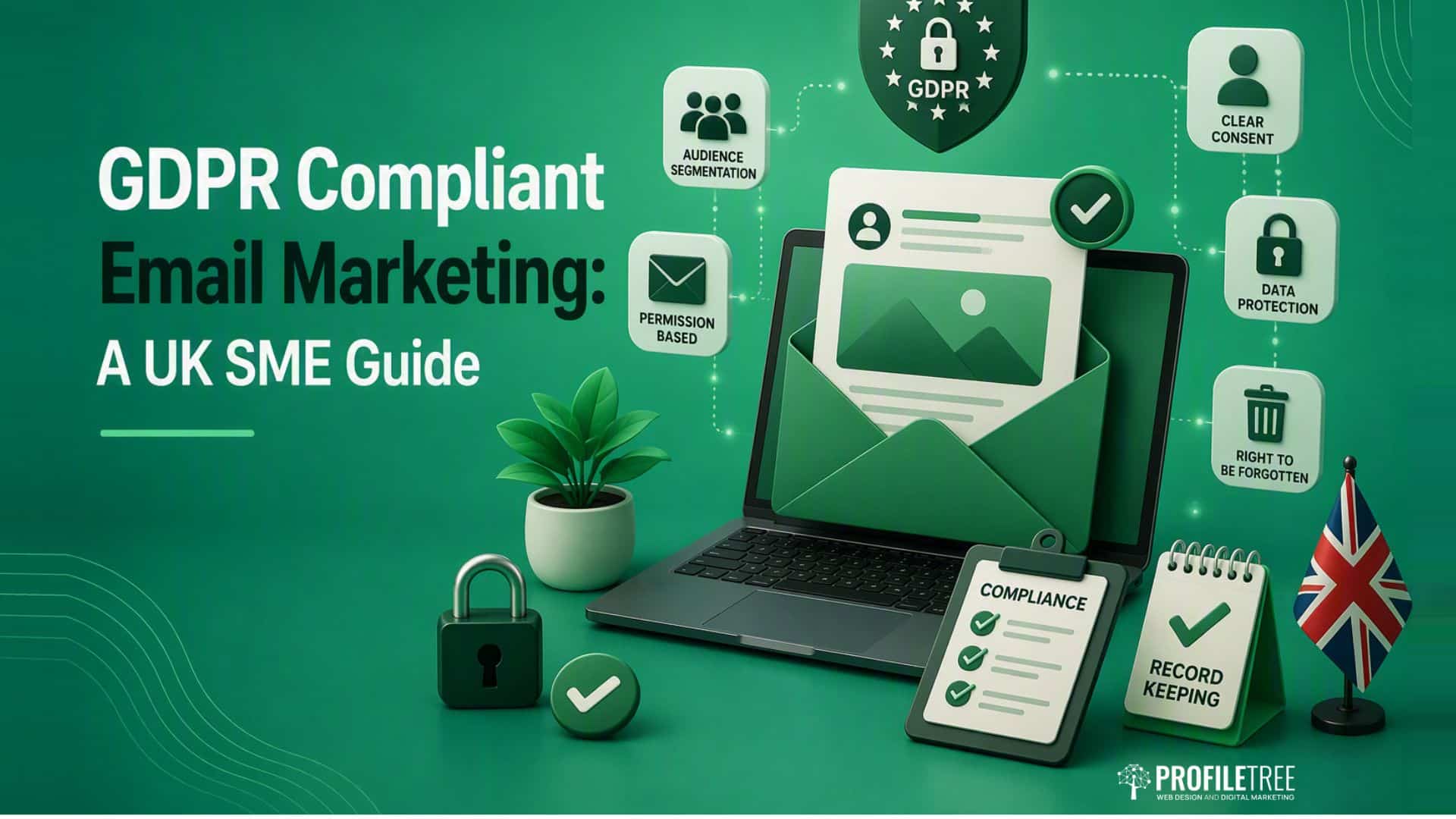
Two sets of rules govern marketing emails in the UK. UK GDPR (the UK’s data protection law) covers how you collect, store and use personal data. PECR (the Privacy and Electronic Communications Regulations, which set the rules for electronic marketing) covers when you are allowed to send a marketing email at all. The Information Commissioner’s Office, the UK regulator, publishes guidance on direct marketing using electronic mail that sets out who needs consent and who does not.

For individual subscribers, which includes sole traders and some partnerships as well as members of the public, you generally need consent before you send marketing. That consent has to be a positive action by the person, so a pre-ticked box or silence does not count, and you need to keep a record of it.

The main exception is what the ICO calls the soft opt-in: you may email someone without prior consent if you collected their details during a sale or negotiations for a sale, you are promoting your own similar products or services, and you gave them a simple way to refuse at the time and in every message since.


Limited companies are treated differently, because the consent and soft opt-in rules apply only to individual subscribers. You still have to say who you are and give every recipient a valid unsubscribe link, whoever they are. A named person’s work address is still personal data under UK GDPR, so a business list does not escape data protection law simply because it is a business list.

Our guide to GDPR compliant email marketing works through these rules in more detail, including what to do with a list that was gathered before 2018. The guidance above is a summary of the regulator’s published position and is not legal advice, so read the ICO’s current pages, or speak to a solicitor, before you rely on an exemption.

Choosing an Email Platform and Tools

An email marketing platform is the first tool most businesses need. Sending marketing from Outlook or Gmail to a long list of addresses in the BCC field puts your domain’s reputation at risk and gives you no reliable record of who agreed to hear from you. A platform solves both problems and adds sign-up forms, templates and reports.

The right choice depends more on what your business already uses than on the length of a feature list. A Shopify store benefits from an email platform that reads order data, a service firm with a CRM benefits from one that connects to it, and a business sending one newsletter a month may need nothing more than a free or low-cost plan. Check that the platform stores consent records, lets you segment your list and makes it simple to export your data if you leave.

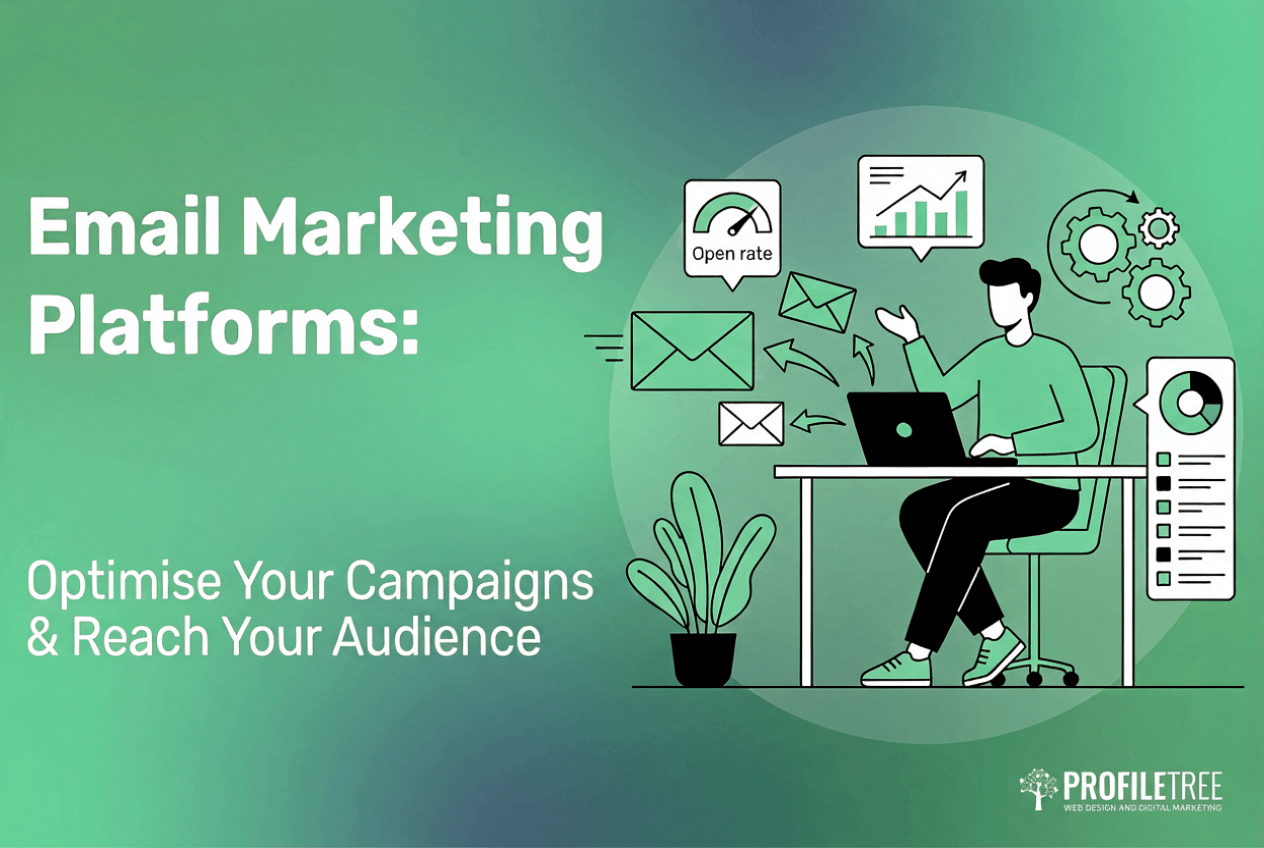
An illustration of a person working at a laptop with email and analytics icons floating above, representing email marketing resources to help optimise your campaigns and reach your audience.

Our buyer’s comparison of email marketing platforms compares the main options with GBP pricing and sets out a framework for choosing by business size and goal. Other guides in the archive below cover design tools, testing tools and integrations with accounting and e-commerce software.

Automation, Segmentation and Personalisation

Automation is where email starts to save time instead of costing it. A welcome sequence for new subscribers, a follow-up after a first purchase and a reminder when someone leaves items in a basket are the usual starting points. Each one is written once and then keeps working every day with no further effort from your team.


Segmentation (splitting your list into groups by interest, location or behaviour) makes each email more relevant to its recipients. A Belfast restaurant might email local diners about a new menu and send gift voucher offers to customers who live further away. A training provider might separate past attendees from people who have only downloaded a guide. Personalisation goes a step further, changing content within a single email to suit each reader, and it works best once your segments are clear.

Start small. One automated welcome email that reads well does more good than a dozen complicated flows that nobody has time to check. The email marketing automation article covers the workflows that suit SMEs, and related guides listed below deal with segmentation tools, personalisation and building an email funnel from first sign-up to first sale.

Reading Open Rates and Benchmarks with Care

The open rate used to be the headline figure in every email report, and it is far less reliable now. Apple’s Mail app offers a privacy setting that, according to Apple’s own support documentation, downloads remote content privately in the background when a message arrives. Many messages therefore register as opened whether or not a person ever read them, which pushes open rates up and makes comparisons with older figures misleading.

Clicks, replies, enquiries and sales are better measures of whether an email worked. If your email marketing platform connects to Google Analytics, tag your links so you can see which emails led to visits and enquiries on your website. Look at trends across several sends from the same list, because a single campaign tells you very little on its own.

Graphic titled Boost Your Email Marketing Open Rates: Strategies for Higher Engagement (UK Guide), featuring an open envelope, upward-trending charts, a magnifying glass, and the ProfileTree logo among our Email Marketing Resources.

Industry benchmarks are useful for spotting a serious problem and much less useful as a target. Averages vary by sector, list size and how each email platform counts an open. Our article on email marketing statistics explains which benchmarks still mean something for UK businesses and how to improve a list that is underperforming. The archive below includes figures broken down by industry.

Writing Emails That People Read

Most weak results come from the message, not the list. An email that tries to do everything (three offers, a news round-up and a request for a review) gives the reader no clear reason to click on anything. Write each email for one reader and one action, and put that action where it can be seen without scrolling.

Subject lines should tell the reader what is inside, because a subject that overpromises earns one open and then a lot of deleted mail. Keep the opening lines specific to the reader’s situation, use the name of a real person as the sender where you can, and write in the same plain voice you use when you talk to customers. Short paragraphs and a single, clear button do more than heavy design, particularly on a phone screen.

“Readers decide in a line or two whether an email is worth their time, so every sentence has to earn its place,” says Ciaran Connolly, founder of ProfileTree. “One email that tells a customer something useful is worth more to a business than ten that repeat what is already in their inbox. That is the standard our content marketing team in Belfast works to, whether the words are going on a web page or into a newsletter.”

Email Marketing Resources

Talk to Us About Your Email Marketing

If you want the writing done for you, the content marketing service we provide across the UK and Ireland produces newsletters and automated email sequences that sit alongside your website content and speak in the same voice. If you would prefer your own team to run email, our digital training is built around your business and your list, so the work starts during the session and carries on after it. Content marketing is quoted on request, and training starts from £350 plus VAT.

Questions about Email Marketing Resources

Is email marketing still worth it for a small business?

Yes, for most small businesses it is, because it reaches people who have already shown an interest in what you sell. The cost of sending is low, and you own the list, so changes to search or social platforms do not take your audience away. It works best for businesses with repeat customers or a long buying cycle, where staying in touch between purchases brings people back.

How do I start an email marketing list from scratch?

Start with a sign-up form on your website that gives visitors a clear reason to join, such as practical updates or a useful guide, and record each person’s consent as they sign up. You can also invite existing customers to join when they buy from you, with a simple way to say no. Avoid bought lists. The people on them have not agreed to hear from your business, so emailing individuals on such a list is likely to breach PECR, and it tends to harm your deliverability.

How often should a small business send email marketing campaigns?

Send as often as you have something useful to say, at a pace your team can keep up month after month. A monthly newsletter that arrives reliably usually does more for a business than a weekly one that stops after a few issues. Check your unsubscribe and complaint figures after each campaign, because a steady rise is a sign that you are sending too often or that the content is not earning its place.

Do I need consent to email other businesses in the UK?

Not for limited companies, according to the ICO’s guidance, because PECR’s consent rules apply only to individual subscribers. Sole traders and some partnerships count as individuals, so they fall under the consent rules or the soft opt-in. Every marketing email must still identify the sender and give a working unsubscribe option. Named contacts are still covered by UK GDPR.

What is the soft opt-in?

The soft opt-in is the ICO’s name for an exception that lets you email an existing customer without asking for consent first. It covers only contact details you gathered while selling to that person or discussing a sale with them, and only messages about your own similar products or services. You must also have offered a simple opt-out when you took the details, and you must repeat that offer each time you write. It does not cover marketing for another company.

Why are email open rates less reliable than they used to be?

Open rates are less reliable because some email apps now load the content of a message automatically when it arrives. Apple Mail’s privacy setting downloads remote content in the background, so a message can be counted as opened without anyone reading it. Clicks, replies and enquiries give a more honest picture of how a campaign performed.

Which email marketing platform suits a small business?

The email marketing platform that works with the systems you already use is usually the right one. An online shop gains most from a tool that pulls in order history, and a service business from one that links to its CRM or booking software. Check the cost as your list grows, how consent is recorded and how easily you can export your data.

Can ProfileTree help with email marketing?

Yes. Our content team writes email copy, welcome sequences and newsletters, usually alongside website and content work. Our digital training helps business owners and their teams manage their own campaigns. ProfileTree is a Belfast web design and digital marketing agency, founded in 2011 and based at the McSweeney Centre, with more than 500 Google reviews with a 5.0 rating.

Join Our Mailing List

Grow your business with expert web design, AI strategies and digital marketing tips straight to your inbox. Subscribe to our newsletter.