
Online Engagement Strategies for UK and Irish SMEs
Table of Contents
Online engagement is what turns a website visit or a social media follow into an actual relationship with your business. Whether you run a small business in Belfast, manage a brand across the UK or work as a freelance consultant, the ability to connect with your audience and turn interactions into opportunities is what separates businesses that grow from those that stagnate. ProfileTree, a Belfast-based digital agency, works with SMEs across Northern Ireland, Ireland and the UK on exactly this problem: building genuine engagement that supports the wider digital marketing strategy behind a business, rather than chasing numbers that don’t convert.
What Is Online Engagement?
Online engagement is the sum of the interactions, comments, shares, replies and repeat visits that show someone is paying real attention to your business, not just scrolling past it. It covers everything from a LinkedIn comment to a returning website visitor, and it matters because engaged audiences convert at a higher rate than passive ones.
That definition matters more than it looks. A lot of SMEs still measure success by follower counts or impressions, which tell you almost nothing about whether anyone actually cares what you post.
Why Engagement Matters More Than Vanity Metrics
Likes and impressions are easy to produce and hard to spend. A post can rack up hundreds of impressions without a single person taking any action that helps the business. What matters is deeper engagement: someone commenting with a genuine question, sharing a post with their own network, or clicking through to a service page and getting in touch.
For SMEs with limited marketing budgets, this distinction is practical rather than academic. Time spent chasing surface-level engagement is time not spent on the content, community work and content marketing that actually builds a pipeline of enquiries.
The Four Types of Online Engagement
Most discussions of online engagement lump everything into one bucket, which makes it hard to plan for. It’s more useful to separate engagement into four distinct types, each of which needs a different approach.
Social and community engagement encompasses interactions on social platforms and within groups: comments, shares, replies, and community discussions. Interactive and web engagement covers on-site behaviour such as time on page, form completions and repeat visits, the kind of data you’d track through web development analytics. Educational and content engagement covers how people interact with guides, videos and resources, including whether they complete the reading or the video. Conversational engagement, sometimes called dark social, covers the private channels where many real recommendations and discussions take place: WhatsApp groups, Slack channels, Discord servers and direct messages that never show up in your analytics.
Treating these as separate categories helps you match the right tactic to the right channel, rather than applying one generic “post more” strategy across everything.
Building Your Professional Network Online
Online professional networking remains one of the most reliable ways to grow engagement over time. Unlike paid advertising, which ends when the budget runs out, a well-maintained professional network continues to generate referrals and opportunities long after the initial connection is made.
LinkedIn remains the dominant platform for professional networking in the UK, but it isn’t the only option. Niche communities on Slack, Discord, and industry-specific forums often produce higher-quality conversations because their audiences are more focused. For businesses offering services like web design, SEO or AI training, being visible in the spaces where potential clients actually ask questions is worth more than broadcasting to a general audience. ProfileTree’s own experience running social media marketing for client accounts backs this up: a smaller, focused audience that replies and asks follow-up questions consistently outperforms a larger one that scrolls past.
A complete, well-structured LinkedIn profile is still the minimum requirement for anyone doing online business development. It should include a professional photograph, a headline that describes what you actually do rather than just a job title, and a summary that explains the problems you solve and the clients you serve. For a deeper look at platform-specific tactics, see this guide to using LinkedIn for business networking and growth, and this list of business networking sites worth considering beyond LinkedIn.
Creating Content That Drives Engagement
Content is the mechanism through which engagement happens at scale. Without something worth reading, watching or sharing, even the best networking strategy hits a ceiling.
The most effective content starts with a clear understanding of what your audience actually needs. For a digital agency like ProfileTree, this means moving beyond generic posts about “the importance of social media” and instead addressing the specific questions Belfast and Northern Ireland businesses ask before hiring a web design or SEO agency.
As Ciaran Connolly, founder of ProfileTree, puts it: “The businesses that win at online engagement are the ones that answer the question before the potential client has even thought to ask it. That requires knowing your audience deeply, not just broadcasting to them.”
Every piece of content should do at least one of the following: answer a specific question, solve a practical problem, or provide a perspective the reader couldn’t easily find elsewhere. When content says something new, it earns shares and the kind of engagement that compounds over time. A structured content marketing plan is what turns individual posts into a consistent pipeline of organic traffic and enquiries, rather than a series of one-off pieces with no connection to each other.
Using Video and Other Multimedia
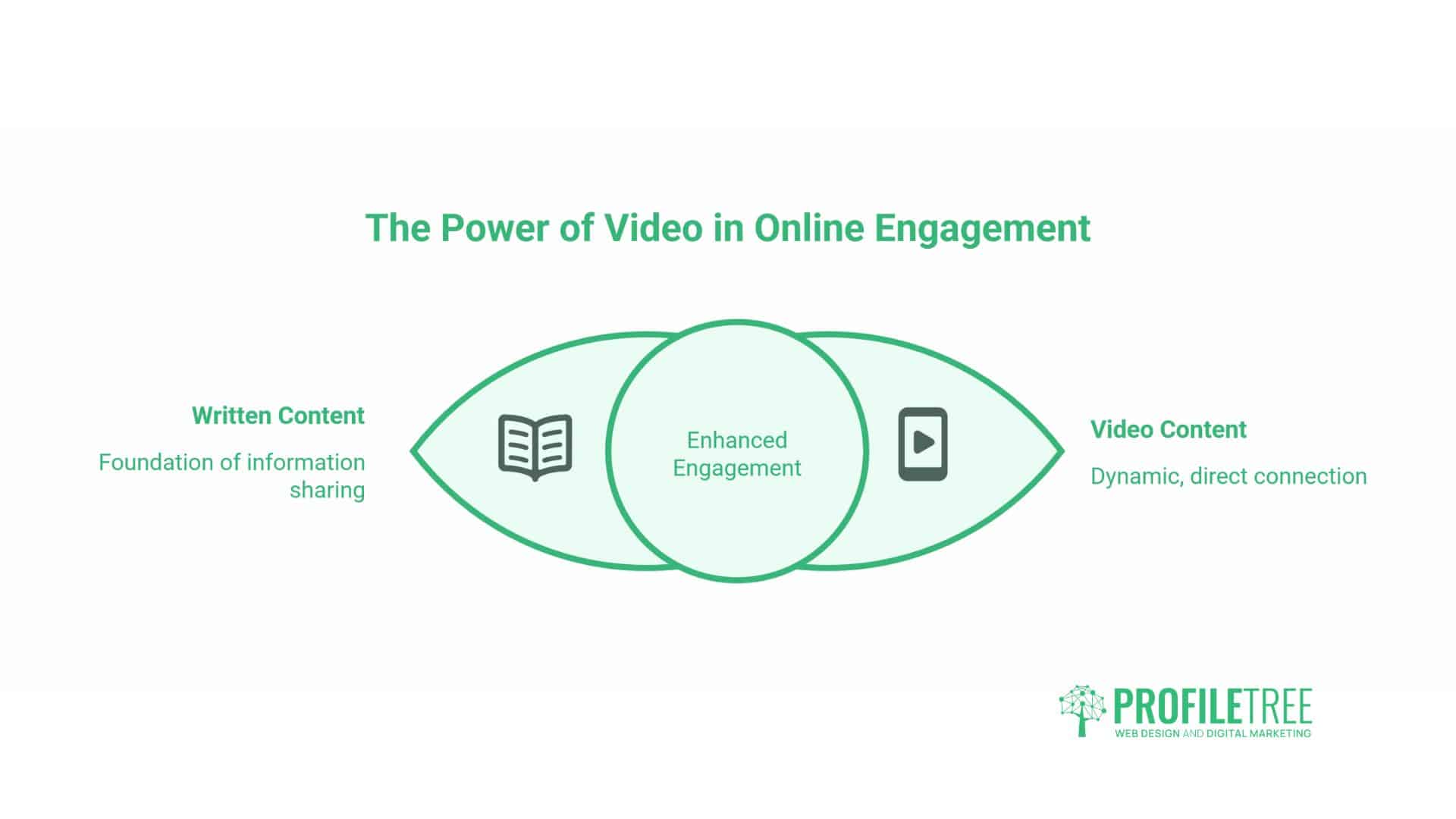
Text alone doesn’t carry the weight it once did. Video has become a core driver of engagement across nearly every platform. Short-form videos on LinkedIn, tutorials on YouTube, and live streams on Facebook serve different audience segments, but they share a common trait: they create a more direct connection than written content alone.
Original graphics and infographics summarise data or explain a process visually, and original visuals tend to outperform stock images on social feeds and in search. Polls, quizzes and question prompts on LinkedIn and Instagram Stories create direct participation and signal to the platform that people are interested.
For businesses investing in video production alongside written content, the effect compounds: each format reaches a different segment of the audience and gives them a different reason to interact. A maintained YouTube marketing presence serves as a search engine in its own right, generating engagement from search as well as subscriptions, and original explainer graphics or short animations can carry a message that would take several paragraphs to explain in text.
Community Engagement and Management
Building a community around a brand takes longer than growing a follower count, but the results last. Community members become advocates: they recommend a business unprompted and provide the kind of social proof that no paid campaign replicates.
An online community isn’t simply a collection of followers. It’s a group that gathers around a shared interest, and it needs active stewardship. New members who feel ignored rarely become active participants, so the welcome experience matters more than most businesses assume.
Clear guidelines, regular prompts and a consistent moderation approach are the practical infrastructure of a healthy community. Pairing community management with a clear digital marketing strategy ensures every activity serves a measurable business goal, rather than generating noise without direction. A community that exists purely to promote one brand will struggle to hold attention; the ones that last give members something beyond a sales pitch.
For a broader look at how community activity shows up in the data, this breakdown of online community statistics for SME marketing managers is worth reading alongside this guide.
Engagement Across Social Platforms
Each social platform has different norms, audiences and content formats. A strategy that works on LinkedIn will likely miss on TikTok, so it’s worth understanding the specific dynamics of each platform before investing significant time.
LinkedIn is the primary platform for B2B engagement in the UK. It rewards consistent publishing, genuine interaction in comments and long-form posts that demonstrate expertise. For ProfileTree’s clients in web design, SEO and digital marketing, LinkedIn is where decision-makers go to evaluate agencies before making contact. This guide on social media shaping modern business networking covers the shift in more detail.
Facebook remains valuable for local business networking and community groups, particularly in regions like Northern Ireland, where a strong culture of local recommendations prevails. Twitter/X is fast-moving and text-heavy, and rewards participation in live conversations and consistent commentary on industry developments. Discord and Slack host some of the most concentrated professional communities in specific sectors, generating high-quality engagement because participants self-select based on genuine interest. For the numbers behind platform performance, see this roundup of social media statistics on engagement and this deeper look at YouTube engagement specifically.
Posting consistency outperforms intensity on every platform. Five posts in one week followed by three weeks of silence does more harm than a steady rhythm of two or three posts per week maintained over months. Responding to comments within the first hour of posting signals to the algorithm that the content is generating real interaction, and it builds an actual relationship with the people who took the time to reply.
The Rise of Dark Social: Engagement You Can’t Always See
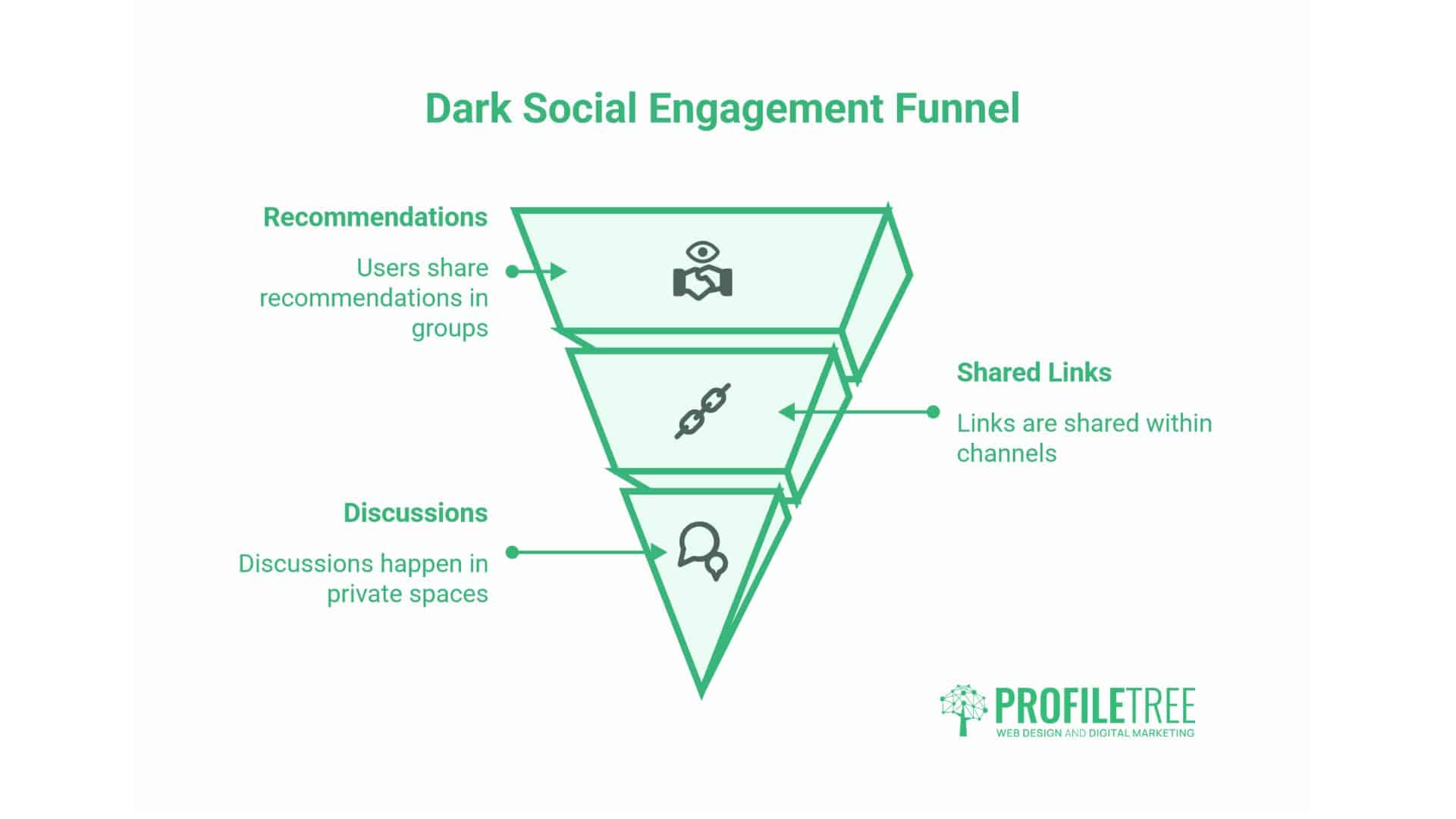
A significant amount of genuine engagement now happens somewhere your analytics can’t reach. WhatsApp groups, Slack channels, Discord servers, and direct messages carry recommendations, shared links, and discussions that never appear as tracked referrals, yet they often drive more actual business than a public comment thread.
This matters specifically for UK and Irish SMEs, given how widely WhatsApp is used for both personal and informal business communication compared with other markets. A link shared privately in a WhatsApp group or a Slack channel for a local trade body can generate a genuine enquiry with no visible trail back to the original post.
There’s no perfect way to track dark social, but there are practical steps. Unique, trackable links on anything designed to be shared privately (a downloadable guide, a case study, a service page) at least let you see when traffic arrives without an obvious public referral source. Asking new enquiries directly how they heard about the business and logging the answer fills a gap that analytics alone can’t close. Treating “someone mentioned you in a group chat” as a real and valuable engagement channel, rather than dismissing it because it isn’t measurable, is the mindset shift that matters most here.
Online Engagement and UK Data Protection Law
Engagement tactics and data protection law intersect more often than most SMEs realise. Collecting comments, running polls, building an email list from engaged followers or retargeting people who interacted with a post all involve personal data, which means UK GDPR and the Privacy and Electronic Communications Regulations (PECR) apply.
The practical requirement that catches most SMEs out is consent for direct marketing. Adding someone to a newsletter list because they commented on a post or engaged with a piece of content, without clear consent for that specific use, sits outside what PECR allows. The Information Commissioner’s Office publishes current guidance on direct marketing and electronic communications, and it’s worth a business owner or marketing manager reading it directly rather than relying on secondhand summaries, since the details can change the answer in specific cases.
None of this means engagement work needs to stop. It means consent needs to be explicit, records need to be kept, and marketing lists built from engagement activity need to be handled with the same care as any other customer data.
Measuring and Improving Online Engagement
Online engagement without measurement is a creative exercise, not a business strategy. The metrics tracked should connect directly to outcomes: enquiries, referrals, brand awareness and revenue.
Not all engagement metrics carry equal weight. Vanity metrics like total impressions or follower counts feel satisfying but rarely predict commercial outcomes. Engagement rate (likes, comments, shares and saves divided by reach) matters more because a small audience with a high engagement rate is worth more than a large one that ignores every post. Referral traffic from social platforms and online communities connects engagement directly to commercial outcomes; if a web development build is set up with proper analytics, this is straightforward to track through Google Analytics or Search Console. Conversion rate, the percentage of engaged visitors who take a desired action, and comment quality, which reveals whether content is reaching the right audience at all, complete the picture.
A simple way to think about relative value across platforms:
| Platform | High-value engagement | Lower-value engagement |
|---|---|---|
| Substantive comments, direct messages, and profile visits from decision-makers | Passive likes with no follow-up | |
| Story replies, saves, DMs asking about services | Follows with no interaction | |
| Facebook Groups | Questions answered, referrals mentioned by name | Reactions with no comment |
| Email/newsletter | Replies, click-throughs to service pages | Opens with no further action |
This isn’t a precise scoring system, more a way to check whether the activity a report highlights is the kind that actually moves a business forward.
Regular surveys, direct messages and active listening in community spaces provide the qualitative context that numbers alone can’t supply. Reviewing the specific language people use when they engage with content often reveals the questions a business should be answering in future posts, and direct conversations with existing clients about how they found the business and what content helped them remain among the most valuable research available to any SME.
Where AI Fits Into Online Engagement
The tools available for managing engagement have moved on quickly. AI-assisted scheduling, CRM systems, and analytics platforms have reduced the manual burden of staying consistent, allowing smaller teams to maintain a professional presence across multiple channels without burning out.
AI tools can identify good times to post, suggest topics based on search trends and flag conversations worth joining. AI chatbots can handle routine enquiries and community questions at scale, freeing up time for the higher-value interactions that need a person. What AI can’t do is replace genuine expertise, an authentic voice or the relationship-building that happens through real conversation.
For SMEs in Northern Ireland and across the UK, the practical opportunity is to automate repetitive tasks such as scheduling posts, managing inboxes and tracking mentions, while reserving human attention for the conversations that actually build relationships. ProfileTree’s AI training and implementation work with SMEs addresses exactly this balance: helping business owners and marketing teams determine which tasks are best handled by automation and which require genuine human judgement.
Expanding Reach Through Webinars and Virtual Events
Virtual events have become a permanent fixture in professional networking. They offer access to audiences and speakers who’d be impractical to reach in person, and they generate engagement that extends well beyond the event itself.
A well-run webinar demonstrates expertise to attendees, generates content in the form of recordings and clips that continue to drive engagement afterwards, and creates a natural context for following up with participants who engaged during the session. For businesses offering digital training and AI transformation services, webinars work particularly well: they demonstrate capability in an inherently educational format, which builds trust more effectively than promotional content on its own.
A clear agenda circulated in advance, interactive elements such as polls and Q&A, and genuine follow-up with attendees who asked questions all make a presentation more participatory. That participation creates the kind of engagement that generates word-of-mouth referrals, still the highest-converting source of new business for most service agencies.
Building a Sustainable Approach to Engagement
Online engagement isn’t a single tactic; it’s the cumulative result of a professional network maintained over time, content that answers real questions, a community that gets something back, and measurement that honestly tells you what’s working. For most SMEs, the fastest route to improvement isn’t doing more of everything at once. It’s picking two or three of the areas above, likely professional networking, content and one platform, and doing them consistently for long enough to see what actually converts.
A business that pairs this kind of engagement work with a properly resourced digital marketing strategy, reliable SEO and a site built on solid web development foundations gives itself the best chance of turning attention into enquiries, rather than just accumulating numbers that look good in a report and do nothing else.
FAQs
What is meant by online engagement?
Online engagement encompasses interactions, comments, shares, and repeat visits that indicate someone is genuinely paying attention to a business online, rather than passively scrolling past its content.
What are the four types of online engagement?
Social and community engagement, interactive and web engagement, educational and content engagement, and conversational (dark social) engagement, covering private channels like WhatsApp and Slack.
How do you measure online engagement?
Through engagement rate, referral traffic, conversion rate and comment quality, tracked consistently through analytics tools rather than judged by follower counts alone.
Is online engagement a ranking factor for SEO?
Not a direct one. Google doesn’t use social shares or likes as a direct ranking signal, but the behaviour engagement creates, such as return visits and referral traffic, supports the wider signals search engines do use.