
Social Media Marketing Companies: How to Choose the Right Partner
Table of Contents
Social media marketing has become essential to any successful business strategy in today’s digital landscape. With millions of potential customers scrolling through platforms like Facebook, Instagram, X/Twitter, and LinkedIn, companies can no longer afford to overlook the power of social media. However, managing the complexities of social media marketing can be overwhelming, which is why many businesses turn to specialised agencies for help.
Choosing the right social media marketing company can be a game-changer, propelling your brand to new heights and fostering meaningful engagement with your target audience. But with countless agencies vying for your attention, how do you ensure you make the right choice?
In this article, we delve into social media marketing and what to consider when evaluating social media marketing companies. This will help you uncover the expertise, creativity, and strategic vision necessary to drive your brand’s success in the ever-evolving world of social media.
Ready? Let’s get into it.
Social Media Marketing
If you’re a business owner, you’ve heard over and over how important social media marketing is to your brand. Understanding what it is and what it isn’t can assist in making the right decisions that will impact your online presence.
Social media marketing uses platforms and websites to promote a product or service. It involves creating and sharing content on social media networks, engaging with followers, running advertisements, and analysing results to achieve marketing goals.
Businesses use social media marketing to build brand awareness, generate leads, drive website traffic, and increase sales by reaching a broad audience of potential active customers on platforms like Facebook, Instagram, X/Twitter, and LinkedIn.
Key Social Media Marketing Laws
Understanding the fundamental principles of social media marketing helps businesses evaluate potential agency partners more effectively. These established “laws” guide successful social media strategies and indicate whether an agency understands the core principles of effective social media marketing.
The Law of Listening
Successful social media marketing begins with understanding your audience rather than broadcasting messages. Companies must actively monitor conversations, track mentions, and analyse audience feedback to create content that adds genuine value. This principle requires sophisticated monitoring tools and dedicated resources that many businesses lack internally.
When evaluating social media marketing companies, assess their approach to social listening. Quality agencies invest in comprehensive monitoring tools and dedicate team members to tracking brand mentions, industry conversations, and competitor activities. This intelligence forms the foundation of effective content strategies.
The Law of Focus
Effective social media marketing requires strategic focus rather than attempting to maintain a presence across every available platform. Different platforms serve different purposes and attract distinct demographics. Businesses achieve better results by concentrating on platforms where their target audiences are most active and engaged.
Professional social media marketing companies conduct thorough audience research to identify optimal platform selections. They understand that a small business might achieve better results focusing on Facebook and Instagram rather than spreading limited resources across six platforms. This strategic approach maximises impact while effectively managing costs.
The Law of Quality Over Quantity
Engagement quality matters more than follower count or posting frequency. A smaller, highly engaged audience delivers better business results than thousands of inactive followers. This principle requires creating content that sparks conversations, builds relationships, and drives meaningful interactions.
Quality social media marketing companies prioritise engagement metrics over vanity metrics. They focus on creating content that generates comments, shares, and direct messages rather than accumulating likes. This approach builds stronger communities and drives better business outcomes.
The Law of Patience
Building a meaningful social media presence requires time and consistency. Overnight success rarely occurs, and sustainable growth demands persistent effort over extended periods. This reality makes partnering with experienced agencies valuable, as they understand the long-term commitment required for success.
When selecting social media marketing partners, consider their approach to timeline expectations. Professional agencies set realistic expectations about growth rates and campaign timelines whilst maintaining consistent effort throughout the relationship. They understand that social media marketing is a marathon, not a sprint.
The Law of Compounding
Quality content generates compound returns through sharing, engagement, and word-of-mouth marketing. When audiences find content valuable, they share it with their networks, expanding reach organically. This multiplier effect reduces paid advertising costs whilst building authentic brand advocacy.
Experienced social media marketing companies understand how to create shareable content that uses this compounding effect. They develop content strategies encouraging audience participation and sharing and amplifying campaign reach through organic distribution channels.
The Law of Influence
Strategic partnerships with influencers and industry leaders can amplify brand reach and credibility. However, successful influencer marketing requires careful selection, authentic partnerships, and precise performance metrics. This specialised area demands expertise that many businesses lack internally.
Professional social media marketing companies often have established relationships with influencers across various industries and follower tiers. They understand how to identify authentic influencers whose audiences align with client objectives and can negotiate partnerships that deliver measurable results.
The Law of Value-Added Engagement
Social media success depends on providing genuine value to audiences through helpful content, entertainment, or inspiration. This principle requires a deep understanding of audience needs and preferences and creative content development capabilities.
When evaluating potential partners, assess their content portfolios to determine whether they create valuable, engaging content or simply promotional messages. Quality agencies clearly understand audience needs and consistently produce content that effectively serves those needs.
The Law of Acknowledgement
Responsive communication humanises brands and builds stronger customer relationships. It requires continuously monitoring multiple platforms and responding promptly to comments, questions, and concerns. Many businesses underestimate the resources necessary for effective community management.
Professional social media marketing companies typically offer community management services, including real-time monitoring and response capabilities. They understand that delayed responses can damage brand reputation and work to maintain consistent communication standards across all platforms.
The Law of Reciprocity
Social media functions as a two-way communication channel that requires genuine engagement rather than broadcast marketing. Successful brands participate in conversations, share others’ content, and build relationships beyond their immediate business interests.
Quality social media marketing companies understand the importance of community participation and reciprocal engagement. They don’t simply post promotional content but actively engage with industry conversations, share relevant third-party content, and build genuine relationships within online communities.
Key Social Media Marketing Trends
Social media marketing is evolving, and several key trends are shaping its landscape.
Video Content
Video content, particularly short-form videos on platforms like TikTok and Instagram Reels, continues to dominate, highlighting the power of visual storytelling in capturing audience attention and driving engagement.
Ephemeral content, such as stories on Instagram and Facebook, has gained popularity for its ability to create urgency and foster real-time interaction. These temporary posts allow brands to maintain relevance and connect more intimately with their audience by sharing fleeting yet impactful moments.
Social Commerce
Another trend is social commerce, which has transformed how businesses interact with consumers by integrating shopping features directly into social media platforms. On the other hand, personalisation boosts engagement and builds stronger connections with consumers by delivering relevant and meaningful content tailored to individual interests.
Influencer Marketing
Influencer marketing continues to be a powerful strategy. It uses the influence of social media personalities and collaborates with them to promote products and services. This allows brands to reach niche audiences authentically and utilise the trust and credibility these influencers have built with their followers to drive conversions and expand brand reach.
Other social media marketing trends include:
- Augmented Reality (AR) enhances user engagement on platforms like Snapchat and Instagram through interactive filters and effects.
- Voice search optimisationensures brands remain discoverable and accessible to users, utilising voice technology to improve visibility and engagement in voice-driven search environments.
- Sustainability and purpose-driven content: Emphasise environmental sustainability and social responsibility to resonate with socially conscious consumers and build stronger loyalty based on shared ethical values.
- Artificial Intelligence (AI): AI-powered tools analyse data to personalise user experiences, optimise ad campaigns, and streamline interactions, improving efficiency and effectiveness in marketing efforts.
- Visual content: Images, graphics, and videos perform better than text-based posts. However, proper optimisation is required.
Paid vs. Managed Services
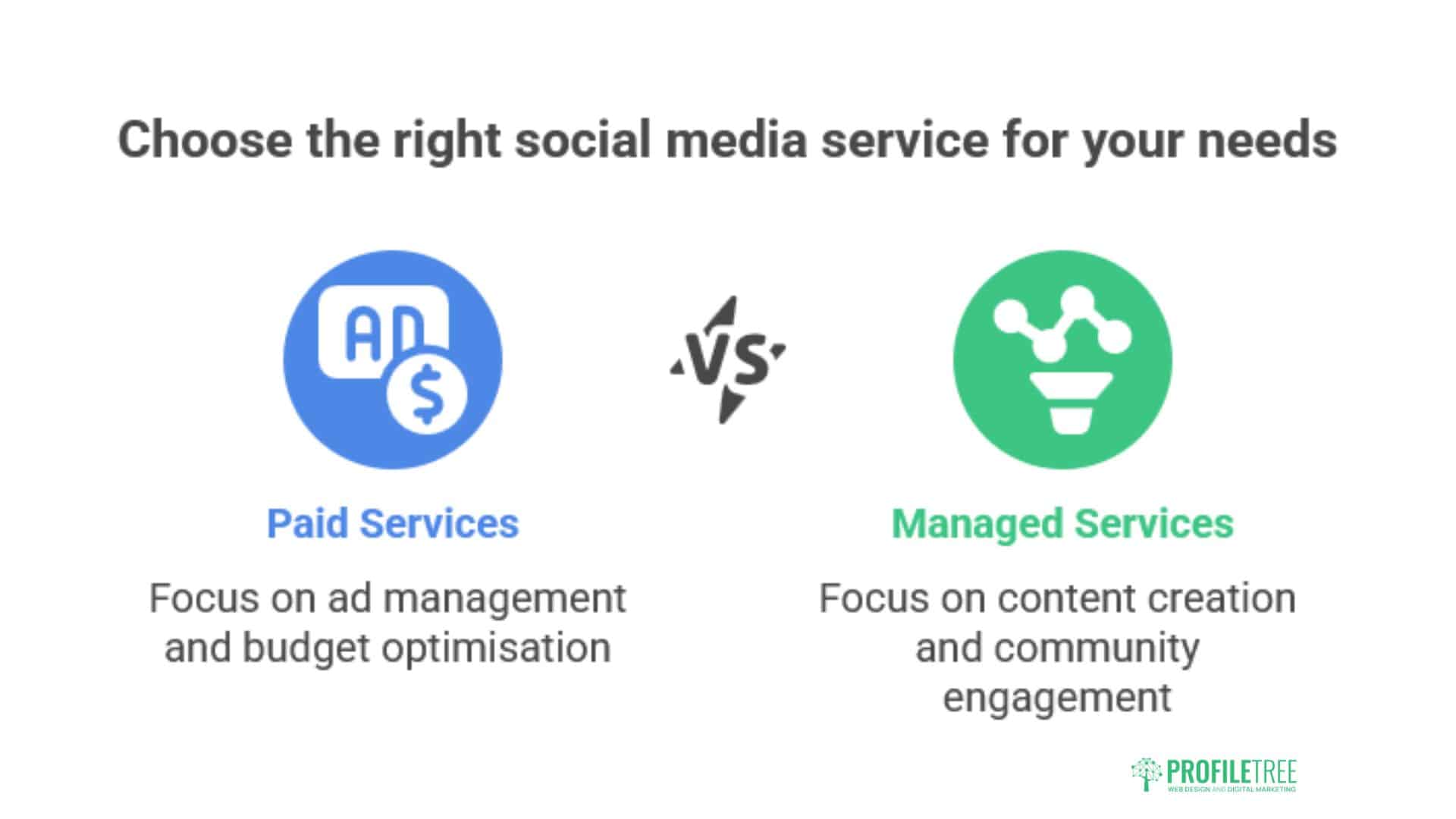
Paid social media services handle ad management and budget optimisation. Managed services focus on content creation and community engagement. Considerations for selecting one versus both include:
- Current resource bandwidth: Existing in-house social team or need to outsource fully
- Goals and KPIs: Require advertising support or just organic content and management.
- Budget: Paid services have minimums, while managed services are flexible
The Agency Evaluation Process
When vetting social media marketing companies, make sure you:
- Compare strategies and services to internal needs.
- Review past campaign examples and results.
- Ensure relevant expertise across desired platforms.
- Ask for client references to get testimonials.
- Evaluate reporting and analytics capabilities.
- Examine pricing models and minimums.
- Assess cultural fit and communication expectations.
Finding the Right Social Media Marketing Partner
Selecting the appropriate social media marketing company requires careful evaluation of multiple factors beyond basic service offerings. The ideal partner should align with your business objectives, budget constraints, and company culture while demonstrating expertise in your industry and target platforms.
Evaluating Agency Expertise and Experience
- Industry Knowledge: Look for agencies with experience in your industry or similar sectors. Different industries require different approaches, compliance considerations, and audience understanding. An agency experienced in B2B technology marketing may not be ideal for a restaurant chain.
- Platform Specialisation: Assess whether the agency has deep expertise on the platforms most relevant to your business. A company focusing on TikTok marketing may not be suitable if your target audience primarily uses LinkedIn. Review their content portfolios across different platforms to evaluate quality and engagement levels.
- Case Studies and Results: Request detailed case studies that demonstrate measurable results rather than just creative work. Look for agencies that can provide specific metrics like engagement rate improvements, lead generation numbers, or revenue attribution from social media campaigns.
- Team Expertise: Understand the qualifications and experience of team members who will work on your account. Social media marketing requires diverse skills, including content creation, data analysis, community management, and paid advertising expertise.
Assessing Service Offerings and Capabilities
- Comprehensive Service Range: Determine whether the agency offers integrated services or specialises in specific areas. Full-service agencies may provide convenience, but specialised firms might offer more profound expertise in particular areas like paid advertising or content creation.
- Content Creation Capabilities: Evaluate the agency’s ability to create high-quality content across different formats, including written posts, graphics, videos, and interactive elements. Review their creative portfolios to assess whether their style aligns with your brand aesthetic.
- Technology and Tools: Understand the agency’s tools and technologies for social media management, analytics, and reporting. Professional agencies should use established platforms like Hootsuite, Sprout Social, or Buffer for scheduling and monitoring, plus advanced analytics tools for performance measurement.
- Scalability: Consider whether the agency can scale services up or down based on your changing needs. A good partner should be able to adapt to seasonal fluctuations, campaign launches, or budget changes without compromising service quality.
Cultural Fit and Communication Style
- Communication Preferences: Assess whether the agency’s communication style matches your preferences. Some businesses prefer detailed weekly reports, whilst others want brief monthly summaries. Ensure the agency can accommodate your preferred communication frequency and format.
- Response Time Expectations: Clarify response times for messages, comments, and potential crises. Social media requires quick responses, particularly for customer service issues or negative feedback that could escalate.
- Brand Understanding: Evaluate whether the agency understands your brand voice, values, and target audience. They should be able to create content that feels authentic to your brand rather than generic promotional material.
- Collaboration Approach: Consider whether the agency prefers to work independently or collaboratively with your internal team. Some businesses want to maintain tight control over content approval, whilst others prefer to delegate responsibility to experienced professionals.
Reference Checks and Testimonials
- Client References: Request references from current and former clients, particularly those in similar industries or with comparable objectives. Ask specific questions about results achieved, communication quality, and overall satisfaction with the partnership.
- Online Reviews: Research the agency’s online reputation through Google Reviews, industry directories, and social media platforms. Pay attention to positive and negative feedback to understand potential strengths and weaknesses.
- Industry Recognition: Look for agencies that have received industry awards, certifications, or recognition from professional organisations. This indicates a commitment to professional development and adherence to industry best practices.
- Longevity and Stability: Consider the agency’s track record and stability. Frequent staff turnover or client churn may indicate underlying issues that could affect service quality or relationship continuity.
Ciaran Connolly, Director of ProfileTree, explains: “After working with hundreds of businesses across Northern Ireland and the UK, I’ve seen that the most successful social media partnerships happen when companies focus on strategic alignment rather than just cost. The agencies that deliver real results are those who take time to understand your business objectives and can demonstrate measurable outcomes from previous campaigns.”
Social Media Marketing Company Profiles
Social media marketing companies vary widely in their strengths, specialities, and approaches. Here are profiles of three diverse companies:
Company A: Creative Content Innovators
Company A specialises in creating captivating and original content across various social media platforms. They excel in crafting visually appealing and engaging posts, videos, and stories that resonate with target audiences. Their approach emphasises creativity and storytelling to build brand identity and foster customer engagement. With a strong focus on analytics, they track performance metrics closely to optimise content strategies and ensure measurable results for their clients.
Company B: Data-Driven Strategists
Company B distinguishes itself through its data-driven approach to social media marketing. It uses advanced analytics tools to meticulously analyse audience behaviour, trends, and campaign performance. This enables it to develop highly targeted and effective marketing strategies that maximise ROI. Company B excels in ad targeting, A/B testing, and campaign optimisation to ensure its clients achieve their business objectives efficiently and effectively.
Company C: Influencer Marketing Specialists
Company C specialises in influencer marketing, utilising the power of social media personalities to amplify brand reach and credibility. They have built strong relationships with a diverse network of influencers across different niches and demographics. Company C excels in identifying and partnering with influencers who align closely with their clients’ brand values and target audience. Their approach focuses on authenticity and engagement, using influencer partnerships to drive brand awareness, user-generated content, and customer loyalty.
Each of these companies offers unique strengths and strategies tailored to meet the diverse needs of brands seeking to improve their presence and engagement on social media platforms. Whether through creative content, data-driven analysis, or influencer collaborations, these companies play important roles in helping brands navigate and succeed in the dynamic world of social media marketing.
Now, let’s look into a few social media marketing top service providers:
- Sprout Social: Focuses on social media management software and agency services— social listening and analytics experts. Packages start at $99/mo.
- Buffer offers both DIY and fully managed options. It specialises in prescheduled social content and provides a media buy starting at $250/mo.
- HubSpot: Full inbound agency supporting social media marketing. Provides comprehensive reporting. Services start at $3,200/mo.
- Hootsuite: Leading platform for social media dashboard and monitoring. Also, offer an add-on content creation service. Plans from $599/mo.
- Cleveland Avenue: A full-service digital agency with social media expertise. Customised strategies and reporting. Minimum $5k/mo.
Understanding Service Models and Pricing
Social media marketing companies offer various service models and pricing structures, each with distinct advantages and considerations. Understanding these options helps businesses select arrangements that align with their budget constraints and service requirements.
Service Model Options
- Full-Service Management: Comprehensive packages that include strategy development, content creation, community management, paid advertising, and performance reporting. This model suits businesses that prefer to delegate all social media responsibilities to external specialists.
- Managed Services: Focused on organic content creation and community engagement, clients handle paid advertising internally. This hybrid approach works well for businesses with internal advertising expertise but limited content creation resources.
- Paid Advertising Specialists: Concentrated on managing social media advertising campaigns whilst clients handle organic content creation. This model suits businesses with strong content teams but limited paid advertising experience.
- Consulting and Training: This approach involves strategic guidance and team training rather than hands-on execution. It works for businesses that want to build internal capabilities while receiving expert strategy and best practices guidance.
Pricing Structure Considerations
Monthly Retainer Models: Fixed monthly fees that cover agreed-upon services. This predictable pricing structure helps with budget planning but may include limitations on content volume or advertising spend management.
- Performance-Based Pricing: Compensation tied to specific performance metrics like engagement rates, lead generation, or revenue attribution. This model aligns agency incentives with business objectives but may include higher base costs to account for performance risk.
- Project-Based Fees: Specific fees for defined projects like campaign launches, content creation, or strategy development. This approach provides flexibility but may result in higher per-project costs than ongoing retainer relationships.
- Hybrid Pricing Models: Combinations of base retainer fees, performance bonuses, or project-specific charges. This approach can provide cost predictability whilst incentivising exceptional performance.
Budget Planning Considerations
- Minimum Investment Requirements: Many professional agencies require minimum monthly commitments ranging from £1,000 to £10,000+, depending on service scope and company size. Understand these requirements before beginning evaluation processes.
- Additional Cost Factors: Consider potential extra costs for content creation, graphic design, video production, influencer partnerships, or crisis management services. These may be included in comprehensive packages or charged separately.
- Advertising Budget Management: Clarify whether quoted fees include advertising spend or represent management fees only. Many agencies charge 10-20% of total advertising spend as management fees, which can significantly impact total investment requirements.
- Contract Terms and Flexibility: Understand minimum contract lengths, cancellation policies, and flexibility for service modifications. Some agencies require 12-month commitments, whilst others offer month-to-month arrangements.
Measuring Return on Investment
- Key Performance Indicators: Establish clear metrics for measuring campaign success, including engagement rates, website traffic, lead generation, and revenue attribution. Ensure potential partners can consistently track and report on these metrics.
- Reporting Frequency and Detail: Clarify reporting schedules and level of detail provided. Monthly reports should include performance metrics, campaign analysis, and strategic recommendations for improvement.
- Attribution Tracking: Understand how the agency tracks and attributes conversions to social media activities. This may require implementing tracking codes, custom landing pages, or integration with the customer relationship management system.
- Competitive Benchmarking: Quality agencies should provide industry benchmarking data to help evaluate performance relative to competitors and industry standards.
Contract Negotiation Tips
- Service Level Agreements: Clearly define service expectations, response times, and performance standards in written agreements. This prevents misunderstandings and provides recourse if service quality declines.
- Ownership Rights: Clarify ownership of content created during the partnership, including graphics, videos, and written content. Some agencies retain rights to creative work, while others transfer full ownership to clients.
- Termination Procedures: Understand the procedures for ending a partnership, including notice requirements, asset transfer, and account access. Ensure you can maintain social media account access if partnerships end.
- Performance Review Processes:Establish regular performance review meetings to assess progress, address concerns, and adjust strategies as needed. This ongoing dialogue helps maintain productive partnerships.
Conclusion
Selecting the right social media marketing company is a critical decision that can significantly impact your brand’s online presence and business growth. By prioritising factors such as industry experience, proven track record, alignment with your brand values, and transparent communication, you can ensure that the agency you choose understands your objectives and has the expertise to execute effective strategies tailored to your needs.
Remember, the best fit is not always the biggest agency, but rather the one that can deliver results while fostering a collaborative and trusting relationship. With careful consideration and due diligence, finding the right social media marketing partner can pave the way for sustained success and enhanced digital engagement in today’s competitive landscape.”
FAQs
What should I budget for social media marketing services?
Professional social media marketing services typically range from £1,000 to £10,000+ monthly, depending on service scope, company size, and advertising spend. Small businesses often start with £1,000-£3,000 monthly retainers, while larger organisations may invest £5,000-£15,000+- £ 15,000+ monthly for comprehensive services.
How long does it take to see results from social media marketing?
Most businesses see initial engagement improvements within 4-6 weeks, with measurable leads and conversions typically appearing within 3-6 months. However, building a strong social media presence and community engagement requires 6-12 months of consistent effort.
What results should I expect from professional social media marketing?
Professional agencies typically deliver 20-50% improvements in engagement rates, 15-30% increases in website traffic from social channels, and 10-25% growth in qualified leads. Results vary based on industry, target audience, and campaign objectives.
How much support do agencies provide beyond content creation?
Most professional agencies provide 5-15 hours of dedicated support daily, including strategy development, campaign management, performance analysis, and client communication. Comprehensive packages may include additional services like crisis management and competitive analysis.
Ready to Transform Your Social Media Strategy?
At ProfileTree, we’ve helped hundreds of businesses across Northern Ireland, Ireland, and the UK build powerful social media presences that drive real results. Our integrated approach combines strategic social media marketing with web design, AI implementation, and digital training to create comprehensive solutions that grow your business.
Whether you’re looking to launch your first social media campaign or optimise existing efforts, our team of experts can help you:
- Develop data-driven social media strategies that align with your business goals
- Create engaging content that resonates with your target audience
- Build websites optimised for social media traffic conversion
- Implement AI solutions to streamline your marketing processes
- Train your team on the latest social media marketing techniques
Get in touch:hello@profiletree.com | 028 9568 0364
Contact ProfileTree for Your Social Media Marketing Strategy