
Emotional Branding: How to Build Customer Loyalty That Lasts
Table of Contents
Emotional branding builds a felt connection between a business and its customers, based on shared values and experience rather than price or features. It drives loyalty because people remember how a brand made them feel. Recent viral moments show the effect at national scale, though the version that lasts is built deliberately over years of consistent work.
Emotional branding is the reason a customer pays a bit more, waits a bit longer, and forgives the occasional mistake. It runs on feeling, and feeling outlasts any feature comparison a competitor can run against you.
For a small business in Northern Ireland, Ireland or the rest of the UK, this matters more than the budget gap suggests. The mechanics that made a handful of brands unavoidable online over the past two years are available to a ten-person firm, as long as the personality behind the business is allowed to show.
What Emotional Branding Means
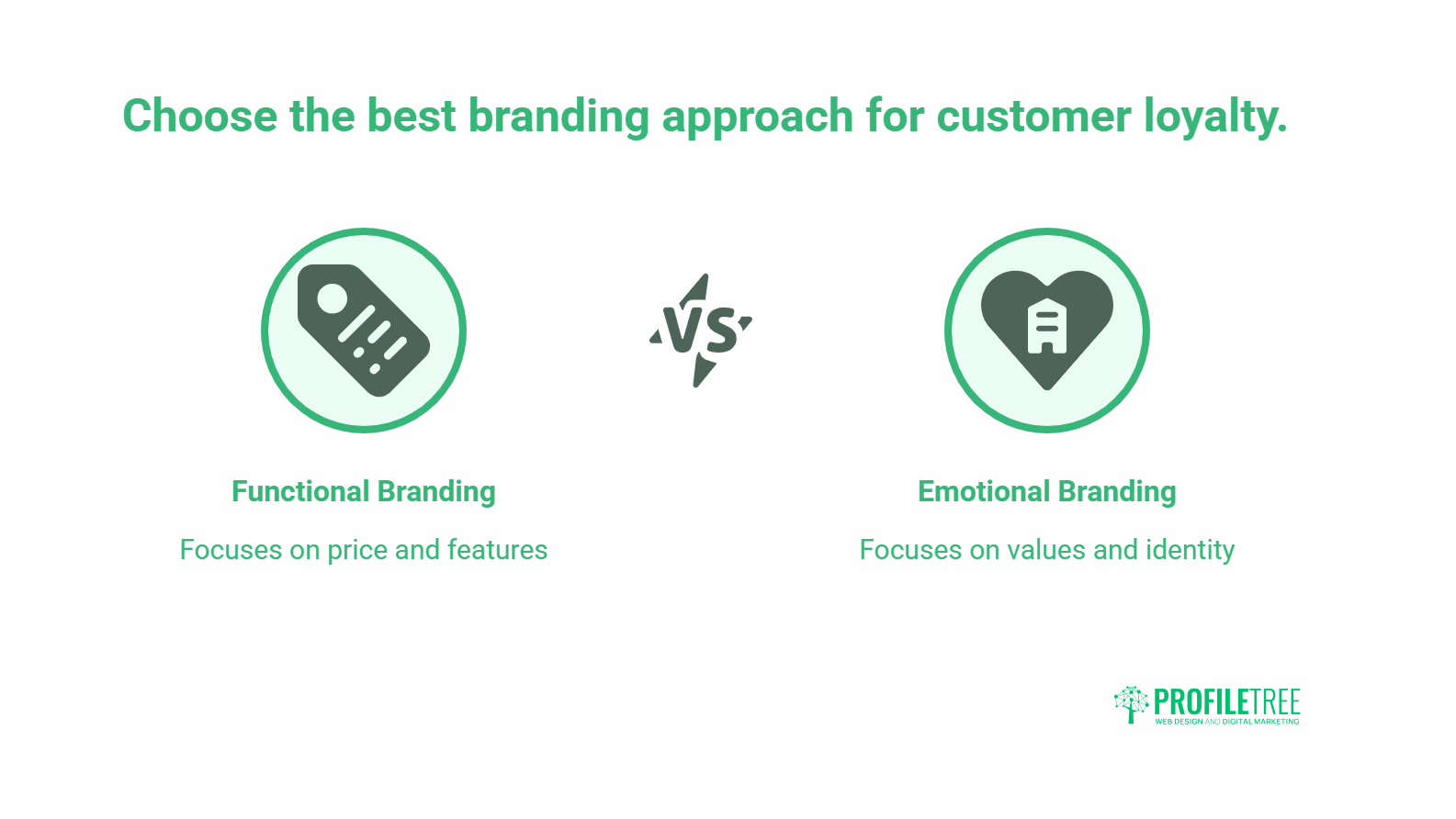
Emotional branding builds a business around how customers feel about it. Functional branding competes on price, durability, and features. The emotional version answers a different question: what does it say about someone that they chose this brand?
The evidence is stronger than the soft language around it suggests. Les Binet and Peter Field’s analysis of the IPA Databank of effectiveness case studies, covering 996 campaigns submitted to the IPA Effectiveness Awards across three decades, found that emotional campaigns produced an average of 1.7 brand effects against 1.0 for rational ones, and were close to twice as likely to deliver large profit growth over the long term. Feeling does the heavy lifting on the metrics that compound.
Guinness is the clearest live example on this island. Its recent run with younger drinkers was driven less by advertising than by ritual: the pour, the settling time, the game of “splitting the G” that customers invented and the brewery had no hand in. The product didn’t change. What changed was the meaning attached to drinking it, and the fact that meaning was worth filming.
For most of the businesses that ProfileTree, a Belfast digital agency, works with, the gap isn’t a product nobody could care about. It’s that nothing in the messaging, design, or content gives customers a reason to feel anything at all. Fixing that usually starts with a clearer digital strategy before a single asset is designed, because emotion that isn’t planned tends not to turn up by accident.
Emotional Branding Versus Functional Branding
You need both, working together. Functional claims earn trust. Emotional ones earn preference. A coffee shop can be clean, fast, and fairly priced and still lose to the one where regulars feel known by name. The functional layer gets you considered. The emotional layer gets you chosen, then kept.
The practical point for an SME is that you can’t skip the groundwork and lead with feeling alone. A beautiful brand story sitting on a slow, confusing website collapses on contact. Trust has to be earned at every touchpoint before emotion has anything to stand on.
Why It Builds Customer Loyalty
Customers stay loyal to brands they feel connected to because emotion, not logic, drives most repeat buying. People forget specifications. They remember experiences. Everything below follows from that single fact, and the wider commercial case for the investment is set out in more detail in this guide to the advantages of branding.
It Makes the Brand Feel Human
A business that reads as a personality gets treated like one. Duolingo, the language app, spent years giving its owl mascot a character with opinions, then in February 2025 announced the mascot’s death across its social accounts and invited users to bring him back by completing lessons. Millions joined a joke about a cartoon bird. That only lands because the brand had already earned the right to be silly, and customers who laugh with a business are slower to leave it.
It Builds Memorable Experiences
People forget the details of a product. They remember how a brand made them feel, or in Jet2’s case, how it sounded. An advert soundtrack UK viewers had heard for years became the dominant audio on TikTok in the summer of 2025, attached to millions of clips of holidays going comically wrong. Nobody was reciting baggage allowances. The feeling did the recall work on its own.
It Differentiates in Crowded Markets
When products become hard to tell apart, emotion is often the last real differentiator. Outdoor clothing brands that campaign on repair and environmental damage give buyers a reason to pick one jacket over a functionally identical one, and that reason has nothing to do with the zips. In a saturated market, a clear emotional identity stops a brand competing on price alone.
It Encourages Advocacy
Loyal customers become advocates. People recommend brands that reflect their own values, and that word of mouth reaches further than paid media can buy. This is why brand building and content work compound: each piece adds to a story customers want to repeat, and that story keeps working after the campaign budget stops.
It Holds Up in a Crisis
Brands with strong emotional ties weather bad weeks better. In a product recall, a bad news cycle, or a downturn, customers who feel connected are more forgiving and more willing to stay. The bond acts as a buffer that functional loyalty never provides, because a relationship survives a setback in a way that a transaction does not.
| Loyalty driver | Functional branding | Emotional branding |
|---|---|---|
| Basis of choice | Price, features | Values, identity |
| Reaction to a price rise | Likely to switch | More likely to stay |
| Word of mouth | Occasional | Frequent |
| Resilience in a crisis | Low | High |
| Cost to maintain over time | Rises with competition | Compounds with goodwill |
What Recent Campaigns Show
The most instructive brand moments of the past two years were not the most expensive ones. Three are worth looking at closely, because the lessons transfer down to businesses with no media budget at all.
Jet2 is the obvious one. Its long-running advert audio was adopted by TikTok users in 2025 and used to soundtrack holiday disasters, which sounds like a nightmare for a travel company. The brand let it run. Marketing Week reported that the slogan appeared in 11.8 million social posts and 80 billion views, that the company carried 750,000 more passengers in the first half of the year, and that membership of its loyalty programme rose 62%. The advice the business acted on was simple: interfere with a meme and you kill it.
Guinness ran on a similar engine and offers the honest counterweight. The drinking game that drove its momentum came from customers, not the brewery, and by late 2025 trade press was reporting that the off-trade boom had cooled as attention moved elsewhere. Borrowed cultural energy is real, and it’s rented.
Duolingo’s mascot stunt is the third, and the only one the brand actually planned. It worked because the character already existed in customers’ heads before the campaign asked them to care about it. That is the transferable part. None of these businesses bought a feeling. Two of them inherited one and had the sense not to trample it, and the third had spent years building a personality it could then spend.
“Most SMEs assume emotional branding is something only big consumer brands can afford. It isn’t. The smallest businesses ProfileTree works with often have the strongest stories, because the owner is the brand. The real mistake is burying that personality under generic, corporate-sounding copy that could belong to absolutely anyone.”
Ciaran Connolly, founder of ProfileTree
That last point explains why founder visibility does so much work for a small company, and why personal branding matters more for an owner-managed firm than for a corporate marketing department. A national brand has to manufacture a character. A local business already has one sitting in the office.
The Elements That Make It Work
The strategy works when a handful of elements line up consistently. Miss one and the connection feels hollow, or worse, staged.
Storytelling
People respond to stories far more than to claims. A clear narrative about what you stand for and why lands deeper than any feature list, which is why studying brand storytelling examples is more useful than studying slogans. For an SME, the story is usually already there in why the business started. The job is telling it well and telling it often.
Brand Identity and Visuals
Colour, type, logo and imagery carry emotion before a single word is read. Blue is commonly associated with trust and dependability. Yellow reads as warmth and optimism. Getting this right is a craft, which is why most brands treat website design and visual identity as one connected job, so the feeling on the homepage matches the feeling everywhere else.
Values People Can Check
Modern customers support brands whose values match their own, whether that means a stance on sustainability, inclusion, or community. The stance only works if it’s genuinely held and visible in how the business operates day to day. Values announced for marketing purposes and contradicted in practice do more damage than saying nothing at all.
Personalisation
Customers want to feel recognised, not processed. Tailored recommendations, relevant messaging and content aimed at a specific audience all strengthen the bond. A well-run email marketing programme is one of the most direct ways to do this at scale, turning a generic list into a series of exchanges that read as one-to-one.
Consistency
A disjointed brand erodes trust quickly, and consistency in brand voice is the part most small teams lose first, usually when a second person starts writing. Online, consistency also depends on reliable delivery. Broken pages, slow load times, and downtime quietly undo emotional work, which is why hosting and site management matter more to brand feeling than most owners assume. A warm brand on a site that keeps failing sends a colder message than any copy can fix.
Community
Building a community around a brand turns customers into members, and belonging is one of the strongest loyalty drivers there is. For most SMEs, that gets built on social platforms through steady social media marketing. One-off campaigns never give a community time to form. The pattern behind both Guinness and Jet2 was the same: customers were given something to do with the brand, not just something to watch.
How to Build an Emotional Branding Strategy
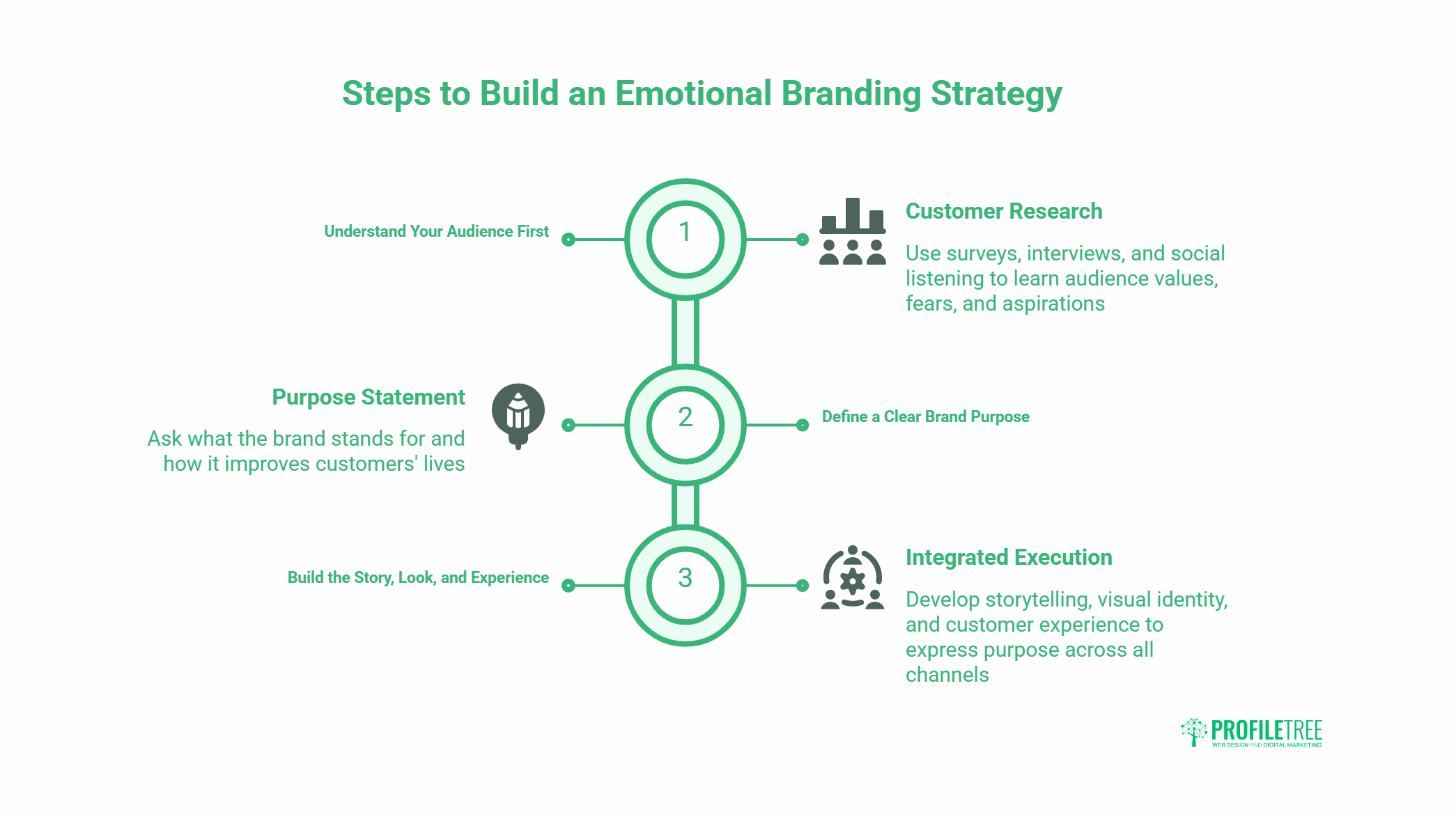
This is not a logo refresh. It’s a sequence that starts with the customer and works outward, and it can be run in a fortnight by a small team that’s willing to be honest about what it finds.
Understand Your Audience First
The foundation is knowing who you’re talking to. Use customer interviews, review analysis and social listening to learn what your audience actually values, fears, and aspires to. A brand built on assumptions about customers tends to connect with nobody in particular.
Define a Purpose You Can Defend
A meaningful purpose guides every later decision. Ask what the business stands for and how it genuinely improves customers’ lives, then check whether you’d still say it in front of a customer who has had a bad experience. A purpose that can’t survive that conversation isn’t a purpose; it’s a slogan.
Express It Everywhere, Then Measure It
Once the purpose is set, the storytelling, the visual identity, and the customer experience all need to express it across every channel. This is the stage where a plan pays off, and where structured digital training helps an in-house team hold the brand steady day to day without outside help on every task. Measuring whether any of it is working belongs in the marketing plan from the start, because a brand position nobody tracks tends to drift.
Where Emotional Branding Goes Wrong
The strategy carries real risks, and the failures are predictable enough to plan around.
Inauthenticity
The biggest pitfall is coming across as insincere. Customers detect a false emotional appeal quickly, and when they do it damages the brand more than no appeal would have. If a value isn’t lived internally, don’t claim it externally. The gap between the promise and the reality is exactly what people notice.
Inconsistency Across Channels
A warm tone on social media paired with a cold, robotic checkout flow breaks the connection. Every touchpoint, from the first advert to the post-purchase email, has to carry the same feeling, or the brand reads as two different companies wearing one name.
Borrowed Moments Fade
Jumping on a trend can buy attention, and attention isn’t the same as attachment. The Guinness cooling is the useful case here: momentum that customers granted can be withdrawn just as quickly, and a business that mistook a spike for a bond has nothing left when the spike ends. Treat a viral moment as a chance to show what you’re normally like, not as the strategy itself.
Cultural Sensitivity
Emotions are shaped by culture, so a message that lands well in Belfast can misfire in Birmingham or Boston. Brands working across markets adapt region by region instead of copying one campaign everywhere and hoping it travels.
Measuring Emotional Impact
This kind of work doesn’t show up neatly in a sales report the way a discount does. You measure it through customer sentiment, repeat-purchase rates, referral behaviour, and brand-recall surveys over time. Setting that up properly, and accepting the payoff is gradual, is what separates businesses that commit from those that abandon the work after one quiet quarter.
Watch: Branding and Marketing Insights from ProfileTree
This short primer on marketing fundamentals frames why brand perception shapes what customers feel about a business, which is the groundwork that emotional branding builds on.
Starting Small When You Are Not a National Brand
None of the campaigns above started with a plan to go viral, and none of them are the realistic target for a business with twelve staff and a modest marketing budget. The transferable part is narrower and more useful: decide what you want customers to feel, make sure one person is accountable for holding that line across the website, the email list and the social accounts, then give it two years.
The businesses that get this right locally tend to do three unremarkable things. They let the owner be the voice of the business. They keep the experience consistent when nobody’s watching, including on a Tuesday in February. And they measure sentiment and repeat purchase alongside the numbers that move faster. That’s a slower route than a trend, and it’s the one that still works when the trend has gone.
FAQs
What is emotional branding?
Emotional branding is a strategy that builds a felt connection between a brand and its customers, built on shared values and experience rather than on price or product features. It works by influencing how customers feel, which shapes buying decisions more strongly than logic for most repeat purchases. The aim is loyalty that survives a price rise.
Why does emotional branding build customer loyalty?
People remember how a brand made them feel long after they forget its specifications. That memory makes customers more likely to return, more tolerant of a price increase, and more willing to recommend the business to people who share their values. In crowded markets, it’s often the only durable reason to choose one supplier over another.
How is emotional branding different from regular branding?
Functional branding competes on tangible attributes: price, quality, speed, and features. Emotional branding competes on meaning. The two work together, because functional claims earn trust and get you considered, while emotional ones earn preference and keep customers once they’ve bought.
Can small businesses use emotional branding?
Yes, and they often have the advantage. Small businesses usually have a clearer story and a visible owner, which makes an authentic connection easier to build than it is for a large company. The common mistake is hiding that personality behind generic corporate language that could belong to anyone.