
What is Digital Marketing? A Complete Guide for UK Businesses
Table of Contents
Digital marketing is the practice of promoting products and services through online channels. But what does that actually mean for your business? At its most basic level, digital marketing is how you connect with customers where they spend most of their time—online.
Understanding digital marketing is no longer optional for businesses across Northern Ireland, Ireland, and the UK—it’s the difference between growth and stagnation. Over 5.3 billion people use the internet, and your competitors are already fighting for their attention. Whether you’re a small business in Belfast or an established firm across the UK, your digital presence determines your market position.
What is digital marketing in practical terms? It encompasses search engine visibility, content creation, social media engagement, paid advertising, website design, and increasingly, artificial intelligence. Each component attracts, engages, and converts your potential customers into actual buyers. This guide breaks down what digital marketing means, how different channels work together, and which strategies deliver real results for businesses like yours.
What Digital Marketing Means for Your Business
Digital marketing encompasses all marketing efforts that use digital channels to reach customers. Unlike traditional marketing, digital strategies offer measurable results, targeted reach, and the flexibility to adjust campaigns in real-time based on performance data.
For business owners and marketing managers, digital marketing solves a specific problem: how to reach the right people, at the right time, with the right message. It’s not about being everywhere online—it’s about being strategic with your presence.
At its core, digital marketing combines several disciplines: search visibility, content creation, paid advertising, social media management, and increasingly, artificial intelligence. Each component serves a specific purpose in attracting, engaging, and converting your target audience.
Core Digital Marketing Channels Explained
Understanding the channels available to you is the first step in building an effective digital marketing strategy. Each channel serves different purposes and reaches audiences at various stages of their buying journey.
Search Engine Optimisation: Your Foundation for Visibility
SEO is improving your website’s visibility in organic search results. When someone searches for services you offer, SEO determines whether they find you or your competitors.
An effective SEO strategy starts with understanding what your customers search for. Technical optimisation makes your website accessible to search engines, while content strategy addresses user intent. Local SEO becomes especially valuable for businesses serving local markets—particularly across Northern Ireland and Ireland.
Local SEO differs from broader strategies by focusing on geographic relevance. It involves optimising your Google Business Profile, building local citations, and creating content that addresses regional needs. For a Belfast-based business, this means ranking for searches like “web design Belfast” or “digital agency Northern Ireland.
The return on investment for SEO compounds over time. Unlike paid advertising, which stops delivering results when you stop paying, strong organic rankings drive traffic month after month. This makes SEO one of the most cost-effective long-term marketing strategies available.
Website Design and Development: Where Conversions Happen
Your website isn’t just a digital brochure—it’s your primary conversion tool. Professional web design combines aesthetics with functionality, creating an environment where visitors naturally move towards becoming customers.
Modern web development prioritises speed, accessibility, and mobile responsiveness. Google considers all three when ranking websites. More importantly, visitors judge your business based on these factors within seconds of arrival.
WordPress powers a significant portion of the web, and for good reason. It offers flexibility, SEO-friendly architecture, and the ability to scale as your business grows. While Wix, Shopify, and Squarespace serve specific needs, WordPress typically provides the best foundation for companies serious about ranking and generating leads.
Building websites focused on ranking, traffic, leads, and sales requires understanding how design decisions impact user behaviour. Every element—from navigation structure to call-to-action placement—should guide visitors towards conversion.
Content Marketing: Building Authority and Trust
Content marketing creates and distributes valuable material that attracts and retains your target audience. It’s not about promoting your products directly—it’s about demonstrating expertise and building trust.
Effective content marketing takes many forms: detailed blog articles, informative videos, engaging social media posts, and visual content like infographics or animations. The format matters less than the value provided. Your content should answer questions your potential customers are asking.
For B2B services, long-form content often performs best. Detailed guides, case studies, and analytical pieces establish your business as an industry authority. For B2C businesses, shorter, more visual content typically generates better engagement.
Video content deserves special attention. YouTube is the second-largest search engine, and video consistently outperforms text-only content for engagement. Professional video production and strategic YouTube optimisation can significantly expand your reach.
Pay-Per-Click Advertising: Immediate Visibility
PPC advertising, particularly Google Ads, provides immediate visibility at the top of search results. You pay each time someone clicks your ad, making budget control straightforward and performance measurable.
The advantage of PPC is speed. While SEO builds results over months, PPC delivers traffic immediately. This makes it valuable for new businesses, time-sensitive promotions, or testing market response before investing in long-term strategies.
Successful PPC requires understanding your customer acquisition cost and lifetime value. If acquiring a customer costs £50 but they generate £500 in profit, PPC makes commercial sense. Without this understanding, PPC budgets can disappear quickly without delivering acceptable returns.
Social media advertising—on platforms like Facebook, Instagram, and LinkedIn—operates on similar principles but targets audiences differently. Rather than capturing search intent, social ads build awareness and interrupt browsing with relevant offers.
Social Media Marketing: Building Relationships
Social media marketing connects businesses with audiences on platforms where they already spend time. Each platform serves different demographics and purposes, requiring tailored approaches.
LinkedIn works best for B2B services and professional connections. Instagram and TikTok reach younger demographics with visual content. Facebook offers a broad reach across age groups. Twitter (X) facilitates real-time conversations and customer service.
Consistency matters more than frequency. Posting quality content three times weekly beats posting daily without a strategy. Social media success comes from understanding each platform’s culture and creating content that fits naturally within user feeds.
Engagement—responding to comments, messages, and mentions—builds community around your brand. Social media isn’t a broadcast channel; it’s a conversation. Businesses that treat it as such see better results.
ProfileTree’s Approach to Digital Marketing Strategy
Digital strategy connects individual marketing activities into a coherent plan aligned with business objectives. Without a strategy, businesses waste resources on tactics that don’t support their goals.
Our approach to digital strategy starts with understanding your business model, target audience, and competitive environment. What works for an e-commerce retailer won’t work for a professional services firm, so strategy must reflect these fundamental differences.
Digital strategy answers several questions: Which channels will effectively reach your target audience? What content will resonate with them? How will you measure success? What resources—time, budget, expertise—do you have available?
Too many businesses jump into digital marketing tactics without understanding how they connect to business outcomes,” says Ciaran Connolly, Director of ProfileTree. “We focus on strategies that drive measurable results—website traffic, qualified leads, or direct sales.”
Integrating AI Into Your Marketing Operations
Artificial intelligence is transforming how businesses approach digital marketing. AI tools now handle tasks that previously required hours of manual work, from content research to data analysis to customer segmentation.
For small and medium-sized businesses, AI offers advantages previously available only to enterprises. ChatGPT and similar tools can assist with content creation, though human oversight remains essential. AI-powered analytics platforms identify patterns in customer behaviour that would be impossible to spot manually.
ProfileTree specialises in AI implementation for SMEs, not enterprises. This distinction matters because small businesses face different challenges and have other resources. Our AI training helps teams understand which tools solve real problems and which add complexity.
AI works best when integrated thoughtfully. It excels at processing data, identifying patterns, and handling repetitive tasks. It struggles with creative strategy, understanding nuance, and building genuine relationships. The most effective approach combines AI efficiency with human judgment.
Digital Training: Building Internal Capability
Digital training develops your team’s capability to execute and manage marketing activities internally. While agencies provide expertise and execution, training creates self-sufficiency.
Our training programmes cover SEO fundamentals, accessibility best practices, AI adoption, and content marketing basics. These workshops give teams practical skills they can apply immediately, rather than theoretical knowledge without application.
For businesses serious about digital growth, some internal capability is valuable even when working with agencies. It enables better communication, more informed decision-making, and the ability to spot opportunities or issues quickly.
Training investments pay dividends over time. A team that understands SEO basics will create better content naturally. Marketing managers who understand paid advertising can evaluate agency performance more effectively. Business owners who grasp AI applications can identify opportunities for automation.
Building Your Digital Marketing Strategy Step by Step
An effective digital marketing strategy doesn’t require massive budgets or technical expertise. It requires clear thinking, realistic goal-setting, and systematic execution.
Define Your Business Objectives First
Digital marketing exists to serve business objectives, not the reverse. Start by identifying what success looks like for your business over the next 12 months. Revenue targets? Market expansion? Product launches? These objectives determine your marketing priorities.
Translate business objectives into marketing goals. If you need £500,000 in new revenue and your average sale is £5,000, you need 100 new customers. If 5% of qualified leads convert, you need 2,000 leads. If 2% of website visitors become leads, you need 100,000 visitors. This reverse-engineering reveals what your marketing must deliver.
Marketing goals should follow the SMART framework: Specific, Measurable, Achievable, Relevant, and Time-bound. “Increase traffic” is vague. Increase organic website traffic from 5,000 to 10,000 monthly visitors within six months” provides clear direction.
Understand Your Target Audience
Effective marketing speaks directly to specific people facing specific problems. Generic messaging does not effectively reach anyone. Audience research identifies these people, what they care about, and where to get them.
Create detailed audience profiles covering demographics, challenges, goals, and online behaviour. A Belfast retailer targeting young professionals needs different content and channels than a UK-wide B2B software company targeting finance directors.
Customer research reveals the language your audience uses to describe their problems. This language should appear in your content, making it immediately relevant. When potential customers see the exact challenges described, they pay attention.
Understanding audience intent—what they’re trying to accomplish at different stages—shapes content strategy. Early-stage content builds awareness and educates. Middle-stage content compares options and addresses objections. Late-stage content facilitates decision-making.
Choose Your Channels Strategically
Businesses can’t be everywhere effectively. Channel selection should reflect where your target audience spends time and which channels best suit your resources and capabilities.
For most businesses, a website optimised for search provides the foundation. It’s your owned property, unlike social media platforms, where algorithm changes can destroy reach overnight. SEO and content marketing typically offer the best long-term return on investment.
Beyond your website, select 2-3 channels where your audience is active and you can maintain consistent quality. It’s better to excel on two platforms than be mediocre across five. Consider your team’s capabilities—video requires different skills from written content.
B2B businesses often succeed with LinkedIn, email marketing, and content partnerships. B2C businesses might prioritise Instagram, Facebook advertising, and YouTube. Local companies need Google Business Profile optimisation above almost everything else.
Create Content That Serves Your Audience
Content creation should start with your audience’s questions and challenges, not what you want to say. Effective content provides value first and sells second.
Conduct keyword research to identify what your audience searches for. Tools like Google’s Keyword Planner or SEMrush reveal search volume and competition. Long-tail keywords—specific phrases with lower volume—often convert better than broad terms.
Content formats should match both your message and your audience’s preferences. Complex topics may need long-form articles. Visual subjects work better as videos or infographics—how-to content benefits from step-by-step tutorials.
Quality consistently beats quantity. One thoroughly researched, expertly written article delivers more value than five superficial posts. Google’s algorithms increasingly reward content that demonstrates genuine expertise and serves user needs comprehensively.
Measure What Matters
Digital marketing’s advantage over traditional methods is measurability. Every click, view, and conversion can be tracked. The challenge is focusing on metrics that matter versus vanity metrics that don’t impact business outcomes.
Website traffic is valuable but incomplete. Who visits matters more than how many. Traffic quality—measured by engagement, conversion rates, and lead quality—tells the real story. Ten visitors who become customers matter more than 10,000 who leave immediately.
Conversion tracking connects marketing activities to business results. Set up goals in Google Analytics for key actions: form submissions, phone calls, purchases, downloads. This shows which channels and content types actually generate business.
Return on investment calculations should include both direct costs and time investment. If SEO costs £2,000 monthly and generates £20,000 in new business, the 10x return justifies continued investment. If social media costs £1,000 monthly in time and tools but generates no measurable leads, redirect those resources.
Common Digital Marketing Challenges and Solutions
Every business encounters obstacles in implementing digital marketing strategies. Understanding common challenges helps you navigate them more effectively.
Limited Budget and Resources
Small businesses often feel disadvantaged by budget constraints. However, digital marketing offers advantages to companies willing to invest time and creativity rather than just money.
SEO, content marketing, and organic social media cost primarily time and knowledge. While these take longer to show results than paid advertising, they build sustainable advantages. A well-optimised website continues attracting visitors for years after the initial investment.
Focus resources on channels where you can be genuinely valuable rather than spreading thin across many platforms. One expertly managed channel beats five neglected ones. Start small, master one approach, then expand.
Consider hybrid approaches: handle content creation internally where you have expertise, outsource technical elements like web development or PPC management where expertise matters more. This maximises budget efficiency.
Staying Current With Platform Changes
Digital platforms change constantly. Algorithm updates, new features, and shifting best practices require continuous learning. This feels overwhelming, but it becomes manageable with the right approach.
Follow trusted industry sources rather than chasing every update. Google’s Search Central Blog, platform-specific resources, and reputable marketing publications provide reliable information. Ignore speculation and focus on official guidance.
Fundamental principles remain stable even as tactics shift. Providing genuine value, understanding your audience, and creating quality experiences work regardless of algorithmic changes. Businesses focused on fundamentals adapt more easily to platform changes.
Generating Consistent Content
Content consistency challenges most businesses. Initial enthusiasm fades as daily operational demands take priority. However, consistency drives results—both for algorithms and audience building.
Create content systems rather than relying on inspiration. Editorial calendars plan topics weeks or months. Content batching—creating multiple pieces in a single session—improves efficiency. Repurposing content across formats maximises value from each piece.
Accept that consistent, good content beats occasional perfect content. Publish regularly at sustainable levels rather than sporadically when you can create something exceptional. Consistency builds audience expectations and search engine trust.
Proving Marketing ROI
Demonstrating marketing return on investment challenges businesses, particularly for activities that build long-term value rather than immediate sales. However, proper tracking makes ROI measurement straightforward.
Implement tracking from the start. Properly configured Google Analytics shows where traffic comes from and what visitors do. Call tracking reveals which marketing sources generate phone enquiries. CRM systems connect leads to original marketing sources.
Attribution—understanding which marketing touchpoints contributed to a sale—requires tracking the customer journey. Many sales result from multiple interactions across channels. Last-click attribution credits only the final touchpoint, often undervaluing earlier awareness and consideration activities.
Track leading indicators for activities with longer sales cycles: traffic growth, engagement metrics, lead volume, and lead quality. These predict future sales even when immediate conversion doesn’t occur.
Advanced Digital Marketing Strategies
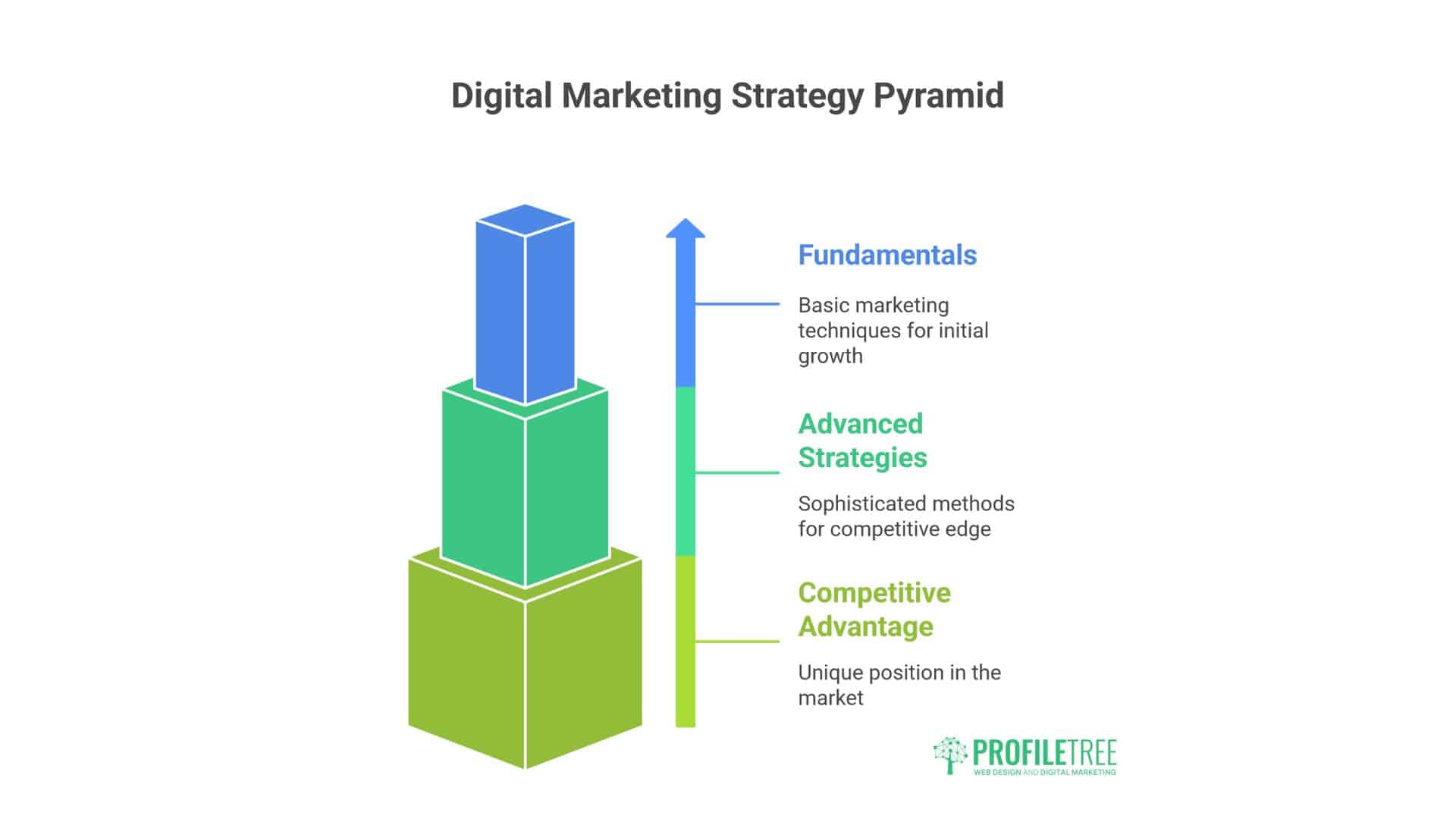
Once you’ve mastered fundamentals, advanced strategies can accelerate results and create competitive advantages.
Conversion Rate Optimisation
Conversion rate optimisation (CRO) improves the percentage of website visitors who take desired actions. Minor improvements compound significantly when multiplied across all traffic.
CRO starts with understanding where visitors abandon the conversion process. Analytics reveal which pages have high exit rates. Heatmaps show where attention focuses. User recordings demonstrate how people actually interact with your site.
Common conversion barriers include unclear value propositions, complicated navigation, slow load times, weak calls to action, and trust concerns. Systematic testing identifies which changes improve performance, and A/B testing compares variations to determine what works best for your specific audience.
Marketing Automation
Marketing automation uses software to handle repetitive tasks, enabling personalised communication at scale. Email sequences nurture leads automatically. Chatbots answer common questions. Social media schedulers maintain a presence without constant manual posting.
Automation works best for standardised processes with predictable triggers. An automated sequence can provide related content over subsequent weeks when someone downloads a guide. When someone abandons a shopping cart, an automated email can remind them.
The key is maintaining human touch despite automation. Automated messages should feel personal and relevant, not robotic and generic. Use automation to scale what works manually rather than replacing human interaction entirely.
Integrated Campaigns Across Channels
Integrated campaigns coordinate messaging across multiple channels to create cohesive brand experiences. Rather than treating each platform independently, integrated approaches ensure consistent messaging while adapting format to each platform’s strengths.
A product launch campaign might include: SEO-optimised content on your website, paid search ads driving traffic to landing pages, social media building anticipation, email sequences to existing customers, and PR outreach to industry publications. Each channel reinforces the others.
Integration requires planning and coordination. Create campaign briefs that outline objectives, key messages, target audiences, and specific tactics for each channel. This ensures consistency while allowing channel-specific execution.
Data-Driven Decision Making
Advanced digital marketing relies on data analysis to inform strategy. Rather than guessing what might work, data reveals what works for your specific audience and market.
Implement proper analytics tracking that captures relevant data points. Connect tools—analytics platforms, CRM systems, advertising platforms—to create comprehensive views of marketing performance. Regular reporting identifies trends and opportunities.
Data analysis should answer specific questions: Which traffic sources generate the most qualified leads? What content topics drive the most engagement? When do email open rates peak? What landing page designs convert best? Use data to test hypotheses and refine approaches continuously.
The Future of Digital Marketing for UK Businesses
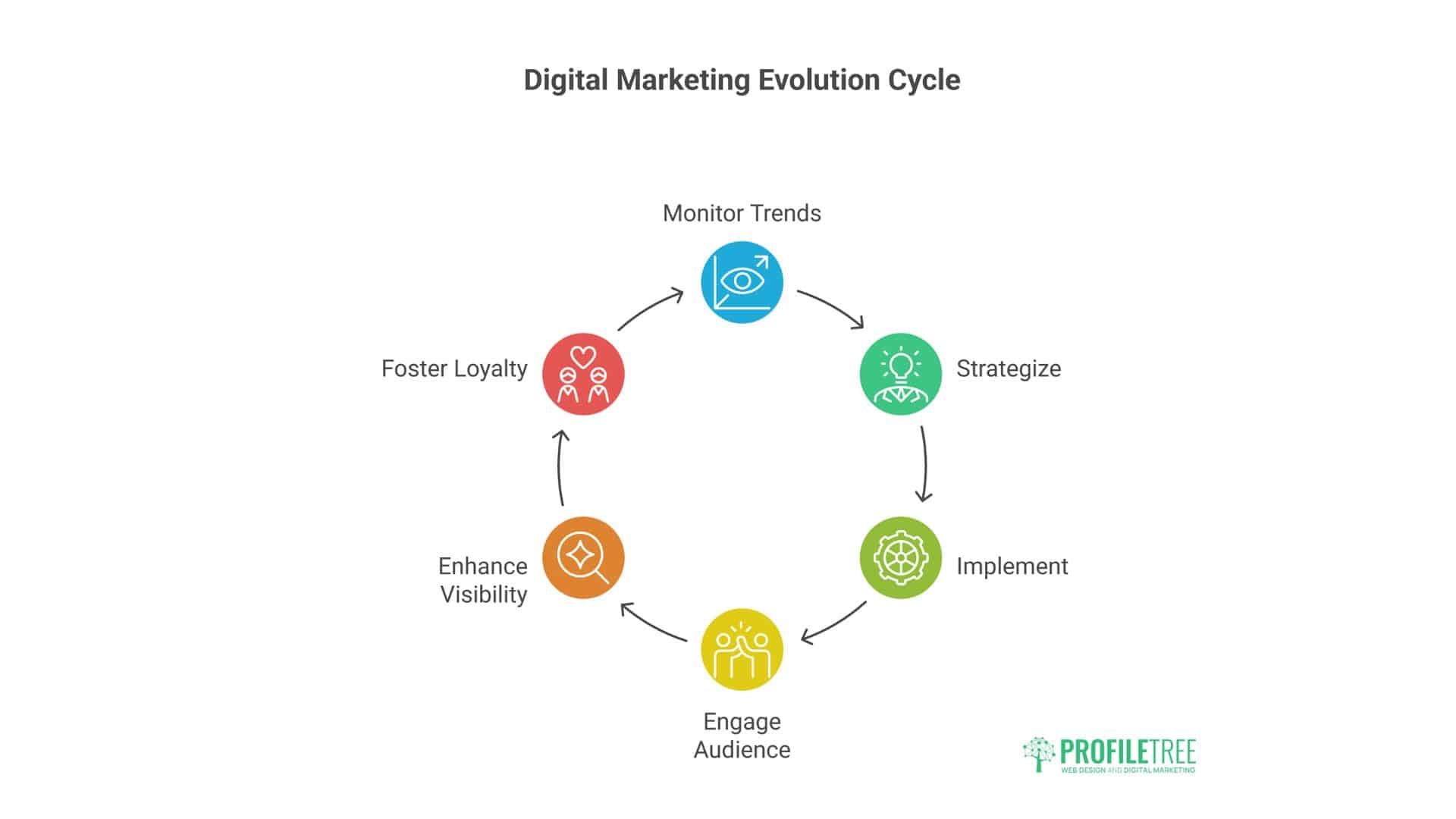
Digital marketing continues evolving rapidly. Understanding emerging trends helps businesses stay ahead rather than constantly catching up.
Artificial Intelligence and Machine Learning
AI is moving beyond novelty to become standard practice. Predictive analytics anticipate customer behaviour. Natural language processing improves chatbot interactions. Machine learning optimises ad targeting and bidding automatically.
For UK businesses, particularly SMEs, AI tools democratise capabilities previously available only to large enterprises. The challenge is identifying which AI applications solve real problems versus which simply add complexity without value.
Focus on AI applications with clear business cases: content research and ideation, data analysis and reporting, customer segmentation, automated email personalisation, and chatbot-based customer service. These provide measurable value without requiring extensive technical resources.
Privacy-First Marketing
Privacy regulations—GDPR in the UK and EU and evolving data protection laws globally—are reshaping digital marketing. Third-party cookies are disappearing, and tracking is becoming more limited. Marketing strategies must adapt.
Privacy-first marketing builds direct relationships with customers rather than relying on third-party data. Email list building, first-party data collection, and content marketing that attracts rather than interrupts become more valuable.
This shift advantages businesses that focus on providing genuine value and building trust. Customers willingly share information with companies they trust and that provide clear value in return.
Voice Search and Conversational Interfaces
Voice search through devices like Alexa, Siri, and Google Assistant is changing how people find information. Voice queries differ from typed searches in that they’re longer, more conversational, and often more specific.
Optimising for voice search means targeting natural language phrases and question-based queries. Featured snippets become more valuable because voice assistants often read these as answers. Local SEO gains importance because voice searches frequently have local intent.
Video Dominance
Video content continues growing in importance across platforms. YouTube remains the second-largest search engine. Social platforms prioritise video in their algorithms. Video typically generates higher engagement than other content formats.
For businesses, this means investing in video capabilities. Professional production quality matters less than authentic, valuable content. Smartphone cameras now produce acceptable quality. The barrier is planning and consistency, not equipment.
Video strategy should align with broader content strategy. Use video where it adds value—demonstrations, tutorials, behind-the-scenes content, customer testimonials—rather than creating video simply because it’s trendy.
Taking Action: What is Digital Marketing?
Digital marketing success doesn’t require technical genius or massive budgets. It requires a clear strategy, consistent execution, and a willingness to learn and adapt.
Start by auditing your current digital presence. How does your website perform? What’s your search visibility for relevant keywords? Where are the gaps? This baseline reveals your priorities.
Choose 2-3 initiatives based on your resources and goals. For most businesses, website optimisation and basic SEO provide the strongest foundation. Add one channel where you can consistently create valuable content.
Set up proper measurement from the start. Install Google Analytics, track phone calls and form submissions, and review key metrics monthly. You can’t improve what you don’t measure.
Commit to consistency for at least six months. Digital marketing builds momentum over time. Evaluate progress monthly, but give strategies time to work before making significant changes.
Consider where external expertise would accelerate results. Professional execution often benefits web design, technical SEO, PPC management, and video production. ProfileTree provides the expertise to drive measurable results—from conversion-focused web design to SEO strategies that generate qualified traffic- for businesses across Northern Ireland, Ireland, and the UK looking to grow through digital marketing.
Your competitors are already investing in digital marketing. The question is whether you can compete effectively in the digital marketplace.
FAQs
What’s the difference between digital marketing and traditional marketing?
Digital marketing uses online channels like websites, social media, and search engines, while traditional marketing uses offline channels like print, television, and radio. Digital marketing offers better targeting, measurement, and the ability to adjust campaigns in real-time based on performance.
How long does digital marketing take to show results?
Results vary by channel. PPC advertising delivers immediate traffic. SEO typically takes 3-6 months to show significant results. Content marketing builds momentum over time, with compounding returns after 6-12 months. The timeframe depends on competition, budget, and execution quality.
Can I do digital marketing myself, or do I need an agency?
Both approaches work depending on your resources and goals. Small businesses can handle basic digital marketing internally with training and commitment. Agencies provide expertise, resources, and experience that accelerate results. Many companies use hybrid approaches—managing some activities internally while outsourcing specialised services.
How much should I budget for digital marketing?
Industry standards suggest 7-10% of revenue for businesses in growth mode, though this varies significantly by industry, competition, and goals. Start-ups often invest higher percentages to build initial traction. Mature businesses might spend less, but should still invest in maintaining their position.