
Audience Targeting: A Practical Guide for UK and Irish Marketers
Table of Contents
Audience targeting is the practice of directing marketing messages at specific groups of people based on what you know about them: their demographics, interests, behaviour, or the context in which they’re browsing. Done well, it means your budget reaches people who are actually likely to buy, rather than funding impressions from people who never will.
For most SMEs in the UK and Ireland, the challenge right now is not understanding the concept. It’s adapting to a landscape that has changed faster than most marketing strategies have. Third-party cookies, which once made cross-site targeting relatively straightforward, have been effectively retired. Google dropped them from Chrome in early 2024. The advertising platforms have adjusted, the regulations have tightened, and the businesses that are still relying on retargeting methods from three years ago are paying more for less.
This guide covers what audience targeting actually means in 2026: the four main types, how the post-cookie shift changes your options, what first-party data really means in practice, and how to connect your targeting strategy to your website, content, and analytics.
What is Audience Targeting?
Audience targeting is the process of identifying a defined group of people and deliberately directing your marketing towards them, rather than broadcasting to everyone. The goal is relevance: an ad or piece of content that speaks to someone’s actual situation will always outperform one built for the widest possible audience.
The mechanism changes depending on the channel. In paid search, you target based on what someone types. In display and social advertising, you use demographic data, interest signals, and behavioural history. In content marketing and SEO, targeting works differently again: you build content around the specific questions your audience is asking, and organic search delivers them to it.
What ties all of these together is the need to understand your audience precisely enough to make deliberate choices. A vague sense that your customers are “SME owners aged 35 to 55” is not a targeting strategy. A clear picture of their decision-making triggers, the channels they use, the questions they’re asking in search, and the content they actually engage with, that is.
The Four Core Types of Audience Targeting
Understanding the main targeting approaches tells you which tools are available to you and which are most appropriate for your situation.
Demographic and Geographic Targeting
Demographic targeting segments audiences by attributes like age, gender, income level, job title, or industry. Geographic targeting layers on location, country, region, city, or in some platforms, postcode.
For service businesses in Northern Ireland and the Republic of Ireland, geographic targeting is one of the most important tools available. A Belfast-based accountancy firm has no reason to serve ads to people in Manchester or Edinburgh. Tightening geographic parameters can substantially reduce wasted spend while improving conversion rates, because the audience seeing the ad is actually reachable.
Postcode-level targeting, available through Google Ads and Meta, is worth considering for hyper-local businesses. A trades firm covering specific council areas, or a restaurant drawing from a particular catchment, can target the square kilometres that actually matter rather than broad regional audiences.
One distinction worth noting for Northern Ireland specifically: because the region sits within both UK and Irish digital markets, you may need separate ad sets for .co.uk and .ie keyword variations and audience segments. The audience intent and regulatory context can differ between the two.
Psychographic and Interest-Based Targeting
Psychographic targeting goes beyond who someone is to what they care about: their values, attitudes, hobbies, and priorities. On platforms like Meta and LinkedIn, this is expressed as interest categories built from engagement signals, pages liked, content interacted with, and professional groups joined.
For B2B targeting, LinkedIn’s interest and professional category data is particularly useful. If you’re selling a service to procurement managers in manufacturing, you can narrow your audience to people with that job function at companies of a specific size in a defined geography. That kind of precision is not available through any other channel.
The limitation is that interest-based data is inferential. The platform is making educated guesses about what someone cares about based on behavioural signals. It is useful for prospecting, finding people likely to be interested, but it’s less reliable than behavioural data built from your own customer interactions.
Behavioural Targeting
Behavioural targeting uses what someone has actually done: pages visited, searches performed, purchases made, and emails opened, to infer intent and relevance. It has historically been the most powerful form of digital targeting because actions are a far stronger signal than assumed interests.
The problem is that behavioural targeting at scale has relied heavily on third-party cookies: small files placed by advertising networks that track users across websites they do not own. With third-party cookies gone from Chrome and Safari, and Firefox blocking them for years, cross-site behavioural tracking is largely unavailable to independent businesses.
What remains is first-party behavioural data: the actions people take on your own website, in your own email list, and through your own CRM. This is covered in detail in the section below on first-party data.
Contextual Targeting
Contextual targeting places advertising based on the content surrounding it, rather than on data about the individual user. An ad for accountancy software appears next to an article about business tax deadlines. An ad for a running shoe brand appears in a fitness guide. The relevance comes from the page context, not from a user profile.
Contextual targeting is experiencing a significant resurgence. With behavioural tracking now constrained by privacy changes, contextual has become the most privacy-compliant way to reach relevant audiences at scale. It requires no personal data and is fully compliant with UK GDPR and the ePrivacy Directive.
For SMEs, contextual targeting is most accessible through Google’s Display Network, where you can target by topic category, specific keywords, or individual placements. The quality of that contextual match depends partly on the content surrounding your ads, which is one of the reasons publishing useful, topic-specific content on your own site creates long-term value for both SEO and advertising.
Audience Targeting vs Market Segmentation
These terms are often used interchangeably, but they describe different stages of the same process. Market segmentation is the strategic exercise of dividing a broad potential market into defined groups based on shared characteristics. Audience targeting is the operational act of directing marketing activity to one or more segments.
| Market Segmentation | Audience Targeting | |
|---|---|---|
| Stage | Strategic planning | Tactical execution |
| Output | Defined customer groups | Specific ad audiences, content topics, channel choices |
| Tools | Customer research, CRM analysis | Google Ads, Meta Ads Manager, content planning |
| Frequency | Periodic (quarterly or annual review) | Ongoing and campaign-specific |
Most SMEs skip formal segmentation and go straight to targeting. This works when you know your customers well from experience, but it can lead to targeting decisions that feel right but haven’t been tested. A digital marketing strategy review that starts with segmentation, who are we actually selling to, and which segments generate the most value, tends to produce sharper targeting choices.
The Post-Cookie Shift: What Has Actually Changed
The retirement of third-party cookies is the single biggest structural change in digital advertising in the last decade. Understanding what has changed (and what hasn’t) is necessary before deciding how to respond.
What has changed: Advertisers can no longer track users across websites they don’t own. Cross-site retargeting, which allowed you to serve ads to someone who visited your site while they were browsing entirely different websites, no longer works in the traditional sense. Audience lists built from third-party data providers (data brokers who aggregate profiles from multiple sites) have become less reliable and less complete.
What hasn’t changed: You can still target people on individual platforms using that platform’s first-party data. Google can still target based on what people search and watch on YouTube. Meta can still target based on Facebook and Instagram activity. LinkedIn can still target based on professional profile data. What you’ve lost is the ability to follow a user off those platforms using tracking pixels.
The practical implication: Advertising within walled gardens, Google, Meta, LinkedIn, and Amazon, has become relatively more effective because those platforms have retained their tracking capability. Advertising outside those ecosystems, through independent display networks and programmatic channels, has become less precise.
For most SMEs, this means the immediate priority is building the first-party data infrastructure that allows you to retain targeting capability independently of third-party networks.
First-Party Data: What It Is and How to Build It
First-party data is information you collect directly from your own audience, with their knowledge and consent, through your own channels. It is the most valuable data you have because it comes from actual interactions with your business, not inferences made by a third party.
First-party data sources for a typical SME include:
- Website analytics (what pages people visit, how long they stay, what they click)
- Contact forms and enquiries (who is reaching out and what they need)
- Email marketing lists (who has subscribed, what they open, what they click)
- CRM records (customer history, purchase behaviour, support interactions)
- Social media followers and engagement data
- Survey and feedback responses
The challenge for most SMEs is that these sources are disconnected. The website is on one platform, the email list is in Mailchimp, the CRM is separate, and nobody has linked them together. A proper first-party data strategy starts with auditing what you have and connecting it into a usable structure.
Your website is the primary vehicle for collecting first-party data. How it is designed, what it asks visitors to do, and what it gives them in exchange for their contact details all determine the quality of data you can build. A website that invites visitors to do nothing except read and leave generates no data. A site with clear email sign-up offers, gated resources, enquiry forms, and event registrations builds an asset that grows over time.
For businesses reviewing their web presence with data collection in mind, the structural decisions, what forms appear where, how consent is handled, and how analytics is configured, need to be part of the design brief, not retrofitted later.
The obligations around collecting and using first-party data are governed by UK GDPR. Under UK law, you need a lawful basis for processing personal data. Consent is the most common for marketing purposes, but legitimate interest is also available in specific circumstances. The ICO’s guidance on direct marketing provides the authoritative position; it’s worth reading before restructuring any data capture process. For more on the legal context, ProfileTree’s guide to the ethics and legalities of digital marketing covers the obligations that apply to UK and Irish businesses.
For a practical overview of how to handle user data responsibly once you’ve collected it, see this guide on protecting user data and secure storage.
AI and Predictive Audience Targeting
The advertising platforms have responded to the loss of third-party cookie data partly by leaning harder into machine learning. Google’s Performance Max campaigns, Meta’s Advantage+ audiences, and LinkedIn’s Predictive Audiences all use AI models to find users likely to convert, based on signals from within those platforms rather than cross-site tracking.
This is a meaningful shift in how targeting works in practice. Rather than the advertiser specifying a precise audience, the model is given a conversion goal and broad parameters and tasked with finding the users most likely to meet it. The advertiser’s job is to feed the algorithm with quality signals: conversion data, customer lists, and clear campaign objectives.
For SMEs, the practical implication is that first-party customer data has become a direct input into AI-driven ad targeting. Uploading a customer list to Google or Meta gives the algorithm a pattern to match, enabling it to find new prospects with similar characteristics. This is called lookalike or similar audience targeting, and it remains available even without third-party cookies because it uses your first-party data, not cross-site tracking.
AI-driven predictive targeting is also extending to content personalisation on your own website. Tools that serve different content blocks, product recommendations, or CTAs to different users based on their behaviour are becoming more accessible. For most SMEs, these are not yet a priority, but they represent the direction the market is moving.
ProfileTree’s work with SMEs on AI implementation frequently starts with exactly this kind of question: how do you use the data you already have more effectively, rather than buying new tools you don’t yet have the foundations for? The importance of data in AI implementation applies directly here; predictive targeting models are only as good as the training data you feed them.
Audience Targeting and SEO: The Connection Most Businesses Miss
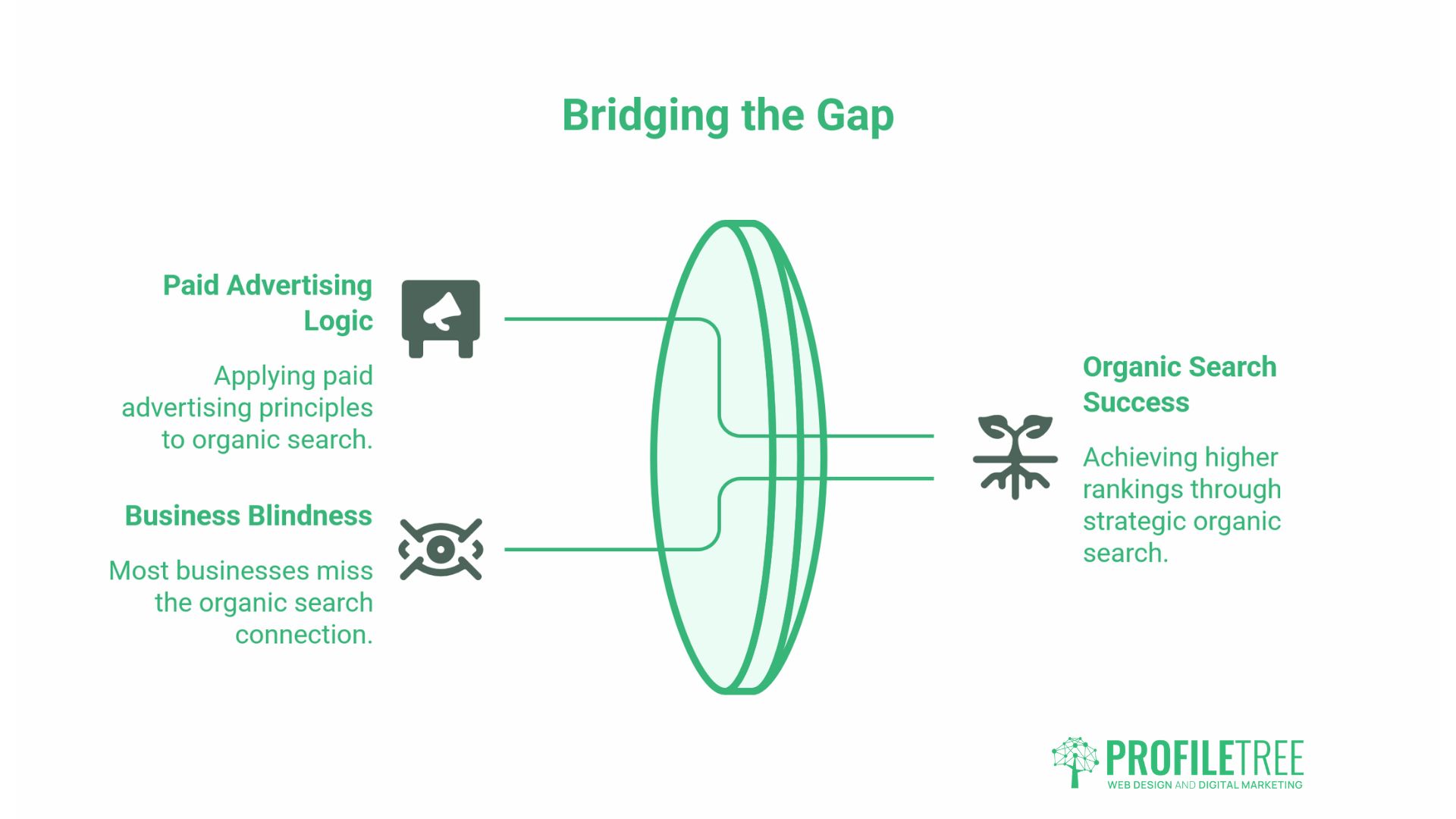
Audience targeting is usually discussed in the context of paid advertising. But the same logic applies directly to organic search, and most businesses are not making the connection.
In SEO, your “audience targeting” is expressed through your content. The topics you write about, the questions you answer, and the language you use all signal to search engines which audience you serve. A piece of content written for “HR managers in manufacturing SMEs in the UK” will rank for different searches and attract different traffic than a generic guide on the same topic.
The connection between paid audience data and SEO is particularly useful. If your Google Ads campaigns show you that the “facilities manager” audience segment converts at twice the rate of the “office manager” segment, that tells you which persona to prioritise in your content programme. The search terms your paid campaigns are capturing can reveal content gaps: if you’re paying for traffic on a search query but don’t have organic content covering that topic, you’re paying for something you could rank for.
For B2B businesses, LinkedIn audience data provides one of the clearest pictures available of who is actually engaging with your content. If finance directors at mid-sized manufacturers are the segment that converts, but your website content is written for a general business audience, there is an alignment problem that no amount of targeting will fix.
Understanding your audience well enough to write specifically for them is foundational to both SEO and content marketing. For the relationship between marketing strategy and content, the principles are the same: clarity about who you’re talking to comes first.
ProfileTree’s SEO services include audience analysis as part of the initial brief, identifying not just the keywords a business wants to rank for, but the specific personas those searches represent and the intent behind them.
Regional Considerations: Targeting UK and Irish Audiences
UK/Ireland-specific nuances are missing from almost every generic audience-targeting guide, leaving businesses operating in this market with a real gap.
Regulatory framework: UK businesses operate under UK GDPR (the retained version of the EU regulation, administered by the ICO). Businesses operating in the Republic of Ireland are subject to the EU GDPR, administered by the Data Protection Commission. For businesses active in both jurisdictions, including many companies in Northern Ireland, given the cross-border nature of commerce in the island of Ireland, both frameworks apply, and their requirements are broadly aligned but not identical.
The practical differences in audience targeting mainly concern consent. UK GDPR offers somewhat greater flexibility regarding legitimate interest as a lawful basis for direct marketing than the Irish DPC’s position. If you’re running email campaigns to both audiences, the consent mechanisms on your sign-up forms need to reflect each subscriber’s jurisdiction, not just your business’s headquarters.
Platform nuances: Northern Ireland occupies an unusual position in digital advertising because it is a UK region with significant commercial ties to the Republic of Ireland. If your business serves both, you may need separate audience targeting for the .ie and .co.uk search landscapes, which can have different keyword volumes and different competitive landscapes for the same products and services.
B2B targeting in the local market: LinkedIn’s precise professional targeting is particularly useful in Northern Ireland and the Irish market, where senior decision-makers are often reachable at relatively low cost compared to London or Dublin markets. Job function, seniority, company size, and industry filters can be combined to build an audience, for example, of operations directors at manufacturing companies with 50 to 200 employees. A level of precision that would be expensive in larger markets is often cost-effective here.
Measuring Audience Targeting Performance
The metrics that matter for audience targeting depend on what you’re trying to achieve. Broad awareness campaigns should not be evaluated on conversion rate. Direct response campaigns should not be evaluated on reach.
A practical framework for SMEs:
For awareness and brand-building: Reach, frequency, and engagement rate. Are you reaching enough of your target audience? Are they seeing your content more than once? Are they engaging meaningfully with it?
For consideration and intent: Click-through rate, time on page, pages per session, and email sign-ups. Are people in your target audience engaging enough to want more?
For conversion: Conversion rate, cost per lead, cost per acquisition, and return on ad spend. Are the people you’re targeting actually buying?
GA4, properly configured with conversion events and audience segments, provides the data to track this journey. The challenge for most SMEs is that GA4 is set up once and rarely revisited, conversion events are not configured, audience segments are not compared, and the data that would inform targeting decisions sits unused.
Connecting GA4 data to your ad platform accounts via linked accounts and imported conversions enables the platforms’ AI models to optimise for the outcomes that matter. This is how the feedback loop closes: better data in produces better targeting out.
Attribution is the harder problem. A user who first finds your business through an organic blog post, subscribes to your email list, sees a retargeting ad two weeks later, and then converts after a direct visit, which touchpoint gets the credit? Multi-touch attribution models distribute credit across the journey rather than assigning it entirely to the last click. GA4’s data-driven attribution model does this automatically if you have sufficient conversion volume.
Building a Targeting Strategy: A Practical Starting Point
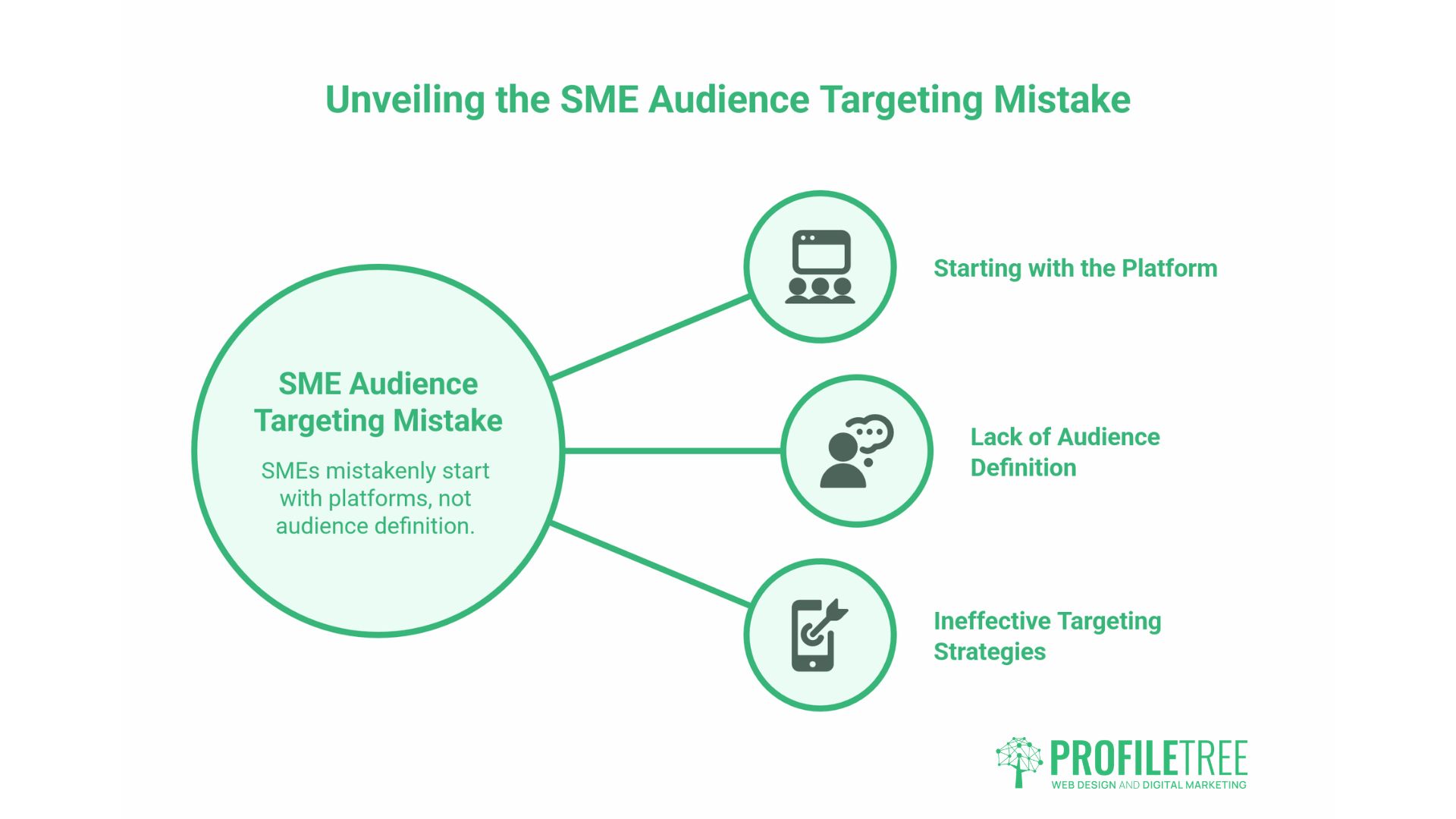
The most common mistake SMEs make with audience targeting is starting with the platform and working backwards. They open Google Ads or Meta Ads Manager and start selecting audience options without first having defined who they’re actually trying to reach and why.
A more useful starting point:
1. Define your most valuable customer. Who, specifically, generates the most revenue, has the highest lifetime value, or is most likely to refer others? Get specific: not “SME owners” but “managing directors of professional services firms with 10 to 50 staff in Northern Ireland and the Republic of Ireland.”
2. Identify where that customer is reachable. Are they searching for your service on Google? Are they active on LinkedIn? Do they read specific trade publications? The channel choice follows the audience, not the other way around.
3. Decide what you want them to do. First visit, or retargeted visit? Download a resource, submit an enquiry, or book a call? The targeting approach differs significantly by objective.
4. Audit your first-party data. What do you already know about your existing customers? Their common characteristics, their most frequent objections, and the content they’ve engaged with? This data should inform your targeting parameters before you spend a dime.
5. Test before you scale. Start with a small budget across two or three audience variants, and let the data tell you which performs best. Scale the winners, learn from what doesn’t work.
For businesses wanting to work through this process with external support, it sits within the scope of a digital marketing strategy engagement, either as a standalone review or as part of a broader programme.
ProfileTree’s digital training programmes for SMEs cover audience strategy, GA4 configuration, and ad platform setup, in a format designed for marketing managers running these functions in-house. For teams looking to build this capability internally rather than outsourcing it entirely, the cost-benefit case for AI tools in SMEs is also relevant. Many targeting and analytics tools that were previously accessible only to large businesses are now available at SME-friendly pricing.
Conclusion
Audience targeting is not a single tool or technique; it is a strategic discipline that runs through every marketing channel, from paid advertising to organic search to content marketing. The post-cookie shift has removed some of the easier options and pushed the responsibility for audience knowledge back onto individual businesses and their own data.
For SMEs in the UK and Ireland, this is a manageable transition, but it does require deliberately building the foundations: first-party data infrastructure, a clearly defined audience, and measurement set up to show what’s actually working. The businesses that invest in those foundations now will have a structural advantage over those that wait.
If you’d like to discuss how to apply these principles to your specific situation, get in touch with the ProfileTree team.
FAQs
What are the four main types of audience targeting?
Demographic (age, gender, job title), geographic (country, region, postcode), psychographic or interest-based (values and hobbies inferred from behaviour), and contextual (based on the content someone is reading rather than who they are). Behavioural targeting, built from past actions like site visits or purchases, is a fifth category, though it has become more limited since the removal of third-party cookies.
Is audience targeting legal under UK GDPR?
Yes, with the right lawful basis. For targeting that uses personal data, consent is the most common basis for direct marketing. Contextual advertising requires no personal data and has no GDPR compliance obligation. The ICO publishes detailed guidance on direct marketing if you need to check your current setup.
How does audience targeting improve ROI?
By cutting wasted impressions. A targeted campaign reaches only the people who match your likely buyer profile, so the same budget generates fewer but more relevant exposures. This typically produces a lower cost per click and a higher conversion rate than broad, untargeted activity.
What is the difference between audience targeting and retargeting?
Audience targeting reaches people who haven’t interacted with you yet, based on their characteristics or the context in which they’re browsing. Retargeting reaches people who have already visited your site or engaged with your content but haven’t converted. Both remain viable; retargeting now depends on first-party data rather than third-party cookie tracking.