
Multi-Channel Strategies: A Practical Guide for SMEs
Table of Contents
Most small businesses in Northern Ireland and the UK are not short of marketing channels. They have a website, a Facebook page, maybe an email list, and perhaps a YouTube channel sitting largely unused. What they are short of is a plan that ties those channels together into something that actually drives enquiries.
That is what multi-channel strategies are for. Rather than treating each platform as a separate task, a multi-channel approach connects your digital activity so that every channel supports the others and all point back to your website.
This guide sets out how to build that kind of strategy as a small business, without a large marketing team or an enterprise software budget.
What Are Multi-Channel Strategies in Digital Marketing?
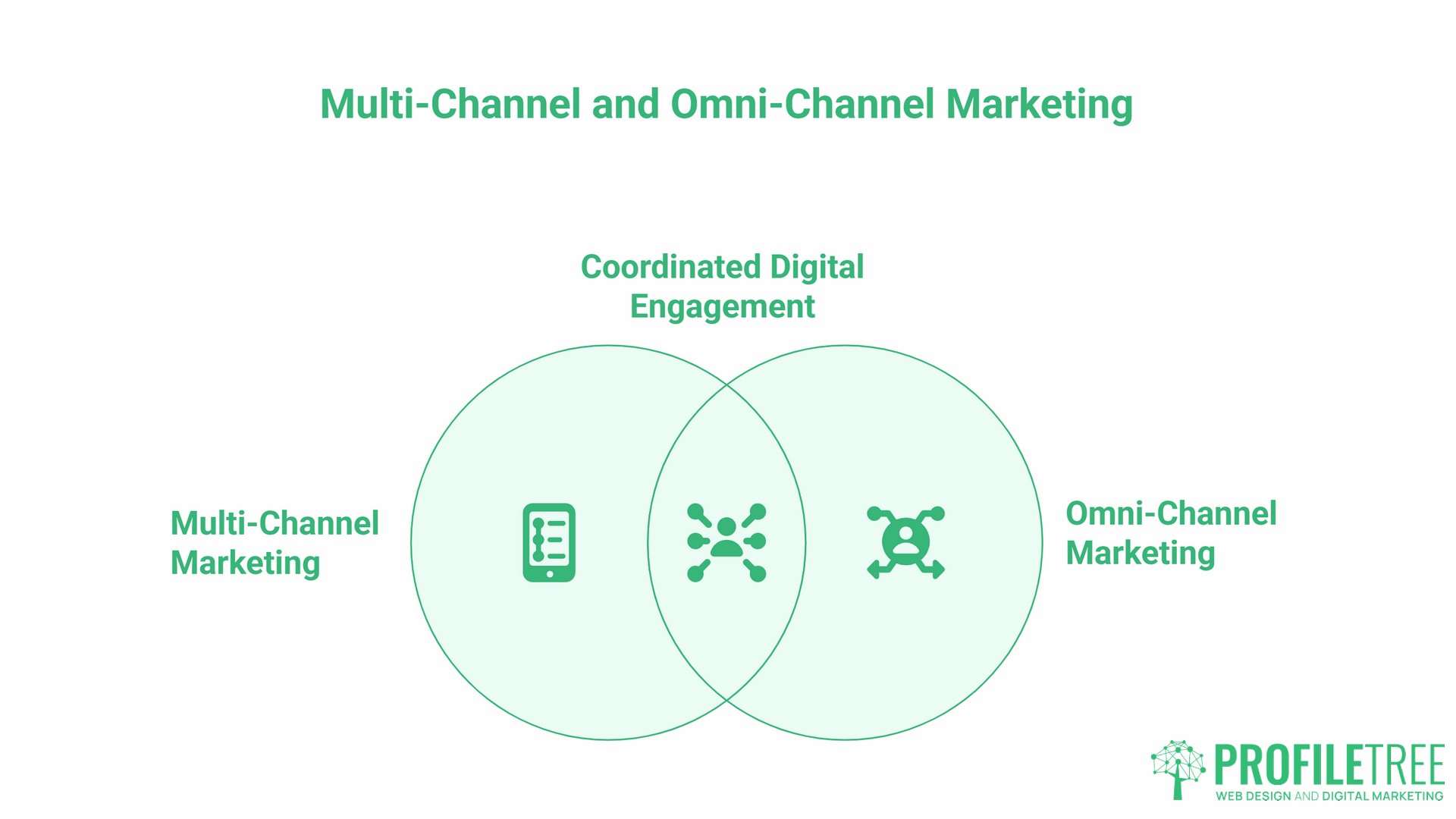
Multi-channel strategies involve reaching your target audience across multiple digital or traditional platforms, coordinating your activity so each channel reinforces the others rather than operating in isolation.
For an SME, this typically means combining organic search, social media, email, and video in a way that suits both your audience and your resources. A customer might first find you through a Google search, follow you on LinkedIn, watch a short video on your website, and then convert after receiving an email. Each of those touchpoints is part of your multi-channel strategy.
Multi-Channel vs Omni-Channel
These two terms are often used interchangeably, but they describe different things. Multi-channel marketing means being present and active on several platforms. Omni-channel marketing goes further, creating a genuinely joined-up experience where the customer’s journey feels consistent regardless of which channel they use or when they switch between them.
For most SMEs, a well-executed multi-channel strategy is the realistic starting point. True omni-channel integration requires more sophisticated data infrastructure than most small businesses need at this stage.
Why UK and Irish SMEs Need a Joined-Up Approach
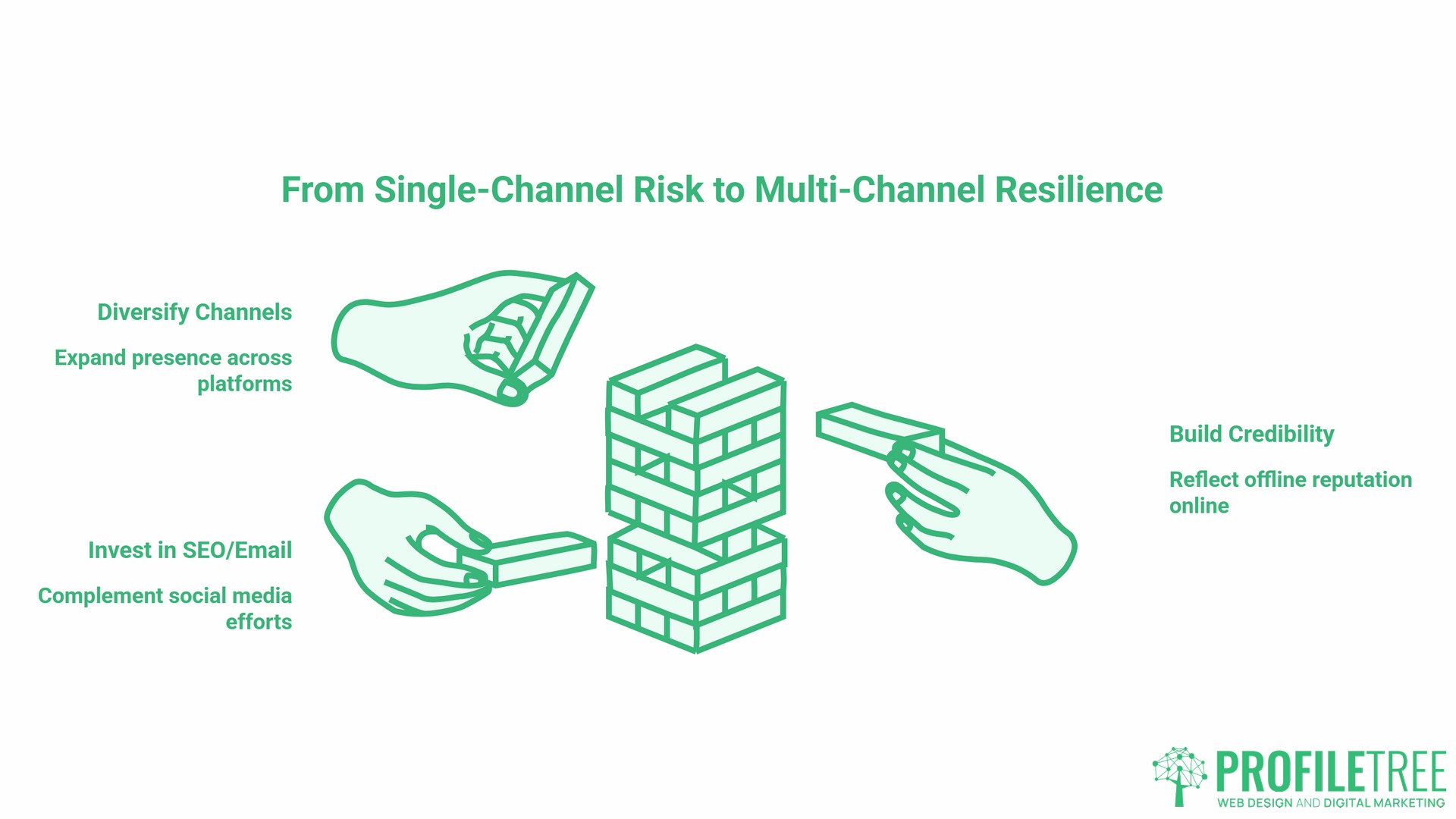
Relying on a single channel is a commercial risk that most small businesses underestimate until it becomes a problem. Algorithm changes, platform policy shifts, or a dip in ad performance can remove a significant share of your traffic overnight if it comes from a single source.
Beyond risk, there is also the reality of how people now make buying decisions. UK and Irish consumers, particularly in B2B services, research across multiple platforms before contacting. A business that appears only in paid search but has no organic presence, no social proof, and a thin website will lose enquiries to competitors who show up consistently across channels.
For businesses in Northern Ireland specifically, where the buying community is tighter, and word-of-mouth travels quickly both online and offline, your digital presence needs to reflect the credibility you have built on the ground.
The Cost of Platform Dependency
Businesses that built their entire lead generation around Facebook organic reach experienced significant disruption as organic reach for business pages declined steadily over several years. Businesses that invested in SEO, email, and social media weathered those changes far better. Multi-channel strategies exist, in part, to prevent any single platform from having that kind of power over your business.
The Five Pillars of Practical Multi-Channel Strategies
Strong multi-channel strategies for small businesses are built around five interconnected pillars. You do not need to activate all five simultaneously, but understanding how they fit together allows you to make better decisions about where to invest first.
Your Website: The Hub of All Channels
Every multi-channel strategy should treat the website as the primary asset. Social media platforms, search ads, and email campaigns all serve one main purpose: bringing the right people to a website that converts.
This means the website itself has to earn that traffic. A slow site, a poor mobile experience, or a homepage that fails to communicate what you do within the first few seconds will waste the effort you invest in every other channel. Professional web design is not a cosmetic concern. It is the foundation on which your multi-channel activity either succeeds or fails.
For SMEs in Northern Ireland and across the UK, this also means making sure your site carries the right local signals: your address, your service areas, Google Business Profile integration, and content that reflects the markets you actually serve.
SEO and Content: The Long-Term Visibility Engine
Multi-channel SEO is the only part of the mix that compounds over time. Paid ads stop delivering the moment the budget runs out. Organic search traffic, built on well-structured content and technical foundations, continues to generate enquiries months and years after the work is done.
Effective SEO services for SMEs involve more than inserting keywords into blog posts. It includes site architecture, internal linking, page speed, schema markup, and building topical authority across a subject area. When those elements work together, your website becomes the anchor around which the rest of your multi-channel strategies operate.
Multi-channel content is what makes the rest affordable. A well-researched article can be repurposed as a LinkedIn post, a video script, an email newsletter segment, and a social media caption. Producing one strong piece of content and adapting it across formats is how small teams execute multi-channel strategies without burning out.
Video Production: Building Trust at Scale
Video is the most underused channel in most SME multi-channel strategies, and it also has the greatest potential to accelerate trust. A two-minute video explaining who you are, what you do, and who you work with does more for credibility than three pages of text.
The practical barrier for most small businesses is not the technology. It is not knowing how to produce a video that looks and sounds professional enough to represent the brand. Well-executed video production creates assets that work across your website, YouTube, LinkedIn, email, and social media simultaneously.
One professionally produced video, properly structured, can be cut into shorter clips for social, embedded in email campaigns, added to landing pages to increase conversion rates, and uploaded to YouTube, where it can build an audience independently. That is the multiplier effect that makes video worth investing in as part of a wider multi-channel approach.
As Ciaran Connolly, founder of ProfileTree, puts it: “One of the most common mistakes SMEs make is trying to be active everywhere at once before they have mastered anything. Pick the channels where your audience actually spends time, do those properly, and then expand. A business with one excellent video and a well-optimised website will outperform a competitor posting daily on five platforms with no strategy behind it.”
Social Media and Paid Search: Short-Term Accelerators
Organic channels build sustainable traffic over time, but they take time to gain traction. Social media and paid search serve a different function in multi-channel strategies: generating attention and traffic while longer-term assets mature.
For B2B businesses in Northern Ireland and the UK, LinkedIn and email are typically the most productive combination. For B2C and retail businesses, Instagram and Meta ads tend to drive stronger results, particularly for product-based businesses with clear visual appeal.
The key principle for SMEs is to treat paid spend as an accelerator rather than a foundation. If your website converts and your SEO is building, paid channels amplify results. If the foundations are not in place, paid spend fills a leaking bucket.
Digital Training: Building In-House Capability
Many SMEs reach a point where they want to bring more of their digital marketing in-house, but lack the skills to do it effectively. Digital training equips your team to manage specific channels effectively, reducing reliance on external support for day-to-day activities while retaining agency expertise for strategy and specialist execution.
Building internal capability also means your multi-channel strategies become more agile. Teams that understand how channels connect can spot opportunities and adjust tactics faster than those waiting on external sign-off for every decision.
How to Build Multi-Channel Strategies on a Limited Budget
The most common mistake in multi-channel planning is trying to activate every channel at once. For most SMEs, a tiered approach based on available budget and team capacity is more practical.
| Tier | Budget Range | Channels to Prioritise |
|---|---|---|
| Foundation | Zero to £500/month | Website SEO + Google Business Profile + organic social (1 platform) |
| Growth | £500 to £1,500/month | Foundation + email marketing + one paid channel |
| Scale | £1,500+/month | Growth + video production + expanded paid + LinkedIn |
Start at the tier your resources support and build from there. A business that masters two channels before adding a third will make faster progress than one that spreads a small budget thinly across five.
Step-by-Step: Getting Started
- Audit what you already have. List every platform where your business has a presence and note which ones are active, which are dormant, and which are generating any meaningful results.
- Choose your primary channel. For most UK and Irish service businesses, this is either SEO or email, depending on whether you have an existing audience.
- Build or fix your website. Before investing in driving traffic, make sure the destination converts. Check your mobile experience, page speed, and whether your calls to action are clear.
- Add a second channel once the first is working. The temptation is to start everything at once. Resist it. Two channels executed well will outperform five channels executed poorly.
- Create content that serves multiple channels. A single article can become a social post, a video script, and an email. Structure your content production around this principle from the start.
- Set up basic tracking before you spend anything. Install Google Analytics 4, set up UTM parameters on any links you share across channels, and know which pages you want people to reach. Without tracking, you cannot tell which channels are working.
GDPR and Multi-Channel Marketing: What UK Businesses Need to Know
This is the section most US-published guides on multi-channel strategies skip entirely, and it is the section that matters most to businesses operating in the UK and Ireland.
GDPR affects how you collect, store, and use contact data across channels. The key rules to understand for multi-channel marketing are:
- Consent must be specific. If someone opts into your email list, that consent does not automatically extend to SMS marketing or retargeting on social platforms. Each channel where you use personal data needs its own lawful basis.
- Data portability between channels requires care. Moving contacts from a social media lead generation form into your CRM and then into an email sequence is a common multi-channel tactic, but it requires clear opt-in language at the point of capture and a privacy policy that describes how you will use that data.
- Retargeting audiences need cookie consent. If you are building website custom audiences for Meta or Google ads, your cookie consent mechanism must comply with UK GDPR and the Privacy and Electronic Communications Regulations. A basic cookie banner is not sufficient.
Getting this right from the start is easier than correcting it after a complaint. If you are building multi-channel strategies that involve collecting or transferring personal data, review your consent flows, privacy policy, and data processing agreements with any third-party platforms you use.
Measuring Multi-Channel Success: KPIs That Matter for SMEs
The attribution problem in multi-channel marketing is real. A customer who finds you through Google, follows you on LinkedIn for three months, and then converts after clicking a link in your email newsletter is hard to credit to a single channel using standard last-click attribution.
For SMEs without access to enterprise attribution tools, a practical approach is to use UTM parameters on every link you share outside your website, review source and channel data in GA4 monthly, and combine that with direct conversation data from your enquiry forms and calls.
The KPIs worth tracking for most small businesses running multi-channel strategies are:
- Organic search traffic and rankings. Month-on-month trends show whether your SEO investment is building.
- Email open and click rates. These indicate whether your content is relevant to the audience you have built.
- Conversion rate by traffic source. This tells you not just which channels drive volume, but which drive quality.
- Return on ad spend. For any paid channels, this needs to be positive before you scale.
- Time on site and pages per session. These proxy metrics indicate content quality and site experience, which in turn affect every other downstream metric.
Review these monthly, not daily. Short-term fluctuations in channel performance are normal. The patterns over three to six months tell you what is actually working.
Effective multi-channel strategies are not about being present on every platform. They are about choosing the right channels for your audience and your resources, connecting them so each one strengthens the others, and treating your website as the asset that everything else serves.
For SMEs in Northern Ireland and the UK, the opportunity lies in executing the basics with more consistency and local relevance than the large US platforms competing for the same terms. ProfileTree works with small and medium-sized businesses across the UK and Ireland to build digital strategies that are grounded in your market. Get in touch to discuss your digital strategy.
Frequently Asked Questions
What is the difference between multi-channel and omni-channel marketing?
Multi-channel means being active on more than one platform. Omni-channel means the customer’s experience carries across those platforms, so someone who starts an enquiry on your website and follows up by email is not asked to repeat themselves. The practical difference for an SME is cost: omni-channel needs a single customer record that every channel reads from and writes to, which usually means CRM investment. Multi-channel needs coordination, which is mostly a planning discipline. Start with coordination.
How many channels should a small business start with?
Build up to two or three, and start with one. The sequencing matters more than the number: get a single channel producing before you add the next, or you end up maintaining three things badly instead of one thing well. Choose the channels where your target customers already spend time, and where you can realistically commit to consistent activity. For most UK service businesses, a combination of website SEO, Google Business Profile, and one social platform is a strong starting point. Add channels only when the ones you have are working.
Is multi-channel marketing expensive for small businesses?
Not necessarily. The most cost-effective multi-channel strategies are built on earned and owned channels: SEO, email, and organic social. These require time and skill rather than a significant budget. Paid channels can be added once the organic foundations are in place and the website is converting well. Starting with paid channels before fixing the fundamentals is where small business marketing budgets are most commonly wasted.
How long before a multi-channel strategy starts producing enquiries?
Expect the first signals within four to eight weeks on paid and email, and three to six months on SEO. What tends to surprise business owners is that the channels do not mature at the same rate, so a strategy judged in month two will appear to be failing on its strongest long-term component. Set separate review points for each channel rather than one blanket assessment and give organic search a full two quarters before deciding whether it is working.
What is the most common multi-channel mistake SMEs make?
Launching channels faster than they can maintain them. A dormant Facebook page, an X account with three posts from 2023, and a YouTube channel with one video do more harm than having none of them, because a prospect checking you out reads inactivity as a signal about the business. Before adding a channel, work out who will post to it, how often, and what happens when that person is on leave. If you cannot answer all three, you are not ready for the channel.
Which channel typically delivers the best ROI for SMEs in Northern Ireland?
Email and SEO consistently deliver the strongest long-term return for service-based businesses in Northern Ireland and the UK. Email has a low cost per send once a list is built, and a well-maintained list converts at higher rates than cold traffic. SEO compounds over time, so the return per pound spent increases as rankings and authority grow. Paid channels can deliver faster results but require ongoing investment to maintain.