
Instagram Marketing Strategy for UK SMEs: A Practical Guide
Table of Contents
For UK businesses competing in crowded digital markets, Instagram now demands the same strategic rigour as your website, SEO, or content marketing. With over 2 billion active users globally and a substantial audience across the UK and Ireland, the platform is a genuine business channel. But only for those who treat it as one.
Most businesses approach Instagram without a plan. They post when inspiration strikes, measure success through likes rather than commercial outcomes, and wonder why they see no return on the time invested. That gap between effort and results almost always comes down to the absence of an Instagram marketing strategy.
An effective strategy connects your content directly to business outcomes: qualified leads, website traffic, consultation bookings, and direct sales. Whether you run a web design studio, a professional services firm, or a trades business in Northern Ireland, Instagram can work. The question is whether your approach is built to make it work.
This guide walks through eight practical steps for building an Instagram marketing strategy that serves your business goals. The steps apply equally to businesses starting from scratch and those with an existing presence that is underperforming.
Step 1: Define Clear Business Objectives
Before you post anything, you need clarity on what Instagram can actually do for your business. Vague targets, such as “grow brand awareness” or “increase engagement,” are not strategies. They are wishes. A working Instagram marketing strategy begins with specific, measurable outcomes tied to commercial goals.
Align Instagram goals with business outcomes
Start by asking what Instagram needs to deliver. Lead generation looks different to e-commerce sales, and thought leadership requires a different approach to either. Each objective shapes your content mix, posting rhythm, and what you measure.
For a Belfast-based web design agency, Instagram might serve three purposes simultaneously: showcasing completed website projects, educating prospects on topics like page speed or accessibility, and positioning the founding team as credible specialists in AI implementation for SMEs. Each goal requires its own content types and success metrics. Treating them as one blob of “Instagram content” is where most strategies break down.
“Too many businesses treat Instagram as a digital billboard rather than a conversation platform,” says Ciaran Connolly, Director of ProfileTree. “The businesses that succeed are those that understand their audience’s specific pain points and create content that genuinely helps solve problems, whether that is through education, inspiration, or practical advice.”
Identify your target audience with precision
Understanding your audience determines everything from visual style to posting times. Move beyond basic demographics and consider the specific challenges they face in their work, what type of content they consume on Instagram, which communities and hashtags they engage with, and when they are most active.
Research your closest competitors’ followers as a starting point. Look at the posts generating the most meaningful engagement and identify patterns in the accounts that interact most regularly. This intelligence shapes content that resonates with decision-makers rather than a generic scroll-and-like audience.
For service businesses in Northern Ireland and Ireland, the audience often includes SME owners, operations managers, and marketing managers within organisations that have 5 to 50 employees. They are time-poor, sceptical of marketing noise, and respond to specificity. Content that addresses a real, named challenge outperforms content that is simply well-produced.
Set measurable targets
Translate objectives into specific, trackable numbers:
- Website traffic: Click-throughs from your bio link and Stories
- Lead generation: Form submissions, DM enquiries, or email sign-ups attributed to Instagram
- Revenue: Sales tracked through UTM parameters on Instagram links
- Reach: How many unique accounts are seeing your content each month
- Saves: A stronger signal than likes; saves indicate genuinely useful content
Establish baseline figures before you begin, then set realistic quarterly targets. A business account starting from zero might aim for 300 engaged followers and 50 website click-throughs in the first 90 days. An established account might focus on increasing Instagram-attributed enquiries by 30% over a quarter.
Step 2: Optimise Your Instagram Profile for Conversions
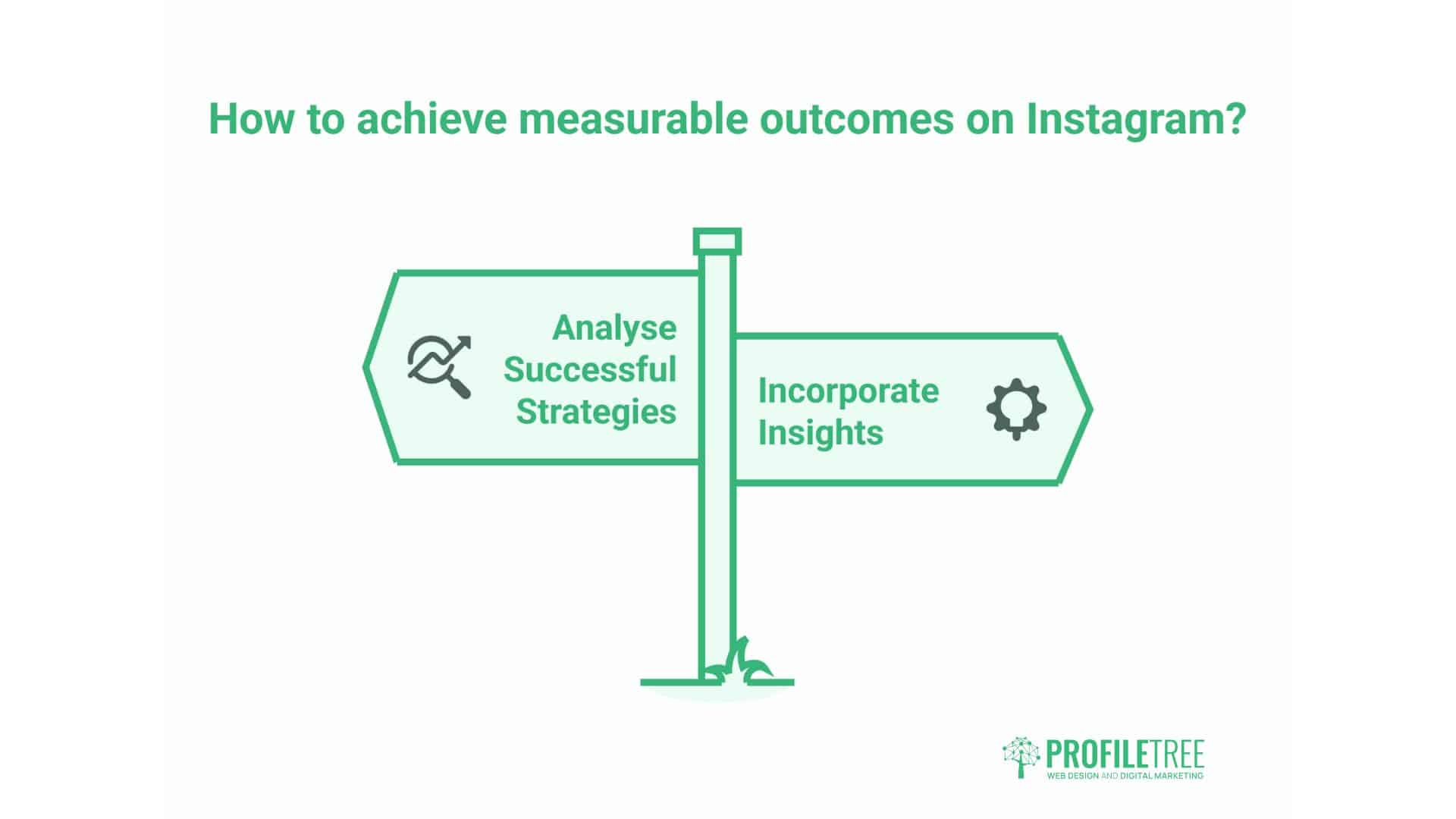
Your Instagram profile is the first thing a prospective customer sees after your content catches their attention. Within a few seconds, they decide whether to follow, click, or leave. Most business profiles fail this test because they describe the company rather than serving the visitor.
Write a bio that converts
You have 150 characters. Use them to communicate who you help, what you do for them, and what they should do next.
Weak: “Digital marketing agency helping businesses grow.” Stronger: “Web design and SEO for UK SMEs | Ranking-focused websites | AI training for business growth.”
The second version tells a visitor exactly who this is for, what the outcomes are, and signals the kinds of problems the business solves. Instagram’s search increasingly surfaces profiles based on bio content, so including the terms your ideal customer would search is worth doing deliberately.
Use your bio link strategically
Instagram’s single bio link requires more thought than most businesses give it. Linking to your homepage is a missed opportunity. Consider linking instead to:
- A campaign-specific landing page built to track Instagram traffic separately
- A lead magnet (a practical guide, checklist, or template) that captures email addresses
- A portfolio page showing recent completed work
- A service page directly relevant to your most recent content theme
Rotate the link every one to two weeks to reflect your current content. If you want to point followers to multiple destinations simultaneously, a link-in-bio tool gives you a dedicated mini-page. Whatever you link to, the page it reaches must be built to convert. Fast-loading, mobile-optimised, with a clear call to action. A poorly built landing page wastes every click Instagram delivers.
This is where your website infrastructure matters. If your site loads slowly on mobile, lacks clear conversion paths, or was not designed with intent in mind, the traffic Instagram sends arrives and leaves without acting. Getting your Instagram strategy right and your website wrong is a common and expensive mistake for SMEs.
Organise your Story Highlights
Story Highlights give you permanent, categorised content on your profile. Organise them to guide visitors toward high-value content:
- Services: Brief explanations of what you offer and who it is for
- Projects: Portfolio pieces and completed work
- Testimonials: Client feedback and measurable results
- Tips: Educational content that demonstrates expertise without selling
- Behind the scenes: Team culture and how you work
Design custom Highlight covers that use your brand colours. It is a small detail, but it signals that the profile is professionally managed. That perception influences whether a visitor trusts you enough to click further.
Step 3: Build a Reels-First Content Strategy
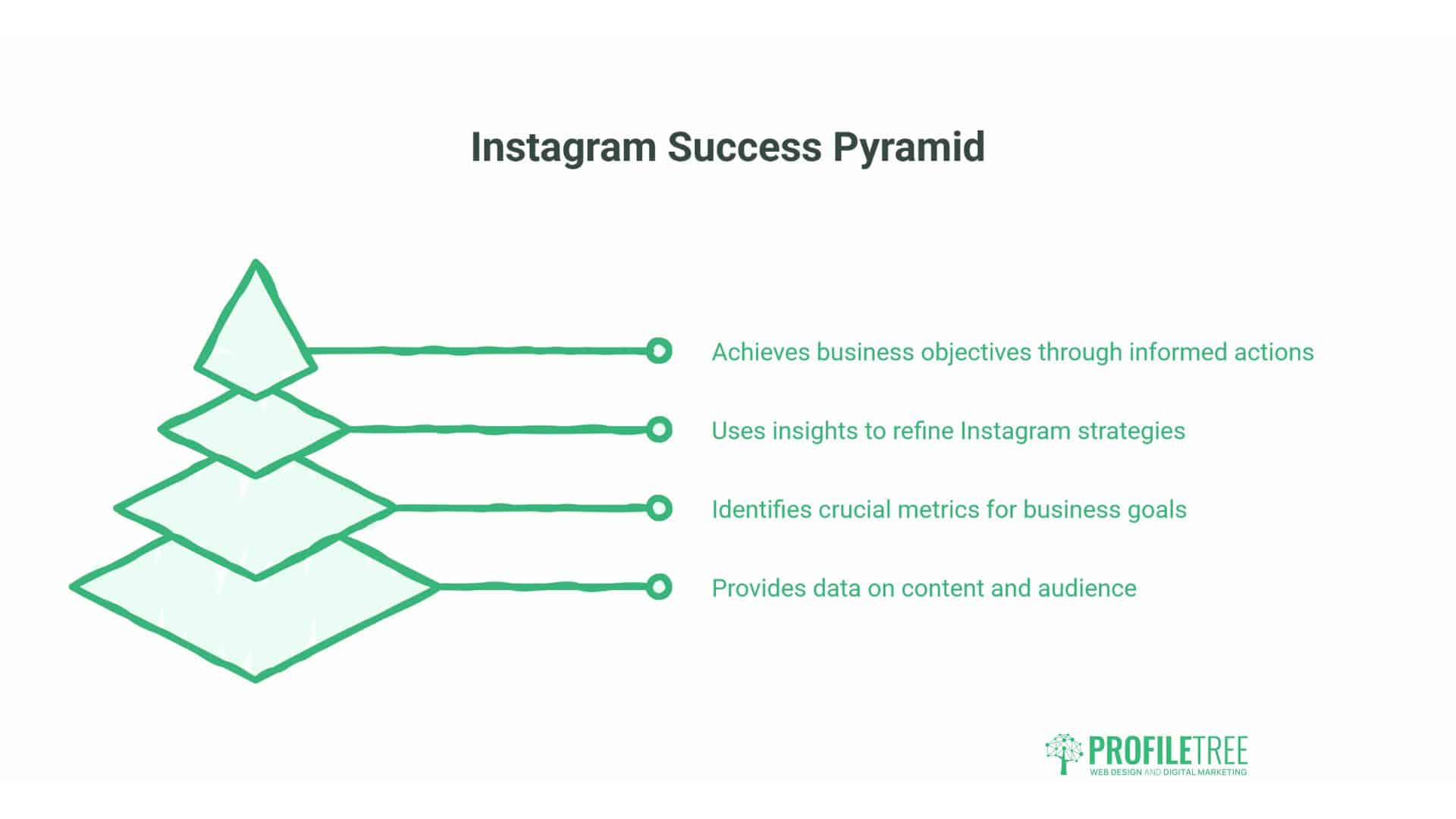
The single biggest shift in Instagram over the past three years is the primacy of Reels. Instagram’s own guidance and the evidence from creators and businesses alike is consistent: Reels reach new audiences at a scale that static posts and carousels cannot match. If your Instagram content strategy is still built around grid aesthetics and polished static imagery, you are optimising for the wrong thing.
This does not mean abandoning other formats. It means being clear about what each format does.
What each format achieves
| Format | Primary purpose | Secondary use |
|---|---|---|
| Reels (9:16 vertical video) | Reach new audiences via algorithmic distribution | Educational content, tutorials, trends |
| Carousel posts | Deeper engagement with existing followers | Step-by-step guides, before/after, data breakdowns |
| Static posts | Announcements, testimonials, polished imagery | Trust-building with warm audiences |
| Stories | Daily visibility, real-time connection | Polls, questions, limited-time content |
Reels are the acquisition layer. Stories and carousels are the retention and engagement layer. Understanding this distinction stops you from expecting Reels to do what carousels do well, or from neglecting Reels because they feel harder to produce than static imagery.
The four content pillars
Establish four or five recurring content themes that map directly to your business objectives and your audience’s interests. For a digital agency, those might include:
- SEO and website performance education
- Web design projects and portfolio showcases
- AI tools and practical implementation for small businesses
- Business growth stories and honest analysis
- Team culture and how the agency works
Every post should belong to one of these pillars. This focus keeps your profile coherent and makes content planning dramatically simpler. It also signals to Instagram’s algorithm that you have a consistent topic focus, which helps with distribution.
The 80/20 content framework
Roughly 80% of your content should deliver genuine value: education, entertainment, or practical advice that serves your audience regardless of whether they ever buy from you. The remaining 20% can be direct promotional content about your services or offers.
This ratio builds the trust that makes promotional content land. A web development agency might share tips on website accessibility, explain common SEO mistakes, or walk through what good mobile performance looks like. That content earns an audience. The occasional post about a service package or a client project result then reaches people who already respect the expertise on show.
The 80/20 framework in practice
The caption strategy matters as much as the visual. Write captions that:
- Open with a hook that earns the “more” click (a specific question, a counterintuitive claim, or a specific number)
- Deliver substantive value beyond what the image or video conveys
- Include relevant terms naturally within the text
- End with a question or prompt that invites a comment
- Use three to five specific, niche-relevant hashtags rather than generic ones
Avoid the same 30 hashtags on every post. Instagram can interpret this as spam behaviour. Use hashtag sets matched to your content themes, and test which combinations generate the best reach and saves over time.
Step 4: Use the AI-Human Hybrid Workflow
Every business with an Instagram presence now faces a version of the same problem: consistent, quality content creation takes time that most SME owners and marketing managers simply do not have. AI tools offer a partial answer. But the businesses using AI well are not the ones generating content wholesale with it. They are the ones using it to handle the mechanical work so that the human contribution, the parts that actually build trust, can get more attention.
Where AI adds genuine value
AI tools are useful for:
- Generating hook options for Reels (give the tool your topic and ask for ten opening lines; choose the one that fits your voice)
- Drafting caption structures to be edited into your own tone
- Producing content calendar outlines based on your pillars
- Repurposing a blog post or case study into a carousel script
- Identifying common questions your audience asks that you have not yet addressed
The instinct to hand the whole process to AI is understandable but counterproductive. AI-generated captions in a generic voice, AI-written scripts delivered robotically on camera, and AI-produced carousels with identical structure and phrasing are easy to spot. They fail not because audiences detect the AI, but because they sense the absence of a real perspective.
Where human input is non-negotiable
The parts of Instagram content that build genuine commercial trust require a person:
- On-camera presence. For service businesses, the person clients will work with appearing on camera is irreplaceable for trust. No AI substitute exists.
- Original perspective. A specific opinion, a counterintuitive observation, or an honest account of a project challenge is what earns saves and shares.
- Local context. A comment about the Northern Ireland business environment, a reference to a local event, or a mention of a sector-specific challenge means something to the audience it targets.
- Responsiveness. Replying to comments and DMs with genuine engagement. This cannot be templated.
A practical hybrid workflow looks like this: AI for ideation and drafting structures, human for filming and delivery, AI again for caption polish and hashtag research, human for final review and posting. This approach roughly doubles the content output of a one-person marketing function without degrading quality.
ProfileTree provides AI training for SMEs looking to implement this kind of workflow across their marketing operations, not just Instagram. The practical sessions cover which tools to use, how to brief them effectively, and how to maintain brand voice when AI is part of the process.
Step 5: Maximise Instagram Stories for Engagement
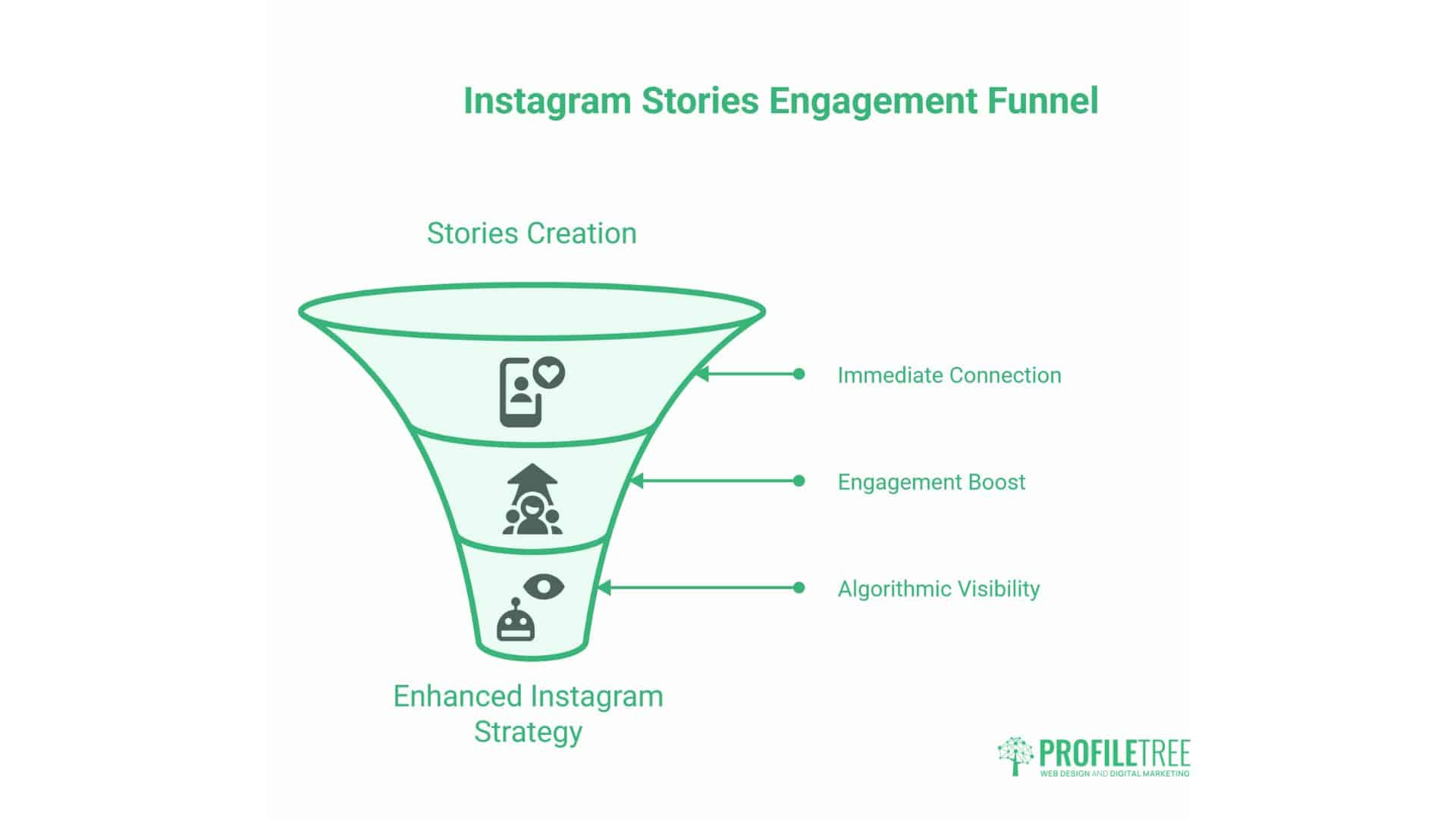
Stories are the daily conversation layer of an Instagram marketing strategy. Where Reels find new audiences, Stories keep existing followers connected and engaged between the higher-production content you publish on your main grid.
Daily presence without production pressure
Stories allow consistent visibility without the effort of a Reel or carousel. Share behind-the-scenes content, quick observations, industry reactions, or informal tips. The 24-hour lifespan encourages authenticity rather than polish. Business owners and marketing managers often find this format easier to maintain than feed content, and audiences frequently respond more warmly to it.
For a trades business in Belfast, that might mean a short clip arriving at a job site. For a consultancy in Dublin, a quick thought on a piece of industry news. For a digital agency, a screen recording showing a technique or a before/after from a recent client project. None of these require video production. They require presence.
Interactive features that build insight
Instagram’s Story stickers increase engagement and provide direct audience research:
- Polls: Gather opinions on content topics or service priorities
- Questions: Invite followers to ask about your work or request specific content
- Quizzes: Test knowledge while educating your audience on your area of expertise
- Countdown timers: Build anticipation for a launch, event, or limited offer
Each interaction signals to Instagram’s algorithm that your content is worth distributing. More practically, the answers tell you what your audience actually wants to see and hear, which is more reliable than guessing.
Story Highlights as a permanent resource library
Convert your strongest Stories into permanent Highlights organised by theme. This transforms temporary content into an ongoing resource that new profile visitors can browse immediately.
For service businesses, consider Highlights structured around frequently asked questions with short video answers, service explainers broken into two to three slides, client project outcomes with commentary, and educational series on topics relevant to your audience. Review and update Highlights every quarter to keep them current.
Step 6: UK Influencer Marketing and ASA Compliance
Influencer marketing for UK businesses is not just a reach strategy. It is also a legal compliance requirement, and one that generic global guides written for US audiences consistently miss. The Advertising Standards Authority (ASA) and the Committee of Advertising Practice (CAP) Code apply to all paid or gifted influencer content, and enforcement has become more visible, not less.
What happens when disclosure fails
The ASA does not just issue quiet warnings. In late 2025, it escalated its approach against repeat offenders by running targeted adverts on Instagram aimed at the same followers those influencers had built, naming Francesca Allen, Jess Gale, Eve Gale, Belle Hassan, Jodie Marsh and Anna Vakili as having failed to disclose paid posts despite prior warnings. Amber Rose Gill followed shortly after for the same reason. The adverts told each influencer’s own audience that content they had seen may have been paid for without proper disclosure.
That is the practical risk for any brand working with an influencer: the ASA can put your commercial relationship in front of the exact audience you paid to reach, framed as a regulatory failure rather than a recommendation.
The scale of the problem is not niche. The ASA‘s most recent Influencer Disclosure Report, built from AI-assisted monitoring of over 50,000 posts across Instagram and TikTok, found that only around 57% of influencer ads met the disclosure rules, while roughly a third carried no disclosure at all. Fashion and travel content performed worst. If your business operates in either sector, the odds of your influencer partner already treating disclosure loosely are higher than most brands assume.
Why the stakes have risen
Liability does not sit with the influencer alone. Where a brand pays for content or has any editorial input, the brand is jointly responsible for making sure the ad is obviously identifiable. The Digital Markets, Competition and Consumers Act 2024 gave the Competition and Markets Authority stronger fining powers for consumer protection breaches, including non-disclosure, on top of the ASA’s own sanctions and public naming process. A brand does not need to be named on a webpage to feel the damage. A single client or prospect spotting an undisclosed partnership and mentioning it publicly can undo months of trust-building content.
The ASA disclosure requirements
Any post where a product, service, or experience has been paid for, gifted, or received in exchange for coverage must be clearly and prominently labelled. The standard labels are:
- #ad for paid partnerships (including retainers, fees, or any financial benefit)
- #gifted for products or services received for free without a fee being paid
- #gifted combined with #ad when there is any editorial control or contractual requirement attached to a gifted arrangement
“Clear and prominent” means the label must be visible before the user interacts with the content. A hashtag buried in a caption below “more” does not meet the standard. Vague terms such as “collab” or “thanks” are not accepted as disclosure. For Reels and Stories, the label must appear in the video itself or as a visible on-screen overlay, not only in the caption.
Businesses that brief UK-based influencers are responsible for their compliance, not just the influencer. If a partner fails to disclose properly, the brand can be named alongside them..
Choosing the right partners
For UK SMEs, micro-influencers with between 5,000 and 50,000 followers frequently deliver better commercial returns than larger accounts. The audience is more targeted, the engagement rate is typically higher, and the cost per partnership is substantially lower.
When evaluating potential partners, look beyond follower count:
- Engagement rate: Divide total likes and comments by follower count. Rates above 3% indicate a genuinely active audience.
- Audience demographics: Request insights to confirm their followers match your target market geographically and by sector.
- Content quality: Review recent posts for consistent quality, authentic voice, and editorial standards that align with yours.
- Audience authenticity: Look at the comment quality. Generic, emoji-only, or suspiciously rapid comments are a warning sign.
- Topical relevance: An influencer who creates content directly adjacent to your industry or audience delivers more targeted reach than one with a generalist following.
Structuring effective influencer campaigns
Clear briefs prevent expensive misunderstandings:
- Specify deliverables (number of posts, Stories, Reels, and which must carry disclosure labels)
- Confirm the required ASA disclosure language and placement upfront
- Provide key messages without scripting the content word for word
- Set content approval timelines that allow time for review before publication
- Establish usage rights if you intend to repurpose their content on your own channels
- Define success metrics and reporting requirements before the partnership begins
For a digital agency, the most productive influencer relationships tend to be with business coaches, marketing consultants, and entrepreneurial content creators who serve the same SME audience. Their recommendation carries weight with decision-makers already seeking business growth solutions.
Step 7: Community Management and Social Selling
Instagram is a conversation platform. The businesses that generate commercial results from it are not just publishing content. They are managing the community that content creates: responding to comments, handling DM enquiries, turning engaged followers into warm prospects, and converting warm prospects into clients.
Turning DMs into leads
Direct messages are where social selling actually happens. For service businesses, an unsolicited DM asking about pricing or availability is a qualified lead. Treating it as such, responding promptly and helpfully, and moving the conversation forward is a commercial skill as much as a social media one.
A few practical principles:
- Respond to DMs within 24 hours during working days. Faster is better, particularly for initial enquiries.
- Keep early responses conversational rather than immediately transactional. Understand what the person actually needs before presenting options.
- Use Instagram’s quick reply feature to handle common first-contact questions without losing the personal tone.
- Move conversations to email or phone once there is genuine commercial interest. Instagram DMs are not a secure channel for detailed proposals or sensitive client information.
UK GDPR considerations for DM communications
When collecting contact details or personal information through Instagram DMs, UK GDPR applies. You need a lawful basis for processing any personal data. For enquiry handling, legitimate interest or consent from the enquiry itself typically covers initial contact management.
However, if you intend to add Instagram enquirers to a marketing list or CRM, you need explicit consent. A message saying “I’d like to send you our monthly guide by email, would you like to opt in?” is both practical and compliant. Automatically adding people to lists based on their enquiry is not.
Community management as a growth strategy
Replying to comments on your own posts is obvious. Less obvious but more powerful: engaging substantively with content in your sector. Leaving a genuinely useful comment on a post by a Northern Ireland business body, a sector publication, or a complementary service provider builds your visibility with their audience. This is not about promotional comments. It is about demonstrating expertise in the places your ideal clients are already paying attention.
ProfileTree’s social media management work with SME clients in Northern Ireland consistently shows that active community management, about 15 minutes of genuine engagement per day, produces measurably better follower growth and enquiry rates than additional posting frequency.
Step 8: Track Performance Beyond Likes
Data-driven decisions separate working Instagram strategies from hopeful ones. Instagram Insights provides substantial information about content performance and audience behaviour. The challenge is knowing which numbers actually indicate that your strategy is working.
Metrics that connect to business outcomes
Move beyond follower count and total likes. Focus on:
- Reach: How many unique accounts saw your content this week versus last week. Specifically: are you reaching new accounts (non-followers), or only your existing audience?
- Saves: When users bookmark your content, it signals high utility and substantially boosts algorithmic distribution. Saves are a better measure of content quality than likes.
- Shares: Content shared to Stories or forwarded via DM indicates it resonated strongly enough that someone wanted another person to see it.
- Website clicks: The direct measure of how effectively Instagram is driving traffic. Track this in Google Analytics using UTM parameters on all Instagram links.
- Profile visits: Indicates content successfully prompted interest in learning more about the business.
- DM enquiries: For service businesses, the most commercially direct metric available.
Content analysis for continuous improvement
Review your top-performing posts monthly. Look for patterns across:
- Which content pillars generate the most saves and shares (not just comments)
- Which posting times correlate with stronger reach to non-followers
- Whether video Reels consistently outperform carousels for new audience reach
- Which caption styles or lengths generate more comments and replies
Use these patterns to refine the content mix progressively. If educational Reels about website performance consistently outperform portfolio posts on reach, adjust accordingly. If a particular topic generates a disproportionate volume of DM enquiries, create more content in that area.
Connecting Instagram performance to your wider marketing data
Instagram’s metrics only tell part of the story. The complete picture requires connecting platform data to your website analytics. How much of your monthly web traffic originates from Instagram? Are those visitors engaging with your service pages or immediately leaving? Are they converting into enquiries?
Set up UTM parameters on every Instagram link so Google Analytics can accurately attribute traffic and conversion events. This data demonstrates Instagram’s actual commercial contribution and informs how much resource it justifiably receives.
How an Integrated Instagram Strategy Supports Your Broader Digital Marketing
Instagram works best as one layer of a connected digital marketing system. Its relationship with the other channels you invest in determines whether the platform pays for itself.
Instagram and your website
Every click from Instagram lands on a page. If that page loads slowly on mobile, lacks a clear conversion path, or asks the visitor to do too much at once, the click is wasted. Service businesses in particular need to ensure that the specific pages their Instagram content links to are built to handle the kind of visitor Instagram sends: someone who knows a little about you, is casually interested, and needs a clear next step.
ProfileTree builds and optimises websites for exactly this scenario: ranking-focused, conversion-aware sites designed for SMEs that want their digital marketing to work as a system rather than a collection of disconnected efforts.
Instagram and your SEO
Instagram links are marked nofollow and do not directly pass authority to your website. But the platform supports your search visibility in other ways:
- Brand name searches often return Instagram profiles alongside your website
- Short-form video content can appear in Google’s video results
- Instagram activity validates your business entity across the web, reinforcing the signals that local and branded search depends on
- Consistent visual presence supports the trust signals that convert a searcher who finds you in Google into an enquiry
Instagram and video production
Short-form Reels and long-form content occupy different parts of the content funnel but draw from the same creative investment. A 90-second Reel that performs well on Instagram can be extracted from a longer YouTube video, repurposed as a LinkedIn post, or embedded in a blog article that supports your SEO.
Professional video production raises the floor on short-form quality, particularly for service businesses where the person on camera is effectively the product. There is a meaningful difference between a casually recorded phone video and content produced with proper framing, audio, and editing. For trades businesses and professional services firms in Northern Ireland, that difference is often the gap between a viewer thinking “interesting” and thinking “I should call them.”
ProfileTree’s video production team works with SME clients to create video content that serves multiple channels, from YouTube and Instagram to website embeds and training materials.
FAQs
How do I create an Instagram marketing strategy for my business?
Start by defining what commercial outcome you need Instagram to deliver. Then identify your target audience with as much specificity as you can manage. Build a content strategy around three to five pillars that map to that audience’s interests and your business expertise. Prioritise Reels for reach and Stories for daily engagement. Track website clicks and DM enquiries rather than vanity metrics. Revisit and adjust every quarter based on what the data shows.
Is Instagram marketing still effective for small businesses?
Yes, but the nature of what works has shifted. Organic reach for static posts has declined significantly. Reels, consistent Stories engagement, and active community management still deliver meaningful results for small businesses, particularly when the content is specific to a defined audience rather than generic. The businesses that struggle are those still approaching Instagram as a broadcasting platform rather than a conversation channel.
What are the UK ASA rules for Instagram posts?
Any post where a product or service has been paid for, gifted, or received in exchange for coverage must carry a clear and prominent disclosure. The standard labels are #ad for paid arrangements and #gifted for products received without a fee. The label must be visible before the user interacts with the content: not buried in hashtags below a “more” prompt, and not appearing only in a caption when the primary content is a Reel. Businesses are responsible for ensuring their influencer partners comply.
How many times a week should a business post on Instagram?
Quality outperforms frequency. Three to five Reels per week combined with daily Stories is a realistic target for most SMEs with limited marketing resource. One well-produced Reel with a genuine perspective and a clear hook consistently outperforms five generic posts. If the choice is between one good piece of content and five mediocre ones, always choose the single good piece.
How can I grow Instagram followers without paid advertising?
Reels with genuinely useful content remain the most reliable organic growth mechanism. Use keyword-rich captions, specific and relevant hashtags (not generic ones), and consistent posting to a defined niche. Engage actively with accounts your audience follows. Collaborate with complementary businesses. Optimise your bio for search. Organic growth is slower than paid promotion but produces a more engaged, commercially relevant audience.
What is the best time to post on Instagram in the UK?
The most reliable answer is: check your own analytics. For UK business audiences, weekday evenings between 7 pm and 9 pm GMT tend to generate strong engagement, as does mid-morning on weekdays. But these are generalisations. Your audience’s specific behaviour, visible in Instagram Insights under the “Followers” section, is always more accurate than any industry average.
Taking Action: Your Instagram Marketing Strategy
The gap between an Instagram presence and an Instagram marketing strategy is the gap between activity and results. The eight steps in this guide are not a checklist to complete once. They are a cycle: set objectives, optimise your profile, create content that earns reach and trust, manage the community it builds, and use the data to get better each quarter.
UK SMEs that treat Instagram as one layer of a connected digital marketing system, alongside a well-built website, a content strategy that supports SEO, and video that works across multiple channels, consistently outperform those that approach each channel in isolation.
ProfileTree works with businesses across Northern Ireland, Ireland, and the UK to build that kind of connected approach: ranking-focused websites, content marketing built for search visibility, video production for short and long-form channels, and digital training that helps in-house teams do more with less. If you are reviewing how your digital marketing channels work together, our team is worth talking to.