
Social Media Brand Awareness: A Practical Guide for UK SMEs
Table of Contents
Most small businesses in the UK do not lose on social media because they post too little. They lose because the people who see them do not remember them a week later. Social Media Brand Awareness is the work of turning that fleeting exposure into recognition, and recognition into trust that eventually converts to enquiries. This guide is written for owners and marketing managers at Northern Ireland, Ireland and UK SMEs who want a plan they can actually run, not a theory.
Three things to hold onto before you read on:
- Recognition beats reach. A smaller audience that remembers you is worth more than a large one that scrolls past.
- Pick two or three platforms and do them properly. A thin presence everywhere rarely builds Social Media Brand Awareness that lasts.
- Measure the things that predict sales. Branded search, saves, shares and returning followers matter more than raw impressions.
The rest of this guide walks through what the term means, the elements of a working strategy, how to build recognition from a standing start, and how to prove it is paying off.
What is Social Media Brand Awareness?
Social Media Brand Awareness is how well your target audience recognises and remembers your business across social platforms. It shapes the first impression that influences whether someone trusts you enough to buy. For UK SMEs, social platforms offer reach that older advertising channels cannot match at the same cost, and they allow two-way conversation rather than one-way broadcasting. When people repeatedly see your content, interact with your posts and recognise your visual style, familiarity builds, and familiarity is what turns a stranger into a customer.https://www.youtube.com/embed/iQ-Qr_2rIwc
Awareness is the top of the funnel, but it is not a vanity exercise. A Belfast B2B firm and a London consumer brand will build it in very different ways, on different platforms, with different content. The principle holds either way: consistency plus genuine usefulness creates recall.
It also helps to separate Social Media Brand Awareness from direct-response marketing. A discount post that drives sales this week is not the same as recognition that makes someone choose you in six months. Both have their place, but treating awareness as a slow compounding asset, rather than a switch you flip for a campaign, is what lets a small business build a name that outlasts any single promotion.
Building Brand Recognition for UK SMEs
Lasting recognition comes from a systematic approach, not sporadic campaigns. It starts with two decisions that most businesses rush: who you are trying to reach, and what a good result actually looks like. Get those right and every later choice about platforms and content becomes easier. A clear digital strategy ties both decisions back to wider business goals rather than to social metrics in isolation.
Understanding Your Target Audience
Demographics tell you who your audience is. Psychographics, their interests, frustrations and online habits, tell you what to say. UK audiences also vary by region and platform, so a service business in Derry will not behave like a retailer in Manchester. Study your existing customers, look at who engages with similar businesses, and use platform analytics to build real audience profiles rather than guesses. Note which platforms they use, which formats they engage with, when they are online, and what problems they are trying to solve.
Regional detail matters more than most SMEs expect. Social Media Brand Awareness in Belfast or Cork is built on local references, local timing and local trust signals that a generic UK-wide feed misses. A trade business posting about a project in a recognisable town, or a retailer tagging a local event, earns recognition that a polished but placeless post never will. Language, humour and even posting times shift across Northern Ireland, Ireland and mainland UK, so lean into where your customers actually are.
Ciaran Connolly, founder of ProfileTree, puts it plainly: “Recognition is earned by showing up with something useful, again and again, for the same group of people. Small businesses win on social when they pick a narrow audience and speak to that audience’s real problems.”
Setting Brand Awareness Goals
Specific, measurable goals turn random posting into a strategy you can judge. Tie them to business objectives and give them a timeframe. Useful targets include growing a relevant following by a set number each month, lifting branded search volume, increasing mentions, or raising the share of website visits that come from social. Track them consistently and adjust based on what the data shows rather than what you assumed would work. A managed social media marketing programme gives these goals a consistent owner rather than leaving them to whoever has a spare hour.
The Elements of a Social Media Brand Awareness Strategy
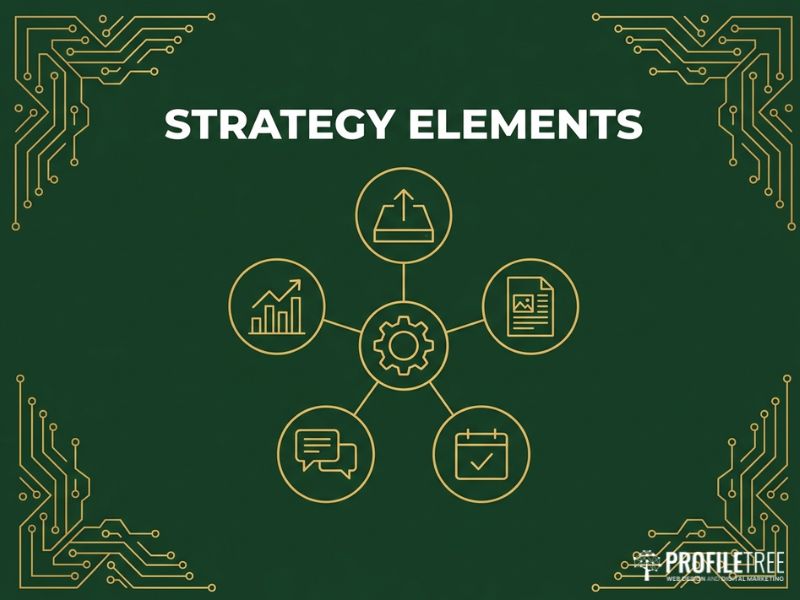
A working plan for Social Media Brand Awareness rests on five parts that support one another: the right platforms, content people value, a consistent schedule, genuine engagement, and honest measurement. Skip any one and the others weaken. The sections below take each in turn.https://www.youtube.com/embed/VK-5UR-ExWo
Choosing the Right Platforms
No platform suits every business, so concentrate your effort where your audience already spends time. LinkedIn works for B2B, professional services and firms selling to decision makers. Instagram suits visual brands in retail, hospitality, food and lifestyle. TikTok reaches younger audiences and rewards creative, native content. Facebook still holds broad reach and strong local community features for service providers and the over-35s. X suits real-time commentary and news-led sectors. Start with two or three channels and master them before adding more. If social sits inside a broader plan, a specialist team offering social media management can help match platforms to audience before you commit budget.
Content That Connects
Content quality is what separates a brand people remember from one they forget. Balance education, entertainment and the occasional promotion, and keep the visual identity consistent so posts are recognisable at a glance. Educational content positions you as a credible source. Behind-the-scenes content shows the real people behind the business and builds trust. Customer content carries more weight than anything you say about yourself. Short-form video, under about 90 seconds, tends to perform strongly for awareness, which is why many SMEs bring in help with video marketing rather than stretching an internal team. Underpinning all of it, a clear content plan keeps output aligned with what your audience actually wants.
A Consistent Posting Schedule
Familiarity comes from consistency, and consistency comes from planning. Build a content calendar at least a month ahead, leaving room to react to timely moments. It should cover themes, formats, publishing dates and times, who is responsible for each stage, and any campaigns or industry events. Posting frequency varies: LinkedIn often suits three to five posts a week, while Instagram and TikTok reward near-daily activity. Quality wins over volume every time. Scheduling tools keep things steady during busy weeks, but leave space for real-time replies so the account still feels human.
Community Engagement
Social Media Brand Awareness grows through participation, not broadcasting. Reply promptly to comments, questions and mentions, ideally within a couple of hours in working time. Where message volume is high, AI chatbots can handle first-line replies so nothing waits too long. Start conversations with questions and polls rather than waiting for engagement to arrive. Join relevant discussions on other accounts to reach beyond your own followers. Watch for mentions even when you are not tagged, and handle negative feedback openly and professionally, since a well-managed complaint often converts a critic into a supporter.
Monitoring and Analytics
Measurement turns guesswork into method. Reach and impressions show how many people see you. Follower growth rate, tracked as a monthly percentage, shows whether your audience is expanding. Engagement rate shows whether content lands. Share of voice compares your mentions against competitors, and sentiment shows whether those mentions are positive. Website traffic from social connects the activity to business outcomes. Review weekly for quick wins and monthly for strategy, and let the numbers guide where your time and budget go next.
Building Awareness From Zero or Growing What You Have
Starting from nothing and expanding an established presence call for different tactics. Knowing which phase you are in stops you wasting effort on the wrong moves, and it keeps your Social Media Brand Awareness building in the right direction.
Starting From Zero
New businesses begin with almost no recognition, so the first job is presence and identity. Complete every profile field, use professional imagery, and keep branding consistent across your channels and your website design. Write descriptions that include the terms people actually search, the same discipline that good search engine optimisation applies to a website. Build a base of 15 to 20 evergreen posts before any push, so early visitors find something worth following. Then draw on the networks you already have: employees, partners and existing customers who will follow and share. Strategic collaborations with established accounts can introduce you to a ready-made audience.
Raising Existing Awareness
An established account should focus on reach, deeper engagement and stronger recall. Test formats you have not used, since algorithms often favour newer content types. Build campaigns around launches, milestones or awareness days that concentrate attention. Encourage customer content through contests or spotlights to multiply output and add social proof. Modest paid promotion can extend organic reach when targeting is tight, and cross-promotion with complementary businesses opens adjacent audiences.
Content Creation and Curation
Content drives every part of Social Media Brand Awareness, and a steady stream matters more than the split between what you make and what you share. Original content proves expertise and gives you full control of the message, while curation keeps you present and useful between larger pieces. The two work together rather than competing.
Original content builds authority and creates assets you can reuse everywhere else, from your website development to email and video channels, and it produces proprietary points of view competitors cannot copy. It costs time and skill, but it keeps paying back long after publication. Curation, sharing worthwhile third-party research or tools with your own commentary, keeps your feed active and positions you as a knowledgeable filter. Never repost without adding your take, since your analysis is what makes shared content valuable. Whatever the source, quality content is relevant to the audience, honest, genuinely useful, decently produced and adapted to each platform’s format.
A practical mix helps SMEs stay consistent without burning out. A rough split of educational, behind-the-scenes and customer-led content, refreshed with the occasional promotion, keeps a feed varied while still building Social Media Brand Awareness around a clear theme. One filmed answer to a common customer question can become a short video, a carousel, a written post and an email, which is how small teams keep output steady on a limited budget.
Measuring Social Media Brand Awareness
Measurement proves value and points to the next improvement. Because awareness sits at the top of the funnel, connecting it to revenue means tracking whole customer journeys rather than single posts. Combine hard numbers with softer signals to get an honest picture of your Social Media Brand Awareness over time. Feeding these numbers back into your digital marketing strategy is what stops measurement becoming a monthly report nobody acts on.
Quantitative measures include follower growth, reach and impressions, engagement rate, share of voice, social traffic to your website and rising branded search volume. Qualitative measures include sentiment, audience feedback and brand recall. To link activity to outcomes, put UTM parameters on every social link, set up conversion tracking, and watch assisted conversions, since many customers discover a brand on social but convert elsewhere. Social often supports other channels, so strong SEO services and social work reinforce each other rather than operating in isolation. Calculate acquisition cost by dividing social spend by customers won through social, and compare it against your other channels to judge efficiency.
A simple worked example makes this concrete. Say a firm spends £600 a month on content and ads, gains 90,000 impressions, sees branded searches for its name rise from 40 to 110 a month, and traces four enquiries back to social. The impressions alone say little, but the jump in branded search is a strong signal that Social Media Brand Awareness is climbing, and four enquiries at £150 acquisition cost gives a figure you can weigh against email or paid search. Watching that branded-search trend month on month is often the clearest single measure of whether recognition is growing.
Common Challenges and How to Solve Them
Even a good plan meets obstacles, and knowing the usual ones lets you deal with them before they stall your Social Media Brand Awareness. Slow growth, low engagement, algorithm shifts, proving return and thin resources are the five that trip up most SMEs. Each has a practical answer.
For slow follower growth, judge engagement rate rather than raw numbers early on, make shareable content, and join industry conversations. For low engagement, ask questions directly, use polls and stickers, post at peak times and reply fast. For algorithm changes, spread across a few platforms and build owned channels, such as an email marketing list and a reliable site backed by proper website hosting, so you are not exposed to a single feed.
For proving return, track beyond vanity metrics, run before-and-after awareness checks, and report leading indicators that predict conversions. For tight resources, focus on fewer platforms, batch-create content, repurpose across formats, and bring in outside help for strategy and production, or build the skills internally through digital training, while keeping day-to-day engagement in-house.
Where Social Media Brand Awareness is Heading
Social platforms change quickly, and staying ahead gives smaller businesses an edge. A few shifts are already reshaping how Social Media Brand Awareness is built, and none of them favour big budgets over sharp thinking. Planning for them now keeps your strategy relevant next year.
Social commerce is folding shopping into discovery, so profiles built for buying will convert attention faster. AI-led personalisation is making content and analysis sharper, and SMEs that adopt tools such as AI marketing tools sensibly can compete above their weight, so a clear plan matters more than chasing every new feature.
Video-first feeds continue to reward short, native clips, which is one reason steady video content pays off. Younger audiences increasingly search inside social apps rather than Google, a shift Ofcom’s Online Nation report tracks alongside the rise of AI-assisted search, so on-screen text and full captions help discovery. And unpolished, honest content keeps outperforming glossy production, which is good news for businesses without a studio budget.
FAQs
How long does it take to build brand awareness on social media?
Typically six to twelve months of consistent effort. Early follower and engagement growth often shows within three months, but reliable recall takes sustained work.
What is the difference between brand awareness and brand engagement?
Awareness measures whether people recognise you; engagement measures how actively they interact with you. You need awareness first, then engagement follows.
How much should a UK business budget for social media?
Many small firms start around £500 to £1,000 a month for organic work, while larger ones invest more once paid ads are added. A common approach is 15 to 20 percent of the marketing budget.
Which platform is best for brand awareness?
The one your audience already uses. LinkedIn suits B2B, Instagram suits visual brands, TikTok reaches younger users, and Facebook offers broad local reach. Master two or three rather than spreading thin.
Can small businesses compete with larger brands on social media?
Yes. Agility, a genuine personality and a tight niche focus often beat a big budget with a weak strategy.