
How to Build Brand Loyalty: A Practical Guide for SMEs
Table of Contents
Most small business owners assume brand loyalty is something only household names like Tesco or Apple can afford to build. That assumption is expensive, because brand loyalty is one of the few growth levers that gets cheaper the more you use it. It is the reason a customer chooses your business again, even when a rival undercuts your price or a competitor’s advert appears first. For SMEs across Northern Ireland, Ireland, and the UK, understanding what drives that choice and building brand loyalty deliberately is a genuine competitive advantage.
This guide covers what brand loyalty actually means, the four stages customers move through on the way to becoming loyal, practical ways to build brand loyalty without a large budget, loyalty examples from UK and Irish brands, what UK and Ireland GDPR rules mean for loyalty data, and how to measure whether any of it is working.
What Is Brand Loyalty?
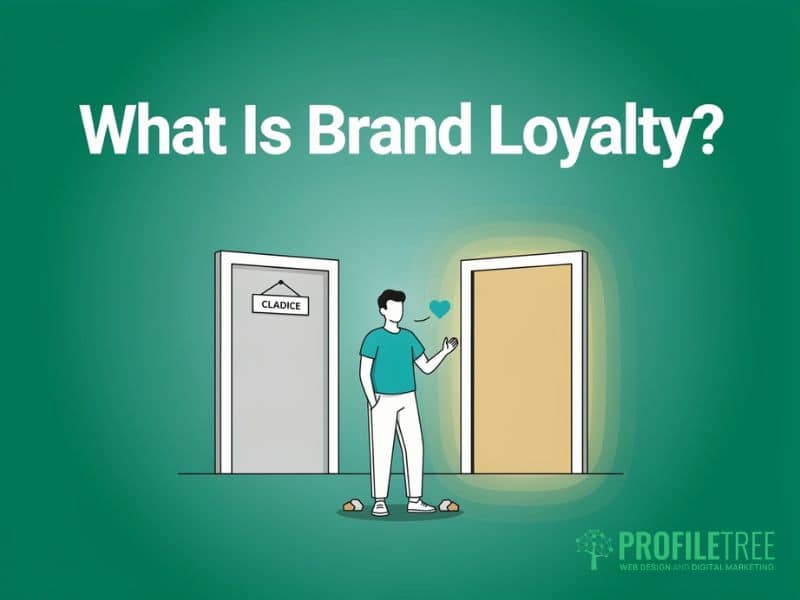
Brand loyalty is the emotional preference a customer holds for your business, one that survives a price rise, a supply hiccup, or a cheaper competitor down the road. It is not the same as simply buying from you again.
A customer can return to a shop purely because it’s the nearest one, or because switching suppliers is a hassle. That is habit, not brand loyalty. Genuine brand loyalty exists when someone would pay slightly more, wait slightly longer, or forgive an occasional mistake, because they believe in what your business represents. This distinction matters because it changes how customers behave under pressure. A habitual buyer switches the moment a cheaper option turns up nearby.
A loyal customer sticks around, even during a genuine cost-of-living squeeze, because the relationship carries more weight than the price difference. That is the point worth keeping in mind before you try to build brand loyalty deliberately, rather than relying on habit alone.
Brand Loyalty vs Customer Loyalty
The two terms get used interchangeably, but they describe different relationships, and the difference matters when you’re deciding where to spend your marketing budget.
Customer loyalty is transactional: someone keeps buying because of points, discounts, or convenience. Brand loyalty is emotional: someone keeps buying because they identify with what the business stands for. The table below sets out how the two typically compare.
| Customer Loyalty | Brand Loyalty | |
|---|---|---|
| Motivation | Points, discounts, and convenience | Shared values, trust, identity |
| Price sensitivity | High | Low |
| Reaction to competitor discounts | Likely to switch | Unlikely to switch |
| Longevity | Short-term, tied to the offer | Long-term, survives price changes |
Most small business loyalty schemes only build customer loyalty, and that still has real value. But if you want customers who stay with you when a bigger competitor undercuts your price, you need to build the brand relationship, not just the transaction.
The Four Levels of Brand Loyalty
Customers don’t become loyal overnight. Marketing research describes brand loyalty as a ladder with four distinct stages, and knowing where your customers sit tells you what to do next.
Cognitive loyalty is the first stage. A customer chooses you based on information: your price, reviews, and specifications. There is no emotional attachment yet, just a rational judgement that you’re the best available option.
Affective loyalty follows once repeated positive experiences build a genuine liking for the brand. This is where good service, consistent quality, and a website that reflects your business properly all start to matter.
Conative loyalty is the stage where a customer forms a real intention to keep buying from you. They have started recommending you to others, sometimes before every purchase has even happened.
Action loyalty is the final stage. The customer buys from you as a matter of course, and will work around obstacles, a temporary stock issue, a slightly higher price, a less convenient location, to do it.
Most SME brand loyalty efforts stall at the cognitive stage, because businesses focus on price and features and stop there. Moving customers towards affective and conative loyalty needs a consistent, genuine experience layered on top of the initial pitch. Looking at loyalty examples from brands further up the ladder shows what is possible when customer loyalty work is sustained over time, rather than treated as a one-off campaign.
Why Brand Loyalty Is a Defensive Growth Strategy
Building brand loyalty carries a direct financial case, one that every small business owner can use, well beyond the goodwill of a strong customer relationship.
Customer acquisition cost, what you spend to win a new customer, has climbed sharply across UK paid channels in recent years. Lifetime value, what a customer is worth across the whole relationship, does not move at the same pace unless you actively build loyalty. A customer who buys from you three times costs less to serve each time, because you’ve already done the work of earning their trust once.
This is exactly why brand loyalty marketing has shifted from a nice-to-have to a core part of SME strategy rather than an afterthought once acquisition budgets are spent. Customer loyalty schemes can support this by encouraging repeat purchases, but the financial case above depends on genuine brand loyalty, not simply discounts that buy short-term repeat custom.
Loyal customers are also less price-sensitive. When a competitor runs a discount, a loyal customer weighs the relationship against the savings and often stays put. That is a real defensive advantage during a genuine cost-of-living squeeze, when many UK households are actively shopping around for a better deal.
Referral behaviour compounds the effect. A recommendation from someone your prospect already trusts outperforms most paid advertising, and it costs nothing beyond the work of earning it. For service businesses, tradespeople, accountants, solicitors, and digital agencies, referral work is often the majority of new revenue, which makes brand loyalty a growth channel in its own right, not only a retention tactic.
How to Build Brand Loyalty in the UK and Ireland
These practical ways to build brand loyalty do not need a large budget. They need consistency and a willingness to treat existing customers as seriously as new ones.
Personalised Email Marketing Beyond the First Name
Email remains the most reliable loyalty channel a small business owns outright.
Unlike a social media following, your email list isn’t subject to a platform’s algorithm changes. A subscriber who opted in is more likely to buy again than a cold prospect, provided the emails are worth opening. The common mistake is treating every post-purchase email as an afterthought, a generic thank you that adds nothing. Personalisation does not need an expensive CRM. It starts with segmenting your list by what someone bought and sending relevant follow-up content.
A plumbing company in Belfast, for example, might email every boiler service customer in October with a reminder about winter maintenance checks. That’s not a hard sell; it’s useful information that keeps the business front of mind exactly when the customer might need them again. Building sequences like this is a natural fit for email marketing support, and it works well alongside wider content marketing planning
Building a Community, Not Just a Feed
Loyalty on social media does not come from posting consistently. It comes from creating a space where customers feel they belong.
A feed is a broadcast: you publish, people scroll past. A community involves genuine back-and-forth, comments that get real responses, questions answered directly, customers featured and thanked publicly. For a local business, this often means leaning into local identity. A “made in Northern Ireland” framing, or a small group supporting Irish businesses on Facebook, builds an affinity a global brand can’t replicate, because it doesn’t belong to that place.
Choose one platform where your customers actually spend time and invest in two-way engagement, rather than spreading thinly across all of them. This is where dedicated social media marketing support pays off, since consistent community management takes real time each week.
Turning Reviews and Customer Stories into Social Proof
Reviews and testimonials do two jobs at once: they reassure new customers, and they make existing ones feel valued.
Asking for a Google review immediately after a good interaction is one of the most valuable habits many small businesses skip. A business with sixty detailed five-star reviews is generally more trusted than a competitor with far more customers but only a handful of reviews. For businesses in Northern Ireland and Ireland, Google Business Profile ratings are a primary trust signal for local search. Beyond written reviews, a short customer testimonial video captures tone and genuine enthusiasm that text can’t, and video production like this doesn’t need to be expensive to be effective, particularly when it’s built around real customers rather than actors.
Values-Led Branding and the Buy Local Advantage
Some of the most durable brand loyalty comes from customers who share your values and want to support what you represent.
For SMEs in Northern Ireland and Ireland, the local dimension is genuinely powerful. Many buyers actively want to support a local business over a multinational alternative when quality is comparable. Values-led branding isn’t a mission statement on an about page; it’s consistent behaviour that reflects what you stand for, whether that’s sustainability, community involvement, or simply being the business that always answers the phone. Your website is usually the first place this story gets told. A website design that reflects your brand’s personality, rather than a generic template, is a genuine loyalty investment, because it’s often the first proper impression a new customer forms.
Frictionless Customer Service via WhatsApp and Live Chat
Customers stay loyal to businesses that are easy to deal with.
Every unnecessary step in a service journey, a phone menu, an unread contact form, a three-day email wait, is a chance for a competitor to step in instead. WhatsApp Business is widely used by UK and Irish SMEs to handle queries quickly and personally. It’s free, familiar to most customers, and faster than email for back-and-forth questions.
A roofing company in Derry that replies to an enquiry within twenty minutes will convert and keep customers that a slower competitor loses. Live chat serves a similar purpose for website visitors who have not yet committed to getting in touch. Fixing simple friction points like these is often the fastest way to improve brand loyalty and customer loyalty at the same time, without spending anything on marketing.
Protecting Loyalty Data: GDPR for UK and Ireland Loyalty Schemes
Most loyalty programmes collect personal data: names, emails, purchase history, and sometimes phone numbers. None of this compliance work directly builds brand loyalty, but a data mishandling incident destroys it quickly, so it is worth getting right, since most schemes are built to reward customer loyalty as much as brand loyalty itself.
In the UK, this falls under UK GDPR (post-Brexit); in Ireland, under EU GDPR. Either way, you need a lawful basis to collect and use personal data, and for loyalty schemes, that’s typically consent. Customers must actively opt in, pre-ticked boxes don’t count, and bundling loyalty sign-up with a general terms agreement isn’t enough on its own.
In practice, that means your sign-up form must clearly explain what data you’re collecting and why. Customers must be able to opt out and have their data deleted on request, the right to erasure. You can’t reuse loyalty data for a different purpose without fresh consent, and if you’re using a third-party loyalty app, check that it’s UK GDPR compliant and that a Data Processing Agreement is in place.
The ICO provides free guidance for small businesses on lawful data collection, and it’s the right starting point if you’re unsure whether your current approach holds up, not this article, which isn’t legal advice. Handled properly, GDPR compliance becomes part of the loyalty pitch itself: customers who understand how their data is used, and have genuine control over it, are more likely to engage with your programme, not less.
Measuring Brand Loyalty: The Metrics That Matter
You do not need a data analyst to measure brand loyalty. Three numbers tell you most of what matters.
Repeat Purchase Rate is the percentage of customers who buy more than once in a given period. Track it monthly or quarterly. If it’s rising, your loyalty efforts are working.
Customer Lifetime Value is the total revenue a customer generates across the whole relationship. A rough estimate is enough: compare the value of customers who bought once against those who bought three or more times, and the gap is your financial case for investing further.
Churn Rate is the percentage of customers who don’t return within the period you’d normally expect. For a café with weekly regulars, a customer absent for six weeks has probably churned. For an annual contract, churn is measured year on year.
Net Promoter Score is worth tracking too, since it captures whether customers would recommend you, which ties directly back to referral-driven growth. Tracking these numbers consistently is the fastest way to see whether your efforts are helping you improve brand loyalty, or simply adding cost without changing behaviour. These same three numbers work just as well for a straightforward customer loyalty scheme as they do for a wider brand loyalty strategy. If measurement and strategy feel like the harder part, a digital strategy review can help identify which of these numbers matters most for your specific customer journey, rather than tracking everything at once.
Brand Loyalty in Action: Examples from UK and Irish Brands
Some of the clearest loyalty examples come from businesses people already recognise, and studying how they built brand loyalty over time is more useful than copying their tactics directly.
Tesco’s Clubcard is often described as a loyalty program, but much of its power comes from personalised discounts and data, which builds customer loyalty more than brand loyalty in the strict sense. Greggs has arguably built something closer to genuine brand loyalty: its app and community following reflect real affection for the brand itself, not only its prices. Monzo built loyalty largely through product experience and transparent communication rather than a formal rewards scheme, which shows that a loyalty programme isn’t a requirement for brand loyalty itself.
For SMEs, the lesson is to recognise which of these approaches, price-driven convenience, product experience, or community identity, actually fits your business and your customers, rather than copying a supermarket’s data infrastructure wholesale.
Brand loyalty is not only a consumer marketing concept, either. In professional services, accountancy, legal, consultancy, and agency work, loyalty is built through relationship management: a named contact, consistent responsiveness, and demonstrated reliability across multiple projects. The mechanics differ from retail, but the underlying principle, trust built through consistent experience, is identical.
Building Brand Loyalty That Lasts
Brand loyalty is built through consistent habits and systems, not a single campaign. The businesses that sustain it treat existing customers as their most valuable asset, not an afterthought once the sale is made. None of this replaces day-to-day customer loyalty work, but it gives you a place to start building brand loyalty deliberately, rather than by accident.
“The SMEs we work with that grow most consistently are not the ones with the biggest advertising budgets. They are the ones whose customers come back and bring others with them. That doesn’t happen by accident, it happens because every touchpoint, from the website to the follow-up email, has been thought through.”— Ciaran Connolly, Founder, ProfileTree
Start this week: look at your last twenty customers and identify who bought more than once. What did they have in common, and what triggered that second purchase? That answer is the beginning of your brand loyalty strategy. If you’d like support building the digital groundwork that makes loyalty scale, from email sequences to website design that reflects what your business stands for, the ProfileTree team can help identify where your current customer journey has the biggest gaps.
FAQs
1. What is brand loyalty?
Brand loyalty is the emotional preference a customer holds for a business that outlasts a price change or a cheaper competitor. It’s different from a simple habit, which is loyalty by convenience rather than belief, and it means a customer chooses you specifically, not just whichever option happens to be easiest.
2. What are some examples of brand loyalty?
Examples include a customer who keeps buying from a local retailer despite a nearby competitor’s lower prices, someone who recommends a tradesperson to friends without being asked, or a business that has used the same accountant for a decade purely on trust. Greggs and Monzo are often cited as UK loyalty examples built through product and community rather than discounts alone.
3. How do you build brand loyalty for a small business?
Start with the basics: respond quickly, deliver consistently, and ask for reviews after every good interaction. From there, personalised email follow-ups, genuine social media community management, and values-led branding on your website all compound over time. None of this needs a large budget, but it does need consistency, and it is often the fastest way to improve brand loyalty without new software or a big campaign.
4. What are the four levels of brand loyalty?
Marketers commonly describe four stages: cognitive loyalty, based on price or features; affective loyalty, built through positive experience; conative loyalty, where the customer intends to keep buying and starts recommending you; and action loyalty, where the customer buys from you as a matter of course, even when it’s slightly less convenient.
5. Is brand loyalty the same as customer loyalty?
Not quite. Customer loyalty tends to be transactional, driven by points, discounts, or convenience, and it often fades the moment a better offer appears. Brand loyalty is emotional and survives price changes because the customer identifies with what the business represents rather than only what it charges.