
What Is a Good Blog Subject? 175+ Ideas for Business Growth
Table of Contents
Selecting the right blog subjects is one of the most critical decisions for business growth. Your choice determines audience engagement, search visibility, and conversion potential. This guide provides actionable strategies and over 175 topic ideas tailored explicitly for UK businesses looking to generate leads, establish authority, and drive revenue through content marketing.
Understanding Your Target Audience for Blog Topic Success
Before creating content, you must understand who you’re writing for and what drives their decisions. UK businesses face unique challenges, from regional regulations to shifting consumer behaviours influenced by economic conditions. Your blog subjects need to address these specific pain points.
Decoding UK Business Needs and Market Trends
The UK business landscape continues to evolve rapidly. Companies across Northern Ireland, Ireland, and the broader UK market are navigating digital transformation, cost pressures, and increased competition. Your blog subjects should reflect these realities.
Consider how economic uncertainty affects purchasing decisions. Business owners now prioritise ROI-driven solutions over experimental approaches. Topics demonstrating clear value, measurable outcomes, and practical implementation steps will resonate most strongly. For instance, rather than writing “10 Digital Marketing Trends,” focus on “How Belfast SMEs Reduce Customer Acquisition Costs by 40% with Targeted SEO.
Sustainability and ethical business practices have moved from nice-to-have to essential considerations. According to recent UK consumer studies, businesses that transparently discuss their environmental impact and community contributions build stronger customer loyalty. Blog subjects exploring your sustainable practices, local partnerships, or social responsibility initiatives can differentiate your brand.
Digital adoption varies significantly across industries and regions. While London-based tech companies may be exploring advanced AI implementation, traditional manufacturers in Northern Ireland might still be optimising basic digital workflows. Tailor your blog subjects to match your audience’s digital maturity level.
Creating Detailed Buyer Personas for Content Planning
Practical blog subjects stem from deep audience understanding. Develop detailed personas that go beyond basic demographics to explore motivations, challenges, and decision-making processes.
For B2B audiences in the UK, consider factors like company size, budget constraints, decision-making authority, and industry-specific regulations. A marketing manager at a Belfast SME faces different challenges than a director at a multinational corporation. Your blog subjects should speak directly to these distinct needs.
Map out the customer journey from initial awareness through to purchase decision. Different blog subjects serve different stages. Early-stage readers need educational content that builds trust, whilst those closer to purchasing require detailed comparisons, case studies, and implementation guides.
“Understanding your audience isn’t just about demographics—it’s about knowing their daily challenges, what keeps them awake at night, and how your solutions genuinely improve their business outcomes,” says Ciaran Connolly, Director of ProfileTree.
Finding Your Niche in the Blog World
Building a successful blog requires focus. Attempting to cover everything dilutes your authority and confuses your audience. A well-defined niche allows you to create targeted content that resonates strongly with a specific audience, building trust and establishing expertise.
Consider what makes your business unique. ProfileTree specialises in digital marketing and creative services for UK SMEs, combining web design, video production, AI implementation, and SEO. This specific focus allows us to create deeply relevant content rather than generic marketing advice for business owners navigating digital transformation.
Identifying Your Areas of Expertise
Your best blog subjects emerge from the intersection of your knowledge, your audience’s needs, and market demand. Start by listing your core competencies and the problems you solve for clients.
What questions do clients ask repeatedly during consultations? These represent knowledge gaps your blog can fill. If you’re frequently explaining the difference between on-page and technical SEO, that’s a valuable blog subject. When clients consistently ask about website maintenance costs, create comprehensive content addressing those concerns.
Consider your team’s varied expertise. A web design agency might have specialists in accessibility, conversion optimisation, WordPress development, or UX design. Each specialist can contribute blog subjects from their domain, providing depth and authority.
Your practical experience solving real problems gives you insights that purely academic content lacks. Case studies, lessons learned, and honest discussions of challenges overcome make compelling blog subjects that theoretical content cannot match.
Balancing Passion and Commercial Viability
Successful blog subjects align personal interest with business objectives. Writing about topics you genuinely care about shows in content quality, but those topics must also serve your business goals.
If you’re passionate about sustainable web design practices, explore how to connect this interest to client benefits. Subjects like “How Eco-Friendly Website Design Reduces Hosting Costs for UK Businesses” merge environmental concerns with commercial value.
Test subject viability by researching commercial intent. Are people searching for these topics with the intent to purchase services? Do these subjects naturally lead to your offerings? A subject might be fascinating but irrelevant to your business model.
Consider content longevity. Some subjects remain relevant for years (evergreen content), whilst others address timely issues. A balanced content strategy includes both. “Fundamental SEO Principles for New Websites” has enduring value, whilst “Preparing Your Website for Google’s 2025 Algorithm Updates” addresses current concerns.
Strategic Methods for Generating Blog Topics
Successful content creation isn’t about inspiration striking randomly. It requires systematic approaches to consistently identify high-impact blog subjects that align with business goals and audience needs.
Keyword Research for UK Business Growth
Effective keyword research forms the foundation of successful blog subjects. Focus on keywords that indicate commercial intent and align with your services. Tools like Google Keyword Planner, Ahrefs, and SEMrush allow you to filter results specifically for UK searches.
Look beyond search volume to understand intent. A keyword with 500 monthly searches and high commercial intent often delivers better results than one with 5,000 searches but vague intent. For example, “affordable web design Belfast” indicates purchase readiness, whilst “what is web design” suggests early research.
Analyse the questions people ask. Use tools like Answer the Public or review Google’s “People Also Ask” sections to uncover specific queries your audience wants answered. These questions often make excellent blog subjects that directly address the reader’s needs.
While long-tail keywords have lower individual search volumes, they collectively drive significant targeted traffic. How to improve local SEO for Northern Ireland restaurants” is more specific and actionable than simply “SEO tips,” making it more valuable for readers and search rankings.
Learning from Competitor Content Analysis
Studying successful competitors provides valuable insights into what resonates with your shared audience. Identify the top-ranking content for your target keywords and analyse what makes it successful.
Look for content gaps—topics your competitors haven’t covered thoroughly or angles they’ve missed. Perhaps they’ve written about web design benefits but haven’t addressed UK SMEs’ common objections about costs or timelines. These gaps represent opportunities for your blog subjects.
Examine engagement metrics where available. Which competitor posts generate the most comments, shares, or backlinks? High engagement indicates topics that strike a chord with readers. Consider how you can address similar subjects from a fresh perspective or with greater depth.
Don’t just copy what works—identify ways to provide superior value. If a competitor has a list post with 10 tips, could you create a more comprehensive guide with 25 actionable strategies? Could you add video demonstrations, downloadable templates, or case studies from UK businesses?
Discovering Topics Through Social Listening
Your audience actively discusses their challenges, questions, and needs across social platforms. Monitoring these conversations reveals authentic blog subject opportunities.
Join UK business groups on LinkedIn and Facebook that are relevant to your industry. Pay attention to recurring questions, common frustrations, and topics that generate significant discussion. These represent proven areas of interest for your target audience.
Reddit UK subreddits, particularly those focused on business, entrepreneurship, or your specific industry, offer unfiltered insights into what people genuinely want to know. The questions asked repeatedly across different threads make excellent blog subjects.
Review comments on your existing content and competitors’ posts. Questions readers ask in comments often indicate topics that need more thorough coverage. These can become standalone blog subjects or inform how you expand existing content.
Strategic Topic Selection Within Your Niche
Once you’ve established your niche, systematic topic selection becomes crucial. Not all subjects within your niche are equally valuable. Strategic selection focuses your efforts on high-impact content that drives business results.
Practical blog subjects meet multiple criteria: they address genuine audience needs, align with your expertise, have reasonable search volume, face achievable competition levels, and naturally connect to your services.
Prioritising Topics Based on Business Goals
Different blog subjects serve various purposes. Some build awareness and attract new visitors, others nurture leads through the consideration phase, whilst some directly support conversion.
Awareness content introduces your brand to new audiences. Subjects like “What Is Local SEO and Why Belfast Businesses Need It” attract people beginning their research journey. These subjects typically target broader keywords with higher search volume.
Consideration content helps prospects evaluate options. Subjects such as comparing approaches, explaining methodologies, or discussing best practices fall into this category. “WordPress vs Wix: Which Platform Suits Your UK Business?” helps prospects make informed decisions while demonstrating your expertise.
Conversion content addresses specific objections and provides detailed information for decision-ready prospects. Subjects like “What to Expect from Professional SEO Services” or “Understanding Web Design Project Timelines and Costs” support final purchasing decisions.
Balance your content across these categories. Too much awareness content without conversion support generates traffic that doesn’t convert, and too much conversion content without awareness building limits your reach.
Building Topic Clusters for Authority
Modern SEO rewards topical authority, demonstrating comprehensive expertise across a subject area rather than isolated knowledge on individual topics. Structure your blog subjects into related clusters.
Start with pillar content—comprehensive guides covering broad topics within your niche. For a digital marketing agency, pillars might include “Complete Guide to SEO for UK Businesses,” “Video Marketing Strategy Handbook,” or “AI Implementation for SMEs.
Create cluster content addressing specific aspects of each pillar topic. You might write about keyword research methods, technical SEO basics, local SEO strategies, SEO tools comparisons, and algorithm update responses to support the SEO pillar. Each cluster piece links back to the pillar and to related cluster content.
This structure helps search engines understand your expertise depth while giving readers clear pathways to explore related topics. It also makes content planning more systematic—identifying cluster subjects becomes straightforward once you establish pillars.
175+ Blog Subject Ideas for UK Business Growth
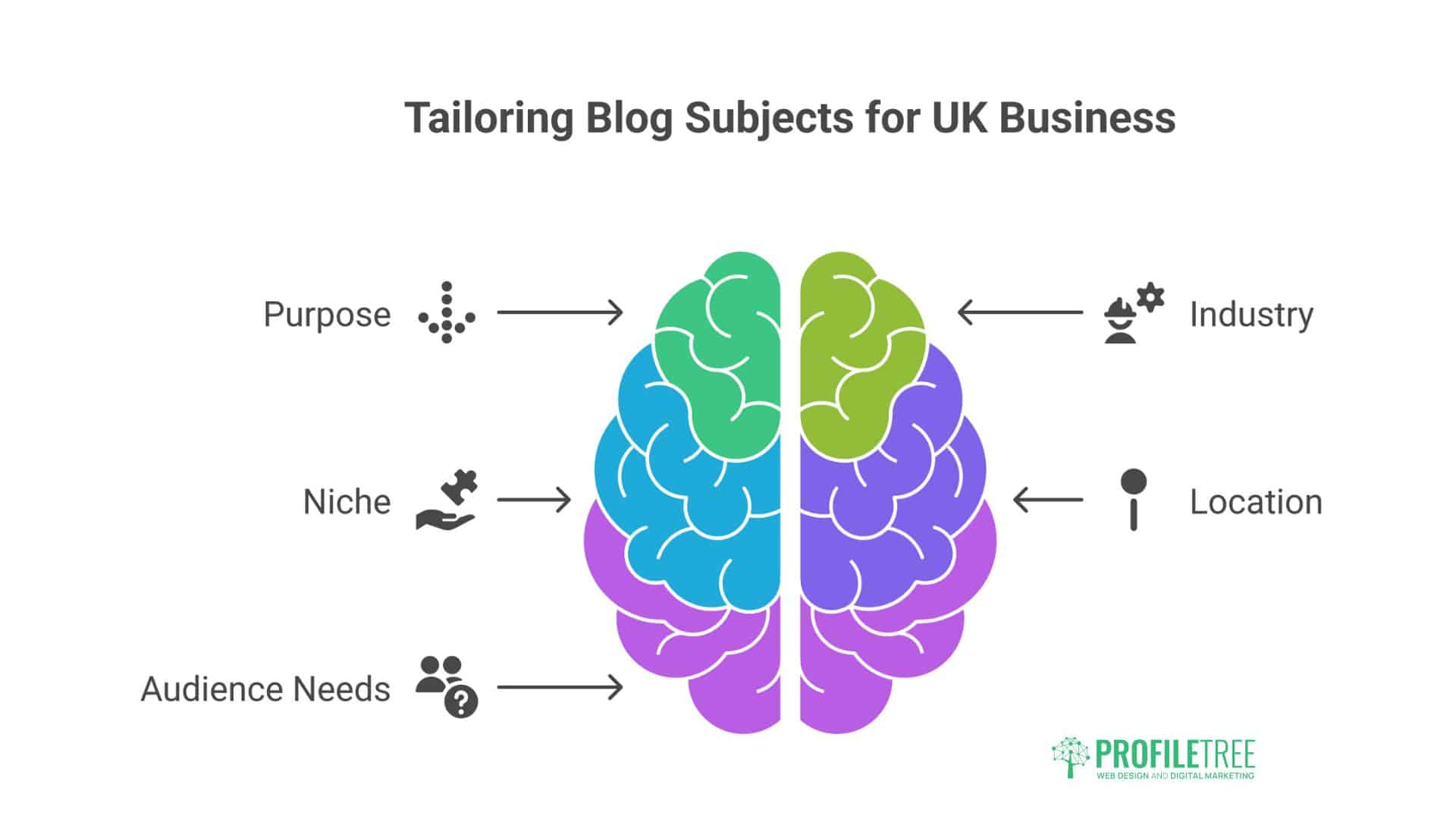
The following subjects are organised by purpose and industry, each adapted for UK business contexts. These ideas can be customised further to fit your niche, location, and audience needs.
Subjects for Building Brand Awareness and Authority
Industry Trends and Predictions:
- The Future of AI in UK Digital Marketing: 2025 Predictions
- How Voice Search Is Changing SEO for British Businesses
- Emerging Web Design Trends UK Companies Should Watch
- Video Marketing Evolution: What Belfast Businesses Need to Know
- The Growing Importance of Website Accessibility in the UK Market
- How GDPR Continues Shaping UK Digital Marketing Strategies
- The Rise of Headless CMS: Is It Right for Your UK Website?
- Mobile-First Indexing: Implications for Northern Ireland Businesses
- How AI Tools Are Transforming Content Creation for UK SMEs
- Sustainability in Web Design: Environmental Considerations
Educational Fundamentals:
- SEO Basics Every UK Business Owner Should Understand
- Web Design Principles That Improve User Experience
- Understanding Google Analytics: A Guide for UK Businesses
- Content Marketing Strategy Fundamentals for SMEs
- Social Media Marketing Essentials for Northern Ireland Companies
- Video Production Basics: Creating Professional Content on a Budget
- WordPress Fundamentals: Getting Started with Your UK Business Website
- Local SEO Explained: Ranking in Your Regional Market
- Email Marketing Best Practices for British Businesses
- Understanding Website Hosting Options for UK Companies
Thought Leadership:
- Why Most UK Business Websites Fail to Generate Leads
- The Biggest SEO Mistakes Northern Ireland Businesses Make
- Rethinking Digital Marketing ROI: Metrics That Actually Matter
- Why Website Speed Matters More Than You Think for UK Conversions
- The Content Marketing Approach UK Businesses Get Wrong
- Accessibility Isn’t Optional: Legal and Ethical Website Considerations
- Why Your Belfast Business Needs Video Content in 2025
- The True Cost of Poor Web Design for UK Companies
- How AI Will Transform SME Operations Over the Next Decade
- Why Digital Strategy Should Drive Business Strategy
Subjects for Lead Generation and Conversion
Solution Comparisons:
- WordPress vs Squarespace vs Wix: Best Platform for UK Businesses
- In-House vs Agency Digital Marketing: Cost-Benefit Analysis for SMEs
- White Hat vs Black Hat SEO: What UK Businesses Need to Know
- Custom Website Development vs Template Solutions: Making the Right Choice
- Organic SEO vs Paid Advertising: Where Should UK Businesses Invest?
- Animation vs Live-Action: Choosing Video Styles for Your Business
- DIY SEO vs Professional Services: True Costs for UK Companies
- Cloud Hosting vs Shared Hosting: What Belfast Businesses Need
- Email Marketing vs Social Media: Where to Focus Your Efforts
- Traditional Marketing vs Digital Marketing for Northern Ireland SMEs
Buying Guides:
- How to Choose a Web Design Agency in Northern Ireland
- Selecting an SEO Service Provider: Questions UK Businesses Must Ask
- What to Look for in Video Production Services
- Evaluating Digital Marketing Agencies: A UK Business Owner’s Checklist
- Choosing the Right CMS for Your UK Business Website
- How to Select AI Tools for Your Business Operations
- Finding Quality Content Writers for Your UK Business Blog
- Selecting Website Hosting: Technical Considerations for UK Companies
- How to Choose Between WordPress Developers
- Evaluating Social Media Management Services for Your Business
Implementation Guides:
- Step-by-Step: Launching Your First Business Blog in the UK
- How to Conduct Keyword Research for Your UK Business
- Creating Your First Business Video: A Complete Guide
- Setting Up Google My Business for Maximum Local Visibility
- Implementing AI Chatbots on Your UK Business Website
- Building Email Marketing Lists That Convert
- Creating Landing Pages That Generate Leads
- Optimising Your WordPress Website for Speed: Technical Guide
- Setting Up Conversion Tracking for Your UK Website
- How to Create an Effective Content Calendar
Problem-Solution Content:
- My Website Isn’t Ranking: Diagnosing SEO Problems for UK Businesses
- Solving High Bounce Rates: Website Engagement Strategies
- Fixing Slow Website Load Times: Practical Solutions
- Addressing Poor Mobile Experience on Your Business Website
- Improving Low Conversion Rates: Practical CRO Tactics
- Solving Common WordPress Security Issues
- Fixing Broken SEO After Website Migration
- Addressing Accessibility Issues on Your UK Business Website
- Solving Email Deliverability Problems
- Fixing Google My Business Listing Issues
Subjects for Customer Education and Loyalty
Advanced Techniques:
- Advanced SEO Strategies for Competitive UK Markets
- Sophisticated Video Marketing Tactics for B2B Companies
- Advanced WordPress Customisation for UK Businesses
- Conversion Rate Optimisation: Beyond the Basics
- Technical SEO: Deep Dive for UK Business Websites
- Advanced Google Analytics: Insights Most Businesses Miss
- Content Distribution Strategies That Multiply Reach
- Advanced Email Segmentation for Higher Conversions
- Schema Markup: Enhancing Your UK Business Website
- Advanced Social Media Analytics and Attribution
Case Studies and Success Stories:
- How We Increased Organic Traffic by 300% for a Belfast Retailer
- Case Study: Website Redesign Boosts Conversions for Northern Ireland B2B Company
- Transforming Local SEO for a Multi-Location UK Service Business
- Video Marketing Success: How One UK Brand Increased Engagement 250%
- AI Implementation Case Study: Reducing Customer Service Costs 40%
- Content Strategy Success: Building Authority in a Competitive UK Niche
- E-commerce SEO Case Study: Doubling Revenue for a UK Online Retailer
- WordPress Migration Success: Improving Performance and Security
- Local Business Transformation Through Digital Strategy
- Social Media Success: Growing a UK Brand from Zero
Industry-Specific Subject Ideas
For Professional Services:
- SEO for UK Solicitors: Attracting Clients Through Search
- Website Design for Accounting Firms: Building Trust Online
- Content Marketing for UK Consultants: Establishing Authority
- Video Marketing for Professional Services: Showcasing Expertise
- Local SEO for Belfast Law Firms: Dominating Regional Search
- Lead Generation Strategies for UK Financial Advisors
- Social Media for Professional Services: What Actually Works
- Building Authority Through Thought Leadership Content
- Website Accessibility for UK Professional Services
- AI Tools for Automating Administrative Tasks
For Retail and E-commerce:
- E-commerce SEO for UK Online Retailers: Complete Guide
- Product Photography Tips for Online Shops
- Seasonal Marketing Strategies for UK Retail Businesses
- Shopify vs WooCommerce for UK E-commerce Sites
- Video Product Demonstrations That Increase Conversions
- Local Inventory Ads for UK Retail Locations
- Abandoned Cart Recovery Strategies That Work
- Mobile Commerce Optimisation for UK Retailers
- Social Commerce: Selling Through Instagram and Facebook
- Email Marketing Automation for E-commerce Businesses
For Hospitality and Tourism:
- Local SEO for Northern Ireland Hotels and B&Bs
- Restaurant Website Design: Converting Visitors to Diners
- Video Marketing for UK Tourism Attractions
- Google My Business Optimisation for Belfast Hospitality
- Social Media Strategy for UK Restaurants and Cafés
- Online Booking Systems: Choosing the Right Solution
- Photography That Sells: Showcasing Hospitality Venues
- Reputation Management for UK Hospitality Businesses
- Seasonal Content Marketing for Tourism Businesses
- Influencer Partnerships for Northern Ireland Attractions
For Trades and Construction:
- Local SEO for Builders and Contractors in Northern Ireland
- Website Design for Construction Companies: Showcasing Projects
- Before-and-After Photography for Trade Businesses
- Video Testimonials That Build Trust for Contractors
- Google Ads for UK Trade Businesses: Quick Lead Generation
- Social Media for Tradespeople: Practical Approaches
- Managing Online Reviews for Construction Companies
- Website Features Every Trade Business Needs
- Content Marketing for Specialist Contractors
- Mobile-Friendly Design for On-Site Trade Estimates
Seasonal and Timely Subject Ideas
Seasonal Business Cycles:
- Preparing Your UK Website for Christmas Shopping Season
- Spring Marketing Ideas for Northern Ireland Retailers
- Summer Content Strategy for UK Tourism Businesses
- Back-to-School Marketing for UK Educational Services
- Black Friday Preparation for UK E-commerce Businesses
- New Year Business Planning: Digital Goals for UK Companies
- Tax Season Content for UK Accounting Firms
- Wedding Season Marketing for Northern Ireland Venues
- Holiday Period Website Maintenance Checklist
- January Sales Strategy for UK Retailers
Optimising Your Blog Subjects for SEO and Engagement
Creating excellent blog subjects is only half the challenge. Optimising how you present and promote them determines whether they achieve their potential.
Crafting Titles That Rank and Convert
Your blog subject becomes a title that must satisfy both search engines and human readers. This requires balancing keyword inclusion with compelling copy that encourages clicks.
Include your primary keyword naturally in the title, ideally near the beginning. “SEO for Belfast Restaurants: Complete Local Ranking Guide” clearly signals relevance for the target keyword whilst remaining readable.
Add specificity to increase perceived value. Numbers, dates, and specific benefits improve click-through rates. Compare “Social Media Tips” with “15 Social Media Strategies That Increased UK Business Engagement by 200% in 2025″—the latter provides concrete expectations.
Consider character limits. Google typically displays 50-60 characters of title in search results. Front-load critical information in case truncation occurs.
Use power words where appropriate. Words like “proven,” “essential,” “complete,” or “definitive” increase perceived authority. However, avoid overuse—they lose effectiveness when every title screams for attention.
Writing Meta Descriptions That Drive Clicks
Meta descriptions don’t directly influence rankings but significantly affect click-through rates. A compelling meta description can improve organic traffic even when you rank below competitors.
Include your primary keyword in the meta description. Google often bolds matching terms in search results, drawing attention to your listing. However, prioritise natural, compelling copy over keyword stuffing.
Clearly state the value readers receive. What specific information will they gain? What problem will you solve? “Learn how Belfast businesses reduced customer acquisition costs 40% using proven local SEO tactics” promises concrete, actionable insights.
Maintain 130-155 characters to avoid truncation. Include a call-to-action when appropriate. Phrases like “Discover how,” “Learn practical strategies,” or “Get actionable tips” create momentum and clarify reader expectations.
Structuring Content for Readability and SEO
How you organise content affects both user experience and search performance. Clear structure helps readers navigate while helping search engines understand your content hierarchy and relevance.
Use descriptive, keyword-rich headings that accurately reflect section content. Instead of generic “Introduction” or “Tips,” use specific headings like “Understanding Local SEO for Belfast Businesses.”
Break content into digestible sections. Long paragraphs intimidate readers and increase bounce rates. Aim for 2-4 sentences per paragraph in most sections, with occasional longer paragraphs for complex explanations.
Incorporate bullet points and numbered lists for scannable information. Many readers skim before committing to deep reading, and lists make it easy to extract key points quickly, encouraging engagement.
Add internal links to related content on your site. This will help readers discover additional relevant information while helping search engines understand your content relationships and site structure.
Building a Sustainable Content Strategy
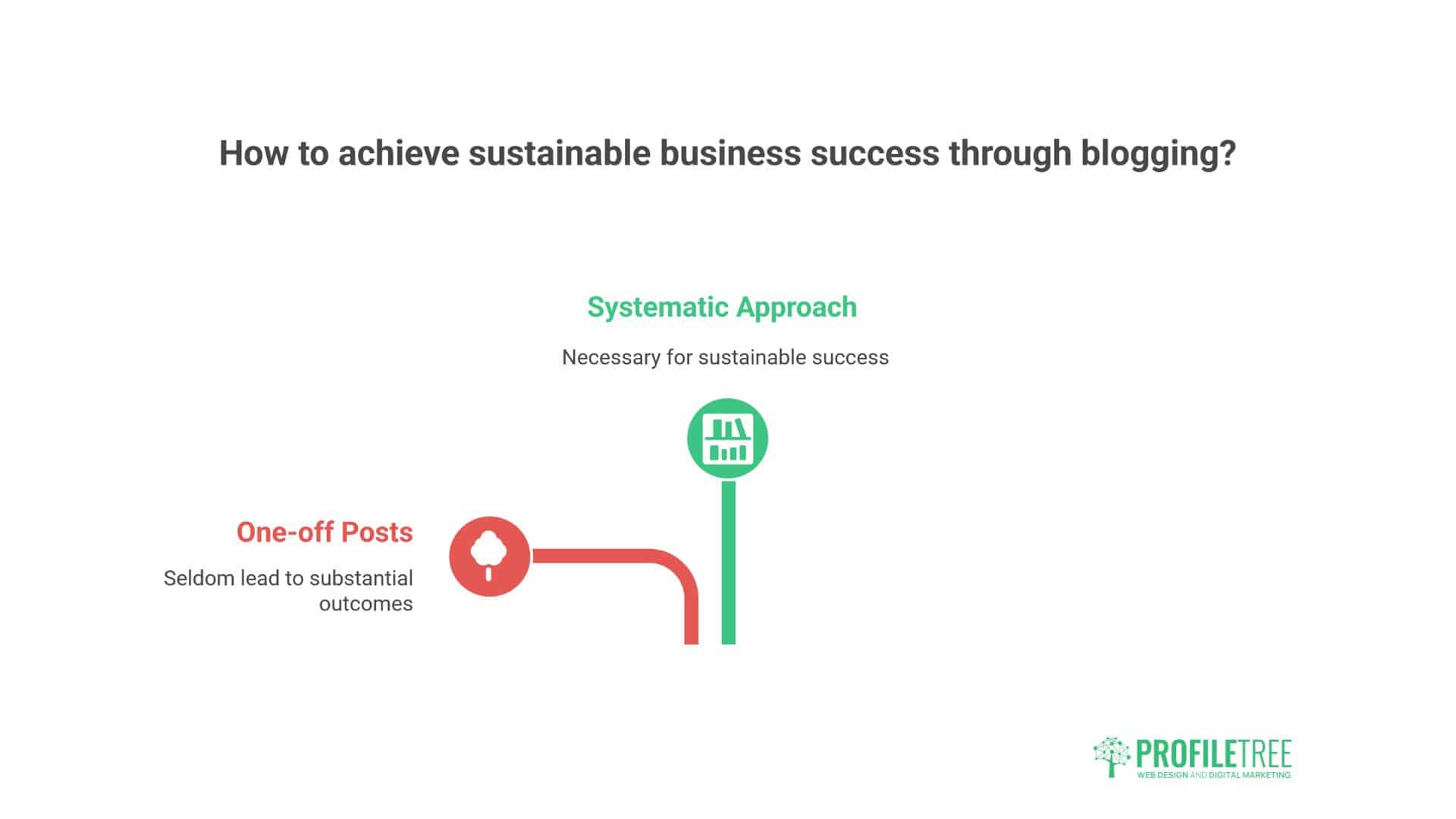
One-off blog posts rarely drive significant business results. Sustainable success requires systematic content creation aligned with broader business objectives.
Creating Your Content Calendar
A content calendar brings structure and intention to publishing. It helps balance different content types, align publishing with business goals, and maintain consistency.
Plan 3-6 months ahead to accommodate research, creation, and promotion timelines. This forward planning also helps identify seasonal opportunities and ensures adequate coverage of important topics.
Balance content across your strategic priorities. Include awareness content to attract new visitors, educational content to nurture prospects, and conversion-focused content to support sales.
Schedule content around business priorities. If you’re launching a new service, plan supporting content that educates prospects about related concepts, addresses common objections, and demonstrates expertise.
Measuring Content Performance
Data-driven content decisions outperform intuition. Regular analysis of content performance reveals what resonates with your audience and informs future subject selection.
Track organic traffic growth for individual posts and overall blog performance. Which subjects attract the most visitors? Which rank well for valuable keywords? This reveals what topics and approaches work for your audience.
Monitor engagement metrics, including time on page, bounce rate, and scroll depth. High traffic with poor engagement suggests a title-content mismatch or quality issues.
Measure conversion actions. How many blog readers complete desired actions—subscribing to emails, requesting consultations, or downloading resources? Track which subjects and content types most effectively drive conversions.
Review search performance in Google Search Console. Which keywords drive traffic to your blog? What’s your average position and click-through rate for important terms? This data informs both content optimisation and new subject selection.
Converting Blog Traffic into Business Growth
Blog subjects ultimately serve business objectives. Traffic and rankings are means to an end—the actual goal is converting readers into customers.
Incorporating Strategic Calls-to-Action
Effective CTAs feel natural and valuable rather than pushy. They offer genuine next steps that benefit readers whilst advancing your business goals.
Place CTAs contextually within content. After explaining a complex topic, offer a downloadable guide that provides additional depth. Following a discussion of DIY approaches, mention your service as an alternative for those wanting expert help.
Vary CTA types throughout longer content. Early CTAs might offer low-commitment actions like newsletter subscription. Mid-content CTAs could suggest related articles. Concluding CTAs might encourage consultation requests for readers who’ve consumed your entire piece.
Make CTA benefits explicit. Rather than generic “Contact us,” use specific value propositions: “Schedule a free website performance audit” or “Get a customised SEO strategy for your business.
Building Trust Through Consistent Value
Business growth from blogging is cumulative. Individual posts rarely convert readers immediately. Consistent publishing that repeatedly delivers value builds the trust necessary for purchasing decisions.
Every piece should teach readers something useful they can implement. Provide actionable information even when discussing topics directly related to your services. This generosity demonstrates expertise while creating reciprocity.
Share authentic experiences and honest perspectives. Admitting when strategies don’t work or discussing challenges you’ve faced makes content relatable. Perfection can feel unattainable; authenticity builds connection.
Stay current with industry developments and update readers accordingly. When major changes affect your field—algorithm updates, new regulations, emerging tools—address them promptly. This positions you as a current, attentive expert.
Final Thoughts
Selecting practical blog subjects is both an art and a science. It requires a deep understanding of your audience, staying current with industry developments, and systematically identifying topics that balance search opportunity with genuine reader value. The 175+ ideas here offer starting points, but your most successful subjects will emerge from truly understanding your customers’ needs and challenges.
Success doesn’t come from any single post. It’s built through consistently publishing quality content that addresses fundamental questions, solves problems, and demonstrates genuine expertise. Whether you’re a Belfast web design agency, a Northern Ireland video production company, or any UK business using content for growth, the principles remain constant: focus on your audience, provide substantial value, optimise strategically, and maintain consistency.
Businesses that treat blogging as a long-term investment rather than a quick win consistently outperform those that chase viral moments. Start with subjects you can genuinely add value to, build momentum through regular publishing, and refine your approach based on data and feedback.
Suppose you need support developing a content strategy tailored to your UK business. In that case, ProfileTree provides digital marketing services including content strategy, SEO, web design, video production, and AI implementation for businesses across Northern Ireland, Ireland, and the UK. Get in touch to discuss how strategic content can drive your business growth.