
Crafting Facebook Ads: A UK Business Guide to Ads That Converts
Table of Contents
Most Facebook ads fail for one reason: the creative is forgettable. The targeting boxes matter less than they used to, because Meta’s delivery system now reads the ad itself and finds the people likely to respond. For UK small businesses, that shifts the work from the back end to the front: the hook, the visual, and the first three seconds of a scroll.
This guide covers how to build Facebook ads that earn attention and action, written for businesses advertising in the UK and Ireland. It walks through understanding your audience, writing copy and designing visuals, staying on the right side of UK advertising and data rules, and measuring what actually moves results.
You will also find realistic GBP benchmarks, ASA compliance notes, and a practical checklist of the mistakes that quietly drain budgets.
Understanding Your Audience Before You Build
Good Facebook advertising starts with a clear picture of who you are trying to reach. With broad targeting now doing much of the heavy lifting, your understanding of the customer shows up in the creative rather than in a long list of interest checkboxes. The sharper your sense of the audience, the sharper the ad. ProfileTree, the Belfast-based digital agency, sees this pattern repeatedly across client accounts: the businesses that brief their creative around a real customer outperform those that brief around demographics alone.
Define the customer, not just the demographic.
Age, location, and income tell you who might see the ad. They do not tell you what makes someone stop scrolling. Write down the specific problem your customer is trying to solve and the words they would use to describe it. A roofing firm in Belfast is not selling “property maintenance”: it is selling an end to the damp patch in the back bedroom.
That distinction shapes everything that follows, which is why it comes first.
Map the buying journey
Someone seeing your brand for the first time needs a different message from someone who visited your website last week. Cold audiences respond to a clear problem and a reason to care. Warmer audiences respond to proof, specifics, and a nudge to act. Plan separate ads for each stage rather than asking one ad to do every job.
Once you know where each audience sits, the targeting choices become straightforward.
Use broad and lookalike audiences sensibly.
Meta’s Advantage+ and broad targeting often beat tightly defined interest lists, because the system optimises against your actual conversion data. Lookalike audiences built from existing customers remain useful for finding similar buyers at scale. If your business needs help turning customer data into a coherent targeting and content plan, our digital strategy services map that out before any spend goes live.
Crafting Ad Copy and Visuals That Stop the Scroll
This is where most of the value sits. A well-targeted ad with weak creative still loses. The aim is a hook that earns the first three seconds, copy that holds attention, and a visual that carries the message even with the sound off.
Write headlines that earn the first three seconds.s
Lead with the outcome or the tension, not your brand name. “Cut your energy bill before winter” works harder than “Welcome to our store.” Keep it short, concrete, and specific to one idea. If the headline tries to say three things, it says nothing.
With the hook in place, the body copy has a job to do.
Structure body copy around one clear promise
State the benefit, back it with a specific detail, and close with one action. Two proven frameworks help here: PAS (problem, agitate, solve) for emotional purchases, and a plain benefit-then-proof structure for considered ones. Avoid stacking multiple offers. One ad, one promise, one call to action such as “Shop now,” “Get a quote,” or “Book a call.”
Copy and visuals work as a pair, so the design has to reinforce the same single idea.
Design visuals for sound-off, mobile-first viewing
Most people watch on a phone with the sound off. Captions are not optional. Put the key message on screen in the first frame, keep text minimal, and use original imagery rather than stock where you can. Video and carousel formats tend to convert well for considered purchases. Producing creative that looks professional without a large budget is a craft in itself, and our video marketing team builds ad creative designed for exactly this kind of placement.
Staying Compliant: UK Advertising and Data Rules
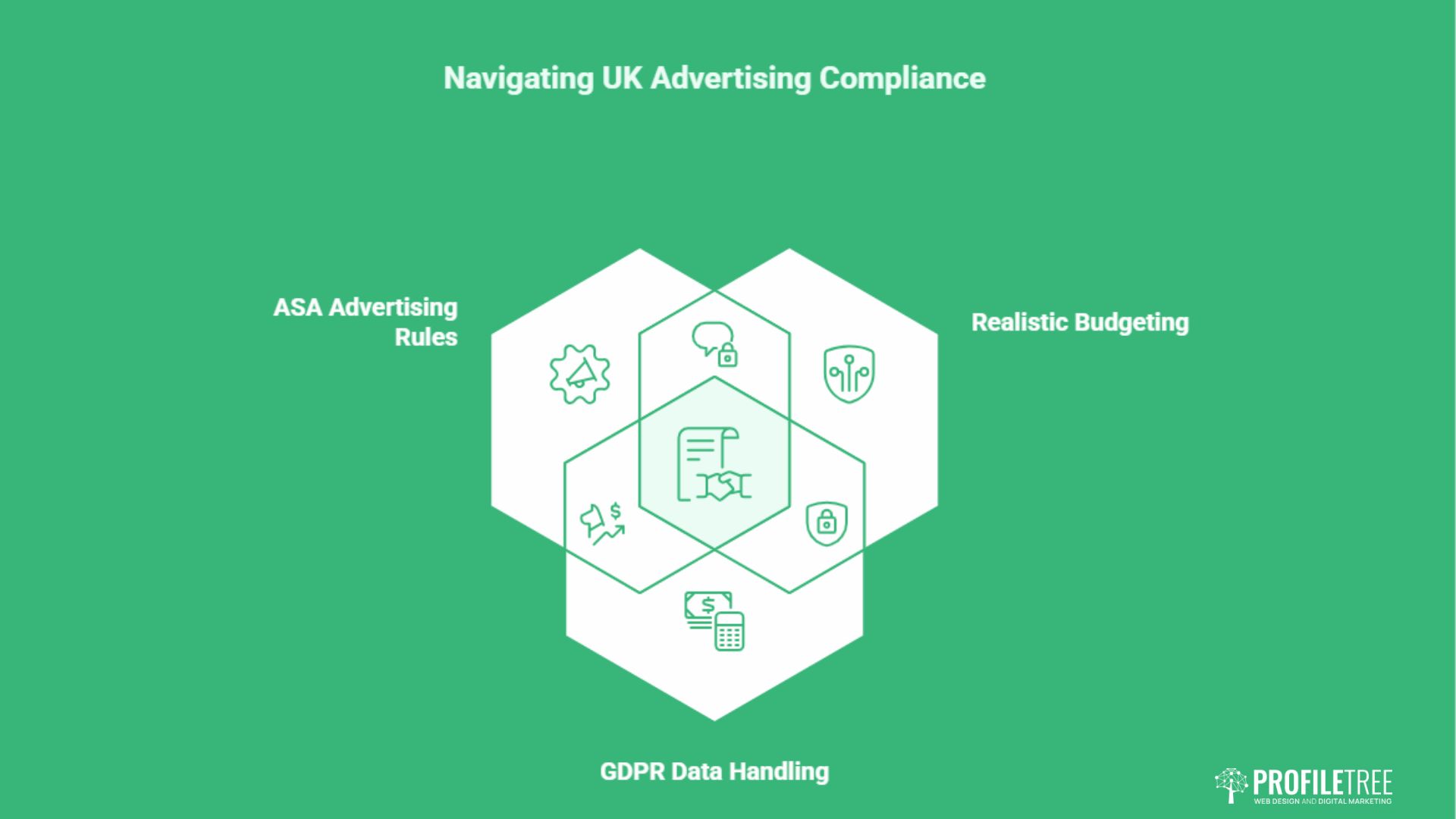
This is the area most global guides skip, and it is the area most likely to get a UK campaign rejected or reported. Advertising in the UK and Ireland carries obligations under both advertising standards and data protection law. Getting this right protects your account and your reputation.
Follow ASA rules on claims and disclosures.re
The Advertising Standards Authority requires ads to be honest, substantiated, and clearly identifiable as advertising. Claims like “the best” or “guaranteed results” need evidence you can produce. Any influencer or paid partnership content must be clearly labelled. The ASA website publishes its rulings, and they are worth reading before you make a strong claim.
Data rules sit alongside these advertising standards and apply the moment you track website visitors.
Handle GDPR and tracking properly.
UK GDPR and the ePrivacy rules govern the Meta Pixel and any retargeting based on website activity. You need a valid consent mechanism before tracking, and a privacy policy that explains it. The Information Commissioner’s Office sets out what consent must look like. This is not a formality: enforcement is real, and consent banners that nudge users into “accept” can themselves breach the rules.
With compliance settled, the practical question becomes budget.
Budget realistically in pounds
UK costs vary by sector, but a useful starting benchmark is around £5 to £10 per day per ad set while the campaign learns, with cost per click commonly falling in the £0.30 to £1.50 range and cost per thousand impressions often between £4 and £12. Service and B2B sectors tend to sit higher. UK businesses should also account for the VAT reverse charge on Meta ad spend. All prices and figures in this guide are indicative UK examples and correct at the time of writing; use them as a benchmark rather than fixed quotations.
As Ciaran Connolly, founder of ProfileTree, puts it: “Creative is the new targeting. Meta’s system already knows how to find the right people. Your job is to give it an ad worth delivering, and to make sure that ad is honest, compliant, and built for a UK audience rather than copied from an American template.”
Measuring, Testing, and Fixing What Underperforms
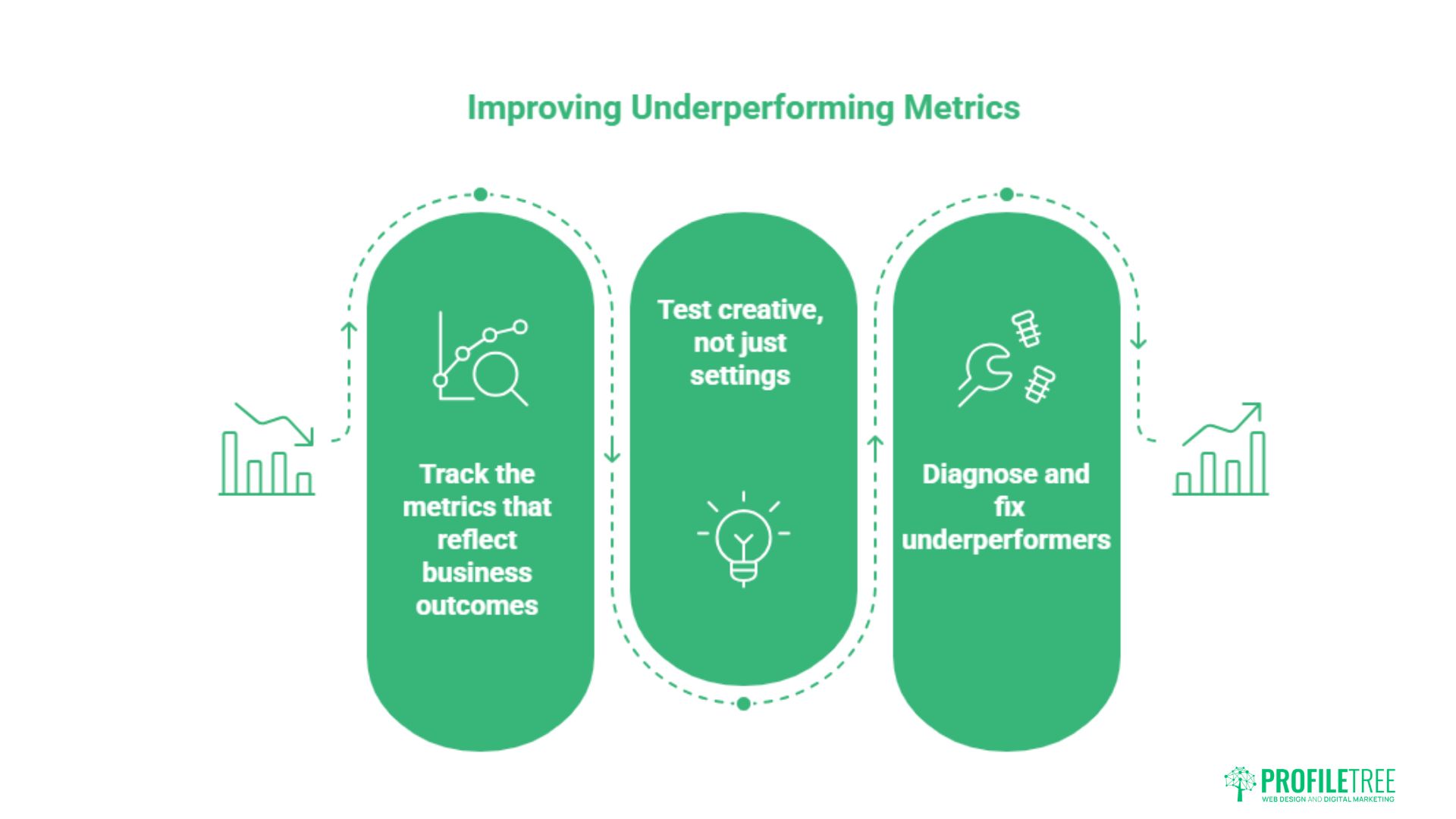
An ad that launches is not finished. The businesses that get a return are the ones that read the data, test deliberately, and cut what is not working. This section covers the metrics that matter and the habits that keep a campaign improving.
Track the metrics that reflect business outcomes.s
Click-through rate is a vanity metric on its own. Watch cost per acquisition, return on ad spend, and conversion rate, because those tie spend to revenue. Impressions and clicks help you diagnose, but they do not pay the bills. Decide what a result is worth to you before you judge whether a campaign succeeded.
Knowing which numbers matter makes structured testing far more useful.
Test creative, not just settings
Since the creative does the heavy lifting, test it first. Run two or three distinct hooks or visuals against the same audience and let the data choose. Change one variable at a time so you can learn from the result. Give each test enough budget and time to clear the learning phase before you call it.
Testing only helps if you act on what it tells you, which brings us to iteration.
Diagnose and fix underperformers.
If an ad is not delivering, work through the usual causes in order: payment or billing issues, policy rejections, an audience that is too small, or a creative that simply is not landing. Reading account data well is a learnable skill, and our digital training courses teach SME teams to run and interpret their own campaigns rather than depending on guesswork.
Conclusion
Strong Facebook ads come from clear audience thinking, creative that earns attention, and honest, compliant execution built for the UK market. Treat every campaign as something you test and refine rather than set and forget. If you want help building the creative or training your team to run it well, talk to ProfileTree about your next campaign.
Frequently Asked Questions
Do I need a big budget to start Facebook ads in the UK?
No. Many UK campaigns start at around £5 to £10 per day per ad set. Keep the budget steady long enough for the campaign to clear its learning phase before judging results.
How does UK GDPR affect Facebook ad targeting?
Tracking website visitors with the Meta Pixel needs valid consent under UK GDPR and ePrivacy rules. You need a compliant consent banner and a clear privacy policy before any retargeting.
What ad format converts best?
Video and carousel formats tend to perform well, especially for considered purchases. The format matters less than a strong hook and a clear single message.
How do I pay VAT on Facebook ads in the UK?
UK VAT-registered businesses usually account for Meta ad spend through the reverse charge mechanism. Check the current position with your accountant, as rules can change.
Why is my Facebook ad not delivering?
Common causes are billing problems, policy rejections, an audience that is too small, or weak creative. Work through them in that order to find the issue.