
Video Marketing Strategy: A Practical Guide for Growing Businesses
Table of Contents
Video marketing has moved from a nice-to-have to one of the most reliable tools a business owner can deploy to build an audience, earn trust, and convert that attention into revenue. Yet most UK and Irish SMEs either do not use it at all or produce content without a strategy. The result is wasted budget, inconsistent output, and no clear way to know whether any of it is working.
This guide is written from the perspective of a digital agency that plans, produces, and distributes video content for businesses across Northern Ireland, Ireland, and the UK. It covers every stage of the process: why video works, how to build a strategy, what the production process actually involves, which platforms to prioritise, and how to measure results. If you want to understand how video marketing fits into a broader content plan, or you are deciding whether to produce in-house or work with a production partner, this is the right starting point.
Why Video Marketing Works for SMEs
The case for video marketing does not rest on a single statistic. It rests on a consistent pattern: businesses that publish video content regularly outperform those that do not, across nearly every metric that matters for growth.
Video holds attention longer than text. It communicates tone, personality, and expertise in ways that written content cannot replicate. When a potential client watches a founder explain their process on camera, they are forming a judgment about whether they trust that person. That trust-building happens faster through video than through any other format.
There are practical SEO benefits, too. Pages with embedded video generate longer dwell times, which signals to Google that the content is worth ranking. YouTube, which Google owns, is the world’s second-largest search engine. Businesses that publish optimised video content are visible to audiences who will never find them through a blog post.
For businesses selling a product or service that is difficult to explain in text, a video removes the ambiguity. A product demonstration, a process walkthrough, or a customer testimonial gives a prospective buyer the information they need to feel confident. That confidence is what converts interest into enquiry.
“Video is the fastest trust-builder available to a small business,” says Ciaran Connolly, founder of ProfileTree. “The businesses we work with that see the strongest results from video are not always the ones with the biggest budgets. They are the ones that commit to showing up consistently on camera and treating video as a genuine part of their marketing strategy rather than a one-off project.”
Video marketing also integrates naturally with a content marketing strategy. A single well-produced video can be repurposed into social clips, used in email campaigns, embedded on service pages, and transcribed for SEO. The return on a single production is significantly higher than most businesses realise when they first budget for it.
The UK and Ireland Context
Ofcom’s annual Media Nations report consistently shows that video streaming and short-form video consumption in the UK have grown year on year. Consumers in Northern Ireland and the Republic of Ireland are watching more video content across more devices than ever before. That shift in consumption behaviour is the context within which your video marketing decisions sit.
For local businesses, this matters for one specific reason: your potential customers are already watching video. The question is not whether to invest in video marketing but whether your business is visible when they are watching content relevant to your industry.
Video Marketing and SEO
The relationship between video and search performance is worth understanding in practical terms. Embedding a video on a page increases the average time visitors spend on that page. Lower bounce rates and higher engagement times are signals that contribute positively to organic rankings.
Beyond on-page performance, structured data for video content (VideoObject schema) tells search engines what your video is about, which can trigger rich results in Google’s video carousel. This gives your content an additional placement in search results alongside your standard organic listing.
Publishing on YouTube with properly researched titles, descriptions, and tags creates a second indexable asset for every video you produce. A business in Belfast that publishes a well-optimised video about, say, office fit-out or accountancy services for hospitality businesses has a realistic chance of appearing both in YouTube search results and in Google’s video tab for relevant queries.
Building Your Video Marketing Strategy
The most common reason video marketing underperforms is that production starts before strategy. Businesses decide to “do more video,” brief a videographer, shoot some content, and then wonder why engagement is low and enquiries have not increased. The issue is almost never the production quality. It is the absence of a clear objective, a defined audience, and a distribution plan.
A video marketing strategy does not need to be a lengthy document. It does need to answer five questions clearly before any filming begins.
What Do You Want a Video to Do for Your Business?
Video marketing can serve several purposes: building brand awareness among new audiences, educating existing customers, supporting sales conversations, improving organic search rankings, or generating leads directly. These require different video formats, different platforms, and different definitions of success. Deciding which objective matters most shapes everything that follows.
Who Is Your Audience, and Where Do They Watch?
A manufacturer selling to procurement managers in the UK has a different video audience to a Belfast restaurant attracting weekend diners. The former may prioritise LinkedIn video and long-form YouTube explainers. The latter will see stronger returns from Instagram Reels and short-form content that showcases the kitchen, food, and atmosphere. Platform choice follows audience behaviour, not personal preference.
What Types of Video Will You Produce?
| Video Type | Primary Purpose | Typical Length | Best Platform |
|---|---|---|---|
| Brand story | Trust and awareness | 90 to 3 minutes | Website, YouTube |
| Product demo or explainer | Consideration and conversion | 2 to 5 minutes | Website, YouTube |
| Customer testimonial | Social proof | 60 to 90 seconds | Website, social |
| Social-first content | Reach and discovery | 15 to 60 seconds | Instagram, TikTok, Shorts |
| Educational series | Authority and SEO | 5 to 15 minutes | YouTube |
| Behind the scenes | Humanising the brand | 30 to 90 seconds | Instagram, LinkedIn |
What Is Your Realistic Production Approach?
The Video Investment Matrix below gives a practical comparison of the three main approaches available to most SMEs.
| Approach | Typical Cost | Time Investment | Output Quality | Best For |
|---|---|---|---|---|
| DIY (smartphone + free editing app) | Minimal | High internal time | Variable | Social-first, behind the scenes |
| Semi-professional (freelance videographer) | £500 to £1,500 per video | Moderate | Consistent | Testimonials, single-topic explainers |
| Agency (strategy + production) | £1,500 to £5,000+ per project | Low internal time | High and brand-consistent | Hero content, service explainers, campaigns |
The right approach depends on the objective. Social content posted three times a week does not require agency production. A hero video on your services homepage does.
How Will You Distribute and Measure Results?
Production is only part of the investment. Video marketing requires a distribution plan: where the content will be published, how it will be promoted, and what metrics you will use to judge performance. A video that is produced but not actively distributed rarely performs.
Understanding the Video Marketing Funnel
Video content works at every stage of the buying journey, but different formats serve different stages.
At the top of the funnel, short-form and social-first video builds awareness with people who do not yet know your business exists. Educational YouTube content attracts people actively searching for answers in your industry.
In the middle of the funnel, explainer videos and product demonstrations help people who are comparing options and assessing whether your business can solve their problem.
At the bottom of the funnel, customer testimonials and case study videos address the final objection before a purchase decision is made. These are often the most underinvested video type, despite having the clearest impact on conversion.
A sustainable video marketing strategy produces content for all three stages rather than concentrating everything on awareness.
The Production Process: From Brief to Final Cut
Understanding the production process helps you brief video professionals more effectively, manage timelines realistically, and make better decisions about where to invest.
Pre-Production: Script and Storyboard
Pre-production is where most of the value is created, and most of the budget is saved. A well-developed script and storyboard prevent expensive reshoots, keep filming efficient, and ensure the final video actually communicates what you intended.
A script for a business video does not need to read like a screenplay. A structured outline with key messages, approximate timings, and a clear call to action is usually enough for a talking-head interview or explainer. More complex productions with multiple locations or actors benefit from a full shooting script.
Storyboarding is the process of sketching or describing the visual sequence shot by shot. For social-first content, a simple shot list often serves the same purpose. The goal is to arrive on shoot day knowing exactly what you need to capture.
The call to action should be planned before filming, not added in post-production. A video that ends without a clear next step wastes the engagement it has built.
Production: Sound, Light, and Framing
A professional-looking business video comes down to three fundamentals far more than camera quality.
- Sound is the single most common reason business videos fail to hold an audience. Poor audio is immediately off-putting and signals low production values even on an otherwise well-shot video. An external lapel microphone costs between £30 and £150 and makes a more significant difference to perceived quality than upgrading from a smartphone to a DSLR.
- Lighting determines whether a video looks polished or amateurish. Natural light from a window to one side of the subject is a reliable starting point. Two LED panel lights (available for under £100) give consistent, controllable results for indoor interviews and talking-head content. The goal is to avoid harsh shadows on the face and overexposed backgrounds.
- Framing follows basic composition principles. Position the subject in the upper third of the frame with some space above their head. For interview-style content, slight off-centre framing with the subject looking towards the centre of the frame is a standard approach that reads as professional. Keep the background clean and uncluttered, or use a shallow depth of field to separate the subject from distracting elements.
A practical pre-filming checklist for in-house video:
- Microphone connected and tested
- Background checked for distracting elements
- Lighting set and shadows removed from the face
- Camera at eye level or slightly above
- Phone or camera in horizontal (landscape) orientation
- Notifications silenced on any devices in the room
- Test footage reviewed before the main take
Post-Production: Editing for Retention
Editing is where the raw footage becomes a finished video, but it is also where many businesses either invest well or lose a significant proportion of the value they have created.
Pacing is the most important editing decision. For social content, cut at or below 60 seconds with no dead air. For YouTube explainers, keep the editing tight enough that no single point takes longer to make than the viewer’s patience allows. A useful rule of thumb: if you would skip a section while watching someone else’s video, cut it.
Graphics and text overlays serve two purposes: they reinforce key messages for viewers watching without sound (the majority on most social platforms), and they maintain visual interest in sections where the main footage is static. Lower thirds identifying speakers, on-screen text summarising key points, and branded end screens all contribute to a professional finish.
Music selection significantly affects the emotional register of the video. Royalty-free libraries such as Artlist, Epidemic Sound, and YouTube’s own Audio Library provide legally cleared tracks. Match the tempo and mood to the content: an upbeat track under a product demonstration creates energy; a quieter, more ambient track suits a testimonial or brand story.
Using AI in Video Production
AI tools have changed the economics of video production for SMEs in practical ways that deserve a direct response rather than a cautious mention.
AI-powered transcription tools (such as Descript or Otter.ai) reduce the time required to create captions and repurpose video content into written formats. This is a straightforward efficiency gain with no brand risk.
AI video editing tools can automate rough cuts based on transcript analysis, identify the strongest takes, and significantly reduce editing time. For businesses producing regular social content, this can make in-house production considerably more sustainable.
Generative AI tools for B-roll creation are more recent and carry more risk. AI-generated footage lacks the authenticity of real-world imagery and is identifiable by audiences. For brand-building content, original footage outperforms AI-generated alternatives. For internal training or low-stakes explainer content, AI-generated visuals may be appropriate.
The important principle is to use AI where it improves efficiency without substituting for genuine brand expression. An AI-scripted, AI-voiced, AI-edited video may be cheap to produce, but it communicates nothing about the people, values, or expertise behind the business.
Distributing and Optimising Your Video Content
Producing a video is the beginning. Distribution determines whether it reaches the right audience.
YouTube Marketing and SEO
YouTube is a search engine as much as a video platform. People search YouTube for answers to specific questions, product reviews, how-to guides, and industry information. For businesses whose potential customers are searching for information about their services, a well-optimised YouTube channel is a long-term organic asset.
Effective YouTube video marketing requires attention to:
- Titles: Include the specific search query the video answers. Front-load the most important term.
- Descriptions: Write at least 200 to 300 words. Include the primary keyword naturally, summarise what the video covers, and add timestamps for longer content.
- Tags: Use a mix of broad topic tags and specific phrase tags matching the video’s subject.
- Thumbnails: Custom thumbnails with clear text and a visible face significantly improve click-through rates compared to auto-generated frames.
- End screens and cards: Link to related videos, playlists, or your website to extend watch time and guide viewers further into your content.
Understanding what short-form video means for your content strategy is useful context for businesses deciding how to split their production effort between longer YouTube content and shorter social formats.
Platform Selection Guide
Choosing the right platform for each piece of content prevents wasted effort and mismatched audiences.
| Platform | Primary Audience | Ideal Video Length | Key Metric | Best Content Type |
|---|---|---|---|---|
| YouTube | Intent-driven searchers | 5 to 15 minutes | Watch time, search ranking | Tutorials, explainers, series |
| Instagram Reels | Discovery-based browsing | 15 to 60 seconds | Reach, saves | Brand personality, product reveals |
| TikTok | Broad discovery, younger audiences | 15 to 90 seconds | Completion rate, shares | Educational, entertaining |
| B2B decision-makers | 1 to 3 minutes | Engagement, profile visits | Thought leadership, case studies | |
| Local and community audiences | 1 to 3 minutes | Views, link clicks | Events, announcements |
For most B2B businesses in Northern Ireland and the UK, the most productive starting point is YouTube for search-driven content and LinkedIn for direct engagement with decision-makers. B2C businesses with a visually demonstrable product will typically see stronger early returns from Instagram and TikTok.
Video Accessibility and WCAG Compliance
Video accessibility is an area most businesses overlook entirely, despite the practical and reputational benefits of getting it right.
Captions make video content accessible to deaf and hard-of-hearing viewers, and to the large proportion of people who watch video without sound in public settings. Closed captions can be auto-generated by YouTube and edited for accuracy, or produced professionally for higher-stakes content.
Audio descriptions are relevant to any video in which meaning is conveyed visually without verbal explanation. For most talking-head business videos, the verbal content is sufficient. For product demonstrations where visual elements are central to the explanation, brief verbal descriptions of what is happening on screen improve both accessibility and comprehension.
Transcripts, published alongside or below the video, serve two purposes: accessibility for users who cannot watch the video, and additional indexable text content for search engines.
The Web Content Accessibility Guidelines (WCAG 2.1) set Level AA as the accepted standard for web content in the UK public sector and is increasingly expected in private-sector communications. Captions, transcripts, and audio descriptions are the core video requirements at that level.
GDPR considerations apply when filming in public spaces or when including individuals’ faces in branded content. Anyone identifiable in a video must have given informed consent for that footage to be used as it is. For employee-facing and external marketing content, a clear consent process is required before filming.
Measuring Success: KPIs That Actually Matter
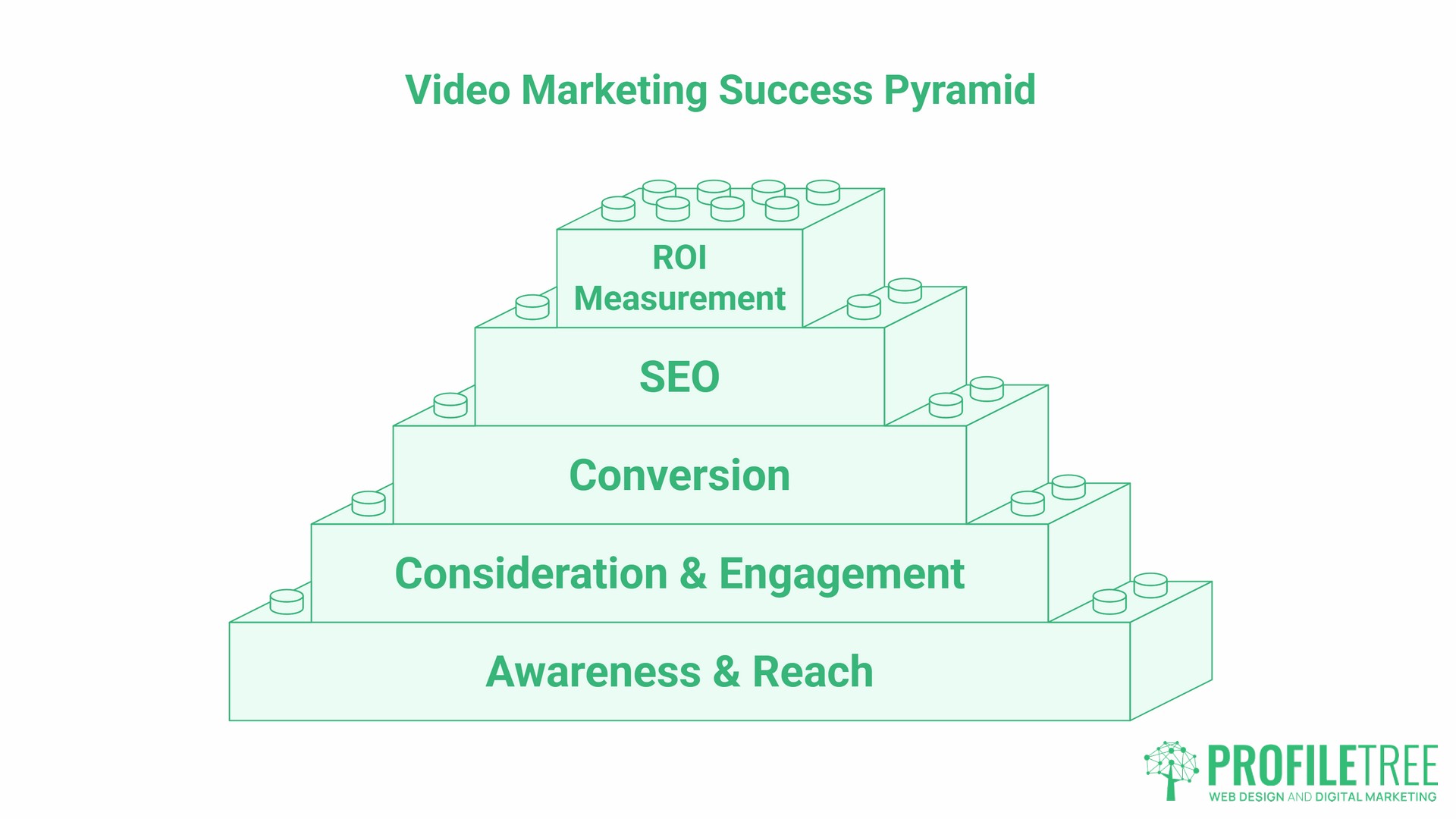
View count is the least useful metric for assessing video marketing performance. A video with 10,000 views that generates no enquiries has performed worse than a video with 400 views and three sales conversations.
The metrics worth tracking depend on the objective the video was designed to serve.
For awareness and reach:
- Impressions and unique viewers
- Average view duration (what percentage of the video people watch)
- Subscriber growth on YouTube
For consideration and engagement:
- Comments and saves (stronger signals than likes)
- Click-through rate on links in the description or end screen
- Shares and reposts
For conversion:
- Landing page visits from video referrals (tracked via UTM parameters)
- Lead form completions where the video is embedded nearby
- Sales enquiries that reference having watched a specific video
For SEO:
- Organic search ranking for target queries (YouTube and Google)
- Time on page for pages with embedded video vs those without
- Backlinks earned by video content
Setting up UTM tracking for every link used in video descriptions and social posts takes minutes and gives you a clear view of which videos are generating traffic, leads, and conversions. Without it, you are guessing.
ROI Measurement
Calculating the return on investment in video marketing requires linking production costs to commercial outcomes.
Start by documenting the full cost of each video: production time, any external costs, distribution spend, and the staff time invested in planning and managing the process. Then track the commercial activity directly attributable to that video over a defined period (typically three to six months for YouTube content, shorter for social).
For lead generation, assign a conservative value to each qualified enquiry based on your average conversion rate and deal value. Compare that figure against total production cost to calculate a basic return.
Video content on YouTube has a longer revenue curve than social content. A well-optimised tutorial or explainer video published today may generate enquiries two years from now if it maintains its search ranking. This compounding return distinguishes YouTube content from that on most social platforms, where content becomes invisible within days.
Understanding how to maximise ROI from digital marketing campaigns provides a broader framework for how video fits into overall campaign measurement.
Video Marketing Challenges and How to Address Them
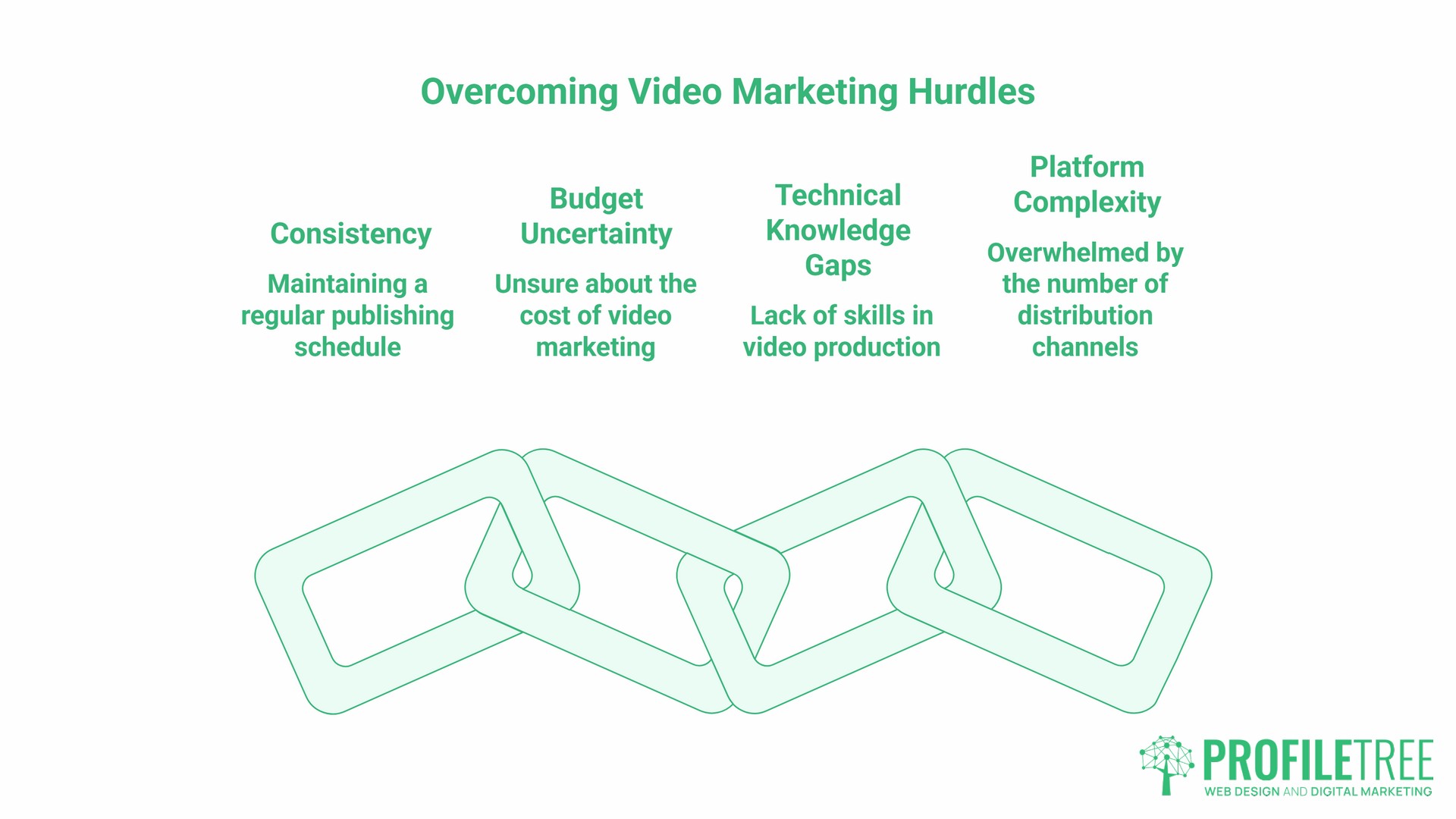
Most businesses that struggle with video marketing face predictable challenges. Identifying them clearly makes them easier to solve.
- Consistency is harder than starting. Producing one or two videos is straightforward. Publishing useful video content on a regular schedule over months and years requires a production system, not just enthusiasm. Batching filming sessions (recording multiple pieces of content in a single day) is the most practical way for small teams to maintain consistent output without constant effort.
- Budget uncertainty. Many businesses avoid video marketing because they are unsure what it should cost. The table in the strategy section above provides a working benchmark. As a general principle, invest the most in content that lives permanently on your website or YouTube channel (hero videos, service explainers), and adopt a lighter production approach for content that has a short lifespan (social posts, event updates).
- Technical knowledge gaps. For businesses that want to build in-house video capability rather than outsourcing entirely, digital training can accelerate the process significantly. Understanding the fundamentals of production, editing, and distribution before you start reduces the trial-and-error period and protects your brand while you are developing skills.
- Platform complexity. The number of platforms available for video distribution can make the decision feel paralysing. The practical answer: start with one platform that matches where your target audience is most active, build a sustainable publishing rhythm there, and only expand to additional channels when the first is working.
Getting Started with Video Marketing
Starting with video marketing does not require a significant upfront investment. The following sequence is a practical starting point for businesses that are new to video or returning to it after an inconsistent attempt.
- Step 1: Define one objective. Choose a single goal for your first three months of video marketing. Build an audience on YouTube, generate testimonial content for your website, or create a series of social posts for a specific campaign. One clear objective is more achievable than a broad aspiration to “do more video.”
- Step 2: Choose one format and one platform. Match the format to the objective and the platform to the audience. Resist the urge to be everywhere at once.
- Step 3: Plan five to ten pieces of content before filming anything. Batching content planning prevents the situation where you film one video, publish it, and then spend weeks trying to work out what to make next.
- Step 4: Produce a test piece before committing to a campaign. A single video, produced quickly and published, gives you real data on how your audience responds before you invest in a full series.
- Step 5: Review and adjust. After eight to twelve weeks, review the performance data. What got the most engagement? What did people ask about in the comments? What content generated enquiries? Use those signals to shape the next phase of production.
Businesses that find the DIY approach productive but want to raise production quality, or develop a more sophisticated YouTube or content marketing strategy, can explore how ProfileTree’s video production service supports SMEs across Northern Ireland and the UK.
FAQs
How much does a professional business video cost in the UK?
Professional business video production in the UK typically ranges from £500 to £1,500 for a straightforward single-camera interview or testimonial produced by a freelance videographer, up to £2,500 to £5,000 or more for a fully produced brand film or campaign video from a digital agency. The variables that most significantly affect cost are crew size, the number of filming locations, the complexity of the edit, and whether the brief includes motion graphics or animation. For businesses with a clear brief and an existing location, costs at the lower end of the professional range are realistic. For content that will represent your brand on a homepage or in a paid advertising campaign, investing toward the higher end typically produces a stronger long-term return.
What is the best video length for social media?
For Instagram Reels, TikTok, and YouTube Shorts, 15 to 60 seconds performs best for reach and completion rate. For LinkedIn, one to two minutes is a practical ceiling for most business content. For YouTube, where the audience is intent-driven and searching for specific answers, two to ten minutes is appropriate for explainer content. Longer content (ten to twenty minutes) can perform well as a tutorial or in-depth guide if the subject warrants it. The principle across all platforms is that video should be exactly as long as it needs to be to deliver its message, and no longer.
Do I need a big budget to start video marketing?
No. A modern smartphone, a lapel microphone (under £50), a ring light or good natural light, and a free editing app such as CapCut or DaVinci Resolve is sufficient to produce social-first content that performs well. The investment most worth making at the start is time: time to plan content, time to learn basic filming and editing, and time to review performance and improve. Budget becomes more relevant when you have validated that the video is driving results and want to increase production quality for higher-stakes content like homepage videos, paid advertising, or YouTube series.
How do I track the ROI of video marketing?
The most reliable method is UTM parameter tracking on every link you include in video descriptions, social posts, and end screens. This connects views to website visits in Google Analytics. From there, goal tracking and conversion events show which videos are driving specific actions (form completions, calls, purchases). For YouTube content, channel analytics show watch time, click-through rates, and subscriber growth over time. For embedded website video, compare time on page and conversion rate for pages with video against equivalent pages without. Combining these data points gives a reasonable picture of commercial impact.
What equipment do I need for a basic in-house video?
A smartphone with a quality rear camera (most current models are adequate), a small tripod or phone mount, a lapel or clip-on microphone, one or two LED panel lights, and a free editing application covers all the fundamentals. The total cost for this setup is typically under £200. As your output becomes more consistent, adding a dedicated camera with manual controls and a second light source are the most impactful upgrades.
Is YouTube or TikTok better for B2B growth?
YouTube and TikTok serve different functions in a B2B video marketing strategy. YouTube is an intent-based platform where people search for specific answers. A business that publishes well-optimised tutorials and explainers on YouTube can attract decision-makers who are actively researching before making a purchase. TikTok is a discovery-based platform where content reaches people who were not looking for it. For building brand awareness among a broader audience, including decision-makers, TikTok is valuable, particularly for businesses targeting founders and SME owners. For most UK and Irish B2B businesses, YouTube delivers stronger commercial returns per hour of production effort, particularly over the medium term.