
Shoppable Video Content: A Practical Guide for SME Retailers
Table of Contents
Shoppable video content lets a viewer buy a product without leaving the video they are watching. For a small retailer in Belfast or a homeware brand in Cork, that shortens the gap between someone admiring a product and actually paying for it. The question for most SMEs is not whether the format works, but whether it is worth the production effort and which route makes sense on a modest budget.
This guide walks through what shoppable video content is, how UK and Irish retailers can use it, what it costs to get started, and the advertising rules you need to follow. It is written for owners and marketing managers weighing up the format, not for enterprise teams with a dedicated video department.
What is shoppable video content?
Shoppable video content is video that includes built-in shopping functionality, so a viewer can move from watching to purchasing within the same experience. The mechanics usually take one of a few forms: clickable product tags or “hotspots” layered over the footage, overlays that surface a price and an add-to-cart button, or links that send the viewer to a product page. On social platforms, the buying step often happens natively; on your own website, it runs through a video player built for commerce.
It helps to separate two things people often confuse. Interactive video is any video a viewer can click, tap or branch through. Shoppable video is a subset of interactive video where the interaction leads to a purchase. All shoppable videos are interactive, but not all interactive videos are shoppable.
The format itself is not new. What has changed is that the tools are now within reach of smaller businesses, and shoppers have grown comfortable buying through social feeds. If you are still deciding whether video belongs in your marketing at all, our video marketing guide covers the wider case before you commit to the shoppable layer.
Why shoppable video suits some SME retailers
Shoppable video earns its place when a product benefits from being seen in use. A short clip showing a candle being lit, a jacket being worn, or a kitchen gadget in action does more selling than a static photo, and the buying button removes the friction of hunting for the product afterwards. For impulse-friendly categories such as fashion, beauty, food and homeware, that combination tends to lift conversion.
It suits SMEs for a practical reason too: the native tools on Instagram and TikTok cost nothing beyond the time to produce the clip. A small team can test the format without a platform subscription, then decide whether to invest further based on real results rather than a sales pitch.
That said, the format is not universal. High-consideration purchases, anything requiring a quotation, or products with complex specifications often convert better through a longer nurture process. Short-form video has reshaped how people discover products, as our piece explains, but discovery and purchase are different jobs, and shoppable video only earns its keep when the product is genuinely ready to buy on sight.
A quick way to decide:
- Good fit: visual products, low price point, impulse-friendly, in stock and ready to ship.
- Weaker fit: services, bespoke or made-to-order items, and high-ticket purchases that need comparison.
- Test first: mid-range products where the visual sells but the price gives buyers pause.
How shoppable video changes buyer behaviour
When the buying step is embedded in the video, the path from interest to checkout gets shorter, and fewer people drop out along the way. Three shifts are worth understanding before you produce anything.
The first is product discovery in context. A cooking clip that tags the pan, or a styling video that tags each item, shows the product in action rather than sitting on a white background. Viewers understand how it fits their lives, which is hard to convey in a product photo.
The second is social proof. Clips featuring real people, including user-generated content and creator partnerships, tend to carry more trust than polished brand ads. A homeware brand in Galway showing a customer’s actual kitchen will often outperform a studio set.
The third is recall. Video is more memorable than static posts, so even viewers who do not buy immediately are more likely to remember the brand later. That makes shoppable video useful at the top of the funnel as well as the bottom, provided you are not expecting every view to convert.
The platforms, and where UK and Irish SMEs should start
Most SMEs face a choice between social-native shoppable video and on-site shoppable video. Each has trade-offs in terms of cost, control, and data.
| Route | Cost to start | Control and data | Best for |
|---|---|---|---|
| Instagram (product tags, Reels) | Free, native | The platform owns the data | Visual consumer products, established Instagram following |
| TikTok Shop | Free to set up, sales commission | The platform owns the data | Younger audiences, impulse categories |
| YouTube (product links, shopping) | Free, native | You own the data and the customer | Longer demos, tutorials, considered purchases |
| On-site player (web-native) | Subscription or build cost | Longer demos, tutorials, and considered purchases | Brands prioritising data and repeat custom |
Social-native routes are “rented” reach: cheap to start, but the platform owns the audience relationship and the data. On-site shoppable video is “owned” media: it costs more to set up, yet every interaction feeds your own analytics and ties back to your store. For most SMEs, the sensible path is to prove the format on a free social channel first, then consider an on-site player once the numbers justify it.
YouTube deserves a particular mention for businesses with something to demonstrate. Longer, search-friendly product videos can keep working for months, unlike social clips that fade within days. Our YouTube marketing strategy guide covers how to build that channel without buying followers. TikTok’s commerce features are moving fast, and the trends in TikTok social commerce are worth tracking before you commit a budget there.
UK and Ireland advertising rules you need to follow
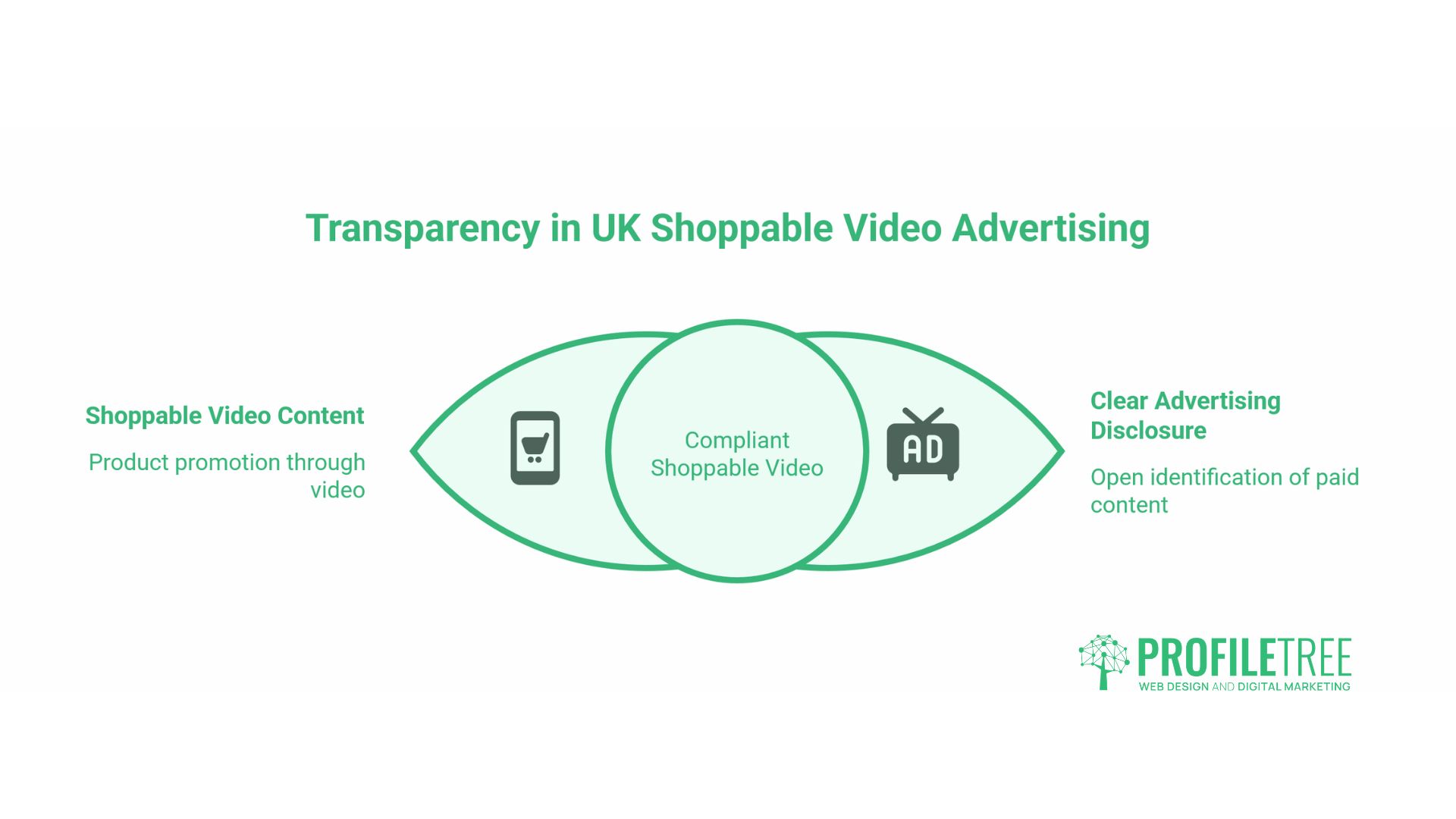
This is the part international guides most often skip, and it matters. In the UK, shoppable videos promoting products must be clearly identifiable as advertising. Where a creator or influencer is paid or otherwise incentivised, the content needs a clear label, such as # AD. Burying the disclosure or relying on viewers to infer it is not enough.
Consumer protection rules apply to the purchase itself. Pricing must be accurate and, where relevant, inclusive of VAT; delivery terms and costs must be clear before checkout; and the standard distance-selling rights around returns and cancellations still apply when someone buys through a video. For businesses shipping between Great Britain, Northern Ireland and the Republic of Ireland, the post-Brexit arrangements add another layer to get right. Our overview of UK digital compliance for e-commerce and the guide to data privacy laws in e-commerce both cover the wider obligations, and the impact of Brexit on UK digital marketing is relevant for cross-border sellers.
Shoppable video for B2B, not just retail
The format is not limited to fashion and beauty. A software firm can use a shoppable demo video that links straight to a trial sign-up. A manufacturer can tag components in a product walkthrough so a buyer can request a quote without leaving the video. The buying step simply changes from “add to cart” to “book a demo” or “download the spec”. For B2B sellers, the value is less about impulse and more about removing steps between an interested viewer and a sales conversation, which connects to broader digital marketing strategy work on lead generation.
What it costs to get started
Cost is the question every PAA result dodges, so here is a straight answer in tiers.
At the entry level, the native tools on Instagram, TikTok and YouTube are free. Your only cost is production time, and a phone shot well in good light is enough to begin. This is where almost every SME should start.
The middle tier adds professional production: proper lighting, editing, and clips shot specifically for vertical and shoppable formats. This is where an agency or freelance video team comes in, and where the quality jump tends to show in conversion. The video production process is worth understanding before you brief anyone, so you know what you are paying for.
The top tier is on-site shoppable video through a dedicated web-native player, usually a monthly subscription on top of production. This only makes sense once you have proven demand and want to own the data and customer relationship rather than rent it from a platform. At that point, the cost sits alongside your wider store build, and a well-built, fast site matters as much as the video itself.
“The hard part is rarely the video. It is making sure your stock, your prices and your checkout all keep up with what the video promises. A clip that drives a hundred orders is a problem if your site cannot take them.” Ciaran Connolly, founder, ProfileTree
Getting the technical side right
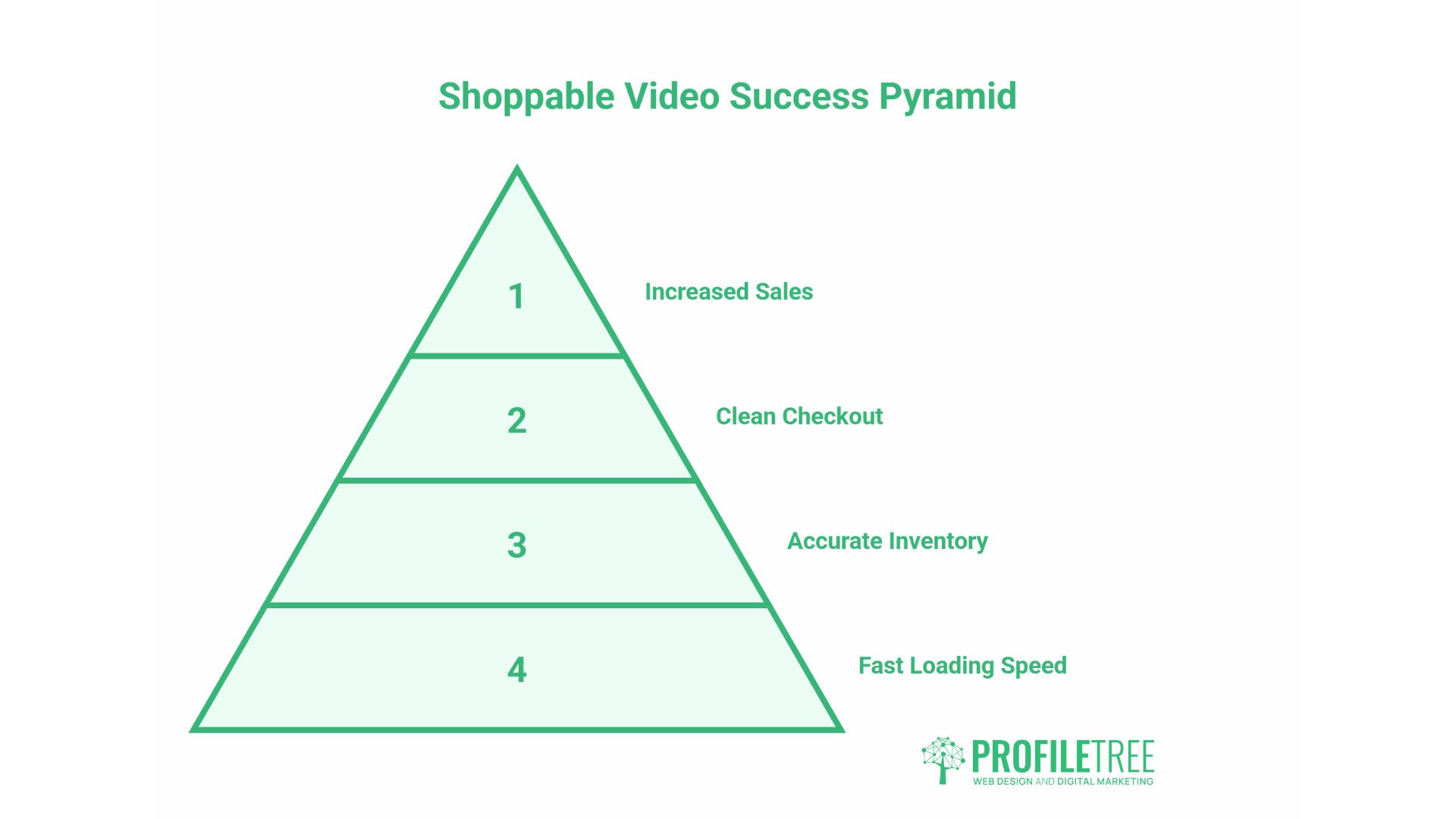
A shoppable video is only as good as the store behind it. Clickable product links and embedded carts depend on a site that loads quickly, keeps inventory accurate, and handles checkout cleanly on mobile, where most of this viewing happens. If the video drives a surge of traffic and the product page is slow or the stock count is wrong, the spend is wasted.
This is where production and web work meet. The video creates the demand; the site has to convert it. For SMEs building or upgrading an online store, the choice of platform and build quality directly affects whether shoppable video pays off, which is why our work on the best programming language for an e-commerce website and AI’s impact on e-commerce conversion rates both feed into the same goal: turning a view into a sale.
A simple first campaign
If you are starting from scratch, keep it small. Pick one product that sells on sight. Shoot a short vertical clip showing it in use, not just sitting still. Tag the product using the native tool on whichever platform your customers already use. Add a clear, honest disclosure if the post is an ad, avoiding the common TikTok marketing mistakes that trip up first-timers. Then track what happens: views, clicks on the product tag, and actual sales, so you can judge the format on evidence rather than hope.
From there, the e-commerce opportunities in Ireland and the role of content marketing in supporting each video give you the next steps once the first test proves out.
How to measure whether it is working
The mistake most SMEs make is judging shoppable video on views. Views tell you reach, not revenue. Three numbers matter more, and all three are free to track on native platforms.
The first is tag click-through: of the people who watched, how many tapped the product. A low figure usually means the product was not clearly shoppable, or the clip did not make anyone want it. The second is conversion: of those who tapped, how many bought. A healthy click-through rate with poor conversion points at the store, not the video. Check the product page speed, price clarity, and mobile checkout before reshooting. The third is cost per sale, which only becomes meaningful once you are paying for production or a player subscription, and which tells you whether to scale or stop.
Set a baseline from your first few clips before you spend anything, then compare every later test against it. Judging the format on evidence rather than instinct is the whole point of starting free, and it ties directly into wider conversion rate work on the store itself.
Common mistakes that waste the effort
A handful of errors come up again and again, and all of them are avoidable.
Producing the video before fixing the store is the most expensive one. A clip that drives orders into a slow page or an inaccurate stock count loses the sale and the goodwill. Sort the e-commerce build first.
Treating every clip as a hard sell is the second. Shoppable video works best when it shows the product in action, not when it just shouts a discount over a still image. Lead with the demonstration; let the tag do the selling.
Skipping the disclosure is the third, and it carries real risk rather than just weak results. Paid or incentivised content without a clear label breaches advertising rules, so build the #AD step into the process rather than bolting it on later.
The fourth is spreading thin across every platform at once. A small team running half-hearted shoppable video on four channels will beat none of them. Pick the one platform your customers already use, prove it, then expand.
for SME retailers selling visual, impulse-friendly products, and it costs nothing to trial on social platforms before committing to the budget. The format rewards businesses that treat it as one part of a wider plan: good production, a fast and accurate store behind it, and clear compliance with UK and Irish advertising rules. Start free, measure honestly, and invest in production or an on-site player only when the early results earn it.
Conclusion
Shoppable video content is worth testing for SME retailers selling visual, impulse-friendly products, and it costs nothing to trial on social platforms before committing budget. The format rewards businesses that treat it as one part of a wider plan: good production, a fast and accurate store behind it, and clear compliance with UK and Irish advertising rules. Start free, measure honestly, and invest in production or an on-site player only when the early results earn it.
FAQs
What is the difference between interactive video and shoppable video?
Interactive video is any video that a viewer can click, tap or browse through. Shoppable video is an interactive video where the interaction leads to a purchase via product tags, overlays, or links. Every shoppable video is interactive, but most interactive videos are not shoppable.
Do I need special software to make my videos shoppable?
Not to begin with. Instagram, TikTok, and YouTube all offer free native tools that let you tag products and link to a checkout page. You only need third-party software, usually a subscription, when you want shoppable video running on your own website rather than a social platform.
How much does it cost to implement shoppable video?
You can start for nothing using native social tools, paying only for production time. Professional production sits in the middle, and a dedicated on-site shoppable video player is the most expensive option, typically a monthly subscription on top of production costs. Most SMEs should prove the format free before spending.
What are the ASA rules for shoppable videos in the UK?
Shoppable content that promotes products must be obviously identifiable as advertising. Where a creator is paid or incentivised, the post needs a clear label such as #AD. Pricing, VAT and delivery terms must also be transparent before the viewer buys.
Is shoppable video effective for B2B brands?
It can be, though the goal shifts from impulse purchase to lead generation. A B2B seller might use a shoppable demo that links to a trial sign-up or quote request, removing steps between an interested viewer and a sales conversation rather than driving an instant sale.
Can I use shoppable video on my own website?
Yes. Web-native video players let you run shoppable content on your own site, which means you own the customer data rather than renting reach from a social platform. It costs more to set up, so it usually makes sense once social testing has proven demand.