
Zero-Click Content and AI: How SMEs Build Owned Audiences
Table of Contents
Most of your potential customers now get their answer without ever reaching your website. In the first four months of 2026, just over 68% of Google searches ended without a single click, and when an AI Overview appears that figure climbs past 80%. For SMEs in Northern Ireland, Ireland and the UK, the practical takeaway is simple: stop treating search traffic as the goal, and start building an audience you own outright.
This guide explains what zero-click content is, why AI Overviews have accelerated the shift, and the specific channels that let a small business keep reaching people when the click disappears. The short version: email, video, podcasts and community give you a direct line to your audience that no algorithm can switch off.
What Zero-Click Content Means for Your Business
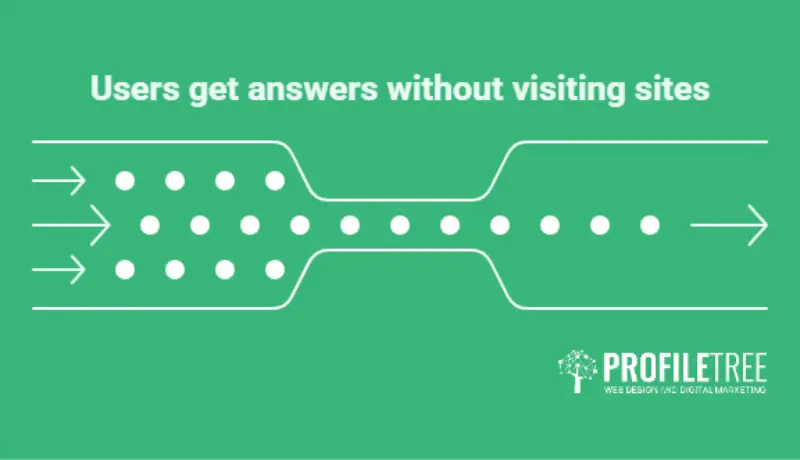
A zero-click search is one where the user finds what they need on the results page itself, through a featured snippet, knowledge panel, local pack or an AI-generated summary, and never visits a website. Zero-click content is the wider version of the same idea: posts, videos and answers designed to deliver value inside a platform, whether that is Google, LinkedIn, Instagram or TikTok, rather than to pull people back to your own site.
The numbers have moved fast. Across 2024 to 2026 the share of Google searches producing any click fell by nearly 23%, the steepest acceleration in a decade. AI Overviews now show on more than a fifth of searches, and where they appear, click-through rates drop by close to 60%. A separate behavioural study of almost 69,000 real searches found that when an AI summary is present, users click a traditional result only 8% of the time, against 15% without one.
This plays out in three ways for a small business. Traditional traffic figures stop reflecting your true reach, so you might be read by thousands while your analytics show a flat line. The customer journey fragments across more touchpoints, which makes attribution harder. And the relationship between you and your audience gets filtered through platform algorithms you do not control.
Take a Belfast cafe that has invested in SEO and ranks first for “coffee shops Belfast city centre”. Google’s map pack already shows opening hours, ratings and photos, so the searcher has everything they need without a click. Visibility has never been higher, yet website visits sit flat. The same pattern repeats from professional services to retail, and the answer is not more SEO. It is owning the next step of the relationship.
Why AI Overviews Make Owned Audiences Non-Negotiable
Platform algorithms now sit between you and your audience, deciding which content appears in AI summaries, which businesses show in local packs, and whose posts reach their own followers. You are no longer competing only with other businesses; you are competing for algorithmic favour, and the rules change without notice.
Each platform works differently. Google’s AI pulls from sources it judges authoritative, favouring structured data and direct answers. LinkedIn rewards native posts that spark professional discussion over anything that links away. Instagram and TikTok prize how quickly a post gathers likes, comments and shares after publishing.
For SMEs here, this filtering brings a specific problem. Regional terms, local market detail and the realities of serving an NI or Irish customer base do not always map neatly onto how a global model interprets a query. A Belfast consultancy that does excellent work for Irish clients can still struggle to surface in AI answers that lean towards larger international names. Adapting your digital strategy for AI-led search is now a core planning task, not a technical afterthought.
Volatility makes it worse. Businesses that leaned on Facebook organic reach learned the hard way when algorithm changes cut their visibility overnight. The pattern is familiar: build an audience on a platform, watch access get restricted, then pay to reach the people who already follow you. Owned channels break that cycle.
Rented Attention Versus Owned Audiences
The clearest way to think about this is the difference between attention you rent and attention you own. Rented attention comes from Google and social platforms: powerful for discovery, but borrowed and revocable. Owned audiences are the contacts you can reach directly, on your terms, regardless of any update.
| Factor | Rented (SEO, social reach) | Owned (email, community, subscribers) |
|---|---|---|
| Control | Platform decides who sees you | You decide who you reach and when |
| Stability | Algorithm updates can cut reach overnight | Reach stays constant as the list grows |
| Cost over time | Often rises as organic reach is throttled | Low marginal cost per additional contact |
| Data | Limited, platform-held | First-party data you can act on |
| Best for | Awareness and first discovery | Retention, repeat business, referrals |
The point is not to abandon search or social. Both still matter for discovery, branded queries, local intent and high-intent transactional searches. The point is to convert that borrowed attention into a relationship you keep.
Five Zero-Click Strategies SMEs Can Use Now
These five approaches turn platform reach into owned relationships. None requires an enterprise budget, and each connects to a capability you can build in-house or with support.
1. Content Marketing: From Blog Posts to Newsletters
Email remains the strongest owned channel, and the newsletter has had a real revival as people look for trusted, curated information rather than another algorithmic feed. A newsletter lands directly in the inbox, stays accessible, and gives you space for the kind of considered thinking that builds authority.
Three things separate newsletters people read from ones they ignore: a consistent schedule that builds a habit, value they cannot get elsewhere, and a voice that is recognisably yours. For an SME, that might be a fortnightly note from a Dublin tech founder breaking down one industry shift, or a monthly round-up from an accountancy practice on changes that affect Irish small businesses. Start simple and let the segmentation and automation come later. A subscriber-first content marketing strategy usually returns more than chasing the occasional viral post.
2. Video Production and YouTube Marketing
Video gives you a direct relationship through subscriptions and notifications, and it travels further than any single platform. The real return comes from repurposing: one shoot becomes a long-form YouTube episode, several short clips for Reels and TikTok, a piece of native LinkedIn video, and a highlight for the newsletter. One recording session, five owned-channel assets.
A professional video production approach focuses on high-retention assets that hold attention rather than polished clips nobody finishes. For an NI services business, a short explainer answering a common client question can sit on YouTube for years, feed your AI citations, and seed half a dozen social posts.
3. AI Implementation: Personalisation and Information Gain
AI works best as an amplifier of human judgement, not a replacement. It speeds up ideation, research and personalisation: email sequences that adapt to subscriber behaviour, recommendations matched to interests, chatbots that answer instantly while capturing useful data. That lets a small team deliver experiences once reserved for much larger firms.
The trap is over-automation. Audiences spot and reject generic AI output quickly, and so do AI Overviews, which summarise away anything that adds nothing new. The defence is information gain: content built on your own project experience, data and judgement that a model cannot synthesise from everyone else’s writing. Practical AI implementation, with the right prompting, oversight and governance, keeps the personality in and the filler out.
4. Interactive Tools on Your Own Website
Calculators, assessments and configurators resist zero-click summarisation because the value lives in the interaction. A model can describe how a mortgage works, but it cannot run an affordability calculation for a specific user, so people come to your site to use the tool and stay. An Irish accountancy firm might offer a simple tax-savings estimator; a marketing business might offer a website audit that returns results in exchange for an email.
These tools need building properly, which is where considered website development earns its place. Done well, an interactive tool delivers immediate value and adds a contact to your owned database in the same step.
5. Social-Native Content That Points Home
Winning on LinkedIn, Instagram or TikTok means publishing content built for each platform rather than reposting the same thing everywhere. The hub-and-spoke model keeps this coherent: your website, email list and podcast are the hub where the detailed, evergreen material lives, and platform posts are spokes that draw people back. Each post stands alone, yet every one nudges the audience towards a channel you control.
How to Measure ROI When Nobody Clicks
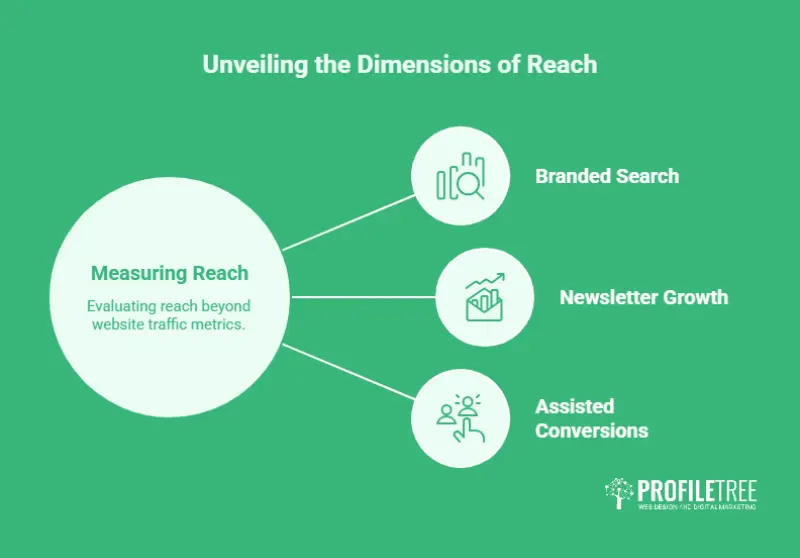
Traffic is becoming a vanity metric. A hundred engaged newsletter subscribers who open, read and act are worth more than ten thousand accidental visitors who bounce in seconds. The fix is a measurement framework built around audience and brand rather than sessions.
Branded Search and Share of Search
When zero-click content does its job, more people search for you by name. Branded search volume, tracked in Google Search Console, is one of the clearest signals that your visibility is converting into recognition. Branded queries also tend to gain clicks in an AI Overview environment rather than lose them, which makes name recognition the strongest hedge against click erosion.
Owned Audience Growth and Assisted Conversions
Track the numbers that represent a chosen relationship: newsletter list growth, podcast subscribers, community members, and engaged social followers. Then connect them to revenue. How many subscribers become customers? What share of podcast listeners request a consultation? Multi-touch attribution and simple post-enquiry questions (“how did you hear about us?”) give a Marketing Manager something concrete to show a finance director, even when the first touch was a click that never happened.
Expert Perspective: The Agency View on AI Search
Ciaran Connolly, ProfileTree founder, puts it directly: “The businesses winning right now aren’t necessarily those with the most traffic or followers. They’re the ones who’ve built direct, meaningful relationships with their audience. When you own the relationship, you control your business destiny regardless of what Silicon Valley decides next.”
That view is showing up across client accounts in the UK and Ireland: impressions holding steady or rising while clicks flatten, the decoupling of visibility from traffic that defines the AI-search era. The businesses adapting best are not fighting the trend; they are using search and social for discovery and moving people into email, video and community as fast as they reasonably can.
Zero-Click Content Ideas for AI Optimisation
If clicks are scarcer, the next best outcome is being the source the AI cites, since cited brands earn meaningfully more clicks than uncited ones on the same query. A few practical moves help your content get pulled into AI Overviews.
Answer specific questions directly in the first one or two sentences of a section, then expand, so a model can lift a clean, self-contained answer. Match your H2 and H3 headings to the exact questions people ask. Keep key facts in plain text rather than locked inside images. And flag structured data to your development team, FAQ and How-to schema in particular, so the page’s meaning is explicit. These steps will not bring back the old click volumes, but they put your brand inside the answer instead of beneath it.
Conclusion
Zero-click search is today’s reality, not a future risk, and the smart response is to build something more durable than traffic: an audience you own. Email subscribers, podcast listeners and community members hold their value through every algorithm change. ProfileTree helps SMEs across Northern Ireland, Ireland and the UK turn borrowed reach into owned relationships through content, video and AI strategy. Talk to the team about your audience-ownership plan.
Frequently Asked Questions
What is zero-click content?
Content designed to deliver value inside a search result or social platform, so users get their answer without visiting a website. It includes featured snippets, knowledge panels and AI-generated summaries.
How do you measure the ROI of zero-click content?
Track branded search volume, owned audience growth and assisted conversions rather than raw clicks. Rising name recognition and a growing subscriber list are the clearest signs the content is working.
Does zero-click content hurt SEO?
It changes the goal rather than damaging it. The aim shifts from click volume to brand visibility and AI citation, both of which still depend on strong, well-structured content.
How do I optimise for Google AI Overviews?
Answer questions directly in the opening sentence of each section, match headings to real queries, keep facts in plain text, and add FAQ and How-to schema so the page’s meaning is clear to AI systems.
Is zero-click content good for B2B businesses?
Yes. Long B2B sales cycles reward repeated brand exposure, and many buyers form their shortlist before they ever search, so being visible and cited early matters more than a single click.
What is a zero-click search example?
Searching a currency conversion, the weather, or a quick definition returns the answer on the results page itself. AI Overviews now do the same for many informational questions.