
Healthcare Digital Marketing: Compliant Strategies for UK Practices
Table of Contents
The healthcare sector across the UK and Ireland faces unprecedented digital transformation challenges. With NHS waiting lists exceeding 7.8 million patients and private healthcare growing 8% annually, medical practices must navigate complex regulatory frameworks while building compelling digital presences that attract and retain patients.
Healthcare marketing fundamentally differs from standard commercial promotion. Strict advertising standards, patient confidentiality requirements, and professional ethics create unique constraints that generic marketing approaches cannot address. This comprehensive guide provides healthcare practices with compliant, effective digital strategies that respect regulatory boundaries while driving practice growth.
The Healthcare Digital Marketing Landscape
Healthcare consumers have fundamentally changed their decision-making processes. Today, 77% of patients research healthcare providers online before booking appointments, 84% consider online reviews as influential as personal recommendations, and 68% would switch providers for better digital experiences. Despite this digital shift, only 31% of UK healthcare practices maintain professionally optimised websites.
The regulatory environment adds layers of complexity that are absent from other sectors. The Advertising Standards Authority (ASA), General Medical Council (GMC), Irish Medical Council (IMC), and Health and Social Care regulatory bodies impose strict guidelines on healthcare marketing—non-compliance risks professional sanctions, reputational damage, and potential legal action.
Private healthcare practices face particular pressure to differentiate while maintaining professional standards. Competition from corporate healthcare groups, emerging telemedicine providers, and informed consumer expectations demand sophisticated marketing approaches that balance commercial objectives with ethical obligations.
Healthcare practices investing in compliant digital strategies report an average increase in new patients of 43% within twelve months. More significantly, these patients demonstrate higher lifetime values, stronger loyalty, and generate more referrals than those acquired through traditional channels.
Regulatory Compliance and Ethical Marketing
Healthcare marketing operates under strict regulatory frameworks including GDPR, medical advertising standards, and professional body guidelines that require careful navigation to avoid costly violations and reputational damage. Ethical marketing in healthcare goes beyond legal compliance to encompass patient privacy protection, truthful advertising claims, and responsible communication that builds trust while respecting the vulnerable nature of healthcare decision-making processes.
Understanding the Regulatory Framework
UK healthcare marketing operates under multiple regulatory jurisdictions. The GMC’s Good Medical Practice guidelines prohibit misleading claims, require factual accuracy, and mandate professional dignity. The ASA enforces additional restrictions on health claims, testimonials, and comparative advertising.
Irish healthcare faces similar constraints through the Medical Council’s Guide to Professional Conduct and Ethics. Additional considerations include the Consumer Protection Act 2007 and specific advertising codes for medical services. Cross-border practices must navigate both frameworks simultaneously.
GDPR compliance proves particularly crucial for healthcare marketing. Patient data protection requirements exceed standard commercial standards. Consent mechanisms, data storage protocols, and breach notification procedures require careful implementation. Healthcare practices face potential fines up to €20 million for serious GDPR violations.
Professional indemnity insurers increasingly scrutinise digital marketing activities. Non-compliant marketing might void coverage, leaving practitioners personally liable for claims. Regular compliance audits ensure marketing activities align with insurance requirements.
Building Trust Through Transparency
Compliant healthcare marketing prioritises transparency over persuasion. Clear fee structures, realistic outcome expectations, and honest capability statements build trust more effectively than aggressive promotion. Patients value authenticity and expertise demonstration over marketing hyperbole.
Evidence-based content forms the foundation of ethical healthcare marketing. Citing peer-reviewed research, referencing established medical guidelines, and acknowledging treatment limitations demonstrates professional integrity. This approach attracts informed patients seeking credible healthcare partners.
Patient consent and privacy protection must underpin all marketing activities. Before-and-after photographs require explicit consent forms, patient testimonials need written permission, and case studies must ensure complete anonymisation. These requirements seem restrictive, but actually enhance credibility when properly implemented.
Website Development for Healthcare Excellence
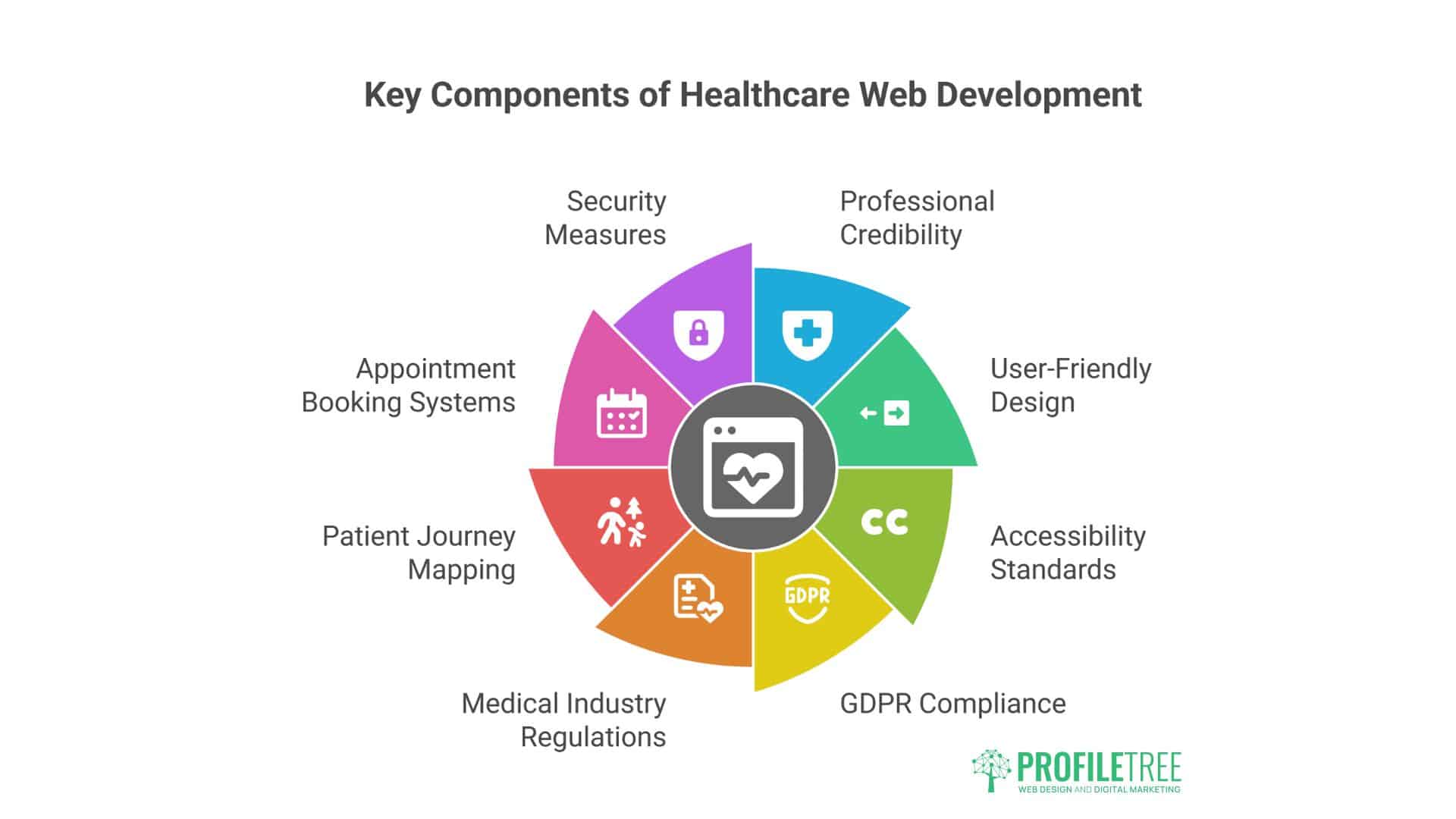
Healthcare websites must balance professional credibility with user-friendly design while meeting accessibility standards, GDPR compliance, and medical industry regulations that govern patient information and service promotion. Excellence in healthcare web development requires understanding patient journey mapping, creating intuitive appointment booking systems, and implementing security measures that protect sensitive health information while delivering seamless user experiences that build trust and facilitate patient engagement.
Clinical Website Architecture
Healthcare websites require specialised architecture, balancing patient needs with professional requirements. User experience research reveals patients primarily seek practitioner credentials, treatment information, appointment booking, fee transparency, and location details. Successful healthcare websites deliver this information within three clicks from the homepage.
Essential website features include secure patient portals for confidential communication, GDPR-compliant contact forms with encryption, online appointment booking with calendar integration, treatment information pages with medical accuracy, practitioner profiles highlighting qualifications and experience, and accessibility compliance meeting WCAG 2.1 AA standards.
Mobile optimisation proves particularly crucial for healthcare websites. Emergency searches, appointment booking while commuting, and symptom research frequently occur on mobile devices. Healthcare websites must load within 2.5 seconds on mobile connections to prevent patient loss to competitors.
Trust signals significantly influence patient decisions. Prominently display professional registrations, specialist memberships, clinic certifications, and insurance affiliations. These credentials provide an immediate credibility assessment for potential patients evaluating your practice.
Professional website development for healthcare ensures compliance while maximising patient engagement and conversion.
Patient Journey Optimisation
Healthcare website design must accommodate various patient journeys from initial symptom research through treatment completion. Information architecture should support worried patients seeking reassurance, informed consumers comparing treatment options, referred patients requiring specific procedures, and existing patients accessing ongoing care.
Conversion optimisation for healthcare differs from e-commerce approaches. Rather than pushing immediate transactions, healthcare websites should nurture informed decision-making. They should provide comprehensive information, multiple contact methods, and respect patient consideration timelines.
Clear calls to action guide patients toward appropriate next steps without appearing aggressive. For medical services, “Book a Consultation” proves more effective than “Buy Now. “Learn About Your Treatment Options” outperforms “Sign Up Today” for patient engagement.
Website accessibility extends beyond compliance to genuine inclusivity. Large fonts for elderly patients, high contrast for visual impairments, keyboard navigation for motor disabilities, and plain language for varying literacy levels ensure all patients can access your services.
Search Engine Optimisation for Medical Practices
Medical practice SEO requires specialised strategies that balance visibility for health-related searches with strict compliance requirements governing medical advertising and patient privacy protection. Effective healthcare SEO focuses on local search optimisation, medical keyword targeting, and content creation that demonstrates expertise while adhering to regulatory guidelines that govern how medical professionals can market their services online.
Medical SEO Strategy
Healthcare SEO requires nuanced approaches respecting the “Your Money or Your Life” (YMYL) criteria. Google applies stricter ranking standards to medical content, prioritising authoritative sources that demonstrate expertise, authoritativeness, and trustworthiness (E-E-A-T).
Keyword research for healthcare uncovers patient language versus medical terminology. Patients search “chest pain when breathing” rather than “pleuritic pain.” Successful healthcare SEO bridges this linguistic gap, incorporating patient-friendly terms and medical accuracy.
Local SEO dominates healthcare search, with 88% of patients seeking providers within 10 miles. Optimising for “cardiologist Belfast,” “dentist Dublin 4,” or “physiotherapy near me” requires sophisticated local strategies beyond basic directory listings.
Content depth and medical accuracy significantly influence rankings. Comprehensive condition guides exceeding 2,500 words, evidence-based treatment explanations, and detailed procedure descriptions establish topical authority. Shallow content fails to rank in competitive healthcare searches.
Strategic SEO services ensure your practice appears prominently when patients search for your specialities.
E-E-A-T Optimisation
Experience, Expertise, Authoritativeness, and Trustworthiness determine healthcare content rankings. Demonstrating these qualities requires structured approaches throughout your digital presence.
Author bylines highlighting medical credentials, publication lists demonstrating research contributions, professional memberships indicating peer recognition, and patient outcome statistics showing clinical excellence build E-E-A-T signals. Include structured data markup to ensure search engines recognise these credibility indicators.
Medical schema markup provides additional context that search engines value. Implement MedicalOrganization, Physician, MedicalCondition, and MedicalProcedure schemas throughout your website. This technical implementation significantly improves search visibility for medical queries.
Citation building from authoritative medical sources strengthens domain authority. Contributing to medical journals, professional association websites, and health education platforms generates valuable backlinks while demonstrating expertise.
Content Marketing for Patient Education
Patient education through content marketing builds trust and positions healthcare practices as authoritative sources while helping patients make informed decisions about their health and treatment options. Effective healthcare content addresses common patient concerns, explains complex medical concepts in accessible language, and provides valuable health information that demonstrates expertise while encouraging patients to seek appropriate professional care rather than rely solely on online resources.
Educational Content Strategy
Healthcare content marketing serves two purposes: attracting new patients while educating existing ones. Successful strategies balance SEO optimisation with genuine patient value, creating resources patients bookmark and share.
High-performing healthcare content topics include condition guides explaining symptoms and treatments, procedure explanations demystifying medical interventions, preventive health advice promoting wellness, medical myth debunking addressing misconceptions, and treatment innovation updates showcasing advancement.
Each piece requires careful balance between accessibility and accuracy. Medical jargon alienates patients, while oversimplification might mislead. Effective healthcare content explains complex concepts clearly without sacrificing precision.
Video content particularly excels for patient education. Procedure explanations, practitioner introductions, and facility tours provide a visual understanding that text cannot convey. Healthcare videos generate 85% more patient enquiries than text-based content.
Professional content marketing creates authoritative resources, positioning your practice as the trusted healthcare authority.
Compliance in Content Creation
Healthcare content must meet strict accuracy requirements while remaining engaging. Every medical claim requires evidence to support it. Treatment benefits need a balanced risk discussion. Success stories must include appropriate disclaimers.
Avoid absolute statements about treatment outcomes. “This procedure might help reduce symptoms” proves more compliant than “This treatment will cure your condition.” Include relevant contraindications, potential complications, and alternative options.
Patient stories require careful handling. Obtain written consent before sharing experiences. Ensure complete anonymisation, including demographic details that might enable identification. Consider composite cases combining multiple patient experiences rather than individual stories.
Regular content audits ensure ongoing compliance. Medical guidelines evolve, regulations change, and new evidence emerges. Schedule quarterly reviews, updating content to reflect current best practices and regulatory requirements.
Social Media for Healthcare Practices
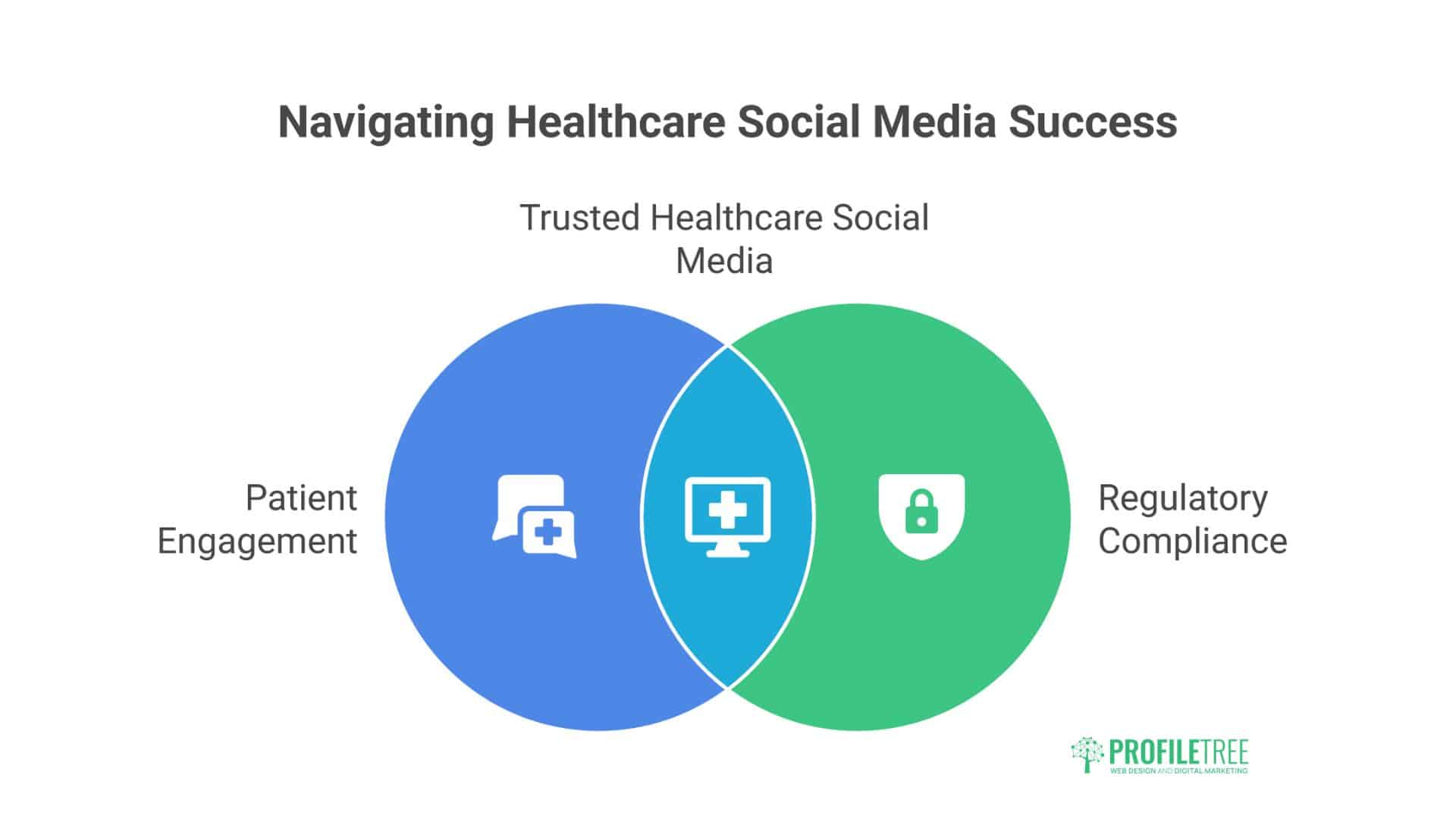
Healthcare social media requires a careful balance between patient engagement and professional boundaries. Strict guidelines govern patient privacy, medical advice disclaimers, and appropriate content sharing that maintains trust and regulatory compliance. Successful healthcare social media strategies focus on community education, practice culture showcasing, and health awareness campaigns that build relationships with potential patients while reinforcing the practice’s expertise and commitment to patient care.
Platform Strategy and Compliance
Healthcare social media requires careful platform selection and content strategy. Facebook enables community building and event promotion. LinkedIn establishes professional credibility. Instagram showcases practice culture and facilities. Twitter facilitates health education and news sharing.
Each platform demands tailored approaches respecting platform norms and healthcare regulations. Facebook posts might share health tips and practice updates. LinkedIn content could discuss medical innovations and professional development. Instagram stories might feature team introductions and facility tours.
Patient privacy remains paramount across all platforms. Never share patient information without explicit consent. Avoid responding to medical questions publicly. Direct health queries to private consultations. These boundaries protect both patients and practitioners.
Influencer partnerships require extreme caution in healthcare. Ensure any collaborators understand medical advertising regulations. Review all content before publication. Maintain editorial control over health claims—document compliance measures for regulatory protection.
Strategic social media marketing builds community while maintaining professional standards.
Crisis Management and Reputation
Healthcare practices face unique reputation management challenges. Negative reviews might contain protected health information. Public complaints could reveal confidential details. Response strategies must balance transparency with privacy obligations.
Develop clear protocols for social media crisis management. Assign responsibility for monitoring and responding. Create template responses for everyday situations. Establish escalation procedures for serious issues. Train staff on appropriate social media conduct.
Proactive reputation management prevents crisis escalation. Monitor mentions across platforms. Address concerns quickly and professionally. Showcase positive patient experiences appropriately. Build goodwill through community engagement and health education.
Digital Advertising for Healthcare
Healthcare digital advertising must navigate complex regulations governing medical advertising claims while targeting patients at critical decision-making moments with messages that inspire trust and encourage appropriate care-seeking behaviour. Effective healthcare advertising campaigns focus on local targeting, condition-specific messaging, and compliance-approved content that generate qualified patient inquiries while maintaining the professional standards and ethical responsibilities that define healthcare marketing excellence.
Paid Search Excellence
Healthcare PPC requires sophisticated approaches that navigate advertising restrictions while generating qualified leads. Google Ads and Microsoft Advertising impose additional healthcare policies beyond standard commercial advertising.
The keyword strategy must avoid prohibited terms while targeting patient intent. Focus on condition-specific searches, treatment options, and local healthcare needs. Avoid aggressive commercial language or unrealistic promises.
Ad copy requires careful crafting, meeting platform policies and professional standards. Highlight credentials and experience. Focus on patient care quality. Include relevant disclaimers and qualifications. Test multiple variations optimising for compliance and performance.
Landing page optimisation proves crucial for healthcare conversions. Ensure message matches between ads and pages. Provide comprehensive information addressing patient concerns. Include trust signals and social proof. Simplify appointment booking processes.
Social Media Advertising
Healthcare social advertising enables precise audience targeting while respecting privacy regulations. Custom audiences from patient lists require explicit consent. Lookalike audiences expand reach while maintaining relevance. Interest targeting reaches health-conscious consumers.
Ad creative must balance engagement with professionalism. Before-and-after images require consent and disclaimers. Testimonials need verification and permissions. Medical claims demand evidence to support them. Visual content should represent diverse patient populations.
Campaign structure should align with patient journeys. Awareness campaigns introduce your practice. Consideration campaigns provide detailed information. Conversion campaigns facilitate appointment booking. Retention campaigns encourage ongoing care.
AI Integration in Healthcare Marketing
AI integration in healthcare marketing enhances patient communication through intelligent chatbots, personalised content delivery, and predictive analytics while maintaining strict compliance with medical privacy regulations and professional standards. Healthcare practices leveraging AI tools can automate appointment scheduling, deliver targeted health information, and optimise marketing campaigns more effectively. Still, they must carefully balance technological efficiency with the human touch, which remains essential for building patient trust and maintaining therapeutic relationships.
Transforming Patient Engagement
Artificial intelligence revolutionises healthcare marketing efficiency while maintaining a personal touch. AI-powered chatbots handle initial enquiries, appointment scheduling, and FAQ responses 24/7, ensuring no patient query persists.
Natural language processing enables sophisticated patient interactions. AI understands symptom descriptions, suggests appropriate specialists, and provides relevant health information while clearly stating limitations and encouraging professional consultation.
Predictive analytics identify optimal outreach timing for appointment reminders, health screenings, and follow-up care. Machine learning algorithms analyse patient behaviour patterns, improving engagement rates while respecting privacy preferences.
AI implementation services help healthcare practices leverage artificial intelligence ethically and effectively. The Future-Proof Your Business with AI: Complete Training Guide comprehensively introduces healthcare AI adoption.
Compliance and AI Ethics
Healthcare AI implementation demands careful attention to ethical considerations. AI systems must ensure patient privacy, avoid diagnostic claims, and clearly identify automated responses. Human oversight remains essential for medical communications.
Transparency about AI use builds patient trust. Clearly indicate when patients interact with automated systems. Provide options for human communication. Explain how AI enhances rather than replaces clinical care.
Regular audits ensure AI systems maintain compliance. Responses are monitored for accuracy and appropriateness. Training data is updated to reflect current medical guidelines. AI decision-making processes are documented for regulatory review.
AI chatbot development designed specifically for healthcare ensures compliant patient engagement.
Video Marketing for Medical Practices
Video marketing allows medical practices to humanise their services, explain complex procedures clearly, and build trust through authentic practitioner presentations that help patients feel more comfortable before their first appointment. Strategic healthcare video content—from virtual practice tours and procedure explanations to patient testimonials and doctor introductions—addresses common patient anxieties while demonstrating expertise and professionalism that distinguishes practices in competitive healthcare markets.
Educational Video Content
Video content delivers exceptional engagement for healthcare marketing while building trust through transparency. Patient education videos, procedure explanations, and practitioner introductions humanise your practice while demonstrating expertise.
Educational videos addressing common health concerns attract organic traffic while establishing authority. “Understanding Diabetes Management,” “Post-Surgery Recovery Guidelines,” or “Preventing Heart Disease” provide value while showcasing clinical knowledge.
Practitioner videos build personal connections before consultations. Introduction videos highlighting qualifications and approach, speciality explanations demonstrating expertise, and patient care philosophy discussions create familiarity that reduces consultation anxiety.
Facility tours provide transparency about clinical environments. They showcase modern equipment, hygiene protocols, and comfortable spaces, addressing common patient anxieties about medical visits through visual familiarisation.
Professional video production creates compelling content that builds trust while maintaining professional standards.
Compliance in Video Content
Healthcare videos require careful compliance consideration. Patient appearances need written consent. Medical claims require evidence support. Treatment demonstrations need appropriate disclaimers.
Include clear disclaimers stating videos provide general information, not personal medical advice. Encourage viewers to consult healthcare professionals for individual concerns. Specify when content reflects general guidelines versus specific recommendations.
Regular review ensures video content remains current and compliant. Medical guidelines evolve, requiring content updates. Archive outdated videos to prevent misinformation. Maintain version control, documenting changes for regulatory purposes.
Email Marketing for Patient Retention
Email marketing in healthcare focuses on patient retention through educational content, appointment reminders, and health maintenance communications that keep patients engaged with their care while respecting privacy boundaries and professional communication standards. Strategic healthcare email campaigns nurture long-term patient relationships by delivering valuable health insights, preventive care reminders, and practice updates, demonstrating an ongoing commitment to patient wellbeing beyond individual appointments or treatments.
Nurturing Patient Relationships
Email marketing offers healthcare practices direct patient communication while maintaining privacy compliance. Segmented campaigns deliver relevant content based on patient interests, conditions, and care stages.
Welcome sequences introduce new patients to your practice, explain services, introduce team members, and provide practical information. Appointment reminders reduce no-shows, while educational newsletters maintain engagement between visits.
Personalisation enhances relevance without compromising privacy. Address patients by name, reference their last appointment timing (not specifics), and suggest relevant health content based on demographics rather than conditions.
Automation enables consistent communication without overwhelming staff resources. Birthday greetings, annual check-up reminders, and seasonal health tips maintain patient relationships efficiently.
GDPR Compliance in Email
Healthcare email marketing faces stringent consent requirements. Explicit opt-in processes, clear privacy policies, and easy unsubscribe mechanisms ensure compliance—document consent carefully for regulatory protection.
Data minimisation principles limit information collection to necessary elements. Avoid requesting sensitive health information through email. Use secure patient portals for confidential communications—Encrypt email transmissions containing any patient identifiers.
Regular database hygiene maintains compliance and deliverability. Remove inactive subscribers, update bounce addresses, and honour unsubscribe requests immediately. Annual consent renewal ensures ongoing permission for communications.
Digital Strategy and Planning
Healthcare digital strategy requires comprehensive planning that aligns marketing activities with patient care objectives, regulatory requirements, and business growth goals while maintaining the trust and professionalism essential to medical practice success. Effective digital planning integrates multiple channels and tactics into cohesive campaigns that support patient acquisition, retention, and education while ensuring all marketing activities comply with healthcare advertising regulations and ethical standards that govern medical professional communication.
Developing Your Healthcare Digital Strategy
Successful healthcare digital marketing requires a comprehensive strategy that aligns with practice objectives while respecting regulatory constraints. Begin with a clear goal definition: attracting new patients, retaining existing ones, or establishing speciality leadership.
Audience analysis reveals patient demographics, conditions, and digital behaviours. Young families seek paediatric information differently from elderly patients researching chronic conditions—tailor strategies to your specific patient population.
Competitive analysis identifies differentiation opportunities. Examine competitor digital presence, content strategies, and patient engagement. Identify gaps where your practice can establish unique positioning.
Digital strategy consultation ensures comprehensive planning aligned with healthcare regulations and practice goals.
Resource Allocation and Budgeting
Healthcare practices should allocate 5-10% of revenue to marketing, with digital comprising 70-80% of marketing budgets. Initial investment focuses on compliant website development, local SEO, and reputation management.
Small practices (1-5 practitioners) benefit from £2,000-5,000 monthly digital investment covering website maintenance, SEO, content creation, and basic advertising. This typically generates 20-40 new patient enquiries monthly.
Medium practices (6-20 practitioners) should invest £5,000-15,000 monthly, enabling comprehensive SEO, content marketing, social media management, and targeted advertising. Expected returns include 50-150 new patient enquiries.
Large practices or hospital groups require £15,000+ monthly to support dedicated marketing teams, sophisticated campaigns, video production, and enterprise marketing technology.
Local Market Dynamics
Healthcare marketing success depends heavily on understanding local market dynamics, including demographic health needs, competitive landscape, referral networks, and regional healthcare delivery preferences that vary significantly across UK and Irish communities. Local market considerations encompass everything from urban versus rural patient access patterns and socioeconomic factors to regional health priorities and cultural attitudes toward healthcare, which influence how patients discover, evaluate, and choose medical practitioners in their specific geographic areas.
London and Southeast Healthcare Marketing
London’s competitive private healthcare market demands sophisticated digital strategies. With over 500 private practices competing for patients, differentiation through specialisation and digital excellence becomes essential.
Focus on specific conditions or demographics rather than general practice positioning. “Harley Street cardiovascular specialists” outperforms “London heart doctors” for search visibility and patient quality. Highlight consultant credentials, innovative treatments, and patient outcomes.
Northern Ireland Healthcare Landscape
Northern Ireland’s healthcare market balances NHS provision with growing private sector demand. Digital strategies must address patients seeking faster access to treatment while navigating insurance complexities.
Belfast’s medical quarter around the City Hospital creates clustering opportunities. Practices benefit from association with established medical districts. Digital content highlighting location advantages and multi-disciplinary collaboration attracts referrals.
Cross-border healthcare between Northern Ireland and the Republic creates unique opportunities. Patients travel for specialist treatments, competitive pricing, and reduced waiting times—Optimise for both markets with appropriate content and currency options.
Scottish and Welsh Considerations
Scotland’s distinct NHS structure and patient expectations require tailored approaches. Emphasis on NHS collaboration, shorter waiting times, and specialised services resonates with Scottish patients.
Wales’ bilingual requirements extend to healthcare marketing. Welsh language website sections, bilingual patient materials, and cultural sensitivity demonstrate commitment to local communities.
Regional Healthcare Specialisations
Different regions demonstrate healthcare specialisations worth targeting. Manchester’s sports medicine expertise, Birmingham’s diverse population health needs, Edinburgh’s medical research connections, and Cork’s pharmaceutical industry relationships create niche opportunities.
Rural healthcare marketing differs from urban approaches. Telemedicine capabilities, home visit services, and community integration prove more critical than facility impressiveness. Digital strategies should emphasise accessibility and convenience.
Measuring Success and ROI
Healthcare marketing ROI measurement extends beyond traditional metrics to include patient acquisition costs, lifetime patient value, appointment conversion rates, and long-term practice growth indicators that reflect the unique economics of medical service delivery. Successful healthcare practices track immediate metrics like website inquiries and appointment bookings alongside deeper indicators such as patient retention rates, referral generation, and practice reputation scores that demonstrate marketing’s actual contribution to sustainable medical practice growth.
Healthcare-Specific KPIs
Healthcare marketing metrics extend beyond standard commercial measurements. Patient acquisition cost, lifetime patient value, appointment conversion rates, and patient satisfaction scores provide meaningful insights.
Quality metrics matter as much as quantity. New patient quality indicators include condition appropriateness, insurance coverage, and likelihood of treatment compliance. One complex surgical case might prove more valuable than ten routine consultations.
Patient journey analytics track progression from initial search through treatment completion. Understanding drop-off points enables targeted optimisation, improving overall conversion rates.
Reputation metrics indicate patient satisfaction, including review ratings, response rates, and sentiment analysis. Positive reputation correlates strongly with practice growth and referral generation.
Analytics Implementation
Comprehensive analytics configuration enables data-driven optimisation. Google Analytics 4 tracking patient journeys, call tracking attributing phone enquiries, appointment system integration, measuring conversions, and CRM connectivity linking marketing to patient value, provides complete visibility.
HIPAA and GDPR compliance require careful analytics implementation. Avoid collecting protected health information. Implement IP anonymisation. Use privacy-preserving attribution models. Document data handling procedures for regulatory compliance.
Regular reporting ensures continuous improvement. Weekly campaign performance reviews, monthly patient acquisition analysis, quarterly ROI assessment, and annual strategy evaluation maintain momentum while identifying optimisation opportunities.
Digital Training for Healthcare Teams
Healthcare teams require specialised digital training that balances marketing effectiveness with strict patient privacy regulations, ensuring all staff understand the opportunities and boundaries of digital patient engagement. Effective healthcare digital training programs equip receptionists, nurses, and practitioners with skills to manage online reviews, create compliant social media content, and utilise digital tools while maintaining the professional standards and ethical responsibilities that define quality healthcare communication.
Building Digital Capabilities
Healthcare professionals often lack knowledge of digital marketing. Comprehensive training ensures teams understand and support digital initiatives while maintaining compliance.
Foundational training covers digital marketing principles, regulatory requirements, patient privacy considerations, and reputation management basics. When teams understand the rationale, adoption accelerates.
Platform-specific training ensures effective utilisation. Clear documentation and training are also required for social media guidelines, content creation protocols, review response procedures, and patient communication standards.
Digital training programmes tailored for healthcare ensure successful implementation while maintaining compliance.
Creating Digital Culture
Healthcare digital transformation requires cultural change beyond technology adoption. Traditional medical culture might resist marketing activities that are viewed as unprofessional. Address concerns through education and demonstration.
Champion programmes identifying digitally-engaged team members accelerate adoption. These individuals receive advanced training, pilot initiatives, and mentor colleagues. Internal champions prove more effective than external consultants for cultural change.
Celebrate digital successes linking efforts to patient outcomes. Share positive reviews, highlight patient testimonials, and demonstrate how digital engagement improves care access. When teams see patient benefits, resistance diminishes.
Common Pitfalls and Solutions
Healthcare practices frequently stumble into predictable digital marketing mistakes, from posting patient information inappropriately and making unsubstantiated medical claims to neglecting online reviews and failing to optimise for local health-related searches. Understanding these common pitfalls—treating digital marketing as an afterthought, ignoring compliance requirements, or focusing solely on new patient acquisition while neglecting existing patient relationships—enables healthcare practices to implement proven solutions that avoid regulatory violations while building sustainable online presence.
Avoiding Compliance Violations
Healthcare practices commonly make preventable compliance mistakes, risking regulatory sanctions. Understanding common violations enables proactive avoidance.
Unsubstantiated health claims remain the most common violation. Every treatment benefit claim requires evidence to support. Avoid absolute statements about outcomes. Include appropriate disclaimers and risk discussions.
Patient privacy breaches through marketing activities risk severe penalties. Never share patient information without explicit consent. Avoid identifying details in case studies. Secure all patient data appropriately.
Professional boundary violations through social media damage reputation and risk sanctions. Maintain professional relationships online. Avoid personal friendships with patients on social media. Direct medical questions to appropriate channels.
Technical Implementation Errors
Healthcare websites often suffer technical issues that limit their effectiveness. Slow loading speeds from unoptimised images, broken appointment booking systems, and poor mobile experiences require immediate attention.
Security vulnerabilities risk patient data exposure. Implement SSL certificates, regular security updates, and penetration testing—document security measures for compliance demonstration.
Accessibility failures exclude patient populations and risk discrimination claims. Ensure WCAG 2.1 AA compliance through regular audits and user testing with disabled populations.
Future-Proofing Healthcare Marketing
Healthcare marketing is rapidly evolving through telemedicine integration, AI-powered patient communication, and changing healthcare delivery models that require marketing strategies to adapt beyond traditional practice-based approaches. Future-proofing healthcare marketing involves embracing emerging technologies like virtual consultations and health apps while maintaining the trust, compliance, and patient-centred focus that will remain fundamental to healthcare success regardless of technological advancement.
Emerging Technologies
Telemedicine integration becomes essential as virtual consultations become mainstream. Websites must facilitate video consultations, digital prescription services, and remote monitoring integration.
Voice search optimisation grows increasingly important as patients use smart speakers for health queries. Optimise for conversational queries and featured snippets, providing immediate answers.
Advances in artificial intelligence enable predictive health marketing. AI identifies patients requiring preventive care, predicts appointment likelihood, and personalises communication timing.
Wearable device integration creates continuous patient engagement opportunities. Connect with fitness trackers, monitor patient progress, and provide personalised health recommendations based on data.
Regulatory Evolution
Digital health regulations continue evolving. Stay informed about regulatory changes through professional associations, legal updates, and compliance services. Build flexibility into strategies enabling rapid adaptation.
International regulations affect cross-border healthcare marketing. GDPR, Medical Device Regulations, and emerging AI governance frameworks require ongoing attention.
Professional standards bodies increasingly address digital marketing. GMC, NMC, and other regulators develop specific digital guidance. Maintain awareness of professional body positions on digital engagement.
Ciaran Connolly, ProfileTree founder, notes: “Healthcare digital marketing represents one of the most complex yet rewarding sectors we serve. The practices that successfully balance compliance with creativity, professionalism with personality, and authority with accessibility see remarkable growth. We’ve helped medical practices increase new patient acquisitions by 200% while maintaining regulatory compliance. The key is understanding that healthcare marketing isn’t about selling—it’s about serving patients through accessible, trustworthy information that empowers informed healthcare decisions.”
Implementation Roadmap
Healthcare marketing implementation requires a carefully structured roadmap that phases digital initiatives to ensure compliance, maintain patient trust, and deliver measurable results without overwhelming practice operations or compromising patient care quality. This systematic implementation approach prioritises foundational elements like compliant website development and local search optimisation before advancing to sophisticated tactics, ensuring each stage builds upon previous successes while maintaining the regulatory standards essential to healthcare marketing excellence.
Phase 1: Compliance Audit (Month 1)
Review current digital presence for compliance issues. Assess website, social media, and advertising against regulations. Document violations requiring immediate attention. Develop compliance protocols for ongoing activities.
Phase 2: Foundation Building (Months 2-3)
Develop or optimise a compliant website infrastructure. Implement required privacy policies and consent mechanisms. Establish Google My Business and healthcare directories. Create initial compliant content addressing key services.
Phase 3: Content Development (Months 4-6)
Produce comprehensive service pages and condition guides. Develop patient education resources and FAQs. Create practitioner profiles and practice information. Build email marketing sequences for patient nurturing.
Phase 4: Promotion and Growth (Months 7-12)
Launch targeted advertising campaigns within compliance guidelines. Implement social media strategies appropriate for healthcare. Develop referral programmes and patient testimonial systems. Scale successful initiatives while maintaining compliance.
Conclusion
Healthcare digital marketing presents unique challenges requiring specialised expertise. Regulatory compliance, patient privacy, and professional standards create constraints absent from other sectors. However, practices that successfully navigate these requirements while building compelling digital presences achieve remarkable growth.
The healthcare landscape continues to evolve rapidly. Patient expectations, technological capabilities, and regulatory frameworks advance continuously. Practices must maintain agility while ensuring compliance, build trust while driving growth, and embrace innovation while respecting tradition.
Success requires comprehensive strategies that address every aspect of digital presence. From compliant websites and ethical SEO to engaging content and targeted advertising, each element must align with healthcare’s unique requirements.
Professional support accelerates success while ensuring compliance. Expert guidance navigates regulatory complexity, implements best practices, and optimises performance while protecting professional standing.
Your medical expertise deserves equally excellent digital representation. The strategies, tools, and support exist to transform your digital presence from compliant but invisible to compelling and dominant. Patients are searching for healthcare solutions right now—ensure they find your practice, trust your expertise, and choose your care.
FAQs
What healthcare marketing activities require regulatory approval?
Advertising prescription medications, making specific health claims, using patient testimonials, and comparative advertising typically require review. Consult legal counsel for specific situations. Document approval processes for regulatory protection.
How can medical practices use patient testimonials compliantly?
Obtain written consent before publication. Ensure testimonials reflect genuine experiences without exaggeration. Include disclaimers about individual results. Avoid testimonials for prescription medications or higher-risk procedures. Consider composite testimonials combining multiple experiences.
What social media platforms work best for healthcare practices?
Facebook provides broad reach for general practices. LinkedIn suits specialist consultants and B2B healthcare. Instagram works for aesthetic medicine and wellness practices. YouTube excels for patient education. Platform selection depends on patient demographics and practice type.
How can healthcare practices measure marketing ROI while maintaining privacy?
Track patient sources through intake forms rather than digital tracking. Use call tracking with appropriate disclaimers. Implement privacy-preserving analytics. Calculate lifetime patient value from anonymised aggregate data. Focus on trends rather than individual patient tracking.
What budget should healthcare practices allocate to digital marketing?
Private practices typically invest 5-10% of revenue in marketing, with 70-80% allocated to digital channels. New practices might invest 10-15% initially to establish a presence. Established practices with strong referrals might maintain 3-5%. Investment should align with growth objectives and the competitive landscape.