
Long-Form Video Marketing: YouTube, Live Streaming and Video SEO
Table of Contents
Short vertical clips on TikTok and Reels get the attention, but they are only half of a working video plan. Tutorials, product demos, customer stories and behind-the-scenes tours all perform better as longer YouTube videos or live streams, where watch time and depth do the selling. This long-form video marketing guide, originally framed as a video marketing masterclass, shows how businesses across Northern Ireland, Ireland and the wider UK can combine short clips, YouTube content and live streaming into one strategy that earns trust and brings in enquiries.
If you are weighing up where your effort should go, the short answer is this: use short-form to get noticed and long-form to get chosen. The sections below cover why longer video still matters, how to handle video SEO, how live streaming fits, and how to tie the formats together without doubling your workload.
“Long-form video, like a product demo or an in-depth brand story, is still one of the strongest ways to build trust. Pair it with short viral clips and you cover the whole journey, from the first scroll to the buying decision,” says Ciaran Connolly, Director of ProfileTree.
Why Longer Video Still Matters for Business
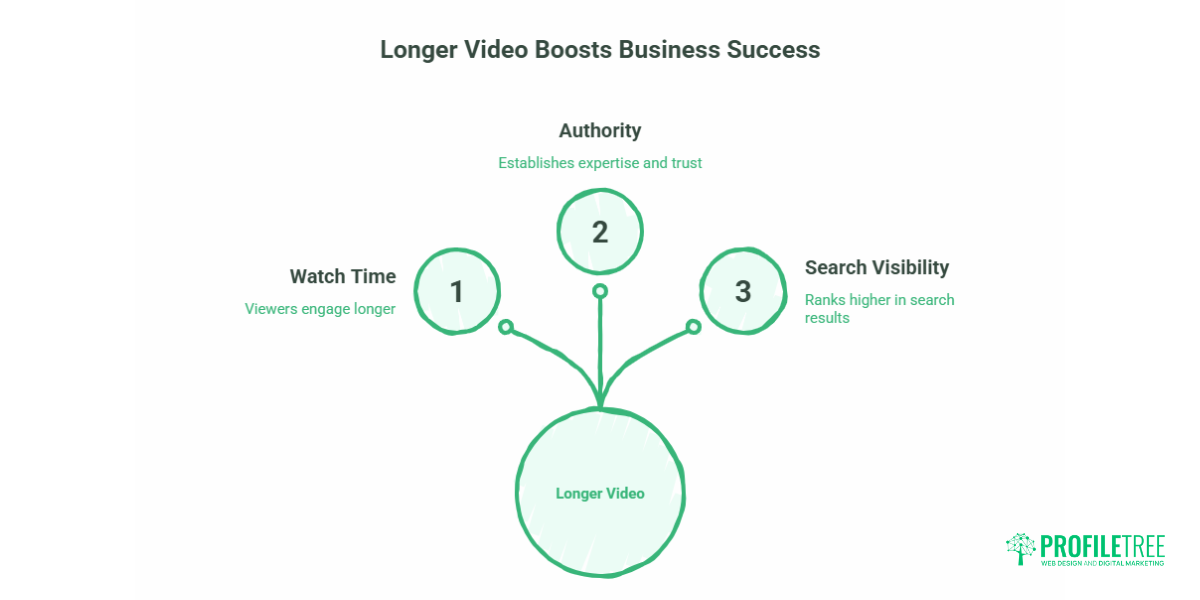
Longer videos earn the watch time, authority and search visibility that short clips rarely deliver on their own. A 30-second TikTok can stop a scroll, but a five to twenty-minute video is where a viewer actually understands what you do and decides whether to contact you. That is why long-form sits at the centre of most serious video marketing plans.
Depth wins for considered purchases
Quick clips hook people. Detailed demos convince them. Sectors like finance, B2B technology and manufacturing rely on thorough visual explanation, because the buyer needs to see the thing working before they trust it. A two-minute walkthrough of how a product is made, or how a service is delivered, answers questions a caption never could.
YouTube is a search engine, not just a social feed
YouTube is the second most-used search engine in the world, and people treat it like Google. A clear video titled around a real question, for example, “How we hand-finish furniture in our County Down workshop”, keeps working long after the upload date. That is the difference between content that disappears in a day and content that brings in viewers for years.
Short and long work together
The practical move is to tease a highlight in a 30-second vertical clip on Reels or TikTok, then point viewers to the fuller YouTube video or live replay for the detail. The short format captures casual scrollers; the long format converts the serious prospects. We cover the split in more depth in our guide to short-form versus long-form video for YouTube growth.
Video SEO on YouTube and Beyond
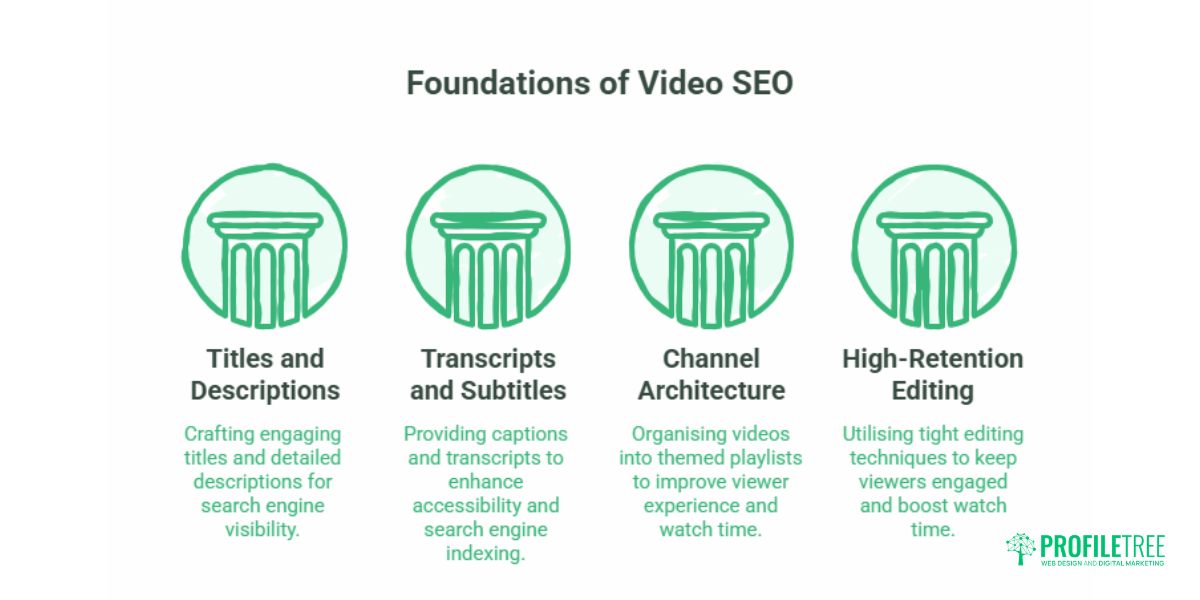
Strong video SEO comes down to giving search engines clear signals: a useful title, a full description, an accurate transcript and a sensible channel structure. Tags matter far less than people think. The work below is what we focus on when running YouTube marketing for clients.
Titles and descriptions
Write titles around how people actually search, and add a location where it helps: “Kitchen tour: a Cork seafood restaurant” beats a vague brand title. Use the description for 100 to 300 words that summarise the video in plain language, with your brand name and any local references included. This is the text Google and YouTube read first.
Transcripts and subtitles
Add captions to every video, then place the full transcript in the description or on the page where the video is embedded. Captions help the large share of viewers who watch on mute, and the transcript gives search engines text to index. For audiences that include Irish or Welsh speakers, multi-language subtitles widen your reach.
Channel architecture and playlists
Group videos into themed playlists, for example, “Small business tips” or “Belfast office tours”. A tidy channel helps viewers move from one video to the next and signals to YouTube that your content holds together around clear topics. Good playlist structure is one of the simplest ways to lift watch time across a channel.
High-retention editing
Retention is the metric YouTube rewards most. Tight, high-retention editing, cutting dead air, opening with the payoff, and using chapter markers keep viewers watching and tell the algorithm the video is worth recommending. Pace matters more than polish.
“Detailed titles, accurate transcripts and well-built playlists are the three things that move video SEO. Get those right and search engines understand exactly what your video is about,” explains Ciaran Connolly.
Live Streaming for Business
Live streaming gives you real-time engagement and a stack of evergreen content from a single session. Platforms including YouTube, LinkedIn and Instagram push live content higher in feeds while it is running, and the replay keeps earning views afterwards. Live video content marketing works because it feels unedited and immediate, which is exactly what builds trust.
Why go live
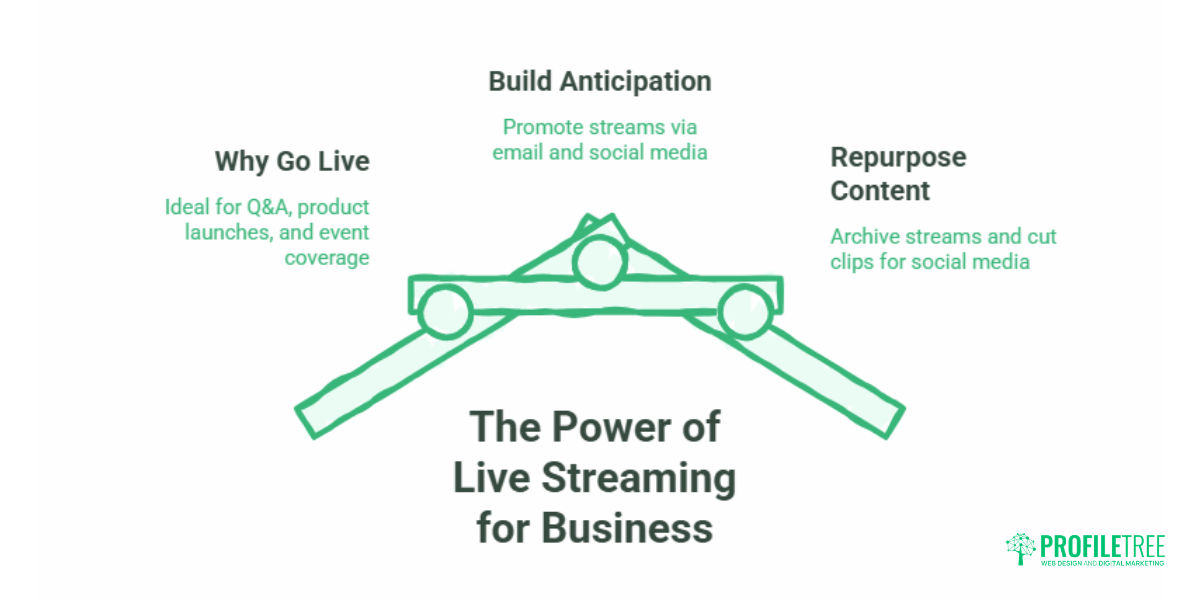
Live formats suit Q&A sessions, product launches and event coverage. A retailer might live-stream a shop opening in Galway; a consultancy might run a workshop from Belfast. The format invites comments and questions in the moment, which is hard to fake with a pre-recorded upload.
Build anticipation first
Promote the stream through your email list and social channels, and publish a scheduled YouTube Live or event link so people can set a reminder. A clear masterclass live streaming schedule, posted ahead of time, gives viewers a reason to show up rather than catch the replay. If you embed a “Watch live” page on your own site, you also pull that interest back to a property you control, something our web design team can build into your site.
Repurpose every stream
Archive the full stream as an evergreen YouTube video, then cut the best moments into short clips for Reels and TikTok. Each short clip can point back to the full replay, which lifts overall watch time. One hour live becomes a month of social content, which is the whole point of a planned content calendar.
Combining Short and Long Videos for One Strategy
The most efficient approach is to film once and publish everywhere. Short videos capture attention and drive quick interactions; long videos deliver depth and watch time. Link the two, and you guide a viewer from a passing glance to a real understanding of your business, without producing twice the content.
The teaser approach
Post a 15-second teaser on TikTok or Reels, for example, “Behind the scenes in our Belfast bakery”, then send viewers to the full five-minute tour on YouTube. The short clip earns the click; the longer video does the persuading. This is the funnel most SMEs should run.
Embed video on your own site
Place relevant YouTube or Vimeo videos inside blog posts, service pages and product pages, with a short transcript or bullet summary alongside. Video lifts the time people spend on a page and gives them context to act. A page that loads quickly and displays video cleanly matters here, which is where solid website development, reliable hosting and management earn their keep.
Cross-promote across platforms
End a long video with “follow us on TikTok for quick tips”, and do the reverse on your short clips. This keeps viewers inside your content rather than drifting to the next recommendation. Mapping that flow across channels is part of a wider digital strategy and your social media marketing.
E-E-A-T and Helpful Content in Video
Video that shows real people, real work and real credentials performs better in both search and AI-assisted answers. Google weighs experience, expertise, authoritativeness and trust, and video is one of the clearest ways to demonstrate all four at once.
Show real expertise
For specialist topics, put an actual team member on camera. A senior developer from your Derry office explaining a coding decision carries more weight than a stock voiceover. Real humans signal genuine expertise.
Show real experience
If you say you source materials ethically, film the supplier. First-hand footage of your premises, your team or a local event proves the claim in a way text cannot. This is experience made visible.
Show trust signals
If you hold a relevant certification or accreditation, show it on screen. Membership of a recognised industry body or local trade association, displayed discreetly, supports the trust element of E-E-A-T without turning the video into an advert.
“Viewers pick up on authenticity straight away. Real staff on camera, an honest look behind the scenes, a verified credential: these lift credibility in ways a polished script alone never will,” says Ciaran Connolly.
Production Tips for Better Video
Good video comes from planning and three basics done well: clear audio, decent lighting and steady framing. The kit matters less than most people assume, which is why we cover practical, low-cost setups in our digital training sessions for in-house teams.
Equipment and setup
A modern smartphone shoots usable 4K footage; a mirrorless camera with a prime lens lifts it further when budget allows. Audio is the part people skip and regret: use a lapel or shotgun mic, because a poor microphone ruins an otherwise good clip. Soft, even lighting keeps the subject clear, which is worth planning for given how often the UK and Irish sky does the opposite.
Editing and style
Keep a consistent intro, outro and on-screen branding so your videos are recognisable. Three to ten minutes suits most brand stories and tutorials, with longer running times fine for genuinely detailed topics, as long as the structure holds. AI tools now speed up rough cuts and captioning, an area our team covers under AI for marketing.
Advanced Video SEO Tactics
Beyond the basics, a few technical steps push video further in search. These are the tactics worth the extra effort once your foundations are solid.
Custom thumbnails
Design a clear, text-overlaid thumbnail that summarises the topic, for example, “3 marketing fixes for Belfast SMEs” in bold. A strong thumbnail lifts click-through in both YouTube feeds and Google results.
Chapter markers
Add timestamped chapters in the description of longer videos. Viewers jump to the part they want, and Google sometimes surfaces those chapters directly in search results.
Structured data and embeds
Use the VideoObject schema on pages where you embed video, so search engines understand the content and can show rich results. Hosting the same video across your site and channel, with consistent metadata, helps it rank in more places. Getting this right sits alongside your wider SEO work.
Live vs Pre-Recorded vs Hybrid
The right format depends on your goal: immediacy, polish or both. Use the table below to choose quickly.
| Format | Best for | Trade-off | Typical reuse |
|---|---|---|---|
| Pre-recorded | Polished brand stories, evergreen tutorials, page embeds | No real-time interaction | Edit once, embed widely |
| Live streaming | Q&A, launches, events, behind-the-scenes | Risk of stumbles or technical hiccups | Archive as replay, clip highlights |
| Hybrid | Webinars, product launches, training | Needs more planning | Live now, polished highlight reel later |
A common hybrid pattern: broadcast an hour-long live Q&A in Belfast, edit a ten-minute highlight reel for YouTube, then cut three 30-second clips for Reels and TikTok. One session, four assets.
“A mixed approach gives you the best coverage: live for immediate engagement, edited uploads for evergreen traction, and short teasers for social reach,” says Ciaran Connolly.
Common Video Marketing Mistakes to Avoid
Most videos underperform for predictable reasons: no SEO, poor audio, or no clear next step. Fix these three, and you are ahead of most competitors.
Wrong level of production
Over-produced video can feel inauthentic for a local, people-first brand. A shaky, badly lit clip puts viewers off just as fast. Aim for clean and relatable rather than cinematic.
Ignoring mobile viewers
Most people watch on a phone. Keep text overlays large enough to read on a small screen, and consider a vertical cut where the audience expects one. Check every video on a phone before you publish.
No call to action
A good video with no next step wastes the attention you earned. Add a clickable link in the YouTube description or pinned comment, and tell viewers plainly what to do next, whether that is visiting a page or getting in touch.
Frequently Asked Questions
What is long-form video marketing?
Long-form video marketing uses longer videos, usually three minutes and up, to explain, demonstrate or tell a brand story in depth. It suits YouTube, website embeds and live streams, and it works alongside short clips that drive initial attention.
Is YouTube still worth it for small businesses?
Yes. YouTube is the second-largest search engine, and well-titled videos keep earning views long after upload. For most SMEs, it is the best home for tutorials, demos and customer stories.
How long should a marketing video be?
Three to ten minutes suit most brand videos and tutorials. Detailed topics can run longer if the structure holds attention, while social teasers should stay under 30 seconds.
Do I need professional equipment to start?
No. A modern smartphone, a basic external microphone and decent lighting are enough to begin. Invest in a better kit once the video is delivering results.
How does video help my website’s SEO?
Embedded video increases the time visitors spend on a page and gives them context to act. With the VideoObject schema and a transcript, it also gives search engines more content to index, which can support rankings.
Turning Video Into a Business Asset
A rounded plan that combines short viral clips with deeper YouTube videos and live streams lets businesses across Ireland, Northern Ireland and the UK reach both casual scrollers and serious buyers. Short bursts build awareness; long-form and live build the trust that turns a viewer into a customer. Add solid video SEO, from clear metadata to accurate transcripts, and your content keeps working in search and social long after you publish it.
Whether you are a Galway bakery filming production tours or a Belfast firm recording technical tutorials, the next step is simple: pick one format, film it well, and build from there. If you would rather have it handled end-to-end, ProfileTree plans, films and optimises video for SMEs across the UK and Ireland. Talk to our video team about where to start.