
Monetising YouTube Channels: Ads, Memberships and Beyond
Table of Contents
Monetising YouTube channels is rarely as straightforward as the platform’s own documentation suggests. You switch on ads, watch hours accumulate, and the first AdSense payment arrives. That’s the easy part. The harder part is building a model that doesn’t collapse when CPM rates drop in January, when an algorithm change cuts your reach, or when a platform policy update changes what’s eligible for ad revenue overnight.
This guide covers every income stream available to UK and Irish creators: the YouTube Partner Programme, CPM and RPM mechanics, channel memberships, Super Chats, brand deals, affiliate marketing, and digital products, plus the UK tax obligations most competitor guides overlook. For growing your channel, our YouTube SEO guide covers keyword research, metadata, and search optimisation in full.
Understanding the YouTube Partner Programme (YPP)
Monetising YouTube channels begins with the YouTube Partner Programme, the gateway to ad revenue, channel memberships, Super Chats, the merchandise shelf, and Super Thanks. Many creators don’t realise that direct fan support is available well before full ad monetisation.
Eligibility Requirements
The YouTube Partner Programme operates two eligibility paths. Long-form content requires 1,000 subscribers and 4,000 valid public watch hours in the previous 12 months. For Shorts-focused channels, the threshold is 1,000 subscribers and 10 million valid Shorts views in 90 days. There’s also a lower fan-funding tier: at 500 subscribers and 3,000 watch hours, you can access Super Thanks and channel memberships before reaching full YPP eligibility. Every channel must be free from active Community Guidelines strikes and compliant with YouTube’s advertiser-friendly content policies. The application review typically takes one to four weeks.
Revenue Share Structure
YouTube splits ad revenue at fixed rates: 55% to creators for long-form content, 45% for Shorts, and 70% for channel memberships and Super Chats (YouTube retains the balance in each case). What you receive depends on CPM, RPM, ad completion rates, and how many of your viewers use ad blockers. Understanding how CPM and RPM interact is the first real step in making sense of your YouTube Studio earnings.
Primary Monetisation Streams
Monetising YouTube channels effectively means treating the platform’s built-in features as a starting point, not a ceiling. Once you’re in the YouTube Partner Programme, several income streams become available. Used together, they create more resilience than any single stream alone.
Advertising Revenue and Understanding CPM vs RPM
Ad revenue is the first income stream most creators encounter when monetising YouTube channels. Two figures matter when you’re reading your YouTube Studio data: CPM and RPM.
CPM (Cost Per Mille) is what advertisers pay per 1,000 ad impressions on your content. It reflects advertiser demand in your niche and your audience’s geographic location. RPM (Revenue Per Mille) is what you actually earn per 1,000 video views after YouTube’s revenue share, ad blockers, and non-monetised views are factored in. It’s always the lower number. Tracking it over time is how you measure whether your YouTube monetisation is actually working.
UK CPMs differ from US averages, which is why generic advice about YouTube earnings rarely reflects reality for British and Irish creators. Finance and B2B content typically generates CPMs of £8 to £18; technology content sits at £4 to £10; lifestyle and gaming content runs much lower. If your content naturally sits in a higher-CPM category, longer videos with mid-roll ad placement will produce a measurable difference in ad revenue.
On videos over eight minutes, place mid-roll ads at natural transition points rather than during high-engagement segments. Review the audience retention graph in YouTube Studio first: the dips show where viewers naturally leave. Placing a mid-roll just before a retention peak keeps completion rates higher and protects RPM.
Channel Memberships
Channel memberships are one of the most underused tools for monetising YouTube channels. Unlike ad revenue, membership income doesn’t fluctuate with advertiser seasonality.
Eligibility requires 1,000 subscribers and YPP participation in good standing (30,000 subscribers for gaming channels). You’re able to set up two to five membership tiers, typically priced between £0.99 and £49.99 monthly, with progressive benefits at each level.
The most effective membership benefits combine community recognition with exclusive content: custom badges and emoji, priority comment responses, members-only videos, behind-the-scenes access, early releases, and Q&A sessions. Launch with two or three well-defined tiers rather than overwhelming your audience. Every benefit must be deliverable within your actual production workflow, or you’ll create obligations you can’t meet.
Weighing up memberships vs Patreon: YouTube takes 30% but keeps viewers on-platform; Patreon charges 8–12% but allows downloadable files. Memberships are the lower-friction option for most starting out. Our beginners guide to creating a YouTube channel covers the full setup process.
Super Chats, Super Stickers and Super Thanks
Super Chats allow viewers to pay for highlighted messages during a livestream. Super Thanks extends the same mechanic to regular videos, letting viewers purchase a highlighted comment as a one-time tip. Both run on the 70/30 split in the creator’s favour and require no minimum subscriber threshold beyond basic YPP eligibility.
These two features perform best when creators acknowledge contributions and build structured interaction into streams: dedicated Q&A segments, viewer-directed choices, or milestone celebrations. Regular livestreams build the viewership consistency that turns Super Chat income from occasional into reliable. Super Thanks is most effective on evergreen content that continues attracting new viewers long after publishing.
YouTube Shopping and the Merchandise Shelf
The merchandise shelf displays up to 12 products beneath your videos and requires at least 10,000 subscribers. UK merch partners include Spring (formerly Teespring) and Crowdmade. Products aligned with your content themes convert considerably better than generic branded merchandise. A cooking channel’s recipe card set will outperform a branded hoodie every time. For a broader view of how video content connects to sales for SMEs, our video marketing services cover production, strategy, and channel development.
Advanced Monetisation Strategies

Once you’re earning from the YouTube Partner Programme’s built-in features, the highest-margin opportunities for monetising YouTube channels sit outside the platform’s own system. Brand deals, affiliate marketing, and digital products all generate more revenue per viewer than ad revenue, and they don’t require the same audience scale to make them work.
Brand Deals and Sponsorships
Direct sponsorships represent the highest-value opportunity for most channels. UK base rates typically run at £20 to £50 per 1,000 views for standard integrations, with premium rates for specialist niches or highly engaged audiences. The best brand deals come through a strong media kit: channel statistics, audience demographics from YouTube Studio, and examples of previous collaborations with performance data where available.
UK influencer agencies, including Social Circle, Goat, and Billion Dollar Boy, connect creators with relevant brand partners. YouTube Brand Connect, available to channels with 25,000 or more subscribers in the YouTube Partner Programme, lets brands find and contact eligible creators directly within YouTube Studio. Channels below that threshold typically find brand deals through direct outreach or network referrals.
UK ASA guidelines require disclosure at the start of the video and in the description. Audiences who know a creator won’t endorse something they don’t believe in will trust those recommendations more, protecting both conversion rates and long-term credibility.
Affiliate Marketing
Affiliate marketing doesn’t require a minimum subscriber count, making it a fast income route when you’re first monetising YouTube channels. You’ll earn a commission each time a viewer buys through your tracking link. UK networks to prioritise: Awin (covering retailers including John Lewis and M&S), Amazon Associates UK, and CJ Affiliate for B2B and digital services. Commission structures range from 5 to 30%, percentage-based to fixed amounts per conversion.
Affiliate marketing works best in content that gives viewers a real reason to buy: product reviews, comparisons, and tutorials using specific tools. Honest presentation of limitations alongside strengths produces better watch time and better conversion. Viewers don’t trust creators who only say positive things about the products they recommend.
Digital Products and Premium Content
Digital products carry profit margins of 80 to 95% after payment processing fees, compared with 45 to 55% for ad revenue. A single online course at £97 generates more net revenue than most channels earn from 20,000 ad-supported views. The most effective digital products extend what the free channel already does: a course, a downloadable template library, or a how-to guide. All convert well because they give viewers who are already invested a way to go deeper. Start with one product that solves one specific problem. Build the range once you’ve validated that your audience will buy.
ProfileTree’s digital marketing services include video strategy and content planning for businesses using YouTube as part of a wider commercial operation.
Strategic Revenue Optimisation
Monetising YouTube channels at a meaningful level requires more than switching on individual features. The channels with consistent YouTube monetisation income combine content strategy, audience development, and financial discipline, treating it as a business rather than a creative project.
Audience Growth and Retention
Every income stream scales with audience size and engagement. Discovery starts with keyword research and strong thumbnails; retention comes from studying your audience retention graph and structuring content with natural pacing. Community building is underrated as a revenue driver: responding to comments and running Q&A content builds the trust that makes channel memberships, Super Chats, and affiliate recommendations convert. If you’re not engaging between videos, you’re leaving revenue on the table.
Content Strategy by Revenue Goal
Different content types optimise for different income streams. Tutorial content pairs well with affiliate marketing because viewers are in a learning mindset and ready to buy the tools you recommend. Product review videos suit both affiliate marketing and brand deals. Episodic series build viewing habits and subscriber loyalty. Livestreams generate Super Chat income and deepen community ties.
UK Tax Obligations for YouTube Income
This is the section most YouTube monetisation guides skip, and it’s the one that creates the most problems for UK creators who don’t know their obligations until they’re already behind.
YouTube income is taxable in the UK. If your total annual income from all sources exceeds the personal allowance (£12,570 for 2025/26), you must register for self-assessment with HMRC and pay Income Tax and Class 4 National Insurance on your profits. The registration deadline is 5 October, after the end of the tax year in which you started earning. This applies to all YouTube income: ad revenue, brand deals, Super Chats, channel memberships, and affiliate commissions.
VAT registration kicks in once your taxable turnover exceeds £90,000 in a rolling 12 months. If you’re selling digital memberships to EU consumers, the EU One Stop Shop scheme may apply. Keep records of every allowable expense (equipment, software, broadband, home office) and separate your business banking from day one. Work with an accountant familiar with the creator economy for your specific situation.
Implementing E-E-A-T in Monetised Content

Monetising YouTube channels sustainably depends on trust. Audience confidence is directly connected to whether your channel memberships convert, whether your affiliate links get clicked, and whether brands want to work with you. E-E-A-T (Experience, Expertise, Authoritativeness, Trustworthiness) isn’t a YouTube-specific concept, but it’s directly relevant to how monetised content performs commercially.
Experience and Expertise
Experience signals come from specificity: document your actual use of sponsored products, share real metrics, and address limitations alongside benefits. Viewers can tell the difference between a creator who has genuinely used something and one who hasn’t; that distinction separates a 2% affiliate conversion rate from a 0.2% one. Expertise shows through reasoning rather than information alone: explain why something works, reference the context that makes a recommendation meaningful, and stay current with YouTube’s monetisation policies.
Authoritativeness and Trustworthiness
Authority-building content includes definitive guides, original analysis, and documented case studies with measurable outcomes. For businesses using YouTube as a commercial channel, these are among the most effective content types for establishing authority.
On trustworthiness: sponsorship disclosure is a legal requirement in the UK under ASA guidelines. Disclose brand deals at the start of the video and in the description. Declining partnerships for products you can’t authentically recommend costs a single fee; losing audience trust costs considerably more.
Revenue Growth Case Studies
Monetising YouTube channels looks different at different stages of growth. The three case studies below show how creators have approached diversified revenue strategies in practice. Each illustrates the same underlying principle: income resilience comes from combining multiple streams rather than depending on any single one.
New Creator to Sustainable Income
A cooking tutorial channel built sustainable income in phases. The first phase focused entirely on content quality, consistent publishing, and a library of 30 or more videos. Basic affiliate marketing links were added at 1,000 subscribers. Revenue diversification followed: channel memberships with exclusive recipes, a premium online course, brand deals with cooking-related brands, and monthly livestreams with Super Chat enabled.
Key milestones: first £100 month at around 5,000 subscribers through AdSense and early affiliate marketing; £1,000 monthly at 15,000 subscribers through combined ad revenue and affiliate commissions; £5,000 monthly at 40,000 subscribers through fully diversified streams including channel memberships and brand deals.
Monetisation Pivot for an Established Channel
A technology review channel with 100,000 subscribers was generating declining ad revenue, relied heavily on brand deals that were becoming harder to close, and had no real differentiation from larger competitors.
The pivot ran in three stages: rebuilding audience relationships through regular livestream Q&As with Super Chat enabled and a Discord community; repositioning content around specialist professional use cases; and restructuring revenue into tiered channel memberships, a premium course, digital products, and consulting services.
Results within six months: 40% revenue increase despite minimal subscriber growth, a shift from 70% brand deals to a balanced portfolio, and over £50,000 in annual recurring revenue from memberships and digital products.
Multi-Platform Monetisation
A fitness and wellness creator expanded beyond YouTube with an interconnected platform system: YouTube for primary content, Instagram for short-form community posts, a podcast for in-depth conversations, a mobile app for subscription workout plans, and a website for programme sales.
The result was a business where no single platform accounted for more than 40% of revenue. YouTube ad revenue and channel memberships funded acquisition; the app and website generated recurring income; brand deals and affiliate marketing ran across all channels. The creator built something that could survive a platform change without losing the business.
Developing Your Monetisation Strategy
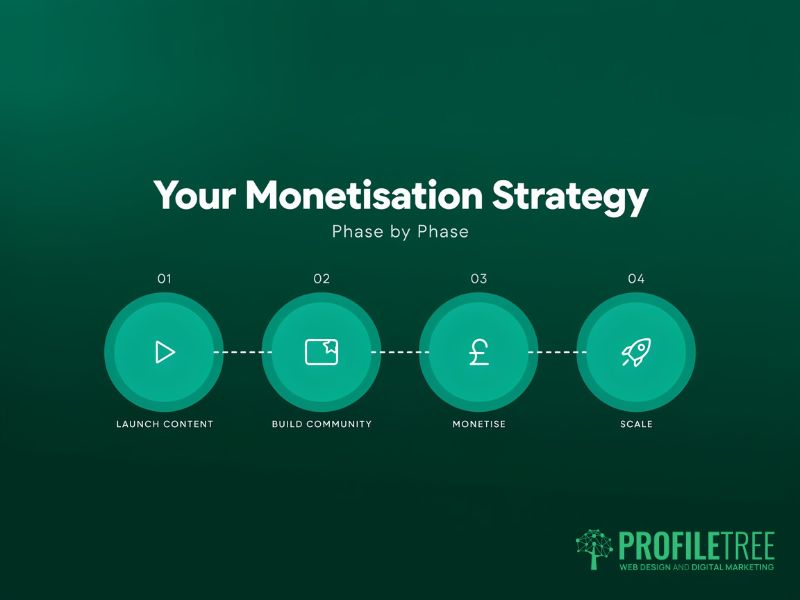
Monetising YouTube channels successfully is a phased process, not a set of features you switch on at once. Good YouTube monetisation requires building the right foundations at each stage of growth, then adding income streams as the audience and the creator’s capacity to deliver support them.
Phased Implementation
The first phase covers foundations: YouTube Partner Programme eligibility, basic ad placement optimisation, initial affiliate marketing links for products you genuinely use, and business infrastructure. Diversification comes next: channel memberships with two or three sustainable tiers, first brand deals, a single digital product, and Super Chat for livestreams.
The third phase optimises based on data, expanding what’s working. A fourth phase then scales the business with team support, platform diversification, and systems that reduce dependency on the creator’s personal time for every output.
Balancing Monetisation and Audience Experience
Channels with durable income treat monetisation as a value exchange rather than a tax on viewership. Place ads at natural content transition points rather than during high-engagement segments. Integrate brand deals with genuine value. Design channel membership benefits that enhance the community experience. Recommend affiliate products based on actual use rather than commission rate alone.
Collect audience feedback regularly and watch for drops in watch time or comment sentiment after introducing new monetisation features. If something is working against the audience experience, the long-term cost to brand deals, channel memberships, and affiliate trust will outweigh any short-term revenue gain.
ProfileTree, a Belfast-based digital agency founded in 2011, has completed over 1,000 web and digital projects. For businesses building a YouTube presence, our video marketing and production team provide the strategy and production quality to make the investment return results. It’s also worth understanding how YouTube Premium affects creator revenue as part of your income planning.
FAQs
1. How many subscribers do I need to start monetising my YouTube channel?
You can begin earning through Super Thanks and channel memberships at 500 subscribers with 3,000 watch hours: that’s the fan funding tier. Full ad revenue through the YouTube Partner Programme requires 1,000 subscribers and 4,000 public watch hours in the past 12 months. Watch hours is often the harder threshold to meet.
2. Can YouTube Shorts be monetised?
Yes. YouTube shares ad revenue with Shorts creators through the Shorts Feed Ad Revenue Sharing model (creators receive 45%). To qualify: 500 subscribers and 3 million Shorts views in 90 days for fan funding, or 1,000 subscribers and 10 million Shorts views in 90 days for full YouTube Partner Programme access. Shorts CPMs are considerably lower than for long-form content, so treat Shorts monetisation as an audience growth tool that supplements other income streams.
3. What is the difference between CPM and RPM on YouTube?
CPM (Cost Per Mille) is what advertisers pay per 1,000 ad impressions on your content. RPM (Revenue Per Mille) is what you actually earn per 1,000 video views after YouTube’s revenue share, ad blockers, and non-monetised views are accounted for. It’s always lower than CPM and more useful for comparing performance across your own videos because it reflects what you actually take home per view, not what the advertiser paid.
4. Do I need to declare YouTube earnings to HMRC?
Yes. YouTube income is taxable as self-employment income in the UK. If your total annual income exceeds £12,570 (2025/26 personal allowance), you must register for self-assessment with HMRC and pay Income Tax and National Insurance on profits. You’ve got until 5 October after the end of the tax year to register. This covers all YouTube income: ad revenue, brand deals, Super Chats, channel memberships, and affiliate commissions.
5. Which pays better: channel memberships or AdSense?
For most channels, channel memberships generate a better return per supporter than AdSense generates per viewer. A £4.99/month membership earns you approximately £3.49 (after YouTube’s 30%) from a single subscriber, which is more than most channels earn from several hundred views. Ad revenue scales with total viewership; channel memberships scale with engaged community size. The most successful approaches to monetising YouTube channels treat these as complementary, with ad revenue funding discovery and memberships creating the stable, recurring base.