
ROI of Video Marketing: A Decision Guide for SME Owners
Table of Contents
AI summary: The ROI of video marketing measures the value a campaign returns against what it costs to produce and distribute. For UK and Irish SMEs, a workable video project typically runs from a few hundred to several thousand pounds, and ROI is judged on leads, conversions and revenue rather than views alone. This guide sets out the costs, metrics and a simple framework to decide whether professional video is worth the spend.
Most small business owners don’t need convincing that video works. They need to know whether it pays. A campaign that generates plenty of views but no enquiries isn’t a marketing win; it’s a budget line that’s hard to defend at the next planning meeting.
This guide is written for owners and marketing managers at SMEs across Northern Ireland, Ireland and the UK who are weighing up the commercial case for professional video. It covers what the work actually costs, which numbers matter, and how to judge whether the investment is working. If you want help putting it into practice, ProfileTree, a Belfast-based digital agency, offers video marketing services alongside wider digital marketing support.
Understanding the ROI of Video Marketing
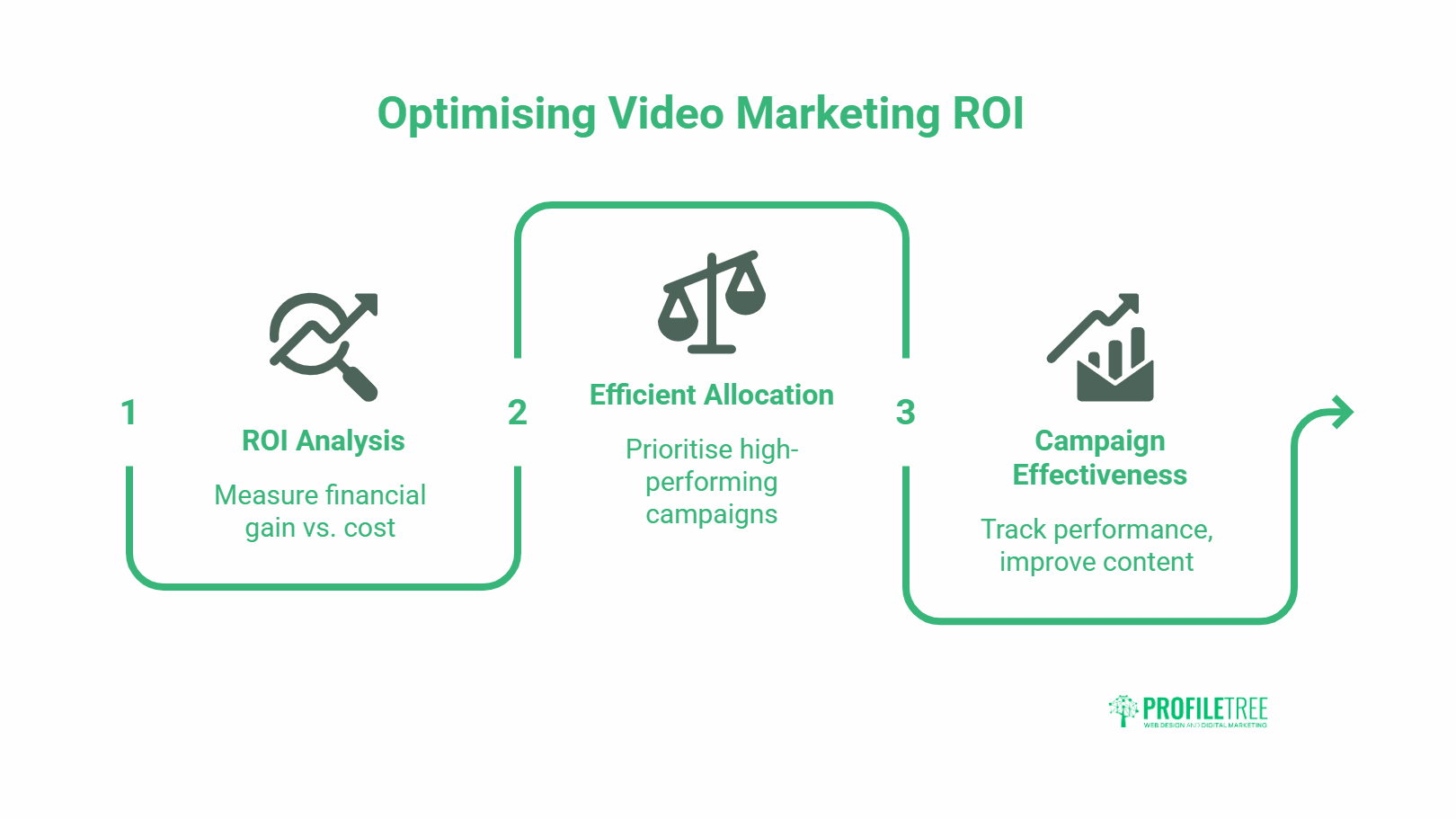
ROI, or return on investment, measures the financial gain or value of a campaign relative to the cost incurred. For video marketing, it answers a single question: Did the money spent on production and promotion bring back more than it took out? Get that answer right, and you can repeat what works. Get it wrong, and the budget drifts toward content that looks busy but earns nothing.
Why ROI Analysis Matters for a Small Business
For an SME, every marketing pound competes with payroll, stock and rent. ROI analysis is the tool that justifies the spend and shapes the next decision. It shows which channels and formats actually move enquiries, so you put money where it returns rather than where it feels productive.
Efficient Resource Allocation
Smaller budgets reward discipline. ROI analysis helps you prioritise campaigns that produce results and stop the ones that don’t. By identifying which formats and platforms generate leads, you direct limited resources toward the work that pays. That same discipline underpins a wider digital strategy rather than treating video as a standalone gamble.
Measuring Campaign Effectiveness
Tracking ROI tells you what works and what doesn’t, which makes the next decision a data one rather than a guess. It highlights the parts of a campaign that performed and the parts that didn’t, so each round of content improves on the last.
Building Stakeholder Trust
For owner-managed businesses, the stakeholder is often you, a co-founder or a board. Clear ROI reporting gives concrete evidence of value, which makes signing off on the next budget far easier. Transparent numbers turn marketing from a cost centre into a case you can defend.
Steps to Analyse ROI in Video Marketing Campaigns
Measuring ROI is both strategic and technical. A structured approach keeps the analysis accurate and the conclusions usable. Work through these four steps in order.
Define Objectives
Every campaign starts with a clear goal, because the goal decides which numbers count. Setting specific, measurable objectives lets you track progress and judge the result fairly. Common objectives include:
- Brand awareness: extending reach to new audiences through memorable content that builds recognition over time.
- Lead generation: capturing contact details through forms or sign-ups, usually by offering something useful in return.
- Conversions: driving sales or subscriptions through targeted calls to action and product-focused messaging.
- Engagement: encouraging likes, shares, comments and completed views that build visibility and connection.
Clearly defined objectives keep you focused on the right metrics and stop vanity numbers clouding the picture.
Identify Metrics for Success
To measure ROI properly, track the key performance indicators that match your objectives. The right KPIs depend on the goal, but these are the ones SMEs return to most:
- View count: total reach, and a first read on whether distribution is working.
- Engagement rate: how actively viewers interact, which signals relevance.
- Click-through rate: how many viewers act on links, a measure of how well the call to action lands.
- Conversion rate: how many viewers take the desired action, the clearest sign of commercial value.
- Watch time: how long people stay, indicating whether the content holds attention.
- Cost per view: spend efficiency on reach. A lower figure points to better targeting.
- Revenue generated: the financial impact, and the number most owners care about.
Strong tracking here connects directly to search visibility and social media performance, since video rarely works in isolation.
Calculate Costs
Accurate ROI needs an honest view of total cost, not just the production invoice. Costs to account for include production (scripting, filming, editing), distribution (paid promotion or sponsored posts), personnel (internal time, freelancers or agency fees), tools and software (editing, hosting, analytics), and incidentals such as music licensing or location hire.
As an indicative guide for UK and Irish SMEs, a simple branded explainer or social clip often sits in the low hundreds of pounds, while a fuller campaign with scripting, multiple deliverables and paid distribution can run into several thousand. These figures are indicative only and vary by scope, location and complexity. For a costed estimate against your goals, the practical step is a conversation about your content marketing plan rather than a generic price list.
Attribute Revenue
Tying revenue to a specific video is the hardest part, especially when several channels contribute to a sale. Three methods help: trackable links using UTM parameters to follow viewer activity through to purchase; promo codes shown in the video that tie sales directly to the campaign; and attribution models (first-touch, last-touch or multi-touch) that share credit across the steps in a buyer’s journey. Accurate attribution is what turns a hunch about video into a defensible ROI figure.
Tools for Analysing Video Marketing ROI
Good ROI analysis depends on the right tools to capture and interpret the data. Each of the following gives a different view of performance, and most SMEs use two or three together.
Analytics and Platform Tools
- Google Analytics: tracks website traffic, conversions and behaviour from video campaigns, and works with UTM parameters to show how video feeds the wider funnel.
- YouTube Analytics: reports audience demographics, watch time and engagement, helping you see which content holds attention.
- Facebook Ads Manager: gives reach, engagement and cost-per-result data for paid video on Facebook and Instagram.
CRM and Dedicated Video Tools
- HubSpot: connects video interactions to leads, customer journeys and revenue through CRM integration.
- Wistia: offers detailed video analytics such as heat maps and viewer-level behaviour, with lead capture inside the player.
Knowing which numbers to read is a skill in itself, which is why some SMEs combine these tools with digital marketing training for the in-house team.
Challenges in Analysing Video Marketing ROI
ROI measurement is rarely tidy. Overlapping channels, delayed effects and gaps in the data all complicate the picture. The common obstacles are worth naming so you can plan around them.
Attribution and Timing
Video marketing campaigns rarely work alone, so isolating their contribution is difficult when several touchpoints influence one decision. Some benefits, such as brand awareness and loyalty, also build slowly and sit outside a single reporting period. Both issues call for solid attribution models and patience with longer-term measures.
Data Quality and Soft Outcomes
Metrics like sentiment and brand perception carry real value but resist easy measurement. Gaps between analytics tools can also produce an incomplete view of performance. Reliable conclusions depend on consistent tracking across every platform and a clear method for the outcomes that numbers struggle to capture.
How to Improve the ROI of Video Marketing
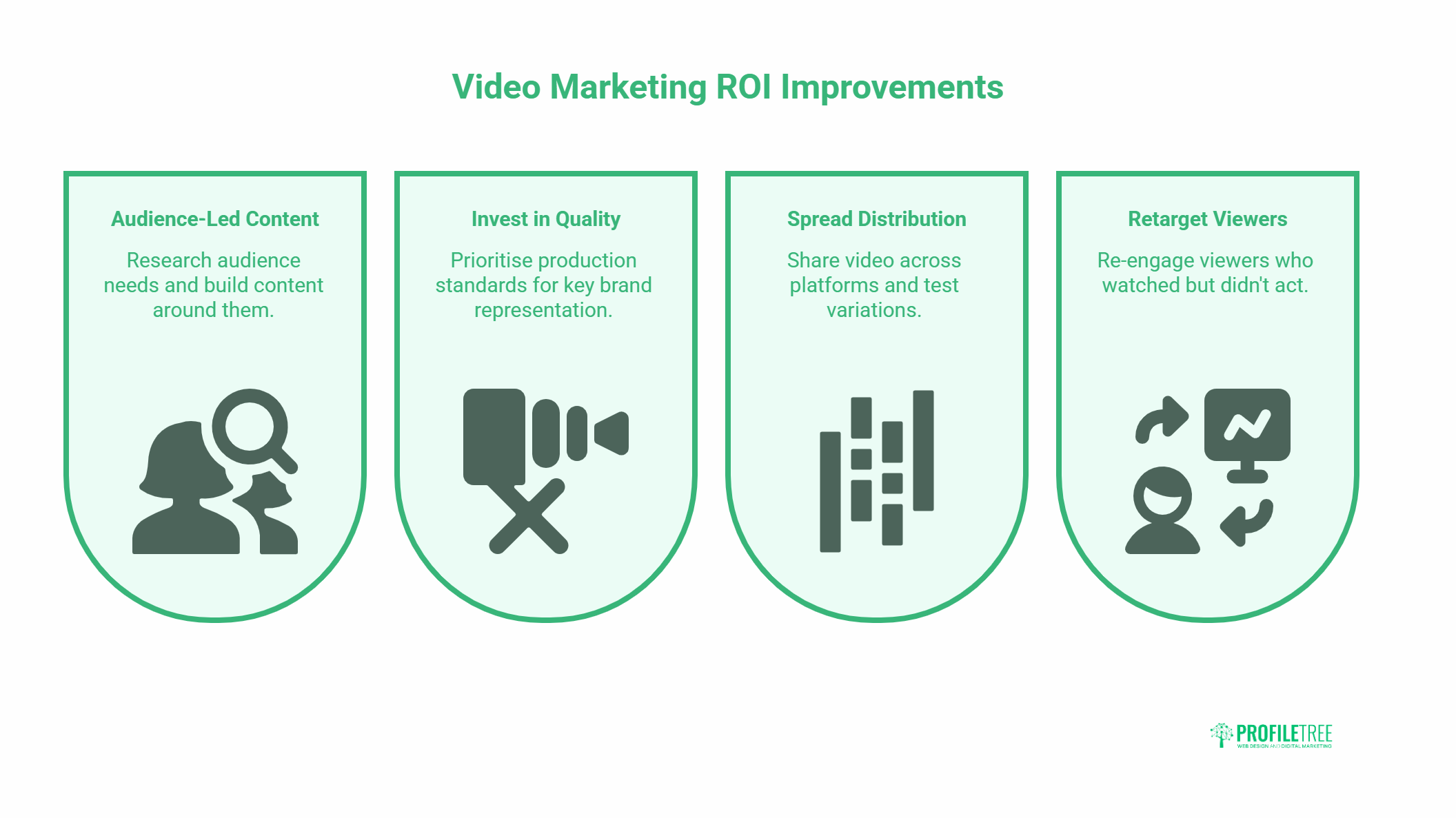
Getting more from video means acting on the analysis, not just reading it. A few practical moves tend to shift returns for SMEs.
Make Content Audience-Led
Research what your audience cares about: their questions, frustrations and viewing habits. Content built around real needs earns more attention than content built around what the business wants to say.
Invest Where Quality Counts
Budgets vary, but production standards affect how a brand is perceived. You don’t need a film crew for every clip, though the pieces that represent you to a buying audience deserve proper attention.
Spread Distribution and Test
Share video across the platforms your audience uses, adapting the format to each one. Then test variations of length, message and call to action to learn what performs. Pairing this with sound SEO practice on titles and descriptions makes the same content easier to find.
Retarget and Follow Up
Re-engage viewers who watched but didn’t act. Retargeting keeps your brand in front of people already partway through a decision, which tends to be more cost-effective than chasing cold reach.
“Most of the SME owners we work with in Northern Ireland aren’t short of video ideas, they’re short of confidence that the spend will pay back. The businesses that win with video are the ones that decide upfront what a result looks like, then measure against it honestly. Treat video as a measurable investment, not a creative luxury, and the budget conversation gets a lot easier.” — Ciaran Connolly, Founder, ProfileTree
Conclusion
Video can drive real growth for a small business, but only when the return is measured rather than assumed. Set clear objectives, track the metrics that match them, account for the full cost, and attribute revenue as accurately as you can. The challenges are real, yet manageable with the right tools and a steady method. Done well, ROI analysis keeps video a sound investment rather than a hopeful one.
Frequently Asked Questions
How Do You Calculate the ROI of a Video Marketing Campaign?
Subtract the total campaign cost from the revenue or value it generated, then divide by the cost. Include production, distribution, personnel and tools in the cost figure, and use trackable links or promo codes to attribute revenue accurately.
How Much Does Video Marketing Cost for a Small Business in the UK?
It varies widely. A simple social clip can sit in the low hundreds of pounds, while a fuller campaign with scripting and paid distribution can reach several thousand. These figures are indicative; scope, location and complexity all affect the final cost.
What Metrics Matter Most for Video ROI?
Conversion rate and revenue generated matter most for commercial return. View count, engagement and watch time help explain performance, but they don’t pay the bills on their own.
How Long Before Video Marketing Shows a Return?
Direct-response campaigns can show results within weeks. Brand awareness and loyalty build over months, so judge those against longer reporting periods rather than expecting an immediate return.