
Professional Website Audit: Your Complete Guide to Digital Success
Table of Contents
Your website should be your most powerful sales tool, working around the clock to attract customers and drive business growth. Yet many business owners are frustrated with stagnant traffic, poor search rankings, and websites that fail to convert visitors into paying customers. The symptoms are clear – competitors dominating search results for key terms, potential clients bouncing from your site within seconds, and a nagging feeling that your digital presence isn’t living up to its potential. Without proper diagnosis, these problems persist while your competition gains ground.
A professional website audit cuts through the confusion by providing a comprehensive health check of your digital presence. This systematic analysis examines every element affecting your website’s performance – from technical infrastructure and search engine optimisation to user experience and conversion pathways. Rather than guessing what might be wrong, a strategic audit delivers concrete data, prioritised recommendations, and a clear roadmap for improvement. The result is a website that looks professional and actively contributes to your business growth through increased visibility, higher engagement, and improved conversion rates.
Why Strategic Website Audits Matter
A website audit is like a big check-up for your website. Think of it as taking your car to the garage to ensure everything works well. For a website, this check helps ensure all parts of your site are working as expected. Website audits have become a fundamental requirement for businesses that are serious about their digital presence. While many business owners recognise their websites aren’t performing optimally, identifying the issues preventing growth remains challenging without professional analysis.
A strategic site audit is a comprehensive health check for your digital presence, examining every element influencing user experience, search engine visibility, and conversion rates. Unlike automated scanning tools that generate lengthy lists of technical issues, professional audits provide context, prioritisation, and actionable solutions tailored to your business objectives.
The importance of website audits extends beyond simple problem identification. These assessments reveal opportunities for competitive advantage, highlight content gaps that could capture new audiences, and identify technical improvements that can significantly impact search engine rankings. For businesses in Northern Ireland, Ireland, and the UK, where local competition for digital visibility continues intensifying, regular website auditing provides the insights needed to maintain competitive positioning.
Professional Audit Framework Components
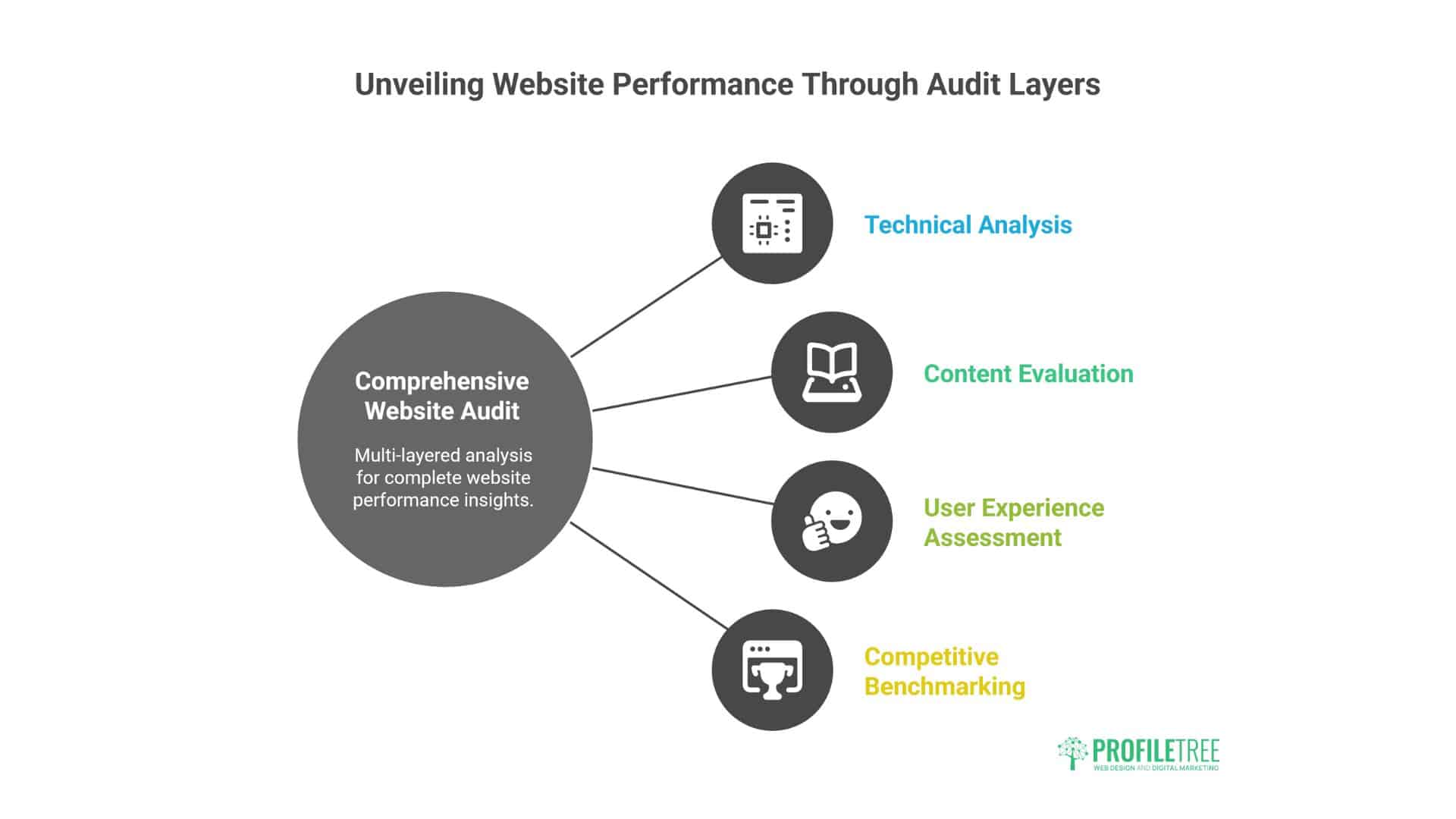
A comprehensive website audit encompasses multiple analytical layers, each targeting specific aspects of digital performance. Profiletree’s framework incorporates technical analysis, content evaluation, user experience assessment, and competitive benchmarking to deliver complete insights.
Technical Infrastructure Analysis
Technical auditing examines the foundational elements determining how search engines interact with your website. This includes server response times, crawlability issues, indexation problems, and mobile responsiveness. Search engine optimisation site audit applications have become increasingly sophisticated, but human expertise remains essential for interpreting results and prioritising fixes based on business impact.
Core technical elements examined include:
- Site speed analysis across desktop and mobile devices
- SSL certificate implementation and security protocols
- URL structure and internal linking architecture
- XML sitemap configuration and submission status
- Robots.txt file setup and crawl directive accuracy
Content Quality and Relevance Evaluation
Content auditing assesses whether your website material effectively serves user intent while supporting search engine visibility goals. This process examines content depth, keyword optimisation, duplicate content issues, and alignment with target audience needs.
The evaluation considers content from multiple perspectives: technical optimisation for search engines, user engagement potential, and business objective alignment. For businesses offering specialised services like AI training or digital marketing strategy, content auditing often reveals opportunities to demonstrate expertise better and attract qualified leads.
User Experience and Conversion Analysis
User experience auditing examines how visitors interact with your website, identifying friction points that may prevent conversions. This analysis considers navigation structure, call-to-action placement, form functionality, and overall user journey optimisation.
Modern website strategy audits increasingly focus on conversion rate optimisation, recognising that traffic generation without a conversion focus provides limited business value. The assessment examines whether your website effectively guides visitors toward desired actions, such as making purchases, requesting consultations, or subscribing to services.
Technical SEO Deep-Dive
Technical SEO forms the foundation of website performance, yet many business owners struggle to understand which technical issues require immediate attention and which can be addressed over time.
Site Performance and Speed Optimisation
Page loading speed directly impacts both user experience and search engine rankings. Website audits examine performance factors, including server response times, image optimisation, code efficiency, and content delivery network implementation.
For businesses operating in competitive markets across the UK and Ireland, even small improvements in loading speed can translate to significant advantages in search rankings and user engagement. The audit process identifies specific performance bottlenecks and provides prioritised recommendations for improvement.
Mobile Responsiveness and Accessibility
Mobile-first indexing means search engines primarily use mobile versions of websites for ranking purposes. Comprehensive website audits examine mobile user experience, touch-friendly navigation, and responsive design implementation.
Accessibility considerations have become increasingly important for user inclusion and search engine optimisation. The audit process evaluates compliance with Web Content Accessibility Guidelines (WCAG), identifying improvements that benefit both disabled users and search engine crawlers.
Structured Data and Schema Implementation
Structured data markup helps search engines understand content context, potentially improving search result appearance through rich snippets. Website audits examine current schema implementation and identify opportunities for enhanced search visibility.
“A well-executed website audit doesn’t just identify problems – it reveals the strategic pathway to digital growth that many businesses never knew existed,” says Ciaran Connolly, Director of ProfileTree.
Implementing Audit Recommendations Effectively
Beyond identifying issues, professional audits provide implementation guidance that transforms technical recommendations into business results. This guidance is particularly valuable for businesses lacking in-house technical expertise, bridging the gap between audit findings and practical solutions.
“We’ve seen businesses transform their digital presence within months of implementing comprehensive audit recommendations. The key isn’t just finding problems – it’s understanding which fixes will drive the biggest impact on your specific business goals,” explains Ciaran Connolly.
Post-Audit Implementation Strategies
Receiving a comprehensive audit report represents just the beginning of the optimisation process. Successful implementation requires strategic prioritisation based on impact potential and resource requirements.
Prioritising Fixes for Maximum Impact
Professional audits categorise recommendations using effort-versus-impact analysis, helping businesses focus resources on changes that deliver the most significant returns. Quick wins – high-impact fixes requiring minimal effort – typically receive the highest priority.
Critical issues affecting search engine crawling or user safety require immediate attention, regardless of implementation complexity. These might include security certificate problems, major mobile usability issues, or broken functionality on key conversion pages.
Building Implementation Timelines
Effective audit implementation follows structured timelines that balance urgency with available resources. Technical fixes often require developer involvement, while content improvements may be handled internally or through content marketing partnerships.
The implementation roadmap considers seasonal business factors, marketing campaign timing, and resource availability to create realistic project schedules. For many businesses, spreading implementation across several months prevents overwhelming internal teams while allowing for testing and refinement of changes.
Measuring Results and Ongoing Monitoring
Post-implementation monitoring tracks whether audit recommendations achieve expected results. Key performance indicators include organic search traffic growth, improved search engine rankings for target keywords, and increased conversion rates.
Regular monitoring allows for strategy adjustment when results don’t meet expectations or when new opportunities emerge. The digital landscape changes rapidly, making ongoing audit work essential for maintaining competitive advantages.
Common Website Issues Discovered Through Audits
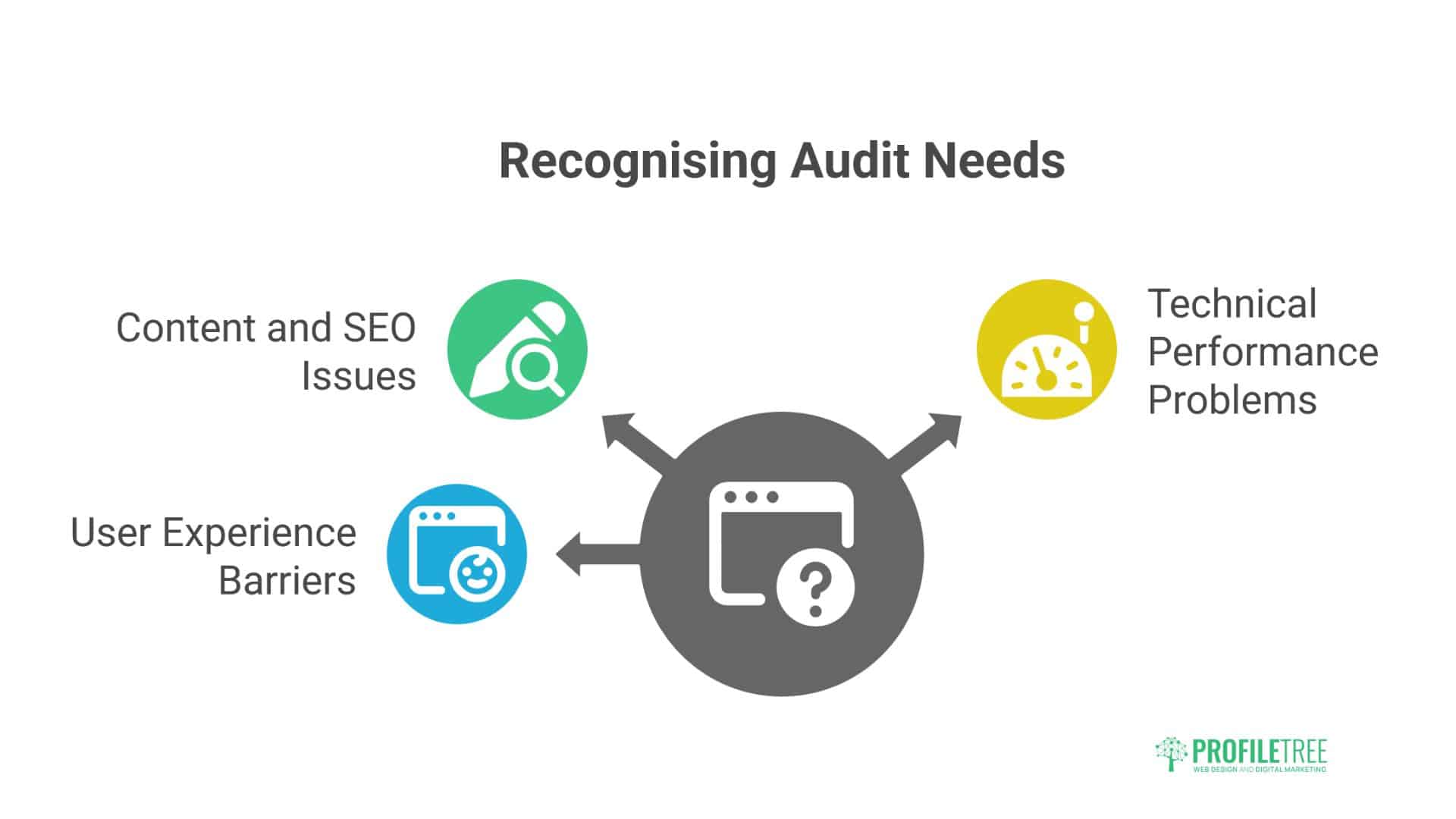
Website audits consistently reveal similar issues across different industries and business types. Understanding common problems helps business owners recognise when professional audit services might benefit their operations.
Content and SEO Issues
Many websites suffer from thin content that fails to serve user search intent adequately. Audits frequently identify pages with insufficient content depth, missing keyword optimisation, or duplicate content problems that may harm search engine rankings.
Internal linking problems represent another common issue, with websites failing to distribute page authority effectively throughout their site structure. Poor internal linking limits the potential for individual pages to rank well in search results.
Technical Performance Problems
Site speed issues remain prevalent, particularly on websites that haven’t been optimised professionally. Oversized images, inefficient code, and poor hosting configurations commonly contribute to slow loading times.
Despite implementing mobile-first indexing, mobile usability problems continue to affect many business websites. These issues include unresponsive designs, touch-friendly navigation problems, and content not displaying correctly on mobile devices.
User Experience and Conversion Barriers
Navigation confusion frequently prevents visitors from finding desired information or completing intended actions. Website audits identify complex menu structures, unclear calls-to-action, and missing contact information that may discourage potential customers.
Form functionality problems often go unnoticed until audits reveal issues preventing lead generation. Broken contact forms, missing confirmation pages, or overly complex submission processes can significantly impact business enquiry volume.
Advanced Audit Techniques for Complex Sites
Large websites with extensive content require specialised audit approaches that can efficiently identify issues across thousands of pages. These comprehensive website audit techniques employ sophisticated crawling tools and data analysis methods.
Enterprise-Level Crawling and Analysis
Sites with significant page counts require systematic crawling approaches to identify patterns in technical issues, content problems, and user experience barriers. Advanced audit tools can process large datasets to highlight priority areas for improvement.
Log file analysis provides insights into how search engines crawl websites, revealing pages that receive excessive crawling attention versus those being ignored. This information helps optimise crawl budget allocation and improve indexation efficiency.
Competitive Benchmarking at Scale
Understanding competitor strategies for businesses competing in crowded digital markets becomes crucial for identifying opportunities. Advanced audits examine competitor content strategies, technical implementations, and user experience approaches to reveal gaps in your website performance.
This analysis extends beyond simple keyword research to examine competitor site architecture, content depth, and technical optimisation strategies that may provide competitive advantages.
Specialised Auditing for Different Industries
Different business sectors require tailored audit approaches that consider industry-specific challenges and opportunities.
E-commerce Website Auditing
Online retail websites face unique challenges, including optimising product pages, organising category structures, and optimising conversion funnels. E-commerce audits examine product description quality, image optimisation, checkout process efficiency, and inventory management integration.
Shopping cart abandonment analysis identifies specific points where potential customers exit the purchase process, allowing for targeted improvements that can significantly impact revenue generation.
Service-Based Business Auditing
Professional service providers, including agencies offering web design, AI training, or digital marketing strategy, require audit approaches that focus on demonstrating expertise and optimising lead generation.
To optimise lead generation processes, these audits examine service page effectiveness, case study presentation, testimonial integration, and contact form conversion rates.
Local Business Optimisation
Businesses serving local markets across Northern Ireland, Ireland, and the UK benefit from audit techniques focusing on local search optimisation, Google Business Profile integration, and location-based content strategies.
Local audit processes examine citation consistency, review management strategies, and localised content development to improve visibility in location-based searches.
Future-Proofing Your Website Through Regular Auditing
The digital landscape evolves continuously, with search engine algorithm updates, user behaviour changes, and technology developments requiring ongoing website optimisation.
Establishing Audit Schedules
Regular audit scheduling helps businesses avoid potential issues while capitalising on new opportunities. Most websites benefit from comprehensive annual audits supplemented by quarterly technical health checks.
High-traffic websites or those in rapidly changing industries may require more frequent assessment to maintain competitive positioning and optimal performance.
Staying Current with Digital Trends
Website audits should consider emerging trends that may impact future performance. This includes voice search optimisation, artificial intelligence integration, and evolving user privacy requirements.
Progressive web application features, advanced user personalisation, and emerging search engine technologies represent areas where forward-thinking audits can identify early adoption opportunities.
Taking Action: Your Next Steps
Website audits provide the foundation for digital success, but value comes from effectively implementing recommendations. Whether you address issues internally or partner with professionals, the key lies in treating audit results as strategic roadmaps rather than simple task lists.
For businesses serious about digital growth, professional website auditing represents an investment in long-term success rather than a one-time expense. The insights from comprehensive analysis often reveal opportunities that far exceed the audit investment through improved search visibility, increased traffic, and higher conversion rates.
FAQs
How often should businesses conduct website audits?
Most websites benefit from comprehensive annual audits, with quarterly technical health checks for high-traffic sites or those undergoing frequent updates.
What’s the difference between automated tools and professional audits?
Automated tools generate data lists but lack strategic context and prioritisation. Professional audits provide business-focused recommendations with implementation guidance.
How long does a comprehensive website audit typically take?
Professional audits usually take 2-4 weeks to complete, depending on the website’s size and complexity. Rush services may be available for urgent situations.
Can businesses implement audit recommendations internally?
Many recommendations can be implemented internally, though technical fixes often require developer expertise. Professional agencies can provide implementation support when needed.
Ready to Unlock Your Website’s Hidden Potential?
Your competitors aren’t waiting—and neither should you. Every day, your website underperforms, which means missed opportunities and lost revenue.
Through comprehensive website audits, ProfileTree has helped businesses across Northern Ireland, Ireland, and the UK achieve 20-50% increases in organic traffic within 6-12 months.
What you get:
- Complete technical analysis and competitor benchmarking
- Prioritised action plan focused on maximum business impact
- Implementation guidance and 90-day follow-up support
Don’t let another month pass wondering why your website isn’t delivering results. Book your audit today.
Get started: Call 028 9568 0364 or email hello@profiletree.com. Your competitors won’t see it coming.