
How to Choose a Web Design Agency in Northern Ireland
The safest way to choose a web design agency in Northern Ireland is to check who will own the domain, web hosting, and finished site; whether the team can show live sites like yours; how search is built in; what support costs after launch; and how meetings will work. Price comparisons only make sense once those answers are written down.
Most businesses here shortlist three or four companies from a search, a recommendation or a Business Profile listing, then compare quotes that describe very different projects. This guide gives you the criteria to put those quotes side by side. If you already want a quote from us, our page on web design in Northern Ireland explains how ProfileTree plans and builds sites for businesses across the region, and our website design service sets out what every build includes.
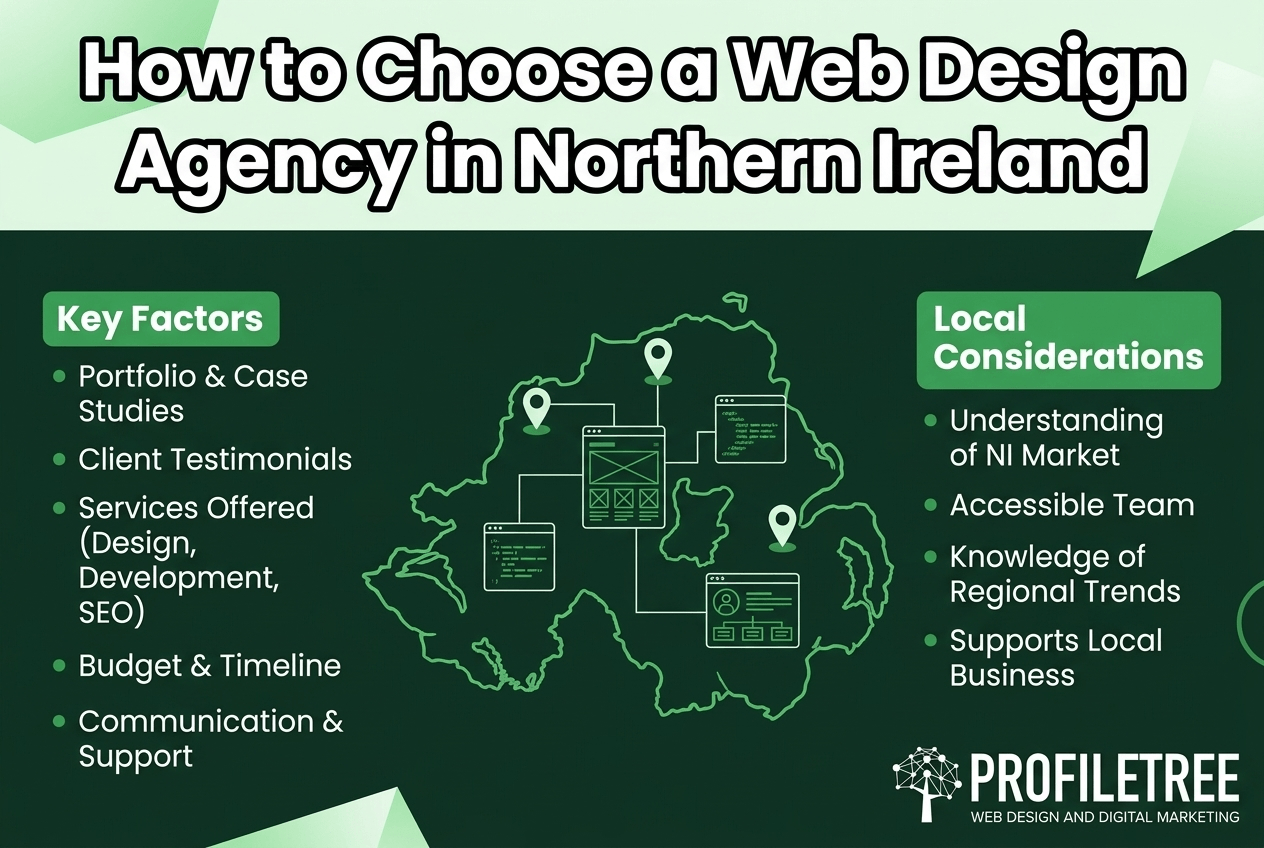
Ready to grow online? Start your project today.
Ownership of the Domain, Hosting, and Site Comes First
Ask who will own the domain name, the hosting account, and the finished website before you ask about design. A business that does not control its own domain can lose its email and its search history if the relationship with the agency ends, and that is far harder to fix than a page layout. The answer you want is that the domain is registered in your company’s name, that you hold the login or can request it at any time, and that the contract says the site passes to you once it is paid for.
Web hosting deserves the same question. Some agencies host every client on their own server and charge a monthly fee that includes support, which can work well; the point is that you should know where the site lives and be able to move it. Ask for the arrangement in writing, and check that the company itself is real and active on Companies House, which takes two minutes and tells you how long it has been trading.
Live Work in Your Sector Tells You More Than a Portfolio Page
A portfolio shows what a team can design; live sites show what it builds and how those sites have aged. Ask for two or three addresses of sites launched in the last two years for businesses like yours, then open them on your phone. Check how quickly the pages load, whether the contact form is easy to find and whether the business still appears to be using the site.
Sector matters because the hard parts of a website differ between businesses. A solicitor in Belfast needs clear service pages and trust signals, a hospitality business on the north coast needs booking and seasonal content, and a manufacturer in Mid Ulster may need product data and trade enquiry forms. A team that has built for your sector will ask about those things at the first meeting rather than discovering them halfway through the build. You can see the range of sectors we have worked with on our projects page.
Search Should Be Built into the Site From the First Draft
A new website should be planned around the searches your customers already make, because the page structure decides what the site can rank for. Retrofitting search after launch usually means rewriting pages and changing their order, which costs more than doing it at the start. Ask each agency how it decides which pages to build, and listen for an answer that mentions search data rather than a standard five-page template.
None of the basics is secret. Google publishes its own Search Essentials, and any agency should be able to explain in plain terms how its builds meet them: crawlable pages, descriptive titles, fast mobile loading, and content written for people. If you also need ongoing search work after launch, our page on SEO Northern Ireland covers how that is planned. AI assistants such as ChatGPT and Copilot now answer many questions that used to start on Google, and they draw on the same clear, well-structured pages, so a site built properly for search is also easier for those tools to read and cite.
Agencies, Studios, and Freelancers Suit Different Projects
The right type of provider depends on the size of the project and how much help you will need after launch. Searches for web design companies across Northern Ireland return freelancers, small studios, full-service agencies, and software developers side by side, and they are not interchangeable. The table compares them on the criteria that tend to decide the outcome.
| Provider Type | Typical Project | Search and Content | Support After Launch | Our Recommendation |
|---|---|---|---|---|
| Freelance designer | Small brochure site, tight budget | Varies widely; often design only | Depends on one person’s availability | Good for a simple site if you have a separate plan for search and cover when they are away |
| Small design studio | Brochure or small shop site with strong visual brand | Sometimes included, often outsourced | Usually available, sometimes limited hours | Good where design is the main need; ask who writes the content and handles search |
| Full-service digital agency | Lead generation sites, shops, multi-location businesses | Usually in-house, planned with the build | Care plans with web hosting, updates and reporting | Best fit when the website has to produce enquiries or sales and you want one accountable team |
| Software or web application company | Customer portals, booking systems, custom apps | Rarely the focus | Development contracts and service levels | Choose this for software; pair it with a web or search specialist for the public site |
| DIY website builder | Very early stage or test idea | Up to you | Platform help desk only | Fine to start; plan to move once the site needs to bring in steady enquiries |
If your project sits between two rows, ask the provider which row they think you belong in and why. An honest answer, including “you do not need us yet”, is a good sign.
A Fair Quote Describes the Whole Project
A useful quote lists the pages, the platform, who writes the content, what search work is included, how many rounds of changes you get, and what happens after launch. Two quotes for “a new website” can differ by thousands of pounds because one covers content, search, and training while the other covers design and build only. Put the quotes in a simple grid with those headings, and the difference usually explains itself.
ProfileTree’s web design starts from £1,250, and our guide to website design costs in the UK breaks down what pushes a project above that. Whoever you choose, check that the quote names the platform (we build on WordPress, Wix, and Shopify, and recommend one based on how you will run the site), and that it states whether you will be able to edit pages yourself.
Two legal points belong in every quote and are often missed. Websites that use analytics or marketing cookies need a consent banner that meets the ICO’s guidance on cookies. Service providers in Northern Ireland have duties to disabled customers under the Disability Discrimination Act 1995, so ask how the build will meet recognised accessibility standards. An agency that raises both points without being asked has usually thought about the rest.
Support After Launch Decides the Total Cost
The build fee is usually the smaller part of what a website costs over three years. Web hosting, security updates, plugin and platform renewals, backups, and small content changes all continue after launch, and some agencies charge for each change separately. Ask for the monthly or annual cost of support in writing, what it includes and how quickly the team responds when something breaks.
Ask, too, what happens if you want to leave. A reasonable agency will hand over logins, files, and a backup without a fee beyond any notice period in the contract. Our web hosting and management service lists what a care plan covers, which is a useful benchmark when comparing offers from others.
How Meetings Will Work Matters More Than the Office Address
You do not need an agency in your own town, but you do need to know how often you will meet and where. Most projects need a kick-off meeting, a review of the first designs, and a launch check. A team that can be at your premises for those three meetings will usually understand your customers better than one that only ever meets on video. Routine updates work well by video call, which saves time on both sides.
Our team is based at the McSweeney Centre in Belfast and works with businesses across the region. Where we have a page for your area, such as web design in Derry, Newry, Lisburn, or Armagh, it covers how we work with businesses there.
Questions to Ask at the First Meeting
A first meeting should leave you with clear answers to the questions that decide the project. These are the questions we would ask if we were the client.
Write the answers down during the meeting. Comparing them afterwards is more reliable than comparing your memory of three conversations.
- Who will own the domain, the hosting account, and the finished website, and is that written into the contract?
- Can you show me two or three live sites you launched recently for businesses like mine?
- How will you decide which pages the site needs, and what search data will you use?
- Who writes the content, and what do you need from me and by when?
- Which platform do you recommend for my site, and will I be able to edit it myself?
- What does support cost after launch, and what does it include?
- How will the site handle cookie consent and accessibility?
- Who will I deal with day-to-day, and how often will we meet in person?
In Practice
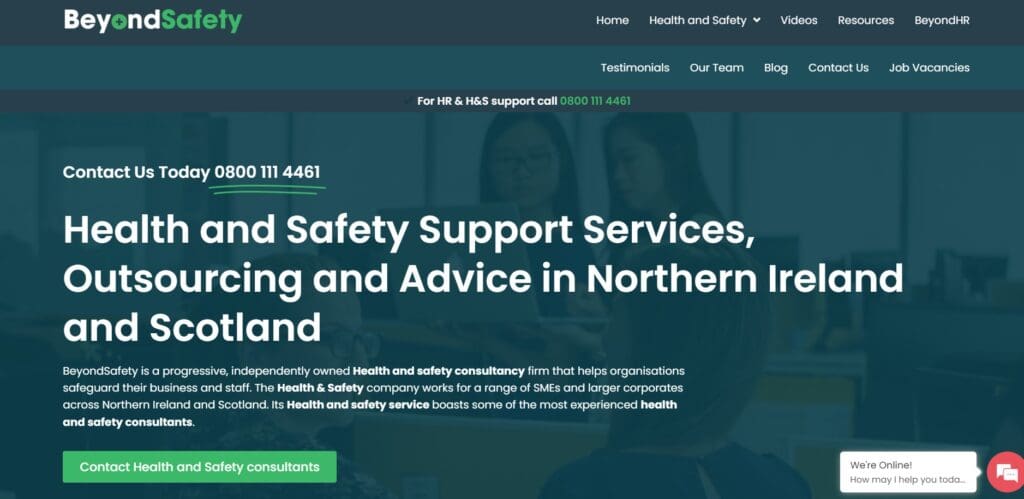
Two projects from our own portfolio show why the checks above matter more than the headline price. BeyondHR, a Northern Ireland HR consultancy, came to us when it was adding a health and safety service, BeyondSafety, and needed a separate online identity for it. Registering a new domain would have been the quick answer, but it would have started the new brand with no search history and split the authority the main site had built over several years.
We built BeyondSafety as a microsite within the existing domain instead, and the BeyondHR case study records that the main site’s rankings were not disrupted and that it now ranks for more than 280 keywords, with the new pages adding coverage on top. That decision was made at the planning stage, which is where the questions about domains and search in this guide belong.
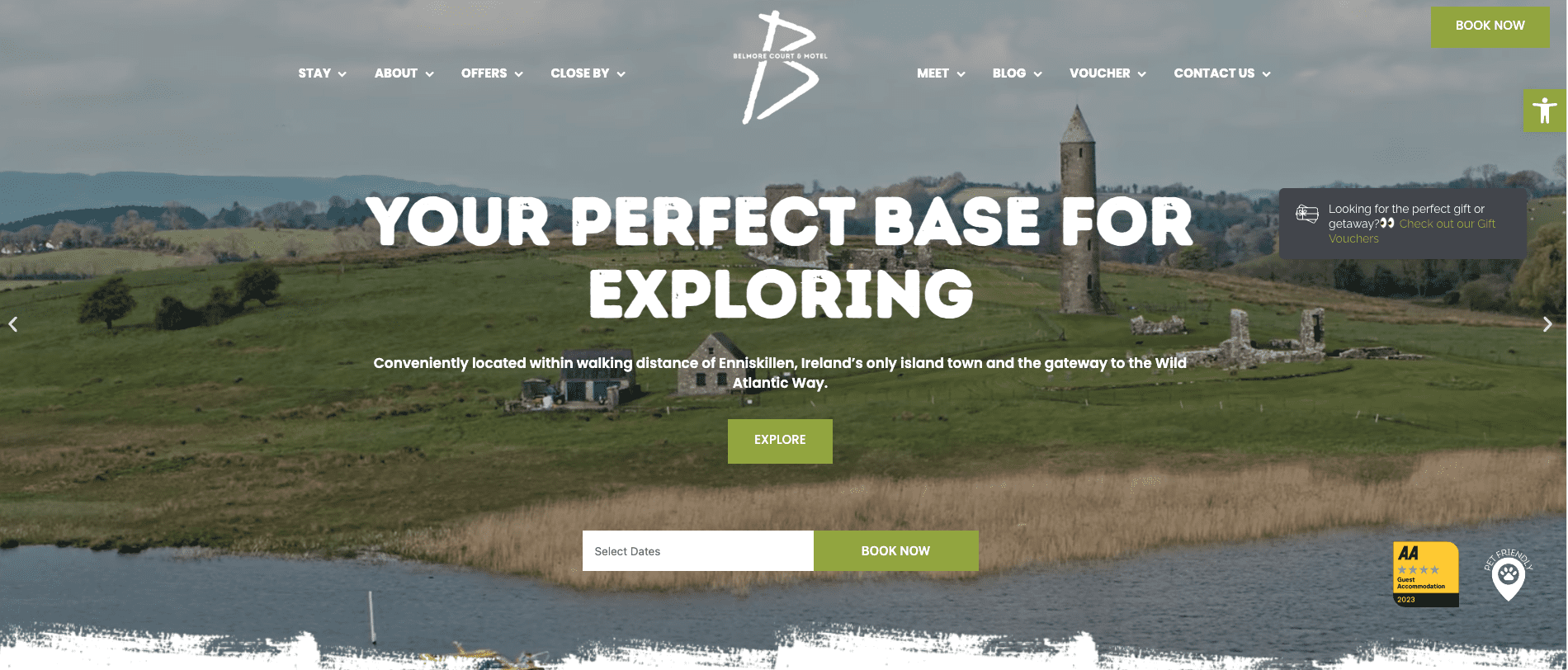
Belmore Court and Motel in Enniskillen shows the value of a team that understands the sector. The old site was dated, worked poorly on mobile, and sent guests to third-party platforms to book, so the property paid commission on reservations it could have taken directly. We rebuilt it mobile-first, around the decisions guests make (rooms, rates, location, and booking), with a booking engine inside the site so guests never had to leave it. The Belmore Court case study reports more than 1,000 organic visitors a month after the rebuild and growth in direct bookings.
When you ask an agency for live sites like yours, this is the kind of answer to look for: a site you can open on your phone, with a result tied to how the business earns its money.
Arrange a First Conversation
If you are comparing providers now, write down the questions above and take them into every meeting, including ours. To talk through your project with our team, get in touch and tell us what the site needs to do for your business; we will tell you plainly whether we are the right fit.
Questions People Ask About How to Choosing a Web Designer
You do not, as long as the team can meet you in person at the key stages and understands your customers. Ask how many in-person meetings the quote includes and where they will happen.
It depends on the number of pages and how quickly content and approvals are ready, which is usually the slowest part. Ask each provider for a written timetable that shows what they need from you and when, so you can see where the time goes.
Prices range from a few hundred pounds for a simple freelance site to several thousand for a site with content, search, and a care plan. ProfileTree’s web design starts at £1,250. Compare quotes on what they include, not on the headline figure.
Choose the platform that suits how you will run the site. Shopify suits most online shops, WordPress suits content-heavy sites that need flexibility, and Wix suits smaller sites that owners want to edit with little training. A good agency will explain its recommendation rather than using one platform for everyone.
Many already do because businesses near the border often sell in both jurisdictions. Ask the agency how the site will show prices in sterling and euro and how it will be found by searchers in both places.
That is a software project, and a web application developer is usually the right fit for the system itself. Many businesses use a web agency for the public site and search, and a developer for the portal behind the login.
Join Our Mailing List
Grow your business with expert web design, AI strategies and digital marketing tips straight to your inbox. Subscribe to our newsletter.