
Mastering YouTube New Rules: Effective Channel Optimisation
Table of Contents
YouTube new rules have changed what it takes to run a business channel safely and profitably. Monetisation now works in two tiers, AI disclosure is enforced with automatic detection, and UK age-assurance duties are tightening around every major platform. For a UK SME, the useful question is not simply what changed, but what those changes mean for the channel you are actually building.
This guide sets out what the rules require in 2026, how UK obligations such as ASA disclosure and the Online Safety Act sit on top of platform policy, and how a business channel stays compliant while it grows.
You will find the monetisation thresholds explained in plain terms, the AI labelling rules broken down, the copyright and community-guideline strike systems mapped out, and a short audit routine you can run before every upload.
Why YouTube’s New Rules Matter for Business Channels
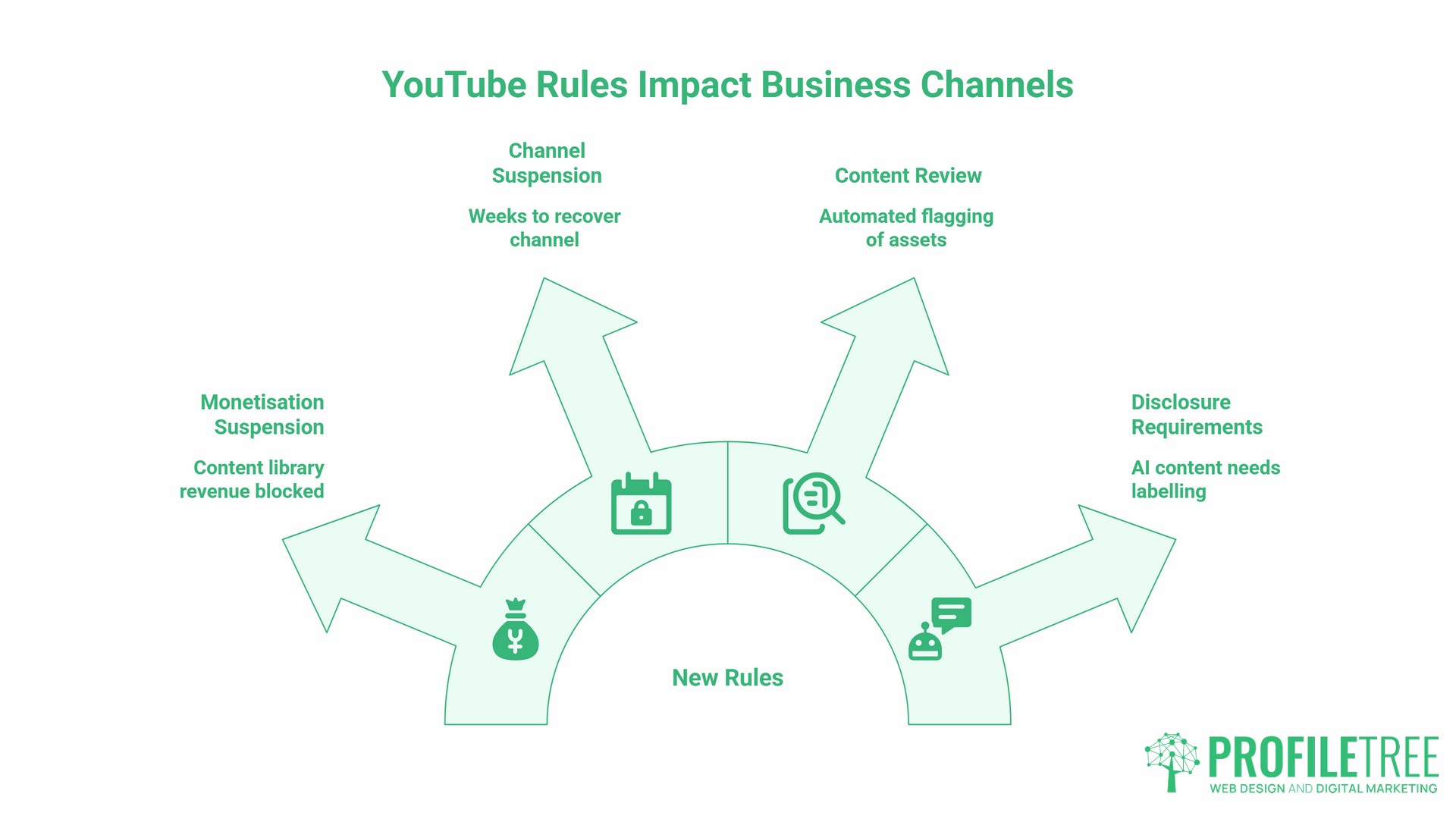
The stakes are simply higher for a company than for a hobbyist. A personal channel that trips a rule loses a video; a business channel can lose income, reach, and months of audience building in one go. That difference is why compliance belongs in your production process rather than in a note you read once and forget.
The Business Cost of a Channel Strike
A single strike can suspend monetisation across a whole content library rather than just the flagged clip, and a suspended channel can take weeks to recover even after the underlying issue is fixed. For a brand that runs product demos or client stories, that is lost revenue and lost momentum at the same time. Getting the groundwork right at the planning stage is one of the practical reasons businesses bring in professional video production services when the output needs to hold up to scrutiny. It also helps to understand the platform itself: our explainer on what YouTube is covers the fundamentals a first-time business channel should know.
Making Pre-Publish Review a Habit
Automated systems now flag unlicensed audio, footage, and images more aggressively than they did a couple of years ago, and disclosure duties around AI-altered content mean a straightforward training video needs a moment of thought before it goes live. A documented review step, even a five-minute one, catches the problems that a busy upload schedule tends to miss. If you want a repeatable structure for that habit, our content audit framework adapts neatly to video.
None of this needs to slow a channel down. The businesses that stay clear of trouble tend to treat review as part of the edit, not a separate chore bolted on at the end.
How Video Supports Your Marketing Goals
Compliance is only worth the effort because video earns its place in the mix. A well-run channel feeds your wider strategy, from search visibility to social proof, and each format pulls its own weight. Our masterclass on long-form and live streams shows how the pieces connect, so the rules become guardrails for growth rather than a set of hurdles.
Monetisation Thresholds Under the Partner Programme
One of the bigger shifts sits in the YouTube Partner Programme, which now works as two separate tiers rather than one. Business owners often assume the lower bar unlocks advertising money; it does not, and the gap between the two tiers is worth understanding before you plan any revenue around a channel.
The Fan-Funding Entry Tier
Channels with 500 subscribers, three public uploads in the last 90 days, and either 3,000 valid public watch hours over 12 months or 3 million Shorts views over 90 days can apply for the entry tier. That opens fan-funding tools such as channel memberships, Super Thanks, and YouTube Shopping. If you are still short of the subscriber bar, our guide to setting up a channel properly covers the groundwork that makes early growth easier.
The Full Ad-Revenue Tier
Display advertising income sits behind a higher bar: 1,000 subscribers plus either 4,000 watch hours over 12 months or 10 million Shorts views over 90 days. A channel that reaches only the lower tier gets fan funding, not ad revenue, and treating the two as the same thing is the most common misreading of the rules. Steady, genuine growth is what closes the gap, which is why we wrote about growing subscribers without buying them.
| Requirement | Entry Tier (Fan Funding) | Full Tier (Ad Revenue) |
|---|---|---|
| Subscribers | 500 | 1,000 |
| Public uploads | 3 in last 90 days | Ongoing activity expected |
| Watch hours | 3,000 (12 months) or 3m Shorts views (90 days) | 4,000 (12 months) or 10m Shorts views (90 days) |
| Access granted | Memberships, Super Thanks, Shopping | Display, overlay, and skippable video ads |
Both tiers also need an active AdSense account, two-step verification, and a channel with no active Community Guidelines strikes.
What Changes on 1 February 2027
The full ad-revenue bar is set to rise. From 1 February 2027, new applicants will need 1,000 subscribers plus either 8,000 qualified watch hours over 12 months or 20 million Shorts views over 90 days, the first real change to the entry terms for ad revenue since 2018. The subscriber requirement stays at 1,000. If your channel leans on Shorts, that doubling of the view threshold matters, and it is worth reading our take on short-form video alongside the numbers, plus the trade-offs we set out in Shorts versus long-form growth.
Treating Channel Income as Trading Income
Whether money arrives through fan funding or advertising, it counts as trading income and should go through normal business accounting. A channel that starts earning is a small revenue stream that HMRC treats like any other, so the sensible move is to raise the treatment with your accountant early rather than after the first payout. Building toward that point is easier with a plan, which is the thinking behind our guide on running a profitable channel.
AI Disclosure and What UK Businesses Must Declare
The rules introduced mandatory disclosure labels for content that is realistic and has been meaningfully altered or generated with AI. The line that trips up most businesses runs between AI used to help with production and AI used to create something synthetic that looks real. Get that distinction right, and the rest of the policy is straightforward.
Production Help Versus Synthetic Content
Generating a script, an outline, a thumbnail concept, or automatic captions with AI needs no label, and neither does colour grading or background blur. Disclosure becomes mandatory where AI makes a real person appear to say or do something they did not, alters footage of a real event, or generates a realistic scene that never happened. Cloning a presenter’s voice sits inside the rule; an AI-drafted script for that same video does not. If you want a clearer sense of how these tools are spotted, our piece on AI content detection is a good starting point.
Automatic Detection and More Visible Labels
From May 2026, YouTube began applying labels automatically to photorealistic AI content its systems detect, whether or not the uploader disclosed it, and moved the label to a more prominent spot: below the player on long-form videos and as an on-screen overlay on Shorts. The platform will automatically label AI videos even when a creator stays quiet, and it also widened its likeness-detection programme to all adult creators.
Disclosure by itself does not reduce reach, ad eligibility, or ranking; the escalating consequences come from failing to disclose when required. That is one reason to plan realistic AI output carefully, and our overview of AI video generation looks at where the technology is heading.
Authenticity is becoming a measurable factor in how audiences and platforms judge business content,
says Ciaran Connolly, founder of ProfileTree. UK businesses experimenting with AI in their video output need a clear internal policy on when something gets labelled, because the cost of getting it wrong is a strike, not just a correction.
Where UK Advertising Rules Add a Second Layer
Platform policy is only half the picture. The Advertising Standards Authority requires UK businesses to disclose paid partnerships clearly and prominently, in plain English at the start of a video, rather than relying on YouTube’s own toggle.
The Committee of Advertising Practice confirmed in 2025 that the CAP Code applies however content was made, so AI-assisted promotion is held to the same standard as anything else, and from June 2026 the Competition and Markets Authority gained direct powers against hidden advertising. Sponsored and gifted-product features therefore belong in your content marketing planning from the outset, and it pays to understand the wider risk around misleading advertising before a campaign goes out.
Building AI into Your Production Process
The businesses that handle this well decide the labelling question during the edit, not after upload. A short internal policy, agreed once and applied to every video, removes the guesswork and keeps a marketing manager from having to escalate each clip. Our look at how SMEs put AI to work shows what a sensible, low-risk approach looks like in practice.
Protecting Your Channel: Copyright and Community Guidelines
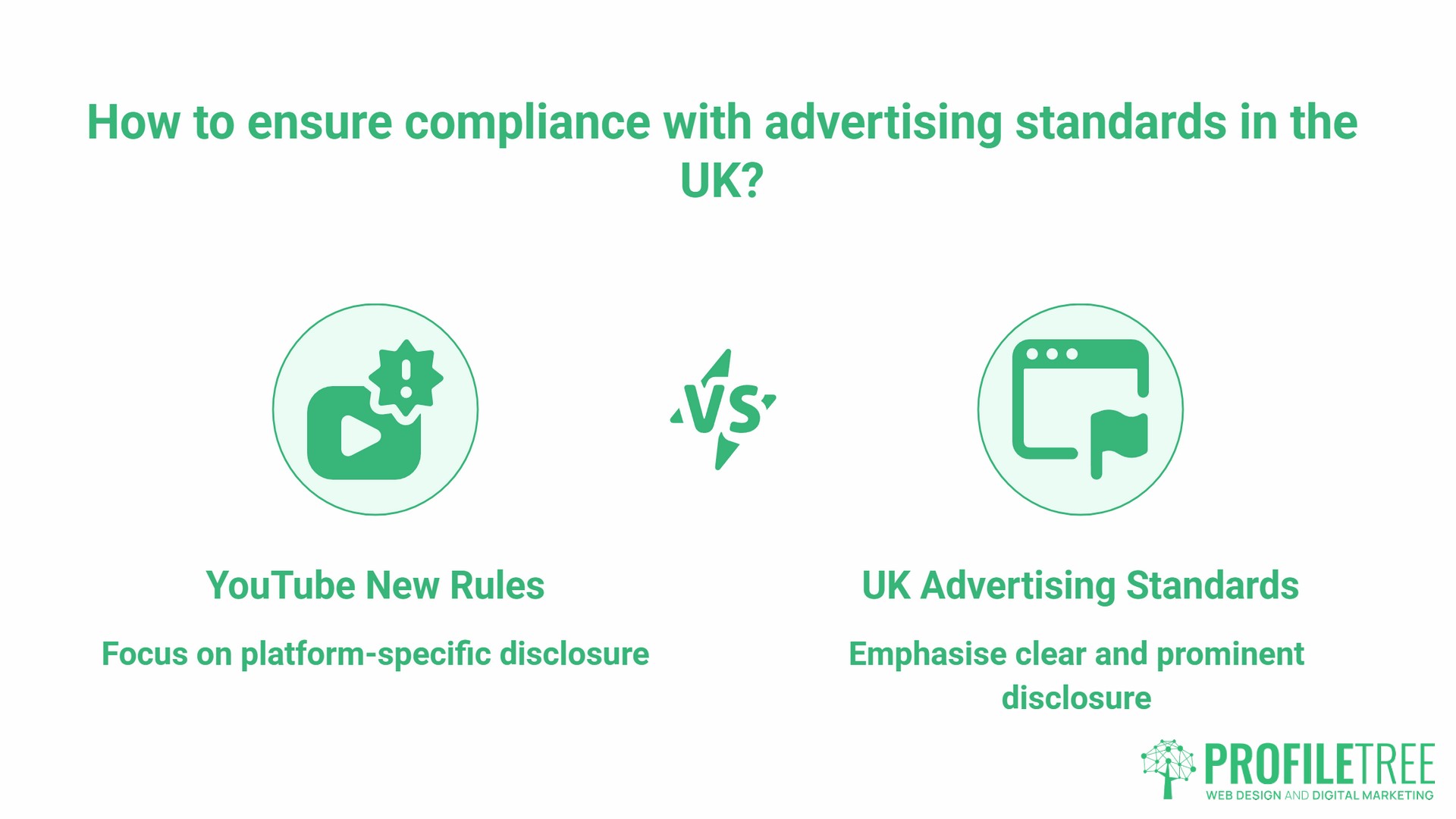
Enforcement has become more automated and far less forgiving of “I did not know” as a defence. Two systems run in parallel here, copyright and community guidelines, and they behave differently, so it helps to understand each before a takedown lands rather than after.
How Copyright Strikes Work
A copyright strike can expire after 90 days, but only once the required Copyright School module has been completed; skip it and the strike stays active no matter how much time passes. The flagged content stays down either way, and three strikes inside a rolling 90-day window terminate the channel permanently. Most of this risk is avoidable at the edit: check every track, clip, and image, and start from properly cleared sources such as the royalty-free music libraries we recommend. Our explainer on copyright infringement covers the basics every uploader should know.
The Warning-and-Strike System
Community-guideline enforcement is gentler on a first slip. A first violation usually brings a warning that clears after 90 days if the optional policy training is completed. A second brings the channel’s first strike and a one-week block on uploading, live streaming, and stories; a third within the window brings a two-week block, and a further one means permanent removal. Keeping content firmly inside policy is far easier than appealing, which is part of what our guide to building brand visibility on YouTube is built around.
Age Assurance and Younger Audiences
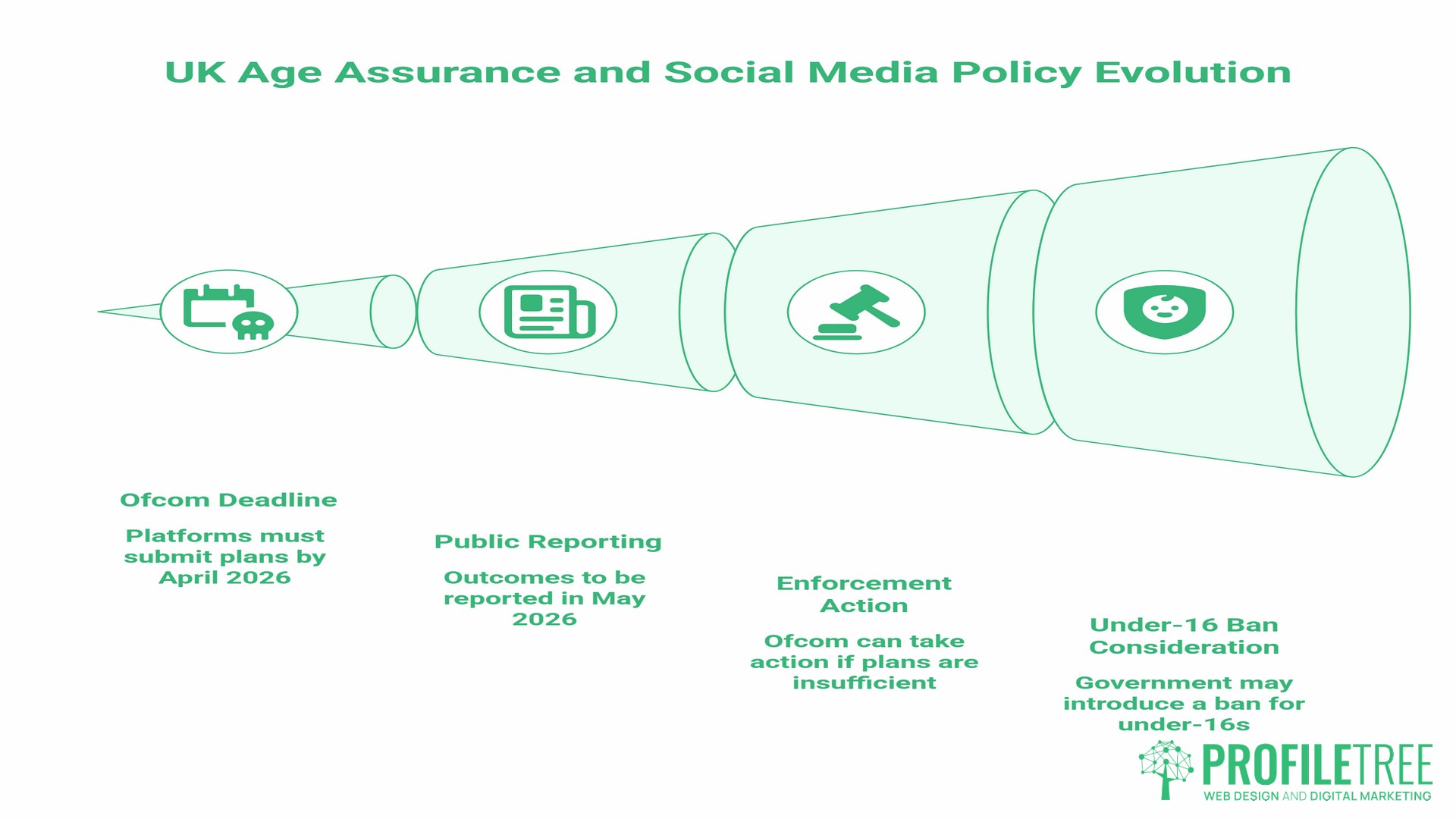
A connected shift sits alongside the platform rules. Since July 2025, services likely to be accessed by children have had to use highly effective age assurance under the Online Safety Act, and Ofcom set major platforms a 30 April 2026 deadline to show stronger age-check plans. In June 2026 the government went further, announcing a social media ban for under-16s modelled on Australia’s approach and covering platforms including YouTube, with first regulations expected before the end of 2026 and protections likely to take effect around spring 2027.
For a business, none of this changes daily operations, but it shapes audience strategy. A channel built around content that appeals to younger viewers, such as educational YouTube channels, should expect more friction around discovery as age checks tighten, and should treat that category as a higher review priority. Getting your channel settings right, including any age-gating decisions, is a sensible first step.
Appealing a Takedown
Where a business disputes a takedown, the counter-notification form in YouTube Studio is the formal route, and submissions that clearly establish licensing or fair dealing tend to move faster than vague objections. A counter-notification is a legal statement rather than an informal request, so be confident in your position first; our overview of fair use and fair dealing explains where the lines fall.
Auditing and Future-Proofing Your Channel
A periodic audit is the most practical way to stay ahead of the rules rather than reacting to a strike after the fact. The aim is a light, repeatable check that fits your publishing rhythm, covering three things together: technical compliance, content risk, and business alignment.
Running a Regular Channel Audit
A useful audit looks at metadata and disclosure labels, the licensing status of music, footage, and images, and whether older content still reflects your current brand and the current rules. Historical uploads can be flagged against today’s guidelines even if they were fine at the time, so a periodic sweep catches drift early. The structure carries over directly from the way we run a marketing audit for clients.
A Practical Pre-Upload Checklist
Most recurring risk is caught by a short routine applied to every video before it goes live. It need not be elaborate; consistency is what makes it work, alongside solid YouTube SEO so compliant content still gets found.
- Has an AI disclosure label been applied where the content meets the realism threshold?
- Is the paid-partnership label switched on for sponsored content, with wording that meets ASA guidance rather than the toggle alone?
- Has all music, footage, and stock material been checked for licensing?
- Does the video need age-gating for its subject matter, and is that decision recorded?
- Has the upload been checked against current YouTube Studio policy alerts?
Building a Channel That Holds Up to Scrutiny
The channels that weather each update tend to combine three habits: a written policy on disclosure and licensing, a production process with compliance built in, and a regular audit that catches problems before they become strikes. Pair that discipline with a clear editorial plan and the rules stop feeling like a threat. Our guidance on planning video content ties the two together.
Staying Ahead of the Next Change
YouTube’s rules will keep moving as the platform balances creator freedom, advertiser confidence, and UK regulation. Treating compliance as an ongoing process rather than a one-off task is what keeps a business channel safe and growing. ProfileTree’s video production and YouTube marketing team helps UK SMEs plan, produce, and audit channels that hold up to current policy. Talk to us about getting your channel review-ready before the next update lands.
FAQs
Can My UK Business Channel Be Monetised with Only 500 Subscribers?
Yes, for fan-funding tools such as memberships, Super Thanks, and Shopping, provided you also meet the upload and watch-hour requirements for that tier. Display and skippable video ad revenue still needs 1,000 subscribers and 4,000 watch hours, or the Shorts-view equivalent.
Do I Need to Label Business Videos as AI if I Only Used It for Editing?
No. Scripting, thumbnails, captions, colour grading, and background blur do not need a label. Labelling is mandatory only where AI creates a realistic but synthetic change, such as a cloned voice or an altered depiction of a real event.
What Happens if a UK Business Ignores the AI Disclosure Rule?
Since May 2026, YouTube can detect and apply the label automatically, and repeated non-disclosure can lead to demonetisation or removal. AI content that misleads viewers can also fall under ASA and CAP rules on misleading advertising, which now apply regardless of how the content was produced.
How Long Do Copyright Strikes Last on YouTube?
A strike can expire after 90 days, but only once the Copyright School module is completed. Without that step, it stays active indefinitely. The content itself remains removed either way, and three strikes within the 90-day window end the channel permanently.
Will the Under-16 Social Media Rules Affect My YouTube Channel?
Possibly. Age-assurance duties already apply to platforms likely to be accessed by children, and the government has announced plans to restrict under-16 access to social media, potentially including YouTube, with protections expected around spring 2027. This sits on top of YouTube’s own age-gating tools.