
From Novice to Pro: Building 5 Skills Needed for Marketing Career
Table of Contents
The marketing profession has transformed dramatically. What once required little more than creative flair and persuasive communication now demands a sophisticated blend of analytical thinking, technical proficiency, and strategic vision. For business owners, marketing managers, and career changers across the UK and Ireland, understanding which skills to develop can mean the difference between thriving and simply surviving in this competitive field.
Modern marketing professionals must navigate an environment where data drives decisions, artificial intelligence shapes strategies, and customer expectations shift constantly. The most successful marketers combine traditional marketing principles with cutting-edge digital techniques, creating campaigns that capture attention and deliver measurable business results.
This comprehensive guide examines the essential skills needed for marketing success, from foundational competencies to advanced specialisations. Whether launching your career, transitioning from another field, or expanding your business capabilities, these insights will help you build the expertise employers and clients value most.
Skills Needed for Marketing: Skills VS Experience
When applying to a marketing position, is it better to have experience or skills? The ideal answer is both, but it’s best to have skill if you have to choose. Experience is only a way to certify your potential. This means that you can acquire the needed skills elsewhere. Getting a degree in marketing is one way; you can also gather the necessary skills for another career.
The biggest challenge here is that the technical skills needed for marketing are changing faster than ever. For this reason, it’s vital to focus on transferable technical marketing skills rather than knowledge of specific tools or techniques. Additionally, many people are seeking to transition into a digital marketing career, and the most in-demand marketers have transferable technical skills:
With that in mind, let’s dive into the key skills you must master to succeed as a modern digital marketer.
Digital Marketing Fundamentals

Digital marketing has become the cornerstone of modern business growth. Understanding these core areas provides the foundation for all other marketing activities and represents the fastest path to career advancement.
Search Engine Optimisation and Content Marketing
SEO remains one of the most valuable marketing skills, particularly for businesses targeting local markets in Northern Ireland, Ireland, and the broader UK. The ability to create content that ranks well in search engines while genuinely serving user needs combines technical knowledge with creative storytelling.
Effective SEO professionals understand keyword research, technical website optimisation, and content strategy. They can identify opportunities to capture organic traffic and convert visitors into customers. This skill set proves especially valuable for small and medium enterprises seeking to compete with larger competitors through innovative content strategies.
Content marketing extends beyond writing blog posts. It encompasses video production, social media content, email campaigns, and multimedia presentations that guide potential customers’ purchasing journeys. The most successful content marketers understand their audience deeply and create materials that educate, entertain, and inspire action.
Paid Advertising and Campaign Management
Proficiency in paid advertising platforms generates immediate results and provides clear return on investment metrics. Google Ads, Facebook advertising, LinkedIn campaigns, and other paid channels offer precise targeting capabilities that traditional advertising cannot match.
Skilled paid media specialists understand audience segmentation, bid management, ad creative testing, and budget optimisation. They can quickly identify which campaigns generate qualified leads and adjust strategies based on performance data. This skill proves particularly valuable for businesses needing rapid growth or seasonal marketing campaigns.
Experienced professionals distinguish themselves from beginners by their ability to manage multiple advertising platforms simultaneously while maintaining consistent messaging and branding. Advanced practitioners also understand how paid advertising integrates with organic marketing efforts to create comprehensive customer acquisition strategies.
Analytics and Data Interpretation
Data literacy has become essential for marketing success. Google Analytics, social media insights, email marketing metrics, and CRM data provide the information needed to make informed decisions and demonstrate marketing value to stakeholders.
Competent analysts can identify trends, spot opportunities, and diagnose performance issues across multiple channels. They understand which metrics matter for different business objectives and can translate complex data into actionable recommendations that non-technical team members can understand and implement.
The most valuable marketing professionals can connect data from different sources to create comprehensive performance pictures. They understand customer lifetime value, attribution modelling, and conversion tracking across multiple touchpoints in the customer journey.
Strategic Marketing Skills
Strategic thinking separates tactical executors from marketing leaders. These skills enable professionals to align marketing activities with broader business objectives and create sustainable competitive advantages.
Market Research and Customer Analysis
Understanding target audiences goes beyond basic demographics. Effective marketers conduct thorough market research to identify customer pain points, purchasing behaviours, and decision-making processes. This insight drives everything from product development to campaign messaging.
Primary research uses surveys, interviews, and focus groups and provides direct customer feedback that informs strategy. Secondary research, which uses industry reports, competitor analysis, and market trends, reveals opportunities and threats that may not be immediately obvious.
Customer persona development transforms research into practical tools for campaign creation. Detailed personas guide content creation, channel selection, and messaging strategies that resonate with specific audience segments.
Campaign Planning and Project Management
Successful marketing campaigns require careful planning, resource allocation, and timeline management. Marketing professionals must coordinate multiple team members, external vendors, and stakeholders while maintaining quality standards and meeting deadlines.
Project management skills include timeline development, budget management, risk assessment, and quality control. The ability to anticipate potential problems and develop contingency plans prevents costly delays and ensures consistent campaign execution.
Effective planners understand how different marketing channels work together to create integrated campaigns. They can sequence activities for maximum impact and adjust strategies based on early performance indicators.
Brand Strategy and Positioning
Brand building requires long-term thinking and consistent execution across all customer touchpoints. Understanding how to develop brand identity, messaging frameworks, and positioning strategies creates lasting competitive advantages.
When developing marketing approaches, brand strategists consider market positioning, competitive differentiation, and customer perception. They understand how short-term tactical decisions impact long-term brand equity and customer relationships.
Maintaining brand consistency while adapting messaging for different audiences and channels requires strategic thinking and practical execution skills. This is particularly important for businesses expanding into new markets or launching new products.
“In our work with businesses across Northern Ireland and the UK, we’ve seen that the marketers who truly excel are those who master both the technical and human sides of the profession. They can read the data, but they also understand that behind every click and conversion is a real person making a decision. That’s where sustainable marketing success comes from,” explains Ciaran Connolly, Director of ProfileTree.
Last but not least, adaptability is essential; the B2B landscape evolves rapidly, and marketers must stay agile, embracing new technologies, strategies, and trends to maintain a competitive edge and drive meaningful engagements with business clients.
Technical Marketing Competencies
Technical skills enable marketers to implement strategies effectively and measure results accurately. These capabilities have become increasingly important as marketing becomes more technology-dependent.
Marketing Automation and CRM Management
Marketing automation platforms streamline repetitive tasks while enabling personalised customer communications at scale. Setting up automated email sequences, lead scoring systems, and customer journey mapping increases efficiency and improves customer experiences.
CRM management involves organising customer data, tracking interactions, and identifying sales opportunities. Skilled CRM users can segment audiences for targeted campaigns and provide sales teams with qualified leads that are more likely to convert.
Integrating marketing automation and CRM systems creates comprehensive customer profiles that inform marketing and sales strategies. This technical capability is essential for businesses focused on customer retention and optimising lifetime value.
Web Development and Design Understanding
While marketers may not need to code professionally, understanding basic web development principles enables better collaboration with technical teams and more effective campaign implementation.
Knowledge of HTML, CSS, and content management systems helps marketers create and modify web pages, landing pages, and email templates without relying on developers for minor changes. This capability speeds up campaign deployment and reduces costs.
Understanding user experience principles and conversion rate optimisation techniques enables marketers to create websites and landing pages that effectively guide visitors toward desired actions. This skill directly impacts campaign performance and business results.
Artificial Intelligence and Marketing Technology
AI tools are transforming marketing operations, from content creation to customer service. Understanding how to effectively use AI-powered platforms for research, content generation, and campaign optimisation provides significant productivity advantages.
Marketing technology stacks continue expanding, with new tools for automation, analytics, and customer engagement launching regularly. The ability to evaluate, implement, and optimise marketing technology helps businesses stay competitive while controlling costs.
AI training and implementation services have become particularly valuable for small and medium enterprises seeking to compete more effectively. Understanding how to introduce AI tools gradually while training team members creates sustainable competitive advantages.
Soft Skills for Marketing Success
Technical competencies alone do not guarantee marketing success. Soft skills determine how effectively professionals collaborate, communicate, and lead initiatives that drive business growth.
Communication and Presentation Skills
Marketing professionals must communicate effectively with diverse audiences, from technical developers to executive leadership. The ability to tailor messaging for different stakeholder groups while maintaining consistency proves essential for career advancement.
Presentation skills enable marketers to sell ideas internally and externally. Whether pitching campaign concepts to clients or reporting results to management, clear communication builds stakeholder confidence and trust.
Written communication skills remain fundamental despite increasing emphasis on visual and video content. Email marketing, blog writing, social media posts, and campaign documentation all require clear, compelling writing that drives desired actions.
Creative Problem Solving
Marketing challenges rarely have obvious solutions. Thinking creatively while considering practical constraints enables professionals to develop innovative approaches that capture attention and deliver results.
Creative problem solving involves understanding limitations and finding ways to achieve objectives despite resource constraints. This might include repurposing content across multiple channels or finding cost-effective alternatives to expensive advertising placements.
The best marketers can balance creativity with analytical thinking, using data to inform creative decisions while ensuring campaigns remain engaging and memorable.
Adaptability and Continuous Learning
Marketing trends, platforms, and best practices evolve constantly. Professionals who remain curious and committed to ongoing learning stay relevant and advance their careers more quickly than those who rely solely on existing knowledge.
Adaptability involves embracing new technologies, testing different approaches, and learning from successes and failures. The most successful marketers view changes as opportunities rather than obstacles.
Continuous learning includes formal education, industry certifications, conference attendance, and staying current with marketing publications. Investment in professional development typically generates significant returns through career advancement and improved performance.
Building Your Marketing Career
Career success in marketing requires strategic planning, skill development, and consistent execution. Understanding the pathway from entry-level to leadership roles helps professionals make informed decisions about their development priorities.
Entry-Level Skills and Opportunities
New marketing professionals should focus on developing foundational skills that provide immediate value while building toward more advanced competencies. Digital marketing basics, content creation, and social media management offer accessible entry points into the profession.
Entry-level positions often involve executing campaigns developed by senior professionals. This provides valuable experience in project coordination, quality control, and performance monitoring, forming the foundation for future strategic responsibilities.
Building a portfolio of successful campaigns, even on a small scale, demonstrates capability to potential employers. Personal projects, volunteer work, and internships provide opportunities to develop and showcase marketing skills.
Mid-Career Development and Specialisation
Experienced marketing professionals must choose between developing broad competencies or specialising in specific areas. Both approaches can lead to career success, but specialisation often generates higher compensation in the short term.
Specialisation areas include SEO and content marketing, paid advertising management, marketing automation, analytics and data science, or marketing leadership. Each path requires different skill combinations and offers distinct career trajectories.
Leadership development becomes increasingly crucial as professionals advance. The ability to manage teams, develop strategies, and collaborate with other departments determines advancement into senior marketing roles.
Senior-Level Strategy and Leadership
Senior marketing professionals focus on strategy development, team leadership, and business impact measurement. They must understand how marketing activities connect to overall business objectives and can demonstrate a clear return on investment.
Strategic thinking involves understanding market dynamics, competitive positioning, and customer behaviour trends that impact long-term business success. Senior marketers anticipate changes and prepare organisations to adapt effectively.
Leadership responsibilities include team development, budget management, and cross-departmental collaboration. The ability to influence others without direct authority and build consensus around marketing strategies proves essential for executive-level positions.
Marketing Skills for Business Owners
Business owners in Northern Ireland, Ireland, and the UK face unique challenges when developing marketing capabilities. Limited resources and time constraints require focusing on high-impact activities that generate immediate and long-term results.
Small business marketing often requires wearing multiple hats and understanding various channels rather than specialising deeply in one area. Flexibility and resourcefulness prove more valuable than theoretical knowledge in many situations.
Local SEO, content marketing, and social media management provide cost-effective ways for small businesses to compete with larger companies. Understanding how to optimise Google My Business listings, create valuable content, and engage local audiences can drive significant business growth.
Digital marketing training and AI implementation services help business owners develop capabilities efficiently while avoiding common mistakes that waste time and resources. Professional guidance accelerates learning and improves results.
Industry-Specific Marketing Considerations
Different industries require adapted marketing approaches considering regulatory requirements, customer behaviours, and competitive dynamics. Understanding sector-specific considerations helps marketers develop more effective strategies.
B2B Marketing Skills
Business-to-business marketing involves longer sales cycles, multiple decision makers, and higher transaction values than consumer marketing. Content marketing, relationship building, and lead nurturing prove particularly important for B2B success.
LinkedIn marketing, email campaigns, and thought leadership content creation help B2B marketers build credibility and generate qualified leads. Understanding how businesses make purchasing decisions enables more effective campaign development.
Account-based marketing techniques target specific high-value prospects with personalised campaigns. This approach requires coordination between marketing and sales teams and sophisticated tracking systems to measure effectiveness.
E-commerce and Retail Marketing
E-commerce marketing combines digital advertising, conversion rate optimisation, and customer retention strategies. Understanding the entire customer journey from awareness to purchase and advocacy enables comprehensive campaign development.
Product photography, description writing, and search engine optimisation prove essential for online retail success. The ability to create compelling product presentations that drive purchases while maintaining accurate expectations determines long-term customer satisfaction.
Email marketing and retargeting campaigns help e-commerce businesses maintain customer relationships and encourage repeat purchases. Understanding customer lifetime value and retention metrics guides resource allocation decisions.
Service-Based Business Marketing
Service businesses must build trust and demonstrate expertise before customers make purchasing decisions. Content marketing, case studies, and testimonials prove particularly effective for service-based marketing.
Local SEO becomes crucial for service businesses serving specific geographic areas. Understanding how to optimise for local search results and manage online reviews directly impacts lead generation and business growth.
Video production and testimonial collection help service businesses showcase their expertise and build credibility with potential customers. The ability to tell compelling stories about customer success creates powerful marketing assets.
Measuring Marketing Success
Effective measurement enables continuous improvement and demonstrates marketing value to stakeholders. Understanding which metrics matter for different objectives and how to track them accurately proves essential for career success.
Key Performance Indicators
Different marketing activities require different success metrics. Brand awareness campaigns focus on reach and engagement, while lead generation campaigns prioritise conversion rates and acquisition costs.
Customer lifetime value, return on advertising spend, and marketing qualified leads provide insights into long-term marketing effectiveness. Calculating and interpreting these metrics enables better decision-making and budget allocation.
Attribution modelling helps marketers understand how different channels contribute to conversions. This knowledge guides resource allocation and campaign optimisation decisions that improve overall performance.
Reporting and Analysis
Regular reporting keeps stakeholders informed and identifies opportunities for improvement. Effective reports combine quantitative data with qualitative insights that explain performance trends and recommend actions.
Dashboard creation and automated reporting systems enable efficient performance monitoring without consuming excessive time on manual data compilation. Understanding how to set up tracking systems and visualise data proves valuable for busy marketing professionals.
Competitive analysis and benchmarking provide context for performance evaluation. Understanding how marketing results compare to industry standards and competitor performance helps set realistic expectations and identify improvement opportunities.
Future-Proofing Your Marketing Career
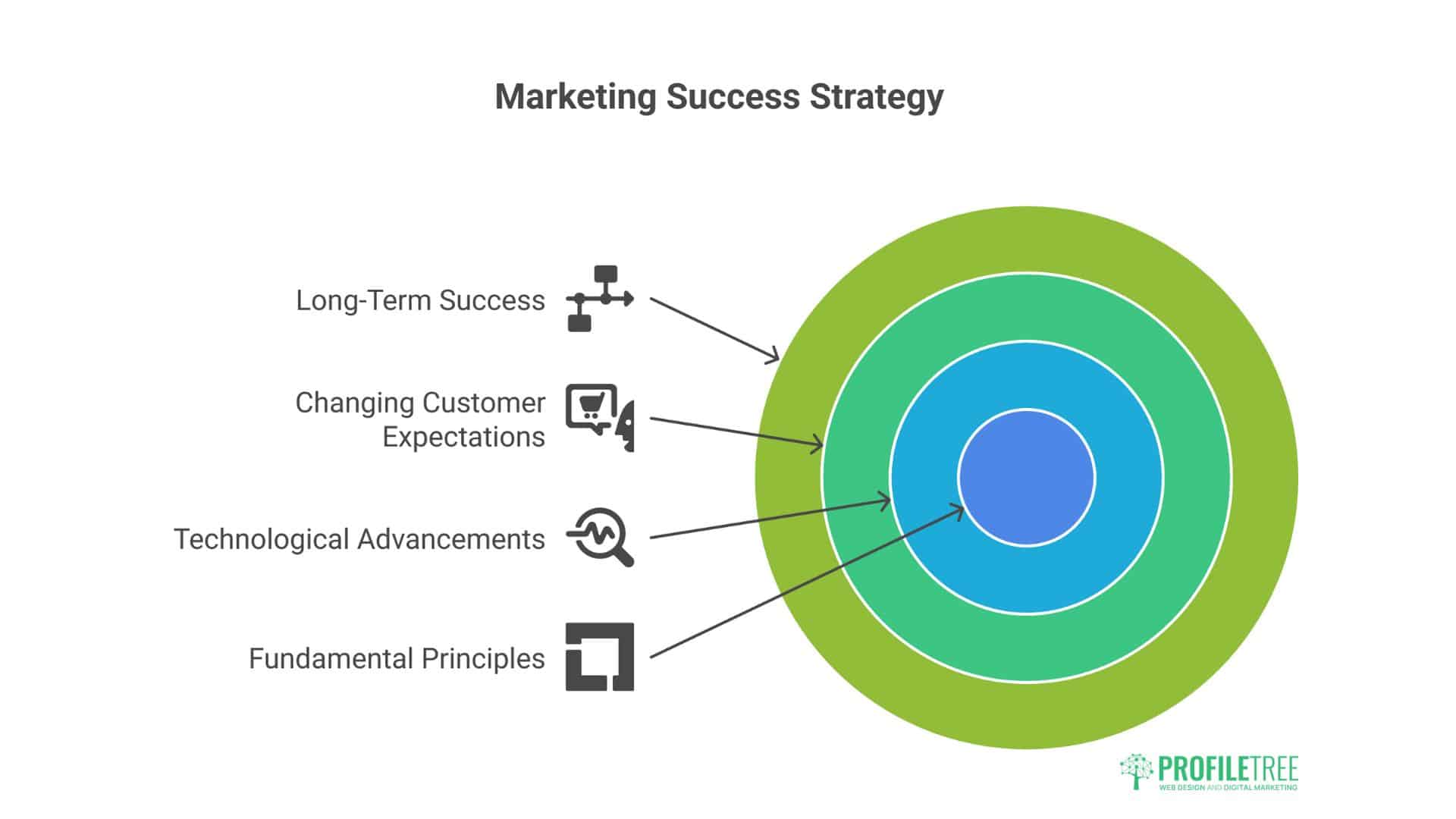
The marketing profession continues to evolve rapidly, driven by technological advancements and changing customer expectations. Staying ahead of trends while focusing on fundamental principles positions professionals for long-term success.
Emerging Technologies and Trends
Artificial intelligence, voice search, and augmented reality represent emerging opportunities forward-thinking marketers should understand. While these technologies may not immediately impact all businesses, understanding their potential applications provides competitive advantages.
Privacy regulations and data protection requirements continue expanding, affecting how marketers collect and use customer information. Understanding compliance requirements and privacy-friendly marketing approaches becomes increasingly essential.
Personalisation and customer experience optimisation drive many marketing innovations. Creating individualised experiences at scale while maintaining efficiency represents a key competitive advantage.
Continuous Professional Development
Marketing certifications from Google, HubSpot, Facebook, and other platforms demonstrate current knowledge and commitment to professional growth. These credentials prove particularly valuable when changing jobs or expanding into new specialisation areas.
Industry conferences, webinars, and networking events provide opportunities to learn about new trends and connect with other professionals. Building relationships within the marketing community creates opportunities for collaboration and career advancement.
Reading industry publications, following thought leaders, and participating in online communities keeps professionals current with rapidly changing best practices and emerging opportunities.
Conclusion
Marketing success requires combining strategic thinking with tactical execution, creative analytical rigour, and customer focus with business objectives. The professionals who thrive understand that marketing is both an art and a science, requiring continuous learning and adaptation.
Focus on building strong digital marketing fundamentals while developing the soft skills that enable effective collaboration and leadership. The most valuable marketing professionals translate complex strategies into practical actions that drive measurable business results.
Developing competencies across multiple areas while specialising in key skills positions you for success in this dynamic profession. The marketing landscape will continue evolving, but professionals who remain curious, adaptable, and focused on customer value will find abundant growth opportunities.
FAQs
How long does it take to develop professional marketing skills?
With focused learning and practice, basic marketing competency can be achieved in 3-6 months. However, developing expertise in specialised areas like SEO, paid advertising, or marketing analytics typically takes 12-18 months of consistent application. Career advancement to senior marketing roles usually requires 3-5 years of experience combined with continuous skill development.
Do I need a marketing degree to succeed in marketing?
A marketing degree is not strictly necessary for success in marketing. Many successful marketers have backgrounds in other fields and developed skills through certifications, online training, and practical experience. Professional certifications from Google, HubSpot, and other platforms often carry more weight with employers than formal degrees, especially for digital marketing roles.
What’s the difference between digital marketing and traditional marketing skills?
Traditional marketing focuses on offline channels like print, radio, and television, emphasising creativity and broad audience reach. Digital marketing requires technical skills like analytics, SEO, social media management, and online advertising platforms. Modern marketers need both skill sets, as integrated campaigns combining online and offline elements typically deliver the best results.
Ready to Take Your Marketing to the Next Level?
Whether you’re a business owner looking to improve your marketing results, a marketing professional seeking to expand your skills, or an organisation planning a digital transformation, ProfileTree has the expertise to guide your success.
Our comprehensive services include:
- Digital Marketing Training – Practical programmes that deliver real-world results
- AI Integration and Training – Future-proof your business with intelligent automation
- Web Design and Development – Websites built for rankings, traffic, and conversions
- SEO and Content Marketing – Dominate local search and attract your ideal customers
- Video Production and Animation – Engaging content that captures attention and drives action
Based in Belfast and serving businesses across Northern Ireland, Ireland, and the UK, we understand local businesses’ unique challenges in competitive markets. Our approach combines proven marketing principles with cutting-edge technology to deliver measurable growth.
Don’t let your competitors gain an advantage. The marketing skills and technologies covered in this guide can transform your business results—but only if you take action.
Contact ProfileTree today or call 028 9568 0364 to discuss how we can help you build the marketing capabilities that drive sustainable business growth.