
Commercial Video Production in Northern Ireland: Costs and Results
Table of Contents
Northern Ireland has built a reputation as one of the UK and Ireland’s strongest centres for screen and creative production. Belfast in particular has hosted major international shoots, and the skills, crews and facilities built around them are now within reach of local businesses.
For SMEs from Belfast to Derry, Newry to Coleraine, that shift matters. Professional video is no longer reserved for big budgets. It has become a practical way to win attention, explain a service and turn interest into enquiries.
This guide covers what commercial video production looks like across the region, the trends shaping it, what affects cost, and how to plan a project that pays for itself. You will find practical steps for getting started and answers to the questions buyers ask most.
The State of Video Production in Northern Ireland
Commercial video sits inside a wider creative sector that has grown quickly across Northern Ireland. Understanding that backdrop helps explain why quality production is now affordable for smaller firms and why local crews can compete on standards with much larger markets.
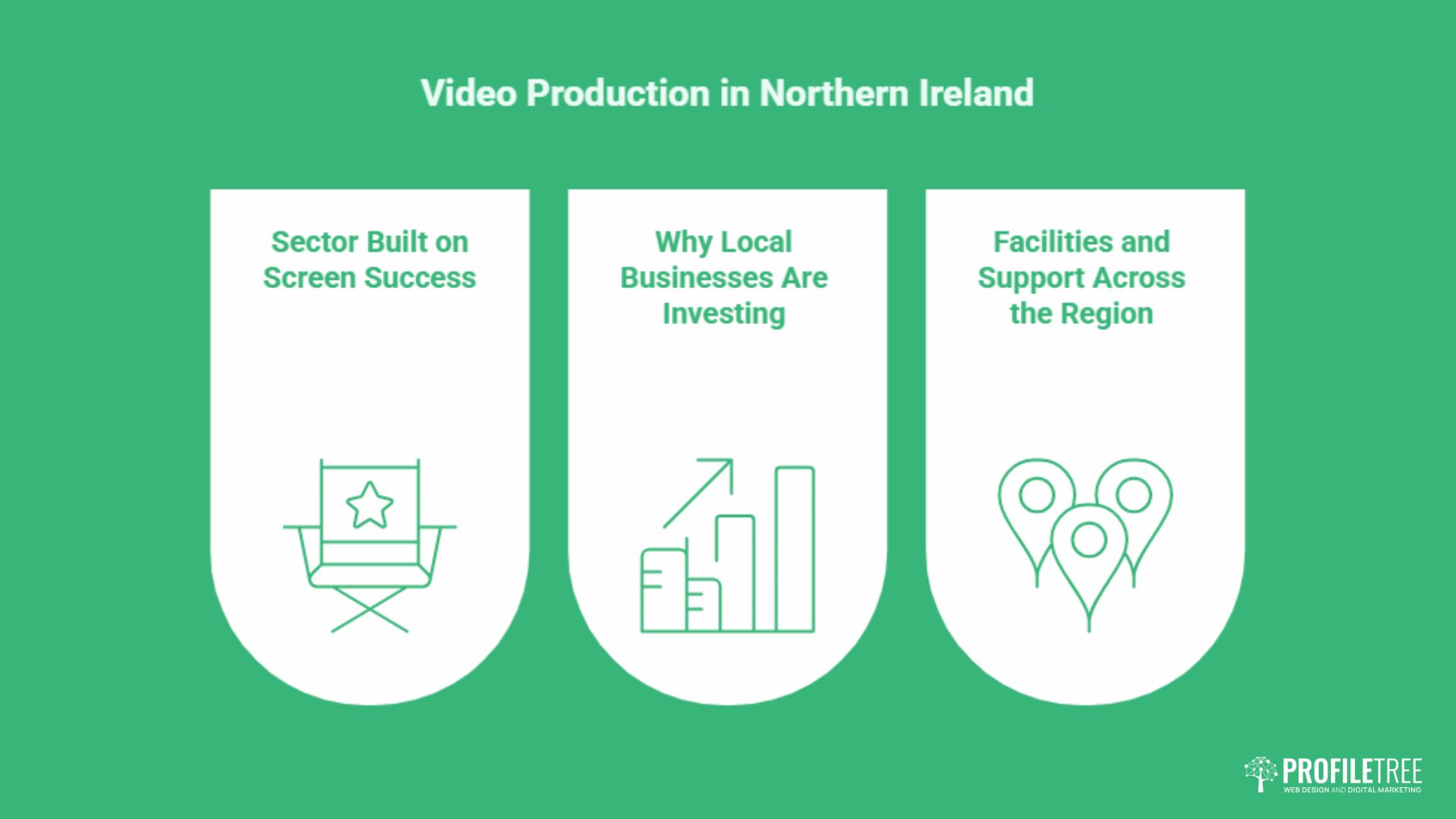
A Sector Built on Screen Success
Years of high-profile film and television work have left Northern Ireland with deep technical talent: camera operators, editors, sound engineers, animators and producers. According to Northern Ireland Screen, the screen sector supports a growing pool of skilled roles across the region. That talent base is the reason a small business can now hire a capable crew without paying London rates.
This local depth also feeds confidence. When buyers can see the calibre of work produced nearby, video stops looking like a gamble and starts looking like a sensible spend. For a fuller picture of the people behind these projects, this overview of Northern Ireland videographers sets out what local filming talent brings to commercial work.
Why Local Businesses Are Investing
Video consumption keeps climbing, and Irish and UK audiences spend a large share of their online time watching it. For a business, that means the audience is already there and already watching. The question is whether your message reaches them in a format they actually engage with.
Short, well-made video answers that question. It explains a product faster than text, builds trust quicker than a brochure, and travels further on social platforms. That combination is why firms from Enniskillen to Bangor now treat video as a core marketing line rather than an extra.
Facilities and Support Across the Region
The supporting infrastructure is strong. Studio space, equipment hire, post-production houses and trained graduates from local universities all sit within a short drive of most towns. Public bodies such as Northern Ireland Screen also back the sector through skills and development support.
That ecosystem keeps costs sensible. A producer can assemble the right team for a project, scale it up or down, and film on location without long travel. Belfast’s standing as a creative city is explored further in this piece on tthe op cities to visit in Northern Ireland, which captures why the region photographs and films so well.
For a small business, the practical upshot is choice. You are not locked into one supplier or one rate card. A short social campaign can use a lean two-person crew, while a flagship brand film can draw on the same wider talent pool that supports larger productions. That flexibility is hard to find in markets where production capacity is thinner, and prices climb accordingly.
Video Trends Shaping Commercial Production
The way businesses use video changes year to year. A few clear patterns now define what works for Northern Irish companies, and knowing them helps you brief a project that lands rather than one that simply looks polished.
Short-Form, Mobile-First Content
Most viewers now watch on a phone, and platforms reward content built for that screen. Short clips of fifteen to thirty seconds carry a single, clear message and perform well on TikTok, Instagram Reels and YouTube Shorts.
For SMEs, this format is forgiving on budget and quick to produce. A single filming day can yield several short pieces: a product demonstration, a customer story, a quick how-to. If you want to understand the format in depth, this analysis of short-form video explains why it earns so much engagement.
AI-Assisted Production
Artificial intelligence has lowered the cost of several production stages. Automated editing, colour matching and transcription speed up post-production, while analytics help identify which content actually drives results. Used well, these tools free up budget for the parts that need a human eye.
The balance matters. AI handles repetitive work; people handle judgment, story and tone. Teams that get this mix right deliver strong video at prices small firms can meet. Building that judgement in-house is something ProfileTree’s digital training services can support.
Personalised and Interactive Video
Generic content is giving way to video tailored to specific audiences. Personalised messages, interactive elements and location-specific edits all lift response rates because they speak directly to the viewer rather than to everyone at once.
This works best when it sits inside a wider plan. A video aimed at a Belfast audience should differ from one aimed at Ballymena or Lisburn, and the distribution should match. ProfileTree’s digital strategy team helps shape these audience-led approaches so each video has a clear job.
Planning a Commercial Video Project
A good video starts long before the camera rolls. The planning stage is where the budget is protected, and results are won, so it deserves real attention. The points below cover how to brief, structure and cost a project sensibly.
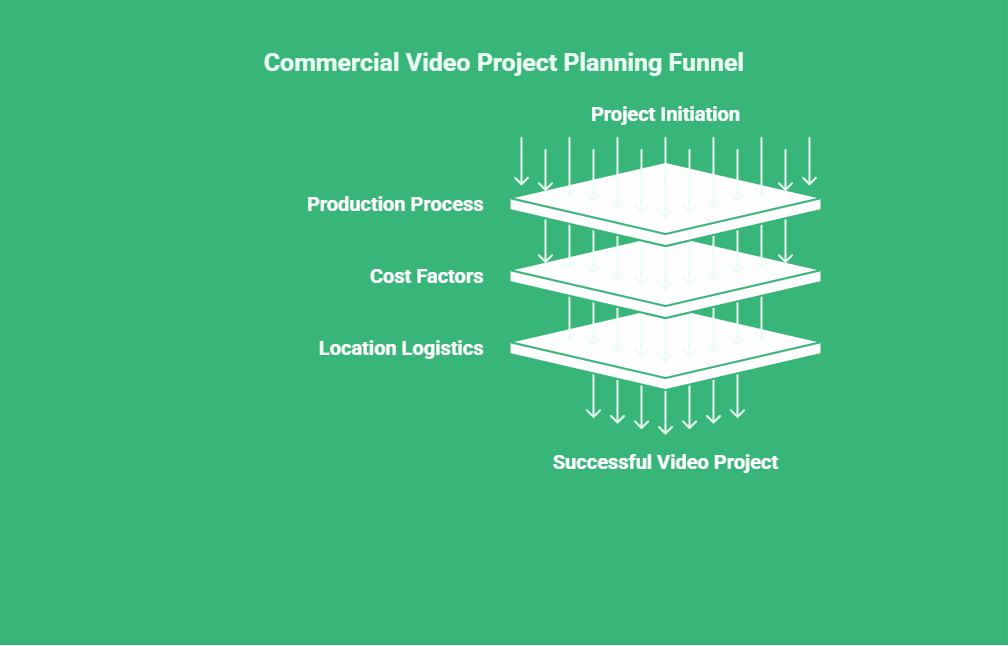
The Production Process Explained
Most commercial projects move through three stages: pre-production (strategy, scripting, scheduling), production (the shoot itself), and post-production (editing, sound, graphics and delivery). Skipping the first stage is the most common cause of overspend.
As Ciaran Connolly, founder of ProfileTree, puts it: “The money you save on a video is almost always saved in pre-production, not on the shoot day. A clear brief and a tight plan are what keep costs predictable.” For a step-by-step breakdown, this guide to the video production process walks through each phase in detail.
What Affects the Cost of a Video
There is no single price for commercial video because briefs vary so widely. Crew size, number of locations, filming days, talent, motion graphics and usage rights are the main factors that move a quote up or down. A one-location brand film costs far less than a multi-day campaign series.
The table below gives an indicative guide to common project tiers. All prices and figures in this guide are indicative UK examples and correct at the time of writing; use them as a benchmark rather than fixed quotations.
| Video Tier | Typical Lead Time | Crew Size | Best For |
|---|---|---|---|
| Social-first short form | 1 to 2 weeks | 1 to 2 | Social engagement, quick demos |
| Standard brand film | 3 to 4 weeks | 2 to 4 | Homepage, About, single message |
| Corporate or testimonial series | 4 to 6 weeks | 3 to 5 | Trust building, B2B sales support |
| Premium campaign | 6 to 8 weeks | 5 plus | Multi-platform launches, TV |
Usage rights are the cost factor buyers most often overlook. A video intended for organic social use is priced differently from one that will run as paid advertising across television and online for a year. Music licensing, on-screen talent buyouts and stock footage all sit under the same heading, so it pays to state where and how long a video will run before asking for a quote.
Because every brief differs, the most reliable figure comes from a quote based on your actual requirements. You can see how this fits into a wider channel plan through ProfileTree’s video marketing services.
Filming Locations and Logistics
Location choice affects both look and cost. Belfast city centre filming usually needs a council permit, drone work requires a CAA-licensed pilot, and sites such as the Giant’s Causeway involve their own permissions. A local producer who already knows these requirements saves time and avoids delays.
Northern Ireland’s range of backdrops, from the Mourne Mountains to Belfast Harbour, gives commercial video a distinctive look without travel costs. Planning the shoot around these settings and around the region’s changeable weather keeps a project on schedule and on budget.
Putting Video to Work for Your Business
Producing a video is only half the task. The return comes from how it is used, where it appears, and how well it connects to the rest of your marketing. This section covers practical applications and how to plan for results.
Practical Uses That Drive Results
Commercial video covers a wide range of practical jobs. Product demonstrations generate interest at launch, customer testimonials build credibility, and explainer videos shorten the sales cycle for complex services. Internal and training videos keep messaging consistent across multi-site teams.
Tourism and property businesses lean on virtual tours and destination showcases, while manufacturers use process films to show capability. Matching the format to the goal is what separates a video that performs from one that simply exists. Pairing video with your website, through ProfileTree’s website development services, keeps that content working hard on the pages that convert.
How Video Supports Different Sectors
Different industries get value from video in different ways. Retail and e-commerce benefit from product showcases; professional services from credibility-led explainer content; food and drink producers from process and brand stories. The brief should reflect the buyer that the sector is trying to reach.
A sector-aware approach also informs distribution. A tourism film belongs on YouTube and travel channels; a B2B explainer belongs on LinkedIn and a sales page. Choosing the right home for each piece is as important as the production quality itself.
Local context strengthens this further. A manufacturer in Ballymena, a restaurant in Belfast’s Cathedral Quarter and a professional services firm in Derry each face different audiences and seasons, and the smartest video plans build those local rhythms into the schedule rather than treating Northern Ireland as one undifferentiated market.
Illustrative Scenarios: What Good Looks Like
Consider a Belfast independent retailer planning a video programme. A realistic approach would combine short product showcases for social, a customer story for the homepage, and a short store tour. The aim is a small library of reusable clips from one or two filming days, rather than a single expensive film.
A North Coast tourism operator might take a different route: a destination showcase to attract visitors, paired with short seasonal edits to extend bookings beyond summer. These are illustrative planning examples rather than reported client outcomes, and they show how format choices follow from business goals.
Getting Started with Commercial Video
If video is new to your business, a measured start beats an ambitious one. A few clear decisions at the outset make the whole project run more smoothly and keep the first spend focused on the highest-value work.
First Steps to a Successful Project
Begin with the objective. Decide what one video needs to achieve, whether that is awareness in Belfast, leads in Derry or online sales across the region. Then research how your audience watches video and on which platforms, so the format fits from the start.
Start with the projects most likely to return value, such as a product demonstration or a customer testimonial, rather than trying to cover everything at once. Working with a local production team that knows both the craft and the market keeps that first project realistic.
It also helps to set a modest budget for the first run and treat it as a test. A single well-planned video, measured properly, tells you more about what your audience wants than a large slate of content commissioned on assumption. Once that first piece proves its worth, scaling up becomes a decision based on evidence rather than hope.
Making the Most of Your Investment
Plan each shoot to produce several assets. One filming day can supply a main film plus a set of short cuts for social, which spreads the cost across more content. Adapt those cuts for each platform rather than posting the same file everywhere.
Consistency matters too. A regular schedule of content builds an audience over time far better than a single one-off film. Tying video into email, social, and your website turns it from a standalone asset into part of a working marketing system.
Measuring What Matters
Set up tracking before you publish so you can judge performance against the original objective. Views alone say little; watch time, click-throughs and enquiries say a great deal. Use that data to refine the next round of content rather than guessing.
This feedback loop is where video budgets earn their keep. Each project teaches you what your audience responds to, and that knowledge compounds. A clear measurement plan turns video from a cost into a repeatable source of growth.
It also changes how you brief the next project. Once you know which length, tone and platform pulled the most enquiries, you can commission with confidence rather than instinct. Over a year, a business that tracks and refines its video tends to spend less per result than one that keeps starting from scratch, because every shoot builds on proven ground rather than guesswork.
Conclusion
Commercial video has become a practical tool for Northern Irish businesses of every size, backed by strong local talent, sensible costs and a ready audience. The firms that benefit most treat it as an ongoing part of their marketing, plan each project around a clear goal, and measure the results. Done that way, the video earns its place in the budget.
Ready to plan your next video project? Talk to ProfileTree for a quote built around your brief.
FAQs
How much does commercial video production cost in Northern Ireland?
Costs vary widely because every brief differs. The main drivers are crew size, number of filming days, locations, on-screen talent and usage rights. A single-location brand film sits at the lower end, while multi-day campaigns with motion graphics cost considerably more. The most accurate figure comes from a quote based on your specific requirements rather than a fixed package price.
How long does the production process take?
Most commercial projects run from about four to eight weeks from brief to final delivery. Simple social-first content can be quicker, often one to two weeks, while premium campaigns with multiple locations take longer. Pre-production planning is the stage that most affects the timeline, so a clear brief early on keeps the schedule on track.
What is the difference between commercial and corporate video?
Commercial video is usually external-facing and built to drive sales or awareness, such as adverts and product films. Corporate video is more often internal or B2B, covering brand values, training and communications. The two overlap, but the audience and purpose differ, which changes how each one is scripted, filmed and distributed.
Do you handle filming permits and insurance in Belfast?
A professional production team manages council permits, risk assessments and public liability insurance as part of the project. Belfast city centre filming generally requires a permit, and certain locations have their own permissions. Handling this in advance avoids delays on the shoot day and keeps the production compliant.
Can you provide drone filming in Northern Ireland?
Yes, drone footage is widely used for property, tourism and landscape work. It must be carried out by a CAA-licensed pilot holding the relevant certification, and some sites need additional clearance. A local crew will know which locations allow aerial filming and what approvals each one needs.