
Snapchat and TikTok for Business: Assessing Brand Potential
Table of Contents
Snapchat and TikTok for business are no longer experimental channels. TikTok passed one billion monthly active users globally and has become one of the most searched platforms among UK consumers aged 18 to 34. Snapchat, meanwhile, reaches over 90% of 13- to 24-year-olds in several markets, making it a serious option for brands targeting younger buyers. The question for most SMEs is not whether these platforms matter; it is which one fits your business, and what a realistic strategy looks like without a dedicated social media team.
This guide works through both platforms practically: who uses them, how advertising works, where content tends to succeed, and what to measure. If you are weighing up where to put your social media budget in the next six months, this is a useful starting point.
Understanding the Audiences on Each Platform
The most common mistake businesses make with TikTok and Snapchat is treating them as interchangeable. They attract overlapping but distinct audiences, and the content formats that perform well on each are genuinely different.
Who Uses TikTok in the UK
TikTok has around 23 million users in the UK, with the largest segment aged 18 to 34. UK TikTok usage data shows strong representation among 25-to-34-year-olds, which is a more commercially useful demographic than many brands expect. The platform is not exclusively teenage. Categories performing consistently well include food and drink, fitness, home improvement, personal finance, and retail — areas where SMEs can compete without large production budgets if the content is genuinely useful or entertaining.
The algorithm distributes content based on engagement signals rather than follower count. A business with 200 followers can reach tens of thousands of people if a video holds attention. That is a meaningful structural difference from platforms like Facebook or LinkedIn, where reach is more directly tied to audience size.
Who Uses Snapchat in the UK
Snapchat’s UK user base skews younger than TikTok’s. The platform reaches a high proportion of 13-to-24-year-olds and remains particularly strong among secondary school and university-age users. If your products or services target this age group, education, fashion, entertainment, events, food and drink, Snapchat deserves serious consideration.
The platform’s defining mechanic is ephemeral content: Stories disappear after 24 hours, and direct Snaps after viewing. This creates a sense of immediacy that suits time-limited promotions, product launches, and event-based marketing better than it suits evergreen brand content.
For businesses targeting adults over 30, Snapchat’s reach drops off noticeably. In those cases, TikTok or a combination of Instagram and TikTok is usually more practical.
Setting Business Objectives Before You Start
Picking a platform before defining what success looks like is one of the more expensive mistakes in social media marketing. The metrics that matter on TikTok and Snapchat are not identical to those on Google or Facebook, and what constitutes a good result depends on what you are actually trying to achieve.
Brand Awareness vs. Direct Response
TikTok is well-suited to brand awareness and top-of-funnel reach. Content that educates, entertains, or shows a product being used in a real context tends to build recognition over time. Direct response — clicks to a website, sign-ups, or immediate purchases — is possible through TikTok’s paid ad formats, but organic TikTok content rarely converts to immediate sales on its own.
Snapchat’s advertising tools are built more explicitly around action. Snap Ads link directly to landing pages, and the platform’s audience responds well to time-sensitive offers. If your goal is driving footfall to a physical location, promoting a limited event, or pushing a short-term offer to a young audience, Snapchat’s ad formats align better with that intent.
Realistic Resource Planning
Both platforms require consistent content output to maintain visibility. TikTok particularly rewards posting frequency; accounts that publish three to five times per week tend to see more algorithm distribution than those posting once a week. For most SMEs without a dedicated social media person, that is a significant time commitment.
Before committing to either platform, consider whether you have the internal capacity to produce short video content regularly. Outsourcing video production to a content marketing team is a practical option for businesses that want a consistent presence without absorbing the production workload internally.
Content That Works on TikTok for Business
TikTok content rewards specificity and authenticity over polish. High production values do not reliably outperform straightforward, well-structured videos that answer a real question or show something worth watching.
Formats That Perform Consistently
Tutorial and how-to content performs strongly across most industry categories on TikTok. A trade business showing a before-and-after project, a food business demonstrating a recipe, or a professional services firm explaining a common client question in 60 seconds, all of these formats have demonstrated reach across SME accounts without paid promotion.
Trending audio and hashtag challenges offer a lower-effort route to reach businesses willing to participate in platform-native formats. The tradeoff is that the content needs to fit the trend naturally; forced participation tends to underperform.
User-generated content, reposting customer videos, running branded challenges, or responding to comments with video replies, extends content output without requiring original production for every post. TikTok’s Stitch and Duet functions make this straightforward to execute.
TikTok Advertising Options
TikTok’s ad formats include:
- In-Feed Ads: Video ads that appear in users’ For You feeds, formatted to match organic content. These are the most accessible entry points for SMEs and support website clicks, app installs, and video views as objectives.
- TopView Ads: Full-screen ads that appear when users open the app. Higher cost, suited to product launches or major campaigns rather than ongoing activity.
- Branded Hashtag Challenges: Sponsored challenges that appear on the Discover page. These require a minimum spend that puts them outside most SME budgets, but they generate high engagement when they land.
- Spark Ads: A format that boosts existing organic posts rather than running separate ad creatives. Useful for amplifying content that is already performing well.
TikTok Ads Manager provides demographic targeting, interest-based targeting, and custom audiences built from website visitors or customer lists. For SMEs starting with paid activity, In-Feed Ads with a clear call to action and a tested landing page are usually the most cost-effective starting point.
Content That Works on Snapchat for Business
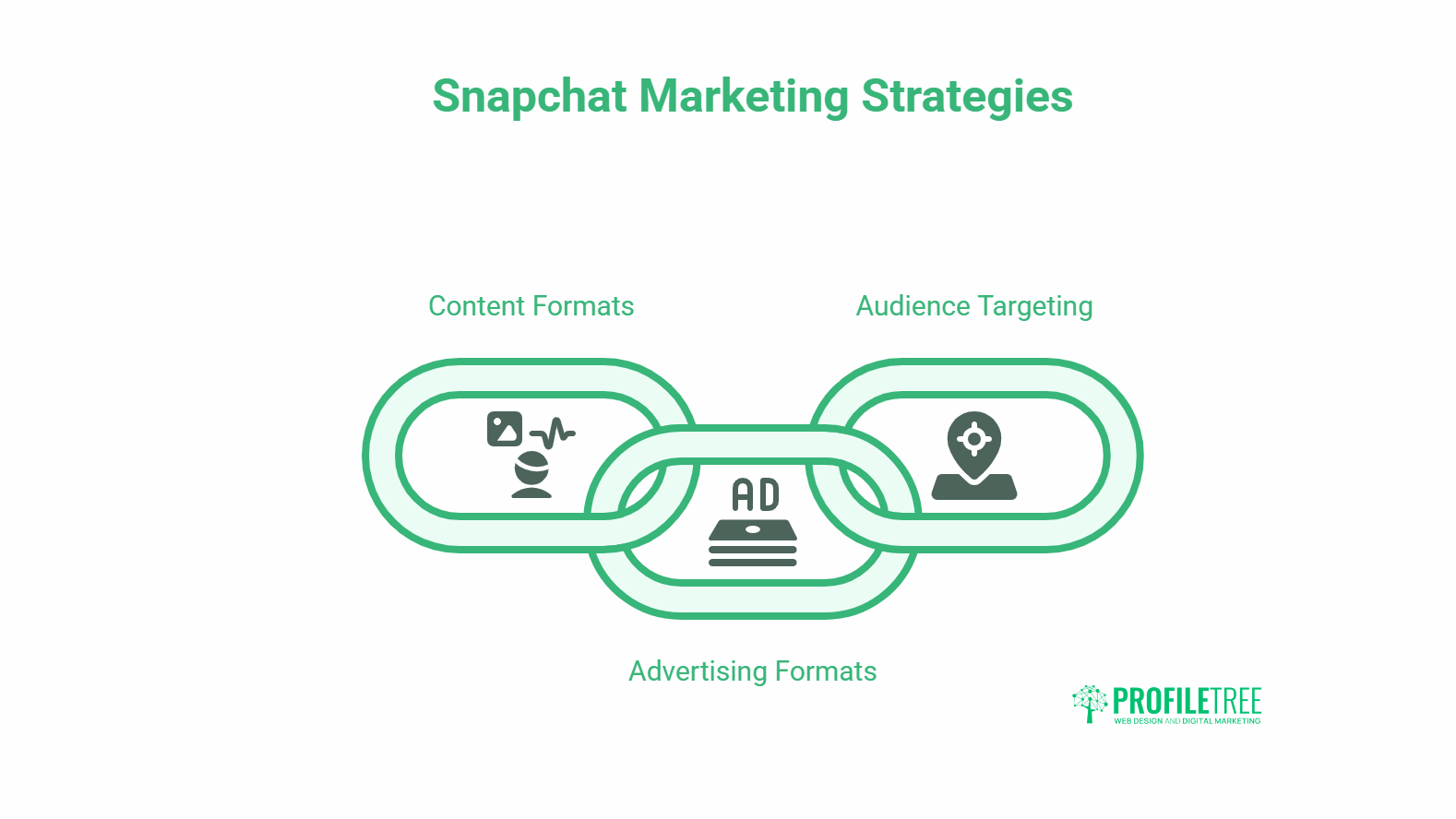
Snapchat’s content environment is built around immediacy. The disappearing format creates a different kind of engagement from a permanent feed, and content strategy on Snapchat needs to account for that.
H3: Stories, Lenses, and Geofilters
Snapchat Stories allow businesses to publish sequential content that disappears after 24 hours. This suits behind-the-scenes content, event coverage, product teasers, and time-limited promotions. The ephemeral nature makes it feel more personal and less curated than a permanent Instagram grid, which can work in a brand’s favour with younger audiences who are sensitive to overly produced content.
Snapchat Lenses, augmented reality filters that users apply to their selfie camera, are one of the platform’s most distinctive advertising formats. Branded lenses can be created through Snapchat’s self-serve Lens Web Builder for a relatively low minimum spend. When users interact with and share a branded lens, it generates brand exposure beyond your direct ad spend. For product categories where trial is part of the purchase decision (cosmetics, eyewear, home decor), the AR try-on mechanic can be a practical tool.
Geofilters are location-specific overlays that appear in a defined geographic area. They are well-suited to events, physical retail locations, and regional campaigns. A Belfast business running a weekend promotion, for example, could deploy a geofilter within a defined radius of their premises for the duration of the event.
Snapchat Advertising Formats
Snap Ads are full-screen vertical video ads that appear between Stories. They support a swipe-up action linking to a website, app store listing, or long-form video. The format works best when the video hooks the viewer in the first two seconds; Snapchat users scroll quickly, and the window for attention is narrow.
Collection Ads display a series of product images beneath a video, allowing users to browse and tap through to specific product pages. These are useful for e-commerce businesses with a clear product catalogue.
Snapchat’s Audience Manager supports targeting by age, location, device type, interests, and behaviour, as well as lookalike audiences built from customer lists. Location targeting is particularly granular, making it useful for businesses with a defined geographic catchment area.
Measuring What Matters
Running activity on either platform without tracking meaningful metrics is a quick way to spend budget without learning anything. The metrics worth tracking depend on your objective, but a few apply consistently.
TikTok Metrics to Track
For organic TikTok content, watch time and completion rate are more useful than view count alone. A video with 500 views and 80% completion rate is outperforming one with 5,000 views and 8% completion rate in terms of algorithm signals. Profile visits and follower growth indicate whether individual pieces of content are building sustained interest rather than one-off reach.
For paid TikTok campaigns, cost per click, click-through rate, and conversion rate against the campaign objective are the primary measures. TikTok Ads Manager provides these natively. Connecting TikTok ad traffic to Google Analytics 4 via UTM parameters gives a fuller picture of what happens after the click.
Snapchat Metrics to Track
Snapchat’s native analytics cover Story views, completion rate, swipe-up rate, and audience demographics. For paid campaigns, cost per swipe and cost per conversion are the key measures, depending on whether your objective is traffic or action. Snap Pixel, Snapchat’s equivalent of the Meta Pixel, can be installed on your website to track what ad viewers do after they leave the platform, including purchases, sign-ups, and page visits.
“Getting the measurement infrastructure right before you start spending is more valuable than any particular ad format or creative choice,” says Ciaran Connolly, founder of ProfileTree. “Without clean tracking, you’re making budget decisions based on platform-reported numbers that don’t tell you what actually happened on your site.”
Integrating TikTok and Snapchat with Your Wider Digital Strategy
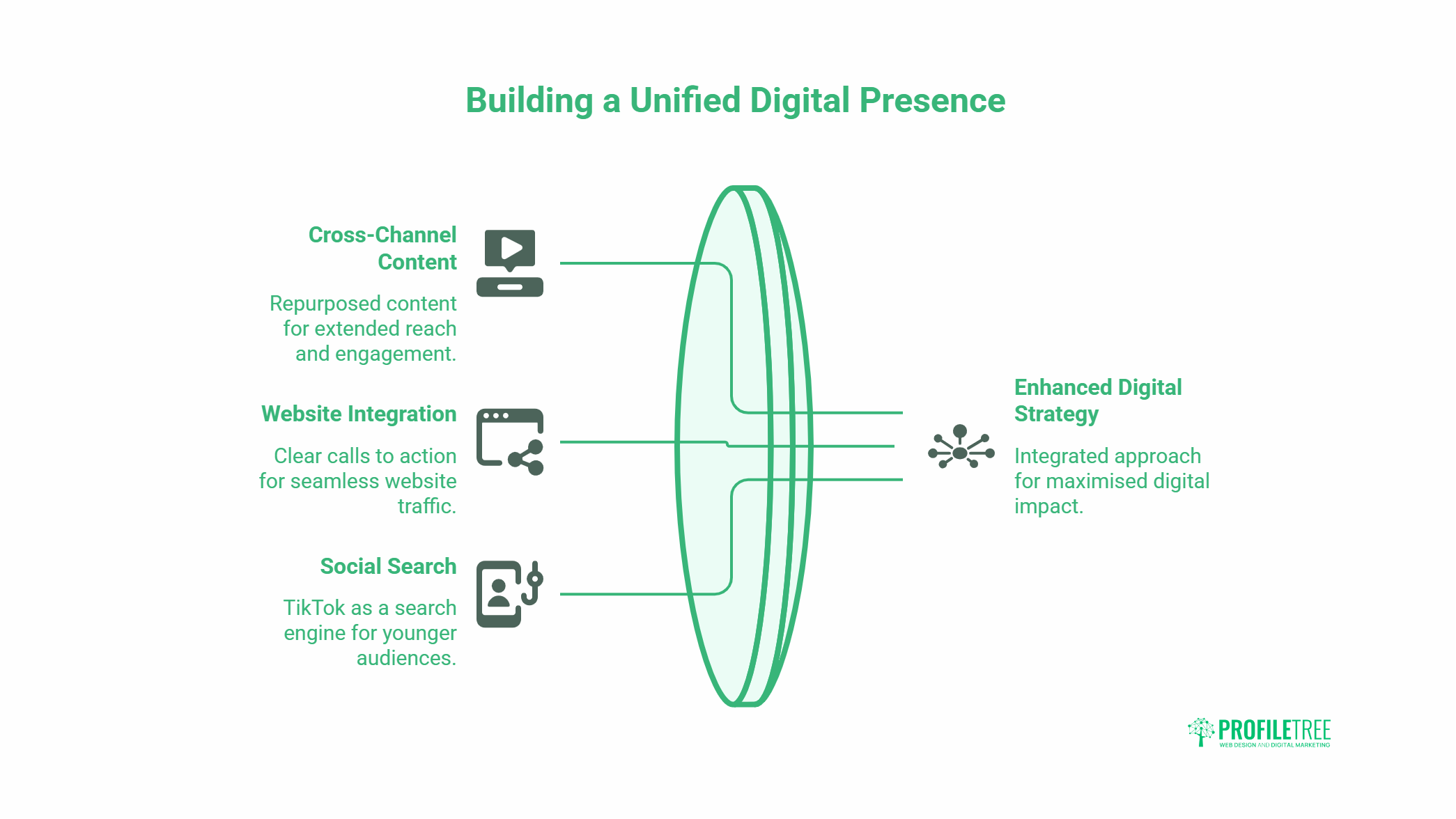
TikTok and Snapchat work better as part of a broader digital presence than as standalone channels. The audience you build on these platforms is rented; changes to algorithms, platform policies, or user behaviour can significantly affect reach overnight. The goal is to use these platforms to drive traffic and awareness that feeds into owned channels and assets.
H3: Cross-Channel Content Planning
Content created for TikTok can be adapted for Instagram Reels and YouTube Shorts with minimal additional effort. Repurposing short videos across formats extends their reach without proportionally increasing production time. The key is adapting for context: aspect ratio, caption style, and audio use vary between platforms, and content that feels native performs better than content that is clearly a direct repost.
Connecting social media activity to your website, through clear calls to action, UTM tracking, and landing pages built for the traffic source, closes the loop between platform reach and business outcomes. A well-structured web design and development setup makes this considerably more straightforward, particularly for businesses running multiple ad campaigns simultaneously.
Connecting Social to Search
TikTok is increasingly used as a search engine by younger audiences. Research by Adobe found that 40% of Gen Z users in the US prefer TikTok and Instagram to Google for search. In the UK, this pattern is emerging in categories like food, fashion, and local services. Creating TikTok content that directly answers search-style questions, “how to find a web designer in Belfast”, “what does a digital marketing agency actually do”, positions a business in front of searchers before they reach Google.
A joined-up digital marketing strategy accounts for the way these channels interact rather than treating each platform as a separate silo.
When to Bring in Outside Support
For businesses without an in-house social media team, TikTok and Snapchat can feel like a significant operational commitment on top of everything else. The content requirements are higher than those of static social platforms, and the learning curve for paid advertising is real. Knowing when to manage activity internally and when to get external support is a practical decision, not a reflection on the business.
Signs that external support makes sense: you are posting inconsistently because production takes too long; your paid campaigns are running, but you cannot tell if they are working; you want to test a new platform, but do not have anyone with platform-specific knowledge internally.
ProfileTree works with SMEs across Northern Ireland, Ireland, and the UK on social media strategy, content production, and digital advertising. If you are weighing up whether TikTok or Snapchat belongs in your marketing plan, or if you want a second opinion on a campaign that is not performing, get in touch with the digital marketing team to talk through the options.
For businesses at an earlier stage of their digital presence, AI-powered tools are also changing how social content is planned and produced. Understanding where automation can reduce the production burden without sacrificing quality is increasingly part of the planning conversation for SMEs.
FAQs
Is TikTok worth it for small businesses in the UK?
TikTok can generate significant organic reach for small businesses, particularly in categories where visual demonstration adds value, such as food, retail, trade services, and professional services. The algorithm distributes content based on engagement rather than follower count, so a small business can reach a large audience without a paid budget if the content holds attention. The main cost is time: consistent posting is necessary, and short video production requires more effort than writing a post. For businesses that can commit to three or more posts per week, TikTok is worth testing. For those with very limited production capacity, starting with paid In-Feed Ads using existing content is a lower-barrier entry point.
What is the minimum budget for Snapchat advertising?
Snapchat’s self-serve advertising platform has a minimum daily spend of around £5 for most ad formats, making it accessible for SMEs. Snap Ads and Collection Ads can be set up and managed directly through Snapchat Ads Manager. Branded Lenses created through the self-serve Lens Web Builder start from around £450 for a one-day run, while custom-built lenses for large campaigns cost significantly more. For most SMEs starting with Snapchat ads, a test budget of £300 to £500 across a two-to-four-week period is enough to gather meaningful data on click-through rates and audience response before committing to a larger spend.
How do TikTok and Snapchat compare for B2B businesses?
Neither platform is primarily a B2B channel, but both have use cases for B2B businesses targeting specific audiences. TikTok has seen growth in B2B content categories including professional services, recruitment, SaaS, and manufacturing, particularly content that shows what a business actually does rather than what it sells. Decision-makers are present on these platforms in their personal capacity, and brand recognition built through social content can influence purchasing behaviour even when the final decision happens through a different channel. Snapchat is less relevant for most B2B applications given its younger demographic skew, though events and experiential marketing are exceptions.
Can I use the same content on TikTok and Snapchat?
The same source footage can be used on both platforms, but direct reposts without adaptation typically underperform. TikTok content benefits from in-app text overlays, trending audio, and captions that mirror the way the platform’s algorithm reads content. Snapchat Stories suit a more immediate, less produced aesthetic and work better without the on-screen text elements common on TikTok. Audio is also a significant difference: TikTok’s algorithm uses audio as a ranking signal, while Snapchat users frequently have sound off by default. Adapting content for each platform, even minimally, produces better results than posting identical files across both.
How do I know if TikTok or Snapchat is right for my business?
Start with your audience rather than the platform. If your primary customers are aged 18 to 34, TikTok covers the broadest range of that demographic with the most accessible organic reach. If you are specifically targeting 13-to-24-year-olds and your marketing objective is awareness or event-driven action, Snapchat’s tools are well-suited to that. If your audience is primarily over 35, neither platform should be your primary investment; LinkedIn, Google Ads, or Meta advertising are likely to deliver better commercial returns. A practical approach is to run a 90-day test on one platform with a defined objective, track results against that objective, and use the data to decide whether to continue, expand, or redirect budget elsewhere.
Conclusion
Snapchat and TikTok for business are not the right fit for every SME, but dismissing them without a clear read of your audience and objectives is an equally poor decision. Both platforms have meaningful UK reach, both support serious advertising tools, and both reward businesses that commit to understanding the format rather than treating it as an afterthought. The starting point is always the audience: who you are trying to reach, where they spend time, and what kind of content they respond to in that environment.
If you want to build a social media strategy that connects platform activity to real business outcomes, ProfileTree’s digital marketing services are a practical place to start.