
Effective Keyword Monitoring: The Ultimate Guide to Unlocking Insights
Table of Contents
For digital agencies operating across Northern Ireland, Ireland, and the UK, keyword monitoring represents far more than tracking position changes in search results. It forms the backbone of client success, the foundation of strategic decision-making, and often the determining factor between retaining valuable accounts and losing them to competitors who can better demonstrate their worth. The difference between agencies that thrive and those that merely survive lies not in their ability to achieve rankings, but in their capacity to translate keyword performance into tangible business outcomes.
This guide will transform your approach from reactive reporting to strategic partnership, positioning your agency as an indispensable asset to every client’s growth trajectory. You’ll discover advanced frameworks for strategic monitoring, critical analysis of industry-leading tools, sophisticated techniques for tracking share of voice and SERP features, and proven methodologies for client communication that transform data into dialogue and metrics into meaningful business insights.
Why Keyword Monitoring Drives Agency Success
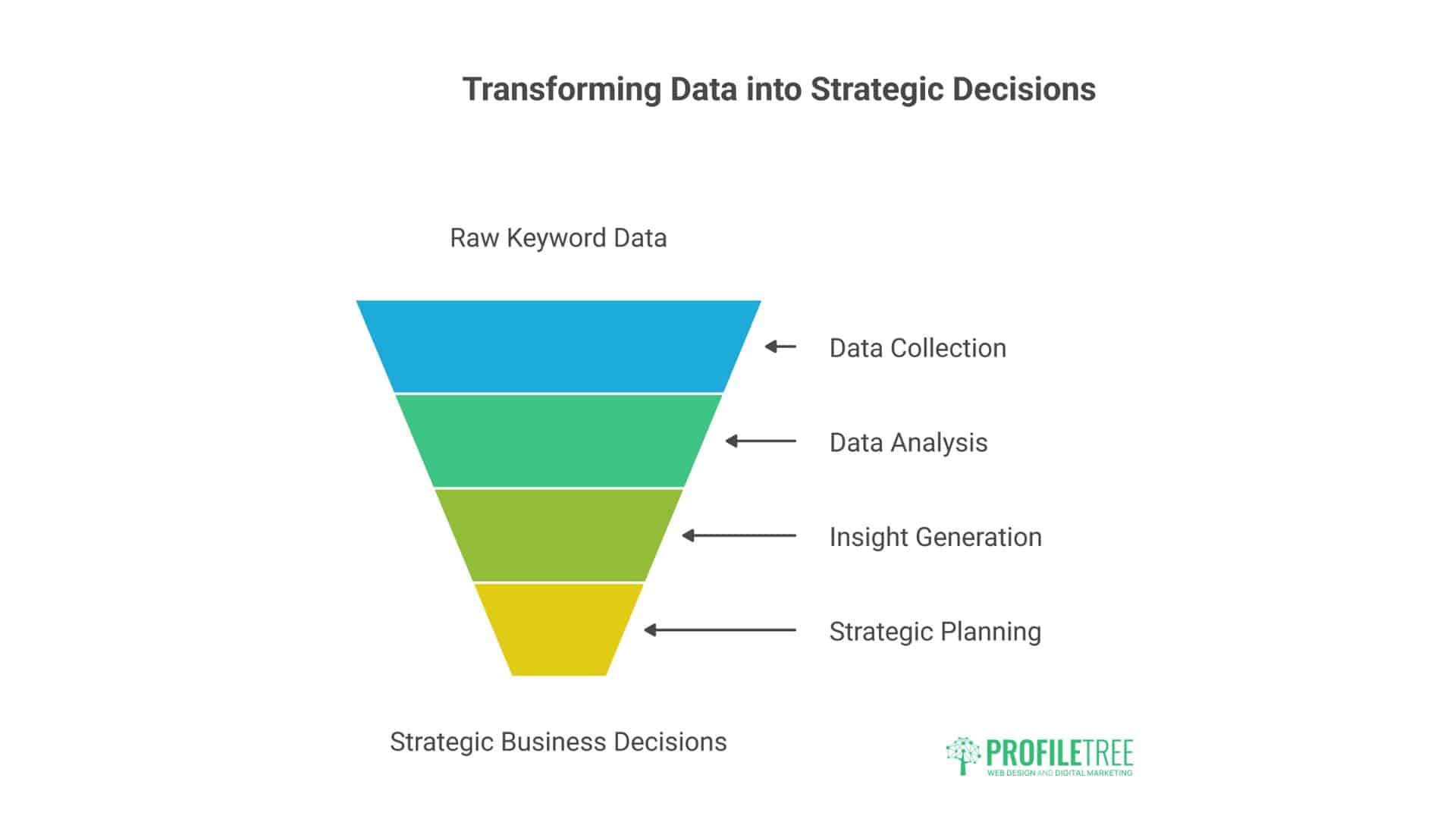
The foundation of successful digital marketing lies not in sporadic ranking checks but in systematic keyword intelligence that transforms raw data into strategic business decisions.
Beyond Rankings: The Strategic Value of Keyword Intelligence
Keyword monitoring extends beyond simple position tracking. Modern SEO success requires understanding the complete search landscape surrounding your client’s business objectives. When businesses in Belfast, Dublin, or Manchester search for services, they encounter featured snippets, local pack listings, People Also Ask sections, and video carousels.
Effective monitoring captures this entire ecosystem. A client ranking third for “digital marketing Belfast” might dominate the SERP by owning the featured snippet, local pack presence, and video results. The strategic value emerges when agencies can identify which content formats win for specific intent types, providing data-driven direction for content development.
“We’ve found that clients who understand the ‘why’ behind their keyword strategy are far more engaged and see better results,” says Ciaran Connolly, Director of ProfileTree. When we show them that their competitors dominate featured snippets with FAQ-style content, they immediately understand why we need to adjust our approach.
Connecting Keyword Performance to Business Outcomes
Clients invest in SEO services to achieve business growth, not ranking improvements. Successful agencies establish clear connections between keyword performance and commercial objectives. This requires segmenting keywords based on their customer journey position:
- Top-of-funnel informational keywords like “what is digital marketing” build awareness. Success metrics include traffic growth, time on page, and newsletter subscriptions.
- Middle-funnel commercial investigation terms such as “digital marketing agencies Belfast” indicate comparison behaviour, measured through feature page visits and consultation requests.
- Bottom-funnel transactional keywords, including “hire digital marketing agency,” represent high purchase intent, as measured by conversion rates and qualified leads.
“The agencies that succeed in client retention can draw direct lines between their SEO activities and their clients’ business growth. It’s not about rankings – it’s about results,” notes Ciaran Connolly, Director of ProfileTree.
Building Your Monitoring Framework
A robust keyword monitoring system requires more than selecting the right tools—it demands a strategic framework that aligns measurement with business objectives and client success metrics.
Establishing Client-Focused KPIs Beyond Traditional Rankings
Traditional ranking reports fail to capture the complexity of modern search results and business impact. Effective agency frameworks centre on metrics that directly correlate with client business objectives:
- Share of Voice (SoV) provides comprehensive visibility measurement, calculating the percentage of potential impressions a client captures across their target keyword portfolio
- Visibility Share accounts for SERP feature ownership, measuring presence in featured snippets, local packs, and knowledge panels
- Traffic Share reveals the proportion of total category traffic flowing to your client versus competitors
- Conversion rate tracking by keyword segment demonstrates which search terms drive qualified leads.
Keyword Segmentation for Strategic Analysis
Meaningful keyword analysis requires segmentation aligned with client business models:
- Brand versus non-brand segmentation reveals the balance between reputation management and market expansion efforts
- Geographic segmentation proves crucial for local businesses—”web design Belfast” requires different optimisation than national terms
- Funnel stage segmentation enables precise measurement: awareness keywords generate traffic, consideration terms indicate research behaviour, and decision keywords represent purchase intent.
- Seasonal segmentation identifies cyclical opportunities for campaign preparation
Competitive Intelligence Integration
Comprehensive keyword monitoring includes systematic competitor analysis—track competitor keyword gains and losses to reveal their content strategies. Gap analysis identifies keywords where competitors rank but your client doesn’t, revealing content opportunities. SERP feature competition tracking shows which competitors dominate featured snippets or local packs.
Essential Tools for Agencies
Choosing the right keyword monitoring tools can make the difference between reactive reporting and proactive strategic advantage. Here’s how to evaluate and select platforms that drive real business results.
Key Features for Agency Operations
Professional keyword monitoring tools must accommodate complex agency requirements:
- Multi-client dashboards enable efficient portfolio management
- Automated reporting functionality saves time while maintaining consistency
- White-label reporting capabilities allow branded client presentations
- Competitor tracking features provide essential strategic intelligence
- API access facilitates integration with other marketing tools
- Scalable pricing models accommodate agency growth
Comprehensive Tool Analysis
SEMrush excels in comprehensive keyword research and competitor analysis. Its Position Tracking tool monitors up to 20,000 keywords across multiple devices and locations. Strengths include extensive database coverage for UK and Irish markets, integrated content planning tools, and sophisticated competitor analysis. Weaknesses involve complex navigation and premium pricing.
Ahrefs offers exceptional backlink analysis alongside robust keyword tracking. Its Rank Tracker monitors unlimited keywords with detailed SERP feature tracking. Strengths include industry-leading backlink analysis, accurate keyword difficulty scoring, and excellent content research capabilities. Limitations include weaker social media integration and higher costs.
SE Ranking provides cost-effective monitoring with white-label reporting. Strengths include competitive pricing, comprehensive white-label options, and integrated technical SEO analysis. Weaknesses involve smaller database coverage and limited advanced features.
AgencyAnalytics specialises in agency reporting and client communication. Its SEO dashboard combines data from multiple sources. Strengths include superior reporting capabilities and comprehensive integration options. Limitations involve dependence on third-party data sources.
Budget-Conscious Options
Google Search Console provides essential keyword monitoring at no cost. Performance reports reveal which queries drive traffic, average positions, and click-through rates. Rank Math offers WordPress users comprehensive SEO tools, including basic keyword tracking. Serpstat delivers keyword tracking and competitor analysis at competitive pricing.
Advanced Monitoring Techniques

Beyond basic position tracking, sophisticated agencies employ advanced techniques that reveal competitive intelligence, identify emerging opportunities, and maximise search visibility across all SERP features.
Share of Voice Analysis
Share of Voice (SoV) measurement provides superior insight compared to individual keyword tracking. SoV calculates the percentage of total potential impressions your client captures across their target keyword portfolio, revealing actual market position and competitive standing.
Calculating SoV requires identifying all relevant keywords, determining search volumes, and measuring average positions. Monthly SoV tracking reveals market share trends that individual keyword fluctuations might obscure. Industry-specific SoV benchmarks help establish realistic targets and measure competitive performance.
Identifying and Resolving Keyword Cannibalisation
Keyword cannibalisation occurs when multiple pages compete for identical search terms, diluting ranking potential. Search Console data reveals multiple pages ranking for similar queries, indicating potential issues. Resolution strategies depend on content quality—high-quality pages can target differentiated keywords, while lower-quality pages might require consolidation through 301 redirects.
SERP Feature Monitoring and Optimisation
Modern search results include featured snippets, People Also Ask sections, local packs, and knowledge panels. Optimising featured snippets requires identifying current holders, analysing their content structure, and creating superior alternatives. Question-and-answer formats often capture featured snippets for informational queries.
“One of our retail clients lost 40% of their organic traffic overnight when they lost a featured snippet to a competitor, despite maintaining their number one ranking,” explains Ciaran Connolly. “This taught us that modern keyword monitoring must track the entire SERP landscape, not just traditional blue links.”
Local pack monitoring proves crucial for geographic businesses. People Also Ask sections provide content expansion opportunities. Knowledge panel monitoring requires ongoing attention to correct inaccuracies and claim ownership.
Integration with Analytics and Search Console
Comprehensive keyword monitoring integrates data from multiple sources. Google Analytics reveals which keywords generate conversions, bounce rates, and engagement metrics. Search Console provides impression data, click-through rates, and average positions. Combined analysis reveals performance gaps where high rankings don’t translate to traffic or traffic doesn’t convert.
Client Reporting Mastery
The ability to transform complex keyword data into compelling business narratives separates successful agencies from those that struggle with client retention and growth.
Understanding Client Reporting Priorities
Successful client reports translate technical SEO data into business intelligence. Business owners care about revenue impact, lead generation, and competitive positioning rather than individual keyword fluctuations. Executive summary sections should highlight key achievements, emerging opportunities, and strategic recommendations within the first page.
Performance metrics should emphasise business impact over technical achievements. Revenue attribution, lead quality improvements, and market share gains resonate more strongly than ranking position changes. Competitive intelligence adds strategic value—clients want to understand their market position and identify competitive advantages.
Building Compelling Data Narratives
Effective keyword reports tell stories rather than present data. Narrative structure should establish context, present challenges, describe actions taken, and demonstrate results achieved. Month-over-month performance comparisons provide immediate context, while year-over-year analysis reveals long-term trends and seasonal patterns.
Challenge identification shows proactive strategic thinking. Acknowledging seasonal traffic declines, algorithm update impacts, or competitive pressures before clients notice them demonstrates expertise and builds trust.
“The biggest mistake agencies make is presenting keyword data without context,” states Ciaran Connolly. “When we tell a client their rankings improved by 15%, they shrug. They renew their contract immediately when we tell them this translates to £50,000 in additional revenue last quarter.”
Visual Communication and ROI Demonstration
Data visualisation transforms complex keyword information into immediately understandable insights. Trend charts show performance trajectories more effectively than numerical tables. Colour coding should follow intuitive conventions, with green indicating positive performance and red showing concerns.
Keyword monitoring ROI extends beyond direct revenue attribution, including risk mitigation, competitive intelligence, and strategic planning value. Traffic value calculation estimates the advertising cost required to generate equivalent organic traffic. Conversion rate improvements attributed to keyword optimisation should include revenue impact calculation.
Transforming Data Into Strategic Advantage
Keyword monitoring forms the intelligence foundation that drives successful digital marketing strategies. Agencies that master this discipline transform from service providers into strategic partners, building lasting client relationships through demonstrable business impact.
- “Most agencies focus too heavily on individual keyword rankings and miss the bigger picture. The real value comes from understanding how keyword performance connects to business objectives and being able to tell that story to clients in a way they understand,” explains Ciaran Connolly, Director of ProfileTree. “When you can show a client that their investment in SEO directly contributed to a 30% increase in qualified leads, you’re not just reporting data – you’re demonstrating partnership.”
ProfileTree’s approach combines comprehensive keyword monitoring with strategic implementation across web design, SEO, content creation, and AI integration, ensuring monitoring intelligence translates into tangible business growth for clients across Northern Ireland, Ireland, and the UK.
FAQs
How often should digital agencies monitor keyword rankings?
Monitoring frequency depends on industry competitiveness and campaign activity levels. Highly competitive sectors require daily monitoring, while established businesses in stable markets can use weekly tracking effectively.
What’s the difference between keyword monitoring and keyword tracking?
Monitoring implies a comprehensive approach that includes SERP feature analysis, competitor tracking, and strategic intelligence gathering. Tracking focuses primarily on position changes for specific keywords.
How many keywords should agencies monitor for each client?
The size of a keyword portfolio depends on the business’s complexity and budget. Small local businesses might effectively monitor 50-100 keywords, while large e-commerce sites could require tracking thousands of terms.
Can free tools provide adequate keyword monitoring for agencies?
Free tools like Google Search Console provide valuable insights but lack comprehensive features needed for professional agency operations. Paid tools offer automation, competitor analysis, and reporting capabilities that justify their cost.
Ready to Transform Your Keyword Strategy Into Business Growth?
Stop settling for basic ranking reports that fail to demonstrate tangible business value. At ProfileTree, we’ve helped dozens of businesses across Belfast, Dublin, and the UK transform their keyword monitoring from a routine task into a strategic competitive advantage.
Whether you’re struggling to prove SEO ROI to clients, losing visibility to competitors, or simply want to take your digital marketing to the next level, our team of experts can help. We don’t just track keywords—we translate performance data into actionable strategies that drive traffic, generate leads, and grow revenue.
Get started today with a complimentary keyword monitoring audit that will:
- Identify your biggest keyword opportunities and competitive threats
- Reveal SERP features you’re missing that could double your visibility
- Show you exactly how your current keyword performance translates to business value
- Provide a 90-day roadmap for maximising your search presence
Don’t let another month pass wondering whether your SEO efforts are working. Contact ProfileTree today and discover how strategic keyword monitoring can become your most powerful business growth tool.
Ready to see real results? Get in touch:
- Call us at 028 9568 0364
- Email hello@profiletree.com
- Visit profiletree.com to learn more about our comprehensive digital marketing services