
How to Identify Marketing Prospects and Convert Them Into Customers
Table of Contents
Identifying and converting marketing prospects remains one of the most critical challenges facing business owners and marketing managers. Whether you’re running a small business in Belfast or managing a national campaign across the UK, understanding how to find, qualify, and convert prospects can make the difference between growth and stagnation.
This guide offers actionable strategies for prospect identification, lead qualification, and proven conversion tactics. We’ll cover both digital and traditional methods, examine how different types of prospects behave, and show you how to build systems that turn interested visitors into paying customers.
Understanding Marketing Prospects: What They Are and Why They Matter
Before you can effectively market to prospects, you need to understand precisely what they are and how they differ from general website visitors or social media followers.
A marketing prospect is someone who has demonstrated genuine interest in your products or services and aligns with your ideal customer profile. They’re not just casual browsers; they’ve taken action that indicates potential buying intent. This might include downloading a resource, requesting a quote, or engaging with your content multiple times.
The distinction between prospects and other audience members is essential because it determines where you allocate your marketing budget. Chasing every visitor wastes resources. Focusing on qualified prospects increases your return on investment and improves conversion rates.
For businesses offering services such as web design, SEO, or digital training, understanding this distinction becomes even more important. A prospect for website development services might visit your portfolio multiple times, check your pricing page, or download a case study. These behaviours signal readiness that a single-page visit doesn’t.
“The biggest mistake we see SMEs make is treating all website traffic the same way,” says Ciaran Connolly, Founder of ProfileTree. “When you understand the difference between a prospect and a casual visitor, you can allocate your marketing resources more effectively and see significantly better results.”
The key characteristics that define a marketing prospect include:
- Demonstrated interest: They’ve engaged with your content, brand, or offerings in a meaningful way
- Fit with your ideal customer profile: Their business size, industry, location, or needs align with what you offer
- Accessibility: You have a way to reach them (email, phone, social media connection)
- Timing indicators: They’ve shown signs they’re actively looking for solutions, not just researching casually
Understanding these characteristics helps you build better systems for identifying prospects in the first place. It also enables you to avoid common pitfalls, such as pursuing leads that will never convert or neglecting warm prospects in favour of chasing colder ones.
Different Types of Marketing Prospects and How to Recognise Them
Not all prospects are created equal. Different types of prospects require different approaches, messaging, and nurturing strategies. Understanding these distinctions helps you prioritise your efforts and tailor your communication.
Leads: Early-Stage Interest
Leads represent the broadest category of potential customers. These individuals have shown initial interest but haven’t yet demonstrated strong buying intent or qualification criteria.
A lead might be someone who has:
- Subscribed to your newsletter
- Downloaded a free resource or guide
- Followed your social media accounts
- Visited your website once or twice
- Attended a webinar you hosted
Leads require nurturing before they’re ready to buy. For digital agencies offering services such as video production or content marketing, this nurturing might involve creating educational content that demonstrates your expertise without pushing for an immediate sale.
The challenge with leads is volume versus quality. You’ll typically generate far more leads than qualified prospects, which means you need systems to identify which leads deserve more attention. Email engagement rates, content consumption patterns, and demographic data all help you distinguish between promising leads and those unlikely to convert.
Qualified Leads: Showing Serious Intent
Qualified leads have moved beyond casual interest. They’ve demonstrated characteristics that suggest they’re actively evaluating solutions and have the authority, budget, and need to make a purchase.
In the B2B space, particularly for services like SEO, website development, or AI training, qualified leads typically exhibit these behaviours:
- Requesting specific pricing information
- Scheduling consultations or demos
- Asking detailed questions about implementation
- Comparing your services with competitors
- Engaging with case studies relevant to their industry
For ProfileTree’s services, a qualified lead might be a business owner who has reviewed our web design portfolio, inquired about the timeline and costs for a new website, and expressed interest in launching within the next quarter.
The qualification process often involves the BANT framework:
- Budget: Can they afford your services?
- Authority: Are they decision-makers or influencers?
- Need: Do they have a genuine problem you can solve?
- Timeline: When are they looking to implement a solution?
However, modern qualification goes beyond BANT. For digital services, you should also consider:
- Technical readiness (do they have the infrastructure to support your solution?)
- Cultural fit (will they work well with your team?)
- Strategic alignment (do they understand the value of what you offer?)
Customers: The Ultimate Conversion
Customers are prospects who have completed the buying journey. They’ve made a purchase and become paying clients.
However, treating customers as the end of the prospect journey is a mistake. Existing customers are often your best source of future business through:
- Repeat purchases and ongoing services
- Upselling opportunities (a web design client might need SEO services)
- Cross-selling related services (a client using your video production might need animation)
- Referrals to new prospects
- Case studies and testimonials that help convert prospects
For service-based businesses, retaining customers is often more profitable than acquiring new ones. A client who trusts your web design work might naturally turn to you for content marketing, digital training, or AI implementation services.
The key is treating customers as ongoing prospects for additional value. This requires:
- Regular check-ins to identify new needs
- Proactive suggestions based on their business evolution
- Educational content that keeps them engaged
- Loyalty programmes or incentives for continued business
- Asking for referrals at the right moments
Understanding these prospect types helps you build appropriate marketing funnels for each stage. Your messaging to cold leads should differ significantly from your approach to warm, qualified leads or existing customers considering additional services.
Exploring Prospect Identification Methods: Online and Offline Strategies
Finding prospects requires a combination of digital tactics and traditional networking. The most successful businesses use multiple channels to build a steady pipeline of potential customers.
The methods you choose should align with where your ideal customers spend their time and how they prefer to discover services. For B2B services such as web design, SEO, and digital training, your prospects may be researching online, attending industry events, or seeking recommendations from peers.
Online Strategies for Prospect Identification
Digital channels offer unprecedented opportunities to identify and reach prospects. The key is using these channels strategically rather than spreading yourself too thin across every platform.
Social Media Listening and Engagement
Social platforms aren’t just for broadcasting your message; they’re powerful tools for finding prospects who are actively discussing needs you can solve.
LinkedIn remains particularly valuable for B2B services. You can identify prospects by:
- Following relevant hashtags in your industry (#webdesign, #SEO, #digitalmarketing)
- Joining industry-specific groups where your ideal customers gather
- Monitoring when people post questions about challenges you solve
- Tracking companies that are hiring for roles that suggest they need your services
Twitter (X) can help you find prospects through conversation monitoring. Business owners often tweet about challenges with their websites, struggles with digital marketing, or frustrations with current providers. These public conversations offer natural opportunities to provide helpful insights that position you as a potential solution.
Industry-specific forums and online communities also provide rich sources of prospects. Whether it’s Reddit communities focused on small business, Slack groups for specific industries, or niche forums, participating genuinely in these spaces helps you identify needs and build relationships.
The key with social listening is patience and authenticity. Don’t immediately pitch your services. Offer genuine help, share insights, and build trust. Prospects who discover you through helpful contributions are far more likely to convert than those who receive cold pitches.
Website Analytics and Behaviour Tracking
Your website contains valuable information about potential prospects. Tools like Google Analytics 4 reveal not just how many people visit your site, but what they’re interested in and how seriously they’re considering your services.
High-value behaviours that indicate prospect status include:
- Multiple visits to your site within a short timeframe
- Extended time spent on service pages or case studies
- Viewing pricing information
- Downloading resources or guides
- Visiting contact or booking pages without completing forms
For businesses using ProfileTree’s web design or SEO services, implementing proper tracking enables you to identify warm prospects and follow up appropriately. You might set up remarketing campaigns targeting individuals who viewed specific service pages, or have your sales team reach out to companies that spent a significant amount of time reviewing your portfolio.
First-party data collection has become increasingly important as third-party cookies decline. Building systems to capture email addresses, business information, and preferences directly from prospects gives you sustainable ways to identify and nurture them.
Paid Advertising for Prospect Discovery
Paid advertising on platforms like Google Ads, LinkedIn Ads, and Facebook Ads helps you reach prospects who are actively searching for solutions or fit specific demographic profiles.
Search advertising works particularly well for services that people actively seek. Someone searching “web design Belfast” or “SEO services Northern Ireland” is likely a prospect with immediate needs. The key is creating compelling ad copy that addresses their specific pain points and directing them to landing pages specifically designed for conversion.
Social advertising allows more sophisticated targeting. On LinkedIn, you can reach prospects based on job title, company size, industry, and other professional criteria. This precision enables you to identify decision-makers at companies that align with your ideal customer profile.
The challenge with paid advertising is balancing cost and quality. Broad targeting might bring more traffic, but fewer qualified prospects. Narrow targeting might bring fewer visitors but higher conversion rates. Testing different approaches helps you find the sweet spot for your specific services.
For digital agencies, consider advertising not just your core services but also your educational content. Someone who downloads your “Guide to Choosing a Web Design Agency” might not be ready to buy today, but they’ve identified themselves as a prospect worth nurturing.
Content Marketing as Prospect Magnet
Creating valuable content serves multiple purposes: it positions you as an expert, improves your search rankings, and attracts prospects who are researching solutions.
The content that attracts qualified prospects addresses specific problems they’re trying to solve. For a digital agency, this might include:
- Guides on choosing between different website platforms
- Case studies showing the results you’ve achieved for similar businesses
- Comparisons of different approaches to SEO or content marketing
- Educational resources about emerging technologies like AI implementation
Search engine optimisation ensures this content reaches prospects when they’re actively looking for information. Ranking for terms like “web design for SMEs” or “AI training Northern Ireland” puts you in front of prospects at the exact moment they’re seeking solutions.
Video content has become particularly effective for prospect generation. YouTube is the second-largest search engine, and prospects often prefer watching explanations over reading lengthy articles. Creating videos about your services, sharing client success stories, or explaining complex topics positions you as an accessible expert.
The key is creating content that demonstrates expertise without giving away everything for free. Your content should make prospects think, “If this is what they share publicly, imagine what they can do when I hire them.”
Offline Strategies for Finding Prospects
Despite the digital focus of modern marketing, offline methods remain valuable for building relationships and finding high-quality prospects.
Industry Events and Networking
Trade shows, conferences, and industry meetups put you directly in front of potential customers. Face-to-face interaction builds trust more quickly than digital communication alone.
For businesses serving the UK market, events such as the Digital City Festival in Leeds, Manchester Digital events, or industry-specific conferences in London provide concentrated opportunities to meet potential prospects. Local business networking groups in Belfast, Dublin, and across Northern Ireland also offer regular opportunities to connect with business owners who may need your services.
The key to successful event networking is going beyond collecting business cards. Have meaningful conversations, understand people’s challenges, and follow up genuinely after the event. A prospect met at a conference who receives a personalised email referencing your discussion is far more likely to engage than one who gets a generic sales pitch.
Strategic Referral Partnerships
Building relationships with complementary businesses creates steady streams of qualified prospects. These partnerships work because the referring business has already established trust with the prospect.
For a digital agency offering web design, SEO, and video production, potential referral partners might include:
- Business consultants who work with companies needing better digital presence
- Marketing strategists who don’t offer implementation services
- Branding agencies that need technical partners for website projects
- Accountants and lawyers who serve small businesses
The key is creating mutually beneficial arrangements. You might refer clients who need services your partners offer, creating a reciprocal value exchange. Clear agreements about how referrals work prevent misunderstandings and ensure smooth collaboration.
Direct Outreach and Cold Approaches
While often considered old-fashioned, targeted direct outreach can still identify prospects effectively when done correctly.
This isn’t about sending mass emails to purchased lists. It’s about identifying specific companies that fit your ideal customer profile and reaching out with personalised, relevant messages.
For example, suppose you specialise in web design for restaurants. In that case, you might identify local restaurants with outdated websites and reach out with specific suggestions for how their sites could better serve customers. This targeted approach demonstrates you’ve done your homework and have genuine insights to offer.
The key principles for effective direct outreach include:
- Research prospects thoroughly before reaching out
- Personalise every communication
- Lead with value, not your services
- Keep initial messages brief and focused
- Make it easy for prospects to respond
- Follow up persistently but respectfully
Cold calling has evolved, but hasn’t disappeared. For high-value services, a well-timed phone call to a decision-maker can cut through digital noise. The key is to call with a legitimate reason, such as referencing their recent business news, a mutual connection, or a specific observation about their current digital presence.
Lead Qualification Process: Separating Genuine Prospects from Time-Wasters
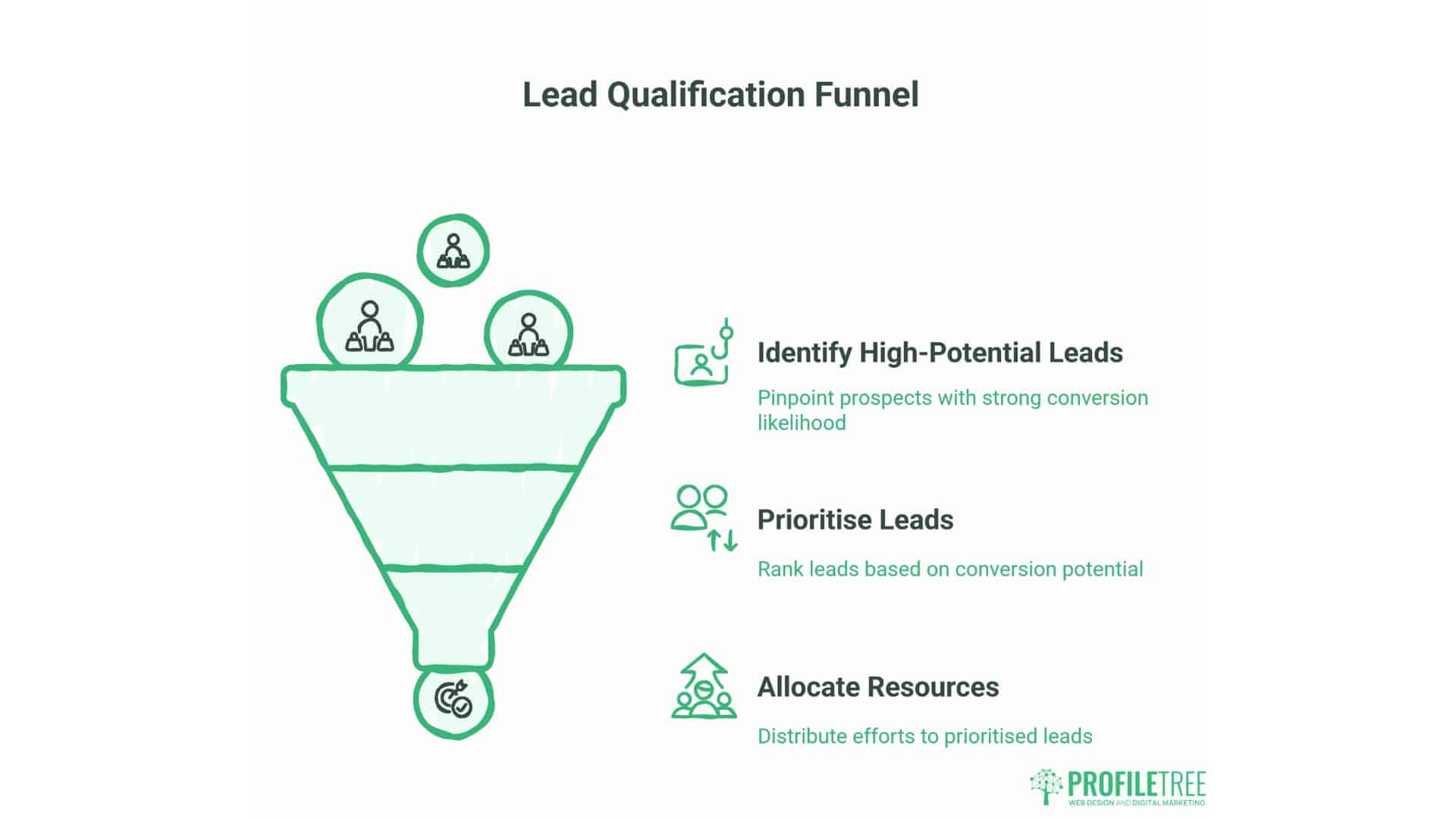
Not every prospect deserves equal attention. Practical lead qualification helps you focus resources on opportunities most likely to convert, improving efficiency and increasing win rates.
The qualification process should happen continuously as prospects move through your funnel. Early qualification prevents you from investing heavily in leads that will never convert. Ongoing qualification helps you prioritise among multiple opportunities competing for your attention.
Establishing Qualification Criteria
Start by defining what makes someone a qualified prospect for your specific services. This varies by business type, service offering, and ideal customer profile.
For digital agency services, qualification criteria might include:
Budget considerations: Do they have realistic expectations about investment? A prospect expecting enterprise-level website design for £500 isn’t qualified. Similarly, someone seeking comprehensive SEO services but unwilling to commit to ongoing monthly investment won’t succeed with proper optimisation.
Decision-making authority: Are you speaking with someone who has the authority to approve purchases? In larger organisations, you might be talking to someone who can influence decisions but not make final choices. Understanding this helps you navigate the process appropriately.
Genuine need: Does their situation actually require what you offer? A business with a perfectly functional website launched last year probably doesn’t need web design services, regardless of its budget or authority.
Timeline: When do they need to implement solutions? Someone researching potential needs next year requires different handling than someone needing a website launched within six weeks.
Technical readiness: Do they have the infrastructure, internal capabilities, and commitment to support success? AI training services require clients willing to invest time in implementation. Website development requires clients who can provide content and offer feedback.
Cultural fit: Will this client work well with your team? Prospects with unrealistic expectations, poor communication habits, or misaligned values often become problematic clients regardless of their budget.
Implementing Qualification Systems
Manual qualification is suitable for businesses with low lead volumes, but scaling requires systematic approaches.
Lead scoring assigns point values to different behaviours and characteristics. A prospect might earn points for:
- Visiting your pricing page (10 points)
- Downloading a case study (15 points)
- Requesting a consultation (50 points)
- Company size matching your ideal client (20 points)
- Job title indicating decision-making authority (30 points)
When a prospect’s score exceeds a threshold, they trigger alerts for your sales team or enter more intensive nurturing sequences.
Progressive profiling collects qualification information gradually, rather than requiring all information to be provided up front. Your initial contact form may only request your name, email address, and company name. Subsequent interactions collect company size, current challenges, timeline, and budget range. This approach reduces friction while still gathering critical qualification data.
Qualification conversations, whether by phone or video call, remain the gold standard for high-value services. A 15-minute qualification call can reveal information that weeks of email exchange might miss. During these conversations, ask open-ended questions that reveal actual needs, constraints, and motivations.
Disqualification: Knowing When to Walk Away
A practical qualification includes knowing when to disqualify prospects. This might feel counterintuitive—shouldn’t you pursue every potential sale?
However, pursuing unqualified prospects wastes resources that could be allocated to better opportunities. Worse still, taking on clients who are poorly suited leads to unhappy relationships, poor results, and damage to your reputation.
Common disqualification triggers include:
- The budget is far below what quality service delivery requires
- Unwillingness to invest in necessary ongoing services (like SEO)
- Expectations that don’t match reality (“I need first page Google rankings by next week”)
- Disrespectful behaviour toward your team
- Requirements outside your capabilities or specialisation
When disqualifying prospects, do so gracefully. Explain why you’re not the right fit and, where possible, suggest alternatives that might serve them better. This maintains goodwill and sometimes leads to future opportunities when circumstances change.
Conversion Strategies: Turning Qualified Prospects Into Paying Customers
Having identified and qualified prospects, the final challenge is converting them into customers. This requires understanding the psychology of decision-making and removing purchase barriers.
Conversion isn’t about manipulation; it’s about making it easy for prospects who genuinely need your services to choose you over alternatives (including doing nothing).
Building Trust Through Demonstration
Prospects buy from businesses they trust to deliver results. For service-based companies, building this trust before the sale requires demonstrating capability and reliability.
Case studies serve as powerful trust-builders. Rather than making abstract claims about what you can do, show specific examples of what you have done. For a digital agency, this might include:
- Detailed web design case studies showing before/after results
- SEO success stories with specific ranking improvements and traffic increases
- Video production examples demonstrating range and quality
- AI training testimonials from businesses that successfully implemented new technologies
The key is specificity. Vague claims like “We increased traffic significantly” carry less weight than “We helped this manufacturing business increase organic traffic by 187% over six months, resulting in 23 new customer enquiries directly from search.”
Social proof extends beyond case studies. Display client logos, share testimonials, and showcase awards or certifications. Video testimonials carry more weight than written ones because they’re harder to fabricate and show real people vouching for your services.
Transparency about your process reduces uncertainty. Prospects hesitate when they don’t understand how you’ll work together. Clearly explaining your approach, how long projects take, what you’ll need from them, and how you communicate progress removes anxieties that might prevent commitment.
Addressing Objections Proactively
Every prospect has concerns that may prevent them from making a purchase. Successful conversion requires identifying and addressing these objections before they become deal-breakers.
Common objections to digital agency services include:
Cost concerns: “Your services cost more than competitors.” Address this by demonstrating value rather than just defending price. Show the cost of not solving their problem, the return on investment previous clients have achieved, and what distinguishes your services from cheaper alternatives.
Time commitment worries: “I don’t have time to work on this right now.” Explain exactly what time commitment you require from clients and how you’ll minimise disruption to their business. Demonstrate how delaying can ultimately lead to higher costs due to lost opportunities or worsening problems.
Past negative experiences: “We tried SEO before, and it didn’t work.” Acknowledge that poor experiences happen, then explain what you do differently. Demonstrate how your approach addresses the shortcomings they previously experienced.
Internal capability questions: “Can’t we just do this ourselves?” This requires diplomatic honesty. Yes, they might be able to handle some aspects internally, but at what opportunity cost? What expertise and experience would they miss? How might DIY approaches cost more in the long run through mistakes or inefficiency?
The key is addressing objections before prospects voice them. Build responses into your website content, sales presentations, and proposal documents to enhance your credibility and effectiveness. When prospects raise concerns, they shouldn’t hear new information; they should listen to reinforcement of what you’ve already communicated.
Creating Compelling Offers and Clear Calls-to-Action
The final conversion moment requires prospects to take specific action. Making this action clear and removing friction maximises conversion rates.
Your calls-to-action should be:
- Specific: “Schedule a free 30-minute website audit” beats “Contact us” because it tells prospects exactly what happens next
- Low-risk: Initial commitments should require minimal investment of money or time
- Valuable: Even your free offers should provide genuine value that prospects appreciate
- Urgent: Give prospects reasons to act now rather than later (limited availability, time-sensitive insights, current problems costing money daily)
For high-value services such as comprehensive website development or ongoing SEO, consider offering step-stone pricing. A prospect might not be ready to commit to a £10,000 website project, but they might purchase a £500 website audit that identifies specific issues and opportunities. This smaller commitment allows them to experience your expertise firsthand, making the larger decision easier.
Proposal documents represent critical conversion moments, rather than generic templates; craft proposals that speak directly to the specific prospect’s situation. Reference details from your conversations, address their unique challenges, and demonstrate how your approach aligns with their particular needs.
Nurturing Through the Decision Process
Conversion rarely happens instantly for high-value B2B services. Prospects need time to consider options, consult stakeholders, and build confidence in their decision.
Effective nurturing during this period keeps you top of mind without being pushy. This might include:
- Sharing relevant case studies or resources based on their specific interests
- Providing additional information they request promptly and thoroughly
- Checking in periodically without demanding decisions
- Offering to answer questions from other stakeholders who might influence decisions
The key is being helpful rather than desperate. Prospects can tell when you’re pushing for a sale rather than genuinely trying to help them make the right decision for their business.
Marketing automation helps maintain consistent communication without requiring constant manual effort. A prospect who downloads your web design guide might automatically receive a sequence of emails over the following weeks, sharing case studies, explaining your process, and eventually inviting them to schedule a consultation.
However, don’t let automation replace genuine human interaction. When prospects engage significantly by replying to emails, spending time on your website, and clicking through multiple resources, have real humans follow up with them personally.
The Psychology of Conversion
Understanding basic psychological principles can significantly improve conversion rates.
Scarcity and urgency: People act more quickly when they perceive a limited availability. This doesn’t mean creating false shortage, but it does mean making genuine constraints clear. If your project schedule fills up quickly, please notify us. If you only accept a limited number of new clients per month, please let us know.
Social proof: People look to others’ decisions when making their own. Prominently displaying client testimonials, case studies, and logos reduces perceived risk. Video testimonials from recognisable businesses carry particular weight.
Authority: Prospects defer to expertise. Demonstrating your knowledge through content, certifications, speaking engagements, and awards makes prospects more comfortable trusting your recommendations.
Consistency: Once prospects take small steps toward making a purchase, they’re more likely to take larger ones. This is why free resources, trial offers, and low-commitment initial engagements work; they create momentum toward larger purchases.
Reciprocity: When you provide value freely, prospects feel a mild obligation to reciprocate. Genuinely helpful content, free audits, and consultations that offer real insights create goodwill, making the path to conversion smoother.
The key is using these principles ethically. They should support prospects in making good decisions, not manipulate them into poor ones.
Taking Action: Your Next Steps for Finding and Converting Prospects
Theory is worth little without implementation. Start by auditing your current approach: which channels bring in qualified prospects, how many enter your pipeline each month, and where they drop out. That baseline shows what to fix first.
Next, define your qualification criteria and document them, so your team evaluates prospects consistently, and revisit quarterly based on who actually converts. Then pick one new identification method to test this quarter: if you’ve leaned on SEO, try LinkedIn outreach; if you’ve relied on referrals, try content marketing. And build systems for consistent nurturing, such as email sequences and a content library, so communication stays steady without constant manual effort.
For businesses wanting external support, ProfileTree offers digital marketing services across Northern Ireland and the UK, spanning SEO, web design, content marketing, and AI implementation. The fundamentals don’t change: find people who genuinely need what you offer, show you can deliver, and make it easy to choose you. Get those right, and you’ll build a pipeline that fuels business growth.
FAQs
What’s the difference between a lead and a prospect?
A lead is anyone who’s shown initial interest, like subscribing to your list or downloading a resource. A prospect is a qualified lead: they have the budget, authority, need, and timeline to become a customer. All prospects start as leads, but not all leads become prospects.
How many prospects should I be working with at once?
It depends on your sales cycle and close rate. For high-value services with long cycles, you might nurture 20-30 qualified prospects while focusing hardest on the 5-10 closest to making a decision. Track your conversion rates to work out how many you need at each stage.
Should I focus more on online or offline prospect identification?
It depends on your audience and strengths. B2B often does well on LinkedIn and content marketing, backed by offline networking and referrals. Test channels, measure results, and lean into what works. Most successful businesses use both.
How long should I nurture a prospect before giving up?
For high-value services, 6-12 months or longer isn’t unusual. The key is telling genuine-but-not-ready prospects apart from polite ones who won’t buy. Ask directly about the timeline and budget. If they claim interest but keep dodging concrete next steps, they’re unlikely to convert.