
What Is Digital Marketing? The Complete UK Business Guide
Table of Contents
What is digital marketing? Digital marketing is promoting products, services, or brands through digital channels and online platforms—encompassing every marketing activity that uses the internet, mobile devices, search engines, social media, email, and websites to connect with current and prospective customers.
For UK businesses operating in competitive markets across England, Scotland, Wales, and Northern Ireland, digital marketing has become essential for growth. From a Belfast retailer optimising their Google Business Profile to a Manchester software company running LinkedIn advertising campaigns, businesses now reach audiences where they increasingly spend their time—online.
What distinguishes digital marketing from traditional methods? Unlike billboards or magazine advertisements, where results remain largely speculative, digital marketing tracks every click, conversion, and customer journey. You can identify which keywords drive traffic to your website, which email subject lines generate opens, which social media posts create engagement, and which advertising campaigns deliver profitable returns. This measurability, precision, and flexibility allow businesses to strategically allocate budgets, adjust underperforming campaigns in real time, and scale tactics demonstrating clear ROI.
Digital marketing includes multiple interconnected disciplines: search engine optimisation (SEO) builds long-term visibility, pay-per-click advertising delivers immediate results, content marketing establishes authority, email campaigns nurture relationships, and social media strategies build communities. Each channel serves specific purposes and reaches audiences at different stages of their buying journey.
Understanding Digital Marketing: What It Means for Your Business
Digital marketing encompasses all marketing activities conducted through digital channels and technologies. Rather than relying on traditional print advertising, direct mail, or telephone outreach, businesses use websites, search engines, social media platforms, email systems, and mobile applications to reach their target audiences.
The fundamental shift digital marketing represents goes beyond channel selection. It introduces measurable, data-driven approaches that allow businesses to track every interaction, quantify return on investment, and adjust strategies based on real performance data. When a prospect visits your website from a Google search, downloads a resource, or clicks through an email campaign, that behaviour creates actionable data your business can analyse and respond to.
Key Characteristics That Define Digital Marketing
Data-Driven Decision Making: Every digital campaign generates metrics. From website traffic sources to email open rates, businesses access detailed analytics that inform strategic decisions. This data reveals which marketing activities create leads, which content resonates with audiences, and where to allocate budget for maximum impact.
Precise Audience Targeting: Digital platforms allow businesses to define their audience by demographics, location, interests, job titles, and online behaviour. A Northern Ireland retailer can target homeowners within a 15-mile radius, whilst a B2B software company can reach IT directors at companies with 50-200 employees. This precision reduces wasted spend and improves campaign efficiency.
Real-Time Interaction: Digital marketing creates opportunities for immediate engagement. Businesses can respond instantly when customers comment on social posts, submit contact forms, or interact with chatbots. This immediacy builds relationships and shortens sales cycles.
Continuous Optimisation: Unlike traditional campaigns that run unchanged until completion, digital marketing allows ongoing refinement. If an ad underperforms, you can adjust the copy, change the image, or refine targeting within hours. This flexibility maximises campaign effectiveness and prevents budget waste.
Ciaran Connolly, Director at ProfileTree, says, “The businesses that succeed with digital marketing view it as a strategic framework rather than isolated tactics. Understanding how SEO supports content marketing, how paid ads complement organic growth, and how data informs every decision—that integrated thinking separates effective digital strategies from expensive experiments.”
The Digital Marketing Landscape in the UK
UK businesses face unique considerations when implementing digital marketing strategies. Regulatory requirements like GDPR and PECR govern data collection and email marketing practices. Regional variations in search behaviour mean local SEO strategies differ for businesses in Edinburgh, Cardiff, or Manchester. Cultural nuances affect messaging, tone, and platform selection.
The UK digital advertising market continues to grow, with businesses across sectors recognising online channels as primary customer acquisition methods. Small retailers compete with national brands through local SEO and targeted social advertising. B2B companies generate leads through LinkedIn campaigns and thought leadership content. Service providers use video marketing to demonstrate expertise and build trust.
For business owners evaluating digital marketing investments, the question isn’t whether to engage but how to do so strategically. Which channels align with your customer journey? What metrics indicate genuine business impact? How do you select agency partners who understand your market and deliver measurable results?
Core Digital Marketing Channels and Their Strategic Purpose
Digital marketing success requires understanding how different channels serve specific business objectives. Each channel offers distinct advantages, reaches audiences at various stages of the buyer journey, and demands particular expertise to execute effectively.
Search Engine Optimisation: Building Long-Term Visibility
Search Engine Optimisation (SEO) focuses on improving your website’s visibility in organic search results. When potential customers search Google for products, services, or information related to your business, SEO determines whether your website appears on page one or remains hidden on page five.
Why SEO Matters for UK Businesses: Search represents high-intent traffic. When someone searches “commercial solicitor Manchester” or “website development Belfast,” they seek solutions. Ranking for these terms connects you with prospects when they’re ready to engage.
Effective SEO requires three interconnected approaches:
Technical Foundation: Your website must be fast, mobile-responsive, secure, and structured so search engines can easily crawl and index your content. Technical SEO addresses site architecture, page speed optimisation, mobile usability, and structured data implementation.
On-Page Optimisation: Each page needs carefully researched keywords, compelling meta descriptions, logical heading structures, and high-quality content that addresses user intent. For UK businesses, this includes regional keyword variations and local terminology.
Authority Building: Search engines assess your site’s credibility through backlinks from reputable sources. Building this authority requires strategic content creation, digital PR, and relationship development with industry publications and local media.
Local SEO deserves particular attention for businesses serving specific UK regions. Optimising your Google Business Profile, maintaining consistent NAP (Name, Address, Phone) information across directories, and generating customer reviews directly impact local search visibility.
Paid Advertising: Immediate Visibility and Lead Generation
Pay-Per-Click (PPC) advertising delivers immediate visibility at the top of search results and across social media platforms. Whilst SEO builds long-term authority, PPC campaigns generate traffic and leads from day one.
Google Ads dominates search advertising in the UK. Businesses bid on keywords relevant to their offerings, paying only when users click their ads. This model allows precise budget control and targets users who are actively searching for specific solutions.
Social Media Advertising reaches audiences based on demographics, interests, and behaviours rather than search terms. LinkedIn ads target professionals by job title and company size—ideal for B2B services. Facebook and Instagram ads work effectively for consumer brands and local businesses. The platform selection depends on where your target audience spends time online.
Successful PPC campaigns require:
- Comprehensive keyword research identifying terms your prospects actually search for
- Compelling ad copy that differentiates your offering and encourages clicks
- Optimised landing pages aligned with ad messaging and designed for conversion
- Continuous monitoring and adjustment based on performance data
- Strategic bid management balancing visibility with cost efficiency
For UK businesses, PPC offers advantages beyond immediate traffic. Campaign data reveals which products or services generate interest, which messaging resonates, and which audience segments convert most readily. These insights inform broader marketing strategies and product development decisions.
Content Marketing: Establishing Authority and Nurturing Prospects
Content marketing involves creating and distributing valuable information that attracts, engages, and nurtures your target audience. Rather than directly promoting products or services, content marketing demonstrates expertise, addresses customer challenges, and builds trust over time.
Effective content takes multiple forms:
Written Content: Blog articles, guides, case studies, and whitepapers establish thought leadership. When prospects research solutions, high-quality content positions your business as the authority. For UK businesses, content should reflect regional perspectives, reference relevant regulations, and use terminology familiar to local audiences.
Video Production: Video has become critical for digital marketing effectiveness. Product demonstrations, customer testimonials, educational tutorials, and brand storytelling videos engage audiences more effectively than text alone. For businesses offering complex services—website development, AI implementation, or digital transformation—video explains capabilities and builds confidence.
Visual Content: Infographics, data visualisations, and presentation materials make complex information accessible. Visual content performs exceptionally well on social media and generates backlinks when other sites reference your data.
Content marketing supports multiple business objectives simultaneously. SEO improves as you publish optimised content targeting relevant keywords. Social media engagement increases when you share valuable resources. Email campaigns gain effectiveness when you nurture subscribers with helpful information rather than constant sales pitches.
The content marketing approach differs significantly from traditional advertising. Instead of interrupting audiences with promotional messages, you attract them by answering questions, solving problems, and providing genuine value. This builds relationships that translate into customer loyalty and referrals.
Social Media Marketing: Building Communities and Driving Engagement
Social media platforms offer direct channels for audience engagement, brand building, and community development. The effectiveness of social media marketing depends heavily on platform selection, content strategy, and consistent interaction.
Different platforms serve distinct purposes:
LinkedIn dominates B2B marketing in the UK. Company pages, thought leadership articles, and targeted advertising reach decision-makers in specific industries and job functions. For professional services firms, recruitment agencies, and B2B technology companies, LinkedIn delivers qualified leads and partnership opportunities.
Facebook and Instagram work effectively for consumer brands, local businesses, and visual products. These platforms support various ad formats, from image and video ads to carousel displays showcasing multiple products. Community building through groups and consistent posting schedules generates organic reach.
Twitter (X) facilitates real-time engagement, customer service, and thought leadership. UK businesses use Twitter for industry commentary, news sharing, and direct customer interaction. The platform’s conversational nature suits firms and makes them comfortable with informal, responsive communication.
YouTube is both a social platform and a search engine. Video content published on YouTube gains visibility in Google search results, making it valuable for demonstrating products, explaining services, and building brand personality.
Social media marketing requires consistent effort and strategic planning. Sporadic posting or abandoned accounts harm credibility more than having no presence. Successful social strategies involve content calendars, engagement protocols, and clear objectives beyond vanity metrics like follower counts.
Email Marketing: Direct Communication and Relationship Nurturing
Email marketing remains one of the highest-ROI digital channels. Despite predictions of its demise, email continues to deliver measurable results for businesses implementing strategic campaigns.
Effective email marketing programmes include:
List Building: Growing an email list of genuinely interested prospects and customers requires valuable incentives—exclusive content, industry insights, practical tools, or special offers. UK businesses must comply with PECR regulations, ensuring explicit consent before sending marketing emails.
Segmentation: Sending identical messages to your entire database wastes opportunities. Segmenting by customer type, purchase history, engagement level, or interests allows personalised messaging that improves open and click rates.
Automation Workflows: Triggered email sequences respond to specific behaviours—welcome series for new subscribers, abandoned cart reminders for e-commerce, and post-purchase follow-ups requesting reviews. Automation maintains consistent communication without manual effort.
Value-Driven Content: Promotional emails perform poorly if that’s all subscribers receive. Balancing sales messages with educational content, industry news, and genuine value keeps audiences engaged and reduces unsubscribe rates.
Email marketing effectively supports customer retention and repeat business as well as generates new leads. Regular communication keeps your business visible, while personalised recommendations and exclusive offers encourage continued patronage.
Marketing Automation: Scaling Personal Engagement
Marketing automation platforms connect multiple digital channels, enabling businesses to deliver personalised experiences at scale. Rather than manually sending emails, updating CRM records, or tracking campaign responses, automation systems handle repetitive tasks whilst maintaining the personal touch that drives conversions.
Automation supports lead nurturing by delivering relevant content based on prospect behaviour. When someone downloads a website design guide, automated workflows can provide additional resources about SEO, send case studies demonstrating results, and eventually offer a consultation—all triggered by the initial download action.
For UK businesses implementing digital transformation, marketing automation represents a practical AI application that improves efficiency without requiring extensive technical knowledge. Modern platforms offer intuitive interfaces whilst handling complex behind-the-scenes processes.
Building an Effective Digital Marketing Strategy for Your Business
Understanding digital channels provides foundation knowledge, but strategic implementation determines success. Business owners and marketing managers must translate channel capabilities into actionable plans aligned with specific company objectives.
Defining Clear Business Objectives
Digital marketing strategies begin with precise goal definition. Vague aspirations like “increase online presence” or “get more followers” lack the specificity for strategic planning. Practical objectives follow this framework:
Specific and Measurable: “Generate 50 qualified leads per month through website contact forms” provides clarity that “increase leads” does not. Measurable goals enable performance tracking and accountability.
Time-Bound: Setting deadlines creates urgency and allows regular assessment. “Achieve first-page Google ranking for three core keywords within six months” establishes clear timelines.
Revenue-Focused: Ultimately, digital marketing must contribute to business growth. Connecting marketing metrics to revenue outcomes—customer acquisition cost, lifetime value, conversion rates—demonstrates real business impact rather than vanity metrics.
Common digital marketing objectives include:
- Increasing website traffic from target audience segments
- Generating qualified leads for sales teams
- Improving brand awareness in specific regions or industries
- Reducing customer acquisition costs
- Increasing customer retention and repeat purchase rates
- Establishing thought leadership in your sector
Your objectives determine channel priorities, budget allocation, and success metrics. A business prioritising lead generation might invest heavily in PPC and conversion optimisation, whilst a brand awareness campaign might emphasise content marketing and social media engagement.
Understanding Your Target Audience and Buyer Journey
Effective digital marketing requires intimate knowledge of who you’re trying to reach and how they make purchasing decisions. Buyer personas provide detailed profiles of your ideal customers, including:
Demographics and Firmographics: For B2C companies—age, location, income, education, family status. For B2B organisations, it is important to know the company size, industry, job titles, and decision-making authority.
Challenges and Pain Points: What problems are they trying to solve? What obstacles prevent them from achieving their goals? Understanding these challenges allows you to position your solutions effectively.
Information Sources: Where do they research solutions? What publications do they read? Which social platforms do they use professionally? This knowledge directs content distribution efforts.
Decision-Making Process: How long does their typical buying cycle take? Who else influences the decision? What criteria determine their final choice? These insights shape nurturing strategies and sales enablement.
The buyer journey maps how prospects move from initial awareness through consideration to final purchase decision. Digital marketing strategies address each stage:
Awareness Stage: Prospects recognise they have a problem but may not know solutions exist. Content marketing, SEO, and social media introduce your business and establish relevance.
Consideration Stage: Prospects actively research potential solutions. Detailed guides, comparison content, case studies, and webinars demonstrate your capabilities and differentiate your approach.
Decision Stage: Prospects evaluate specific providers. Product demonstrations, customer testimonials, free consultations, and compelling offers convert consideration into purchase.
Understanding where prospects are in this journey allows appropriate messaging. Someone in the awareness stage isn’t ready for aggressive sales pitches, whilst decision-stage prospects need concrete reasons to choose you over competitors.
Selecting the Right Channel Mix
No single digital channel succeeds in isolation. Effective strategies integrate multiple channels, reinforcing each other and guiding prospects through the buyer journey.
Channel selection depends on several factors:
Audience Behaviour: Where does your target audience spend time online? B2B services targeting corporate decision-makers prioritise LinkedIn and industry publications. Consumer brands reaching younger demographics might emphasise Instagram and TikTok.
Business Model: E-commerce businesses benefit from Google Shopping ads and retargeting campaigns. Professional services firms generate leads through thought leadership content and search visibility. Local businesses prioritise local SEO and location-based advertising.
Budget and Resources: Some channels require significant ongoing investment. PPC delivers immediate results but stops generating traffic when spending ceases. SEO demands patient, sustained effort but builds compounding long-term value. Content marketing requires creation capabilities—either in-house resources or agency partnerships.
Competitive Landscape: Analyse where competitors invest their digital marketing efforts. Gaps in competitor strategies represent opportunities, whilst saturated channels may require differentiated approaches or higher budgets.
A comprehensive digital strategy typically includes:
- SEO is the foundation for long-term organic visibility
- Paid advertising for immediate traffic and lead generation
- Content marketing establishes authority and supports SEO
- Email marketing for lead nurturing and customer retention
- Social media for engagement and brand building
- Marketing automation connecting these channels seamlessly
The specific weight given to each channel varies by business. A startup might emphasise paid advertising for rapid customer acquisition whilst building organic visibility. An established company might reduce ad spending as organic traffic grows, reallocating budget to content production and automation.
Allocating Budget Strategically
Many business owners struggle with allocating digital marketing budgets. Determining appropriate investment levels proves difficult without experience in channel performance and typical costs.
UK businesses should consider these factors when setting digital marketing budgets:
Revenue Percentage: Many businesses allocate 7-12% of revenue to marketing, with digital representing most of that investment. High-growth companies or those entering new markets often invest 15-20% during expansion phases.
Customer Acquisition Cost: Calculate how much you can afford to spend acquiring a customer based on their lifetime value. If a customer generates £5,000 in profit over their relationship with your business, spending £500 to acquire them delivers solid ROI.
Competitive Requirements: Highly competitive industries require larger investments to achieve visibility. Legal services, financial advice, and construction sectors face higher PPC costs and more demanding SEO requirements than less competitive niches.
Business Stage: New businesses often require a higher initial investment to establish a presence and generate momentum. Established companies maintain visibility with proportionally lower spending whilst focusing on optimisation.
Budget should be distributed across channels based on expected return and strategic priorities:
Foundation Investment: Allocate 30-40% to foundational activities, such as website optimisation, technical SEO, and content creation infrastructure. These investments support all other marketing activities.
Traffic Generation: Dedicate 30-40% to activities that drive traffic, such as PPC campaigns, social advertising, content distribution, and link building.
Conversion Optimisation: Reserve 15-20% to improve conversion rates through landing page testing, email automation, remarketing campaigns, and lead nurturing systems.
Testing and Innovation: Maintain 10-15% for experimental channels, new tactics, and emerging platforms. This flexibility allows adaptation as the digital landscape evolves.
Budget allocation should remain fluid, shifting based on performance data. Increasing that allocation makes sense if PPC campaigns consistently deliver qualified leads at acceptable costs. If social advertising underperforms despite optimisation efforts, reallocating those funds to higher-performing channels improves overall ROI.
Building or Partnering: The Agency Decision
Businesses face critical decisions about how to implement digital marketing strategies. Depending on company size, budget, and strategic importance of digital marketing, building in-house capabilities, partnering with agencies, or using hybrid approaches, each offers advantages.
In-house teams provide direct control, deep company knowledge, and immediate availability. Building internal expertise makes strategic sense for businesses where digital marketing represents a core competitive advantage. However, in-house approaches require significant investment in hiring, training, tools, and ongoing professional development across multiple specialisations.
Agency Partnerships deliver immediate access to diverse expertise without the overhead of full-time employees. Agencies bring experience across multiple clients and industries, established processes, and specialist skills in technical SEO, video production, or paid advertising. For small to medium businesses, agencies offer cost-effective access to capabilities that would be prohibitively expensive to build internally.
Hybrid Models combine in-house coordination with agency specialists. For example, a company might employ a marketing manager who owns strategy while partnering with agencies for execution—SEO specialists, video production teams, or paid advertising experts. This approach balances strategic control with specialist execution.
When evaluating agency partners, UK businesses should assess:
Relevant Experience: Has the agency worked with businesses in your sector or serving similar audiences? Do they understand your market dynamics and customer behaviour?
Service Integration: Does the agency offer the full range of services your strategy requires, or will you need to coordinate multiple specialists? Integrated service providers simplify management and create better cross-channel synergies.
Transparency and Communication: How does the agency report results? What metrics do they prioritise? Will you have direct access to campaign data and regular strategic reviews?
Cultural Fit: Do the agency’s values align with your business approach? Is their communication style compatible with your preferences? Strong partnerships require mutual understanding beyond technical capabilities.
Proven Results: Can the agency demonstrate measurable outcomes from previous clients? Case studies, testimonials, and specific performance data indicate capability more reliably than vague promises.
At ProfileTree, we work with businesses across Northern Ireland, Ireland, and the UK to develop and implement digital strategies that drive measurable growth. Our integrated approach—combining website development, SEO, content marketing, video production, and AI implementation—creates synergies that isolated tactics cannot achieve. By understanding your business objectives and target audience, we develop strategies that generate qualified leads, improve online visibility, and deliver clear ROI.
Measuring Digital Marketing Success: Metrics That Actually Matter
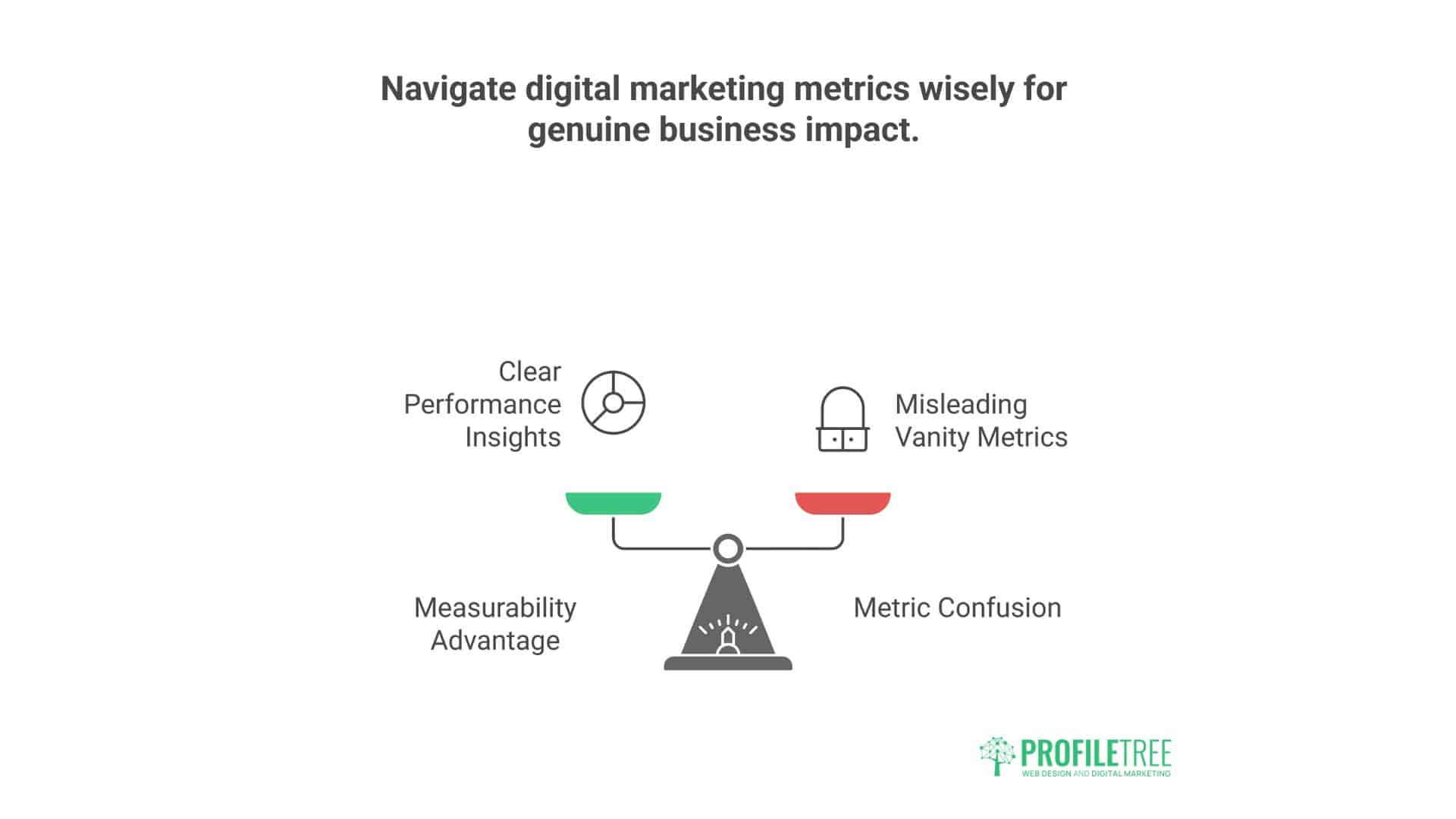
Digital marketing’s measurability represents its primary advantage over traditional methods. However, the abundance of available metrics creates confusion about which data points indicate genuine business impact versus vanity metrics that look impressive but don’t drive growth.
Key Performance Indicators for Different Objectives
Effective measurement begins with connecting marketing metrics to business outcomes. The specific KPIs you prioritise depend on your primary objectives:
For Lead Generation:
- Number of qualified leads (not just total form submissions)
- Cost per lead by channel
- Lead-to-customer conversion rate
- Customer acquisition cost
- Pipeline value generated from marketing
For E-Commerce:
- Revenue by traffic source
- Conversion rate (visitors to purchasers)
- Average order value
- Customer lifetime value
- Return on ad spend (ROAS)
For Brand Awareness:
- Organic search visibility (rankings for brand and category terms)
- Direct and branded search traffic growth
- Social media reach and engagement rates
- Share of voice in your industry
For Customer Retention:
- Email engagement rates (opens, clicks, forwards)
- Repeat purchase rate
- Customer lifetime value growth
- Net Promoter Score (NPS)
- Referral programme participation
Understanding Attribution in Multi-Channel Marketing
Attribution—determining which marketing activities deserve credit for conversions—represents one of digital marketing’s ongoing challenges. Customers rarely follow linear paths from first interaction to purchase. They might discover your business through organic search, read several blog articles, see social media ads, receive email campaigns, and visit your site multiple times before converting.
Simple attribution models assign credit to a single touchpoint:
Last-Click Attribution credits the final interaction before conversion—typically undervaluing awareness and consideration activities that introduced prospects to your business.
First-click attribution credits the initial touchpoint, often overemphasising awareness activities while undervaluing the nurturing and conversion tactics that closed the sale.
More sophisticated Multi-Touch Attribution Models distribute credit across the customer journey. These approaches provide a more accurate understanding of how different channels contribute to conversions, informing budget allocation decisions.
Understanding attribution prevents premature conclusions about channel effectiveness for UK businesses implementing digital strategies. PPC might appear expensive on a last-click basis, but it plays a critical conversion role for prospects initially attracted through organic search or social media.
Tools and Platforms for Performance Tracking
Measuring digital marketing effectiveness requires appropriate analytics tools:
Google Analytics provides comprehensive website traffic analysis, including visitor sources, user behaviour, conversion tracking, and audience demographics. The platform’s free version offers substantial capabilities that are suitable for most small to medium businesses.
Google Search Console monitors search performance—rankings, click-through rates, indexing status, and technical issues affecting visibility. Regular review identifies opportunities and problems requiring attention.
CRM Systems track lead sources, sales pipeline progression, and ultimate customer conversion. Connecting marketing data to CRM records closes the loop between marketing activity and revenue generation.
Email Marketing Platforms measure campaign performance, including delivery rates, opens, clicks, and conversions. Segmentation analysis reveals which audience groups engage most effectively.
Social Media Analytics tracks engagement metrics, audience growth, and traffic driven to websites. Platform-specific tools (Facebook Insights, LinkedIn Analytics, Twitter Analytics) provide detailed performance data.
Call Tracking Systems attribute phone enquiries to specific marketing sources, which is particularly valuable for businesses where phone calls represent primary conversion actions.
Effective measurement requires more than tool access. Regular review routines, clear reporting frameworks, and commitment to data-driven optimisation separate businesses that extract real value from analytics from those drowning in unused data.
Continuous Optimisation: The Path to Sustained Results
Digital marketing performance rarely remains static. Algorithm updates affect search rankings. Audience behaviour evolves. Competitors adjust strategies. Market conditions change. Sustained success requires continuous optimisation based on performance data and strategic experimentation.
Effective optimisation follows structured processes:
Regular Performance Review: Monthly or quarterly analysis identifies trends, successes, and underperforming areas. Comparing results against objectives and historical performance reveals whether strategies work or require adjustment.
Hypothesis-Driven Testing: Effective optimisation starts with specific hypotheses rather than random changes. “We believe changing the call-to-action from ‘Learn More’ to ‘Get Your Free Quote’ will improve conversion rates by at least 15%.” Testing this hypothesis provides learning regardless of whether it succeeds or fails.
Systematic Implementation: Changes should be tested individually to determine their specific impact. Changing multiple elements simultaneously makes it impossible to identify which modifications drove results.
Data-Backed Decisions: Intuition and preferences matter less than data. If testing consistently shows a design you dislike converts better than alternatives, business outcomes should prevail over aesthetic preferences.
Scaling What Works: Once testing identifies effective tactics, scaling those approaches accelerates results. If a particular ad creative or landing page design dramatically outperforms alternatives, allocate more budget to capitalise on that success.
Areas commonly benefiting from continuous optimisation include:
- Landing page design and messaging
- Ad creative and targeting parameters
- Email subject lines and content
- Website user experience and navigation
- Content topics and formats
- Keyword targeting and bid strategies
Digital marketing success isn’t about finding the perfect strategy and executing it unchanged indefinitely. It’s about systematic testing, learning from results, and continuously refining approaches based on real performance data.
Compliance and Ethical Considerations for UK Businesses
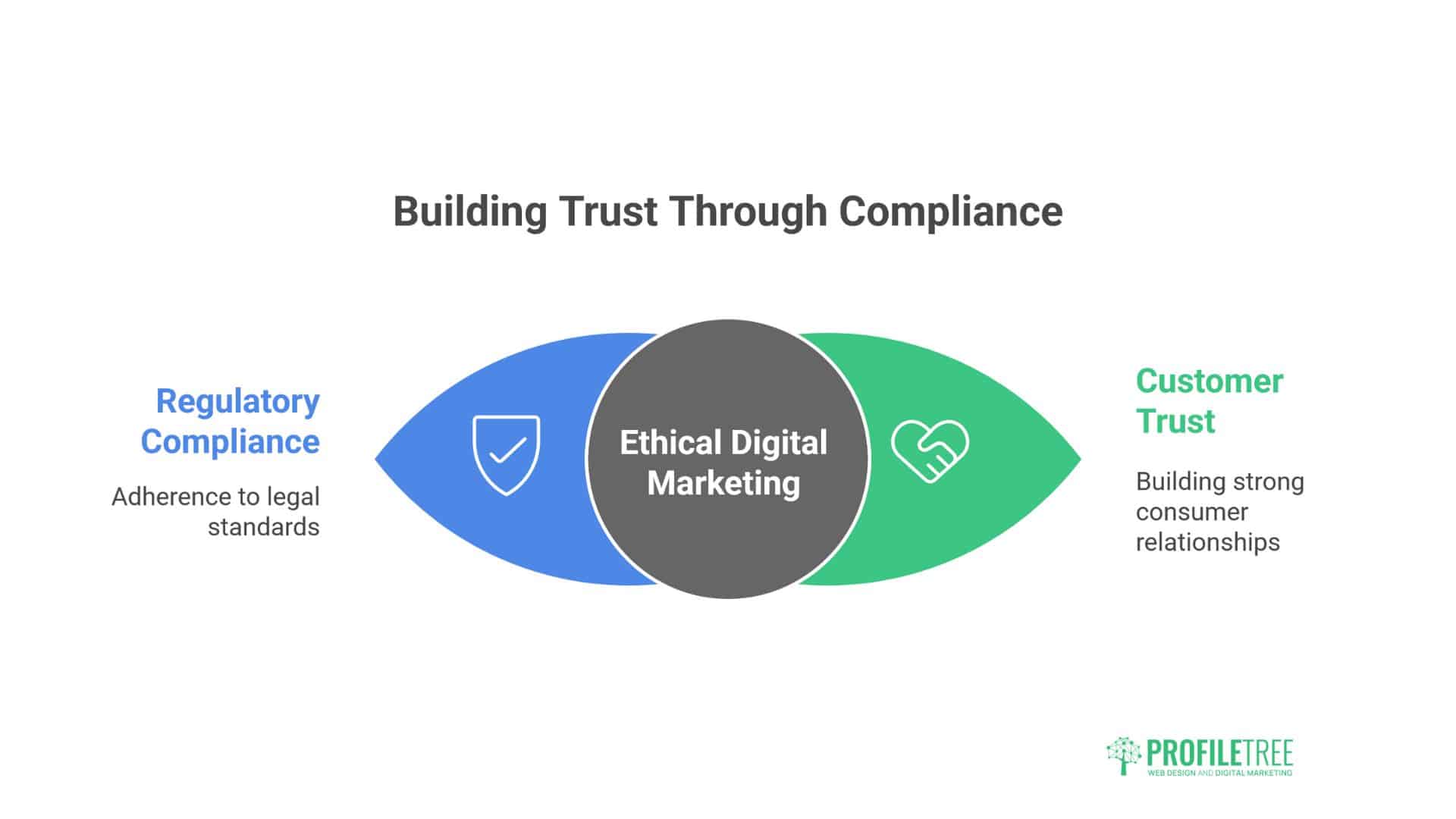
Digital marketing in the UK operates within regulatory frameworks designed to protect consumer privacy and prevent misleading advertising. Understanding and adhering to these requirements protects your business from legal consequences while building customer trust.
GDPR and Data Protection
The General Data Protection Regulation (GDPR) governs how businesses collect, store, and use personal data. Key requirements include:
Lawful Basis for Processing: You must have legitimate reasons for collecting personal data—typically consent, contractual necessity, or legitimate business interests. Marketing activities usually rely on explicit consent.
Transparent Privacy Policies: Businesses must clearly explain what data they collect, how they use it, who they share it with, and how individuals can exercise their rights.
Right to Access and Deletion: Individuals can request copies of their data and, in many circumstances, demand deletion. Systems must facilitate these requests.
Data Security: Appropriate technical and organisational measures must protect personal data from unauthorised access or breaches.
Practical implications for digital marketing include:
- Cookie consent mechanisms on websites
- Clear opt-in checkboxes for marketing emails
- Secure data storage and processing
- Regular privacy policy updates
- Data retention policies limit how long you keep information
PECR: Privacy and Electronic Communications Regulations
PECR specifically governs marketing communications in the UK. Key requirements include:
Email Marketing Consent: You cannot send marketing emails to individuals without their explicit consent. Pre-ticked boxes don’t constitute valid consent. Corporate email addresses have slightly different rules, but the best practice remains obtaining explicit permission.
Clear Unsubscribe Options: Every marketing email must include simple unsubscribe mechanisms that work immediately.
Accurate Sender Information: Your business identity must be clear in all marketing communications.
Cookie Usage: Websites must obtain consent before setting non-essential cookies, including analytics and advertising cookies.
These regulations affect practical digital marketing tactics. Building email lists requires valuable incentives and clear consent mechanisms. Purchased email lists typically violate PECR since individuals haven’t consented to receive your messages. Retargeting campaigns must respect cookie consent preferences.
Advertising Standards and Truthful Marketing
The Advertising Standards Authority (ASA) regulates advertising content in the UK, including digital marketing. All marketing communications must be:
Legal, Decent, Honest, and Truthful: Claims must be accurate and substantiated. Misleading statements, exaggerations, or omissions that affect consumer decisions violate regulations.
Socially Responsible: Advertising shouldn’t cause harm or serious offence, particularly to children or vulnerable groups.
Clearly Identified: Sponsored content, influencer partnerships, and paid advertising must be clearly labelled so audiences understand they view marketing rather than editorial content.
Evidence-Based: Making specific claims—”Our software increases productivity by 47%”—requires robust evidence supporting those statements.
Practical implications include:
- Maintaining documentation supporting all marketing claims
- Clear disclosure of affiliate relationships
- Transparent pricing without hidden fees
- Honest representation of products or services
- Appropriate disclaimers for testimonials and results
Ethical Digital Marketing Practices
Beyond legal compliance, ethical marketing builds trust and long-term relationships. Questionable tactics might generate short-term results but damage reputation and customer relationships over time.
Ethical digital marketing includes:
Respecting User Privacy: Collecting only necessary data, securing it appropriately, and using it solely for stated purposes.
Transparent Communication: Being honest about capabilities, limitations, pricing, and avoiding manipulative tactics or artificial scarcity.
Accessibility Considerations: Develop websites and content accessible to people with disabilities, following WCAG guidelines.
Sustainable Practices: Considering environmental impact—website efficiency, unnecessary data collection, and responsible advertising spend.
Fair Competition: Avoiding disparagement of competitors whilst honestly differentiating your offerings.
These ethical considerations align with business self-interest. Customers increasingly value privacy, transparency, and social responsibility. Businesses demonstrating these values attract more loyal customers and avoid the reputational damage associated with unethical practices.
Future Directions: Emerging Trends Shaping Digital Marketing
Digital marketing continues evolving as technology advances and consumer behaviour changes. Understanding emerging trends allows businesses to position themselves strategically rather than reacting to disruptions.
Artificial Intelligence and Machine Learning
AI is transforming multiple aspects of digital marketing:
Content Creation: AI tools assist with drafting copy, generating images, and even producing video content. These technologies don’t replace human creativity but augment it, handling routine tasks whilst marketers focus on strategy and refinement.
Personalisation at Scale: Machine learning analyses customer data to deliver highly personalised experiences—product recommendations, dynamic website content, individualised email campaigns—without manual segmentation.
Predictive Analytics: AI identifies patterns in customer behaviour, predicting which prospects are most likely to convert, which customers risk churning, and which products to recommend.
Automated Optimisation: Google Ads and Facebook use machine learning to adjust bids, targeting automatically, and creative delivery based on performance data, often outperforming manual management.
AI adoption doesn’t require massive investment or technical expertise for UK businesses, particularly SMEs. Many marketing platforms now incorporate AI capabilities into standard features. The strategic question isn’t whether to use AI but how to implement it effectively for your business objectives.
At ProfileTree, we specialise in practical AI implementation for businesses that lack technical expertise. Our AI training programmes help teams understand capabilities, identify relevant applications, and implement tools that improve efficiency without requiring data science degrees. We focus on accessible AI solutions that deliver measurable business value rather than technology for its own sake.
Voice Search and Conversational Interfaces
Voice-activated devices and assistants continue growing in adoption, changing how people search for information and interact with businesses online:
Natural Language Queries: Voice searches use conversational phrasing rather than keyword strings. For example, “Where can I find a good accountant near me?” instead of typing “accountant Belfast.” Content optimised for natural language questions improves voice search visibility.
Local Intent: Voice searches frequently have local intent. “Best pizza delivery” implies “near my current location.” Local SEO becomes even more critical for businesses serving specific geographic areas.
Featured Snippet Optimisation: Voice assistants often read featured snippets—the highlighted boxes appearing at the top of search results. Structuring content to capture these positions increases voice search visibility.
UK businesses should adapt content strategies to address conversational queries and question-based searches. FAQ sections, how-to guides, and content directly answering common questions improve both voice and traditional search performance.
Video Content Dominance
Video consumption continues to increase across all demographics. For businesses, video represents powerful opportunities:
Explanation and Demonstration: Complex services or products benefit from video explanations. A website development agency can show its process, and an AI training provider can demonstrate practical applications. Video communicates more effectively than text for many topics.
Trust and Personality: Video allows audiences to see and hear real people from your business, building trust more effectively than written content alone. Customer testimonials, behind-the-scenes content, and team introductions humanise your brand.
Social Media Reach: Platforms algorithmically favour video content, delivering greater organic reach than static images or text posts.
YouTube as a Search Engine: YouTube is the second-largest search engine globally. Publishing video content on YouTube creates additional opportunities for discovery beyond your website.
For UK businesses, video production has become more accessible. Professional-quality video no longer requires expensive equipment or production companies. Smartphones capture high-quality footage, whilst editing software offers powerful capabilities at reasonable costs. Alternatively, partnering with video production specialists delivers professional results without building in-house capabilities.
ProfileTree’s video production services help UK businesses create compelling content that drives engagement and conversions. From customer testimonials to product demonstrations and educational content, we develop video strategies aligned with your broader digital marketing objectives.
Privacy-First Marketing
Growing privacy concerns and regulatory requirements are reshaping digital marketing approaches:
Cookie Deprecation: Browsers are phasing out third-party cookies, which have long been used for tracking and retargeting. This affects remarketing capabilities and attribution tracking.
First-Party Data Focus: Businesses must build direct customer relationships, collecting first-party data through owned channels rather than relying on third-party tracking.
Transparent Data Practices: Consumers increasingly demand to know how their data is used. Businesses communicating transparently about data practices and providing genuine value in exchange for information build stronger customer relationships.
Contextual Targeting: As behavioural tracking becomes more restricted, contextual advertising—placing ads based on page content rather than user tracking—gains importance.
UK businesses should develop strategies that are less dependent on third-party tracking. Building email lists, creating valuable content that attracts direct traffic, and developing first-party data collection methods through customer interactions become increasingly important.
Conclusion: What Is Digital Marketing?
Digital marketing represents the primary method UK businesses use to reach customers, generate leads, and drive growth. Success requires more than understanding individual tactics—it demands strategic thinking about how channels work together, clear objectives connecting marketing activities to business outcomes, and continuous optimisation based on performance data.
The businesses that succeed with a digital marketing approach do so strategically rather than tactually. They understand their audiences deeply, select appropriate channels based on objectives rather than trends, implement data-driven optimisation, and maintain consistent effort over time.