
Moving Your Business Online: A Guide for UK and Irish SMEs
Table of Contents
Moving your business online is one of the biggest commercial decisions a small business owner makes, and getting the order of the steps right matters far more than the tools you pick.
This guide walks UK and Irish SMEs through the full move: choosing an online model, building a website that brings in real enquiries, then local SEO, content, video, funding and the AI tools worth using now.
You will find a phased plan, a platform comparison, indicative UK costs and a plain compliance checklist. ProfileTree has supported over 1,000 businesses through this shift since 2011.
Why Traditional Businesses Are Moving Online
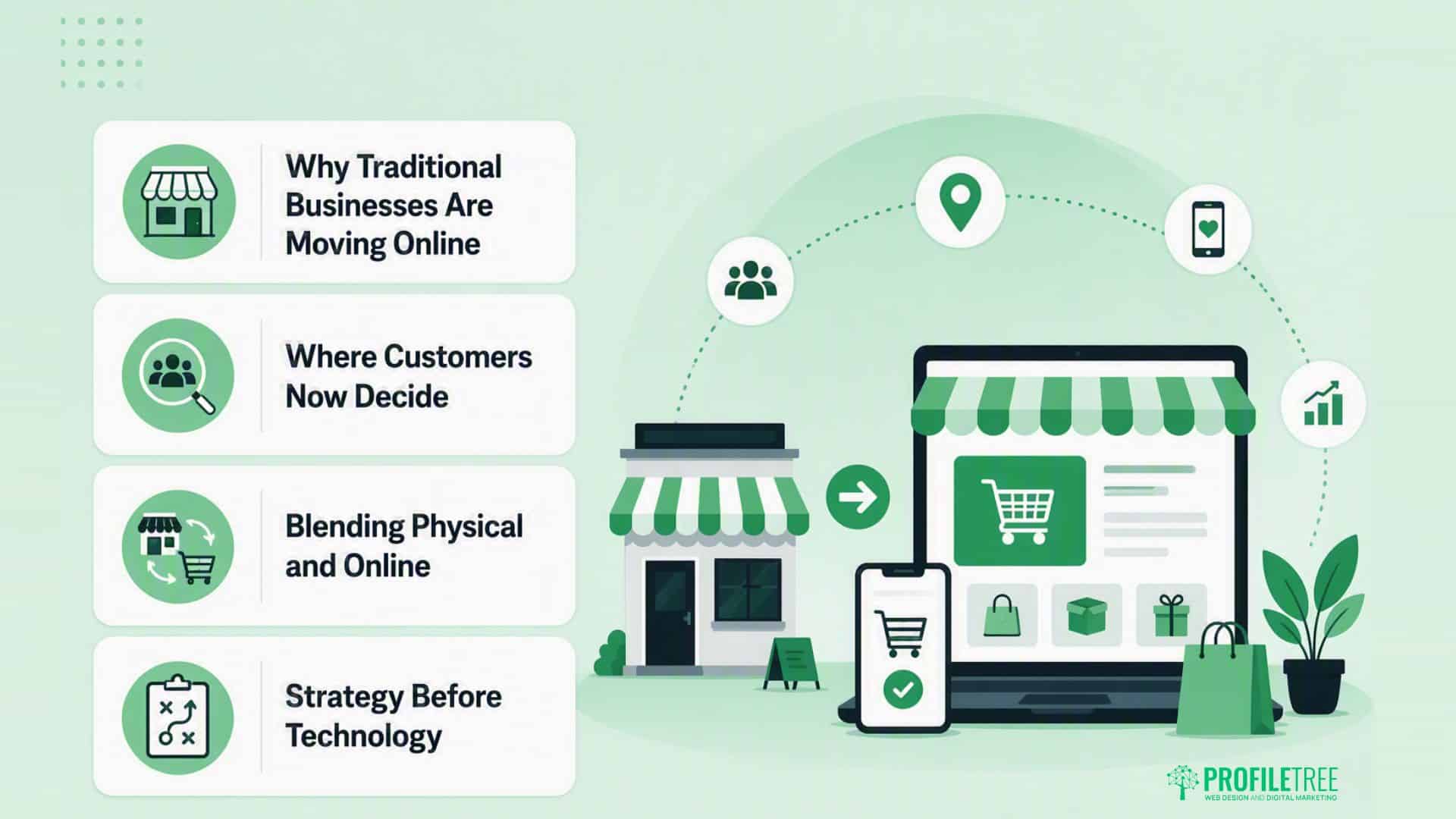
The reason to take a traditional business online has little to do with technology. It is about where customers now make their decisions. Across the UK and Ireland, more buying journeys start with a search, even for services delivered entirely in person.
Where Customers Now Decide
Trades, hospitality, professional services, food, health and personal care are all affected. A trades firm that takes bookings online and sends automatic reminders wins work that phone-only rivals never see.
A cafe with a well-kept Google Business Profile shows up in local searches; one without it stays invisible. The online presence does not replace the physical service. It makes the physical service findable.
The scale of this shift is clear in the wider data. This roundup of small business statistics gives a useful sense of how quickly buyer habits have moved.
Blending Physical and Online
Most competitor guides treat this as a straight swap: shut the shop, sell on the web. That framing loses your biggest advantage, which is the trust a physical business already holds.
The stronger model keeps both working together. Think click and collect, checking local stock on the website before a visit, and using online enquiries to fill the diary of an in-person service. Online tools should pull people towards the counter, not away from it.
The table below shows how the core functions of a traditional business translate once you move online, keeping the strength of each rather than discarding it.
| Business function | Traditional approach | Online equivalent |
|---|---|---|
| Customer acquisition | Word of mouth, local ads | Local SEO, content, organic social |
| First impression | Shopfront, staff | Website design, online reviews |
| Trust building | Face to face | Video, case studies, testimonials |
| Communication | Phone, in person | Email, chatbot, social |
| Sales process | In store or by appointment | Online booking, enquiry forms, and selling online |
| Repeat business | Personal relationships | Email marketing, automated follow-up |
Strategy Before Technology
The businesses that stall longest are the ones that treat going online as a technology project. It is a commercial decision first. The software follows the plan, not the other way round.
As Ciaran Connolly, founder of Belfast web design and digital marketing agency ProfileTree, puts it: “The businesses that get the most from going digital are the ones that spent time defining what success looks like before they touched a website brief. The ones that struggle are usually the ones that went straight to design.”
Before drawing a brief, answer four questions. What do you want customers to do online: browse, book, buy, enquire or get a quote? Who is the primary online customer, and are they the same person who walks through the door? What is the smallest online presence that would show measurable results within six months? And how will digital channels sit alongside fulfilment, service and staff time?
Most stalled moves share the same roots. Buying software before defining success. Underestimating the ongoing effort, since going online is an operational function rather than a one-off project. Launching every channel at once when a phased start wins. And measuring the wrong things, such as follower counts instead of the enquiries those followers produce. Reviewing the common small business failures is a sober sense-check, and a clear digital marketing plan keeps spending tied to outcomes. https://www.youtube.com/embed/gW8fauPpLIY
Build a Website That Does Real Work
A business website is infrastructure, not a brochure. Built properly, it takes enquiries, processes bookings, builds trust with people who have never met you, and appears when buyers are actively looking. Platform choice matters less than structure, but it is the right place to start.
Choosing the Right Platform
Most SMEs in Northern Ireland and the UK run on WordPress, and for good reason. It handles SEO well, links up with booking, payment and CRM tools, and grows with the business. WooCommerce extends it into full online selling within the same setup.
For firms selling a physical product range with stock to manage, Shopify is often cleaner to launch and tidier out of the box. The trade-off is less flexibility for unusual needs and a monthly fee that never stops. The comparison below sets out the practical differences for a UK or Irish SME.
| Factor | WordPress + WooCommerce | Shopify |
|---|---|---|
| Best fit | Services, mixed service and product, complex needs | Product catalogues with physical stock |
| SEO control | Deep and flexible | Good, but more limited |
| Ongoing cost | Hosting plus the plugins you choose | Fixed monthly platform fee |
| Setup speed | Slower, more configurable | Faster to a basic shop |
| Bookings and memberships | Strong via plugins | Weaker without add-ons |
ProfileTree uses WordPress as the default for exactly these reasons, backed by website design services and ongoing hosting and management, so the build stays fast after launch. If you want to understand the setup before committing, this guide to using WordPress themes is a good primer.
The Pages Your Site Actually Needs
Structure carries more weight than the platform. A service business usually needs a homepage that states plainly what you do, who you serve and the area you cover, with a visible call to action high on the page.
Give each core offering its own service page. Google cannot rank a single page for “emergency plumbing Belfast” and “bathroom fitting Belfast” at once if they share one URL. Add a contact or booking page reachable from everywhere, and an about page that carries real credentials, because that is often where a buyer decides whether to trust you.
A blog or resources area then supports informational searches and long-term authority. Firms serving several towns benefit from separate location pages rather than one page listing every area. For anything involving online payments, the build stack matters, and this look at the best e-commerce build is worth a read before you brief a developer.
Speed, Mobile and Conversion
Google treats loading speed, layout stability and responsiveness as ranking signals through Core Web Vitals. A practical target is the main content within 2.5 seconds on mobile, a stable layout as elements load, and a response to taps within about 200 milliseconds.
Mobile is where most local searches happen, so a site that loads slowly on a phone loses people before they read a word. Any capable developer should hit these numbers on a properly configured build, and a solid website development process bakes them in from the start.
Traffic counts for nothing if visitors do not act. Put the main call to action in the first visible section, repeat it at sensible points, keep forms short, and make phone numbers tap to call on mobile. For service firms, a visible number, a brief enquiry form, and a clear note on what happens next removes most of the friction.
Get Found Through Local SEO and Content
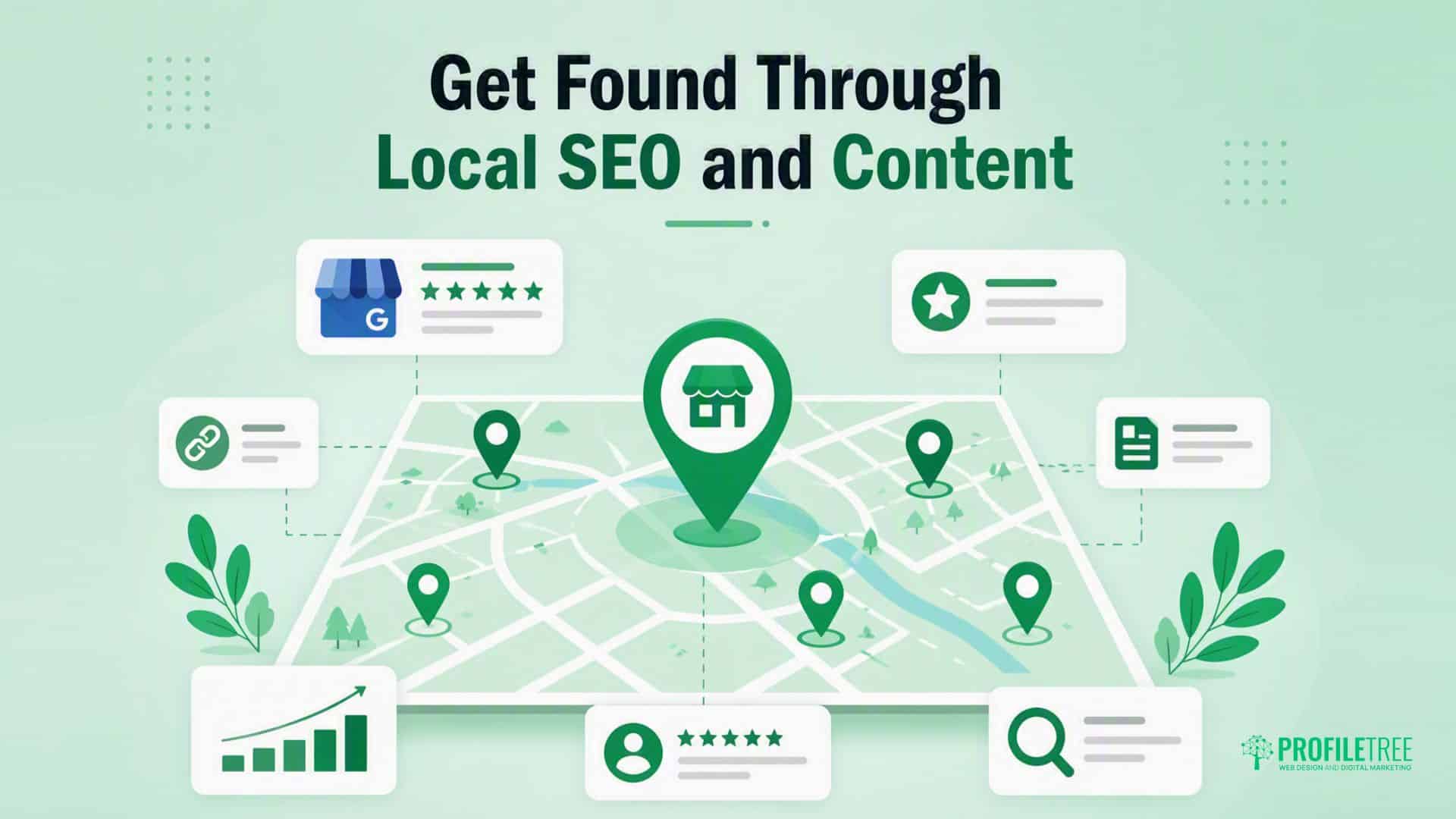
A website nobody can find achieves nothing. Local SEO makes your site visible to people searching for what you offer in your specific area, and for a first move online, it is usually the highest priority. Content then compounds that visibility over time.
Google Business Profile and Citations
The Google Business Profile is the single biggest lever for local visibility. A complete, verified, regularly updated profile lifts your chances of showing in the map pack when someone searches nearby.
Set the correct primary category, write a natural description that mirrors how customers search, keep opening hours and phone number accurate, add real photos, and reply to reviews promptly. Consistent name, address and phone details across directories reinforce the signal, and this guide to business listing sites covers the ones worth claiming in the UK and Ireland.
Activity matters too. Profiles that post updates and respond to reviews outperform those left to sit still, as the numbers in these Google Business Profile figures show.
On-Page Signals and Reviews
Each page should read as clearly relevant to one topic and one place. The H1, page title and opening paragraph should all reflect the service and location without stuffing. A page targeting “web design Belfast” should say so in each of those spots naturally.
Location pages only work when they carry genuinely local detail: area references, local knowledge, and content that differs meaningfully from your other town pages. Swapping the city name on a template rarely ranks.
Reviews feed rankings as well as trust, since Google reads volume and recency as quality signals. Ask at the point of highest satisfaction, right after a job is done, with a short message and a direct link to the review form. Professional SEO services tie this technical health to content that matches how local customers really search.
Content That Compounds
Articles, guides and how-to pieces build search authority and prove you know your field. A Belfast plumber who publishes a clear guide to burst pipes in winter helps homeowners and signals genuine knowledge to search engines at the same time.
This is a longer game than social or paid ads, with results building over 12 to 24 months rather than overnight. For firms with patience and steady output, it is one of the most affordable ways to win customers, and a planned content marketing approach beats posting sporadically and hoping.
The compounding effect is what makes it worth the wait. Every useful page you publish keeps working long after it goes live, which is rarely true of a one-off advert.
Build a Consistent Flow of Customers
Once you can be found, the task becomes steady enquiries. Digital marketing spans many channels, and the right mix depends on your model, your customers and how much content you can realistically produce. Pick a few and do them well rather than spreading thin.
Organic Social and Community
Social media works best for visibility, community and staying present with people who already know you. The platform depends entirely on where your customers are: Facebook for many consumer services and trades, Instagram for food, hospitality and interiors, LinkedIn for B2B and professional practices.
The common mistake is posting without a point. Every piece should show expertise, show the work, answer a frequent question or share a result. Generic “excited to be working hard” posts add nothing, so a focused social media marketing plan pays off far more than volume.
Email and Owned Audiences
Email remains the highest return channel for most SMEs once a list exists. It reaches people who already showed interest, costs almost nothing to send, and sits outside the reach of algorithms that throttle social posts.
Building a list from scratch needs a reason to sign up: a useful resource, a first-order discount, or a newsletter that genuinely informs rather than sells. It grows slowly, then compounds. Structured email marketing keeps that list warm without becoming a chore.
Video to Build Trust at Scale
Traditional firms earn trust face-to-face. Move online, and that default disappears, which is where video steps in. A short clip that shows how a service works, or introduces the team, lets a buyer weigh you up before making contact.
For a business here, video also carries local identity in a way page titles cannot. A clip filmed around recognisable local spots, the sort featured in this guide to Northern Ireland cities, signals authenticity and place at once.
YouTube is the world’s second-largest search engine, so a channel adds a second place to be found. The rise of short-form video also lowers the bar: clear sound, decent light and a real message beat a slick corporate reel, and dedicated video marketing turns that into a repeatable habit.
AI Tools, Funding and Compliance
AI is not a future problem for SMEs. The tools are here, affordable, and many need no technical skill. The real question is where they add the most value for your business at its current stage, and how the move fits UK and Irish funding and rules.
AI Tools That Add Value Now
Chatbots answer common questions out of hours and qualify leads before a human steps in. For a firm that currently misses evening enquiries, a well-set-up bot captures and replies to first contacts around the clock without extra staffing, and these notes on chatbots for SMEs show where they fit best.
Behind the scenes, appointment reminders, booking confirmations, follow-ups and review requests can all run automatically on standard platforms. Start by listing the three to five most repetitive, rules-based tasks that eat time, then automate those first, as the patterns in this business automation data suggest.
Purpose-built AI chatbots handle the customer-facing side, while practical AI training helps owners spot the highest-value uses rather than chasing hype.
UK and Ireland Funding Support
Businesses here sit within a funding context that most generic guides skip. Help to Grow: Digital is a UK government-backed scheme offering eligible small firms subsidised access to approved software, from online selling to CRM and digital accounting.
Invest NI runs digital programmes for Northern Ireland SMEs covering website work, online selling and skills. In the Republic, Enterprise Ireland and the Local Enterprise Offices support similar projects at the county level, and Innovate UK vouchers suit projects with a technology or innovation angle.
Eligibility and amounts change often, so treat each body’s own website as the authority and check directly rather than trusting any third-party summary, including this one.
Meeting Compliance Without the Panic
UK GDPR applies to any site collecting personal data, including form submissions and analytics that identify users. A clear privacy policy, proper consent and a documented process for data requests should be in place before launch; the Information Commissioner’s Office publishes small business guidance.
Making Tax Digital is steadily requiring UK firms to keep tax records digitally and file through compatible software, so a digital move is a sensible moment to sort cloud accounting. The Consumer Contracts Regulations 2013 also set out pre-contract information, cancellation rights and delivery terms for anything sold online to consumers.
Firms trading goods across the UK and the Republic of Ireland face specific conditions under the Windsor Framework, so take legal and accountancy advice on fulfilment before launch. This overview of UK digital compliance is a useful starting point, and structured AI transformation support keeps new tools inside those rules.
Costs and a Realistic Budget
A properly built SME website in Northern Ireland typically runs from about GBP 2,000 to GBP 10,000, depending on page count, complexity and whether you sell online. A realistic monthly budget for local SEO and content usually starts around GBP 500 to GBP 1,500.
Set the budget against the outcome you defined at the start, not against the cheapest quote. A site that brings in two extra jobs a month pays for itself quickly, while a bargain build that ranks for nothing costs far more in missed work.
All prices and figures in this guide are indicative UK examples and correct at the time of writing; use them as a benchmark rather than fixed quotations.
Conclusion
Moving your business online rewards sequence over speed. Define what success looks like, build a fast website that converts, get found through local SEO, then add content, video and AI as capacity allows. Keep the trust your physical business already holds and give it an online home. Do that in phases, check the funding you qualify for, stay inside the rules, and the move becomes an asset rather than a gamble.
Ready to plan your move online? ProfileTree helps UK and Irish SMEs shape a practical, phased digital strategy and build the site, content and tools to deliver it. Talk to the team about where to start.
FAQs
How long does it take to move a business online?
A functional website with basic local SEO and a verified Google Business Profile usually takes two to four months to build properly. Meaningful organic traffic tends to follow six to twelve months after launch.
Do I need to close my premises to move online?
No. Most successful moves run the physical and online sides together, with the online presence extending reach rather than replacing it. Many owners find that day-to-day operations get more efficient as routine contact shifts online.
Should I use WordPress or Shopify?
For service businesses, WordPress is usually the better long-term choice for its SEO and flexibility. For product ranges with real stock, Shopify is often cleaner, while WordPress with WooCommerce suits firms selling both.
What funding is available in Northern Ireland?
Invest NI runs several digital support programmes, and Help to Grow: Digital operates across the UK. Eligibility changes regularly, so confirm current terms directly with each body.
How much does moving a business online cost?
A well-built SME site typically ranges from about GBP 2,000 to GBP 10,000, with monthly local SEO and content often starting around GBP 500 to GBP 1,500. Treat these as benchmarks, not quotes.