Drone Video Production in Ireland: A Guide for Business Buyers
Table of Contents
Aerial videography transforms Irish business storytelling by capturing perspectives impossible through conventional filming methods, from dramatic coastal hospitality properties to comprehensive construction project documentation. Drone Video Production in Ireland delivers visual impact that distinguishes marketing materials while providing practical documentation capabilities for industries ranging from real estate and tourism to infrastructure development.
However, successful drone videography in Ireland requires navigating complex aviation regulations, unpredictable weather patterns, and logistical challenges that demand specialised expertise beyond basic piloting skills. The Irish Aviation Authority’s strict airspace restrictions, combined with Ireland’s challenging meteorological conditions, create operational complexities that inexperienced operators frequently underestimate.
ProfileTree’s extensive drone production experience across Northern Ireland and the Republic demonstrates that professional aerial cinematography success depends on comprehensive pre-production planning, regulatory compliance expertise, and creative vision that transforms elevated perspectives into compelling visual narratives. The distinction between amateur drone footage and professional aerial content lies primarily in strategic planning and storytelling capability rather than equipment sophistication.
This Drone Video Production in Ireland guide addresses practical considerations for businesses evaluating aerial videography investments, providing realistic budget frameworks, regulatory guidance, and outcome expectations. Whether documenting Belfast construction developments, showcasing Wild Atlantic Way tourism destinations, or creating commercial property promotional content, successful drone projects require understanding both creative possibilities and operational constraints.
Irish Aviation Regulations and Compliance
Operating drones commercially in Ireland requires navigating two regulatory frameworks: the Irish Aviation Authority (IAA) in the Republic and the UK Civil Aviation Authority (CAA) requirements in Northern Ireland. Both jurisdictions implemented EU drone regulations, but with distinct national variations that affect production planning.
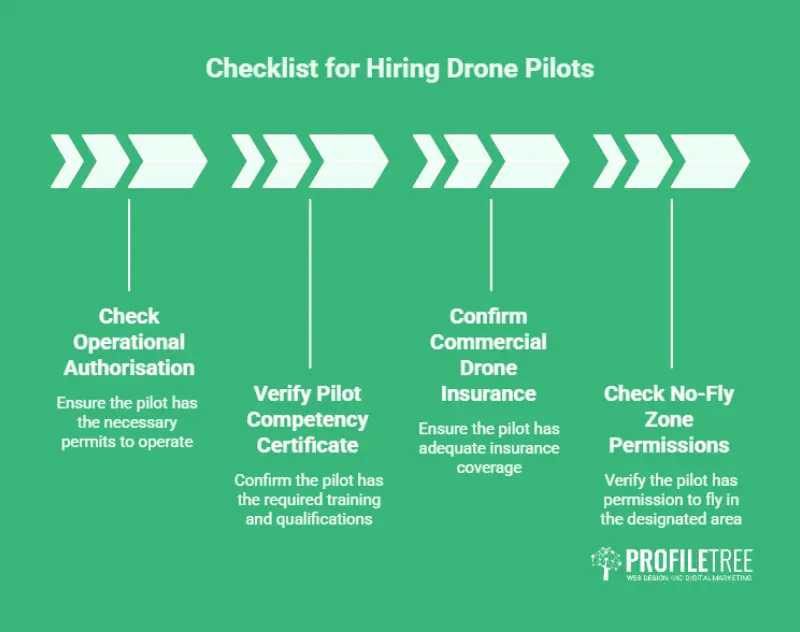
Commercial operators must hold a Specific Category Operational Authorisation for most business applications. This goes beyond basic registration, requiring operational risk assessments, pilot competency certificates, and comprehensive insurance coverage. Professional drone operators invest thousands in maintaining compliance, a cost reflected in legitimate production pricing.
No-fly zones across Ireland create production challenges that require creative solutions. Dublin Airport’s extended restriction zones affect large swathes of the capital, while military installations, prisons, and certain government buildings create unexpected limitations. Belfast presents similar challenges with two airports and sensitive locations requiring special permissions.
Insurance requirements for commercial drone operations typically demand a minimum of €6.5 million in public liability coverage. This substantial coverage protects operators and clients but represents a significant operational cost distinguishing professional operators from hobbyists offering cheap aerial services.
Weather dependency affects drone operations more in Ireland than in many European locations. Wind speeds above 35 km/h ground most commercial drones, while rain renders many systems inoperable. Professional operators build weather contingencies into production schedules, understanding that Ireland’s changeable conditions demand flexibility.
“Regulatory compliance isn’t optional in professional drone operations,” states Ciaran Connolly, ProfileTree founder. “Businesses hiring drone operators should verify insurance, authorisations, and pilot certifications. The savings from using unauthorised operators evaporate instantly if something goes wrong.”
Types of Business Applications
Property and Real Estate
Estate agents and property developers across Ireland increasingly recognise aerial videography’s power to differentiate listings. Drone footage reveals property context that ground-level photography misses: proximity to amenities, surrounding landscapes, and true property scale.
Commercial property marketing particularly benefits from aerial perspectives. Industrial estates, office complexes, and retail developments use drone footage to demonstrate accessibility, parking facilities, and strategic positioning. These aerial views help potential tenants or buyers understand location advantages before viewing.
Residential developments leverage drone progression videos to maintain buyer confidence during construction. Monthly aerial updates show construction advancement, helping developers maintain sales momentum and manage buyer expectations throughout lengthy build processes.
Hotels and hospitality venues use seasonal drone footage to showcase their facilities yearly. Coastal properties highlight beach proximity, while countryside hotels emphasise rural tranquillity. This footage serves multiple marketing purposes across websites, social media, and booking platforms.
ProfileTree’s video marketing services help property businesses integrate aerial footage into comprehensive marketing strategies. Understanding how to unlock business growth with strategic video marketing ensures drone investment delivers measurable returns.
Construction and Infrastructure
Construction companies utilise drone documentation for progress monitoring, stakeholder updates, and safety compliance. Regular aerial surveys create visual timelines that are invaluable for project management, dispute resolution, and future marketing capabilities.
Infrastructure inspection via drone reduces costs and safety risks compared to traditional methods. Bridge inspections, roof surveys, and telecommunication tower assessments that previously required scaffolding or cherry pickers now happen safely from ground level.
Site surveying through photogrammetry and LiDAR-equipped drones generates accurate topographical data for planning applications and earthworks calculations. This technology revolutionises preliminary site assessment, particularly for challenging terrain or large-scale developments.
Aerial perspectives reveal site organisation, access routes, and potential hazards, benefiting health and safety documentation. These videos support training materials, incident investigations, and compliance demonstrations.
Time-lapse compilation of regular drone flights creates powerful project showcase videos. These condensed narratives demonstrate capabilities to potential clients more effectively than static case studies or written testimonials.
Tourism and Hospitality
Tourism Ireland and regional tourism boards increasingly require aerial content for destination marketing. Drone footage captures the scale and beauty of landscapes, which draws international visitors, particularly for outdoor activities and scenic routes.
Activity centres and adventure tourism operators use drone footage to showcase experiences from participants’ perspectives. Whether filming coasteering along Clare’s cliffs or mountain biking in Wicklow, aerial footage conveys excitement that static photography cannot match.
Golf courses throughout Ireland employ drone videography for course flyovers, hole-by-hole guides, and tournament coverage. These productions help attract international golfers while providing members with unique perspectives on familiar landscapes.
Wedding venues differentiate themselves through aerial footage that reveals the full property scope and setting’s beauty. Couples increasingly expect video tours that include aerial perspectives, making drone footage essential for competitive venue marketing.
Festival and event documentation from above captures scale and atmosphere impossible from ground level. Whether filming Electric Picnic or local agricultural shows, aerial footage provides content for promotion, sponsorship reports, and future marketing.
Corporate and Industrial
Manufacturing facilities use drone footage to demonstrate scale, efficiency, and technological advancement to stakeholders, investors, and customers. Aerial perspectives of production lines, logistics operations, and facility expansions communicate capability without requiring site visits.
Renewable energy companies document wind farms and solar installations through dramatic aerial footage, communicating environmental commitment and technological progress. These videos serve investor relations, planning applications, and public relations purposes.
Agricultural enterprises showcase modern farming practices through seasonal aerial documentation. From showing precision agriculture technology to demonstrating sustainable practices, drone footage helps agribusinesses tell compelling stories about food production.
Logistics and distribution centres utilise aerial footage to demonstrate efficiency, capacity, and strategic location advantages. These videos support sales presentations, recruitment campaigns, and stakeholder communications.
Corporate video production incorporating aerial elements requires understanding how drone footage integrates with broader narrative structures. ProfileTree’s guide to mastering commercial video production explores this integration in detail.
Production Planning and Logistics
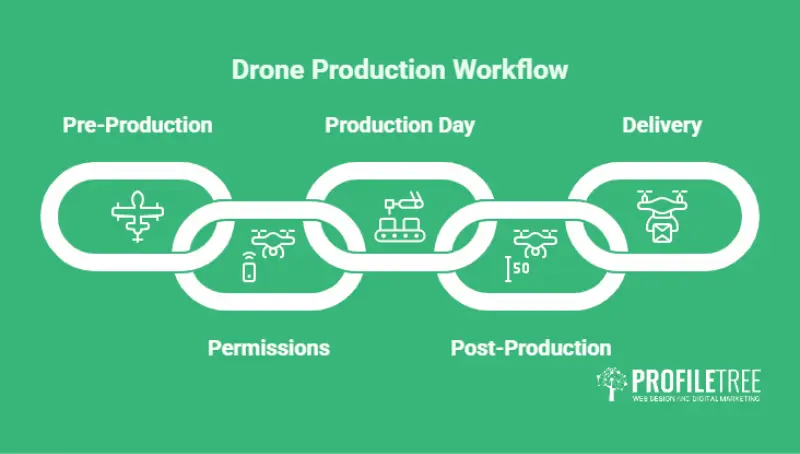
Successful drone productions require meticulous planning that goes beyond simply arriving with equipment. Weather windows, permission securing, and shot list development influence final output quality and project success.
Pre-Production Requirements
Location scouting, even for familiar sites, reveals optimal flight paths, safety considerations, and creative opportunities. Professional operators conduct site visits or virtual reconnaissance using mapping tools to identify challenges before production days.
Permission securing extends beyond aviation authorities, including landowner consent, local authority notifications, and sometimes An Garda Síochána coordination. Complex shoots might require weeks of permission gathering, particularly for urban locations or sensitive sites.
Shot list development ensures production efficiency and client satisfaction. Detailed shot lists specify altitudes, angles, and movements required, preventing expensive reshoots and providing comprehensive coverage during limited weather windows.
Safety planning involves identifying hazards, establishing exclusion zones, and briefing all participants. Professional operators create site-specific risk assessments, from overhead cables to wildlife disturbance.
Backup planning acknowledges Ireland’s unpredictable weather and technical possibilities. Professional productions include weather contingency days, equipment redundancy, and alternative shot options if primary plans prove impossible.
Production Day Execution
Early morning and late afternoon provide optimal lighting for most aerial videography. These “golden hours” deliver warm, dramatic lighting while casting shadows that add depth and dimension to aerial footage.
Weather monitoring continues throughout production days. Wind speeds can change rapidly, particularly in coastal locations, requiring constant vigilance and flexibility to capture footage during safe conditions.
Battery management becomes critical during extended shoots. Cold weather significantly reduces flight time, while multiple battery sets enable continuous operation during optimal conditions. Professional operators typically carry 6-12 batteries for full production days.
Communication systems between the pilot, the visual observer, and the creative director ensure efficient shot capture. Clear communication protocols prevent misunderstandings that waste valuable flight time or compromise safety.
Data management during shoots prevents devastating footage loss. Professional operators implement redundant recording systems, immediate backups, and careful media handling protocols that protect valuable footage.
Post-Production Considerations
Colour grading transforms raw aerial footage into polished final products. Ireland’s variable lighting conditions often require substantial colour correction to achieve a consistent look across sequences shot in different situations.
Stabilisation technology removes minor vibrations and wind buffeting that affect even gimbal-stabilised footage. Professional post-production ensures smooth, cinematic movement that maintains viewer engagement.
Music selection significantly impacts aerial footage’s emotional resonance. Understanding video marketing optimisation includes recognising how audio choices influence viewer perception and engagement.
Format delivery varies by platform and purpose. Social media requires different aspect ratios and durations than website headers or television commercials. Professional productions deliver multiple formats optimised for intended platforms.
Integration with ground footage requires careful planning to maintain visual consistency. Matching colour grades, pacing, and transitional elements ensures aerial footage enhances rather than disrupts overall production.
Budget Considerations for Irish Businesses
Understanding drone production pricing helps businesses allocate appropriate budgets and avoid disappointment from underfunded projects. Professional aerial videography represents significant value compared to traditional aerial filming methods, but still requires meaningful investment.
Typical Pricing Structures
Half-day shoots (3-4 hours on-site) typically range from €800-1,500 for basic coverage, while full-day productions (6-8 hours) cost €1,500-3,000. These rates include planning, permissions, insurance, and basic editing but exclude extensive post-production or complex permissions.
Project-based pricing for specific deliverables often provides better value than day rates. For example, a complete property marketing video might cost €2,000-5,000, including multiple shoot days, comprehensive editing, and various format outputs.
Retainer arrangements suit businesses requiring regular aerial documentation. Construction companies or estate agencies might negotiate monthly retainers of €2,000-4,000 for guaranteed availability and preferential rates.
Additional costs frequently surprise budget planners. Special permissions, extended post-production, rush delivery, or weather contingency days add 20-50% to base quotes. Travel expenses for remote locations, especially Ireland’s islands, can substantially increase costs.
A value comparison with traditional alternatives highlights drone cost-effectiveness. Helicopter filming costs €2,000-5,000 per hour, while drone operations deliver comparable footage for a fraction of that investment.
ROI Measurement
Many businesses struggle with direct revenue attribution from drone footage. However, tracking metrics like property viewing requests, enquiry quality, and time-to-sale provides insight into aerial content’s impact.
Brand differentiation value extends beyond immediate sales impact. Businesses using professional aerial content position themselves as innovative and experienced, attracting quality clients willing to pay premium prices.
Content longevity justifies initial investment. Well-produced aerial footage remains relevant for years, providing ongoing value across websites, presentations, and marketing materials. This extended utility improves cost-per-use calculations.
Digital strategy consultation helps businesses understand how aerial content fits broader marketing objectives and measurement frameworks.
Competitive advantage in industries where aerial content remains uncommon provides first-mover benefits. Early adopters in traditional industries often capture disproportionate attention through innovative presentation.
Choosing Drone Production Partners

Selecting appropriate drone operators requires evaluating technical capability, creative vision, regulatory compliance, and business compatibility. The proliferation of drone hobbyists offering commercial services complicates selection processes.
Essential Qualifications
Operational authorisation verification should be non-negotiable. Request copies of specific category operational authorisation, pilot competency certificates, and operations manual approval. Legitimate operators readily provide documentation.
Insurance confirmation must specify coverage for commercial drone operations with appropriate liability limits. General business insurance rarely covers aviation activities, making specialised drone insurance essential.
Portfolio evaluation reveals creative capability and technical proficiency. Look for work similar to your requirements rather than being impressed by unrelated spectacular footage. Experience in your industry indicates an understanding of specific requirements.
Reference checking with previous clients provides insights beyond portfolio presentations. Ask about reliability, flexibility, problem-solving, and delivery timeliness. Weather-related challenges test operator professionalism.
Equipment specifications matter less than operator skill, but professional systems indicate serious investment. Current-generation drones with redundant systems, professional cameras, and comprehensive accessories suggest operational maturity.
Red Flags to Avoid
Surprisingly, low pricing often indicates that unlicensed operators are cutting corners on insurance, permissions, or quality. Professional drone operations have substantial fixed costs that establish price floors below which legitimate operation becomes impossible.
Reluctance to provide documentation suggests regulatory non-compliance. Professional operators understand documentation requests and readily provide the necessary paperwork. Evasiveness about qualifications should eliminate candidates.
Over-promising regarding weather or permissions indicates inexperience with Irish conditions. Experienced operators set realistic expectations about weather dependencies and permission timelines.
Limited pre-production discussion suggests inadequate planning processes. Professional productions require detailed briefings, site assessments, and shot planning. Operators wanting to “just turn up and fly” rarely deliver professional results.
Lack of formal contracts or terms indicates business immaturity. Professional operators provide detailed contracts specifying deliverables, timelines, ownership rights, and liability arrangements.
Weather and Seasonal Considerations
Ireland’s maritime climate creates unique challenges and opportunities for aerial production. Understanding seasonal patterns helps schedule shoots for optimal results while building realistic timeline expectations.
Seasonal Production Planning
Spring (March-May) offers increasingly stable weather with stunning green landscapes. However, changeable conditions require flexible scheduling, and popular locations become crowded as tourism increases.
Summer (June-August) provides the longest daylight hours and most stable weather, though perfect conditions are rarely guaranteed. Heat shimmer can affect footage quality during unusually warm spells, while tourist crowds complicate location access.
Autumn (September-November) delivers dramatic lighting and colours, particularly for rural and forest locations. Storm frequency increases through the season, requiring careful monitoring and backup dates.
Winter (December-February) challenges include short daylight hours, frequent storms, and cold affecting battery performance. However, low sun angles create dramatic lighting, while snow-covered landscapes offer unique visual opportunities.
Weather Window Optimisation
Morning shoots often encounter calmer conditions before afternoon winds develop. Coastal locations particularly benefit from early starts when morning offshore breezes provide stability.
Weather forecast interpretation requires understanding microclimates and local patterns. West coast locations face Atlantic weather systems first, while inland valleys might remain calm when surrounding areas experience wind.
Flexibility in scheduling maximises success probability. Building weather contingency into project timelines prevents disappointment when Ireland’s weather doesn’t cooperate with production schedules.
Equipment limitations in adverse conditions affect production possibilities. Rain, fog, and strong winds ground most drones, while cold reduces battery life and can affect gimbal performance.
Legal and Privacy Considerations
Data protection obligations under GDPR affect drone footage capturing identifiable individuals. Business buyers must understand their responsibilities regarding footage containing personal data.
Privacy impact assessments may be required for regular drone operations over populated areas. These assessments document privacy considerations and mitigation measures implemented to protect individual privacy.
Signage requirements often mandate notifying people about drone filming in public spaces. Professional operators understand notification requirements and include appropriate signage in production planning.
Image rights for commercial use require careful consideration. Footage containing identifiable individuals or private property might require releases for commercial use, particularly in advertising contexts.
Content marketing strategies must account for legal requirements when incorporating aerial footage. Professional guidance ensures compliance while maximising content utility.
Intellectual property ownership should be clearly specified in production contracts. Understanding who owns raw footage versus edited productions prevents future disputes about usage rights.
Integration with Marketing Strategies

Aerial footage amplifies marketing impact when strategically integrated rather than used in isolation. Understanding integration opportunities helps justify drone production investment.
Website Integration
Hero videos featuring aerial footage create an immediate visual impact that differentiates websites. These opening sequences establish quality expectations that influence entire site experiences.
Property tours combining aerial establishing shots with interior walkthroughs provide comprehensive viewing experiences. This integration reduces physical viewing requirements while qualifying genuine prospects.
Background videos using subtle aerial footage add visual interest without overwhelming content. These atmospheric elements enhance user experience while maintaining focus on key messages.
Loading optimisation ensures aerial footage enhances rather than hinders website performance. Professional compression and delivery systems maintain quality while minimising load times.
Website development services that understand video integration ensure aerial content enhances rather than compromises user experience.
Social Media Distribution
Platform-specific edits maximise aerial footage’s impact across different social channels. Planning during production requires vertical crops for Instagram Stories, square formats for feeds, and landscape for YouTube.
Teaser campaigns using dramatic aerial reveals build anticipation for launches or announcements. Strategic reveal sequences maintain audience engagement across multiple posts.
Behind-the-scenes content showing drone operations generates additional content value. Audiences enjoy seeing production processes, particularly for spectacular aerial sequences.
Paid promotion of aerial content often delivers strong returns due to high engagement rates. Visual impact generates clicks and shares that improve advertising cost-effectiveness.
Traditional Media Usage
Television advertising incorporating aerial footage stands out in cluttered commercial breaks. Regional broadcasters particularly value local aerial content that resonates with their audiences.
Print advertising using aerial still frames provides unique perspectives for newspaper and magazine placements. High-resolution drone cameras capture images suitable for large-format printing.
Trade show displays featuring aerial footage attract attention in crowded exhibition halls. Large-screen presentations of aerial content draw visitors and initiate conversations.
Presentation materials enhanced with aerial footage improve stakeholder engagement. Aerial context benefits investor presentations, planning applications, and sales pitches.
Future Trends in Drone Technology
Emerging technologies promise expanded capabilities and new applications for business drone usage. Understanding developing trends helps businesses plan long-term aerial content strategies.
Automated flight systems enable complex, repeatable shots that previously required exceptional pilot skill. These systems democratise access to sophisticated camera movements while ensuring consistency.
AI-powered editing tools increasingly automate routine post-production tasks. Colour matching, stabilisation, and even basic editing increasingly use artificial intelligence to accelerate workflows.
Beyond visual spectrum imaging, including thermal and multispectral cameras, opens new business applications. These expanded imaging capabilities benefit the agriculture, construction, and energy sectors.
Indoor drone capabilities are developing rapidly, enabling aerial footage in warehouses, factories, and large interior spaces. These systems use advanced obstacle avoidance and positioning systems for safe indoor operation.
While limited, drone delivery services will normalise drone presence in Irish skies. This normalisation reduces public concern about drone operations while potentially simplifying regulatory frameworks.
Making Informed Decisions
Drone video production offers Irish businesses powerful marketing and operational tools when approached strategically. Success requires understanding regulatory requirements, selecting qualified operators, and integrating aerial content into broader business strategies.
Investment in professional drone production delivers value through differentiation, enhanced communication, and operational efficiency. While budget considerations matter, choosing operators based solely on price often results in disappointment or regulatory problems.
Weather dependency and regulatory complexity require realistic expectations and flexible planning. Ireland’s challenging conditions demand experienced operators who understand local requirements and can deliver despite environmental challenges.
For businesses seeking comprehensive video production, including aerial elements, ProfileTree’s video marketing team provides integrated solutions that maximise aerial footage impact. Our understanding of Irish market requirements and strategic approaches to business growth through video ensures drone investment delivers measurable returns.
The future of business video increasingly includes aerial perspectives. Companies embracing these capabilities position themselves advantageously as drone technology becomes increasingly integral to business communication and marketing. Understanding current capabilities and limitations helps businesses make informed decisions about incorporating aerial content into their visual strategies.
Learn more about how businesses win with video marketing and discover common mistakes to avoid in commercial video production to ensure your drone video investment delivers maximum value.
FAQs
What’s the typical turnaround time for drone video production in Ireland?
Simple property videos typically deliver within 5-7 business days after shooting. Complex productions requiring extensive editing, colour grading, or multiple formats might take 2-3 weeks. Weather delays can extend timelines, particularly during the winter months.
Do I need special permissions to film my own property with drones?
Commercial drone operations always require appropriate authorisations regardless of property ownership. Even filming your property for business purposes constitutes a commercial operation requiring proper licensing, insurance, and potentially specific location permissions.
How much footage can drones capture in a typical session?
Professional drones fly for 20-30 minutes per battery, capturing 15-20 minutes of usable footage per flight. Depending on project requirements, a half-day shoot typically yields 60-90 minutes of raw footage, edited to 2-5 minutes of final content.
What happens if the weather prevents filming on scheduled days?
Professional operators include weather contingency in contracts, typically rescheduling within agreed timeframes without additional charges. Multiple weather cancellations might incur further costs. Flexible scheduling and realistic timeline expectations prevent weather-related frustrations.
Can drones film at night or in low-light conditions?
Night operations require additional permissions and specialised equipment. While technically possible, most business applications don’t justify the extra complexity and cost. Early morning and late afternoon provide dramatic lighting without night flying requirements.
Who owns the rights to drone footage after production?
Ownership terms vary by operator and contract structure. Typically, clients receive usage rights for agreed purposes while operators retain raw footage rights. Exclusive ownership usually costs more. Clear contract terms prevent future disputes about usage rights.