
Leveraging Case Studies: A Practical Playbook for Turning Client Wins into Pipeline
Table of Contents
Most B2B companies treat a finished case study as the end of a project. It is closer to the start. Leveraging case studies well means treating each client win as a piece of source material that can be cut, reshaped and placed across at least a dozen channels over the next ninety days. The agencies and SMEs we work with at ProfileTree, the Belfast digital agency, see the difference quickly. One properly handled story, repurposed across web, video, email and search, can do more for pipeline than five new pieces written from scratch.
This guide sets out how we approach leveraging case studies for clients across web design, SEO, AI training and digital marketing strategy work. It pulls together the parts most articles on this topic miss: the AI repurposing workflow, the role of case studies in generative search visibility, the sales enablement angle, and how to attribute revenue back to the asset.
Why Most Case Studies Fail (and What Changes When You Fix Them)
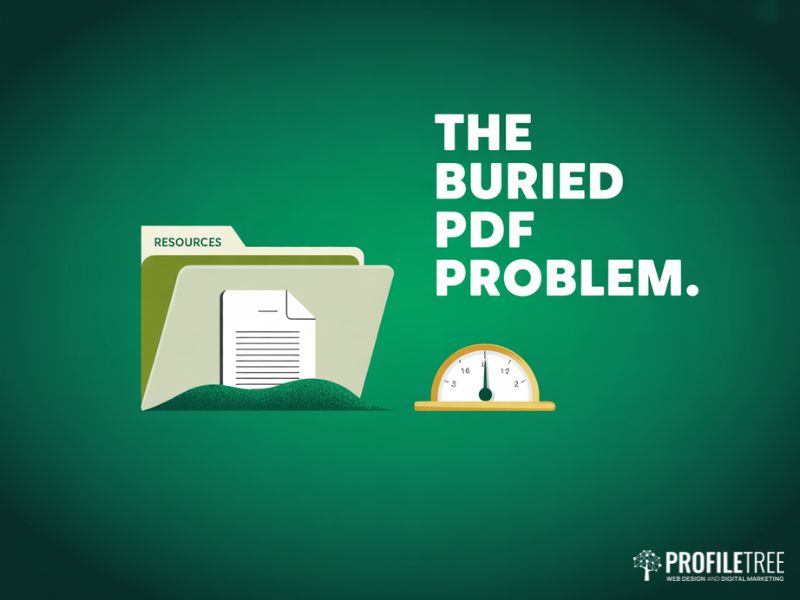
The typical B2B case study costs between £1,500 and £6,000 to produce when you include client interviews, design and internal review. It then gets posted once, shared on LinkedIn for a day, and quietly buried in a “resources” folder that almost nobody visits. That is the failure pattern leveraging case studies properly is meant to fix.
We see three problems repeatedly when auditing client content libraries. The asset is too long for any single channel. The story is not extractable, meaning AI search tools and human readers cannot pull a clean stat or quote without reading the whole thing. And nobody owns distribution after publication. Marketing built it, sales never used it, and analytics never tracked it.
Why It Matters Right Now
Search has changed faster in the last 18 months than in the previous decade. Google’s AI Overviews appear on roughly 12.5% of informational queries, and B2B technology queries trigger them around 70% of the time, according to Search Engine Land’s 2025 analysis. Pages cited in those answers come from the top 20 organic results 97% of the time, and 44% of LLM citations are pulled from the first 30% of content. That structural shift makes leveraging case studies more valuable, not less.
Original statistics get cited 40% more often than qualitative claims, per Ahrefs’ 17 million citation study. A case study packed with named clients, real percentages and dated results is the cleanest possible source for a model to quote. If you build the story properly, you are not just talking to buyers. You are feeding the systems buyers now use to shortlist suppliers.
What “Done Right” Looks Like
A well handled case study has a long second life. We work back from a simple test. By the end of the first quarter, can the story show up in five places without anyone needing to chase it? That means the headline stat lives on the homepage, the full narrative sits as a service page proof block, a 90 second video runs on the YouTube channel, the CRM has a tag that lights up every time a deal cites it, and a dated set of social posts is already scheduled. Good website design services earn their keep here, because a case study that cannot be surfaced quickly from the homepage is being underused by the site itself.
The Repurposing Framework: Turning One Story Into a Quarter’s Content
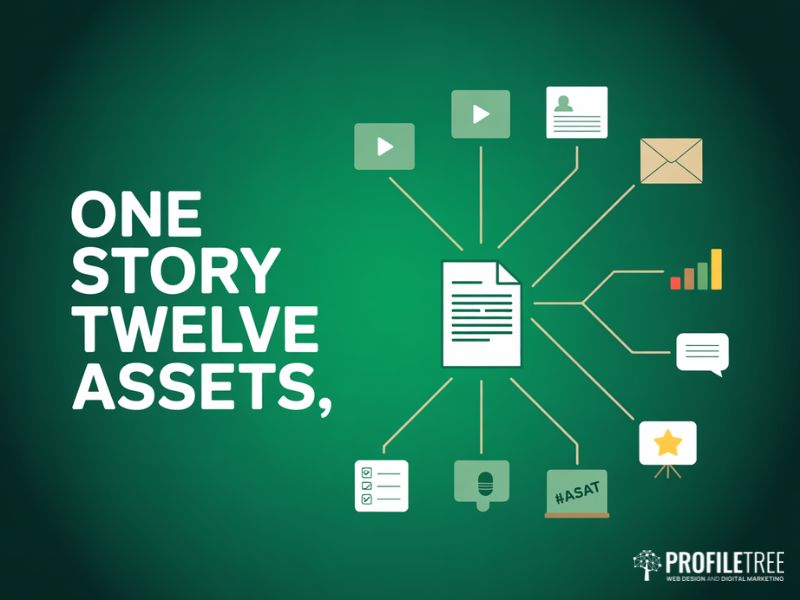
Leveraging case studies efficiently is a content engineering problem more than a writing problem. The decision is not “what do we say next” but “which slice of the existing source material does this channel need”. Treat the full case study as a master document, then cut around 15 to 25 smaller assets out of it.
This is the practical break down we use across website development work and broader content marketing services at ProfileTree, whether the client is a manufacturer, a professional services firm, a SaaS product or a retail brand.
The Content Tree, Asset by Asset
Each case study should produce, at minimum, the following derived assets. The point is not to produce all of them on day one, but to know what is possible before you publish.
- One full long form case study page on the website, between 1,200 and 2,000 words.
- One 60 to 90 second client testimonial video, plus three 15 to 30 second cuts for YouTube Shorts, Instagram Reels and LinkedIn.
- Three to five “micro proof” social posts for organic social media marketing, each carrying a single statistic, a single quote, or a single before and after fact.
- One LinkedIn carousel walking through the problem, the approach and the result.
- One middle of funnel email for the nurture sequence.
- One blog post or thought leadership article that uses the case study as evidence for a wider point.
- One pitch deck slide and one proposal slide pre built for the sales team.
- One FAQ block answering the questions the case study quietly resolves.
That is twelve assets from one source document. With AI assistance, the production work for the secondary assets typically takes a day, not a fortnight. Leveraging case studies at this scale is what turns a one off document into compounding output.
Using Generative AI as the Atomisation Engine
We use AI tools to break case studies into smaller assets every week. The skill is not in writing the prompts; it is in editing what comes back. Treat AI as a junior assistant that drafts the first version of every derivative asset, with a senior writer doing the rewrite.
A working prompt asks the model to act as a B2B content editor and pull out the three most quotable client statements with context, the four strongest numerical results expressed as before and after, a 250 word LinkedIn post focused on the single most counter intuitive lesson, three short carousel slide outlines, and a 150 word cold outreach email written for a peer of the featured client. The instruction always closes with a constraint: reject any output that uses promotional language, exclamation marks or generic phrases like “in today’s world”.
This is where ProfileTree’s digital training for SME teams connects directly to the work of leveraging case studies. Most teams have access to ChatGPT, Claude or Gemini through their existing software stack, often via AI marketing and automation tools they already pay for. The constraint is not the tools; it is knowing how to brief them.
Leveraging Case Studies in Search and AI Visibility
Pages with original data and named sources sit at the top of what generative search tools cite. That is why leveraging case studies is now a search strategy as much as a sales one. Each case study page should carry FAQ schema, a clearly marked author with credentials, an opening paragraph that answers the implied query in plain language, and at least one structured table comparing before and after. Google’s own Search Central documentation sets out the basics that matter most for AI features: clear textual content, structured data that matches what is visible, and authoritative authorship.
When we publish case study pages for clients in our SEO services in Belfast work, we build them with AI Overview citation as a deliberate goal. The page targets a long tail commercial query like “how does an SME measure SEO ROI” or “what does WordPress speed optimisation actually deliver”. The case study is the proof. The page does double duty, ranking traditionally and feeding the answer engine at the same time. Where speed and stability matter for that ranking work, our WordPress hosting and management keeps the technical base steady.
Case Studies for Sales: Proof at the Point of Decision
Most marketing teams brief, write and publish a case study without ever asking sales how they would use it. Leveraging case studies in sales conversations is often the highest yield use of the asset, because it reaches buyers at the precise moment they are deciding whether to trust you. The mistake is sending the full PDF. Sales prospects do not read 2,000 word PDFs during a buying cycle. They want a proof point, in context, that fits the question they just asked.
The Micro Proof Approach
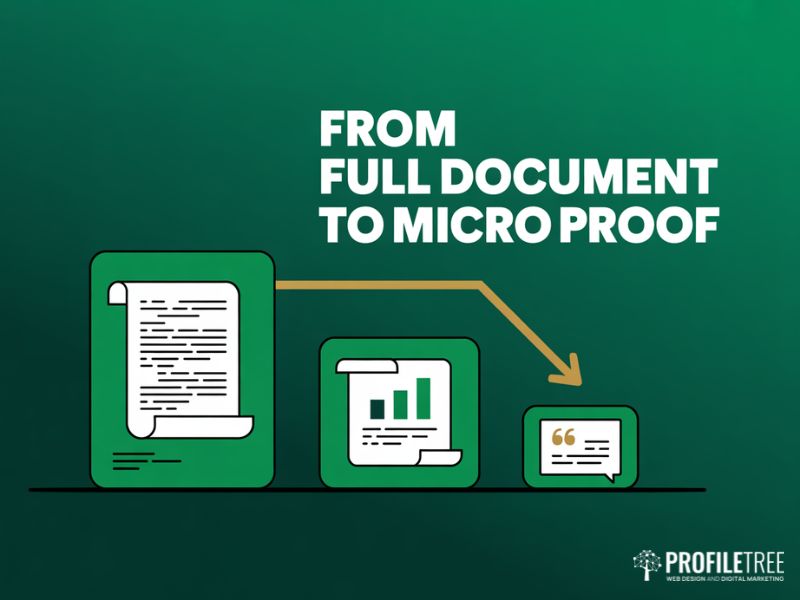
A “micro proof” is a 50 to 80 word extract from a case study, written so it can stand alone in an email, a LinkedIn message or a pitch deck. Each one has the same structure. State the client industry and size. State the problem in one sentence. State the result in numbers. Done.
The format, with placeholders:
“We worked with a [size] [industry] business in [location] who came to us with [specific problem]. After [intervention] over [time period], [primary metric] moved from [before] to [after]. The full project notes are in the case study if helpful.”
A sales development rep can carry six or seven of these in a snippet library, picking the one that matches whatever industry the prospect mentioned. Reply rates lift because the proof is specific, recent and matched to the conversation. The same micro proofs feed naturally into AI chatbots for sales conversations, where a buyer’s first question is often answered by a stat lifted directly from a case study.
Arming Account Executives for Demos
For account executives in later stage conversations, the format changes again. The job is not to introduce evidence; it is to remove the last objection. We build a small library of one slide proof points for each common objection. Cost concern, the slide showing payback period. Implementation concern, the slide showing project timeline. Risk concern, the slide showing client retention rate. Each slide is a single chart and a single sentence. Leveraging case studies inside a deck is most effective when each slide answers exactly one buyer question.
Connecting Case Studies to the Marketing Funnel
Leveraging case studies effectively means matching the format to the funnel stage. At the top of the funnel, a video clip on social does the job. In the middle, a comparison page that uses two case studies as anchors works well. At the bottom, the micro proof email or the objection slide is what closes the gap. The same source material does all three jobs, with very little additional production cost.
This is where video production and animation earns its keep. A single client interview, filmed once, edits into the long form video, the social cuts and the testimonial slide for the deck. Filming is a one off cost. The asset depreciates over years.
Measuring Case Study ROI: The Step Most Brands Skip
If you cannot show what a case study delivered, you will struggle to get budget for the next one. This is the gap most articles on leveraging case studies skip entirely, and the section that matters most to anyone signing off the spend.
The honest answer is that case study attribution is messier than ad attribution because the asset gets used in dozens of places, often without a clean tracking link. The realistic goal is not perfect attribution. It is enough evidence to show the asset earned its place.
What to Tag and Where
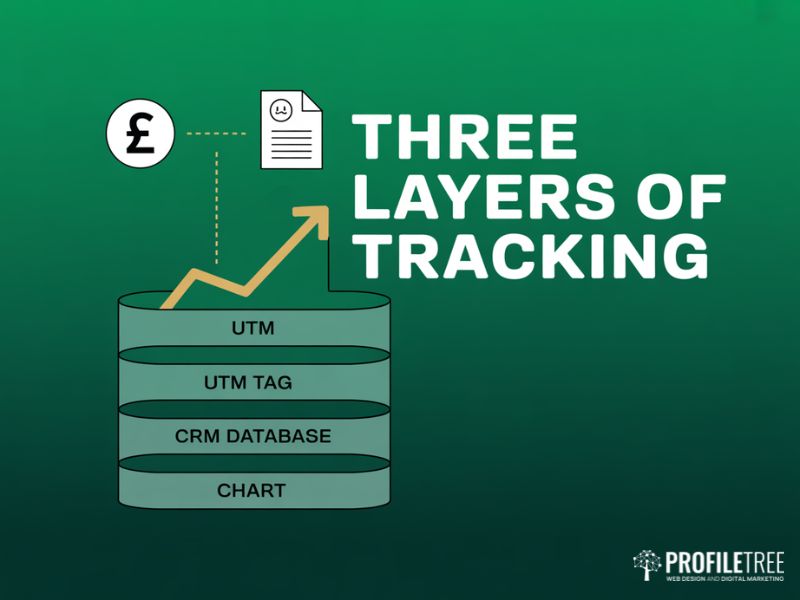
Three layers of tracking get you most of the way. Build them once, apply them every time.
UTM parameters on every distribution link. Source identifies the channel, medium identifies the format, campaign carries the case study name. So a LinkedIn post linking to a manufacturing case study would carry.
A CRM custom field on every deal that records which case studies were referenced during the sales process. Sales fills it in as part of the call notes. Over a quarter, you can pull a list of every closed deal that referenced the asset, and the revenue attached.
A page level analytics view showing pageviews, scroll depth and onward clicks for the case study URL. If scroll depth is low, the front end needs a rewrite. If onward clicks are low, the internal linking is weak. This is where leveraging case studies as a measurable asset, rather than a brochure, finally pays back.
What Metrics Actually Matter
Pageviews on their own tell you almost nothing about whether leveraging case studies is working. The useful set is shorter.
Influenced pipeline is the number to lead with. How much of the open pipeline mentions or has been sent the case study during the buying process? Recorded by sales in the CRM custom field, this is the floor for ROI.
Time spent on the page matters because case studies are designed to be read, not skimmed. If average engaged time is under 90 seconds on a 1,500 word case study, either the wrong people are landing on it, or the opening is not holding them.
Citation in AI search tools is the newest metric. Specialist trackers now log when your domain appears in ChatGPT, Perplexity and Gemini answers. The data is imperfect, but a case study page that earns a citation in a generative answer is doing work that no other content type does as efficiently.
A Working ROI Example
Take a UK manufacturing case study that cost £4,000 to produce. In the six months after publication, it picks up around 800 organic visits, gets used in 22 sales conversations, and is referenced in the pipeline for nine deals worth a combined £180,000 of opportunity. Three of those deals close, with combined contract value of £62,000. Even at half attribution, the asset has paid for itself many times over. Leveraging case studies starts paying back in the first quarter and keeps paying back for years, which is why we treat the work as a long term asset rather than a one off campaign.
This is why we link case study work tightly to broader digital strategy engagements rather than treating it as standalone content production. The story is only as useful as the system around it.
Future Trends in Leveraging Case Studies
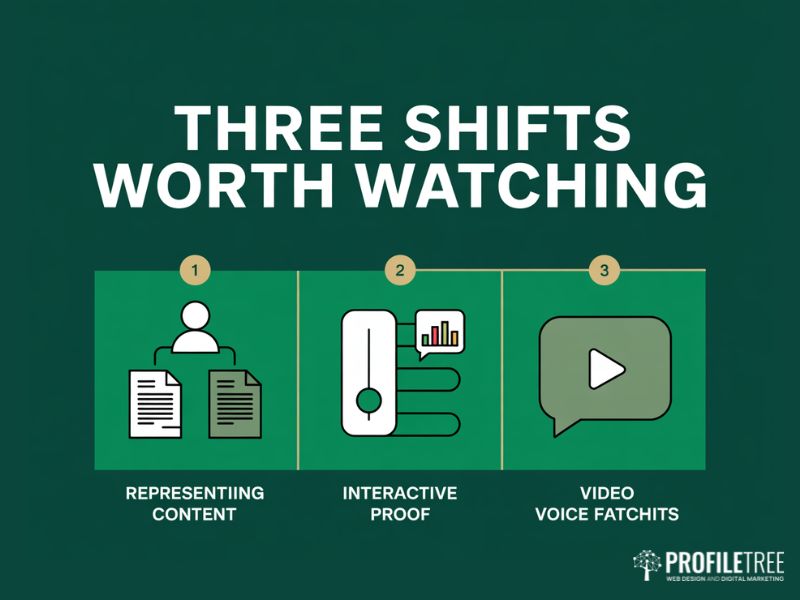
Static PDFs will keep being produced and will keep being underused. The brands that pull ahead will treat case studies as structured data first, prose second. Three shifts are worth watching.
Personalised storytelling powered by AI. Marketing platforms are starting to assemble custom case study pages on the fly, based on what is known about the visitor. An anonymous SaaS visitor sees a SaaS case study; a known prospect from manufacturing sees the manufacturing one.
Interactive proof. ROI calculators, comparison sliders and live charts let prospects pressure test the claim themselves rather than reading about it.
Voice and video first formats. AI search tools now surface short video clips alongside text answers. A 90 second client testimonial cut from a case study is answerable directly inside ChatGPT and Gemini, which means leveraging case studies in video form has measurably more reach than the same content in text alone.
None of this changes the fundamental rule. Leveraging case studies always comes back to whether the underlying story is true, specific and recent.
FAQs
What does “leveraging case studies” actually mean?
Treating each client success story as source material to be cut into 15 to 25 smaller assets and tracked in the CRM.
How long should a B2B case study be?
Between 1,200 and 2,000 words. Long enough to carry the story, short enough to read in eight minutes.
Where should case studies sit on the website?
On their own indexable URL, linked from the homepage, relevant service pages, and any blog post that uses them as evidence.
Do AI tools like ChatGPT cite case study pages?
Yes, when they include original data, named clients, before and after numbers, FAQ schema and a named author.
How many case studies does a small business need?
Three to five strong ones, properly worked, will outperform fifteen weak ones. The repurposing matters more than the volume.
Should case studies always include real client names?
Where the client agrees, yes. If not, anonymise carefully but keep industry, geography, size and metrics specific.
How does leveraging case studies fit with SEO?
A well built case study page targets a commercial intent query, carries FAQ schema, and front loads the answer. It is one of the strongest tactics for ranking on queries that convert.
Can AI write our case studies for us?
Only the components: summaries, FAQs, social cuts. The source interview and editorial sign off must always be human.
The AI extraction point deserves more emphasis. We’ve seen that play out across a few examples where structured case studies with named metrics consistently outperform narrative-first ones in LLM citations.