Skip to content

SEO Resources for Small Businesses

These SEO resources for small businesses are free guides from ProfileTree, written for owners in Northern Ireland, Great Britain and Ireland who want more customers reaching them through search. They show you how to check your website, choose the right search terms, rank locally, appear in AI answers and decide whether to bring in help.

Search engine optimisation (SEO) is the work of making a website easier for search engines and AI assistants to understand and recommend. ProfileTree is a Belfast web design and digital marketing agency, founded in 2011 and based at the McSweeney Centre, and the guides here describe the same methods our team uses on client websites every week. If you would prefer to hand the work over, our SEO Northern Ireland team works with businesses across the region, and the sections below will still help you judge whether that work is being done well.

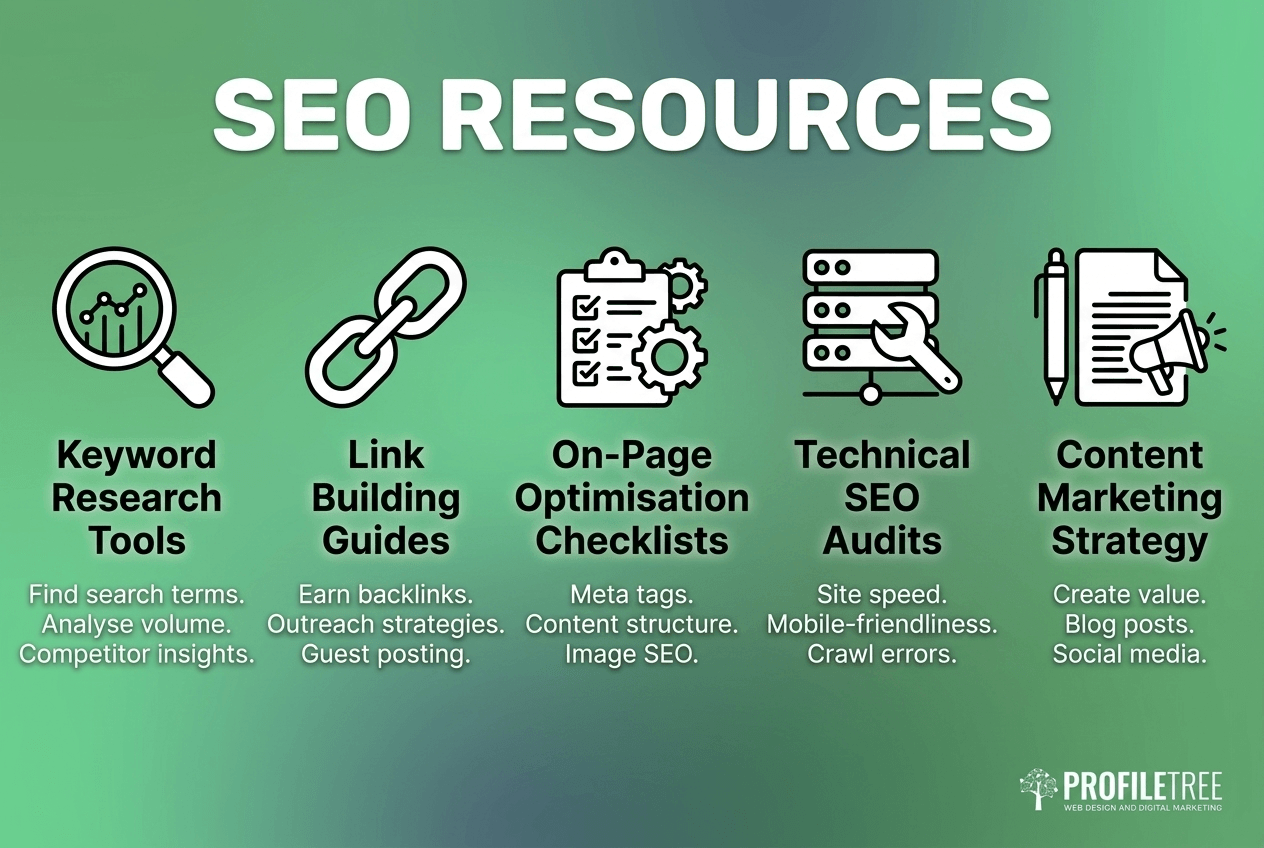
Infographic titled SEO Resources outlining five key areas for Search Engine Optimisation: Keyword Research Tools, Link Building Guides, On-Page Optimisation Checklists, Technical SEO Audits, and Content Marketing Strategy, with sub-points for each.

SEO Training That ProfileTree Offer

Start a project

Start With a Check of Your Own Website

The most useful first step is a check of how Google currently sees your site, because it tells you whether your problem is technical or a matter of content. Google Search Console shows which pages are indexed and which have been left out, along with the queries that already bring people to you.

From there, look at page speed and Core Web Vitals. Then check whether every service you sell has a page of its own with a clear title. Our guide on how to carry out an SEO audit works through these checks in the order we use them, and the articles further down cover each one in more depth.

Give each change time before you judge it. Google’s SEO Starter Guide says that some changes show within a few hours, while others take several months. It also suggests waiting a few weeks before deciding whether a change has helped.

Find the Searches Your Customers Use

Keyword research means finding the words people type into Google when they need what you sell, and how often they type them. It decides which pages you need, so it comes before any writing. A plumber in Lisburn and a software firm selling across the UK need very different pages, even though both want more enquiries from search.

The practical rule is one page for each service, and each question buyers ask, written in the words they use. Google’s own guidance says it does not use the keywords meta tag, and it treats repeating words over and over as spam. Our explanation of how keyword research works walks through building a short list of searches for a local firm without paid software.

Local SEO for Businesses in Northern Ireland

Local SEO is the part of SEO that decides whether you appear when someone nearby searches for your service, including in Google Maps. For a business that serves customers in one town or county, it is usually where SEO effort pays back soonest.

It starts with your Google Business Profile, the free listing that appears in Maps and in the local results at the top of a search. Your business name, address and phone number should match exactly on the profile and the site, and the categories you choose should describe what you actually do.

Reviews matter too, so ask every satisfied customer for one and reply to each review you receive. A page for each town you serve helps only when it says something specific about working there; a page with the town name swapped in does more harm than good. Our local SEO guide covers each of these steps for businesses in Northern Ireland.


Being Found in AI Search Answers

AI Overviews are the AI-written summaries that appear at the top of some Google results, and AI Mode is Google’s conversational version of search. Both are built on Google’s main search index. Google’s guidance on AI features states that there are no extra requirements or special optimisations for appearing in them, and that site owners do not need new files or special markup to be included.

In practice, that means the fundamentals above also decide whether an assistant quotes your page. In our work on client sites, the pages that get cited answer the question in their first paragraph, cover the follow-up questions underneath and show a real author. Our page on AI SEO explains how we assess a business’s visibility in ChatGPT, Copilot and Google’s AI features.


When to Do SEO Yourself and When to Hire Help

Many small businesses can handle the basics themselves, particularly the Google Business Profile and keeping service pages up to date. Google’s starter guide makes a similar point from the other side, suggesting a professional for owners who are short on time or do not want to do the technical work.

The case for hiring help grows when there are technical faults you cannot diagnose or when you compete for searches across a whole city or region. It also grows when the time SEO takes is pulling you away from paying work. At that point, it is worth getting an outside view before you commit to a contract, and the final section below explains what to send us.

Ciaran Connolly, founder of ProfileTree, puts it this way: “Most of the SEO problems ProfileTree sees with businesses in Northern Ireland come down to identity, whatever the owner thinks the problem is. Google cannot work out what the business is and where it is, because the website says a hundred things at once. Say one thing clearly, on one page, and the rankings follow.”

SEO Training for Your Team

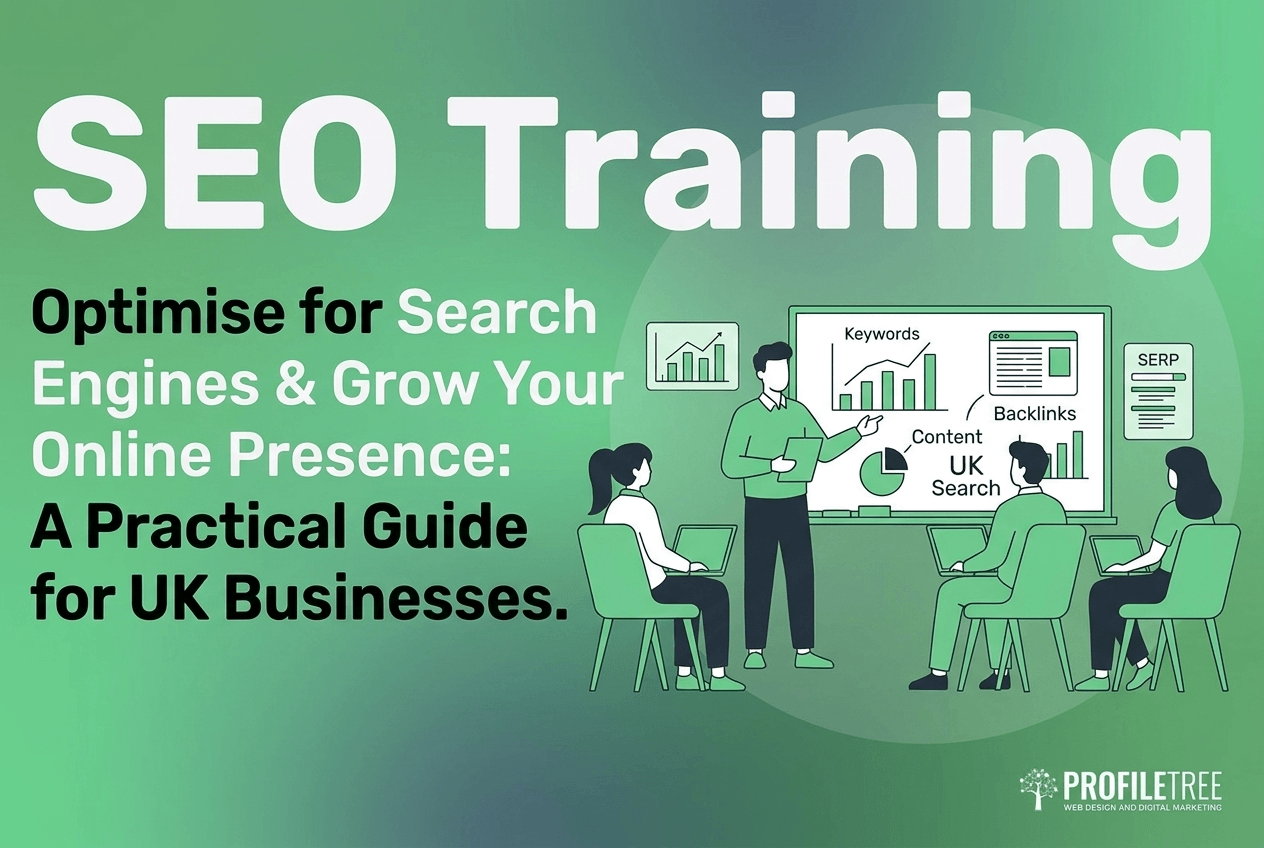
Training suits businesses that prefer to keep SEO in-house and need their own staff to do it confidently. Our SEO training is built around the pages you already have and the terms people use to find you, so your team leaves with real changes made to real pages. Sessions are delivered from the McSweeney Centre in Belfast.

An instructor leads an SEO training session, presenting key topics like keywords, backlinks, and search engine results pages to attendees seeking SEO resources.

Resources for Search Engine Optimisation

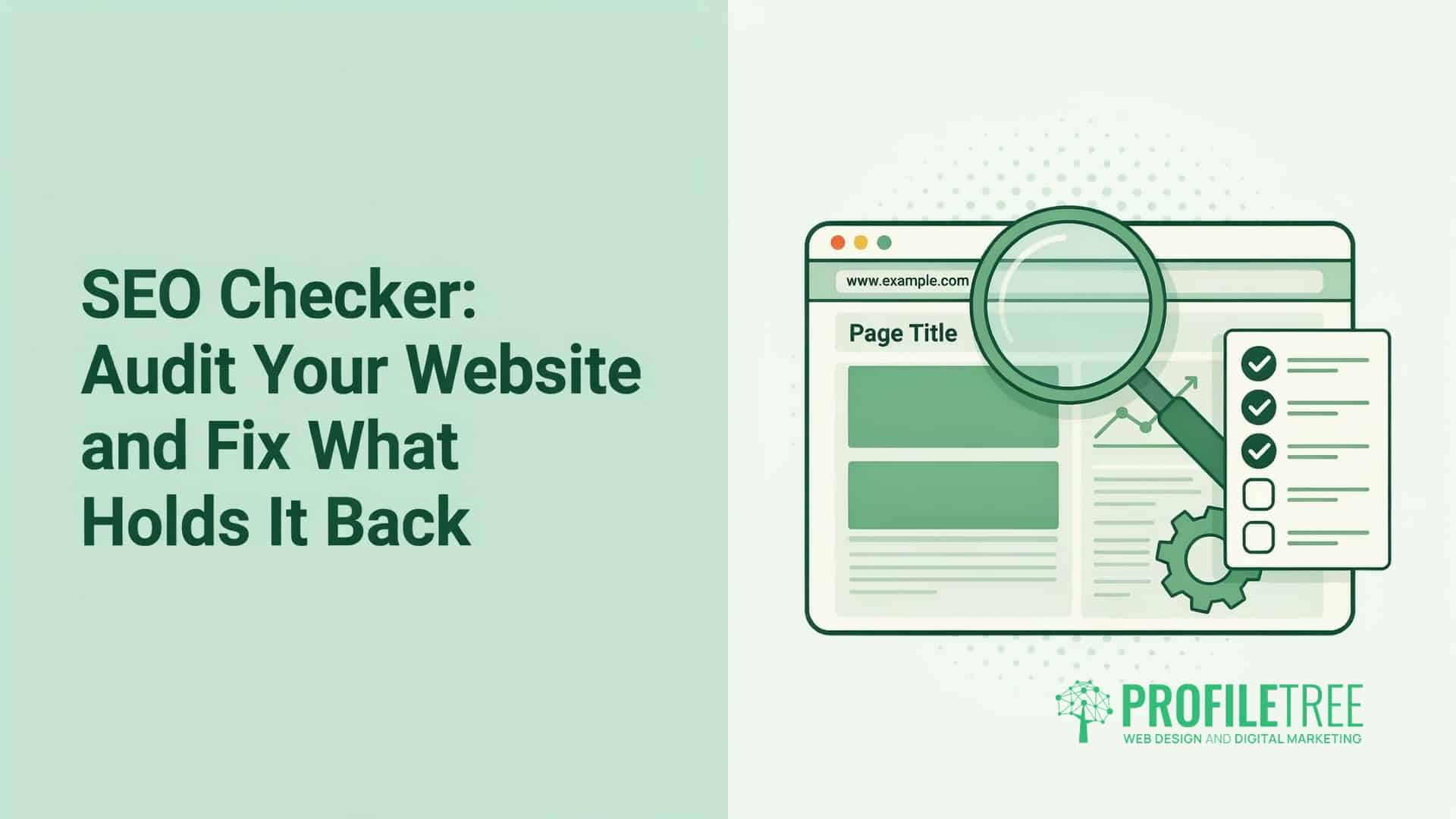
Each article listed below takes one task from start to finish, so pick the one that matches the problem in front of you. If you are new to the subject, begin with the SEO glossary, which explains more than 80 of the terms you will meet in reports and agency proposals in plain English. If you already suspect something is wrong with the site, the SEO checker guide and the website analysis guide help you pin it down and decide which faults to fix first.

Whichever guide you start with, record the clicks and impressions for the page you are working on in Search Console ahead of any change. Make one change at a time and compare the same length of period about a month later. That way you know which change made the difference, and a good change is not hidden by a weaker one made alongside it.

Book an SEO Review for Your Website

If you would like a second opinion on where you stand, use the Start a project button on this page and include your web address, so the team can see how Google treats it before we speak. ProfileTree has more than 500 Google reviews with a 5.0 rating from the businesses we have worked with, and an SEO review is a straightforward way to find out whether our approach suits yours.

Firms in Great Britain and the Republic of Ireland can also read how our SEO services across the UK and Ireland are set up, including what a monthly programme covers and how progress is reported.

SEO Resources FAQs

How long does SEO take to show results for a small business?

From the sites we work on, small fixes such as a clearer title or a corrected Google Business Profile can show within weeks, while new pages competing for busy searches usually take a good deal longer. Google’s own guidance gives a range from hours to several months for changes to be reflected. The timing depends on the competition you face and the amount of work needed at the start.

Can I do SEO for my business myself without an agency?

Yes, many owners handle the essentials well, including their Google Business Profile and the reviews that sit on it. The guides listed here are written for that purpose. Outside help earns its cost when technical problems are holding the site back, or when the time involved would be better spent on running the business.

How much does SEO cost for a small business in Northern Ireland?

ProfileTree’s SEO is priced from £500 a month plus VAT, agreed against your goals and your competition. Training for business owners who would like to do it themselves is priced from £350 plus VAT. Free tools such as Google Search Console cover the basics a growing firm needs to track its progress.

Do I need different SEO to appear in ChatGPT and Google AI Overviews?

No separate technique is required for Google’s AI features, which Google says rely on its standard search practices. In our work, clear pages that answer a question early and a consistent description of your business online help in Google and with AI assistants alike.

What should I fix first on my website for SEO?

Fix anything that stops Google from indexing your important pages first, then make sure each service has its own page with a clear title. Each of those pages should give a direct answer near the top. Once those are in place, turn to your Google Business Profile and then to the questions your customers ask most often.

Join Our Mailing List

Grow your business with expert web design, AI strategies and digital marketing tips straight to your inbox. Subscribe to our newsletter.