
Drone Video Production in Ireland: A Guide for Buyers
Table of Contents
Drone video production in Ireland gives businesses aerial perspectives that ground-level filming cannot reach, from coastal hotels to live construction sites. Used well, it sharpens marketing and provides practical documentation for property, tourism, construction and infrastructure work.
It also carries real operational weight. Irish Aviation Authority airspace rules, commercial licensing, insurance, and Ireland’s changeable weather all shape what a shoot can deliver and what it costs. This guide sets out the regulations, realistic budgets and the questions to ask before hiring an operator.
Irish Aviation Regulations and Compliance
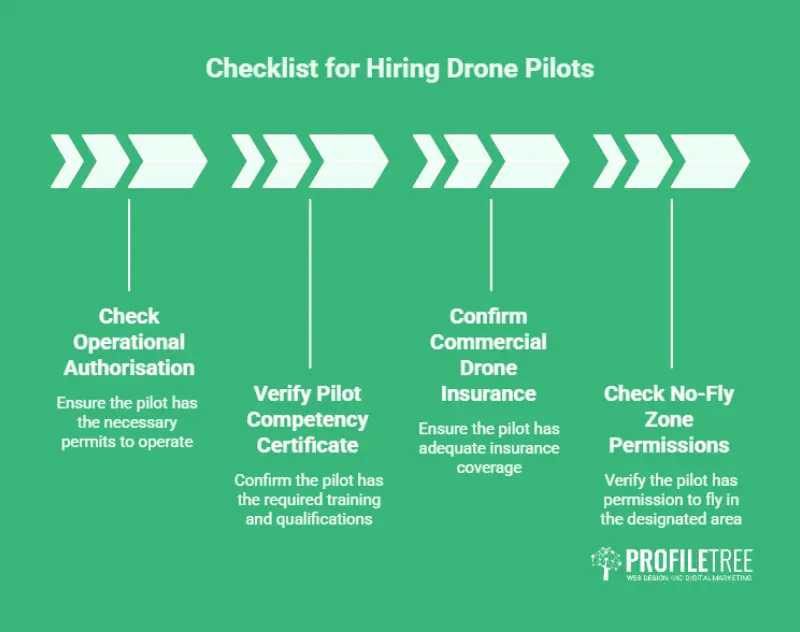
Commercial drone work in Ireland runs under two regulatory frameworks. The Irish Aviation Authority (IAA) covers the Republic, while the UK Civil Aviation Authority (CAA) governs Northern Ireland. Both adopted EU drone rules, with national variations that affect planning. Anyone hiring should understand the basics before booking, and a wider view of the video production process helps set expectations.
Most business applications require a Specific Category Operational Authorisation. This goes well beyond basic registration: operators need risk assessments, pilot competency certificates and proper insurance. Maintaining that compliance costs thousands, which is reflected in legitimate pricing.
No-fly zones add planning challenges. Dublin Airport’s restriction zones cover large parts of the capital, and military sites, prisons and certain government buildings impose limits. Belfast presents the same picture, with two airports and sensitive locations needing special permission. If you are weighing aerial stills alongside video, the basics of drone photography are worth reviewing too.
Insurance for commercial operations commonly runs to several million euro in public liability cover. That protects operators and clients, but it is a significant fixed cost that separates professionals from hobbyists offering cheap aerial work.
Weather affects Irish drone work more than in many parts of Europe. Wind above roughly 35 km/h grounds most commercial drones, and rain stops many systems entirely. Experienced operators build contingency into schedules because conditions here change fast.
“Regulatory compliance isn’t optional in professional drone operations,” states Ciaran Connolly, ProfileTree founder. “Businesses hiring drone operators should verify insurance, authorisations and pilot certifications. The savings from using unauthorised operators evaporate instantly if something goes wrong.”
Types of Business Applications
Aerial footage suits a wide range of sectors in Ireland, each with different priorities. Property and tourism lean on visual impact, while construction and industry lean on documentation. Integrating that footage into a wider plan is something video marketing services handle directly.
Property and Real Estate
Estate agents and developers use aerial footage to show context that ground photography misses: proximity to amenities, surrounding landscape and true scale. Commercial property marketing benefits in particular, with footage demonstrating accessibility, parking and positioning before a viewing.
Residential developments use monthly progression videos to maintain buyer confidence through long builds. Hotels and hospitality venues shoot seasonal footage that works across websites, social media and booking platforms.
Construction and Infrastructure
Construction firms use drones for progress monitoring, stakeholder updates and safety records. Regular surveys build visual timelines that help with project management and dispute resolution. Inspection by drone also cuts cost and risk on bridges, roofs and telecoms towers that once needed scaffolding.
Photogrammetry and LiDAR-equipped drones produce accurate topographical data for planning applications and earthworks. Time-lapse compilations of repeat flights make strong project showcases.
Tourism and Hospitality
Tourism boards increasingly want aerial content for destination marketing, capturing landscape scale that draws international visitors. Activity operators film coasteering or mountain biking from above, and golf courses produce flyovers and hole-by-hole guides.
Wedding venues use aerial footage to show full property and setting, now an expectation among couples. Festival and event footage from above captures scale for promotion and sponsorship reporting.
Corporate and Industrial
Manufacturers use aerial footage to show scale and capability to investors and customers without site visits. Renewable energy firms document wind and solar installations for investor relations and planning. Agricultural businesses film seasonal practices, and logistics centres demonstrate capacity and location. Corporate video that includes aerial elements works best when planned against a wider digital strategy.
Production Planning and Logistics
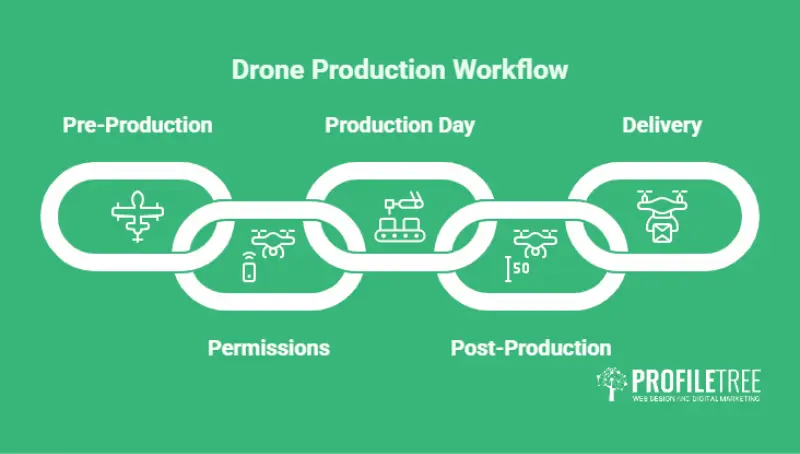
Strong drone productions depend on planning, not just turning up with kit. Weather windows, permissions and a clear shot list shape the final result.
Pre-Production Requirements
Location scouting reveals flight paths, safety considerations and creative options, even at familiar sites. Permission gathering extends beyond aviation authorities to landowner consent, local authority notice and sometimes Garda coordination. Complex urban shoots can take weeks to clear.
A detailed shot list specifying altitudes, angles and movements prevents costly reshoots and gives full coverage during limited weather windows. Safety planning sets exclusion zones and briefs everyone on site. Backup planning builds in contingency days and equipment redundancy.
Production Day Execution
Early morning and late afternoon give the best light, with warm tones and shadows that add depth. Wind monitoring runs all day, especially on the coast where conditions shift quickly. Cold weather cuts flight time, so operators carry several battery sets for full days. Clear communication between pilot, observer and creative lead keeps flight time productive, and redundant recording protects footage.
Post-Production Considerations
Ireland’s variable light usually needs substantial colour correction for a consistent look. Stabilisation smooths out wind buffeting, and music choice shapes emotional impact. Delivery formats vary by platform, so productions output multiple aspect ratios. Matching grade and pacing keeps aerial and ground footage visually consistent.
Budget Considerations for Irish Businesses
Understanding pricing helps businesses budget properly and avoid underfunded projects. Professional aerial work costs far less than traditional methods such as helicopter filming, but it still needs meaningful investment, and quotes vary by shoot length, deliverables and complexity. Most operators price by the half-day or full day, by fixed project, or through a monthly retainer for clients needing regular documentation.
Half-day and full-day rates suit single shoots, while project pricing covers a complete deliverable with multiple shoot days, full editing and several output formats. Retainers work for construction firms or estate agencies that need recurring footage and value guaranteed availability. Always ask what a quote includes, since planning, permissions, insurance and basic editing are sometimes bundled and sometimes charged separately.
Extra costs can surprise budget planners. Special permissions, extended post-production, rush delivery or weather contingency days add to base quotes, and travel to remote locations or the islands raises costs further. Even so, drone work costs a fraction of traditional helicopter filming while delivering comparable aerial footage.
Measuring Return
Direct revenue attribution is difficult, but tracking viewing requests, enquiry quality and time-to-sale shows aerial content’s effect. Well-produced footage stays usable for years across websites, presentations and campaigns, which improves cost-per-use. In sectors where aerial content is still uncommon, early adopters often capture disproportionate attention. Aligning that spend with wider goals is part of content marketing planning.
Choosing a Drone Production Partner
Selecting an operator means checking technical capability, creative vision, compliance and business fit. The number of hobbyists offering commercial services makes this harder than it should be.
Essential Qualifications
Treat authorisation checks as non-negotiable: ask for the operational authorisation, pilot competency certificates and operations manual approval. Insurance must specify cover for commercial drone operations, since general business policies rarely include aviation. Review a portfolio for work similar to your brief rather than unrelated spectacle, and check references on reliability, flexibility and delivery.
Red Flags to Avoid
Very low pricing often signals unlicensed operators cutting corners on insurance or permissions. Reluctance to share documentation points to non-compliance. Over-promising on weather or permission timelines shows inexperience with Irish conditions. Limited pre-production discussion and a lack of formal contracts both indicate business immaturity.
Weather and Seasonal Considerations
Ireland’s maritime climate brings both challenges and opportunities. Knowing the seasonal pattern helps set realistic timelines.
Spring (March–May) offers greener landscapes and steadier weather, though conditions still change quickly. Summer (June–August) gives the longest daylight and most stable spells, with tourist crowds the main complication. Autumn (September–November) delivers dramatic light and colour, with rising storm frequency. Winter (December–February) means short days and cold that cuts battery life, but low sun and snow create distinctive footage.
Morning shoots often catch calmer air before afternoon wind builds, and coastal sites benefit from early starts. West coast locations meet Atlantic systems first, while inland valleys can stay calm when surrounding areas are windy. Building flexibility into the schedule is the single most reliable way to protect a shoot.
Legal and Privacy Considerations
GDPR obligations apply to footage capturing identifiable people. Regular operations over populated areas may need a privacy impact assessment documenting mitigation measures. Public filming often requires signage notifying people, which professional operators plan for. Footage of identifiable individuals or private property may need releases for commercial use, particularly in advertising. Ownership of raw versus edited footage should be set out clearly in the contract.
Integration with Marketing Strategies
Aerial footage works best inside a wider plan rather than in isolation. On websites, hero videos create immediate impact, property tours combine aerial establishing shots with interior walkthroughs, and subtle background footage adds interest without distraction. Proper compression keeps load times low, which is where website design and delivery matter.
Across social media, platform-specific edits matter: vertical crops for Stories, square for feeds, landscape for YouTube. Teaser campaigns build anticipation, and behind-the-scenes content adds value. In traditional media, aerial footage stands out in television breaks, and high-resolution stills suit print and large-format display.
Making Informed Decisions
Drone video production gives Irish businesses a practical marketing and operational tool when approached with planning. Success comes from understanding the rules, choosing a qualified operator and fitting aerial content into wider objectives. Choosing on price alone tends to end in disappointment or compliance problems. For integrated video work that includes aerial elements, the ProfileTree video team can scope a project around your budget and goals. Talk to the team to get started.
FAQs
What’s the typical turnaround for drone video production in Ireland?
Simple property videos usually arrive within 5–7 business days of filming. Complex edits with colour grading or multiple formats can take 2–3 weeks, and winter weather can extend timelines.
Do I need special permissions to film my own property?
Yes. Commercial drone work always needs proper authorisation regardless of property ownership, including licensing, insurance and sometimes location-specific permissions.
How much footage can a drone capture in one session?
Most professional drones fly 20–30 minutes per battery and capture 15–20 usable minutes per flight. A half-day shoot typically yields 60–90 minutes of raw footage, edited to 2–5 minutes of final content.
What happens if weather stops filming on the scheduled day?
Professional contracts usually include weather contingency and reschedule within agreed timeframes at no extra charge. Repeated cancellations can add cost, so flexible scheduling helps.
Can drones film at night or in low light?
Night work needs additional permissions and specialised equipment. Most business briefs are met instead with early morning or late afternoon light, which avoids night flying.
Who owns the rights to the footage?
Terms vary by contract. Clients usually receive usage rights for agreed purposes while the operator retains raw footage, with exclusive ownership costing more. Clear contract terms prevent later disputes.