
The Business Case for Video Production: Your Complete Guide
Table of Contents
Video content delivers measurable business results for Irish companies, with recent industry data showing that businesses using video marketing report 66% more qualified leads annually compared to those without video strategies. This shift isn’t about following trends—it’s about responding to fundamental changes in how customers research, evaluate, and purchase products and services across Ireland, Northern Ireland, and the broader UK market.
The numbers speak volumes: viewers retain 95% of a message when watching video compared to 10% when reading text. For SMEs competing in increasingly crowded digital markets, this retention difference translates directly into stronger brand recall, improved conversion rates, and ultimately, better return on marketing investment. ProfileTree’s experience working with businesses across Belfast and Dublin confirms that video production, when executed strategically, becomes one of the most cost-effective tools for sustainable business growth.
Let’s explore the business case for video production.
Understanding Video Production ROI for Irish Businesses
Calculating return on investment for video production requires understanding both immediate and long-term value creation. A single well-produced company video serves multiple purposes: website conversion optimisation, social media engagement, email marketing enhancement, and sales enablement. When you factor in that video content remains relevant and valuable for 12-24 months on average, the cost per impression often proves lower than traditional advertising methods.
Irish businesses particularly benefit from video’s ability to bridge geographical gaps. A Belfast-based manufacturer can showcase products to buyers in Cork, Galway, or London without expensive travel or physical demonstrations. This geographical flexibility proves especially valuable for Northern Ireland companies seeking to expand into Republic of Ireland markets or establish stronger presence across the UK.
Consider the mathematics of video investment. A professionally produced video costing £3,000-5,000 might seem substantial initially. However, when that video generates even five additional customers over its lifespan—customers who might spend £1,000-2,000 annually with your business—the return becomes clear. Factor in improved website conversion rates, reduced sales cycle times, and increased customer lifetime value, and video production shifts from expense to investment.
The compounding effect of video content often surprises business owners. Each video strengthens your overall digital presence, improving search visibility whilst building brand authority. Videos embedded on your website increase average time on page by 88%, sending positive signals to search engines about content quality and relevance. This improved engagement directly impacts organic search rankings, creating a virtuous cycle of visibility and traffic growth.
Current Video Marketing Statistics That Matter to SMEs
Real-world performance data reveals why Irish companies increasingly prioritise video production. Websites featuring video content on landing pages see conversion rate improvements averaging 80%. For e-commerce businesses, product videos increase purchase likelihood by 144%. These aren’t marginal gains—they represent transformational improvements in marketing effectiveness.
Social media platforms continue evolving toward video-first experiences. LinkedIn reports that video posts receive 5x more engagement than text-only updates. For B2B companies across Ireland targeting professional audiences, this engagement differential makes video essential for thought leadership and brand building. Instagram Reels and TikTok’s explosive growth demonstrate consumer preference for video content, with users spending an average of 95 minutes daily consuming video across platforms.
Email marketing metrics show similar patterns. Including “video” in email subject lines increases open rates by 19% and click-through rates by 65%. For Irish SMEs with established email lists, adding video content to campaigns represents one of the fastest ways to improve performance without increasing send frequency or list size.
Mobile consumption patterns further reinforce video’s importance. With 92% of Irish consumers owning smartphones, and mobile video consumption growing 100% year-over-year, businesses without mobile-optimised video content miss significant engagement opportunities. Vertical video formats, once considered amateur, now drive higher engagement rates than traditional horizontal formats on most social platforms.
Search behaviour changes also favour video content. YouTube operates as the world’s second-largest search engine, with many consumers beginning product research on the platform rather than Google. Irish businesses creating helpful, informative video content capture this search traffic whilst building brand authority in their sectors.
Why Belfast and Dublin Companies Choose Professional Video Production
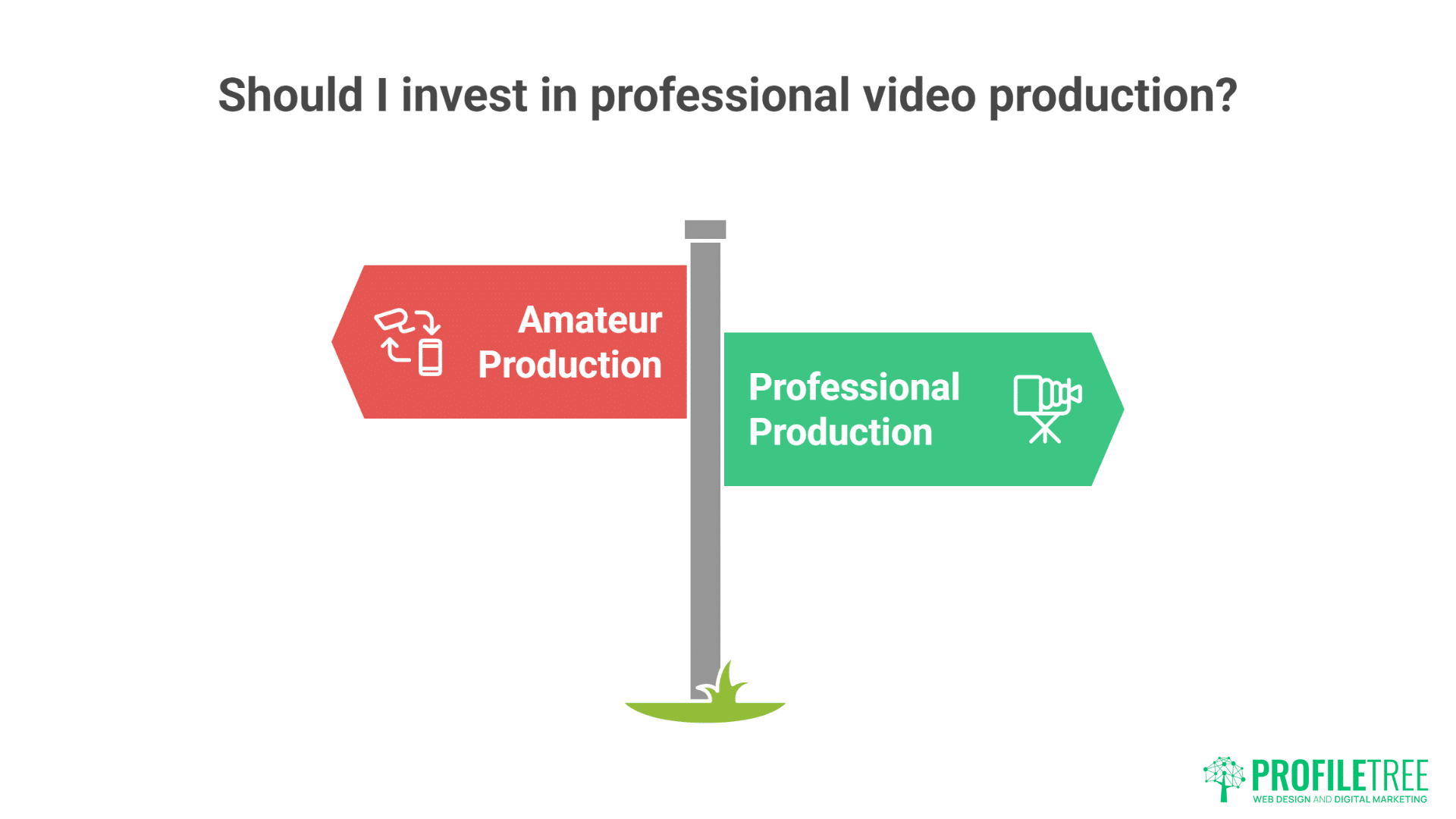
The distinction between amateur and professional video production becomes apparent in business results. While smartphone cameras produce increasingly impressive footage, professional video production encompasses far more than image quality. Script development, storytelling structure, audio engineering, colour grading, and strategic distribution planning separate effective business videos from forgettable content.
ProfileTree’s video production services address the complete content lifecycle. Pre-production planning identifies key messages, target audiences, and distribution channels. This strategic foundation prevents the common mistake of creating beautiful videos that fail to drive business objectives. Every creative decision—from location selection to background music—aligns with broader marketing goals.
Professional production teams bring technical expertise that transforms raw footage into polished assets. Proper lighting eliminates unflattering shadows that distract viewers. Quality audio equipment ensures clear communication without background noise or echo. These technical elements might seem minor individually, but collectively they determine whether viewers watch your entire video or click away within seconds.
Post-production elevates good footage into exceptional content. Colour correction ensures consistent brand presentation across all videos. Motion graphics and animations explain complex concepts visually. Professional editing maintains pace and energy, holding viewer attention throughout. These refinements require specialized software, hardware, and most importantly, years of experience understanding what resonates with audiences.
Distribution strategy often determines video success more than production quality. Professional video producers understand platform-specific requirements and best practices. A video optimised for LinkedIn differs significantly from Instagram Reels content. Resolution, aspect ratio, caption placement, and even colour saturation require adjustment for different platforms. Without this platform-specific optimisation, even exceptional videos underperform.
Breaking Down Video Production Costs for Irish SMEs
Understanding video production pricing helps businesses budget effectively and avoid unexpected expenses. Professional video production typically ranges from £1,500 for simple talking-head videos to £10,000+ for complex multi-location shoots. Most Irish SMEs find their needs met within the £3,000-6,000 range, which delivers polished, professional content suitable for multiple marketing channels.
Pre-production typically accounts for 20-30% of project costs. This phase includes concept development, scriptwriting, location scouting, and logistics planning. Investing adequately in pre-production prevents expensive mistakes during filming. A well-planned shoot day accomplishes more in less time, reducing overall costs whilst improving final quality.
Production day costs vary based on crew size, equipment requirements, and location complexity. A basic setup might involve a videographer and sound technician, while larger productions require directors, producers, lighting technicians, and assistants. Equipment rental—cameras, lenses, lighting, audio gear—represents another significant cost component. Location fees, permits, and insurance add to production expenses.
Post-production often surprises clients with its time requirements. Professional editors might spend 5-10 hours editing each minute of finished video. Complex projects requiring animation, special effects, or extensive colour grading require even more time. Music licensing, voiceover recording, and graphics creation represent additional post-production investments.
Consider total value when evaluating costs. Professional video production delivers multiple assets from a single shoot. A day of filming might produce a hero video for your homepage, shorter social media clips, employee testimonials, and behind-the-scenes content. This asset multiplication improves cost-effectiveness significantly compared to producing each video separately.
Essential Video Types Every Irish Business Should Consider
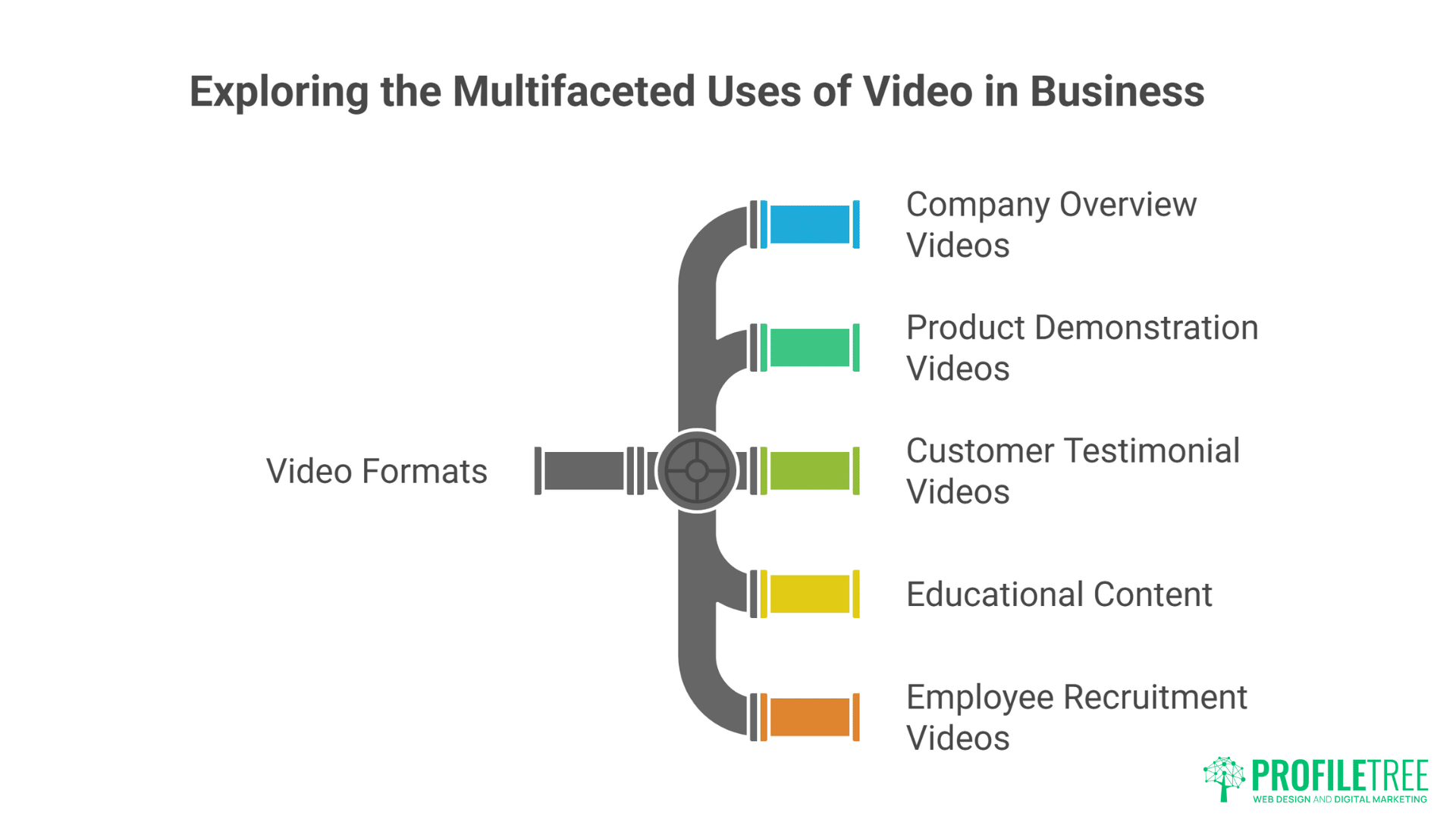
Different video formats serve distinct business objectives. Company overview videos introduce your brand to new audiences, establishing credibility and trust quickly. These 60-90 second videos work across multiple touchpoints: websites, email signatures, trade show displays, and sales presentations. For businesses entering new markets or launching rebrands, overview videos provide consistent messaging across all stakeholders.
Product demonstration videos reduce sales friction by answering common questions visually. Rather than requiring prospects to imagine product benefits, demonstration videos show real-world applications. Manufacturing companies showcase production quality. Software companies walk through user interfaces. Service businesses demonstrate their process and expertise. These videos significantly reduce sales team workload by addressing repetitive queries automatically.
Customer testimonial videos provide social proof that written reviews cannot match. Seeing satisfied customers describe their experience creates emotional connections with prospects. The authenticity of real customers sharing genuine experiences overcomes scepticism more effectively than any marketing message. Irish businesses particularly benefit from local testimonials, as regional accents and familiar locations build immediate trust with target audiences.
Educational content positions your business as industry experts whilst providing genuine value to viewers. How-to videos, industry insights, and problem-solving content attract prospects during research phases. This content marketing approach builds relationships before sales conversations begin. Educational videos also support existing customers, reducing support costs whilst improving satisfaction.
Employee recruitment videos address Ireland’s competitive talent market. Showcasing company culture, growth opportunities, and team dynamics attracts quality candidates who align with your values. Recruitment videos reduce time-to-hire by pre-qualifying candidates who self-select based on cultural fit. For Northern Ireland businesses competing with Dublin or London for talent, compelling recruitment videos level the playing field.
Video Production for Investor Relations and Fundraising
Investment communications increasingly rely on video content to convey complex business models, demonstrate traction, and build investor confidence efficiently.
Pitch Deck Enhancement Through Video
Traditional pitch decks gain impact when key slides become video content that demonstrates concepts rather than describing them.
Product Demonstration Videos Investors struggle to visualise products from static slides. Short demonstration videos (60-90 seconds) show functionality, user experience, and value proposition instantly. Technology companies particularly benefit—showing software in action communicates more than screenshots ever could. Belfast startups using video in pitch decks report 40% higher meeting conversion rates.
Founder Story Content Investors back founders as much as ideas. Video capturing founder passion, expertise, and vision creates emotional connections that financial projections alone cannot achieve. Keep these authentic—investors detect rehearsed content instantly. Natural, conversational founder videos build trust that facilitates due diligence.
Traction and Milestone Videos Show business progress through time-lapse videos, customer testimonial compilations, or team growth montages. Visual traction evidence proves execution capability. A Cork manufacturing company secured Series A funding partly through video showing their production facility expansion over 18 months.
Due Diligence Video Assets
Sophisticated video libraries streamline due diligence processes whilst protecting sensitive information.
Process Documentation Videos Investors want to understand operational capabilities without accessing proprietary information. Process overview videos show how you deliver products or services without revealing trade secrets. These videos answer common due diligence questions before they’re asked, reducing time in due diligence phases.
Team Capability Demonstrations Investors assess team quality during due diligence. Videos showing team members discussing their expertise, solving problems, or presenting to customers demonstrate capabilities authentically. Irish businesses raising funding should prepare team introduction videos proactively.
Ongoing Investor Communications
Post-investment, video transforms quarterly updates and annual reports from tedious documents into engaging communications.
Quarterly Video Updates Replace lengthy written reports with concise video updates from founders or leadership teams. Cover financial performance, strategic developments, challenges encountered, and support needed from investors. Video updates take less time to produce than written reports whilst generating higher engagement. Investors actually watch 5-minute video updates whereas they skim 20-page documents.
Annual General Meeting Video Content Hybrid AGMs require quality video content. Present annual results through visual storytelling. Use customer testimonials to show impact. Include team members explaining their achievements. Irish companies with strong AGM video content report higher investor satisfaction scores and easier future fundraising.
Multi-Location Video Production Consistency
Businesses operating across multiple locations face challenges maintaining brand consistency whilst allowing regional customisation in video content.
Brand Guidelines for Distributed Video Creation
Centralised brand standards enable consistent video output across locations without stifling local creativity.
Visual Identity Systems Document colour palettes, typography, logo usage, and graphic elements that must appear in all video content. Create templates for lower thirds, title cards, and end screens that local teams can use. Belfast headquarters can maintain brand integrity whilst Cork and Dublin offices create location-specific content.
Messaging Frameworks Core value propositions and key messages should remain consistent across all locations. Provide approved messaging libraries that local teams incorporate into their videos. Regional offices can add location-specific examples whilst maintaining overall brand narrative.
Quality Standards Documentation Define minimum technical standards: resolution, aspect ratios, audio quality benchmarks, and lighting requirements. This prevents low-quality content damaging brand perception. Irish franchises using standardised quality guidelines report 60% fewer unusable video submissions from locations.
Centralised Production with Local Execution
Hybrid production models balance efficiency with customisation needs.
Template-Based Video Systems Create master video templates where local teams swap specific elements. A customer testimonial template might include standardised opening graphics, interview questions, and closing calls-to-action. Local offices film region-specific customer interviews that fit the template. This approach delivers consistent branding with local relevance.
Central Post-Production Services Local teams capture raw footage following standardised shooting guides. Central production teams handle editing, colour grading, and finishing. This model ensures consistent production quality whilst leveraging local market knowledge. Belfast headquarters can serve as post-production hub for Irish operations.
Approval Workflows for Multi-Location Content Implement digital asset management systems with built-in approval workflows. Local offices submit content for brand compliance review before publication. Marketing teams approve quickly when content meets guidelines, provide feedback when adjustments needed. This systematic approach prevents brand inconsistency without creating bottlenecks.
Measuring Video Performance and Business Impact
Effective video marketing requires systematic performance measurement. View count alone provides limited insight—engagement metrics reveal true impact. Watch time percentage indicates whether content resonates with audiences. If viewers consistently abandon videos at specific points, that feedback guides future production decisions.
Conversion tracking connects video views to business outcomes. Modern analytics platforms track viewer journeys from video engagement through to purchase or enquiry. This attribution data proves video ROI definitively, moving beyond vanity metrics to demonstrate real business value. Setting up proper tracking before launching videos ensures you capture this valuable data from day one.
Engagement metrics vary by platform but generally include likes, comments, shares, and saves. High engagement rates indicate content resonates with target audiences. More importantly, engagement amplifies organic reach as algorithms favour content generating meaningful interactions. A video generating discussion and shares reaches far beyond your immediate follower base.
Website behaviour metrics reveal video’s impact on overall digital performance. Pages with embedded videos typically show increased time on page, reduced bounce rates, and improved conversion rates. These improvements affect search rankings, creating compound benefits beyond direct video engagement. Heat mapping tools show how videos influence user behaviour, informing placement and presentation decisions.
A/B testing optimises video performance continuously. Testing different thumbnails, titles, descriptions, and calls-to-action identifies what resonates with your specific audience. Small improvements in click-through or completion rates compound into significant performance gains over time. Professional video producers understand these optimisation principles, building testing into distribution strategies.
Proving Video Production ROI to Stakeholders
Finance directors and boards require concrete evidence before approving video production budgets. These frameworks demonstrate return on investment through metrics that CFOs understand.
ROI Calculation Framework
Calculate video production return using three core metrics: customer acquisition cost reduction, sales cycle velocity improvement, and customer lifetime value increase.
Customer Acquisition Cost Impact Track cost-per-lead before and after video implementation. Most Irish SMEs see 40-60% reduction in acquisition costs within six months. A Belfast technology company reduced cost-per-qualified-lead from £180 to £75 after implementing product demonstration videos. Calculate this by dividing total marketing spend by qualified leads generated.
Sales Cycle Velocity Measurement Video shortens sales cycles by addressing objections and questions before sales conversations begin. Measure average time from first contact to closed deal before video implementation, then compare to post-video metrics. Irish businesses typically report 25-35% faster sales cycles. Document this improvement for board presentations.
Lifetime Value Enhancement Video-educated customers often become more valuable long-term. They understand product capabilities better, have realistic expectations, and use products more effectively. Track customer lifetime value segmented by those who engaged with video content versus those who didn’t. Cork-based businesses report 30% higher lifetime values from video-engaged customers.
Attribution Modelling for Video Content
Connect video views to revenue using multi-touch attribution that shows video’s influence throughout customer journeys.
First-Touch Attribution Track which prospects first discovered your business through video content. Use UTM parameters on video links and platform analytics showing referral sources. Video often introduces prospects who later convert through other channels—don’t overlook this awareness role.
Multi-Touch Analysis Most B2B purchases involve multiple touchpoints. Video might appear at awareness, consideration, and decision stages. Marketing automation platforms track these interactions, showing how video influences eventual purchases. Irish businesses using HubSpot or similar platforms can generate reports showing video’s contribution across the full buyer journey.
Time-Decay Models Weight touchpoints closer to purchase decisions more heavily. A product video watched the day before purchase deserves more credit than awareness content viewed months earlier. Time-decay attribution provides nuanced understanding of video’s commercial impact.
Presenting ROI to Decision-Makers
Board presentations require specific formats and evidence types that resonate with financial stakeholders.
Executive Dashboard Creation Build quarterly video performance dashboards showing: total video views and completion rates, video-influenced pipeline value, cost-per-lead comparisons (with vs without video), sales cycle duration changes, and customer satisfaction scores for video-engaged customers. Visual dashboards communicate performance instantly.
Benchmark Comparisons Context matters when presenting results. Compare your video performance to industry standards and previous marketing channel performance. “Video generates leads at £20 each whilst paid advertising costs £85 per lead” creates immediate understanding of relative value.
Projected vs Actual Performance When requesting initial video investment, provide conservative projections. Then report actual performance against these forecasts. Exceeding projections builds confidence for expanded video programmes. Under-promising and over-delivering creates budget flexibility for future investments.
Platform-Specific Video Strategies for Maximum Reach
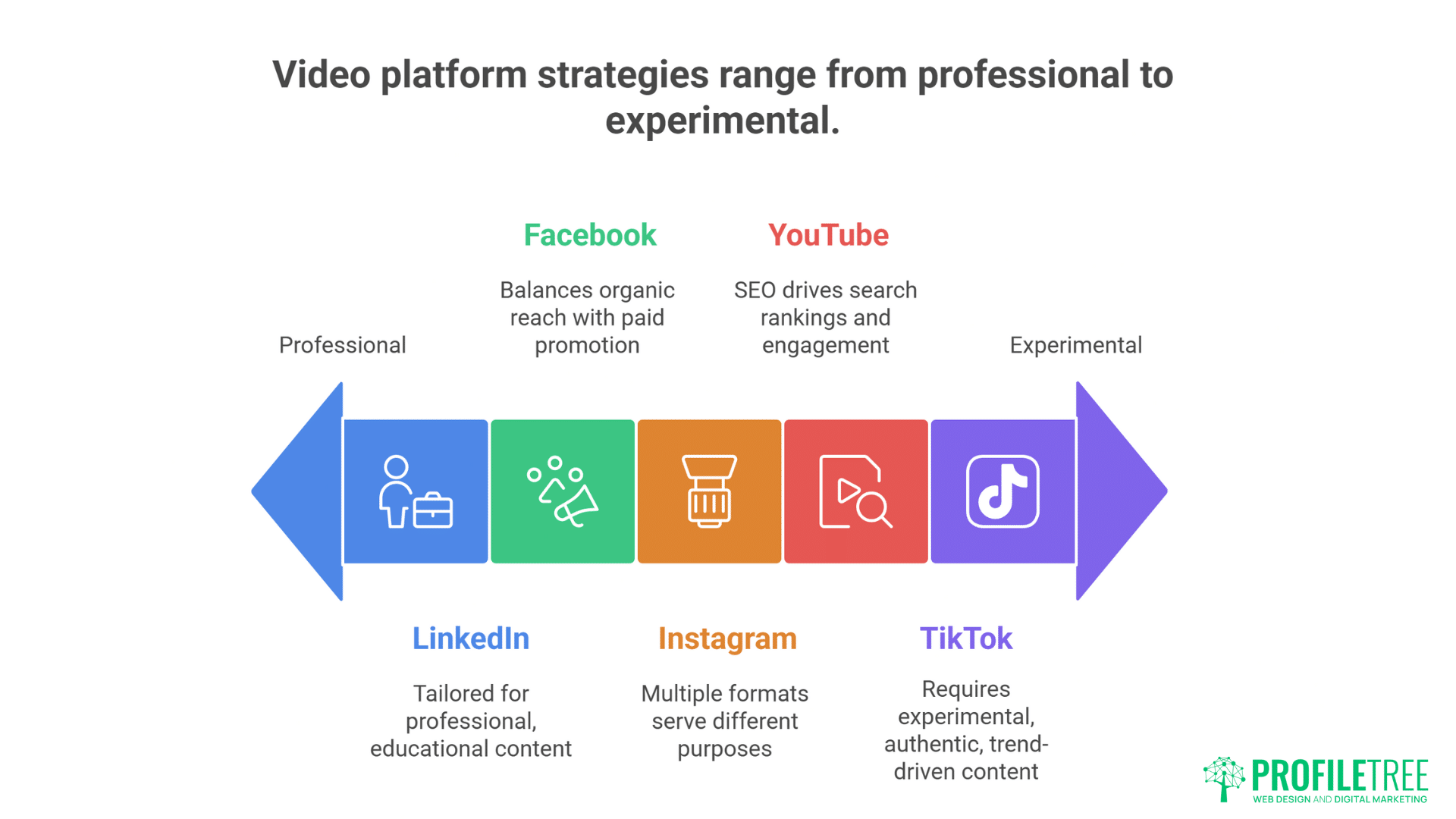
Each digital platform requires tailored video approaches. LinkedIn favours professional, educational content between 30 seconds and 5 minutes. Native LinkedIn video receives priority in the algorithm, generating higher reach than YouTube embeds. For B2B companies targeting decision-makers, LinkedIn video represents essential territory.
Instagram’s multiple video formats—Reels, Stories, IGTV, and feed videos—each serve different purposes. Reels favour entertaining, trend-driven content under 90 seconds. Stories suit behind-the-scenes content and time-sensitive announcements. IGTV accommodates longer-form content up to 60 minutes. Understanding these format distinctions maximises Instagram marketing effectiveness.
YouTube SEO differs fundamentally from website SEO. Video titles, descriptions, tags, and closed captions influence YouTube search rankings. Thumbnail design dramatically impacts click-through rates. Playlist organisation keeps viewers engaged longer. YouTube’s recommendation algorithm favours channels posting consistently, making regular publication schedules essential.
Facebook video strategy balances organic reach with paid promotion. Native Facebook videos autoplay silently in feeds, requiring immediate visual interest and captions. Facebook Live generates 6x more engagement than pre-recorded videos, making it valuable for product launches and announcements. Facebook’s detailed targeting options make it ideal for paid video campaigns reaching specific demographics.
TikTok and emerging platforms require experimental approaches. What works on established platforms often fails on newer channels. Authenticity trumps production value. Trends evolve rapidly. Irish businesses succeeding on TikTok embrace platform culture rather than forcing traditional marketing messages. The reward for mastering emerging platforms includes first-mover advantages and access to younger demographics.
Overcoming Common Video Production Challenges
Budget constraints challenge many Irish SMEs considering video production. Start small with testimonial videos or simple product demonstrations. These formats require minimal production complexity whilst delivering significant value. As video marketing proves its worth, reinvest returns into more ambitious projects. This graduated approach reduces risk whilst building internal confidence.
Finding authentic on-camera talent within your organisation seems daunting initially. Most employees feel uncomfortable on camera without preparation and support. Professional video producers coach nervous participants, creating comfortable environments where natural personality emerges. Multiple takes and careful editing ensure everyone appears confident and professional in final videos.
Maintaining consistent video output challenges businesses without dedicated marketing teams. Batch production solves this problem efficiently. Filming multiple videos during single production days reduces per-video costs whilst ensuring consistent quality. Planning annual video calendars aligns production with business priorities whilst preventing last-minute scrambles.
Technical complexity intimidates many business owners. Professional video production partners handle technical aspects, allowing you to focus on message and strategy. Modern video producers offer turnkey solutions from concept through distribution. This partnership approach delivers professional results without requiring internal video expertise.
Measuring ROI remains challenging without proper attribution systems. Implement tracking pixels, UTM parameters, and conversion goals before launching videos. Connect video analytics to customer relationship management systems. Document baseline metrics before video campaigns begin. These preparations ensure you capture evidence of video marketing success.
The Role of Animation and Motion Graphics
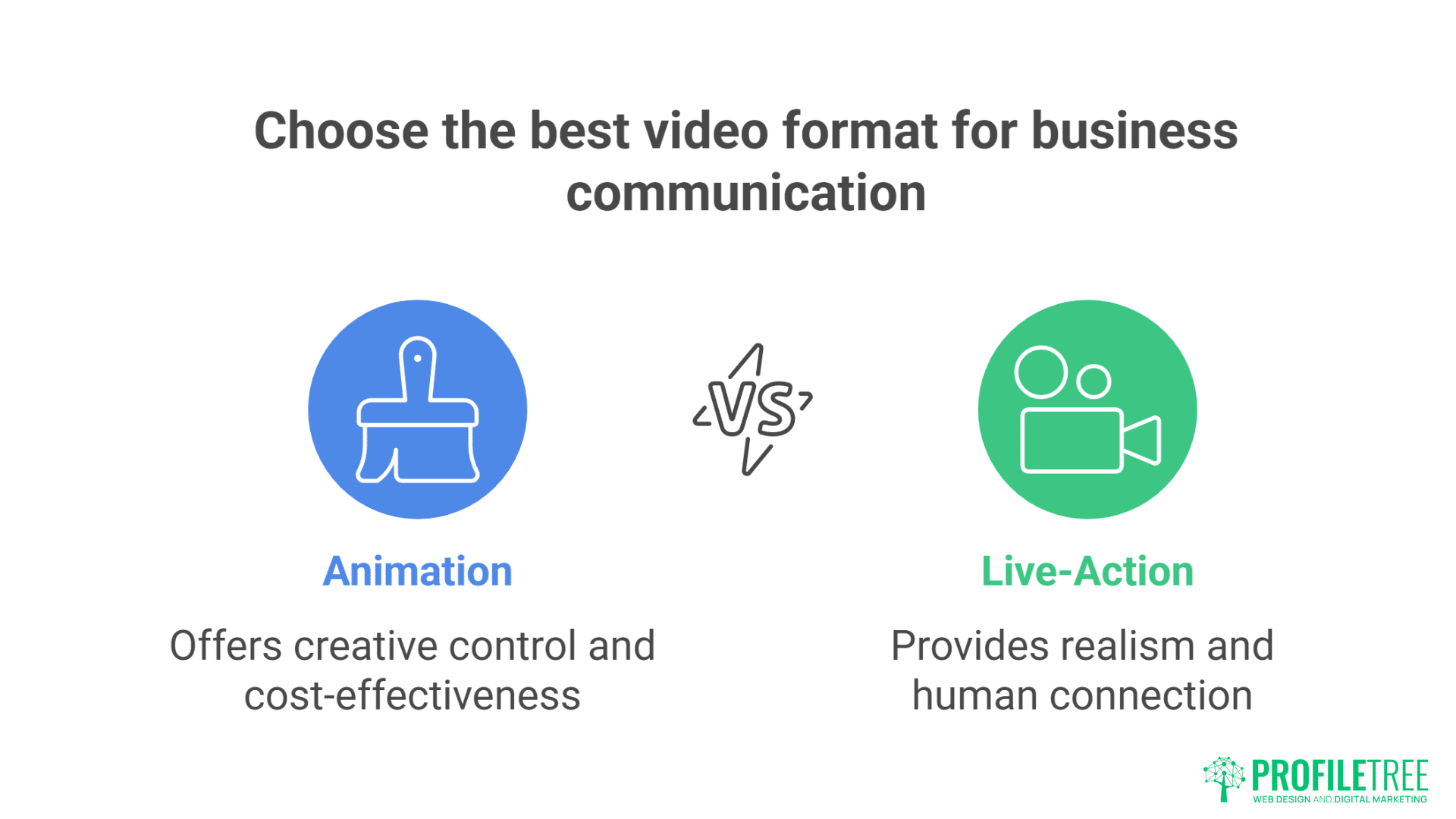
Animation solves unique business communication challenges. Complex processes, abstract concepts, and data visualisation benefit from animated explanation. Unlike live-action video, animation offers complete creative control. Brand colours, impossible camera angles, and perfect timing create engaging content that live footage cannot achieve.
Motion graphics enhance live-action footage with supporting visual elements. Lower thirds identify speakers. Animated logos reinforce branding. Kinetic typography emphasises key messages. Data animations make statistics memorable. These enhancements guide viewer attention whilst maintaining professional presentation standards.
Explainer animations particularly suit Irish technology companies. Software features, technical specifications, and service architectures become accessible through animation. Two-minute explainer videos often communicate more effectively than lengthy documentation. For companies selling intangible services, animation provides tangible visualisation of value propositions.
Character animation creates emotional connections without celebrity endorsements. Animated brand mascots become recognisable assets across marketing materials. Story-driven animations engage viewers whilst delivering marketing messages subtly. This approach proves especially effective for sensitive topics where live actors might seem exploitative.
Cost considerations make animation attractive for specific use cases. Once created, animated assets require no repeat filming for updates. Changing text, colours, or small details costs far less than reshooting live footage. For businesses with frequently changing products or services, animation provides flexibility that live-action cannot match.
ProfileTree’s Approach to Video Production Excellence
ProfileTree combines technical expertise with strategic marketing understanding to deliver video content that drives measurable business results. Our Belfast studio serves clients across Northern Ireland, Republic of Ireland, and the UK, bringing local market knowledge to every production. This regional expertise ensures content resonates with target audiences whilst maintaining professional production standards.
Our pre-production process begins with understanding your business objectives, not equipment specifications. What specific outcomes do you need? Which audiences must you reach? How will video integrate with existing marketing efforts? These strategic questions shape creative decisions throughout production. Every shot, edit, and effect serves your business goals, not artistic preferences.
Production capabilities span from simple interview setups to complex multi-camera shoots. Our equipment arsenal includes 4K cameras, professional lighting, and broadcast-quality audio gear. More importantly, our crew brings decades of combined experience across diverse industries. This experience translates into efficient shoot days that capture exceptional footage whilst respecting your time and budget.
Post-production transforms raw footage into polished marketing assets. Our editors understand both storytelling and platform requirements. Colour grading ensures brand consistency. Audio mastering delivers clear, professional sound. Motion graphics and animations enhance understanding. The result: videos that engage viewers whilst driving business objectives.
Distribution support extends beyond final delivery. We provide platform-specific versions optimised for each channel. Thumbnail designs maximise click-through rates. Video SEO improves discoverability. Performance tracking measures success. This comprehensive approach ensures videos deliver maximum value long after production wraps.
Future Trends in Video Marketing for Irish Businesses
Interactive video technologies create new engagement opportunities. Clickable hotspots, branching narratives, and embedded forms transform passive viewing into active participation. Irish e-commerce businesses particularly benefit from shoppable videos where viewers purchase products without leaving the video player. Early adopters of interactive video report engagement rates 3x higher than traditional video.
Artificial intelligence streamlines video production and distribution. Automated editing tools reduce post-production time. AI-powered captioning improves accessibility whilst boosting SEO. Predictive analytics identify optimal publication times. While AI won’t replace human creativity, it makes professional video production more accessible to SMEs with limited budgets.
Personalised video experiences become increasingly feasible. Dynamic video content adjusts based on viewer data: location, industry, previous interactions. A single video template generates thousands of personalised versions. For Irish businesses with diverse customer segments, personalisation improves relevance without multiplying production costs.
Virtual production techniques, popularised by shows like The Mandalorian, become accessible to smaller productions. LED walls replace green screens, providing realistic backgrounds without location shoots. This technology proves particularly valuable for Irish businesses wanting international settings without travel expenses.
Live streaming continues growing beyond pandemic-driven adoption. Hybrid events combining in-person and virtual audiences become standard. Product launches, training sessions, and company announcements benefit from live video’s immediacy and authenticity. Irish businesses master live streaming gain competitive advantages in reaching distributed audiences.
Ciaran Connolly on Video Marketing Strategy
“Video content isn’t just another marketing channel—it’s becoming the primary way businesses communicate with customers,” explains Ciaran Connolly, ProfileTree founder. “We’re seeing Irish SMEs achieve remarkable results when they commit to consistent, quality video production. The key is starting with strategy, not equipment. Understand your audience’s needs, create content that genuinely helps them, and the business results follow naturally.”
This strategic approach distinguishes successful video marketing from expensive experiments. Too many businesses create videos because competitors have them, without considering purpose or performance metrics. ProfileTree’s methodology ensures every video serves specific business objectives whilst providing genuine value to viewers.
Making the Business Case for Video Production Investment
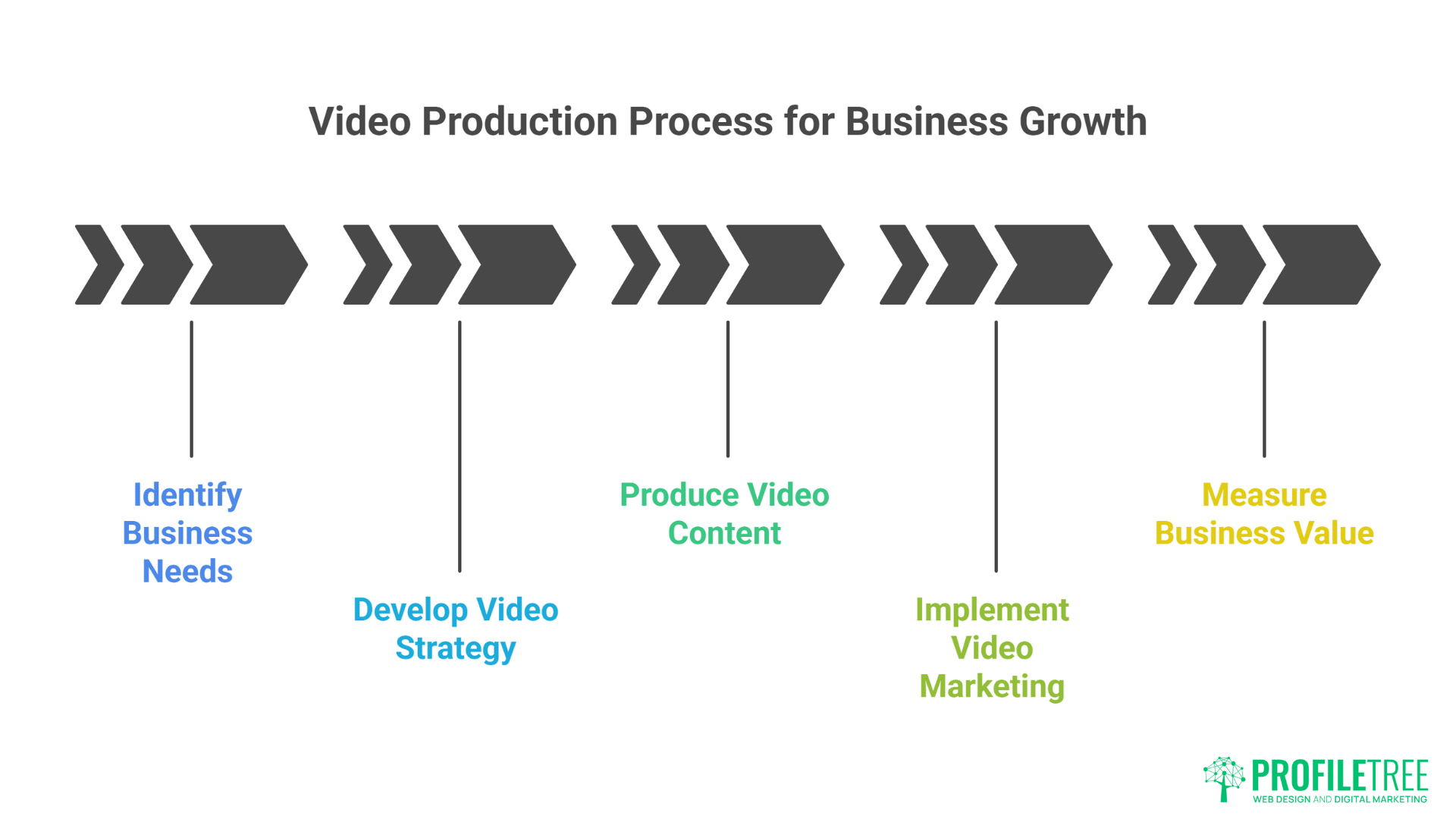
Presenting video production investment to stakeholders requires concrete business arguments. Calculate current customer acquisition costs across existing channels. Compare these against projected video marketing performance based on industry benchmarks. Include considerations for video content longevity—unlike paid advertising, videos continue generating value without ongoing spend.
Risk mitigation arguments resonate with cautious decision-makers. Competitors already using video gain market share advantages. Customers increasingly expect video content when researching purchases. Search algorithms favour video content. Delaying video investment means falling further behind rather than maintaining status quo.
Phased implementation reduces perceived risk. Begin with single hero videos for homepage or product pages. Measure performance meticulously. Use success data to justify expanded video marketing investment. This evidence-based approach builds organisational confidence whilst proving video marketing value.
Consider opportunity costs alongside direct expenses. Every month without video content means lost customer engagement, reduced search visibility, and competitor advantages. When framed as strategic necessity rather than optional expense, video production investment becomes easier to justify.
FAQs
What makes video content more effective than written content for Irish businesses?
Video combines visual, auditory, and emotional elements that written content cannot match. Viewers process visual information 60,000 times faster than text, whilst retaining 95% of video messages compared to 10% from reading. For Irish businesses competing in crowded digital markets, video’s superior engagement and retention rates translate directly into stronger brand recall and improved conversion rates.
How quickly should Irish SMEs expect ROI from video production investments?
Most businesses see initial returns within 3-6 months of publishing professional video content. Website conversion improvements often appear immediately. Social media engagement increases typically emerge within weeks. Search ranking improvements develop over 2-4 months as videos accumulate views and engagement. The compound effect means video ROI accelerates over time rather than diminishing.
What video length works best for business marketing purposes?
Video length depends entirely on platform and purpose. Social media videos perform best under 60 seconds. Website hero videos should communicate value within 90 seconds. Product demonstrations might require 2-5 minutes. Educational content can extend to 10 minutes when providing genuine value. The key principle: make videos as short as possible whilst communicating complete messages effectively.
Should Northern Ireland businesses create different videos for different markets?
Regional customisation improves relevance and conversion rates. A Belfast business targeting Dublin customers benefits from acknowledging local context. However, core video assets can serve multiple markets with minor adjustments. Consider creating modular videos where regional elements can be swapped without complete reproduction. This approach balances customisation with production efficiency.
What technical specifications should business videos meet?
Minimum technical standards include 1080p resolution, clear audio without background noise, and proper colour grading. Frame rates should match platform requirements—typically 24-30fps for standard video, 60fps for action content. Export videos in formats compatible with major platforms: MP4 with H.264 encoding works universally. Professional video producers handle technical specifications automatically, ensuring optimal quality across all platforms.
How can smaller Irish companies compete with larger competitors’ video budgets?
Authenticity often outperforms production value in business video. Smaller companies can leverage personal connections, local knowledge, and agility that larger competitors lack. Focus on creating helpful, genuine content rather than matching corporate production values. Batch production reduces per-video costs. User-generated content supplements professional production. Strategic planning maximises limited budgets’ impact.
How do I prove ROI for video production to finance directors?
Demonstrate video ROI through three measurable metrics: customer acquisition cost reduction (typically 40-60% improvement), sales cycle velocity increase (25-35% faster on average), and customer lifetime value enhancement (30% higher for video-engaged customers). Build quarterly dashboards showing video-influenced pipeline value, cost-per-lead comparisons against other channels, and attribution data connecting video views to closed revenue. Irish SMEs investing £15,000-25,000 annually in video typically achieve payback within 6-8 months through these combined improvements.
What video content works best for investor relations and fundraising?
Product demonstration videos (60-90 seconds showing functionality), authentic founder story content, and traction milestone videos perform best in fundraising contexts. Due diligence video assets showing process capabilities and team expertise streamline investment processes. Post-investment, quarterly video updates from leadership generate 5x higher investor engagement than written reports. Cork and Belfast startups using video in pitch processes report 40% higher meeting conversion rates and faster funding round closures.
How do video production firms manage creative consistency across diverse locations?
Multi-location consistency requires centralised brand guidelines (colour palettes, messaging frameworks, quality standards) combined with template-based video systems that allow regional customisation. Hybrid models where local teams capture footage following standardised guides whilst central teams handle post-production deliver the best balance. Digital asset management systems with approval workflows prevent brand inconsistency. Irish businesses operating across Belfast, Dublin, and Cork typically achieve 60% reduction in off-brand content through systematic consistency protocols.
Who should consider using social media video production services?
Businesses struggling to maintain consistent social content calendars, those lacking in-house video expertise, and companies wanting platform-specific optimisation (Instagram Reels, LinkedIn video, TikTok) benefit most from professional social media video services. Irish SMEs generating fewer than 8 videos monthly typically find professional services more cost-effective than hiring internal videographers. B2B companies targeting professional audiences particularly benefit from LinkedIn-optimised video content that positions executives as thought leaders.
What makes video production for regulated industries different?
Regulated industries face compliance requirements that fundamentally change video production approaches. Financial services need risk warnings and disclosure timing that meets FCA and Central Bank standards. Healthcare requires patient consent documentation beyond standard releases and clinical accuracy verification. Legal services must navigate client confidentiality whilst creating testimonials. For detailed guidance on compliance requirements, see our complete guide to video production for regulated industries.
How quickly should Irish SMEs expect results from video production investments?
Initial conversion improvements appear within 30-60 days of publishing hero videos on key pages. Lead generation impact emerges at 60-90 days as video content gains search visibility. Sales cycle improvements become measurable at 90-120 days once enough deals complete. Full ROI typically crystallises at 6-8 months when combined effects of improved conversion, faster sales cycles, and lower acquisition costs compound. Patient, systematic video implementation delivers better long-term results than expecting immediate transformation.
Taking Action on Video Production
Video production represents a critical investment for Irish businesses seeking sustainable growth in digital markets. The evidence overwhelmingly supports video marketing’s effectiveness across industries and company sizes. From improved search rankings to increased conversion rates, video content delivers measurable business value that justifies initial investment.
ProfileTree’s video production services help businesses across Belfast, Dublin, and beyond harness video’s full potential. Our strategic approach ensures every production serves specific business objectives whilst maintaining professional quality standards. Whether creating your first company video or developing comprehensive video marketing strategies, we provide expertise and support throughout the entire process.
The question isn’t whether your business needs video content—it’s how quickly you can begin capturing video marketing’s benefits. Every day without professional video content means missed opportunities for engagement, conversion, and growth. Start planning your video strategy today, and position your business for success in an increasingly video-centric digital economy.
Contact ProfileTree to discuss how professional video production can transform your marketing effectiveness and drive measurable business growth across Irish and UK markets.