
Corporate Animation in Northern Ireland: A Buyer’s Guide
Table of Contents
Most businesses commissioning their first corporate animation start with the wrong question. They ask what style they want long before they have worked out what the video is for, who signs it off, and what they can sensibly spend. That order needs reversing.
Animated video is now produced by 23% of video marketers, the second most common format after live action, according to Wyzowl’s 2026 State of Video Marketing report. ProfileTree, a Belfast-based digital agency, treats corporate animation as one part of a wider marketing plan rather than a standalone purchase, which is usually where the value sits for smaller firms.
This guide on corporate animation in Northern Ireland walks you through the choices that decide whether the money is well spent: picking a style, buying through an agency, subscription or freelancer, real costs in pounds, how a project actually runs, and the sourcing questions that matter to buyers across the UK and Ireland.
Why Northern Ireland Punches Above Its Weight
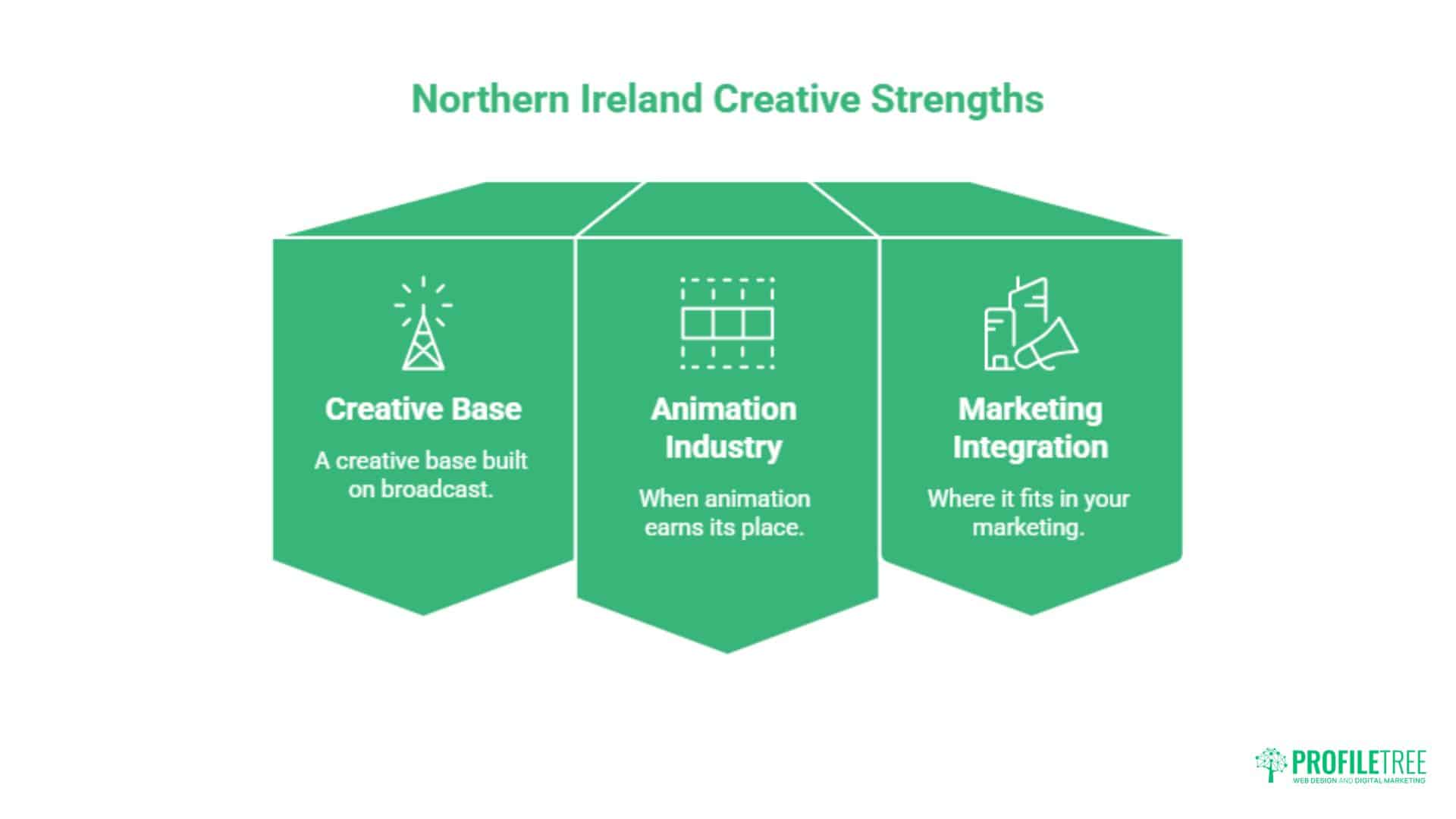
Northern Ireland has a deeper animation base than its size suggests, and that changes the buying decision for local firms. The same talent that produced broadcast and streaming work now serves business clients, so companies from Derry to Newry can reach studio-grade animators without commissioning from London or Dublin. Before you weigh styles or budgets, it helps to understand the case for the format itself.
A Creative Base Built on Broadcast
The region’s reputation for screen production grew out of years of film, television and streaming projects, supported by Northern Ireland Screen and a cluster of studios around Belfast. That heritage matters to a buyer because the animators available for a corporate explainer often carry broadcast-standard craft.
The practical upshot is proximity. You can sit in a review session in person, brief a producer over coffee, and keep the work inside the same time zone. For businesses spread across cities and towns like those covered in this guide to Northern Ireland’s cities, a local partner also understands the regional market they are selling into.
When Animation Earns Its Place
Animation pays off when it makes a hard idea easy to follow. A still image or a wall of text struggles to show a process, a piece of software, or an abstract service. A short animated explainer can do the same job in under ninety seconds.
The numbers back the format when you stick to named sources. Wyzowl found that 91% of businesses use video as a marketing tool, 82% report a good return, and 85% say video helped them generate leads. The report also notes that 71% of marketers rate clips between 30 seconds and two minutes as the most effective length, which is why most business explainers sit inside that window. Keeping an eye on wider content trends helps you place animation sensibly within everything else you publish.
Where It Fits in Your Marketing
An animation rarely works in isolation. It performs best when the explainer feeds the landing page it sits on, the email that links to it, and the social clips cut from it. That repurposing is where the production budget multiplies in value.
Tying the piece to a clear digital strategy keeps every decision anchored to a business goal rather than made in a vacuum. Treat animation as a tool inside your plan, not a trophy for the homepage, and the spend justifies itself faster.
Choosing the Right Animation Style
The right style follows from the message and the audience, not from what looks impressive on a showreel. Financial and professional firms tend to suit clean motion graphics that read as trustworthy. Manufacturers often need detailed process work that a camera cannot reach. Software companies lean on illustrated explainers. Below, each of the four main styles is matched to a use, a rough timeline and a relative cost, so you can rule options in or out early.
2D Explainers for Software and Services
Two-dimensional vector animation is the workhorse of corporate video. It suits product tours, onboarding, service explainers and software walkthroughs, and it typically runs four to six weeks from brief to delivery.
For a Belfast fintech explaining a new feature, or an agri-food firm walking buyers through a supply process, a well-scripted 2D piece answers the question at a fraction of the cost of full 3D. If you are comparing looks, our breakdown of animation styles goes deeper into tone and feel.
3D and Technical Animation for Industry
Three-dimensional work shows internal mechanisms and structures that no film crew can capture, which is why engineering, manufacturing and life sciences firms reach for it. A machine’s inner workings, a chemical process, a piece of medical equipment: all of these become clear when they turn in three dimensions.
The trade-off is time and money. Detailed 3D can run eight to twelve weeks and carries the highest cost of the four styles, so it earns its budget only when the subject genuinely needs that level of detail.
Motion Graphics and Whiteboard
Motion graphics animate text, icons, charts and data, so it suits reports, brand statements and thought-leadership pieces where numbers do the talking. Whiteboard and hand-drawn styles fit training, education and step-by-step explanation, and both sit at the lower end of the cost range.
For public sector and NGO work in particular, accessibility cannot be an afterthought. Captions, high contrast and clear pacing keep a piece usable for every viewer, and the principles in our guide to accessible motion graphics are worth reading before you sign off a style for a WCAG-bound campaign.
Matching Style to Message and Budget
Set the four styles side by side and the decision usually makes itself. The table pairs each with its best use, a realistic timeline and a relative cost band.
| Style | Best for | Typical timeline | Relative cost |
|---|---|---|---|
| 2D vector/explainer | Service and product explainers, onboarding, software tours | 4 to 6 weeks | ££ |
| Motion graphics / kinetic type | Data, reports, thought leadership, brand statements | 3 to 5 weeks | £ to ££ |
| 3D / technical | Product mechanisms, engineering, manufacturing, medical | 8 to 12 weeks | ££££ |
| Whiteboard / hand-drawn | Training, education, step-by-step explanation | 3 to 5 weeks | £ |
Motion graphics count as animation, for the record. The difference from character work is simply whether a character carries the story or moving graphic design does. Both are built frame by frame or with rigged assets.
How to Buy, and What It Costs
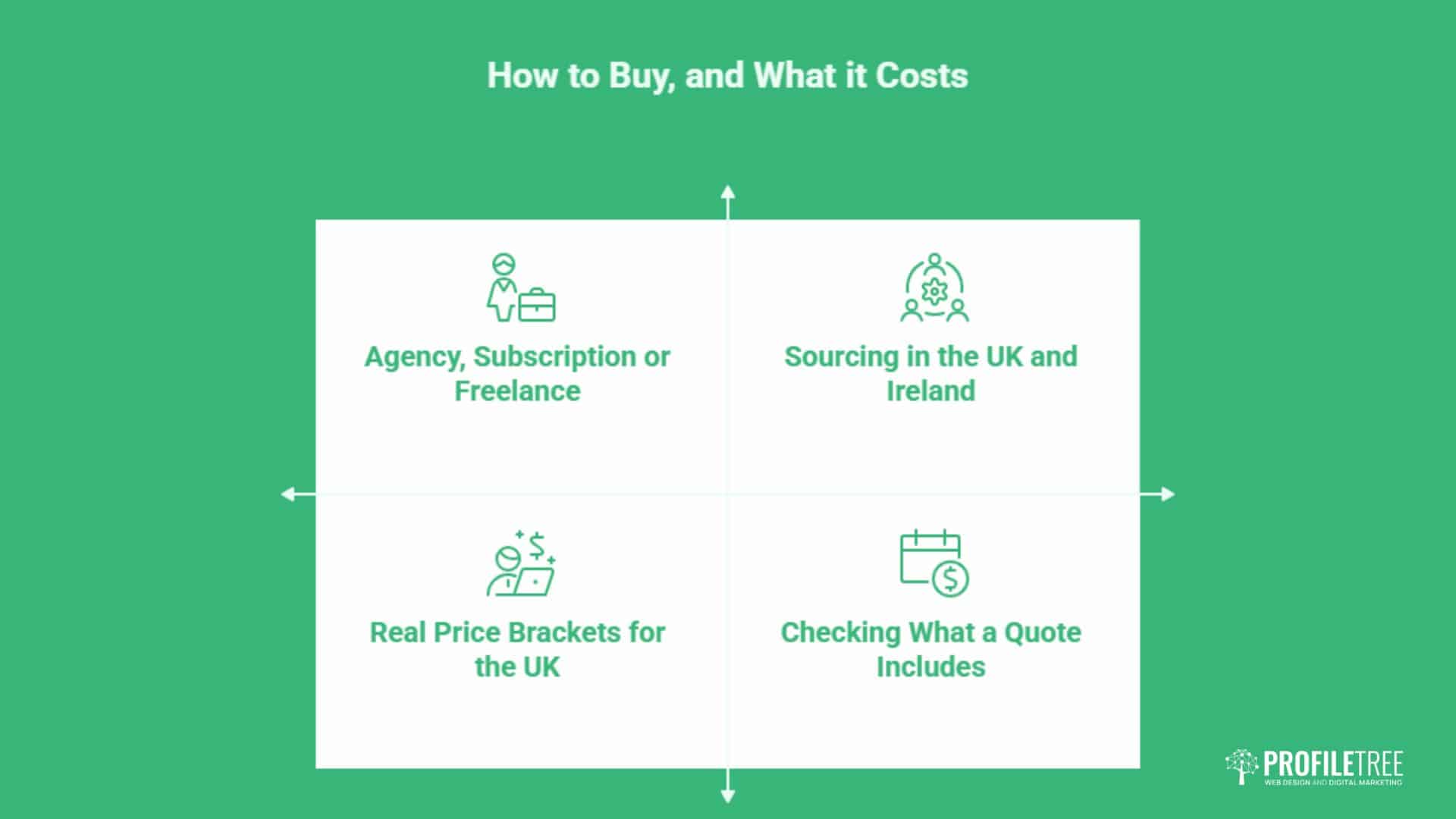
Once you know the style, the next question is how to buy it, and this is the part most studio pages skip because they only sell one model. There are three honest routes to animated content, and the right one turns on volume, budget predictability and how much creative depth you need. Pricing follows, with a clear view of what a quote should actually include.
Agency, Subscription or Freelance
For a single high-stakes piece, such as a homepage explainer or an investor video, a bespoke agency usually pays off because strategy, scripting and revisions are handled as one job. If you need a steady trickle of small social clips, a design subscription or an in-house hire may work out cheaper. Marketplaces suit quick, low-risk edits.
| Criteria | Bespoke agency | Design subscription | Freelance / marketplace |
|---|---|---|---|
| Best suited to | Flagship films, custom explainers | Steady flow of small assets | Simple, template edits |
| Cost predictability | Quoted upfront per project | Fixed monthly fee | Variable, per task |
| Management overhead | Low, the agency runs it | Medium | High, you manage the brief |
| Creative depth | High | Medium | Low to medium |
A middle path many Northern Ireland firms take is to keep simple work close to home and commission the showpiece externally. Our look at in-house video production sets out where that line tends to fall.
Real Price Brackets for the UK
Pricing shifts with style, length and complexity, but the ranges below reflect the UK market and let you sense-check a quote. Per-second rates commonly run from about £100 to £500, depending on style.
Simple motion graphics start from roughly £1,500. A standard 2D character explainer of 60 to 90 seconds, with script, voiceover and sound design included, usually runs £2,000 to £10,000. Complex or 3D work starts around £15,000 and climbs from there.
All prices and figures in this guide are indicative UK examples and correct at the time of writing; use them as a benchmark rather than fixed quotations.
These rates compete well with Dublin and London while keeping collaboration local. When you weigh quotes, look past the headline figure and treat animation as part of your wider video marketing budget rather than a one-off line item.
Sourcing in the UK and Ireland
Two practical issues shape sourcing for buyers here, and most global guides ignore both. The first is tax. If you commission animation from a studio outside the UK, the reverse charge usually applies, which changes how you account for VAT rather than removing it, so confirm the treatment with your accountant before you sign.
The second is data. Animation often means sharing sensitive material such as product roadmaps, unreleased software screens and internal training content. Sending that outside the UK or the European Economic Area raises UK GDPR questions about where the data is processed and stored, and a local studio removes that layer. As Ciaran Connolly, founder of ProfileTree, puts it:
“The cheapest quote is rarely the cheapest project. What costs money is a vague brief and three rounds of rework, not the day rate.”
Checking What a Quote Includes
A low headline price can hide a higher final bill. The items that catch buyers out are revisions, usage rights, music licensing and source files, and any of them can turn a cheap-looking quote into an expensive project.
The cheaper end of the market tends to be templated rather than custom. That is fine for a quick social asset, though a poor fit for a flagship piece that your brand will be judged on. Ask for the inclusions in writing so you can compare like with like.
The Production Process, Step by Step
A polished 60 to 90-second animation typically runs four to eight weeks from brief to delivery. The timeline rarely slips because of the animators; it slips because of slow client-side feedback in the early stages. Knowing the sequence helps you protect the schedule, and it shows where the biggest savings hide.
Brief, Discovery and Script
Every project starts with objectives, audience and the single message the video must convey. Get this wrong, and every later stage costs more.
The script comes next, written for the ear and the eye together and timed to the target length. Sign-off at the script stage is the cheapest place to make changes, so give it proper attention before anyone opens the animation software. A fuller walkthrough sits in our guide to the production process.
Storyboard, Animation and Voiceover
The storyboard and style frames set the look and the scene flow, and they should be approved before any animation begins. Skipping this gate is how projects drift.
Then comes the build itself, with a professional voice recorded to match the script’s pacing. For regional campaigns, a Northern Irish voiceover carries a trust profile that a generic accent cannot, which matters for public sector and local brand work in particular.
Sound Design and Sign-Off
Music, effects and the final mix separate professional output from rough drafts. This polish stage is quick, but it is the difference viewers feel without being able to name.
Most overspend comes from reopening decisions being made late. Consolidate feedback at each gate, send one set of changes rather than a steady drip, and the project stays on budget and on schedule.
Where AI Speeds Things Up
Generative tools now shorten the early ideation and style-frame stage for many studios, trimming days from the front of a project. That is a genuine gain when the goal is exploring options quickly.
For a brand-critical piece, though, the final production assets should still be custom and free of copyright doubt, so ask any supplier how they use AI and where the human-made work begins. Thinking about AI in marketing more broadly helps you judge where automation adds value and where it introduces risk.
Making the Animation Work Harder
Commissioning the video is the start, not the finish. The firms that get the most from animation build it into their site, their content plan and their team’s skills, so a single production earns its keep for months. This final section covers how to spread that value and how to choose the right partner to deliver it.
Building Animation Into Your Website
Animation belongs inside the website itself, not just on social channels. Hero animations and small interface movements shape how a modern site feels, which is why motion often surfaces during a build rather than as a separate commission.
Planning the animation alongside a website design project means the explainer lands on a page built to hold it, with the right load speed and layout, rather than being bolted on afterwards.
Feeding Your Content and YouTube Plan
An explainer is raw material for a dozen smaller assets. Cut it into clips, pull stills for social, and let it anchor a blog post or an email, and the production budget stretches much further.
YouTube deserves particular attention, since Wyzowl ranks it as the most used and highest-rated platform among video marketers. An asset built with a YouTube home in mind, with a strong thumbnail and clear titling, keeps earning views, and the same logic drives the pull of short-form video across every channel. Slotting animation into a wider content marketing plan is what turns one video into a season of posts.
Keeping Updates In-House
Modular animation can be edited later without a full rebuild. Swap a line of text, refresh a voiceover, or update a single scene, provided the studio structured the project for it.
Teams that want to handle those small changes themselves can build the skill through digital training, keeping minor updates in-house and reserving the studio for the bigger pieces. Flag any likely future edits during the brief so the build allows for them.
Choosing a Northern Ireland Partner
The strongest partner plans, produces and distributes the animation as one job rather than handing it between disconnected suppliers. That single point of accountability is usually the practical difference between a smooth project and a stalled one.
ProfileTree builds animation into an offer that spans web design, video, content and SEO services, so a piece can be planned, produced and promoted together. For Northern Ireland firms that want studio-grade work without the offshore admin, that joined-up approach tends to earn its keep.
Your Next Step With Corporate Animation
Corporate animation rewards buyers who plan before they price. Settle the purpose, the sign-off and the goal first, choose a style that fits the message, and pick a route to buy that matches your volume and budget. Do that, and the format earns its place across your website, your content and your channels. Talk to ProfileTree about what your animation needs to achieve before any style or budget is fixed.
FAQs
How Much Does a 60-Second Animated Video Cost?
In the UK market, a templated option starts at around £1,500, a standard custom 2D explainer with script, voiceover, and sound design typically runs £2,000 to £10,000, and complex or 3D production starts at around £15,000. The biggest cost drivers are style, length and the number of revision rounds. A clear, signed-off brief and script keep the figure at the lower end of any range.
What Is the Difference Between Motion Graphics and 2D Animation?
Motion graphics animate text, icons, shapes and data, so it suits reports, brand statements and abstract ideas. Two-dimensional character animation uses illustrated characters to carry a story, which fits explainers and narrative pieces. Both are animations; the difference is whether a character drives the message or the moving graphic design does.
How Long Does Corporate Animation Production Take?
A polished 60 to 90-second video usually takes four to eight weeks. Simple motion graphics can be quicker at two to three weeks, while detailed 3D or character work can run eight to twelve. Most delays come from slow feedback at the script and storyboard stages, so booking reviewers in early protects the timeline.
Should We Use a Local Studio or an Offshore One?
Local studios offer easier communication, regional voiceover and simpler data handling under UK GDPR. Offshore production can look cheaper on paper, but reverse-charge VAT, extra revision rounds and time-zone friction often erode the savings. For sensitive or brand-critical work, the local route is usually the safer choice.
Who Owns the Video and the Source Files?
You normally own the final delivered file, such as the MP4 or MOV. Raw project files, like editable After Effects assets, are often kept by the studio unless you negotiate ownership in the contract. If you expect to make your own future edits, agree to this in writing before production starts.