
Most Popular Social Media Platforms: UK Business Guide
Table of Contents
Choosing which of the most popular social media platforms to use for your business is one of the most common marketing questions SME owners ask. The answer is rarely “all of them.”
Facebook holds the top position among the most popular social media platforms globally by monthly active users. But for a business owner in Belfast, Dublin, or London, that single statistic tells you almost nothing useful about where to spend your time or budget.
The most popular social media platforms by global reach are not always the most valuable for a specific business, audience, or goal. A Belfast-based accountancy firm and a Dublin fashion retailer have completely different answers to the question of where to show up online. This guide covers verified user numbers, UK and Irish usage patterns, and what each platform actually means in practice for SMEs trying to make sensible marketing decisions.
ProfileTree, the Belfast-based digital marketing agency, works with businesses across Northern Ireland, Ireland, and the UK on social media strategy, content marketing, and video production. The clearest pattern across those projects is that businesses that choose platforms based solely on reach data tend to spread themselves thin and see weak returns. The ones that pick two or three platforms based on their specific audience, content capability, and commercial goals are the ones that build genuine traction.
The Most Popular Social Media Platforms by User Numbers
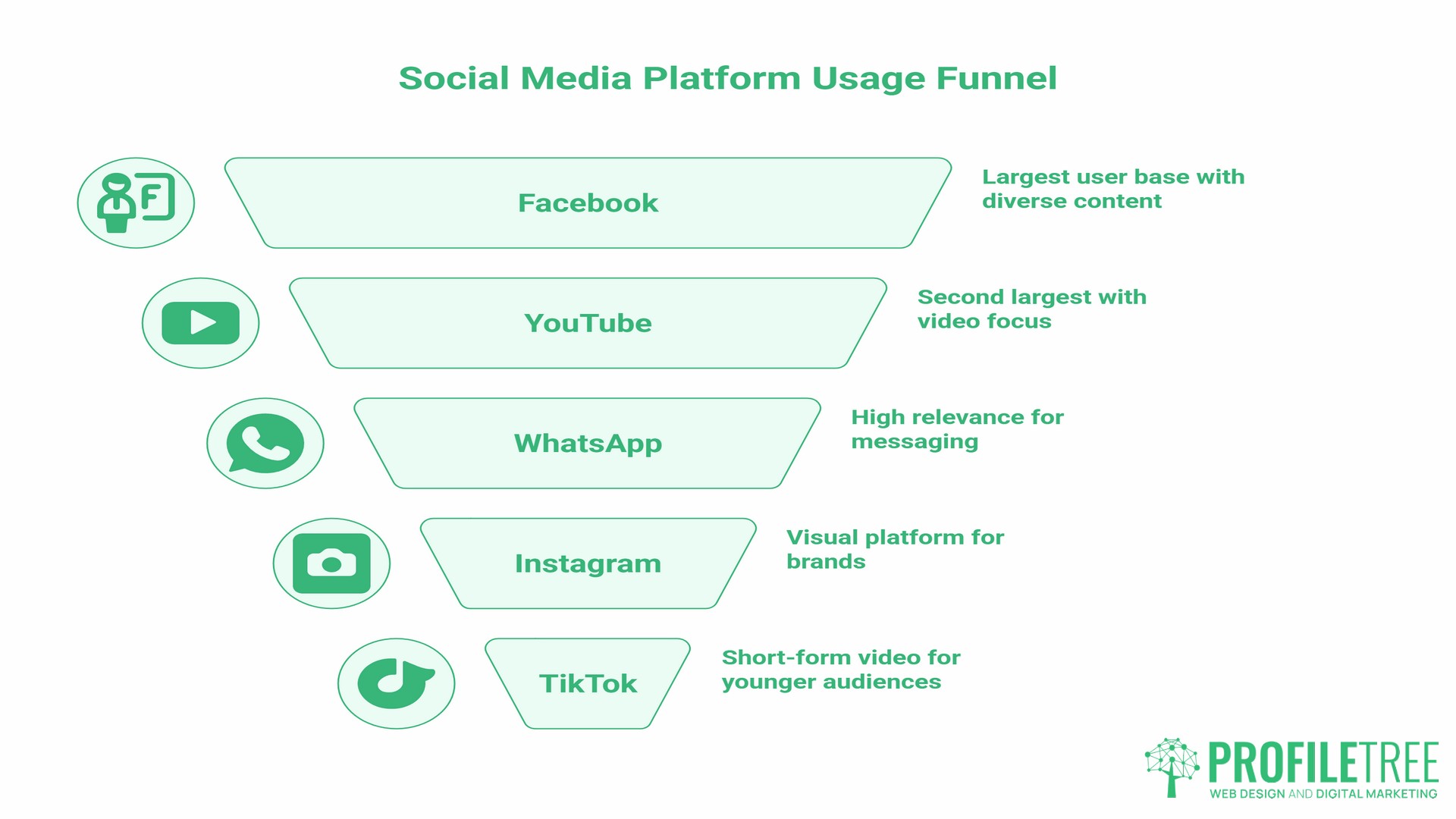
Before getting into strategic decisions, here is where global usage currently stands. These figures represent monthly active users (MAUs) reported by each platform or in official earnings filings, aggregated by DataReportal and Statista.
| Platform | Global MAUs | UK/IE Relevance | Primary Content Format | Best For |
|---|---|---|---|---|
| 3.07 billion | High | Mixed (text, video, groups) | Community, ads, local awareness | |
| YouTube | 2.5 billion | High | Long-form and short video | Search-driven content, tutorials |
| 2 billion | Very High | Messaging | Customer service, direct comms | |
| 2 billion | High | Visual, Reels, Stories | Brand awareness, product showcase | |
| TikTok | 1.58 billion | High (under 35s) | Short-form video | Reach, trend-led content |
| 1.34 billion | Low | Messaging | China-focused brands only | |
| 1.15 billion | High (B2B) | Professional content | B2B lead generation, recruitment | |
| Snapchat | 946 million | Medium (under 25s) | Ephemeral content | Youth audiences, AR filters |
| X (Twitter) | 611 million | Medium | Text, news | PR, commentary, news brands |
| 498 million | Medium | Visual discovery | E-commerce, lifestyle, interiors | |
| 471.6 million WAU | Medium | Community discussion | Niche communities, research |
Sources: DataReportal Digital 2026; Statista Global Social Media Statistics; platform earnings filings. Facebook, YouTube, WhatsApp, Instagram, TikTok, WeChat, LinkedIn, and Pinterest figures reflect platform-reported MAUs. The Snapchat figure is from Snap Inc.’s Q4 2025 earnings report. Reddit reports Weekly Active Uniques (WAUq) rather than MAUs; the figure above reflects Q4 2025 WAUq per Reddit’s FY2025 10-K filing.
The comparison table above reflects global figures. UK and Irish usage patterns differ in meaningful ways, which the sections below address platform by platform.
The Most Popular Social Media Platforms Reviewed for UK SMEs
1. Facebook
Facebook remains the world’s most popular social media platform, with over 3 billion monthly active users. In the UK, it retains strong penetration across the 35–65 age bracket, making it the primary platform for reaching older consumers, local community audiences, and service-based businesses.
Facebook Groups have become particularly valuable for local trade and service businesses. A plumber, a solicitor, or a beauty therapist operating in a specific town will often find more commercial value in active local Facebook Groups than in any other platform.
Facebook Ads Manager remains one of the most precise targeting tools available to SMEs, allowing businesses to reach users by location, age, income bracket, interests, and life events. For businesses in Northern Ireland and Ireland specifically, Facebook’s local targeting capability makes it a practical first choice for awareness campaigns.
The platform does require consistent content output to maintain reach. Organic reach on Facebook pages has declined substantially over the past five years; for most business pages, paid promotion is now necessary to reach audiences beyond existing followers.
Best for: Service businesses, retailers, hospitality, local trades, community organisations, and any business targeting the 35–65 demographic in the UK and Ireland.
2. YouTube
YouTube is the second-most-popular social media platform globally, with over 2.5 billion monthly active users. It functions differently from every other platform on this list: YouTube is primarily a search engine, not a social feed. Users arrive with intent, searching for tutorials, product reviews, how-to content, and educational material.
This makes YouTube uniquely valuable for businesses whose customers research before buying. A manufacturing company explaining its processes, a solicitor answering common legal questions, or a contractor demonstrating a technique can all attract relevant, high-intent audiences through YouTube that would be difficult to reach on other platforms.
YouTube content has a long shelf life. A well-optimised video can generate views and leads years after publication, unlike content on Instagram or TikTok, which depreciates rapidly. For businesses with the capacity to produce quality video consistently, YouTube offers a compounding return that no other social platform matches.
Success on YouTube requires attention to video SEO: keyword-relevant titles, accurate descriptions, and engagement signals (watch time, comments, saves) all influence how the algorithm distributes content. ProfileTree’s video marketing service covers both production and channel strategy for businesses building a YouTube presence from scratch or improving an existing one.
YouTube Shorts has also opened YouTube to audiences that previously favoured TikTok or Instagram Reels, and can serve as a discovery mechanism drawing new subscribers toward longer-form content on a channel.
Best for: Businesses with educational or demonstrable content, trades, professional services, e-learning, manufacturers, and any brand investing in long-term search visibility.
3. WhatsApp
WhatsApp sits third globally with 2 billion monthly active users, but its significance in the UK and Ireland is disproportionate to its ranking. In Northern Ireland and the Republic of Ireland in particular, WhatsApp is the dominant personal and business communication tool, used for everything from customer queries and appointment confirmations to supplier coordination.
WhatsApp Business allows SMEs to set up automated replies, product catalogues, and broadcast lists. For service businesses handling inbound enquiries, it is often the fastest route to conversion. Many customers in the UK and Ireland will message a business on WhatsApp before they pick up the phone or complete a web form.
WhatsApp Channels allow businesses to broadcast updates to followers without two-way group interaction, making them well-suited for promotions, event announcements, and service updates.
Best for: Service businesses with high inbound volume, hospitality, healthcare, trades, and any business where speed of response to customer enquiries directly affects conversions.
4. Instagram
Instagram has over 2 billion monthly active users and remains one of the most popular social media platforms for businesses in retail, hospitality, beauty, fitness, and interior design. Its strength is visual storytelling: businesses that can produce high-quality imagery and short videos will find Instagram an effective platform for brand building.
Reels currently receive the highest organic reach of any content type on the platform. The algorithm actively distributes Reels to non-followers, making it the most accessible way for smaller accounts to grow an audience without paid spend.
Instagram Shopping allows product-based businesses to tag items directly in posts and Reels, turning content into a direct purchase pathway. The platform skews younger than Facebook, with its strongest UK engagement among 18–34-year-olds. B2B businesses and those targeting older demographics will typically see weaker returns here than on LinkedIn or Facebook.
Best for: Retail, hospitality, beauty, fitness, food and drink, interiors, fashion, and any brand with strong visual content.
5. TikTok
TikTok reached 1.58 billion monthly active users and has transformed expectations around content discovery. Its algorithm distributes content to non-followers based entirely on engagement signals, meaning a business account with zero followers can reach thousands of people with the right content.
In the UK, TikTok’s user base is heavily weighted towards under-35s, though it has been growing steadily among 35–45 year olds since 2022. Businesses targeting younger consumers in fashion, food and drink, entertainment, and lifestyle categories have achieved strong organic reach.
TikTok’s commercial value for most SMEs lies primarily in awareness rather than direct conversion. Content tends toward entertainment, humour, and behind-the-scenes authenticity. Businesses that can produce this style of content consistently will find TikTok cost-effective for audience growth, though the volume of content required is high.
Best for: Consumer brands targeting under-35s, food and drink, fashion, entertainment, and businesses comfortable with authentic, informal video content.
6. LinkedIn
LinkedIn has over 1.15 billion registered members and is the only major social platform built specifically around professional identity. For B2B businesses, professional services, and recruitment, there is no direct equivalent on the most popular social media platforms.
In the UK and Ireland, LinkedIn penetration among senior decision-makers and business owners is high. LinkedIn content rewards genuine expertise: long-form posts, case studies, and industry commentary consistently outperform promotional content.
LinkedIn Ads are considerably more expensive per click than Facebook or Instagram, but the audience targeting by job title, industry, company size, and seniority is uniquely precise for B2B campaigns. A campaign targeting procurement managers at mid-sized manufacturing firms in the UK, for example, is achievable on LinkedIn in a way that is not possible elsewhere.
ProfileTree’s article on LinkedIn for business covers practical steps for building a company presence that generates leads rather than simply accumulating connections.
Best for: Professional services, B2B suppliers, consultancies, recruitment, financial services, and any business where the buyer is a senior professional.
7. Snapchat
Snapchat reached 946 million global monthly active users in Q4 2025, according to Snap Inc.’s official earnings report, and is approaching the one billion user milestone. Its relevance for UK SMEs is primarily limited to brands targeting under-25 audiences. The platform’s augmented reality advertising formats are technically sophisticated but require specialist creative skills, and it is generally not the first investment for an SME building a social presence from scratch.
Best for: Consumer brands targeting under-25s, youth fashion, entertainment, and brands with capacity for AR creative production.
8. X (Formerly Twitter)
X has approximately 611 million monthly active users globally, though UK engagement has declined since the platform’s ownership change in 2022. It retains value for news brands, PR activity, commentary in specific sectors (technology, finance, politics), and businesses where real-time public conversation is commercially relevant. For most SMEs in the UK and Ireland, it is not a priority platform.
Best for: News publishers, PR-led brands, technology and financial services businesses with a commentary-driven content strategy.
9. Pinterest
Pinterest has approximately 498 million monthly active users and functions as a visual discovery engine. Its commercial value is concentrated in specific sectors: home interiors, weddings, food and drink, fashion, and DIY. Users on Pinterest typically have higher purchase intent than on most other social platforms, as they are actively planning purchases. For e-commerce businesses in these categories, Pinterest’s product linking features are worth exploring.
Best for: E-commerce businesses in home, lifestyle, food and drink, weddings, and fashion.
10. Reddit
Reddit reported 471.6 million Weekly Active Uniques in Q4 2025, per its FY2025 10-K filing. The platform does not publish a standard monthly active user figure comparable to other networks. Reddit is built around community forums called subreddits, and its culture strongly disfavours promotional content.
For businesses, Reddit’s value lies in audience research, organic community participation, and Reddit Ads targeting specific subreddits. Businesses that genuinely contribute useful content to relevant communities can build credibility over time. Success requires a thorough understanding of each subreddit’s rules and culture.
Best for: Businesses with strong community knowledge, brands whose audience actively discusses relevant topics on Reddit, and marketing teams using it for audience insight and research.
Platform User Growth: 2023 to 2025
| Platform | 2023 MAUs | 2025 MAUs | Change |
|---|---|---|---|
| 2.9 billion | 3.07 billion | +6% | |
| YouTube | 2.2 billion | 2.5 billion | +14% |
| 2 billion | 2 billion | Stable | |
| 2 billion | 2 billion | Stable | |
| TikTok | 1 billion | 1.58 billion | +58% |
| 950 million | 1.15 billion | +21% | |
| X (Twitter) | 528 million | 611 million | +16% |
| Snapchat | 750 million* | 946 million | +26% |
| 465 million | 498 million | +7% |
Snapchat 2023 figure based on platform-reported data from Q4 2023. 2025 figure from Snap Inc. Q4 2025 earnings. Reddit is excluded from this table as the platform reports weekly rather than monthly actives; comparisons would not be like-for-like.
TikTok and LinkedIn show the strongest growth trajectories across this period. LinkedIn’s 21% growth reflects the platform’s expansion from professional networking into a broader content publishing channel with significant B2B commercial value.
Regional Spotlight: Social Media in the UK and Ireland
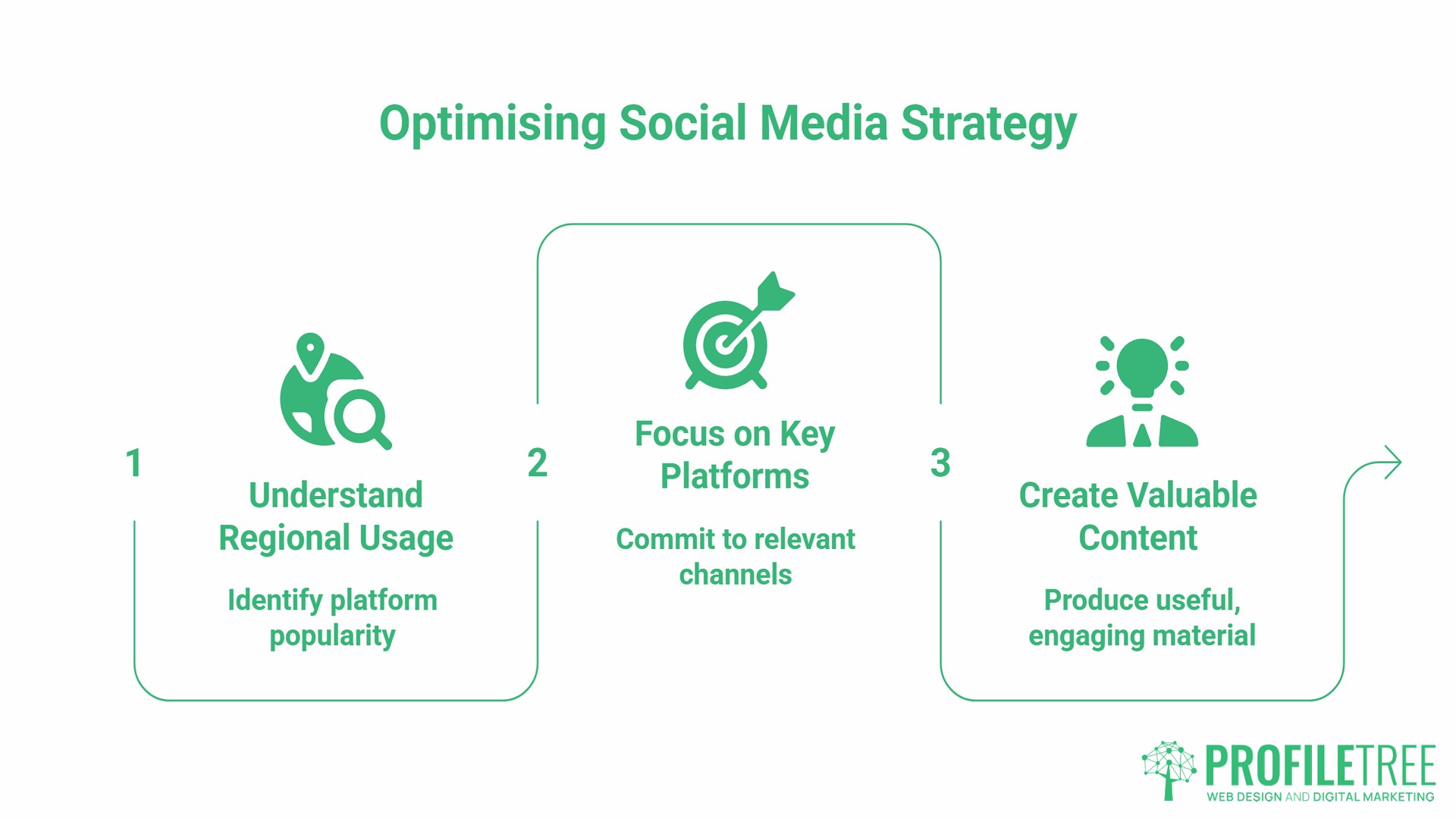
Global user statistics obscure regional differences that matter when allocating marketing budget. Among the most popular social media platforms globally, usage patterns vary considerably at a UK and Irish level.
In the UK, Ofcom’s annual communications market research consistently shows Facebook and YouTube as the two most widely used social platforms across all age groups. WhatsApp is the dominant messaging platform, used by the majority of UK smartphone owners. Instagram leads for under-35 usage, with TikTok closing the gap year on year in that demographic.
In Ireland and Northern Ireland, WhatsApp has particularly high penetration as a business communication tool. It is routine for SMEs across both jurisdictions to handle customer enquiries, quote requests, and appointment bookings entirely through WhatsApp. This distinguishes the Irish and Northern Irish market from the broader UK pattern, where phone and email still account for a larger share of inbound enquiries.
LinkedIn’s relevance in the Republic of Ireland is amplified by Dublin’s position as a European headquarters location for major technology and financial services companies. B2B businesses targeting enterprise clients in Ireland will find LinkedIn more commercially productive than the global averages suggest.
“The businesses we see getting the best return from social media are not the ones on every platform,” says Ciaran Connolly, founder of ProfileTree. “They are the ones that have made a clear decision about where their customers actually spend time, and then committed to producing genuinely useful content in that one or two places.”
How to Choose the Right Platform: A Framework for UK SMEs
Selecting from the most popular social media platforms is not the same as selecting the right ones for your business. These five steps give a practical starting point.
- Step 1: Define your audience clearly. Age, location, and whether you are selling to consumers or businesses will immediately narrow the field. Under-35 consumers: Instagram and TikTok. Over-35 consumers: Facebook. Business buyers: LinkedIn. Local service customers: Facebook and WhatsApp.
- Step 2: Match the platform to your content capability. Video content performs best on YouTube and TikTok. Static imagery works on Instagram and Pinterest. Written thought leadership belongs on LinkedIn. If you cannot realistically produce video consistently, do not make YouTube your primary channel.
- Step 3: Start with one or two platforms, not five. Mediocre content across five platforms will consistently underperform focused, quality content on two. Audit your existing presence: which platforms are generating enquiries? Commit there first.
- Step 4: Measure what matters. Follower counts and likes are not commercial metrics. For most SMEs, the meaningful signals are website referral traffic, direct enquiries attributed to social content, and the quality of conversations starting through social channels.
- Step 5: Review quarterly. Platform algorithms, formats, and audience behaviours change. A quarterly review of which platforms are generating leads ensures the strategy stays current rather than running on assumptions formed two years ago.
ProfileTree’s digital training programmes help marketing teams and business owners build the internal skills to manage social strategy without outsourcing every execution decision.
Building a Presence That Avoids the Ghost Town Effect
The most common failure mode for SME social media accounts is inconsistency. An account that posts ten times in January and then goes quiet until March signals unreliability to both the platform algorithm and the audience.
Consistency does not mean volume. A business that posts twice a week with audience-relevant content will outperform one that posts daily filler content. Before every post, ask: Does this give the audience something useful, interesting, or worth sharing?
Content variety helps. Most platforms offer multiple formats: text posts, static images, short videos, long videos, stories, and live broadcasts. Testing different formats identifies what resonates with a specific audience rather than assuming. Responding to comments in the first hour after posting signals genuine engagement to the algorithm, which affects distribution.
For businesses wanting to move from an inconsistent presence to a structured content programme, the ProfileTree article on digital content marketing trends provides further guidance on building content plans that work across platforms.
Common Pitfalls in Social Media Marketing for UK Businesses
- Treating all platforms identically. Posting the same content to LinkedIn, Instagram, and TikTok simultaneously without adaptation almost always underperforms. Each platform has distinct norms, formats, and audience expectations.
- Prioritising follower count over engagement. A business with 500 highly engaged followers in its target market will generate more leads than one with 10,000 passive followers who never interact.
- Investing in paid social before establishing organic. Paid social amplifies what works organically. Businesses that run Facebook Ads before establishing what content their audience responds to will waste budget. Test organically first.
- Publishing without a content strategy. Platform selection and posting frequency are not substitutes for a clear content strategy: knowing what you want to say, who you are saying it to, and what action you want them to take.
- Measuring vanity metrics. Impressions and reach are awareness signals, not conversion signals. Track enquiries, link clicks, and actions that connect to revenue.
For further reading on how UK users actually allocate time across platforms, the ProfileTree article on time spent on social media statistics provides useful context on where attention is genuinely concentrated.
Frequently Asked Questions
What is the most popular social media platform in the UK?
Facebook is the most widely used platform in the UK across all age groups, followed by YouTube and WhatsApp. Instagram leads for under-35 users, and TikTok has grown significantly in the 18–34 demographic since 2022. Ofcom’s annual communications market reports provide the most current UK-specific usage data.
Which of the most popular social media platforms is best for B2B lead generation in the UK?
LinkedIn is the most direct B2B lead generation platform in the UK, particularly for professional services, consultancy, and technology businesses. Its audience targeting by job title, industry, and seniority makes it uniquely suited to reaching business decision-makers.
Should a small business be on every social media platform?
No. Spreading a limited content budget across five or six platforms produces diluted output on all of them. Most SMEs are better served by a focused presence on two platforms where their audience is active, with consistent and relevant content, than by a token presence everywhere.
Is Facebook still relevant for UK businesses targeting older customers?
Yes. UK adults aged 35–65 remain active on Facebook, and the platform’s local targeting through Ads Manager makes it effective for service businesses operating in specific geographic areas. Facebook Groups retain strong community engagement in local markets across the UK and Ireland.
What is the fastest-growing social media platform in the UK?
TikTok has shown the strongest growth trajectory among UK users aged 18–44 over the past two years, rising from 1 billion MAUs in 2023 to 1.58 billion by 2025. LinkedIn has also grown significantly by 21% over the same period, driven by increased content publishing.
How much should a UK SME spend on social media advertising?
There is no universal figure. Facebook and Instagram campaigns can generate measurable results with modest budgets when audience targeting is precise and the creative is well-matched to the platform. LinkedIn advertising costs more per click but is often justified for B2B businesses, where a single converted lead has significant commercial value. Establish which platforms generate organic engagement with your audience before committing to paid spend.
Do I need an agency to manage social media?
Not necessarily. Many SMEs manage social effectively in-house when the team has the right skills and a clear strategy. ProfileTree’s digital training programmes are designed for business owners and marketing teams who want to build that in-house capability. For businesses that want full execution support, agency management provides consistency and strategic alignment.