
Instagram Hacks for Business: A Practical Guide for SMEs
Table of Contents
Instagram started as a photo-sharing app. For millions of businesses across the UK and Ireland, it has become one of the most cost-effective marketing channels available, provided you know which features to use and why. Most SME owners set up an account, post inconsistently, and wonder why nothing happens. The issue is rarely effort. It is almost always a strategy.
This guide covers the Instagram features that actually move the needle for small and medium-sized businesses: bio optimisation, carousels, Reels, Stories, Highlights, and Insights. For each one, you will find a practical explanation of how it works, why it matters for social media marketing, and what a realistic SME use case looks like. This is written for business owners in Northern Ireland, Ireland, and the UK who want results from the time they put in.
Instagram Bio: Your 10-Second Business Case
Your Instagram bio is the first thing a potential customer sees when they land on your profile. For a business, it needs to do real work in under 150 characters: communicate what you do, who you serve, where you operate, and what the visitor should do next.
A bio that simply states the business name and a vague tagline wastes the space. Instagram’s internal search algorithm uses bio text to match profiles to user queries, so keyword placement here is one of the most overlooked Instagram hacks available. A solicitor’s firm in Belfast that includes “family law Belfast” in its bio is far more likely to appear when someone searches for that service on Instagram than one that writes “helping families through difficult times.”
A well-structured SME bio covers five elements:
- What you do, using the words your customers actually search for
- Where you operate (city, region, or “across the UK and Ireland” if your service area is broader)
- Who you serve
- Your primary differentiator or proof point
- A clear call to action with a link
The link field deserves more attention than most businesses give it. Pointing visitors to your homepage is the default choice and often the wrong one. A landing page built around the action you want them to take, booking a consultation, viewing a specific service, or requesting a quote, converts significantly better than a homepage. If your website does not have dedicated landing pages for your key services, that is worth addressing before investing more time in growing your Instagram presence.
One practical tip: Instagram allows line breaks in bios, and using them to give each element its own line makes the profile far easier to read on mobile, where the majority of visits happen.
Carousels: The Highest-Reach Format on the Grid
Single-image posts still have a place on Instagram, but carousels consistently outperform them for reach and engagement. The reason is structural: if a follower scrolls past your first slide without engaging, Instagram will serve them the second slide later as though it were a new post. A carousel with six slides has six opportunities to appear in that person’s feed.
For SMEs, carousels work particularly well for content that benefits from a sequence: a step-by-step process, a before-and-after transformation, a product range comparison, or a client result broken down across slides. A trades business could use a carousel to show a job from survey through to completion. An accountancy practice could use one to walk through the key dates in the self-assessment tax calendar.
The first slide is the most important. It functions as a cover image and headline combined. If it does not stop someone scrolling within the first second, the remaining slides will not be seen. Text overlays with a clear hook, “5 things your website is costing you” or “What to check before signing a commercial lease”, perform better than plain photographs as opening frames.
Design consistency matters too. Carousels built with a coherent visual style read as professional and on-brand. Tools like Canva AI have made it straightforward to produce consistent, branded carousel designs without a dedicated graphic designer, which removes a real barrier for smaller teams.
Instagram Reels: Short-Form Video for Business Visibility
Reels receive the highest organic reach of any content type on Instagram. The algorithm actively pushes Reels to non-followers, making them the most effective way to reach new audiences without a paid budget. For a service business in Northern Ireland or Ireland trying to build awareness beyond its existing customer base, Reels are worth prioritising.
The format rewards specific, useful content rather than generic content. A Reel that explains one thing clearly, how to read a P60, what to look for in a website brief, and the difference between a surveyor and a structural engineer will consistently outperform one that tries to cover too much ground.
Four elements that improve Reel performance for business accounts:
- A hook in the first two seconds. On-screen text or a spoken opening line that tells the viewer exactly what they will learn or see. The decision to keep watching is made almost immediately.
- Captions or on-screen text throughout. A significant proportion of Instagram users watch videos with sound off. If your Reel only works with audio, you are losing a large part of your potential audience.
- Relevant audio. Trending audio can expand reach because Instagram promotes Reels using popular tracks more widely. The upward-pointing arrow next to a track in the audio library indicates it is currently trending.
- A clear next step. A verbal or on-screen call to action at the end, directing viewers to a link in bio, a DM, or a comment, is how Reels convert attention into action.
Understanding Instagram Reels is one thing; producing content that performs is another. There is a visible difference between self-shot footage and content filmed with proper lighting, clear audio, and basic editing. Video marketing does not require television-level production, but the fundamentals make a measurable difference to how professional a business appears on screen.
Instagram Stories: Staying Visible Between Posts
Stories disappear after 24 hours, which makes them feel lower-stakes than grid posts. That is actually one of their strengths. The informal nature of Stories makes them the right place for content that would feel too casual or too frequent on the main grid: behind-the-scenes footage, quick updates, team moments, polls, and direct audience interaction.
The Instagram algorithm ranks profiles partly on engagement signals. Accounts that generate regular interaction, even quick taps on a Story poll, tend to see their grid posts shown to more of their existing followers. Stories are therefore not just a broadcasting tool. They are a way of maintaining the algorithmic relationship between a business account and its audience between major pieces of content.
For Instagram Stories content, the engagement stickers are the most underused feature for SME accounts:
- Poll sticker. A simple “this or that” question is the lowest-friction engagement mechanic on the platform. A kitchen fitting company might ask, “New kitchen first: worktops or flooring?” The response data is also genuinely useful for understanding customer preferences.
- Question sticker. Opens a direct line to customer questions. A financial adviser could run a monthly “ask me anything about your pension” Story and address responses individually. The follow-up content practically writes itself.
- Countdown sticker. Effective for launches, seasonal offers, or events. Followers can opt in to receive a push notification when the countdown ends, a direct message without the cost of an ad.
- Quiz sticker. Useful for service businesses that want to test audience knowledge about a topic they specialise in. A cybersecurity firm quizzing followers on common phishing tactics naturally positions them as the authority.
Stories also connect directly to Instagram Live, which allows businesses to run real-time Q&A sessions, product demonstrations, or panel discussions. Live content notifies followers directly, making it one of the few organic tactics that bypasses the standard algorithmic feed.
Instagram Highlights: A Permanent Profile for New Visitors
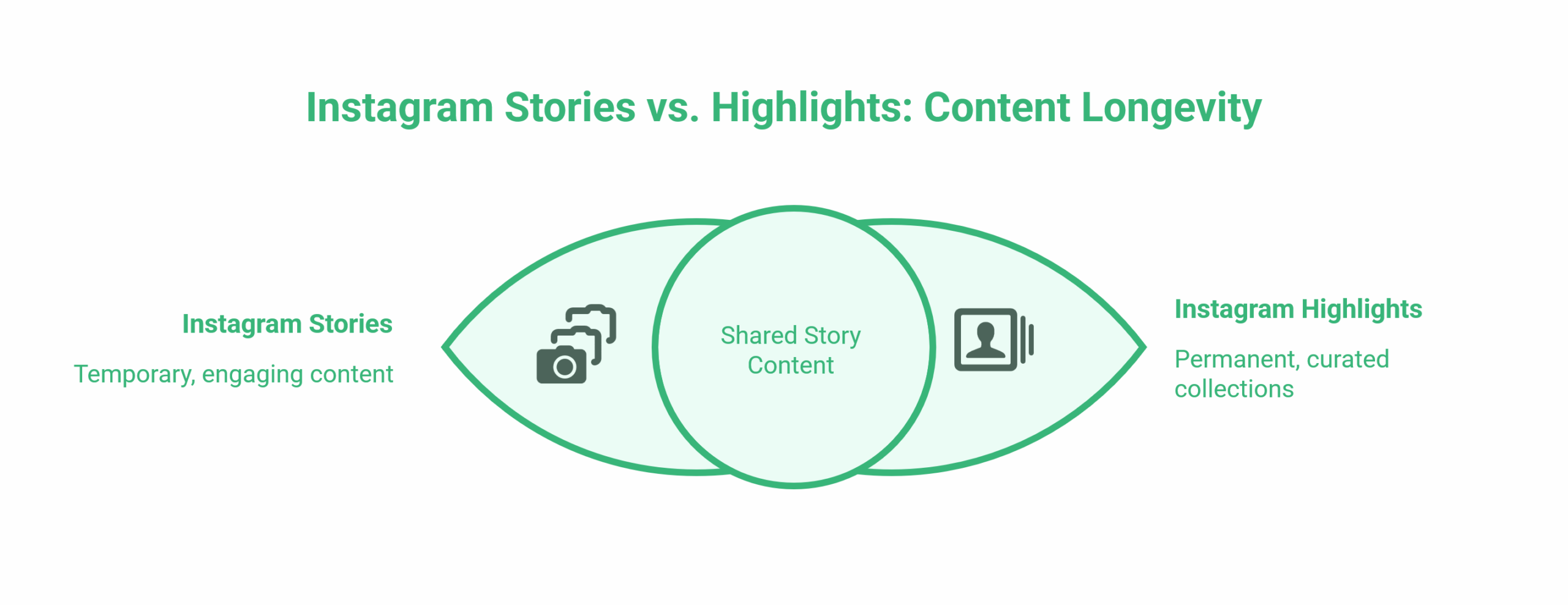
The practical problem with Stories is that useful content disappears after 24 hours. Highlights solve this by letting you pin selected Stories permanently to your profile, grouped into named collections visible to anyone who visits.
For SMEs, highlights function as a lightweight navigation system, helping new profile visitors quickly understand who the business is, what it offers, and what others say about it. Treating the Highlights row with the same intentionality as a website menu pays dividends in the first impression a new visitor forms.
Effective Highlight categories for a service business:
- About Us — a short video or slide sequence explaining who the business is, where it operates, and what it does differently
- Our Work — project images, before-and-afters, or short case study snapshots
- Reviews — screenshots of Google reviews, client testimonials, or direct messages from happy customers
- FAQs — answers to the questions the sales team hears most often, presented as short Story slides
- Offers — current promotions or seasonal pricing, updated as needed
The cover images for each Highlight are worth designing intentionally. Default grey circles with a faint icon look unprofessional. Branded cover images using consistent colours, a simple icon, and the category name signal that the account is managed by a business that takes its presentation seriously.
Thinking of the Highlights row as a secondary homepage is a useful frame. Someone who discovers the business through a Reel and then visits the profile should be able to understand the full picture from the Highlights alone, without needing to scroll through months of grid posts.
Instagram Insights: Turning Data Into a Content Strategy
Instagram Insights is available to all business and creator accounts and provides data that most SME owners either do not check or check but do not act on. Used properly, it is the most practical Instagram hack available because it removes the guesswork from content decisions.
The metrics worth monitoring regularly fall into two groups.
Reach and impressions tell you how many people are seeing your content and whether that number is growing. A rising reach figure with consistent posting means the account is building its audience. A flat or falling reach figure, despite regular posting, usually means either that the content type is not being favoured by the algorithm or that the posting frequency is too low to maintain visibility.
Engagement by content type tells you which format your specific audience responds to. This varies by industry, audience age, and content style. An account that sees strong engagement on carousels but weak performance on Reels might be serving an audience that prefers reading over watching and should weigh its content calendar accordingly. Reviewing this monthly and adjusting the mix is a straightforward way to improve performance without producing more content.
The audience demographic data, location, age range, gender, and active hours are particularly useful for businesses serving a defined geographic market. A business in Belfast targeting local customers that finds 60% of its audience is based outside Northern Ireland has a targeting problem worth addressing, either through the content topics it covers or through a more disciplined use of location tags and local hashtags.
Insights data naturally connects with a broader content strategy. Knowing which posts generate the most saves is a strong signal that someone found the content valuable enough to return to, and which generate the most profile visits tells you far more about what to produce next than follower count does. For a wider view across platforms, social media analytics tools can consolidate this data alongside your performance on other channels.
Hashtags, Search, and Discoverability
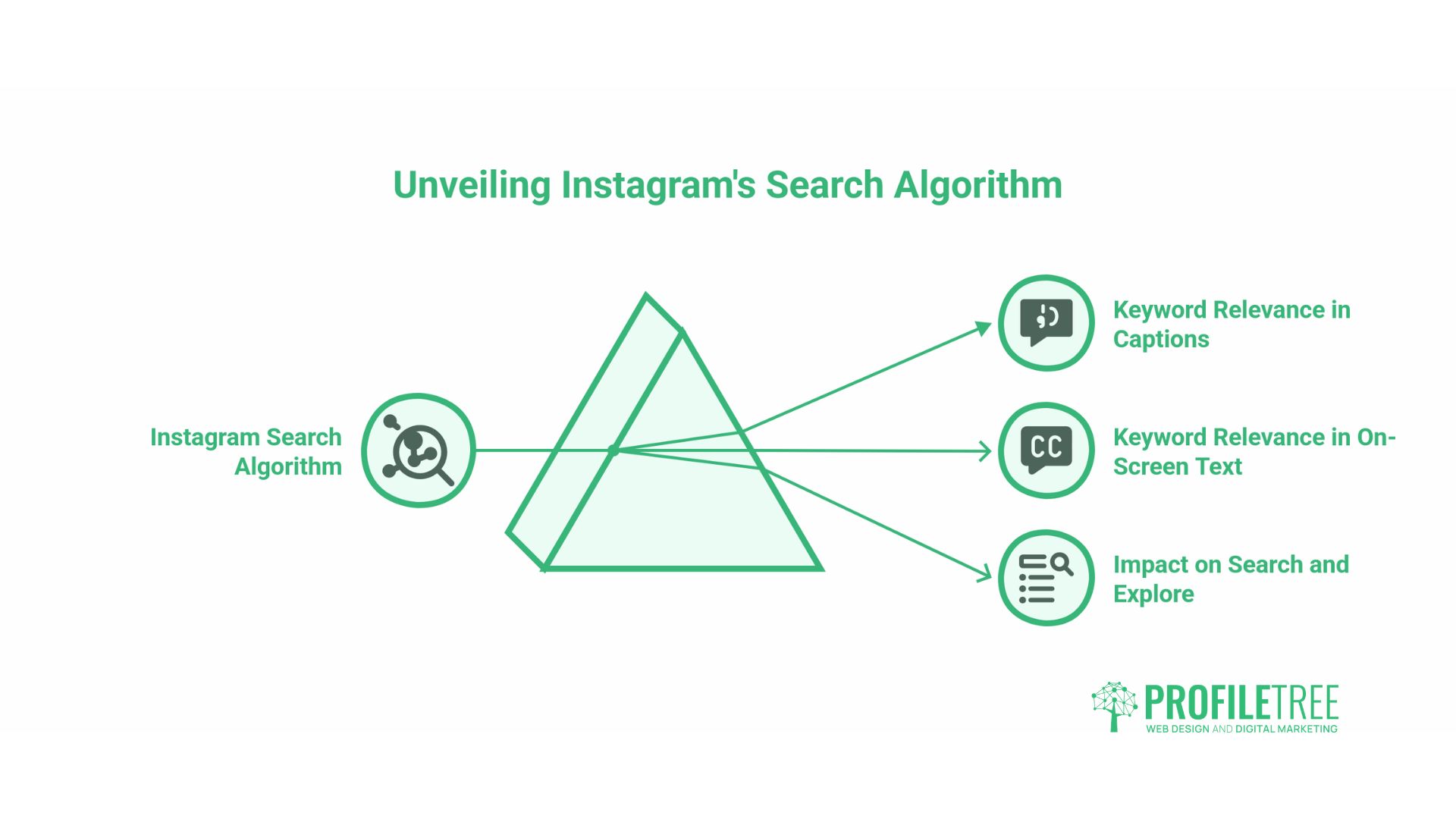
Instagram’s search function now surfaces content based on keyword relevance in captions and on-screen text, not hashtags alone. Writing descriptive captions with specific, relevant phrases directly affects whether your content appears in Search and Explore results.
Hashtags remain a discovery signal, but the guidance has shifted. Meta recommends three to five highly relevant hashtags, rather than the previous practice of using 20 to 30. A mix of niche-specific tags (that directly describe the content), industry tags (for broader sectors), and location tags (for locally focused businesses) tends to outperform large volumes of generic tags. A plumber in Derry using #plumbingderry #heatingengineer #northernirelandtrades will reach a more relevant local audience than the same post tagged with #plumbing #home #diy #interiors #renovation.
Bringing It Together: Instagram as Part of a Wider Strategy
Each of the features above is more effective when it operates as part of a connected plan rather than in isolation. Posting Reels without reviewing Insights is guesswork. Running Stories engagement stickers without a content calendar means the momentum from high-engagement polls does not carry into the next piece of content. Setting up Highlights without a clear profile strategy means visitors still cannot quickly understand the business.
The businesses that see consistent results from Instagram are typically those that treat it the same way they treat any other marketing channel: with defined goals, a posting schedule, a regular review of what is working, and a clear connection between Instagram activity and wider business objectives. For a deeper look at why this matters commercially, the research on social media marketing consistently shows that systematic approaches outperform sporadic high-effort bursts.
For SMEs that want to build this structure but lack in-house marketing expertise, two options are worth considering. The first is outsourcing to a specialist. ProfileTree’s social media services cover strategy, content production, and account management for businesses across Northern Ireland, Ireland, and the UK. The second is building internal capability through digital training, equipping your team to manage Instagram and other channels with confidence.
Instagram’s platform will keep changing. The features covered here have been stable long enough to build a business strategy around, but the specific tactics which audio is trending, which caption length is being rewarded, and how the Explore algorithm weights different content types shift regularly. The underlying principles do not include clear communication, consistent posting, genuine value for the audience, and regular review of the data.
Conclusion
The Instagram features in this guide are not complicated. What separates businesses that see results from those that do not is consistency and follow-through: a bio that does its job, carousels that earn second and third views, Reels that reach beyond the existing audience, Stories that keep the algorithm engaged, and Insights that actually inform what comes next.
None of that requires a large team or a significant budget. It requires a plan and the discipline to review the data. If your business needs support building that structure, ProfileTree’s social media services cover the full process from strategy through to content production for SMEs across Northern Ireland, Ireland, and the UK.
FAQs
What are the most effective Instagram hacks for small businesses?
Optimise your bio with searchable keywords, use carousels to extend post reach, and check Insights monthly to see which content types drive profile visits.
How often should a business post on Instagram?
Three to five times per week, consistently. Regular posting outperforms sporadic bursts; the algorithm rewards accounts that show up reliably.
Do hashtags still matter on Instagram?
Yes, but use three to five specific, relevant tags rather than 20 to 30 generic ones. Location-based hashtags add particular value for businesses serving a defined area.
What is the difference between Instagram reach and impressions?
Reach is the number of unique accounts that saw your content. Impressions count total views, including repeat views by the same person. Reach is the more useful growth metric for most businesses.