
Hotel Booking Marketing Strategies That Actually Fill Rooms
Table of Contents
Most hotels are not losing bookings because their product is poor. They’re losing them because the booking journey starts online and most hotel marketing stops short of where the decision actually happens.
A guest might discover your property through Instagram, research it on Google, compare prices on Booking.com, and then abandon the process because your website was slow or your direct booking button wasn’t obvious. Every one of those touchpoints is a marketing problem with a practical solution.
“The hotels we work with that grow bookings consistently are the ones treating their digital presence as an operational system, not a brochure,” says Ciaran Connolly, founder of Belfast-based digital agency ProfileTree. “SEO, content, email, and social each play a different role in the booking journey. When they’re aligned, the results compound.”
This guide covers the strategies that genuinely move the needle: from search visibility and direct booking optimisation to loyalty programmes, influencer partnerships, and AI-powered personalisation. The tactics are drawn from how hotels are winning right now, not five years ago.
How Guests Find and Book Hotels
The hotel booking journey rarely follows a straight line. Research from Google’s travel insights shows that guests visit an average of 17 to 38 websites before making a booking decision, with the process sometimes stretching across weeks. Understanding where your marketing fits into that journey is the starting point for making any of it work.
The Stages of the Modern Booking Journey
Most guests move through four phases: inspiration (social media, travel blogs, word of mouth), research (Google searches, review platforms, OTA listings), comparison (price-checking across OTAs and your direct site), and booking (wherever the process feels easiest and most trustworthy).
Your marketing needs to show up across all four stages. A hotel that only invests in OTA listings, for example, captures guests at the comparison stage but misses the opportunity to influence them earlier, when brand preference is formed.
The Direct vs OTA Booking Problem
Online travel agencies like Booking.com and Expedia give hotels distribution reach, but they come at a cost: typically 15 to 25% commission per booking. For hotels with healthy direct channels, the maths of reducing OTA dependency is straightforward.
The goal is not to abandon OTAs. It’s to use them as a discovery channel and then give guests strong reasons to complete their booking directly. That means a better website, competitive direct-only rates or perks, and a frictionless booking process that OTA interfaces can’t replicate.
Building a Hotel Website That Drives Direct Bookings
Your website is the only digital asset you fully own. Your OTA profiles, social media pages, and Google Business listing can all change overnight based on platform decisions outside your control. Your website cannot.
What a High-Converting Hotel Website Needs
A hotel website that converts needs four things working together: speed, trust signals, a clear path to booking, and content that answers the questions guests actually have.
Page speed matters more than most hotel operators realise. Google’s Core Web Vitals data consistently shows that conversion rates drop sharply when pages take longer than three seconds to load. For hotels running high-resolution image galleries, this is a common problem. Compressing images to WebP format, using a caching plugin, and running on quality-managed hosting are the baseline fixes.
Trust signals include professional photography, genuine reviews displayed prominently, clear pricing with no hidden fees, and an obvious cancellation policy. Guests are handing over money for an experience they can’t try in advance. Every element of your website should reduce the perceived risk of booking.
The booking engine should be impossible to miss. It belongs in the site header, on the homepage above the fold, and at the close of every room description. Hiding the booking button in a secondary menu loses bookings daily.
Mobile-First Is Non-Negotiable
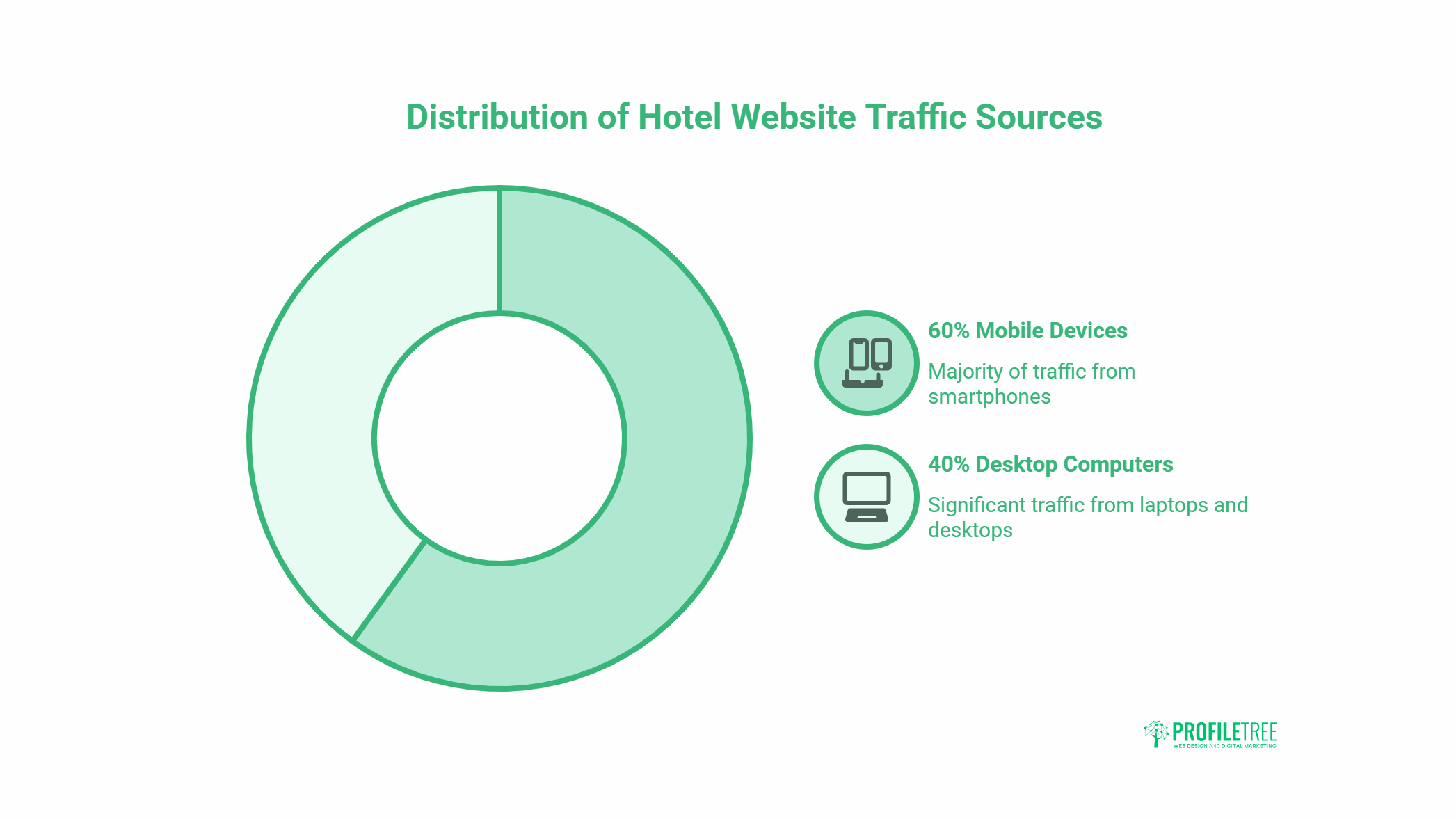
More than 60% of hotel website traffic now comes from mobile devices, but conversion rates on mobile consistently lag behind desktop. The gap usually comes down to form complexity, slow load times, and menus that weren’t designed for small screens.
A mobile-first approach means testing every critical journey on a phone before launching, not bolting on a mobile version as an afterthought. ProfileTree’s web design and development services cover this kind of performance-led build from the ground up.
Virtual Tours and Rich Media
Virtual tours have moved from a differentiator to an expectation among higher-end hotel guests. A well-executed room tour, embedded via Google Street View or a specialist 360° provider, reduces booking hesitation by letting guests see exactly what they’re getting.
Pair virtual tours with professional video content showing the property, the surrounding area, and the guest experience in action. Video on landing pages consistently increases time on page and conversion rate.
Hotel SEO: Getting Found Before Guests Even Think of Your Name
Search engine optimisation for hotels operates at two levels: getting found by people searching for accommodation in your area, and being visible to people researching the type of experience you offer.
Local SEO and Google Business Profile
For most hotels, local search is the highest-value SEO channel. When someone searches “hotels in [city]” or “boutique hotel near [landmark],” Google shows a map pack of local results before the organic listings. Getting into that map pack requires a fully optimised Google Business Profile.
That means accurate and complete information across every field: address, phone number, check-in and check-out times, amenities, property type, and regular photo updates. Reviews are weighted heavily in local rankings, so actively encouraging guests to leave Google reviews (and responding to every one professionally) is not optional.
On-Site SEO for Hotel Keywords
Beyond local search, hotels benefit from targeting specific informational and transactional keywords across their website content. Pages targeting “family-friendly hotels in [city],” “dog-friendly hotel [area],” or “boutique hotel with spa [region]” capture guests whose search intent goes beyond pure price comparison.
These pages need to be genuinely useful, answering the specific questions guests have about that type of stay. A thin location page with a generic description will not rank. A well-structured page that explains what makes your property the right fit for that specific type of guest can.
Structured Data for Hotels
Adding schema markup to hotel pages, specifically the Hotel and Lodging Business schema types, makes it easier for Google to display rich information about your property directly in search results. Structured data is a technical SEO task, but has a meaningful impact on click-through rates for hotel searches.
Social Media Marketing for Hotels
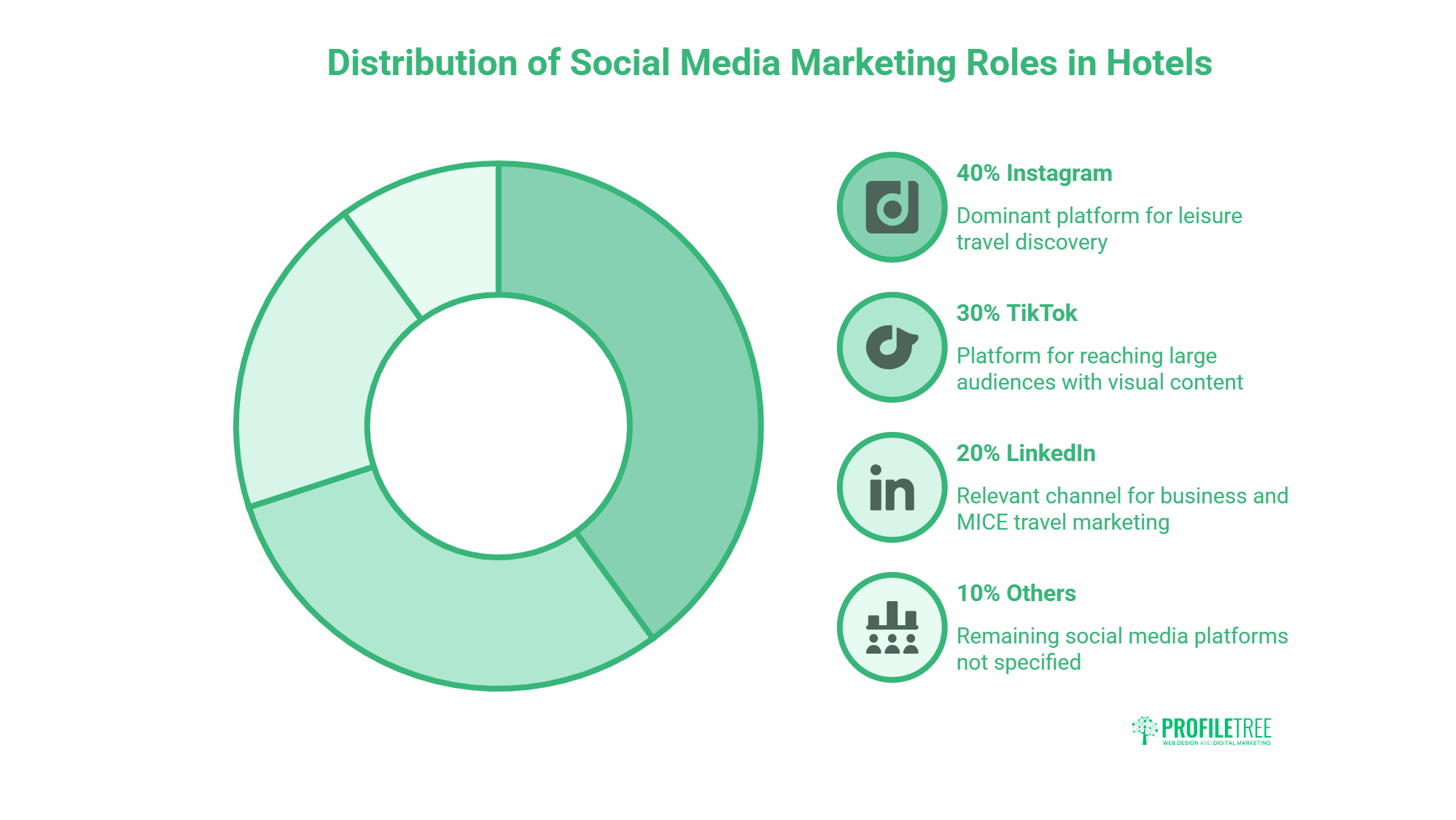
Social media’s role in hotel marketing is primarily inspirational. It rarely drives direct bookings on its own, but it shapes brand preference long before the guest reaches your booking page.
Instagram and Visual Storytelling
Instagram remains the dominant platform for hotel discovery, particularly among leisure travellers. The content that works is authentic and specific: real guest photos, behind-the-scenes footage of food preparation, staff personality, and the experience of the surrounding location.
Curated, overly polished content has given way to content that feels lived-in. Reels and Stories with genuine character consistently outperform static posts for reach. A short video of a bartender explaining their signature cocktail will outperform a staged product shot every time.
User-generated content, where guests share their own photos and tag the property, is the most credible form of social proof. Encouraging it through hashtags, in-room prompts, and active engagement with guest posts costs nothing and builds a content library you can reshare.
LinkedIn for Business and MICE Travel
For hotels with conference facilities, corporate rates, or event spaces, LinkedIn is a more relevant channel than most hotel marketers use it for. Content targeting event planners, corporate travel managers, and HR teams planning company retreats reaches the decision-makers who control significant booking volumes.
Case studies of past events, thought leadership on what makes a productive conference environment, and specific content about facilities, tech specs, and catering all serve this audience.
TikTok and Influencer Partnerships
TikTok’s algorithm gives new content a genuine chance of reaching large audiences regardless of follower count. For hotels with a strong visual story, a single well-executed video can generate thousands of views from exactly the right demographic.
Influencer collaborations work best when the creator is given genuine access and editorial freedom, rather than a script. Travel creators with engaged audiences in the 10,000 to 100,000 follower range (sometimes called micro-influencers) often deliver better results than large accounts because their audiences trust their recommendations.
Before approaching any influencer, check that their audience matches your target guest profile by location, income bracket, and travel style. A discount code or trackable booking link lets you measure the direct impact.
Content Marketing That Attracts and Converts
Content marketing for hotels serves a different purpose than it does for many other businesses. The goal is rarely to explain what a hotel is. It’s to attract people who are in the research phase of planning a trip to your area and to position your property as the natural choice.
Blog Content and Local Area Guides
Content that ranks well for hotel websites tends to be genuinely useful to someone planning a visit to the area. Guides to local restaurants, event calendars, seasonal attractions, and neighbourhood guides all attract research-phase traffic and establish your property as a knowledgeable local resource.
This content also builds internal link equity toward your booking pages when structured correctly. A guide to “things to do in [city] in summer” can naturally reference your property as the base for exploring those activities.
ProfileTree’s content marketing services include content strategy, writing, and ongoing optimisation for exactly this kind of hospitality-focused content planning.
FAQs and Pre-Booking Content
Guests have specific questions before they book: parking, check-in flexibility, pet policies, accessibility, what’s included in breakfast, and whether the gym is open. Hotels that answer these questions clearly in their content reduce the friction that causes people to abandon bookings mid-process.
A comprehensive FAQ section, updated based on actual enquiries, is one of the highest-converting pieces of content a hotel website can have.
Email Marketing for Hotels
Email remains one of the most cost-effective channels for driving direct hotel bookings, particularly for repeat guests and re-engagement of past visitors.
Building and Segmenting Your Email List
An email list built from genuine past guests and direct enquiries is a valuable asset. Guests who have stayed before are significantly more likely to book again if given a relevant reason to. Segmenting your list by guest type, stay history, and past spend allows you to send offers that feel relevant rather than generic.
A family that stayed at half-term does not need to receive a midweek business rate offer. A couple that booked for an anniversary will respond to a romance package. The segmentation does not need to be complex to be effective.
Automated Email Sequences
Pre-arrival emails sent two to three days before check-in improve the guest experience and open up upsell opportunities: room upgrades, restaurant reservations, spa bookings. Post-stay emails sent within 48 hours of checkout, asking for a review and offering a returning guest discount, are among the highest-converting emails in hospitality.
As Ciaran Connolly of ProfileTree notes: “Email is where hotels can have a genuine one-to-one conversation with a guest, at scale. The return on investment when it’s done well is hard to beat with any other channel.”
Re-Engagement Campaigns
Guests who haven’t returned in 12 months or more are not necessarily lost. A well-timed re-engagement email, perhaps timed to the anniversary of their last stay or to a seasonal event they might enjoy, regularly recovers bookings that would otherwise go to a competitor.
Data, Analytics, and Revenue Management
Marketing without data is guesswork. Hotels that treat their analytics seriously make better decisions about where to spend their marketing budget and can identify which channels are actually driving bookings.
Using Google Analytics and Booking Data Together
Connecting Google Analytics to your booking engine lets you trace the full path from first website visit to completed reservation. This reveals which traffic sources produce bookings (not just visits), which pages cause guests to drop off, and which devices and demographics convert best.
This data should directly inform budget allocation. If organic search converts at three times the rate of paid social, that ratio should be reflected in where marketing spend goes.
Dynamic Pricing and Demand Forecasting
Revenue management is the practice of selling the right room at the right price at the right time. In practice, this means using historical booking data, upcoming local events, competitor pricing, and current demand signals to adjust room rates dynamically.
Hotels that manage pricing reactively, only adjusting rates after occupancy problems emerge, consistently leave revenue on the table. Hotels that forecast demand and adjust pricing proactively capture more of the available spend at a higher margin.
AI Tools in Hotel Marketing
AI is changing how hotels personalise their marketing at scale. AI-driven tools can now analyse guest behaviour to predict the offers most likely to convert for individual segments, automate email personalisation at a level that would be impractical manually, and optimise paid advertising bids in real time.
ProfileTree’s AI transformation services help hospitality businesses identify where AI can reduce manual effort and improve conversion, without replacing the human elements that make hospitality what it is.
Advertising Strategies for Hotels
Paid advertising plays a specific role in hotel marketing: capturing demand that already exists, particularly during high-intent search moments and competitive peak seasons.
Google Hotel Ads and Search Campaigns
Google Hotel Ads appear directly in search results and on Google Maps, showing real-time availability and pricing. For hotels, this is often the most efficient paid channel because it targets people who are actively searching for accommodation, not people who might be interested in travel at some point.
Search campaigns targeting branded terms protect against OTAs bidding on your property name (a common practice) and ensure that guests searching directly for your hotel land on your site rather than a commission-bearing OTA listing.
Display and Remarketing
Display advertising is most effective for hotels as a remarketing tool: targeting people who visited your website but didn’t complete a booking. Given that the average guest visits 17 to 38 sites before booking, showing a well-timed ad to someone who’s already shown interest in your property is a relatively efficient spend.
Broad awareness display campaigns, while useful for new properties, require substantial budgets to generate meaningful results and are rarely the right starting point for hotels with limited marketing spend.
Peak Season Strategy
During high-demand periods, competition for ad space increases and cost-per-click rises. The correct response is not simply to increase budgets proportionally but to sharpen targeting, increase bid adjustments for your best-converting audience segments, and prioritise campaigns that drive direct bookings over OTA traffic.
ProfileTree’s digital marketing services include paid search management and campaign strategy for hospitality clients, including seasonal planning.
Building Guest Loyalty and Managing Your Online Reputation
Acquiring a new guest costs significantly more than retaining an existing one. Hotels that invest in post-stay relationships and reputation management grow more sustainably than those focused purely on new customer acquisition.
Loyalty Programme Design
Loyalty programmes work best when the rewards are genuinely desirable and attainable within a reasonable number of stays. A points system that requires 15 stays before any reward is realised will not change booking behaviour. A programme that delivers a tangible benefit on the third visit will.
Beyond transactional rewards, personalised recognition is a powerful loyalty driver. Remembering that a guest prefers a high floor, noting the occasion of their visit, or upgrading them quietly on a quiet night costs nothing and creates the kind of experience they talk about to other people.
Reputation Management on TripAdvisor and Google
Your response to reviews is as visible as the review itself. A professional, specific response to a critical review, one that acknowledges the issue, explains what was done about it, and invites the guest back, communicates to future potential guests that you take quality seriously.
Review platforms should be monitored daily. Negative reviews that go unanswered for weeks signal indifference. Properties that respond consistently to both positive and negative reviews consistently outperform those that don’t in both review scores and booking conversion rates.
Partnerships and Collaborations
Partnerships with local businesses, from restaurants and experience providers to wedding venues and corporate event organisers, create referral networks that bring in bookings through routes that paid advertising cannot reach.
Co-marketing with local tourism boards, appearing in official destination guides, and contributing to travel publications (both print and digital) builds brand awareness and backlinks that strengthen your hotel’s search visibility over time.
Frequently Asked Questions
What is the most cost-effective marketing strategy for a hotel with a limited budget?
For hotels with limited marketing budgets, organic search (SEO) and email marketing consistently deliver the best return on investment. SEO compounds over time: content and technical improvements made today continue driving traffic and bookings for years without ongoing spend. Email marketing, particularly automated pre-arrival and post-stay sequences, requires relatively little ongoing effort once set up. Both should be prioritised before paid advertising.
How can hotels reduce their dependency on OTAs?
Reducing OTA dependency requires building direct channels strong enough to compete: a fast, professional website with a straightforward booking process, a direct-rate advantage (even if only through value-adds like free parking or breakfast), and an email list of past guests who can be re-engaged directly. Over time, investing in SEO to capture demand organically reduces the volume of guests who only find the property through OTA listings.
How important are online reviews for hotel bookings?
Online reviews are among the most significant factors in hotel booking decisions. Research consistently shows that the majority of travellers read reviews before booking, and properties with lower ratings or unanswered reviews convert at meaningfully lower rates than those with strong, actively managed review profiles. Responding to reviews, actively encouraging satisfied guests to leave them, and acting on the feedback within operations are all part of a coherent reputation strategy.
What role does social media play in hotel bookings?
Social media’s primary role in hotel marketing is awareness and brand preference, not direct booking conversion. Guests discover properties through Instagram, TikTok, and Facebook and then go to Google or a booking platform to complete the transaction. This means the quality of your social content influences bookings indirectly, and measuring social ROI purely through last-click attribution undervalues its contribution.
How can small independent hotels compete with large hotel chains?
Independent hotels have advantages that chains cannot replicate: genuine personality, local knowledge, flexibility, and the ability to create memorable personal experiences at scale. Marketing these qualities honestly, particularly through social media, content, and review platforms, attracts the segment of travellers actively looking for something different from a branded chain experience. Local SEO is particularly valuable for independent hotels, as guests searching for accommodation in a specific area often prefer a property with local character over a recognisable chain.
What is the best way to increase direct hotel bookings?
The most reliable way to increase direct bookings is to make the direct booking experience clearly superior to OTA alternatives. That means a website that loads quickly, a booking engine with fewer clicks than Booking.com, a price-match guarantee or exclusive direct-rate perk, and trust signals (reviews, photography, clear policies) that reduce booking anxiety. Email marketing to past guests and loyalty incentives for repeat direct bookings compound this effect over time.