
Blogging Platforms: How to Choose the Right One for Your Goals
Table of Contents
Choosing a blogging platform is one of those decisions that looks simple until you are six months in and realise you picked the wrong one. The platform you start on shapes your SEO potential, your ability to own your audience, and how much of your time goes into technical upkeep versus actual writing. This guide covers the platforms that consistently deliver results, the trade-offs worth knowing before you commit, and why the right choice depends less on feature lists and more on what you are actually trying to build.
Whether you are a small business owner in Northern Ireland weighing up your content marketing options, or a blogger looking to grow beyond a hobby, the sections below give you a practical framework for making that call. This guide on blogging platforms covers hosted platforms, self-hosted CMS options, newsletter-first tools, and community platforms that are reshaping how audiences form online.
The Core Trade-Off: Reach Versus Ownership
Before comparing individual platforms, it helps to understand the tension that runs through every blogging decision: reach versus ownership. Platforms with built-in audiences (Medium, Substack, LinkedIn) make it easier to find readers quickly, but you are building on rented land. The platform controls your distribution, your monetisation options, and what happens if the algorithm changes or the company pivots.
Self-hosted platforms (WordPress.org, Ghost) give you complete control over your content, your data, and your revenue model, but they start with zero built-in audience. You have to earn every reader through SEO, social media, and email growth.
Neither approach is wrong. The most effective bloggers treat this as a sequencing problem rather than a binary choice.
Why owned media is the long game
An email list is the only audience you truly own. A subscriber on your mailing list stays yours if you move platforms, get suspended, or the platform shuts down. For businesses, this matters enormously: content published on a self-hosted site builds domain authority over time, compounds through SEO, and supports commercial objectives in a way that Medium posts simply cannot replicate.
ProfileTree, a Belfast-based web design and digital marketing agency, works with SMEs across Northern Ireland, Ireland, and the UK who often ask which platform to use for business blogging. The consistent answer is WordPress.org for anyone who views content as a long-term commercial investment.
Why borrowed media is a legitimate starting point
Starting on Medium, Substack, or LinkedIn is not a compromise position. For writers building an audience from zero, these platforms provide access to distribution networks that a new self-hosted blog simply cannot match in the short term. A well-written piece on Medium can reach thousands of readers within days. A new WordPress site starts with none.
The strategic play is to use these platforms to build an email list, then migrate that list to a self-hosted hub once you have validated the audience and the content direction.
Platform Comparison: What Each One Does Well
Below is an honest breakdown of the platforms worth serious consideration in 2026, assessed against three criteria: SEO potential, discovery and reach, and long-term audience ownership.
| Platform | SEO Power | Discovery Potential | Audience Ownership | Approx. Monthly Cost (GBP) |
|---|---|---|---|---|
| WordPress.org | High | Low (you build it) | Full | £5 to £30 (hosting) |
| Ghost | High | Low to Medium | Full | £9 to £36 (managed) |
| Substack | Low | High | Partial (exportable list) | Free (10% of revenue) |
| Medium | Low (for author) | High | None | Free / £4 (Partner) |
| LinkedIn Articles | Medium | High (for B2B) | Partial | Free |
| Wix | Medium | Low | Full | £13 to £35 |
| Beehiiv | Low | High (newsletter) | Full (list) | Free / £30 to £75 |
WordPress.org: the standard for SEO and control
WordPress.org powers approximately 43% of all websites globally, and for good reason. It is the most capable platform for building long-term search visibility because it gives you complete control over technical SEO: custom URL structures, canonical tags, schema markup, site speed configuration, and full access to the underlying code if you need it.
Plugins like Yoast SEO and Rank Math give non-technical users a guided process for optimising individual posts, covering meta titles, meta descriptions, readability, and keyword usage. For businesses that view content as a channel for generating leads, WordPress is the platform that lets you manage the full picture, from how a post is structured to how it connects to your service pages and conversion goals.
The trade-off is the setup and maintenance overhead. A WordPress site needs a hosting provider, regular updates, security monitoring, and plugin management. For SMEs without an in-house technical resource, working with a web development partner during setup avoids the most common problems around speed and security from the outset. ProfileTree’s guide to running a WordPress site covers the basics of what is involved before you commit to the platform.
Ghost: the minimalist alternative for professional publishers
Ghost is an open-source CMS built specifically for publishing. Where WordPress does almost everything through plugins, Ghost ships with a clean, fast core designed around writing, newsletters, and paid memberships. Pages load quickly out of the box, the editor is uncluttered, and the built-in email functionality means you can publish a post and send it to subscribers simultaneously without a separate tool.
From an SEO perspective, Ghost performs well. It generates clean URLs, supports structured data, and its architecture tends to produce fast page load times without significant configuration. For writers who want a professional publishing setup without the complexity of WordPress plugin management, Ghost is a credible alternative.
The managed version (Ghost Pro) starts at around £9 per month. Self-hosting is possible but requires more technical confidence than WordPress due to smaller community resources.
Substack: built-in discovery and network effects
Substack has grown significantly as a platform for newsletter-first publishing. Its internal recommendation network means that readers who subscribe to one Substack newsletter are surfaced to others in the same space, creating a genuine discovery mechanism that new self-hosted sites lack entirely.
For bloggers, the key advantage is the ability to start building a paid subscriber base without any technical setup. The platform handles payment processing, email delivery, and basic analytics. The free tier takes 10% of revenue from paid subscriptions; there are no upfront costs.
The significant limitation is SEO. Substack pages do not rank well in Google because the platform has historically applied limited indexing to individual posts. If organic search traffic is a commercial priority, Substack is best treated as a distribution channel rather than a primary publishing hub.
Medium: reach without technical setup
Medium’s value is straightforward: it has an existing audience and an internal algorithm that surfaces content to readers based on reading behaviour and tags. A well-written post on a topic with genuine interest can accumulate readers within days of publication, something a brand-new self-hosted blog cannot do.
For bloggers testing content ideas or building name recognition in a particular niche, Medium is a practical starting point. The Partner Programme pays writers based on reading time from paying members, though the income potential is modest for most.
The ownership problem is real. Content published on Medium builds Medium’s domain authority, not yours. If you later migrate to a self-hosted site, the SEO equity from those posts does not transfer. The portable asset from Medium is your email list, not the content itself.
LinkedIn Articles: the underused option for B2B bloggers
LinkedIn’s native article format is significantly underused by businesses operating in B2B markets. An article published through a LinkedIn profile reaches an existing professional network directly, appears in followers’ feeds, and can be reshared across the platform without any advertising spend.
For consultants, agency founders, and sector specialists, LinkedIn articles serve a different purpose from blog posts: they build professional credibility and generate conversations rather than passive search traffic. The SEO value is moderate. LinkedIn articles do index in Google, but ranking for competitive terms through LinkedIn alone is difficult.
As part of a hybrid approach, publishing abridged versions of long-form pieces as LinkedIn articles, with a link back to the full post on a self-hosted site, captures both the immediate professional network reach and the long-term SEO equity.
Wix: practical for visual-heavy blogs and small business sites
Wix occupies a specific niche: it is genuinely easy to use for people who want a blog as part of a small business website, without hiring a developer or learning a CMS. The drag-and-drop editor is accessible, the templates are visually polished, and the all-in-one hosting and domain setup removes several steps that trip up new site owners.
Wix’s SEO capabilities have improved considerably in recent years. You can manage meta titles, meta descriptions, structured data, and redirects without technical knowledge. For a local business that wants a clean website with a blog section, it is a workable option.
The ceiling is lower than WordPress. Advanced SEO configuration, custom functionality, and performance optimisation are more constrained. Businesses expecting to compete for high-traffic search terms, or planning to use their site as a primary lead generation channel, will typically outgrow Wix faster than they expect.
Beehiiv: the growth-focused newsletter platform
Beehiiv has positioned itself as the newsletter platform for growth-focused publishers. Its referral programme allows subscribers to earn rewards for referring others, which creates a compounding growth mechanism that most platforms do not offer natively. The platform also provides relatively detailed analytics on subscriber acquisition, open rates, and click behaviour.
For writers focused on building a paid newsletter audience quickly, Beehiiv is worth serious consideration. The free plan allows up to 2,500 subscribers. Paid tiers start at around £30 per month and provide access to monetisation features, including subscriptions and premium content.
As with Substack, the SEO limitations apply. Beehiiv is a newsletter platform first, and driving organic search traffic through it is not a realistic primary strategy.
As Ciaran Connolly, founder of ProfileTree, puts it: “The platform question is really a business strategy question. ProfileTree asks clients what they want their blog to do in three years, and that usually makes the right choice obvious.”
The Hybrid Approach: How to Scale from 0 to a Sustainable Audience
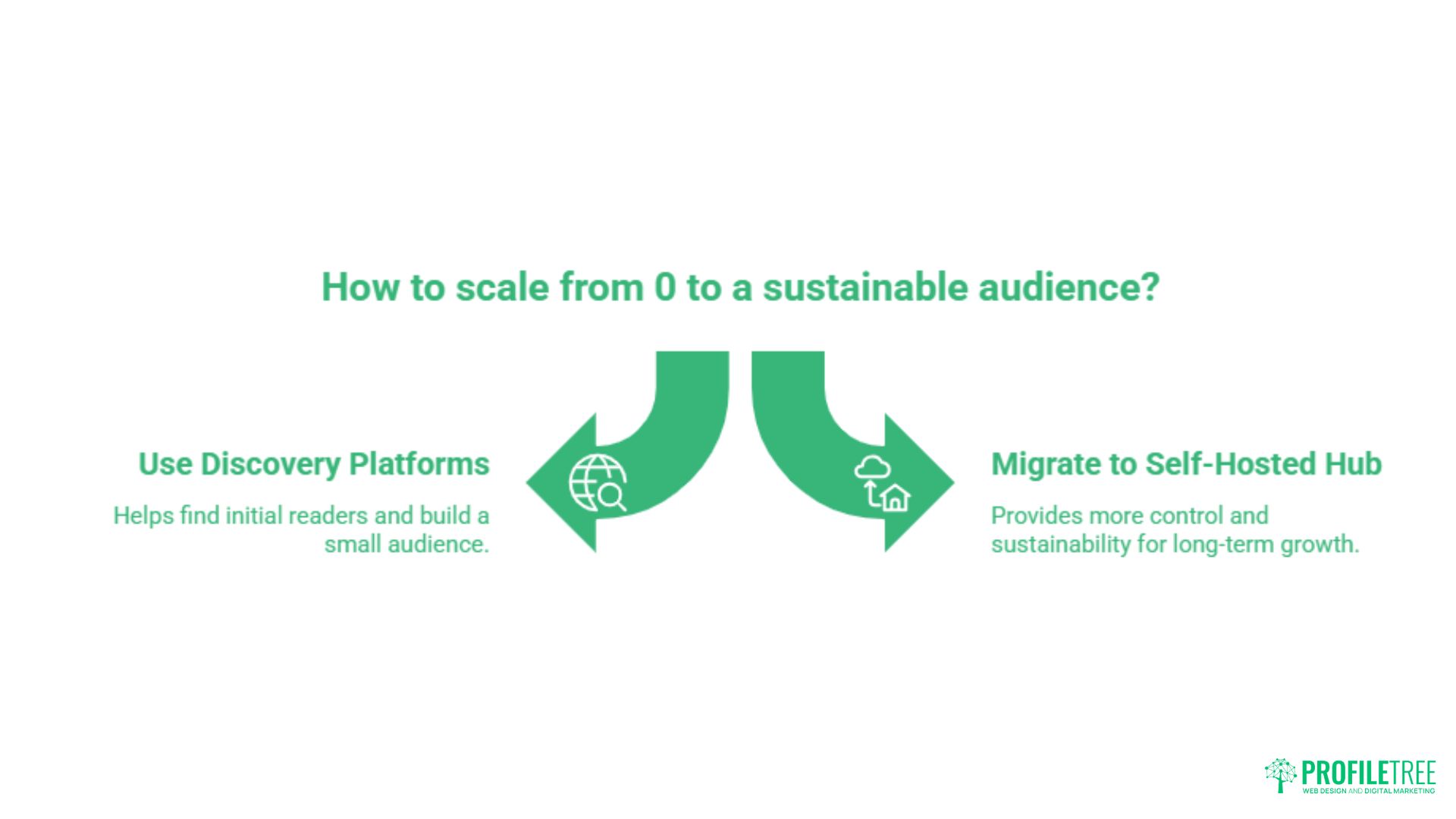
The bloggers who build durable audiences rarely start on a single platform and stay there. The practical pattern that works looks more like a staged rollout, and competitors rarely explain it in concrete terms.
Stage 1: Use discovery platforms to find your first readers
Publish on Medium, Substack, or LinkedIn for the first three to six months. Your goal at this stage is not to build domain authority. It is to work out which topics your readers engage with, build a small but real email list, and develop your writing consistency. Every new subscriber should be captured to an email list that you control, regardless of which platform you publish on.
On Substack, use the Recommendations feature immediately after launching. On Medium, tag posts precisely using the platform’s topic tags rather than creating vague custom ones. On LinkedIn, publish at least once per fortnight and engage with comments within the first two hours of posting, when algorithmic visibility is highest.
Stage 2: migrate to a self-hosted hub
Once you have a validated topic focus, a list of at least a few hundred subscribers, and a publishing rhythm you can sustain, move to a self-hosted platform. WordPress.org is the default recommendation for most use cases. Ghost is a strong alternative for writers who want simplicity and do not need the WordPress plugin library.
The migration process is less frightening than most bloggers expect. Email lists export cleanly from both Substack and Beehiiv as CSV files that import into any major email marketing platform. Medium content can be exported and republished on a self-hosted site, though the SEO equity does not transfer.
Your discovery platforms do not have to disappear at this stage. Many successful bloggers cross-post to Medium or publish newsletter editions on Substack while building their primary site’s organic traffic. The self-hosted site becomes the hub; the other platforms become distribution spokes.
Technical Considerations for UK and Irish Bloggers
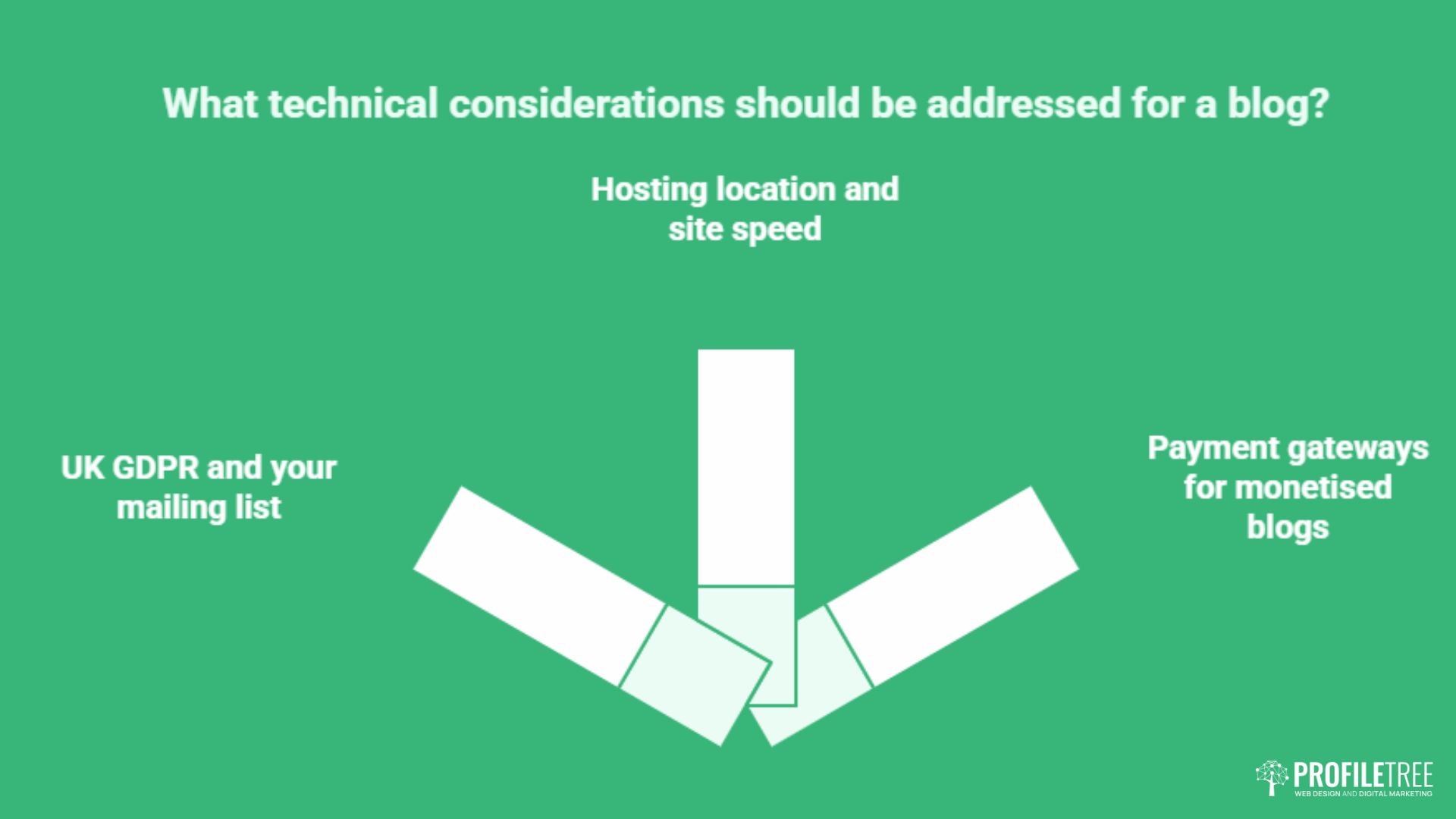
Most blogging guides are written for a US audience and skip over considerations that matter specifically to bloggers and businesses in the UK and Ireland.
UK GDPR and your mailing list
If you are building an email list, you are operating under UK GDPR (or the EU GDPR for Republic of Ireland-based bloggers). The practical requirements are not complex, but they are non-negotiable. Subscribers must give explicit consent to receive marketing emails, which means double opt-in is best practice. You need a clear privacy policy explaining how you collect, store, and use data. You must provide a straightforward way to unsubscribe from every email you send.
Platforms like Mailchimp, ConvertKit, and MailerLite all handle the technical mechanics of compliant list management. The ICO website covers the UK requirements in accessible terms and is worth reading before you start any list-building activity.
Hosting location and site speed
For UK and Irish audiences, hosting your WordPress or Ghost site on servers based in Europe or the UK typically produces better page load times than US-based hosting. Faster load times contribute to both user experience and search rankings. Most quality hosting providers, including SiteGround, Kinsta, and WP Engine, offer European data centre options. Check this is selected at account setup rather than defaulting to a US location.
Payment gateways for monetised blogs
If you plan to sell subscriptions, digital products, or courses through your blog, the payment gateway options in the UK and Ireland are well-developed. Stripe is the most widely integrated option across WordPress, Ghost, and most membership plugins, and it supports GBP, EUR, and most major currencies. PayPal remains a secondary option that many buyers prefer for occasional purchases.
For Republic of Ireland businesses, VAT obligations on digital sales apply when selling to EU consumers, which is worth accounting for in your pricing structure from the outset.
Conclusion
The blogging platform you choose sets the ceiling on what your content can achieve commercially. For most businesses and serious bloggers in the UK and Ireland, that means a self-hosted site on WordPress.org as the primary hub, with discovery platforms like Substack or LinkedIn used for reach while the main site builds search authority over time. Getting the platform right from the start saves a costly migration later.
ProfileTree’s web development team works with SMEs across Northern Ireland and beyond to set up and configure WordPress sites built for long-term content performance. If you are at the platform decision stage, it is worth getting that conversation right before you commit.
FAQs
Which blogging platforms work best for content marketing?
WordPress.org is the strongest choice for businesses using content marketing as a lead generation channel. It gives you full control over SEO, integrates with analytics and CRM tools, and allows you to connect content directly to commercial pages. Platforms like Medium or Substack can support content marketing as distribution channels, but should not replace a self-hosted site for businesses with serious content goals.
Is it better to blog on Medium or my own website?
They serve different purposes. Medium offers immediate access to an existing readership and requires no technical setup, but the SEO equity from your content accrues to Medium, not to you. Your own website builds domain authority over time, supports organic search traffic, and gives you full control over monetisation. For most people with a long-term publishing goal, the right answer is both: start on Medium to find your audience, then build your own site as the primary hub.
Does Substack help with SEO?
Limited. Substack applies selective indexing to posts, which constrains how well individual pieces rank in Google. If driving organic search traffic is a priority, Substack works better as a newsletter and discovery tool than as a search-visible publishing platform. Pair it with a self-hosted site for the SEO component.
Can I move my audience from Medium to WordPress later?
Your email list is the only portable asset. If you have been building a subscriber list through Medium, you can export those addresses and import them into an email platform connected to your WordPress site. The SEO authority from your Medium posts does not transfer.
Which free blogging platforms are best for building a readership?
Substack and Medium both provide meaningful built-in discovery without upfront costs. Substack’s recommendation network is particularly effective at connecting writers with readers in similar niches. Medium’s algorithm rewards consistent, well-tagged publishing.