
Digital Marketing for Travel Agencies and Tour Operators
Table of Contents
Around a third of UK holidaymakers still book through a travel agent or tour operator, and the reasons they give have almost nothing to do with price. ABTA’s Holiday Habits 2025-26 report puts the figure at 34%, with ease of booking (57%), saving time (42%) and confidence that someone will help if things go wrong (41%) as the leading motivations. That last figure rose five percentage points in a single year. For an independent agency, this is the whole commercial case: the market is not shrinking away from human expertise, it is paying for reassurance, and most agency websites barely mention the things that provide it.
Effective digital marketing for travel agencies rests on five things, and this guide covers each in turn for UK and Irish agencies and tour operators: local search visibility, content that matches how people research trips, regulated financial protection as a marketing asset, the shift toward AI-assisted holiday planning, and realistic budgets. Agencies that want an outside view of where their current activity is leaking can get digital strategy support that starts with an audit rather than a channel recommendation.
Three things worth knowing before you spend anything
- Booking volume through travel professionals held broadly steady over the past five years. The competitive threat is visibility, not obsolescence.
- ATOL and ABTA credentials are the single largest differentiator against booking platforms, and almost no agency markets them properly.
- AI-assisted planning is small but doubling. ABTA found 8% of holidaymakers used AI for inspiration in 2025-26, twice the previous year, while 43% said they would be comfortable letting an AI tool plan a trip.
Where UK Travel Bookings Come From, and What Agencies Spend to Win Them
Start with the channel picture, because it determines where the budget should go. ABTA’s Holiday Habits 2025-26 research found 34% of holidaymakers booked through a travel professional in the previous twelve months, down from 38% the year before but consistent with 2023. ABTA characterised the movement as normal variation rather than decline. Confidence in booking through an agent or operator went the other way, climbing from 36% to 41%.
What that means in practice: the audience exists, it is reachable, and it responds to trust signals more than to discounting. The problem for most independent agencies is that the audience cannot find them, which makes visibility the first job of digital marketing for travel agencies rather than persuasion.
On budget, the honest benchmark is wider than most agency guides admit. Gartner’s 2025 CMO Spend Survey put average marketing budgets at 7.7% of company revenue across 402 marketing leaders in North America, the UK and Europe, flat year on year, with half of respondents reporting 6% or less. Travel and hospitality was among the sectors Gartner recorded as decreasing. For a small independent agency turning over £500,000, a 6% to 8% allocation works out at roughly £30,000 to £40,000 annually, or £2,500 to £3,300 a month across every channel. Treat that as a reference point rather than a target, since Gartner’s sample skews heavily toward large enterprises.
Allocation matters more than the headline number. The table below sets out where the weight usually belongs by business type.
| Business type | Primary channel | Secondary | Usually not worth it early |
|---|---|---|---|
| High-street agency, single location | Google Business Profile and local search | Email to past clients | Broad paid search on destination terms |
| Online-only or homeworking agent | Niche content and destination pages | Instagram and Pinterest | Local map pack optimisation |
| Tour operator with own product | Organic search on itinerary and route terms | Paid social retargeting | Generic brand awareness campaigns |
| Specialist or luxury agency | Long-form destination content and referrals | Selective influencer partnerships | Price-led advertising of any kind |
| Inbound tourism business | Content in source-market languages | Trade partnerships and PR | Domestic local SEO |
All figures here are indicative UK examples correct at the time of writing. Use them as benchmarks, not quotations.
Local SEO: Getting Found Before the Big Players
For independent agencies, local search is the highest-return organic channel available. The reason is competitive, not technical. No independent agency is going to outrank Expedia for “holidays to Spain”, and chasing that term wastes budget. “Travel agent in Lisburn” or “bespoke holidays Northern Ireland” are winnable because proximity and specialist knowledge are ranking-relevant signals that a platform cannot fake.
Optimising Your Google Business Profile
The profile is often the first thing a prospective customer sees, and most agencies treat it as a directory listing rather than a shopfront. Fill every field: opening hours, service categories, Q&A responses, and regular photographs of the team and window displays. Consistent NAP data (name, address, phone number) across your website, social profiles and directory listings is the technical base. Any mismatch reduces the chance of appearing in the local map pack.
Reviews do double duty as a ranking signal and a conversion tool. Ask for a Google review after every completed booking and reply to each one, including the difficult ones. Agencies building this systematically often bring in SEO services to set up the process, then run it in-house once it is working.
Destination and Service Page Strategy
Beyond your location, build pages around the specific destinations and travel types you actually sell. A Belfast agency doing tailor-made Caribbean holidays needs a page targeting that combination, not one generic holidays page carrying every product. Each destination you book regularly is an unbuilt keyword cluster.
Internal linking between destination pages and your main service content strengthens topical authority and tells search engines the site covers the subject with some depth. Reading across the broader tourism marketing strategies that apply sector-wide will help you spot angles your competitors have left alone.
Schema Markup and Technical Foundations
LocalBusiness schema tells search engines what you do and where. TravelAgency schema goes further and associates the site directly with the travel vertical. Both are quick additions that most agencies skip, which is exactly why adding them separates you in a crowded local SERP.
Speed is not a nice-to-have in this sector. Deloitte and Google’s Milliseconds Make Millions study, based on 7.4 million travel user sessions, found that a 0.1 second improvement in mobile site speed was associated with a 10.1% increase in travel conversions, the largest conversion lift of any vertical measured. Page views per session rose almost 3%. A tenth of a second. That is the scale at which travel sites lose bookings, and it is a development question before it is a marketing one.
Content That Sells the Experience, Not the Package
Travel is bought emotionally and justified rationally. People are not buying a seat on a plane; they are buying a version of themselves somewhere specific. ABTA’s members-only analysis of booking drivers found 45% of people rank destination as their most important consideration, rising to 57% among the over-65s, with cost second at 33%. Content built around destination and experience meets that ranking. Content built around price fights on the one axis where platforms win.
Destination Guides and Itinerary Content
Long-form destination guides remain the strongest format available to an agency. A 2,500-word guide to two weeks in Japan, written from real booking experience, ranks for dozens of long-tail queries and works as a credibility document for anyone landing on the site for the first time.
Itinerary-led content works because it meets people at the exact research stage most travellers occupy: roughly decided on where, undecided on how. A structured itinerary that positions the agency as the operator who handles the logistics converts better than a price list, because it demonstrates competence instead of asserting it.
Hyper-local content earns its place too. A guide to the best cities in Northern Ireland speaks to the domestic short-break market, where travellers want curated knowledge rather than another aggregator.
Video and Visual Content
During the consideration phase, video and photography carry more weight than any amount of copy. A walkthrough of an accommodation, a drone sequence over a destination, a rough vlog from a familiarisation trip: each puts the viewer inside the experience before they have paid anything.
Short-form vertical video drives real discovery on Instagram Reels and TikTok. A 45-second clip of an agent describing somewhere they have personally been, with unpolished commentary, tends to outperform produced promotional footage. It reads as a recommendation. Sustaining that output alongside a full booking diary is the hard part, which is where a structured content marketing programme tends to earn its cost, by turning ad-hoc posting into a planned calendar tied to the destinations you sell.
Blogging for Long-Tail Search
Blogging still returns well for agencies who approach it with a keyword strategy instead of a publishing habit. Posts answering specific questions (“Is Morocco safe for solo female travellers?”, “What vaccinations do I need for Southeast Asia?”) attract people who are actively planning, not people browsing travel content for entertainment.
Every post should connect to something commercial: a destination page, a service, an enquiry form. A blog that sits disconnected from the booking path generates traffic and nothing else.
Marketing for Tour Operators and Tourism Businesses
Most guidance on digital marketing for travel agencies assumes a retail model, which is why it underperforms for operators. Tour operators are a different business and the marketing follows different rules. An agency sells someone else’s product and competes on service. An operator sells its own product and competes on the product itself. That single difference changes almost every decision downstream.
The practical consequences are worth spelling out. Operators own their inventory, so their content can be genuinely proprietary: actual routes, actual departure dates, actual guides, actual group sizes. That is the strongest information gain signal available in the sector, and it is why operator content ranks for itinerary-shaped queries that agencies struggle to reach. Search demand reflects this. Queries around tour operator marketing, adventure tour operator promotion and tours-and-travel marketing sit as a distinct cluster from travel agency terms, and pages that address one rarely satisfy the other well.
Three things matter disproportionately for operators. Route and itinerary pages should be built as individual URLs rather than tabs on a single product page, because each route has its own search demand. Departure and availability information belongs in crawlable text rather than in a booking widget, since search engines and AI systems cannot read what sits behind JavaScript. Trip reports and post-departure content from actual groups give you first-hand material that no aggregator can reproduce.
Inbound tourism businesses, meaning operators selling the UK and Ireland to overseas visitors, face a further split. Their search demand originates in source markets, often in other languages, and their trust signals need to work for someone who has never heard of your town. Domestic local SEO does very little for them. Source-market content and trade relationships do most of the work.
Social Media: Building Authority Before the Sale
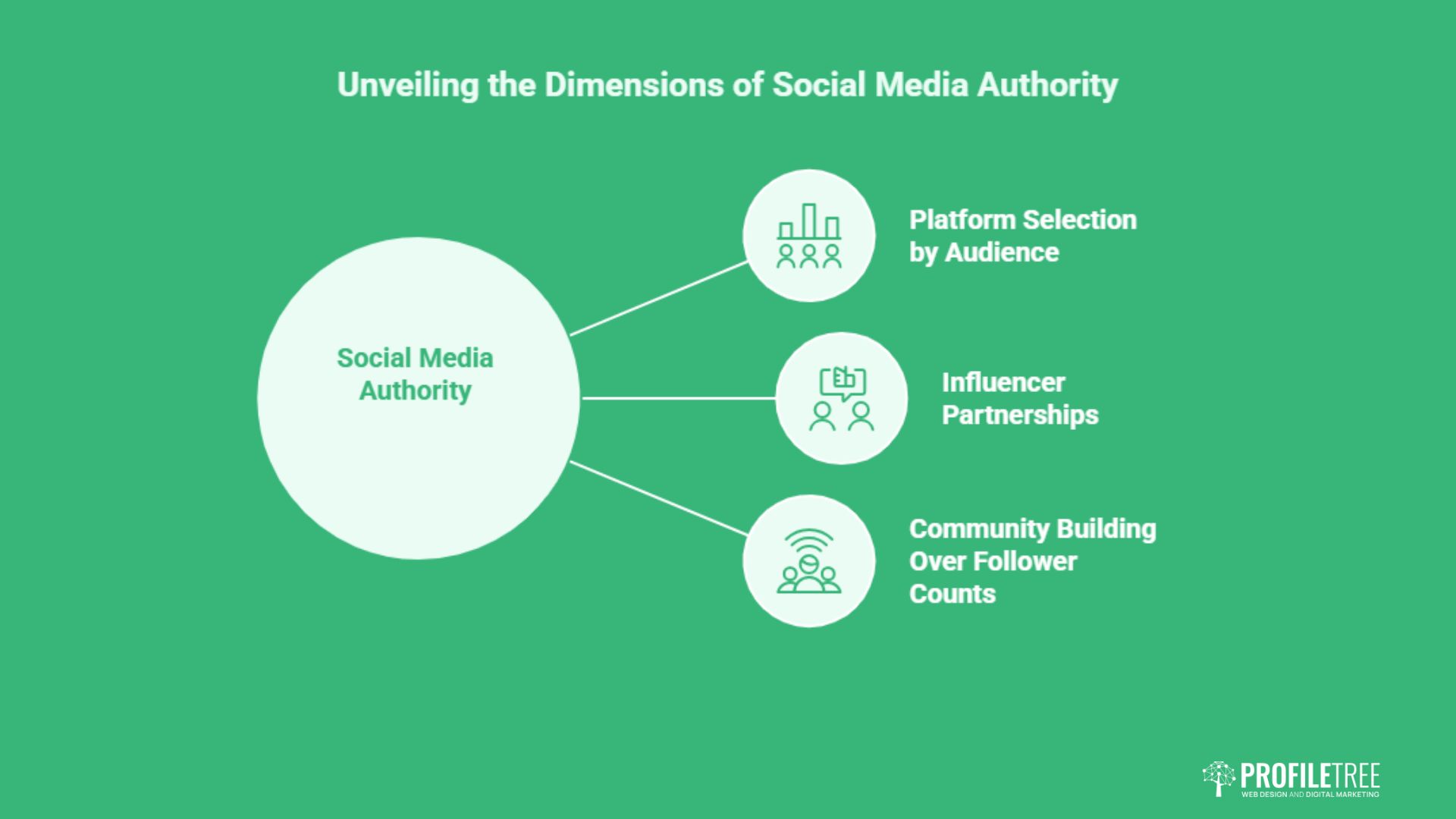
Social is routinely misused in this sector as a broadcast channel, pushing package offers and departure dates at an audience that has not been warmed up to buy anything. The agencies producing measurable returns treat it as a trust-building channel first and a conversion channel some distance second.
Platform Selection by Audience
Instagram remains the main discovery platform for travel because the format matches the product. Pinterest drives long-tail traffic through inspiration boards, particularly for wedding and honeymoon bookings. TikTok reaches large audiences organically for destination content even without an established following. Facebook holds real value for the 35-plus demographic that makes up a large share of agency clients, especially for group travel, cruises and long-haul.
ABTA’s inspiration research is a useful corrective to platform enthusiasm. General internet search was the top inspiration source at 49% of respondents, with recommendations from family and friends second at 39%. Social media averaged around one in five, though it rose sharply among younger travellers, reaching 44% of 25 to 34-year-olds. Map platform choice to your actual client demographics rather than to whichever channel the trade press is discussing this quarter.
Influencer Partnerships
Influencer marketing in travel has matured past follower counts. Mega-influencers are expensive and convert poorly for niche travel products. Micro-influencers with engaged audiences in defined niches, whether family travel, adventure travel or accessible tourism, deliver better for independent agencies with focused ranges.
Payment is not always the mechanism. A familiarisation trip in exchange for content, or a collaboration on a destination guide, can generate meaningful reach at a fraction of advertising cost. The practical difference between micro and macro influencers is worth understanding before you commit budget either way.
Community Building Over Follower Counts
Agencies that run private Facebook groups or WhatsApp communities around specific interests, walking holidays, cultural tours, escorted trips, build recurring contact with their best customers. Those communities produce unprompted referrals, generate product ideas, and lower the cost of retention.
Ciaran Connolly, founder of ProfileTree, notes: “The travel agencies we work with that are growing consistently are not chasing follower counts. They are building small, engaged communities where their expertise is visible every week, not just when they have a deal to push.”
The UK Advantage: ATOL, ABTA and Financial Protection
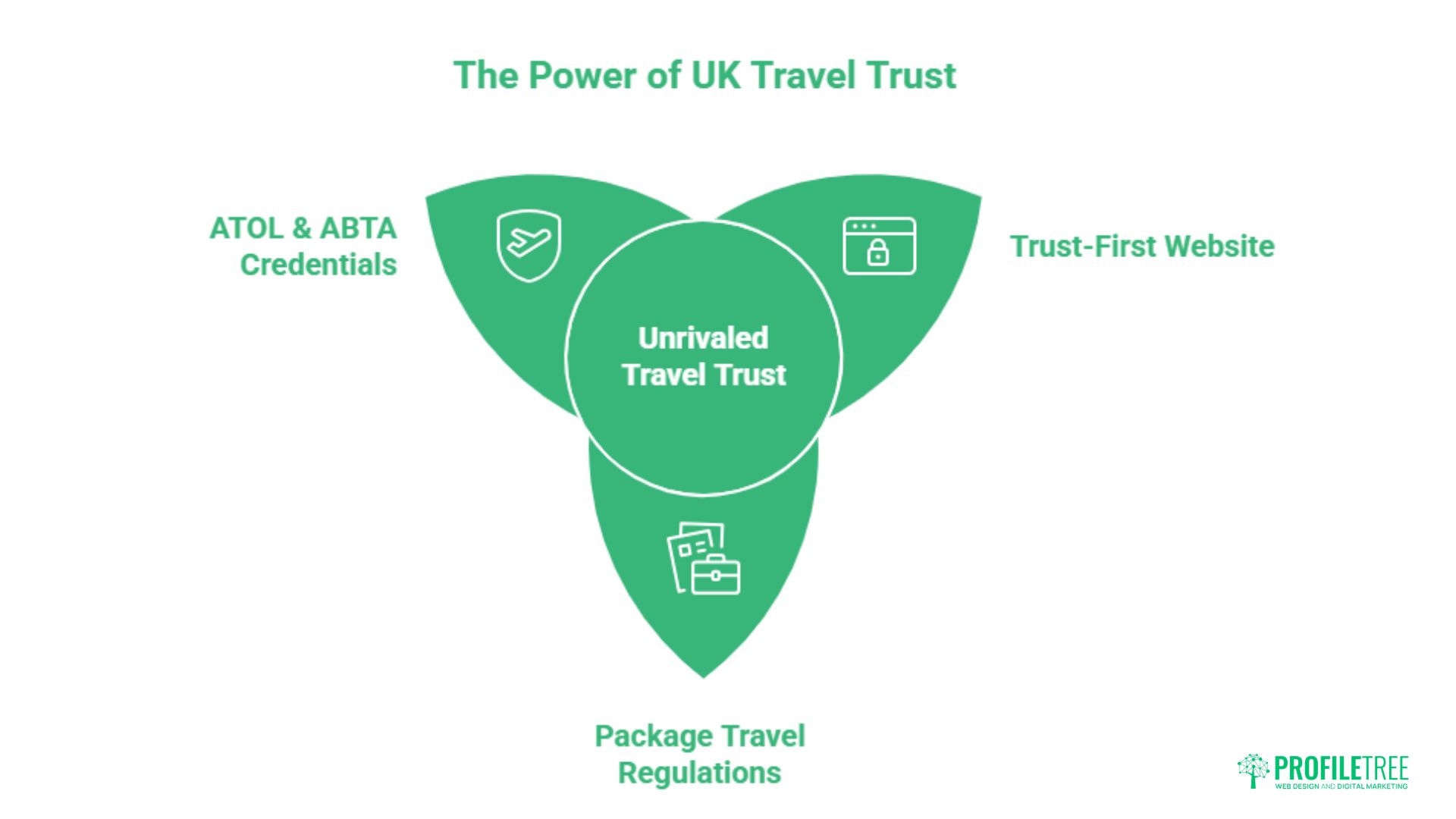
UK and Irish agencies hold one asset that no booking platform can replicate: regulated financial protection. ATOL and ABTA membership are conversion tools as much as legal obligations, and most agency marketing barely mentions them. This remains the most under-exploited competitive advantage in the sector.
Marketing Your ATOL and ABTA Credentials
The scale is worth quoting to customers. The UK Civil Aviation Authority reported that 20 million passengers travelled on ATOL-protected holidays in the year to the end of August 2025, an increase of almost 1.1 million on the previous year, across 1,616 licensed businesses. ABTA represents over 4,300 travel brands with combined UK turnover above £40 billion. These are not abstractions. They are the reason a customer’s money survives an operator failure.
Display the logos on your header, on booking confirmation pages and in paid ad copy, then explain what they mean in plain English. “Your holiday is financially protected by ATOL, so if anything goes wrong before or during your trip, you will not lose your money” does more work than a logo sitting in a footer nobody scrolls to. The CAA requires ATOL holders to state their name, ATOL number and protection status on booking terms, invoices and receipts. Most agencies satisfy the requirement and stop there, treating a compliance obligation as though it were only a compliance obligation.
Building a Trust-First Website
Your website is the primary sales tool and for most agencies it is underperforming. Travellers compare several sites before booking, and the decision often turns on which one makes them feel most confident about the business behind it.
The elements that carry that confidence are unglamorous: genuine team photographs with agent profiles describing specialist destination knowledge, a visible phone number and physical address, customer reviews shown in context rather than in a carousel, and clear information about how booking and payment work. A site that puts these above the fold converts better than a visually impressive one that buries them.
The Package Travel Regulations as a Marketing Asset
The UK Package Travel and Linked Travel Arrangements Regulations set out obligations for agencies selling package holidays, covering pre-contractual information and cancellation rights among others. Content that references these protections and explains them in consumer language builds credibility the larger platforms rarely match.
Agencies that state their obligations plainly, and describe how they meet them, separate themselves from unregulated online sellers and from platforms that bury the same information in twelve pages of terms. Transparency at that level is a competitive position, not a legal chore.
How AI Search Is Changing Travel Discovery
AI-assisted planning is still a minority behaviour, but the direction is unambiguous and the sector should plan for it now rather than react in two years. ABTA found 8% of holidaymakers used AI for holiday inspiration in the 2025-26 research period, double the previous year. ABTA’s Director of Communications Graeme Buck said the association expects that figure to double again as more capability arrives. More striking is the stated willingness: 43% of ABTA’s 2,100 respondents said they would feel confident letting an AI tool plan a holiday, and 38% said they would let one book it.
What changes for an agency is the mechanics of discovery. When a traveller asks an AI assistant to plan ten days in Vietnam, the assistant assembles an answer from sources it can read and trust, then may or may not name them. Seer Interactive’s longitudinal study, tracking 53 brands and 5.47 million queries between January 2025 and February 2026, found organic click-through rates on queries carrying an AI Overview fell to a low of 1.3% in December 2025 before recovering to 2.4% by February 2026, against roughly 3.3% on queries with no AI Overview present. Being cited inside the answer, rather than merely ranking beneath it, became the thing that mattered.
Four practical adjustments follow from this. Answer questions directly in the first two sentences of each section, because extraction favours self-contained passages. Put prices, durations, inclusions and departure details in text and tables rather than images or booking widgets. Attribute claims to named sources, since attributed content is more readily reused. Publish the specific things only you know: the ferry connection that is faster than the obvious route, the month a destination is quietly cheaper, the accommodation that photographs better than it sleeps.
None of this replaces conventional search work. It is the same discipline applied to a surface that summarises rather than lists.
What to Do First
Digital marketing for travel agencies comes down to making expertise findable and credentials visible at the moment someone is deciding whom to trust with several thousand pounds. Local search, destination-led content, properly marketed financial protection and content structured for AI extraction are the four foundations, and they compound.
If you are starting from a standing position, work in this order. Fix the Google Business Profile and get a review request into your post-booking process this month. Build one destination page for the trip type you sell most, properly, rather than five thin ones. Put your ATOL and ABTA explanation above the fold. Then look at content volume. The same sector-specific logic applies well beyond travel; the reasoning behind a vertical approach is set out in this practical guide for UK manufacturers, where the audience and buying cycle differ but the method does not.
Want a plan built around your own booking data rather than sector averages? Speak to the ProfileTree team.
FAQs
These are the questions that come up most often when agencies and operators start looking seriously at digital marketing for travel agencies and where the budget should go first.
How do I promote my travel agency on social media?
Lead with short-form vertical video on Instagram Reels and TikTok showing destination knowledge and real traveller experience rather than package graphics. Post consistently and use destination-specific hashtags to reach people in the active planning stage. Behind-the-scenes material from familiarisation trips outperforms polished promotional posts because it reads as a recommendation. Match platform to demographic: ABTA’s research found social media averaged around one in five as an inspiration source overall but reached 44% among 25 to 34-year-olds, so a cruise-heavy client base and a young adventure-travel base warrant different channel weightings.
What is the best digital marketing strategy for a new travel agency?
Google Business Profile optimisation and local search come first, because they generate bookings at low ongoing cost once established. Build a niche content strategy alongside it, targeting the specific destinations or travel types you specialise in rather than covering everything. Resist spreading budget across multiple channels before you know what converts for your particular product mix. One channel done properly beats four done thinly, and the evidence for that is visible in almost every underperforming agency site.
How is digital marketing for tour operators different from travel agencies?
Operators sell their own product, which means their content can be genuinely proprietary: real routes, real departure dates, real group sizes. Build each route or itinerary as its own URL rather than as tabs on a single page, since each carries separate search demand. Keep departure and availability details in crawlable text rather than inside booking widgets. Retail agencies compete on service and relationship, so their content works harder on trust signals, destination expertise and local visibility.
Is SEO worth it for travel agents now that AI answers so many queries?
Yes, though the target has shifted from ranking to being cited. AI Overviews and AI assistants draw from well-structured, authoritative content on established sites. Seer Interactive’s study of 5.47 million queries found click-through rates on AI Overview queries recovering to 2.4% by February 2026 after a late-2025 low, still below the roughly 3.3% seen on queries without one, with cited pages capturing a disproportionate share. The fundamentals that earn citation are the fundamentals that always earned rankings: original expertise, clear structure, direct answers.
How can a travel agency compete with Booking.com and Expedia?
Platforms compete on price, volume and convenience. Independent agencies compete on expertise, personalisation, financial protection and accountability. ABTA’s Holiday Habits 2025-26 found 41% of people felt more confident having booked through an agent or operator, up five points year on year, and 22% said they had a better holiday as a result, rising to 30% among 18 to 24-year-olds. A customer who wants a tailor-made itinerary, an agent who has been to the destination, and ATOL protection cannot get any of those from a comparison site.
How much should a UK travel agency spend on marketing?
Gartner’s 2025 CMO Spend Survey put average marketing budgets at 7.7% of company revenue, with half of the 402 respondents reporting 6% or less, and travel and hospitality among the sectors recording decreases. For an agency turning over £500,000, 6% to 8% is roughly £2,500 to £3,300 a month across all activity. Gartner’s sample skews to large enterprises, so treat it as a reference rather than a rule. Allocation matters more than total: a small budget concentrated on local search and email will outperform the same budget split five ways.
Does my travel agency need a blog?
Only if you will publish destination-led content consistently. A blog updated twice a year provides close to no SEO value and costs credibility with anyone who checks the dates. One well-researched destination guide or travel advice post per fortnight generates meaningful organic traffic within six to twelve months. If that output is not realistic, put the same resource into your Google Business Profile and an email programme to past clients, both of which return faster for less effort.