
Local SEO for Welsh Businesses: A Practical Guide
Table of Contents
Local SEO for Welsh businesses works differently to national SEO. A plumber in Cardiff, an accountant in Swansea, or a tradesperson covering a wide rural patch of Gwynedd all compete for the same thing: showing up when someone nearby searches for what they offer, whether on Google Maps, in the Local Pack, or in ordinary organic results.
ProfileTree is a Belfast-based web design and digital marketing agency working with SMEs across Northern Ireland, Ireland and the wider UK on SEO, content strategy and website development. The approach in this guide applies directly to Welsh businesses building local search visibility, whether that work happens in-house or gets handed to an agency.
Why “Local” Means Something Different in Wales
When someone searches “plumber Cardiff” or “accountant Swansea”, they aren’t researching. They’re ready to make contact. That commercial intent is what makes local search worth prioritising, even for businesses running a modest digital marketing strategy budget.
Google’s local ranking system weighs three factors:
| Factor | What It Means | How to Improve It |
|---|---|---|
| Relevance | How well a business profile matches what someone searched for | Accurate Google Business Profile categories and complete service descriptions |
| Distance | How close the business is to the searcher | Consistent, accurate address data across every listing |
| Prominence | How well known and trusted the business is online | Reviews, citations and backlinks from local sources |
Wales adds a layer that most UK-wide guides skip: the divide between dense urban markets and large, sparsely populated rural areas. A business competing for “seo wales” or “wales seo” as a broad national term faces different competition to one targeting “local seo cwmbran” or “seo gwynedd”, where fewer businesses are actively optimised, and visibility is easier to win. A plumbing business in Pontypool chasing “local seo in Pontypool” is up against a much smaller field than one trying to rank nationally for “plumber Wales”.
Rural service areas also behave differently in Google’s system. A business based in Gwynedd or Powys often serves a wide geographic area rather than a single town, and its Google Business Profile should reflect that with defined service areas rather than a single fixed location. Urban businesses in Cardiff or Swansea, by contrast, usually benefit more from tightly defined, hyper-local content. Treating both markets the same way is one of the most common reasons a “local seo wales” strategy underperforms.
Google Business Profile: The Foundation for Welsh Search Visibility
Your Google Business Profile (formerly Google My Business) is the single most important asset in any local SEO plan for Wales. It controls how a business appears in Google Maps, the Local Pack, and search results for the business name or a relevant category near its location. ProfileTree’s guide to running a full local SEO audit covers the profile checks worth running quarterly.
Claiming and completing the profile:
- Business name. Use the actual trading name only. Adding keywords or location descriptors to the name field breaches Google’s guidelines and can result in suspension.
- Bilingual naming. Where a business trades under both an English and Welsh name, or includes a Welsh descriptor, keep the format consistent with how the name appears on the website, Companies House registration and every other directory.
- Address. Match the format used on the website and other listings exactly, including abbreviations.
- Phone number. A local number reinforces geographic relevance more effectively than a national rate number.
- Categories. The primary category is the most important field. A plumbing business should select “Plumber”, not “Contractor”. Add secondary categories for any additional services offered.
- Service areas. For businesses covering a wide rural patch, such as one based in mid-Wales serving several counties, set a defined service area rather than relying on a single pin. This is the field most rural Welsh businesses leave incomplete, and it directly affects whether the profile appears for searches across the full coverage area.
- Business hours. Keep these up to date for bank holidays and seasonal changes.
- Description. Write 250 to 750 words describing services, service area and what makes the business worth contacting. Include the primary service keyword and the main Welsh towns or regions naturally within the text.
Google Posts and the Services section: Post at least twice a month with updates about services, offers or news, each with a call to action linking to a specific page. The Services section lets a business list individual services with prices where applicable, which improves how accurately Google matches the profile to relevant searches.
Photos: Profiles with photos receive noticeably more engagement, and Google’s own data links photos to higher direction requests and website clicks. For Welsh businesses, photos of premises, team members and completed work add local credibility that stock imagery can’t replicate.
“For local businesses in Wales, the content that performs best is specific rather than general,” says Ciaran Connolly, founder of ProfileTree. “A page that mentions specific towns, local landmarks or area-specific considerations will consistently outrank a generic service page that could apply to anywhere in the UK. Google can tell the difference, and so can your customers.”
Local Keyword Strategy and Content That Works for Welsh Audiences
Local keyword research follows the same process as broader research, with geographic modifiers added. Start with the service category and main location: “accountant Cardiff”, “web designer Swansea”, “electrician Newport”. Then expand to nearby areas, regional terms (“south wales seo”, “local seo north wales”), and long-tail phrasing that reflects how people actually search, such as “best time to call a plumber in Cardiff” or “planning permission for an extension in Gwynedd”.
Google Search Console (free to use) shows which queries already bring traffic to a site. Google’s autocomplete suggestions and the “People Also Ask” panel reveal the questions potential customers are asking, making them natural sources for FAQ content and H2 headings. ProfileTree’s guide to winning featured snippets covers how to format those answers so Google can lift them directly into search results.
One factor most guides for “seo for small business Wales” miss entirely is the difference between English and Welsh search volume for the same service:
| Service | English Search Volume | Welsh Equivalent | Note |
|---|---|---|---|
| Plumber | High (national term) | Lower, concentrated in North/West Wales | Welsh volume rises sharply in Gwynedd and Anglesey |
| Solicitor | High | Moderate | Legal terminology often searched bilingually |
| Accountant | High | Low to moderate | English dominates in Cardiff and Swansea |
| Estate agent | High | Low | Regional variation is high |
Content that performs well for Welsh local SEO includes:
- Service area pages. A business serving multiple Welsh towns should create a separate page for each primary location rather than listing them all on a single page. Each page needs genuinely different content: local considerations, area references and any location-specific service detail. ProfileTree’s web design services can structure this kind of page architecture from the build stage rather than retrofitting it later.
- Local guides and resources. Content addressing questions specific to an industry in Wales. A building contractor might publish a guide to planning permission rules across different Welsh councils. An accountant might cover business rates reliefs available to Welsh businesses. ProfileTree’s content marketing services build this kind of resource as part of an ongoing content plan.
- Welsh language considerations. Wales has a significant Welsh-speaking population, particularly in North and West Wales. For businesses with customers in Gwynedd, Ceredigion, parts of Carmarthenshire, or Anglesey, Welsh-language or bilingual content can provide a genuine competitive advantage in those areas.
On-page basics for every local page: the target keyword (service plus location) in the H1 and within the first 100 words; the location mentioned naturally two to three times in the body; a full business address in the footer, formatted consistently with the Google Business Profile; a clear call to action with phone number or contact form link; and internal links to related service pages. Title tags for local service pages should follow the format [Service] in [Location] | [Differentiator] | Business Name, for example, “Web Design in Cardiff | WordPress Sites for Welsh Businesses”, kept under 60 characters.
Technical Bilingual SEO: More Than Translation
Most guidance on Welsh-language SEO stops at “write in Welsh.” The technical setup underneath a bilingual site determines whether Google treats the English and Welsh versions of a page as complementary or as duplicate content competing against each other.
Hreflang tags tell Google that an English page and its Welsh equivalent serve the same purpose for different language audiences, rather than being two competing versions of the same content. Without this markup, Google may index only one version, or worse, treat the pair as duplicate content and suppress both. Getting hreflang right on a bilingual Welsh business site is a job for a developer, and it’s worth flagging explicitly in any technical SEO brief rather than assuming a website builder platform handles it automatically.
URL structure matters here too. A subfolder approach (/en/service-name/ and /cy/service-name/) generally consolidates domain authority better than running Welsh content on a separate subdomain, because the ranking signals stay pooled under one domain rather than split across two. For most Welsh SMEs without the resources to build a separate authority for two properties, subfolders are the more practical choice.
Machine translation is not a substitute for genuine Welsh content. Automated translation misses regional phrasing, gets industry terminology wrong, and reads as obviously mechanical to native Welsh speakers, undermining the trust signal that bilingual content is supposed to build in the first place. Where budget allows, human transcreation (adapting the message for a Welsh-speaking audience rather than translating word-for-word) produces content that performs better with both readers and Google. ProfileTree’s digital training programmes cover how in-house teams can plan this kind of bilingual content workflow without needing external translation on every page.
Citations, NAP Consistency and the Welsh Directory List
A citation is any online mention of a business’s name, address and phone number. Google uses citations to verify that a business exists at the listed address and to assess how prominently it’s represented across the web.
The most useful citation sources for Welsh businesses include:
- Google Business Profile (primary)
- Bing Places for Business
- Apple Maps
- Yell.com
- Thomson Local
- Checkatrade (for tradespeople)
- FreeIndex
- The Welsh Government’s business directory
- Local council business directories (Cardiff Council, Swansea Council and equivalents)
- Industry-specific directories relevant to the sector
Every listing needs identical NAP data: the same spelling, the same abbreviations (or lack of them), the same phone number format. “Street” versus “St”, “Ltd” versus “Limited”; these inconsistencies reduce Google’s confidence in the data and weaken local ranking, even when each individual listing looks fine on its own. ProfileTree’s guide to free business listing sites is a useful starting point for auditing which directories a business is already listed on before adding new ones.
Audit existing citations before building new ones. Searching the business name in Google surfaces most existing listings, and each one is worth checking for accuracy against the current NAP format.
Reviews and Local Authority Signals
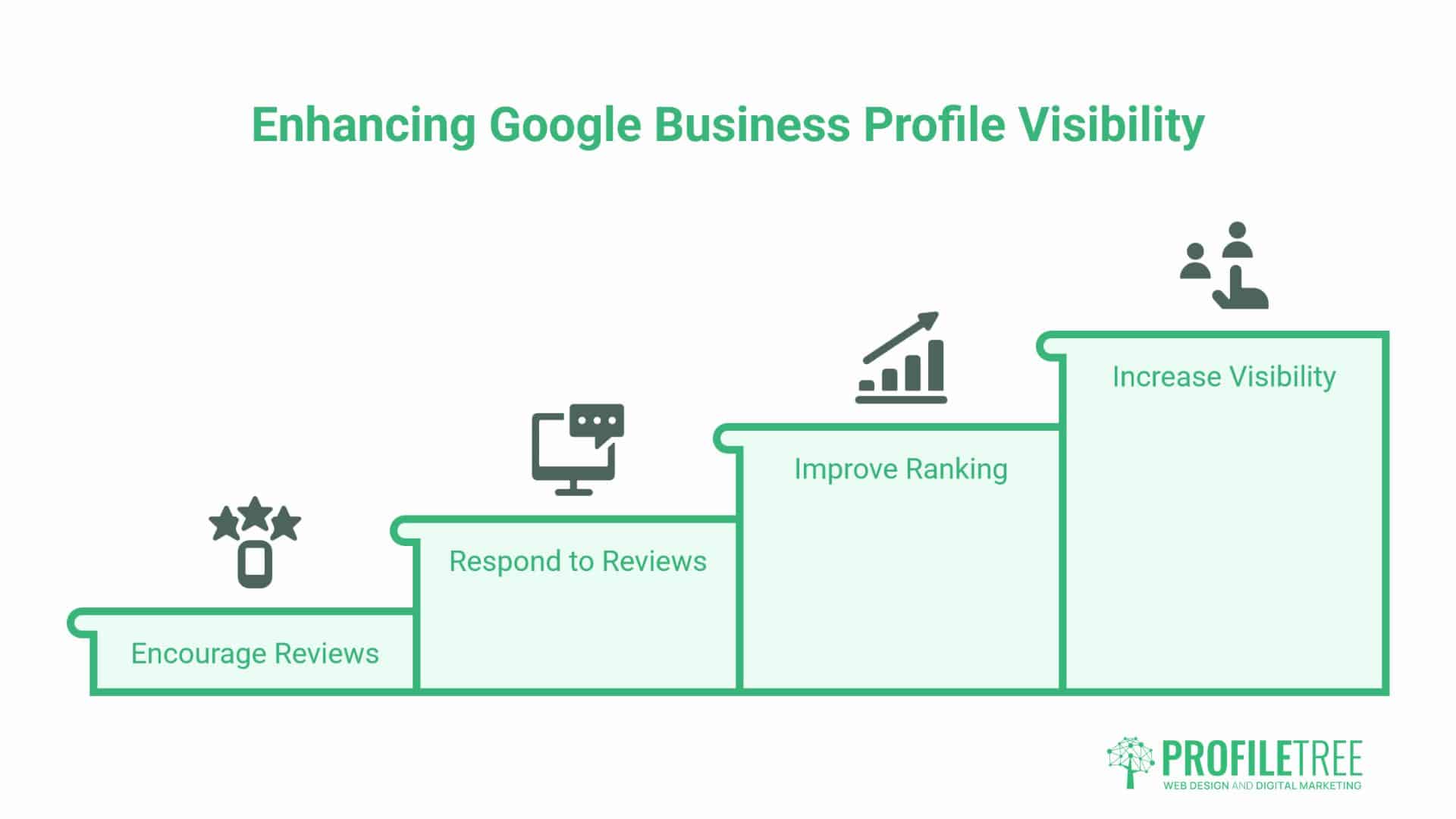
Reviews are one of the strongest local ranking signals and the most visible trust indicators on a Google Business Profile. The practical goal is to make it easy for satisfied customers to leave a review and to respond to every review received.
Generating reviews: direct, personal requests at the moment of a positive interaction work more reliably than generic automated emails sent weeks later. A follow-up email after completing a job, a card with a QR code linking to the Google review page, or a brief request at the point of handover all outperform delayed, impersonal asks.
Responding to reviews: aim to respond within 48 hours. For positive reviews, a brief, specific reply that mentions the service provided and thanks the customer by name reinforces that the review is genuine. For negative reviews, acknowledge the concern, apologise for the experience without admitting fault when the complaint is disputed, and invite the customer to contact you directly to resolve the matter. Defensive or dismissive replies are read as carefully by future customers as the original review.
ProfileTree’s guide to online community statistics covers how review volume and engagement compare across sectors, which is useful context when setting a realistic review target.
Local Link Building in the Welsh Business Community
Backlinks from other Welsh websites are a meaningful signal of local authority. Sources worth pursuing include:
- Local business associations, including the Federation of Small Businesses Wales and local Chambers of Commerce
- Local news outlets such as Wales Online, Business News Wales and council press pages
- Welsh tourism and community websites, where a business has a genuine local interest angle
- Industry bodies with UK or Welsh directories
- Guest articles in Welsh business publications
Quality matters more than quantity here. A single link from Business News Wales carries more local authority signal than twenty links from generic directory sites. ProfileTree’s approach to online engagement strategies covers how outreach for links and coverage fits alongside a wider content plan.
Optimising for AI Overviews in Wales
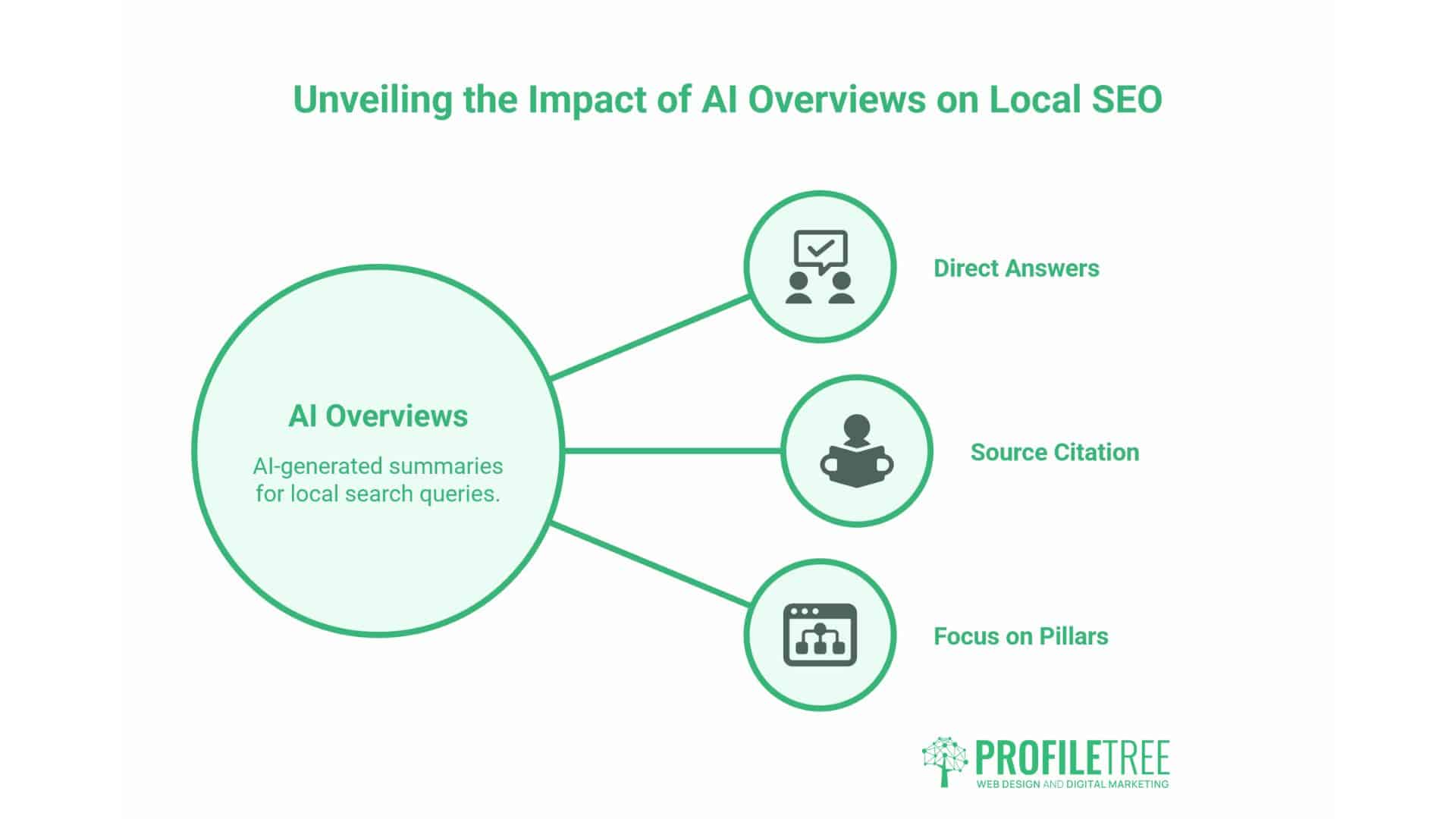
Google’s AI Overviews increasingly answer local search queries directly, drawing from a small set of sources rather than sending the searcher straight to a list of 10 links. For a query like “local seo wales” or “seo for small business Wales”, an AI Overview is likely to summarise the three ranking pillars (proximity, relevance, prominence) and cite two or three sources rather than showing the full organic list.
Getting cited in that summary depends on the same fundamentals covered above, applied consistently: clear factual statements early in the content, a complete and accurate Google Business Profile, and genuine local specificity rather than generic advice that could apply to any UK region. Pages that name specific towns, postcode areas (CF, SA, NP, LL) and regional distinctions between north and south Wales give an AI system more concrete material to draw from than pages written at a purely national level.
Local SEO in Wales Comes Down to Consistency, Not Budget
Local SEO for Welsh businesses rests on three things done well and maintained over time: a complete, actively managed Google Business Profile, accurate NAP data across every directory, and content specific enough to the town, region, or Welsh-speaking audience it’s written for.
None of this requires a large budget. It requires attention to detail and a system followed consistently, whether that’s a business in Cardiff working through the fundamentals in-house or a business in Gwynedd handling a rural service area with the help of an agency. For most Welsh SMEs, the businesses ranking well aren’t outspending the competition; they’re simply more thorough.
FAQs
What is local SEO and why does it matter for Welsh businesses?
Local SEO optimises an online presence to appear in searches from customers in a specific area, whether in Google Maps, the Local Pack or organic results. It carries more commercial intent than general search, so local visitors are more likely to contact or visit the business.
How do I set up a Google Business Profile for a business in Wales?
Go to business.google.com, select “Manage now” and search for the business name, or create a new listing. Complete every section: trading name, address, phone number, categories, hours, description and photos. Google verifies the listing by post; it then needs to be updated and posted regularly.
Does the Welsh language affect my Google rankings?
Genuine Welsh-language content doesn’t harm English rankings when hreflang and URL structure are set up correctly. It can improve topical relevance, particularly for areas with more Welsh speakers, such as Gwynedd or Anglesey. In Cardiff and Swansea, English content typically reaches a broader audience.
What is NAP consistency, and why does it affect local rankings?
NAP is Name, Address and Phone number appearing identically across every directory, profile and listing. Differences such as varying phone formats or abbreviated street names reduce Google’s confidence in the data and can suppress local ranking. Audit existing listings before adding new ones.