
How Many People Use Social Media in 2026? Latest Global Data
Table of Contents
People use social media for connection, entertainment, information, and increasingly, to make purchasing decisions that shape the success of businesses worldwide. What started as simple networking platforms has transformed into a global phenomenon that fundamentally influences consumer behaviour, brand perception, and commercial success.
For marketing managers and business owners across the UK, understanding current social media statistics isn’t merely academic—it’s essential for survival in a digital-first marketplace. When over 5 billion individuals actively engage with social media platforms daily, representing more than two-thirds of the global population, the question shifts from whether your business should have a social presence to how you can leverage these platforms strategically.
The numbers tell a compelling story. Social media users spend an average of 2 hours and 27 minutes daily across platforms, checking their smartphones within 15 minutes of waking and engaging multiple times throughout the day. This behaviour represents a fundamental shift in how people discover brands, research products, seek recommendations, and ultimately decide where to spend their money.
For UK businesses specifically, the landscape is remarkably mature and competitive. With 83% of the UK population actively using social media—among the highest penetration rates globally—your potential customers are already online, already engaged, and already forming opinions about businesses like yours. The only question is whether you’re part of that conversation.
This comprehensive guide examines the latest global and UK-specific social media data for 2025, breaking down platform-by-platform statistics, regional variations, and demographic trends. More importantly, it translates these numbers into actionable insights for businesses seeking to transform social media presence into measurable commercial results. Whether you’re developing your first social media strategy or optimising existing efforts, understanding where your audience spends their time—and how to reach them effectively—begins here.
How Many People Use Social Media Worldwide?
The scale of social media adoption continues to expand at a remarkable pace. As of 2025, approximately 5.22 billion people worldwide actively use social media platforms, representing over 67% of the global population. This figure has grown substantially from the 3.196 billion users recorded in 2018, demonstrating a penetration increase of more than 60% in just seven years.
What makes these numbers particularly significant for businesses is the depth of engagement they represent. The average person maintains accounts across 7.6 different social media platforms and spends approximately 2 hours and 27 minutes daily engaging with social content. This represents a substantial shift in consumer behaviour—people aren’t just checking social media occasionally; it has become an integral part of their daily routines.
For UK businesses seeking to expand internationally or understand their competitive landscape, this global reach presents both opportunities and complexities. The proliferation of platforms means that audiences are fragmenting across different channels, each with distinct demographics, content preferences, and engagement patterns.
Active User Growth and Engagement Patterns
Year-on-year growth remains strong across most regions, though the rate varies considerably. While mature markets, such as the UK, show steady but modest increases of around 3-5% annually, emerging markets continue to experience double-digit growth rates. Saudi Arabia, for instance, recorded a 32% year-on-year increase in social media adoption, significantly outpacing the global average of 13%.
This growth translates into tangible business opportunities. With 80% of people checking their smartphones within 15 minutes of waking, social media has become the primary channel for morning information consumption. Weekday usage averages 87 minutes, extending to more than 160 minutes on weekends—time that businesses can capture with strategically planned content.
The Philippines maintains its position as the most engaged market globally, with users spending an average of 3 hours and 57 minutes daily on social platforms. Brazil follows closely at 3 hours and 39 minutes. These engagement levels far exceed traditional media consumption patterns, representing prime opportunities for businesses operating in or targeting these markets.
How Many People Use Social Media in the UK?
The UK presents a particularly sophisticated social media landscape. Over 83% of the UK population now actively engages with social media platforms, making it one of the most digitally connected markets globally. This high penetration rate means that for most UK businesses, the question isn’t whether to use social media, but instead how to use it effectively.
The UK market demonstrates distinct demographic patterns that businesses must consider when developing their social media strategies. The highest concentration of users falls within the 23-34 age bracket, whilst the 50-65 age group shows the lowest adoption rates—though this gap continues to narrow as older demographics become increasingly digitally literate.
For businesses targeting younger demographics, platforms such as Instagram, TikTok, and YouTube offer the highest potential for engagement. However, companies serving older audiences or operating in B2B sectors will find Facebook and LinkedIn more effective channels. Understanding these nuances is crucial for effective resource allocation and informed campaign planning.
Platform Preferences Across UK Demographics
UK users exhibit sophisticated patterns of platform usage. Unlike some markets where a single platform dominates, UK audiences distribute their attention across multiple channels. This multi-platform behaviour means businesses can’t rely on a single channel strategy. Instead, successful social media marketing requires coordinated campaigns that maintain consistent messaging while adapting content formats to suit each platform’s unique characteristics.
The rise of video content has notably reshaped UK social media consumption. Short-form video dominates engagement metrics, with TikTok and Instagram Reels showing the strongest growth trajectories. For businesses, this shift necessitates investment in video production capabilities—whether developing these skills in-house or partnering with agencies that specialise in video content creation.
Social Media Platform User Statistics
Understanding platform-specific user numbers enables businesses to make informed decisions about where to allocate their marketing resources. Each central platform serves distinct purposes and attracts different audience segments, making strategic platform selection crucial for campaign success.
Facebook: Still the Dominant Force
Facebook maintains its position as the world’s largest social media platform with 2.9 billion monthly active users. What’s particularly notable for businesses is the depth of engagement—76% of Facebook users check the platform daily, creating consistent touchpoints for brand messaging.
For UK businesses, Facebook offers sophisticated targeting capabilities and a mature advertising ecosystem. The platform excels in community building, customer service, and reaching audiences aged 35 and above. Businesses can create dedicated pages, run targeted advertising campaigns, and engage directly with customers through comments and messages.
Facebook Messenger and WhatsApp, together, process 60 billion messages daily, presenting opportunities for businesses to develop effective conversational marketing strategies. Many UK SMEs now use these platforms as their primary customer communication channel, finding them more immediate and personal than email.
YouTube: The Video Search Engine
With 2.6 billion monthly active users and 5 billion videos watched daily, YouTube functions as both a social platform and the world’s second-largest search engine. For businesses, this dual nature creates unique opportunities to capture both entertainment and search-driven traffic.
UK businesses, in particular, benefit from YouTube’s capabilities for long-form content. Unlike short-form platforms, YouTube allows detailed product demonstrations, tutorials, and thought leadership content that builds authority and trust. The platform’s search functionality ensures that well-optimised content continues to generate views and leads long after publication.
Video content on YouTube tends to perform exceptionally well for educational content, product reviews, and behind-the-scenes business insights. Companies offering complex products or services find YouTube particularly valuable for explaining features and demonstrating value propositions in depth.
Instagram: Visual Storytelling for Brands
Instagram’s 2 billion monthly active users make it indispensable for visually-oriented businesses. The platform’s strength lies in aesthetic presentation and lifestyle marketing, making it particularly effective for fashion, food, travel, and design-focused brands.
The platform’s engagement metrics are impressive—51% of users open Instagram daily, whilst 35% check it multiple times throughout the day. Instagram Stories, with 300 million active users, has surpassed Snapchat as the preferred format for ephemeral content, offering businesses opportunities for time-sensitive promotions and behind-the-scenes content.
For UK businesses, Instagram’s shopping features have transformed the platform from a purely brand awareness tool to a comprehensive sales channel. Product tagging, shoppable posts, and Instagram Checkout allow businesses to create seamless purchasing experiences without directing users away from the platform.
Twitter/X: Real-Time Engagement
Twitter maintains a dedicated user base of 335 million monthly active users, with 81% of millennials checking the platform at least once daily. The platform processes 6,000 tweets per second and 500 million tweets daily, making it the primary channel for real-time conversation and news distribution.
For businesses, Twitter excels at customer service, industry commentary, and participating in trending conversations. The platform’s public nature and rapid information flow make it particularly valuable for brand transparency and crisis communication. UK businesses find Twitter to be an effective platform for B2B networking, thought leadership, and engaging with journalists and industry influencers.
LinkedIn: Professional Networking and B2B Marketing
LinkedIn has become the essential platform for B2B marketing and professional services. Whilst only 18% of users log in daily, the platform’s professional context means engagement is highly qualified and commercially oriented.
For UK businesses operating in B2B sectors or professional services, LinkedIn offers unmatched targeting capabilities based on job titles, industries, and company sizes. The platform supports thought leadership through articles, facilitates direct outreach through messaging, and provides advertising options specifically designed for lead generation and recruitment.
TikTok and Emerging Platforms
TikTok’s explosive growth continues, though exact user numbers fluctuate due to regional restrictions and rapid adoption. The platform has fundamentally changed social media content creation, popularising short-form, authentic video content that emphasises entertainment value over production polish.
UK businesses initially hesitant about TikTok are reconsidering as the platform’s demographics mature and shopping features expand. TikTok Shop has created new e-commerce opportunities, whilst the platform’s algorithm offers smaller brands unprecedented organic reach potential compared to ad-dependent platforms like Facebook and Instagram.
Social Media Opportunities for UK Businesses
The statistics reveal clear business opportunities, but success requires strategic thinking rather than simply maintaining presence across multiple platforms. Understanding how many people use social media is only the starting point—the real value comes from knowing how to convert that audience into customers.
Strategic Platform Selection
Not every business needs to be on every platform. Resource constraints mean most SMEs must prioritise. The decision should be based on where your target audience actively engages and which platforms align with your content strengths.
B2B companies typically find the most value on LinkedIn and Twitter, where professional audiences actively seek industry insights and solutions. Consumer brands with strong visual identities should prioritise Instagram and Pinterest. Businesses targeting younger demographics need TikTok presence, whilst those serving older audiences still find Facebook most effective.
“The businesses that succeed with social media aren’t necessarily those with the biggest budgets,” notes Ciaran Connolly, Director of ProfileTree. “They’re the ones that understand their audience deeply and create content that genuinely addresses their needs and interests. Platform choice matters far less than content relevance.”
Content Strategy Development
Successful social media marketing requires consistent, valuable content tailored to each platform’s unique characteristics. This doesn’t mean creating entirely separate content for each channel—innovative businesses develop core content that can be adapted and used across multiple platforms.
Video content has become a non-negotiable component for achieving social media success. Businesses don’t need expensive production studios; smartphone-quality video often outperforms highly polished content because it feels more authentic and relatable. The key is consistency and value—regular content that educates, entertains, or solves problems for your audience.
UK businesses should consider developing content pillars—three to five core topics aligned with their expertise and audience interests. These pillars provide structure for content creation whilst allowing flexibility for trending topics and timely opportunities.
Measuring Social Media ROI
The abundance of users means nothing without proper measurement. Businesses must move beyond vanity metrics, such as follower counts and likes, and focus instead on metrics that directly connect to business objectives—website traffic, lead generation, customer acquisition costs, and ultimately, revenue.
Modern social media platforms offer sophisticated analytics that track user behaviour throughout the customer journey. UK businesses should implement proper tracking to understand which platforms, content types, and campaigns generate actual business value. This data-driven approach allows continuous optimisation and ensures social media efforts contribute measurably to business growth.
Integration with Broader Digital Strategy
Social media shouldn’t exist in isolation. The most successful UK businesses effectively integrate social media into their comprehensive digital marketing efforts, which encompass SEO, email marketing, website development, and paid advertising. Social media can drive website traffic, whilst website content can be repurposed for social platforms. Email subscribers become social followers, and social audiences can be retargeted with paid advertising.
This integrated approach is where ProfileTree’s expertise becomes particularly valuable. As a digital agency offering web design, SEO, content marketing, and AI implementation, we help UK businesses develop cohesive strategies where social media amplifies all other marketing efforts rather than operating as a standalone channel.
Regional Social Media Usage: A Global Perspective
Understanding regional variations in social media adoption is crucial for businesses operating internationally or targeting specific markets. Usage patterns, platform preferences, and engagement levels vary significantly across different regions, reflecting cultural differences, economic development, and the availability of infrastructure.
Eastern Asia: The Digital Leader
Eastern Asia leads globally with a 72% social media penetration rate and over 1.2 billion users. China alone accounts for more than 800 million social media users, though access to Western platforms remains restricted. This creates unique challenges for international businesses—success in China requires understanding domestic platforms like WeChat, Weibo, and Douyin (TikTok’s Chinese counterpart).
For UK businesses targeting Asian markets, the regional preference for integrated “super apps” that combine social networking, messaging, payments, and shopping represents a fundamentally different digital ecosystem. Success requires adapting strategies rather than simply translating Western approaches.
Southern Asia: Rapid Growth
Southern Asia follows with a 71% penetration rate and over 961 million users. India’s 450 million-plus social media users make it one of the world’s largest markets. The region’s relatively recent adoption of the internet means audiences are still developing digital literacy, but growth trajectories suggest enormous future potential.
UK businesses targeting the Indian market should note the strong preference for video content and support for regional languages. English content reaches urban, educated audiences, but truly scaling requires localisation into Hindi and other regional languages.
North America: Mature but Evolving
North America maintains a 74% penetration rate with over 300 million users. As a mature market, growth primarily comes from increased time spent and deeper platform integration, rather than new user acquisition. Facebook, Instagram, and Twitter remain dominant, though TikTok has captured significant attention from younger demographics.
For UK businesses targeting North American audiences, the key is understanding the highly competitive nature of these markets. Paid advertising is often necessary to achieve visibility, and content quality expectations are high due to the abundance of professional marketing presence.
Europe: Sophisticated and Privacy-Conscious
Europe registers a 68% penetration rate with over 540 million users. Facebook and WhatsApp dominate, although younger demographics are increasingly favouring Instagram and TikTok. The region’s defining characteristic is a strong sense of privacy consciousness, shaped by the GDPR and increasing digital rights awareness.
UK businesses benefit from cultural and regulatory alignment with European markets, though Brexit has complicated some aspects of digital marketing operations. The European preference for privacy-respecting marketing and authenticity over aggressive sales tactics aligns well with UK business culture.
Latin America: Mobile-First Engagement
Latin America exhibits strong growth, with a 72% penetration rate, surpassing 430 million users. The region is notably mobile-first, with most users accessing social media exclusively through smartphones. Facebook, WhatsApp, and Instagram are particularly popular, alongside regional platforms.
For UK businesses targeting Latin American markets, understanding mobile-optimised content is crucial. Connection speeds vary, so lightweight content that loads quickly performs better than data-intensive formats. Regional cultural preferences also favour warm, personal communication styles over corporate formality.
Middle East & North Africa: Rising Potential
The Middle East and North Africa region shows a 51% penetration rate with over 280 million users. Growth is steady as internet infrastructure expands and smartphone costs decrease. Instagram, Facebook, and TikTok are among the most popular platforms, with regional preferences varying by country.
UK businesses should note the importance of culturally appropriate content in these markets. Religious sensitivities, gender considerations, and local customs significantly impact the reception of content. Successful campaigns require a deep understanding of local culture or partnerships with local experts.
Sub-Saharan Africa: The Next Frontier
Sub-Saharan Africa displays the lowest current penetration at 23%, with over 270 million users. However, this represents enormous growth potential as infrastructure develops and smartphone access expands. Facebook and WhatsApp dominate due to their lightweight apps, which are designed for use in areas with limited connectivity.
For forward-thinking UK businesses, the African market represents long-term opportunities. Early market entry can establish a brand’s presence before markets become saturated, although success requires patience and an understanding of the infrastructure limitations that affect content delivery.
Social Media Content Creation and Planning
Raw statistics about user numbers mean little without understanding what content actually resonates with those users. Successful social media marketing requires strategic content planning that balances business objectives with audience interests.
Understanding Content Types
Different content formats serve different purposes across social media platforms. Static images work well for inspirational or educational content on Instagram and Pinterest. Video dominates engagement on Facebook, Instagram Reels, TikTok, and YouTube. Text-based posts still find audiences on Twitter and LinkedIn, particularly for thought leadership and industry commentary.
UK businesses should develop content capabilities across multiple formats to effectively reach their target audiences. This doesn’t require massive production budgets—smartphone cameras, free editing apps, and authentic presentation often outperform expensive professional content. The key is consistency and delivering value, rather than focusing on production polish.
Content Calendar Development
Strategic content planning prevents the feast-or-famine posting patterns common among businesses new to social media. A content calendar maps out posts across platforms, ensuring a consistent presence and allowing preparation during busy periods.
Effective calendars strike a balance between promotional content and valuable, educational, or entertaining posts. The 80/20 rule serves well here—80% of content should inform, educate, or entertain, whilst only 20% directly promotes products or services. This ratio builds audience trust and engagement rather than triggering promotional fatigue.
Platform-Specific Optimisation
Content that performs well on one platform often fails on another. Instagram rewards aesthetic cohesion and visual quality. TikTok prioritises authentic and entertaining content over production quality. LinkedIn expects professional insights and industry expertise. Twitter demands brevity and timeliness.
Innovative businesses develop core content that can be adapted to each platform’s unique characteristics. A blog post becomes a Twitter thread, a YouTube video script, an Instagram carousel, and a LinkedIn article. This approach maximises content value while respecting each platform’s distinct user expectations.
User-Generated Content Strategy
Encouraging customers to create content featuring your products or services provides authentic social proof whilst reducing content creation burden. User-generated content typically achieves higher engagement than branded content because audiences trust peer recommendations over corporate messaging.
UK businesses can stimulate user-generated content through hashtag campaigns, contests, customer features, and simply asking satisfied customers to share their experiences. This approach works particularly well on Instagram and TikTok, where users actively seek participation opportunities with brands they support.
The Impact of Social Media on Business Growth
Understanding how many people use social media is crucial because these platforms have fundamentally transformed the way businesses grow and operate. The direct connection between brands and customers that social media enables has democratised marketing, allowing small businesses to compete with larger competitors through creativity and authentic engagement.
Customer Acquisition and Lead Generation
Social media platforms offer sophisticated targeting capabilities that allow businesses to reach precisely defined audiences. UK businesses can target their marketing efforts by location, age, interests, behaviours, and even life events, ensuring that marketing spend reaches genuinely interested prospects rather than broad, unfocused audiences.
The lead generation potential extends beyond paid advertising. Organic content that addresses customer questions and needs naturally attracts interested prospects. Regular posting establishes expertise and builds trust, making social media an effective top-of-funnel marketing channel that warms audiences before direct sales approaches.
Customer Service and Community Management
Modern customers expect businesses to be accessible on social media for questions, complaints, and support. Many UK businesses find that social media messages outnumber email inquiries, requiring dedicated resources for timely responses.
Effective social media customer service fosters loyalty and demonstrates a public commitment to customer satisfaction. Handling complaints professionally and promptly on social platforms turns potentially harmful situations into opportunities to showcase excellent service, with conversations visible to potential customers evaluating your business.
Brand Building and Reputation Management
Social media enables businesses to craft their brand narrative, rather than relying solely on traditional advertising. Consistent posting that reflects company values, showcases culture, and demonstrates expertise builds brand recognition and affinity over time.
For UK businesses, social media also serves as a valuable tool for managing their reputation. Monitoring brand mentions allows quick responses to both positive and negative feedback. Engaging with mentions—thanking customers for compliments and addressing their concerns—demonstrates active management and a customer-focused approach that builds trust.
Future Trends in Social Media Marketing
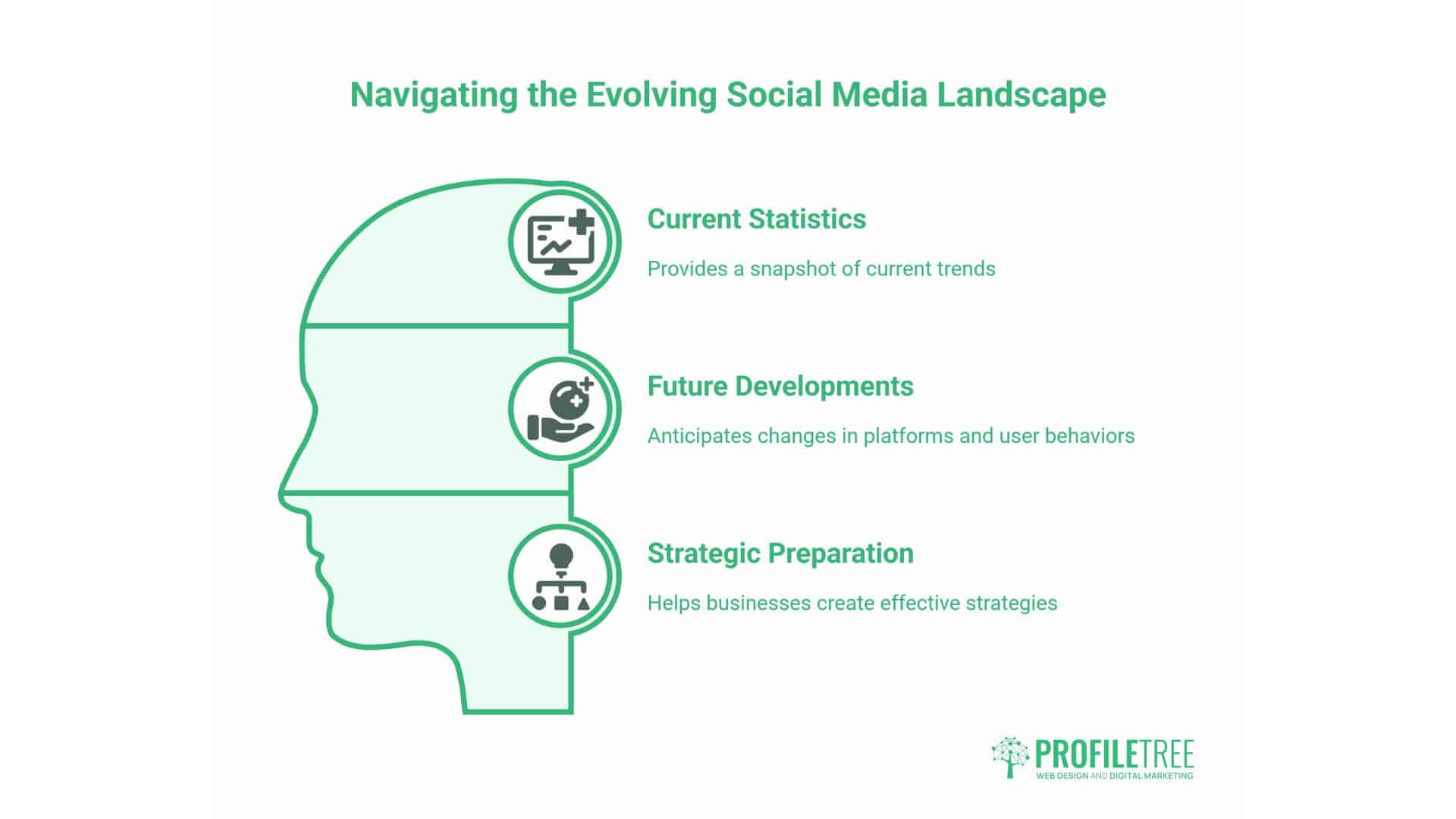
The social media landscape continues to evolve rapidly. Understanding current statistics provides a snapshot, but anticipating future developments helps businesses prepare strategies that remain effective as platforms and user behaviours change.
The Rise of Social Commerce
Social media platforms are increasingly integrating shopping capabilities directly into their interfaces. TikTok Shop, Instagram Shopping, and Facebook Marketplace transform social platforms from awareness channels to complete sales funnels. UK businesses should prepare for social commerce growth by optimising product catalogues and developing shoppable content strategies.
This integration means businesses need seamless connections between social media and e-commerce operations. Website development that supports social commerce integration is becoming increasingly important, as is inventory management that can handle sales across multiple channels simultaneously.
AI and Personalisation
Artificial intelligence increasingly powers social media platforms, from content recommendation algorithms to automated customer service chatbots. UK businesses should consider utilising AI tools for social media management, including content creation assistance, optimal posting time recommendations, and automated response systems for frequently asked questions.
ProfileTree specialises in AI implementation for SMEs, helping businesses adopt these technologies without requiring deep technical expertise. AI can dramatically improve social media efficiency whilst maintaining the authentic, personal engagement that audiences value.
Video Content Dominance
Video continues to dominate social media engagement metrics. Short-form video has shown strong performance across platforms, driven by TikTok’s success and the subsequent adoption of similar formats by Instagram (Reels) and YouTube (Shorts).
UK businesses should invest in video production capabilities—not necessarily expensive equipment, but the skills and processes to create regular video content. This may involve training existing staff, hiring specialists, or partnering with agencies that offer video production services in conjunction with broader digital marketing support.
Privacy and Data Protection
Growing privacy concerns and regulatory developments, such as the GDPR, shape how social media platforms handle user data. UK businesses must stay current with data protection requirements whilst developing marketing strategies that respect user privacy.
This shift towards privacy actually benefits businesses that focus on building genuine relationships with audiences rather than relying on invasive tracking. First-party data collection through email lists and direct customer relationships becomes increasingly valuable as third-party tracking becomes less effective.
How ProfileTree Supports Social Media Success
Understanding that over 5 billion people use social media worldwide and 79% of the UK population (54.8 million people as of early 2025) actively engages with these platforms is valuable—but translating these statistics into business results requires expertise, strategy, and consistent execution.
ProfileTree helps UK businesses develop and execute social media strategies that align with broader business objectives. As a digital agency offering web design, SEO, content marketing, video production, and AI implementation, we provide integrated solutions where social media amplifies all other marketing efforts.
Our approach begins with understanding your specific business goals, target audience, and competitive landscape. Rather than recommending presence on every platform, we identify where your audience is actively engaged and which channels offer the highest return on investment for your specific situation.
We develop content strategies that strike a balance between promotional messaging and genuine value delivery, creating posts that audiences want to engage with rather than scroll past. Our video production capabilities enable businesses to create visual content that drives social media engagement, while our SEO expertise helps content reach audiences through both social platforms and search engines.
For businesses seeking to implement AI technologies, we offer training and implementation support that makes advanced capabilities accessible to SMEs. This includes AI-assisted content creation, automated customer service solutions, and data analysis tools that inform strategic decisions.
Practical Steps for Social Media Success
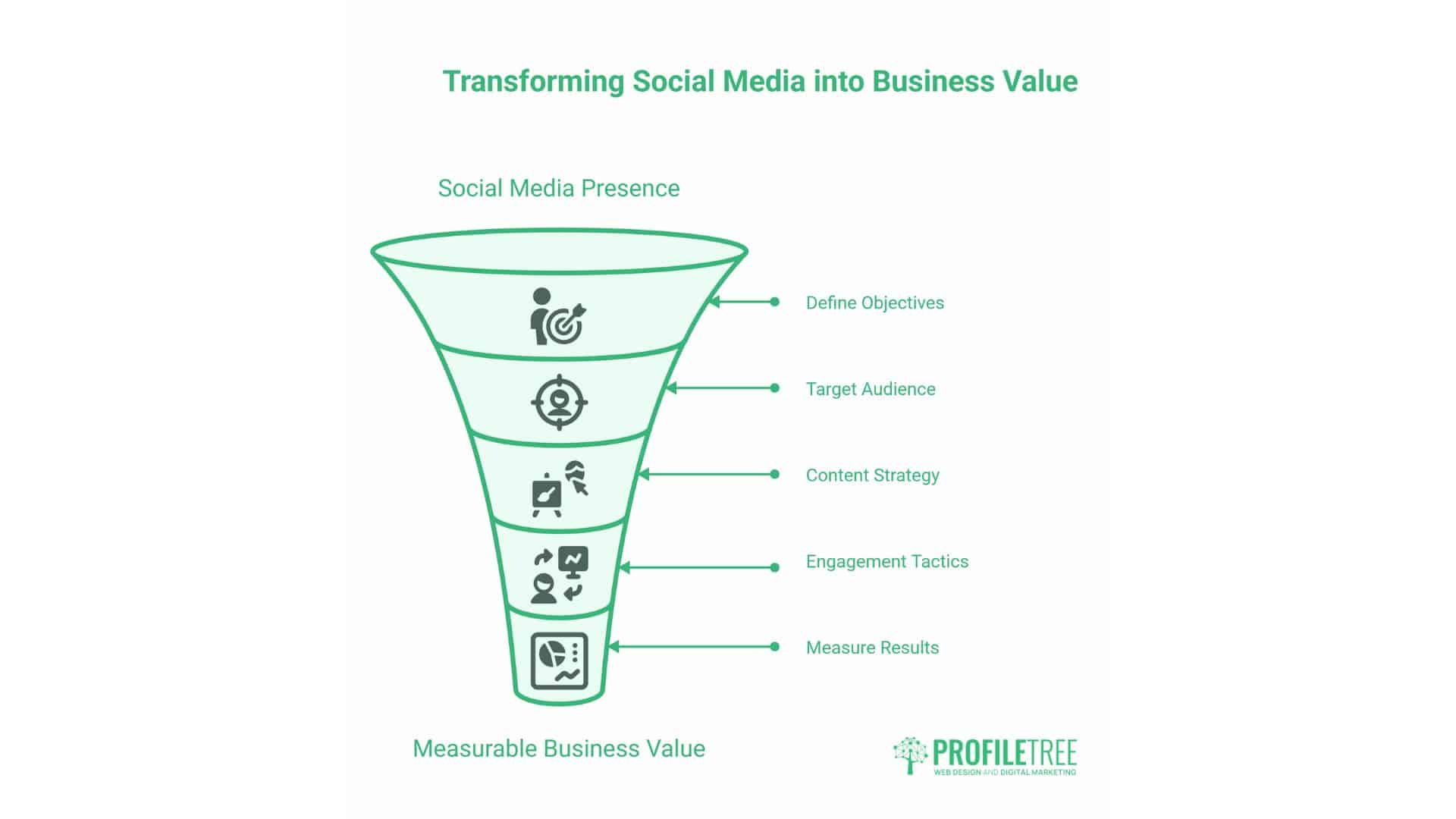
Statistics about the number of people using social media provide context, but success ultimately comes from strategic action. Here are concrete steps UK businesses can take to transform social media presence into measurable business value:
Audit Current Performance
Begin by honestly assessing current social media efforts. Which platforms are you active on? What content performs well? Where does engagement fall short? Understanding your starting point is essential for developing improvement strategies.
Review analytics across all active platforms, noting which content types, posting times, and topics generate the strongest engagement. Look beyond vanity metrics to business outcomes—which social media efforts actually drive website traffic, generate inquiries, or lead to sales?
Define Clear Objectives
Social media success requires specific, measurable goals tied to business outcomes. Rather than vague objectives like “increase engagement,” set concrete targets: generate 50 qualified leads monthly through LinkedIn, drive 1,000 website visits weekly from Instagram, or reduce customer service response time to under 2 hours on Twitter.
These specific goals allow measurement and accountability. They also guide content strategy—if the objective is lead generation, content should include clear calls to action and value propositions. If the goal is brand awareness, content should focus on storytelling and shareability.
Develop a Content Strategy
Create a content calendar that maps out posts across platforms for at least the next month. Balance promotional content with educational, entertaining, and community-building posts. Plan content around product launches, seasonal events, and industry developments whilst leaving flexibility for timely opportunities.
Consider how content pieces can work across multiple platforms. A blog post can be transformed into social media posts, a video script, and email newsletter content. This multi-channel approach maximises content investment whilst maintaining consistent messaging.
Invest in Capabilities
Successful social media requires specific capabilities, including photography, video production, copywriting, and community management. Assess which capabilities you can develop internally versus which require external support.
For many UK SMEs, partnering with a digital agency like ProfileTree makes sense. Rather than hiring full-time specialists in multiple disciplines, working with an agency provides access to a complete team of experts across web design, content creation, video production, and digital strategy.
Measure and Optimise
Social media marketing should be continuously improving based on performance data. Review analytics regularly, noting what works and what doesn’t. Don’t be afraid to experiment with new content types, posting times, or platform features—social media rewards innovation and authenticity over rigid formulas.
Set aside time monthly to review performance against objectives and adjust the strategy based on the results. Social media algorithms and user preferences are constantly evolving, so what worked six months ago may not be effective today—continuous learning and adaptation are key to differentiating successful social media strategies from abandoned accounts.
Common Social Media Mistakes to Avoid
Understanding how many people use social media tempts businesses to rush into these platforms without a proper strategy. Avoid these common mistakes that undermine social media effectiveness:
Broadcasting Instead of Engaging
Social media is fundamentally about conversation, not broadcasting. Businesses that only post promotional content without engaging with their audience miss the platform’s core value. Respond to comments, participate in relevant discussions, and show genuine interest in your audience’s needs and opinions.
Inconsistent Posting
Social media algorithms favour consistent activity. Accounts that post regularly maintain visibility, whilst sporadic posting leads to declining reach. If consistent posting isn’t sustainable, consider reducing the number of platforms you’re active on rather than maintaining an inconsistent presence across multiple channels.
Ignoring Platform Differences
Content that works well on LinkedIn often fails on TikTok. Each platform has distinct user expectations, content formats, and engagement patterns. Develop platform-specific content strategies rather than cross-posting identical content across multiple platforms.
Neglecting Analytics
Social media provides extensive performance data, but many businesses never review it. Analytics reveal what content resonates with, when audiences are most active, and which efforts drive business results. Regular analytics review is essential for continuous improvement.
Chasing Trends Blindly
Whilst staying current with social media trends matters, not every trend suits every business. Jumping on trending topics or formats that don’t align with your brand or audience often appears forced and inauthentic. Be selective about trend participation, focusing on those that genuinely fit your business and messaging.
FAQs
How many people use social media worldwide in 2025?
Approximately 5.22 billion people actively use social media platforms globally, representing over 67% of the world’s population. This number continues to grow, particularly in emerging markets where internet access and smartphone adoption are expanding rapidly.
What percentage of the UK population uses social media?
Over 83% of the UK population actively engages with social media platforms. This high penetration rate makes social media an essential channel for businesses targeting UK audiences across virtually all demographics and industries.
Which social media platform has the most users?
Facebook remains the largest social media platform with 2.9 billion monthly active users. YouTube follows with 2.6 billion users, then WhatsApp and Instagram, each with 2 billion users. However, user numbers alone don’t determine which platform is best for your business—audience demographics and engagement patterns matter more.
How much time do people spend on social media daily?
The global average is approximately 2 hours and 27 minutes per day, though this varies significantly by region and demographic. The Philippines leads with nearly 4 hours of daily usage, while usage patterns in the UK average slightly below the global mean but remain substantial.
Taking Action: Your Next Steps
Understanding how many people use social media provides valuable context, but knowledge alone doesn’t drive business results. Success stems from the strategic implementation of these insights. Whether you’re just beginning with social media or looking to optimise existing efforts, the path forward requires commitment to consistent, value-driven engagement with your audience.
For UK businesses looking to transform their social media presence into measurable business value, ProfileTree provides comprehensive support across strategy development, content creation, video production, and performance measurement. Our integrated approach connects social media with web design, SEO, and broader digital marketing efforts to create cohesive strategies that work together rather than in isolation.
The 5.22 billion people using social media worldwide represent an enormous opportunity for businesses willing to engage authentically and strategically. The question isn’t whether social media matters for your business—with over 83% of UK consumers active on these platforms, it is clear that it does. The real question is whether you’ll approach social media strategically or continue with ad-hoc efforts that fail to deliver measurable results.
Social media success doesn’t require massive budgets or large teams. It requires understanding your audience, delivering consistent value, and measuring what matters. With the right strategy and support, businesses of any size can compete effectively in the social media landscape that has become central to modern marketing.