
Brand Attributes: A Practical Guide for Growing Your Business
Table of Contents
Brand attributes are the specific characteristics customers associate with your business: how consistent you are, what you stand for, and why someone would pick you over the business next door or the next tab in their browser. Get them right and every part of your digital presence, from your website to your search rankings, does more work with less effort. Get them wrong, or leave them undefined, and even good marketing struggles to stick.
This guide sets out what brand attributes actually are, the core attributes worth building around, how well-known UK and Irish brands use them, and how to turn a list of characteristics into decisions you can act on across web design, content, and search.
What Are Brand Attributes, Exactly?
A brand attribute is a specific, describable quality that people associate with your business: reliable, straightforward, expensive-but-worth-it, fast, local. Attributes sit alongside two other terms that often get muddled with them, so it’s worth separating all three.
Brand values are the internal beliefs that guide business decisions, such as honesty and sustainability. Brand personality is the human-like character of your communications project, whether that’s playful, formal, or blunt. Brand attributes are the external, observable characteristics customers actually notice and remember, the output of your values and personality combined. This distinction matters when developing a consistent marketing approach, and digital marketing strategy services can help translate these attributes into messaging, content and campaigns across different channels.
| Term | What it is | Who it’s for | Example |
|---|---|---|---|
| Brand values | Internal beliefs guiding decisions | Leadership and staff | “We prioritise transparency” |
| Brand personality | The character your brand projects | Marketing and content teams | Playful, direct, formal |
| Brand attributes | Observable qualities customers notice | Customers and prospects | Reliable, fast, local, affordable |
A business can hold a value like honesty without ever earning the attribute “honest” in customers’ minds, if that value never shows up consistently in how the business communicates. Attributes are earned through repetition, not stated through a mission page.
The Core Brand Attributes Worth Building Around
Most strong brands, regardless of sector, tend to lean on a handful of the same underlying characteristics. Five come up repeatedly across why organisations bother with branding at all, and they’re worth treating as a working checklist rather than a fixed formula.
Consistency means the same tone, quality, and visual identity turn up wherever a customer meets you, on your website, in your emails, and on social media. Customers who know what to expect are more likely to act on that expectation, which is why the advantages of branding so often come down to reduced friction rather than a single flashy campaign.
Distinctiveness is what stops your business from blending into the background. If an attribute could apply equally well to your closest competitor, it isn’t distinctive; it’s just a category requirement everyone in your sector needs to meet before customers even consider you.
Trustworthiness matters more in some sectors than others, but it rarely hurts. For professional services in particular, trust tends to outrank excitement or novelty as the deciding attribute, because the buyer is taking on risk by hiring you.
Relevance ties your attributes to what your specific audience actually cares about. A “premium” attribute means nothing to a customer shopping on price, just as “budget-friendly” won’t land with a client expecting white-glove service.
Emotional connection is the attribute that turns a functional choice into a preferred one. Emotional branding works by tying a business to a feeling, belonging, confidence, or relief, rather than a feature list, and it’s often the hardest attribute to copy.
Not every business needs all five in equal measure. An accountancy practice probably relies more on trustworthiness and consistency, while a hospitality brand might rely more on emotional connection and distinctiveness. The point isn’t to tick every box, it’s to know which two or three actually drive your customers’ decisions.
A Brand Attributes List by Industry
A generic list of adjectives rarely helps, because the right attribute depends heavily on what your customers are actually buying. The table below groups commonly used attributes by sector, as a starting point rather than a finished answer.
| Sector | Attributes customers respond to |
|---|---|
| Professional services (legal, accountancy, consultancy) | Trustworthy, experienced, thorough, discreet, responsive |
| Technology and SaaS | Reliable, fast, intuitive, secure, scalable |
| Retail and e-commerce | Convenient, good value, on-trend, well-reviewed, easy to return |
| Hospitality and food | Welcoming, consistent, authentic, generous, local |
| Manufacturing and trades | Durable, precise, punctual, fairly priced, well-equipped |
If you sell professional services, “trustworthy” and “responsive” will usually do more for you than “different” ever will, since clients hiring an accountant or a solicitor are buying certainty, not novelty. A trades business, by contrast, earns repeat work through punctuality and fair pricing long before anyone asks whether it’s exciting, and that pattern holds whether the business is based in Belfast, Cork, or Manchester.
How UK and Irish Brands Use Attributes to Stand Out
The clearest way to understand brand attributes is to look at businesses that have built a recognisable position around a small number of them, rather than trying to be everything to everyone.
Monzo built its identity almost entirely around straightforward, jargon-free communication at a time when most UK banks still buried fees and terms in dense small print. That single attribute, plain-spoken transparency, became the reason people talked about the app to friends who’d never normally discuss their bank.
BrewDog took a similarly narrow approach in a crowded drinks market, leaning hard into an irreverent, rule-breaking tone that ran through everything from packaging to advertising. Whether or not that tone appeals to a given customer, it’s instantly recognisable, which is the whole point of a distinctive attribute.
Kerrygold has spent decades reinforcing a single attribute, authentic Irish provenance, across packaging, advertising, and even the shape of its foil wrapper. It hasn’t needed to reinvent that attribute for each market it enters; it has simply repeated it consistently.
Dyson positions itself around engineering-led innovation rather than lifestyle imagery, with marketing that tends to foreground patents, testing, and mechanical detail over the kind of aspirational scenes typical of consumer appliance advertising. The attribute and the marketing execution reinforce each other.
None of these businesses tried to claim every available positive attribute. Each picked one or two that fit what they actually deliver and repeated them relentlessly, which is a more realistic template for an SME than trying to match a multinational’s marketing budget.
Identifying Your Own Brand Attributes
Working out which attributes genuinely apply to your business, rather than which ones sound good on a slide, takes a short, structured process rather than a single brainstorm.
Start with an internal audit. Ask the people who deal with customers directly, sales staff, account managers, whoever answers the phone, what they hear customers say about you unprompted. This is usually more revealing than anything from a boardroom discussion, because it reflects lived experience rather than aspiration.
Check the gap between intention and perception. Compare what you believe your business represents against how customers and reviews actually describe you. A documented brand strategy is worth little if it doesn’t match what’s showing up in your Google reviews or on your social channels.
Map your position against competitors. List two or three direct competitors and note which attributes they’ve already claimed convincingly. There’s limited value in also claiming “forward-thinking” if a competitor has spent five years building that exact reputation; you’ll do better finding the attribute they’ve left uncontested, even if it feels less flattering on first glance.
Run a stress test on each candidate attribute. Ask three questions of every attribute you’re considering: is it true, is it deliverable day to day, and is it distinctive from what competitors already claim? Drop anything that fails even one of these, no matter how appealing it sounds on paper.
As Ciaran Connolly, founder of ProfileTree, puts it: “Consistency in brand delivery isn’t just about maintaining standards, it’s about creating trust through reliability. When clients see that your digital presence reflects the same quality as your actual service delivery, you remove friction from the decision-making process.”
That last point is worth sitting with. Attributes that only exist in your marketing copy, but don’t match your actual service delivery, tend to be exposed quickly through reviews and repeat custom, particularly in smaller markets like Northern Ireland and Ireland, where word of mouth still carries real weight.
Turning Brand Attributes Into a Digital Strategy
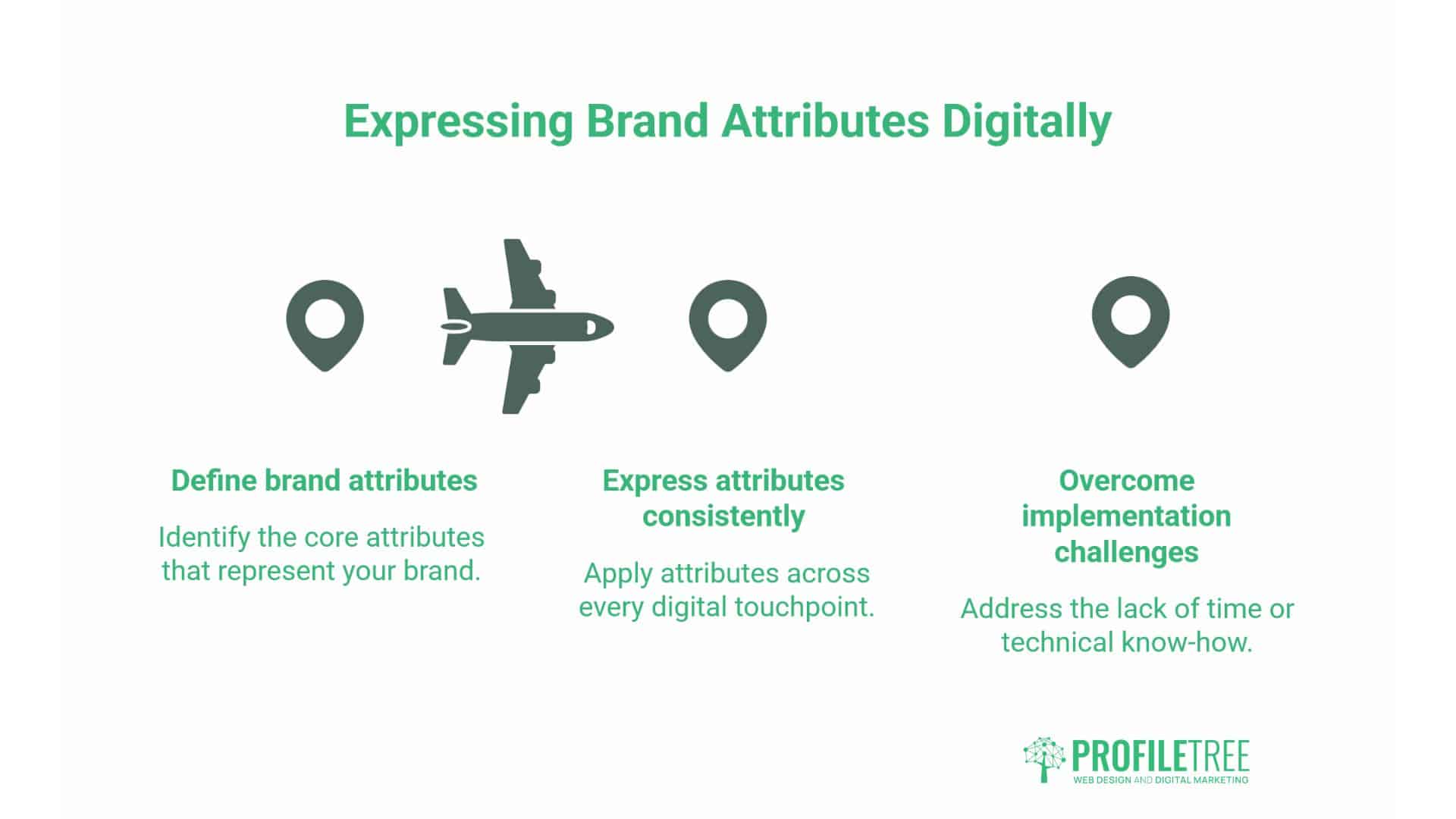
Defining your attributes is the easier half of the job. The harder, more useful half is expressing them consistently across every digital touchpoint, which is where most SMEs either run out of time or technical know-how.
Web Design and Visual Identity
Colour, typography, and layout are the fastest ways customers absorb a brand attribute, often before they’ve read a single word. Colour psychology in web design genuinely affects perception: blue tones tend to read as trustworthy and professional, which suits a firm leaning on the “trustworthy” attribute, while brighter palettes suit businesses built around energy or approachability. A well-designed logo reinforces the same attribute across every touchpoint, from your website header to your delivery van.
Website Development and User Experience
An attribute like “reliable” or “efficient” falls apart the moment a website loads slowly or breaks on a phone. Professional website development is where an attribute either proves itself or quietly undermines itself, since navigation structure, loading speed, and mobile responsiveness are judged by customers as evidence of how the business actually operates. Accessible navigation does double duty here, too; it widens your audience while reinforcing an attribute like “thoughtful” or “inclusive” for every visitor who benefits from it.
Search Engine Optimisation
Attributes only work if people encounter them, and for most SMEs, that still means being found in search. SEO services built around your actual attributes, rather than generic industry keywords, tend to attract customers who are already looking for what you genuinely offer. A firm built on “responsive” and “local” should be targeting local, service-led search terms rather than competing head-on for broad national keywords that don’t reflect what makes it distinctive.
Content and Video Marketing
Written content lets you demonstrate an attribute rather than just claim it: a detailed, honest FAQ page proves “transparent” far more convincingly than the word itself ever could. Video takes this further. A short walkthrough of your workshop, your process, or your team says more about “authentic” or “experienced” in ninety seconds than several paragraphs of copy, and video marketing has become realistic for smaller budgets, not just larger campaigns. Animation offers a similar route for businesses whose work is harder to film directly, such as software or professional services.
Digital Training and AI Implementation
Smaller teams often can’t hire a dedicated brand manager, which is where building the skill in-house through digital training makes it easier to maintain the attributes without ongoing external support. AI tools are increasingly part of that picture, too. Used carefully, they can help ensure new content matches an agreed tone of voice before it’s published, though the cost and benefits of AI implementation for SMEs are worth weighing honestly rather than adopting tools because they’re available.
Measuring Whether Your Brand Attributes Are Working
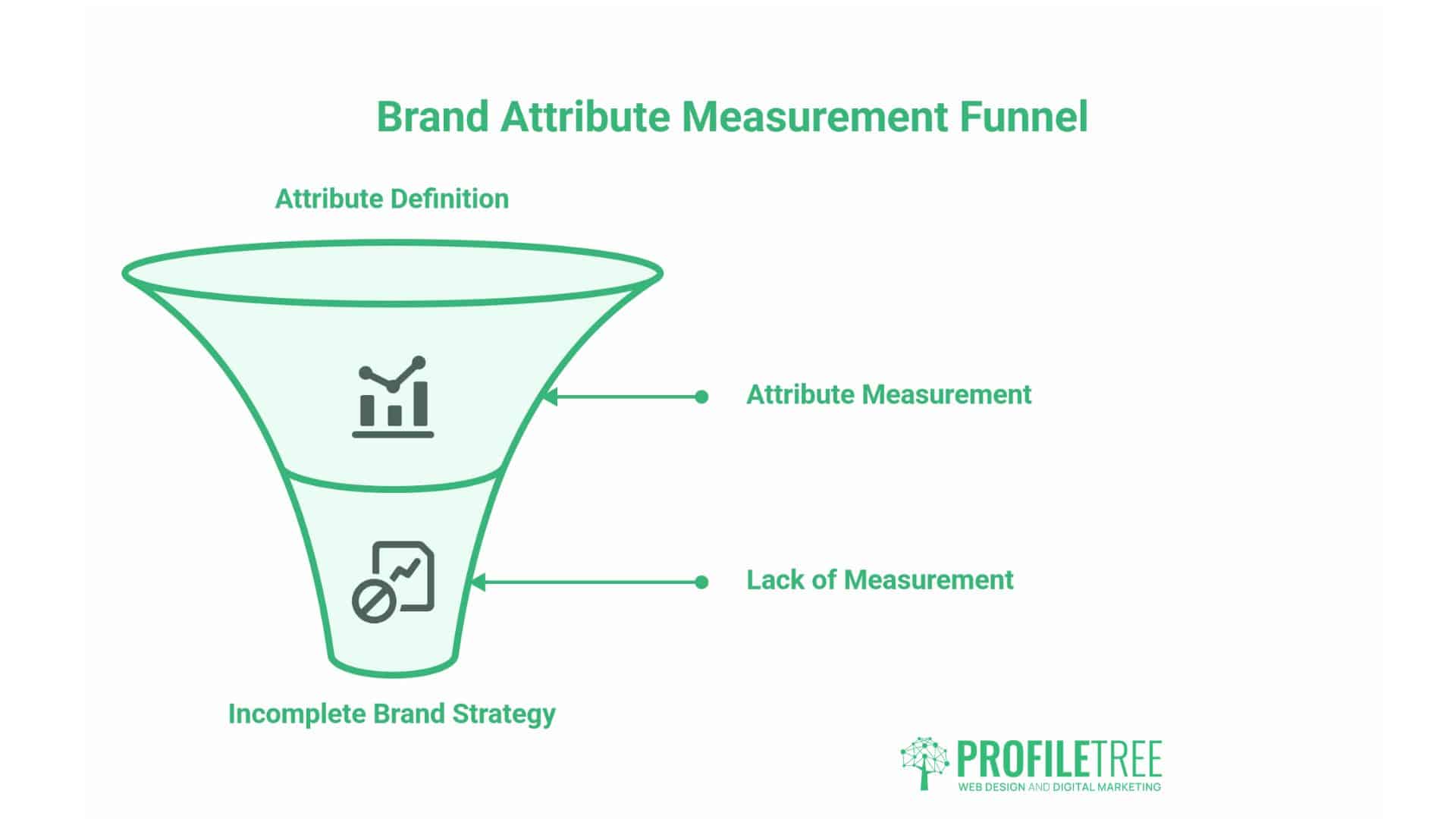
Attributes are easy to define and surprisingly hard to measure, which is probably why so many businesses stop after the workshop stage and never check whether the work landed.
Review scores and repeat business are the simplest starting point. If your intended attribute is “reliable,” look at whether your reviews actually use words like that, or whether customers are describing something else entirely. A gap between your intended attribute and your actual reviews is more informative than any internal brand document.
Search visibility offers a second, quieter signal. If your website consistently ranks for the terms tied to your intended attributes, “fast,” “local,” “affordable,” that’s some evidence the market associates you with them already. Marketing analytics can help connect that visibility back to actual enquiries rather than treating rankings as the end goal in themselves.
Consistency has a genuine, if debated, financial case behind it too. Lucidpress’s State of Brand Consistency Report found that businesses maintaining consistent branding across channels saw revenue increases of 23% in its original study, rising further in a later update based on a survey of more than 200 organisations. The figure varies between studies and years, but the direction is consistent: fragmented, inconsistent branding costs businesses measurable revenue, not just polish.
Common Pitfalls: Why Vague Attributes Do Not Work
The most common mistake is choosing attributes so broad that they could describe almost any business in the sector. “Quality,” “professional,” and “customer-focused” appear on so many websites that they’ve lost their distinctiveness; they’re closer to a basic entry requirement than a genuine differentiator.
A second, subtler pitfall is choosing attributes that sound aspirational rather than accurate. Claiming to be “ahead of the curve” because it sounds impressive, rather than because your business genuinely does something differently from competitors, tends to get noticed for the wrong reasons once customers compare the claim against the reality. Reviewers and repeat customers spot the gap between claim and delivery faster than most business owners expect, and once that gap is public in a review, it’s far harder to undo than it was to avoid in the first place.
Making Brand Attributes Work for Your Business
Brand attributes matter only when they’re visible in the places customers actually look: your website, your search results, your reviews, and the tone of your content. Defining three or four honest, specific attributes and expressing them consistently across web design, content, and search will do more for a growing business than a longer list nobody can maintain.
For SMEs across Northern Ireland, Ireland, and the UK, that consistency is usually the hardest part to sustain without dedicated support, which is where working through web design, development, SEO, and content decisions together, rather than as separate projects, tends to produce a brand that actually holds together online.
FAQs
What is the difference between a brand attribute and a brand value?
Brand values are internal beliefs that guide how a business operates. Brand attributes are the external qualities customers actually notice, such as “reliable” or “affordable,” and a business can hold a value without ever earning the matching attribute.
How many brand attributes should a business have?
Three to five core attributes work best. Claiming ten or more tends to dilute all of them, since customers rarely remember more than a couple of distinct impressions about any one business.
Can brand attributes be negative?
Yes. Unintended attributes, such as “slow” or “hard to reach,” develop just as easily as positive ones without deliberate management, and they usually surface in reviews before any internal audit catches them.
How often should a business review its brand attributes?
There’s no fixed schedule, but review after any meaningful change, merger, new target market, or shift in what’s being sold. Otherwise, checking every few years against current customer language is usually enough.
Are brand attributes the same as a slogan?
No. A slogan is a line of communication; brand attributes are the underlying qualities it is meant to express. Writing a clever line first and building the brand around it afterwards rarely produces an attribute that sticks.
Do brand attributes matter for a business-to-business company as much as a consumer brand?
Yes, though the attributes differ. B2B buyers weigh risk and expertise more heavily than personality, so “reliable” and “experienced” typically carry more weight than they would for a consumer lifestyle brand.