
What Is Content Marketing? A Practical Guide for Growing Businesses
Table of Contents
What is content marketing, and why do some businesses pull steady enquiries from their website while others publish constantly and hear nothing? The short answer is that content marketing is a planned approach to creating and sharing useful information that attracts a defined audience and earns their trust before any sales conversation begins. It is the difference between an invisible online presence and one that quietly does the selling for you.
This guide explains what content marketing is, why it matters for businesses across Northern Ireland, Ireland and the UK, and how to build an approach that drives traffic, builds authority and turns interest into revenue. You will find a clear definition, the formats that work, the measurable benefits, and a step-by-step plan you can start this week.
What Is Content Marketing, Defined Clearly
What is content marketing in plain terms? It is a strategic approach focused on creating and distributing valuable, relevant content to attract and keep a clearly defined audience. Rather than pushing product features at anyone within reach, content marketing offers something useful first: knowledge, answers, solutions or inspiration. That shift from interruption to invitation changes the whole relationship between a company and its market.
Content Marketing Versus Traditional Advertising
Traditional advertising leases attention. The moment you stop paying, the traffic stops. Content marketing builds an owned asset that keeps working. A useful article written today can attract readers for years, and a single video can generate enquiries long after it is published. The table below sets out the practical difference.
| Feature | Traditional advertising | Content marketing |
|---|---|---|
| Duration | Stops when payment stops | Keeps earning traffic over time |
| Customer intent | Interruptive (push) | Permission based (pull) |
| Cost profile | Linear: more leads, more spend | Compounding value over time |
| Trust | Lower, scepticism toward the pitch | Higher, authority built through help |
Why The Definition Has Shifted
The old definition stopped at “publish helpful content”. That is no longer enough. With generative AI flooding every niche, the bar has moved from noise to signal. Noise is high-volume filler designed only to rank. Signal is original research, real experience and a specific answer to a real problem. What is content marketing now? It is the work of producing signal that an AI summary cannot replicate, because it draws on first-hand expertise.
Why Content Marketing Matters For Your Business
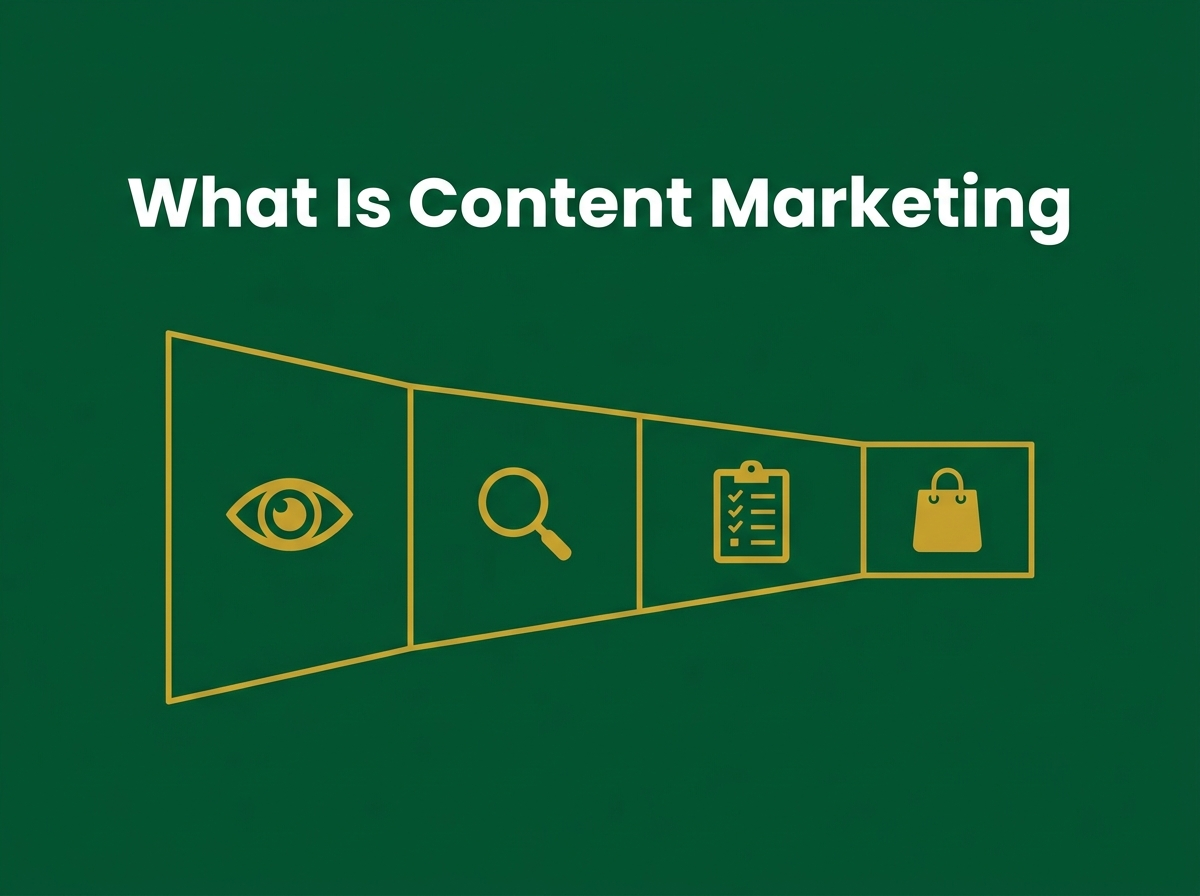
Content marketing matters because it mirrors how people actually buy. When you ask what is content marketing for, this is the heart of it: meeting buyers who research extensively before they ever speak to a salesperson, and rewarding the businesses that helped them along the way. Understanding the buying cycle shows exactly where content earns its keep.
Supporting Every Stage Of The Buying Cycle
The cycle moves through four stages, and content supports each one. At the awareness stage, people recognise a need but do not yet know the options, so educational articles introduce the possibilities. During research, they compare approaches, which is where detailed guides and comparison pages help. At the consideration stage, case studies and reviews build confidence in a specific provider. At purchase, onboarding and support content help close the deal and keep the customer.
Levelling The Field For Smaller Businesses
This staged approach is valuable for SMEs across Northern Ireland and the wider UK. Smaller firms rarely outspend larger competitors on advertising, but content marketing rewards expertise and helpfulness rather than budget size. A well-researched article that answers a specific question can outrank generic material from a much bigger brand. Local relevance strengthens this further: content that addresses regional concerns, regulations or market conditions attracts highly relevant visitors that national content misses.
As Ciaran Connolly, founder of ProfileTree, a Belfast-based digital marketing agency, puts it: “Content marketing changes how a business connects with its market. When you consistently provide genuine value, you are not just generating leads, you are building relationships that turn into long-term loyalty and steady growth.”
What Is Content Marketing In Practice Across Channels
Content marketing takes many forms, and each suits a different goal, audience and budget. Knowing what is content marketing in practice means recognising that the format matters far less than the value it delivers. The most effective businesses use a mix that meets people wherever they prefer to consume information. What is content marketing if not the discipline of matching the right format to the right moment?
Websites And Blogs
Your website is the foundation. Beyond standard service pages, a regularly updated blog drives organic search traffic, demonstrates expertise and gives you shareable resources. Steady performance also depends on dependable website hosting management, since slow or unstable pages undo good content. The difference between a content-led site and a basic corporate one is focus: every page should serve the reader first and the business second. Demonstrating that you can solve a problem is far more persuasive than claiming you are good at solving it. A focused, well-built site is the platform that makes this possible, which is why thoughtful website design and reliable website development sit at the centre of any content effort.
Social Media Content
Social platforms keep you visible between longer publications. The strongest social content does not broadcast, it starts conversations. Questions, polls, behind-the-scenes posts and customer stories generate engagement and build social proof. A planned approach to social media marketing keeps this consistent, while a connected email marketing programme turns followers into a list you own outright. Regular posting signals an active, responsive business, which audiences are far more likely to follow and trust.
Video And Podcast Content
Video is the fastest-growing format, and it builds trust through a face-to-face connection that text cannot match. It does not need a large budget; an informative, authentic video outperforms a polished but empty one. Podcasts deliver similar benefits in audio, fitting neatly into commutes and workouts, and a single recording can be repurposed into transcripts, blog posts and social clips. Businesses that lack in-house capability often work with a partner for video marketing to get started.
Visual And Long-Form Resources
Infographics turn statistics and processes into something people readily share, which clarifies what plain text struggles to. When a topic needs full coverage, long-form assets such as guides and whitepapers position your business as the definitive source. These typically serve buyers conducting serious research, which makes them strong tools for generating qualified enquiries.
The Business Benefits That Make Content Marketing Worth It
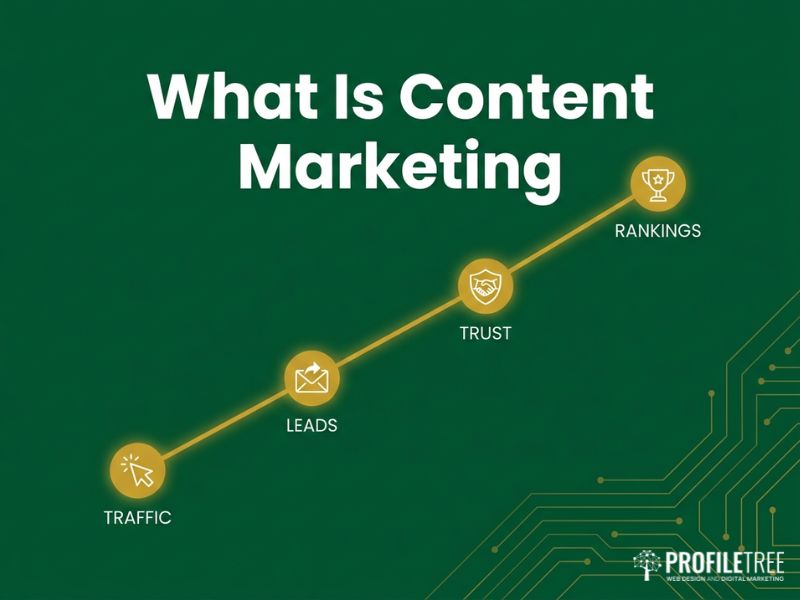
What is content marketing worth in measurable terms? It delivers results across several business objectives at once, which is why it rewards patience. Understanding what is content marketing capable of, in measurable terms, makes the case for sustained investment. The benefits below compound, so the value grows the longer you sustain the work.
Traffic, Leads And Visibility
Quality content attracts visitors at no cost beyond its creation, and each piece becomes another entry point to your site. This is what is content marketing at its most practical: every article, video or guide is one more chance to be found. A business with fifty useful articles has fifty chances to be found; one with five hundred has ten times as many. Crucially, content marketing generates the right traffic. People who arrive through a relevant article are already interested in your expertise, which produces higher-quality leads that are easier to convert. They arrive partly educated, which shortens sales cycles and improves close rates. Adding AI chatbots to high-traffic pages can capture and qualify these visitors around the clock.
Authority, Trust And Rankings
Consistent, valuable content builds both recognition and authority. When your name appears repeatedly in search results and industry discussion, buyers remember you, and familiarity carries real weight at the point of purchase. This authority compounds; an archive built over years becomes an asset that newer competitors struggle to match. Content and search rankings reinforce each other too, since search engines favour sites that fully answer real queries, a point Google’s own guidance on helpful content makes clearly. Sustained visibility comes from disciplined search engine optimisation that keeps each piece findable as your library grows.
Cost-Effectiveness And Measurable Results
Content marketing tends to deliver stronger long-term returns than paid channels because the work keeps performing after publication. This is where what is content marketing differs sharply from advertising. Paid advertising stops the moment the budget runs out; a guide published today can earn enquiries indefinitely, so the cost per lead usually falls over time. Modern analytics also make performance transparent, showing which topics attract readers, which formats generate leads and which content converts. Layering AI for marketing on top of that data helps you spot patterns and act faster. That visibility turns content marketing from guesswork into a process you can refine continuously.
How To Create Content Marketing That Actually Works
Understanding the benefits is one thing; producing content that delivers them is another. What is content marketing done well? It starts with the audience, maps to their journey, and prioritises genuine value over self-promotion. The principles below separate content that performs from content that disappears.
Let The Audience Define The Topics
The most common mistake is creating content you find interesting rather than content your audience needs. Effective content marketing begins with research into their questions, challenges and goals. Search console data shows what people look for before they reach you, customer conversations surface repeated questions, and keyword tools reveal where you can realistically rank. Picture a specific person with a specific need as you write; this keeps the content sharp rather than generic.
Map Content To The Customer Journey
Different content serves different moments, and this is where what is content marketing becomes a question of timing. Awareness content introduces ideas without pushing products, research content provides comparisons and explanations, and decision content addresses specific concerns and builds confidence. Mapping your existing content to these stages exposes gaps, such as plenty of introductory material but nothing to help a qualified buyer make a final choice. A balanced library creates a complete path from first awareness to purchase.
Focus On Value, Stay Consistent, Optimise For Search
The marketing in content marketing refers to intent, not a hard sell. The strongest content helps first and sells second, if at all. Think of it as teaching: share knowledge generously and the audience returns. Consistency matters as much as quality, so choose a cadence you can sustain rather than an unsustainable burst. Optimise for search without sacrificing readability by using relevant terms naturally and structuring content with a clear hierarchy. Writing for people first, and search engines second, produces better results on both counts. Setting this within a wider digital strategy keeps every piece pulling in the same direction, and building the skills in-house through digital training means the work continues long after a campaign ends.
Your Content Marketing Action Plan
Moving from theory to practice needs clear steps. This framework gives you a practical starting point whether you are beginning content marketing or refining an existing effort. It also answers what is content marketing in operational terms, step by step. Work through it in order, because each step informs the next.
Define Objectives And Research Your Audience
Decide what you want content marketing to achieve: more traffic, better-qualified leads, stronger rankings or improved authority. Specific, measurable goals guide every later decision, from format to channel to the metrics you track, and a clear marketing strategy ties those goals to the rest of your activity. Then research your audience properly. Analytics show who visits now, customer interviews reveal motivations, and input from your sales team identifies the questions and objections that come up most. Deep understanding here is what separates effective content marketing from generic output.
Audit, Strategise And Implement SEO
Most businesses already have some content, so audit it before creating more. Catalogue what exists, assess what performs and identify the gaps. With objectives set and the audit done, build a strategy that specifies audience segments, key themes, formats, publishing frequency and success metrics. Sound technical foundations let that content perform, which is where professional SEO services support site speed, structure and indexing so good content can rank. A capable development team keeps those foundations sound as the site grows.
Publish Consistently And Measure
Start with manageable goals, such as one quality article a week rather than daily publishing you cannot keep up. Each piece should serve a defined need and align with the strategy. Then measure properly: track traffic, engagement, conversions and rankings, and look past vanity metrics to the numbers tied to business outcomes. Strong governance around honesty and compliance protects this work, and equipping your team through marketing training helps them measure and report it properly.
Where Content Marketing Goes From Here
Content marketing represents a real shift in how businesses connect with their markets, build authority and grow. For organisations across Northern Ireland, Ireland and the UK, it levels the field with larger competitors while building durable audience relationships. The defining factor is commitment, because results come from consistent execution over months and years, not weeks.
The principles stay constant whatever the format, and they answer what is content marketing better than any single definition: understand your audience, provide genuine value, stay consistent and measure what matters. ProfileTree helps businesses put this into practice alongside web design, SEO, video production and digital training, treating content marketing as part of a joined-up digital strategy rather than an isolated tactic. The real question is not whether your business needs content marketing, but whether you will invest in it before your competitors do.
FAQs
What is content marketing in simple terms?
What is content marketing? It is creating and sharing useful, relevant content to attract a defined audience and build trust, so they choose you when they are ready to buy. It helps first and sells second.
How is content marketing different from advertising?
Advertising interrupts people and stops working when you stop paying. Content marketing attracts interested people with helpful information and keeps earning traffic long after publication.
How long does content marketing take to show results?
Most businesses see meaningful traffic gains within three to six months of consistent work. Authority and ranking improvements usually take six to twelve months. It compounds over time.
Can small businesses compete through content marketing?
Yes. It rewards expertise and helpfulness over budget size. A focused small business that knows its customers well can outrank generic content from much larger competitors.
How often should I publish content?
Consistency matters more than volume. One substantial piece a week, such as an article, video or podcast episode, is a sustainable standard for most businesses.