
Web Marketing for Legal Services: England, Scotland & Wales Guide
Table of Contents
The British legal profession stands at a crossroads where centuries of tradition meet digital disruption. From Magic Circle firms in London to high street practices in Cardiff, from Scottish advocates in Edinburgh to regional specialists in Manchester, every legal practice faces the same reality: clients now begin their legal journey online. The firms flourishing in 2025 aren’t necessarily the oldest or largest – they’ve mastered connecting with clients through web-based channels while maintaining the gravitas and trust the profession demands.
Each nation within the UK presents unique challenges and opportunities. England’s Solicitors Regulation Authority (SRA), the Law Society of Scotland, and Wales’s increasingly distinct legal framework create a complex regulatory tapestry. Add the cultural differences between regions—London’s international focus, Scotland’s separate legal system, Manchester’s commercial growth, Birmingham’s diverse communities, and Cardiff’s bilingual requirements—and you have a landscape demanding sophisticated, localised web marketing approaches.
Regulatory Landscapes Across Three Nations
How do advertising rules differ between England, Scotland, and Wales?
The Solicitors Regulation Authority governs English and Welsh solicitors through the SRA Standards and Regulations 2019, fundamentally reshaping how firms approach client acquisition. The shift from prescriptive rules to outcomes-focused regulation provides flexibility but demands greater judgment. Every tweet, blog post, and LinkedIn update must align with principles of honesty, integrity, and respect.
Scotland operates under distinctly different frameworks. The Law Society of Scotland’s Practice Rules 2011 and the Scottish Solicitors’ Discipline Tribunal set parameters for Scottish legal marketing. Advocates face additional Faculty of Advocates regulations. The Scottish approach tends toward more traditional restrictions, particularly advertising success rates or comparative claims.
Wales presents unique considerations despite sharing the SRA framework with England. The Welsh Language Standards require certain public-facing legal practices to provide bilingual services and marketing materials. This isn’t merely translation – it requires cultural sensitivity and understanding of Welsh-speaking communities’ distinct needs.
The Legal Services Board’s oversight adds another layer across all jurisdictions. Their push for transparency and competition influences how firms present services and fees. The CMA’s market study recommendations drive price transparency and service clarity requirements.
Cross-border practice complicates compliance further. Firms operating across England, Scotland, and Wales must navigate multiple regulatory frameworks simultaneously. A Manchester firm with Glasgow and Cardiff offices faces three requirements, each with subtle but significant differences.
Financial conduct regulations affect firms offering litigation funding, damages-based agreements, or certain advisory services. The FCA’s requirements overlay professional regulations, creating additional complexity for full-service practices.
Regional Platform Strategies
Which web channels work best in different UK regions?
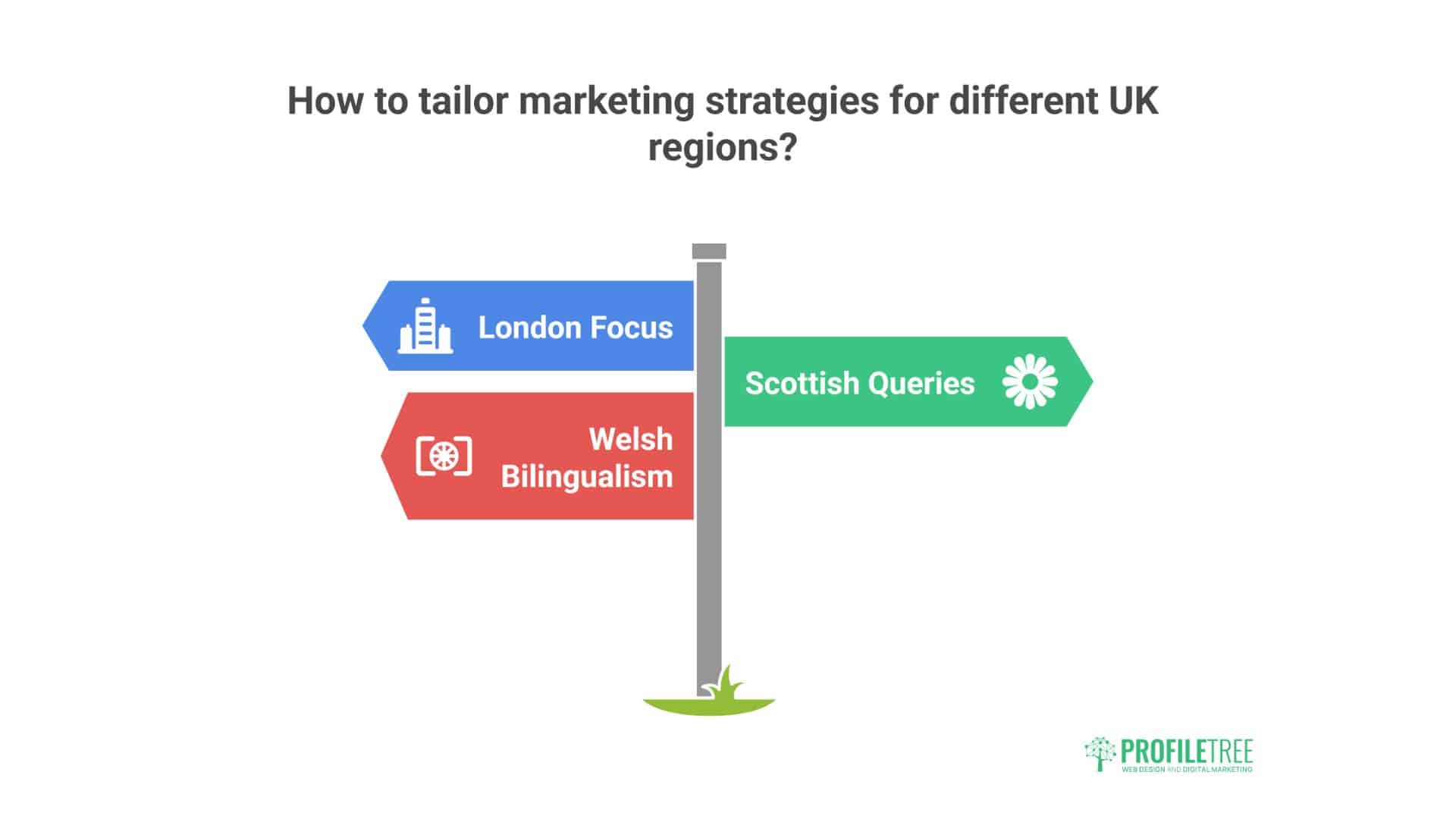
Google dominates across all UK markets, but with regional variations. London searches skew toward commercial and international terms, Scottish queries often include jurisdiction-specific language, while Welsh searches increasingly include bilingual elements. Understanding regional search behaviour shapes effective search optimisation strategies.
LinkedIn’s importance varies dramatically by region and practice type. London corporate lawyers find LinkedIn essential for international connections, while Scottish advocates use it more for domestic professional networking. Welsh firms report lower LinkedIn engagement except in Cardiff’s commercial sector.
Facebook usage patterns differ markedly across regions. Northern England shows higher Facebook engagement for legal services than London. Scottish firms report strong community group participation, while Welsh practices find Facebook crucial for reaching Welsh-speaking communities.
Twitter maintains a stronger professional presence in major cities. #LegalTwitter remains active in London and Manchester, #ScotLaw drives Edinburgh discussion, and Cardiff’s legal community increasingly uses #CyfrithWales. Regional hashtags create micro-communities worth engaging with.
Instagram adoption varies by demographic rather than geography. Firms targeting younger professionals in Manchester, Birmingham, or Glasgow find Instagram valuable for recruitment and brand building. Traditional practices in smaller cities report minimal Instagram value.
TikTok’s emergence surprises many but delivers results for forward-thinking practices. Employment lawyers explaining workers’ rights, family lawyers demystifying divorce, and criminal defenders correcting legal myths reach audiences that traditional marketing misses. Edinburgh and Manchester firms have led the UK legal adoption of TikTok.
YouTube transcends regional boundaries through search integration. Educational videos rank prominently regardless of location. However, regional accents and references improve local engagement. Scottish firms report better results using Scottish presenters for Scottish audiences.
Nation-Specific Practice Area Approaches
How do marketing strategies adapt to England, Scotland, and Wales?
Commercial Law – London and Financial Centres
The City of London demands a world-class web presence to compete globally. International clients expect sophisticated content strategies that demonstrate expertise in complex cross-border transactions. Thought leadership must address global trends while maintaining expertise in English law.
Content excellence requires addressing Brexit’s ongoing implications, regulatory changes, and international trade developments. Articles analysing UK-EU trade arrangements, financial services regulations, or international arbitration trends demonstrate relevance whilst attracting traffic.
Webinar programmes targeting international audiences prove highly effective. Time-zone considerations mean recording and on-demand availability matter more than live attendance. Topics like “UK Corporate Structures for International Investment” or “Post-Brexit Financial Services” draw global audiences.
Multi-language capabilities increasingly matter. While English remains dominant, providing executive summaries in Mandarin, Arabic, or Spanish acknowledges international client bases. This extends beyond translation to cultural adaptation.
Scottish Legal System Distinctions
Scottish firms must emphasise jurisdictional differences in their web marketing. Many potential clients don’t understand Scotland’s separate legal system. Content explaining the differences between Scottish and English law captures significant search traffic.
Property law presents particular opportunities. Scottish conveyancing differs fundamentally from English processes. Creating comprehensive guides about “Home Buying in Scotland” or “Scottish Property Law Explained” serves information-seekers whilst demonstrating expertise.
Criminal law marketing must acknowledge Scotland’s unique procedures. From “not proven” verdicts to different sentencing guidelines, Scottish criminal lawyers need content addressing system-specific queries. This differentiation helps Scottish firms compete against English practices attempting to cross-border marketing.
Family law variations between Scotland and England create content opportunities. Different divorce grounds, financial provision rules, and children’s hearing systems require explanation. Scottish firms creating authoritative content about these differences dominate relevant searches.
Welsh Language and Cultural Considerations
Welsh firms increasingly recognise bilingual marketing’s competitive advantage. Beyond compliance requirements, Welsh-language content reaches underserved audiences. Creating authentic Welsh content, not mere translations, demonstrates cultural commitment.
Rural Welsh practices face unique challenges. Sparse populations mean broader geographic targeting and an opportunity to dominate regional searches. Content addressing rural-specific issues like agricultural tenancies or rural planning appeals resonates strongly.
Cardiff’s growing commercial sector requires different approaches from those of rural Wales. International businesses establishing Welsh operations need guidance on Welsh development agencies, government incentives, and regional advantages. Content positioning Wales as a business destination serves this market.
Welsh personal injury law differs enough to warrant specific content, particularly around NHS Wales claims and Welsh government compensation schemes. Firms demonstrating this expertise attract clients who might otherwise choose English firms.
Regional English Variations
Manchester’s emergence as the UK’s second legal centre requires a distinct positioning. Content emphasising “Northern Powerhouse” advantages, lower costs than London, and sector specialisms (particularly technology and media) resonates with regional businesses.
Birmingham’s diverse population demands culturally sensitive marketing. Content in community languages, understanding religious legal requirements (Islamic finance, Hindu marriage law), and demonstrated cultural competence attract underserved communities.
Newcastle and Leeds firms strongly leverage regional identity. Their content emphasises local knowledge, understanding of regional business culture, and commitment to regional development, differentiating them from national firms’ branch offices.
Bristol’s technology and creative sectors shape legal marketing opportunities. Content addressing startup legal needs, intellectual property for creatives, and technology licensing attracts the region’s growth businesses.
Content Architecture for Multi-Regional Reach
How can legal practices create content serving diverse UK audiences?
Educational resources must acknowledge jurisdictional differences without overwhelming readers. Creating separate guides for each nation – “Divorce in England,” “Divorce in Scotland,” “Divorce in Wales” – serves specific audiences whilst avoiding confusion.
Legal commentary requires regional awareness. When the UK Supreme Court delivers judgments, explain the implications for each jurisdiction. When Westminster legislates, clarify whether laws apply UK-wide or England-only. This precision demonstrates expertise whilst serving diverse audiences.
Video content benefits from regional authenticity. Scottish accents for Scottish content, Welsh presenters for Welsh audiences, and regional references throughout improve engagement. Subtitles serve accessibility requirements whilst enabling cross-regional viewing.
Case studies need careful handling across jurisdictions. English case outcomes might not apply in Scotland. Welsh language rights create precedents not relevant elsewhere. Clear labelling prevents confusion whilst demonstrating pan-UK capability.
News response requires speed and accuracy. When major legal news breaks, firms providing immediate, jurisdiction-specific analysis capture traffic and demonstrate expertise. The first accurate commentary often dominates search results long-term.
Resource libraries should be segmented by jurisdiction and practice area. Straightforward navigation, helping visitors find relevant content for their location and legal need, improves user experience and conversion rates. Avoid assuming visitors understand jurisdictional boundaries.
Local Search Mastery Across UK Cities
How do legal practices dominate local search in their regions?
Google My Business optimisation requires location-specific approaches. London firms might target multiple borough-specific profiles, Scottish practices need city and region coverage, while Welsh firms balance English and Welsh language listings.
City-specific landing pages must provide genuine local value. They should include local court information, parking details, public transport links, and regional legal peculiarities. Commercial Lawyers in Manchester” should discuss the local business landscape, not just swap city names in template content.
Regional citation building varies significantly. English firms benefit from national directories, Scottish practices need Scotland-specific listings, and Welsh firms require bilingual citations. Despite regional variations, consistency across all platforms remains crucial.
Local link acquisition strategies differ by region. London firms might target financial publications, Manchester practices engage with Northern business media, while Scottish firms focus on the Scottish press. Welsh firms find bilingual media links particularly valuable.
Review platform priorities vary regionally. Google dominates everywhere, but Trustpilot matters more in England; Scottish firms report Reviews.io effectiveness, while Welsh practices find Facebook reviews particularly influential in smaller communities.
Mobile optimisation becomes critical for “near me” searches. Whether someone searches “solicitor near me” in London, Edinburgh, or Cardiff, they expect immediate, mobile-friendly results. Fast loading, click-to-call functionality, and clear directions prove essential.
Paid Promotion Strategies by Region
Which paid advertising approaches work across different UK markets?
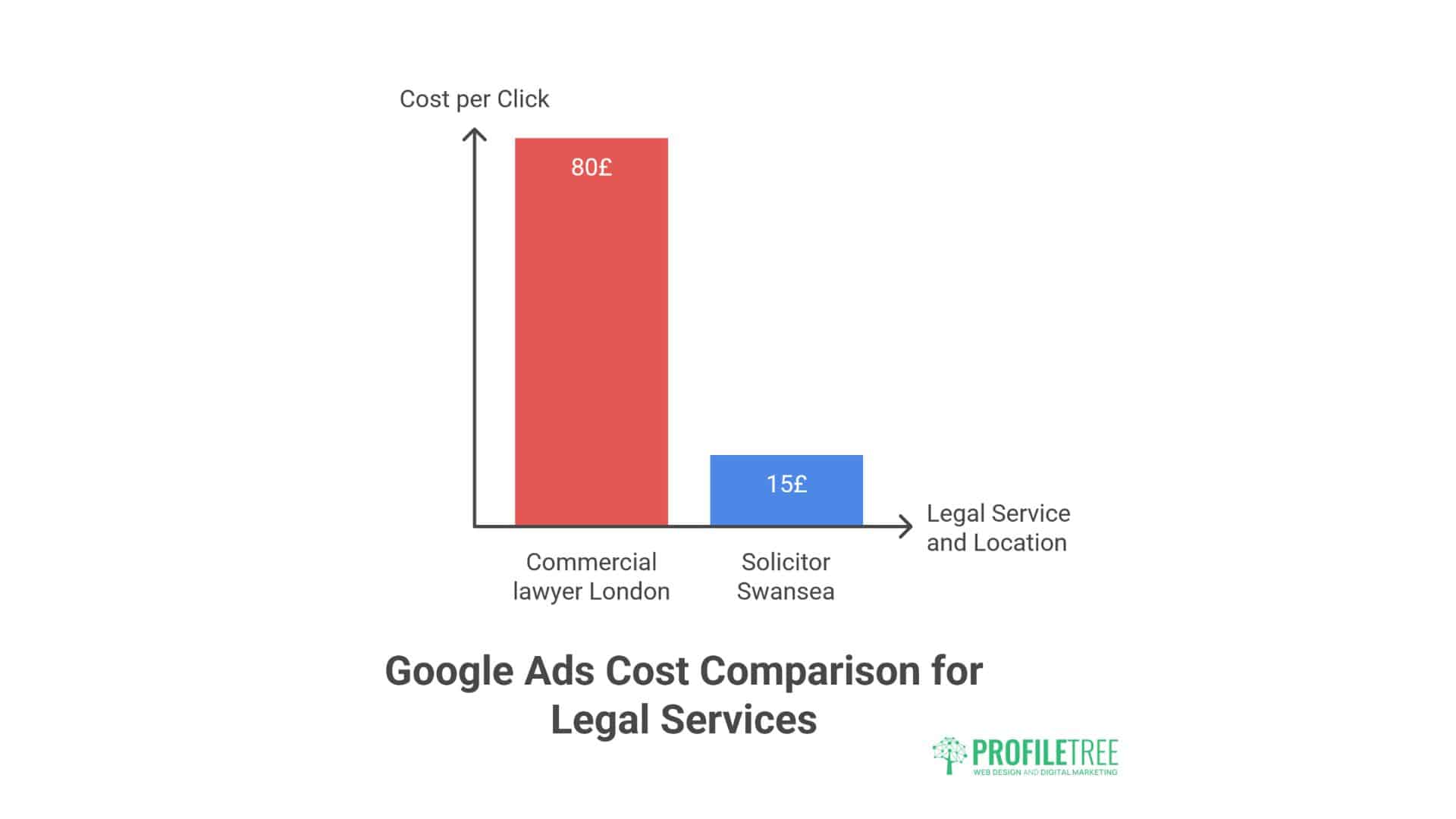
Google Ads costs vary dramatically by location and practice area. “Commercial lawyer London” might cost £80+ per click, while “solicitor Swansea” costs £15. Budget allocation must reflect regional competition and client values.
Microsoft Advertising penetration differs regionally. Higher usage in corporate environments makes it valuable for B2B marketing in business centres. Scottish government and public sector Bing usage is worthwhile for certain Scottish practices.
Facebook advertising effectiveness varies by region and demographic. Rural areas show higher Facebook engagement than urban centres. Welsh-language Facebook ads reach audiences other platforms miss. Scottish community groups provide targeted advertising opportunities.
LinkedIn advertising suits different needs across regions. London firms target international executives, Manchester practices reach Northern business leaders, while Scottish firms focus on Scotland’s tight professional networks. Wales shows lower LinkedIn advertising effectiveness outside Cardiff.
Programmatic display advertising enables sophisticated regional targeting. Serve different messages to London’s financial district versus Birmingham’s jewellery quarter. Scottish independence considerations might influence messaging tone. Welsh language options improve regional relevance.
Regional publication advertising drives qualified traffic. The Times for national reach, The Scotsman for Scottish audiences, and Western Mail for Welsh markets. Digital editions provide measurable results, unlike traditional print advertising.
Social Engagement Strategies by Nation
How should legal practices approach social media across the UK?
LinkedIn content strategies must reflect regional business cultures. London expects thought leadership on international issues, Manchester values practical regional insights, Scotland appreciates jurisdiction-specific expertise, and Wales responds to bilingual capability demonstration.
Twitter engagement varies by regional legal community activity. London’s fast-paced legal Twitter demands frequent, newsworthy content. Scottish legal Twitter values substantive discussion over volume. Welsh legal Twitter increasingly operates bilingually.
Facebook approaches differ by regional demographics. Northern England practices find Facebook groups highly effective for community engagement. Scottish firms report strong local Facebook page engagement. Welsh practices use Facebook to connect with the Welsh-language community.
Instagram succeeds differently across regions. London firms showcase international credentials and prestigious offices. Regional firms highlight community involvement and local connections. Scottish firms effectively use Instagram for recruitment marketing.
TikTok adoption leads in younger cities. Manchester, Birmingham, and Glasgow firms report surprising success with educational legal content. Traditional Edinburgh and rural practices remain sceptical but risk missing emerging audiences.
YouTube strategies should consider regional preferences. Londoners expect polished production values, regional audiences prefer authenticity over perfection. Scottish accents improve Scottish engagement. Welsh content needs subtitle consideration.
Email Engagement Across Diverse Audiences
What email strategies work for different UK regions?
Newsletter segmentation by region improves relevance. London subscribers expect international perspectives, Scottish readers want Scotland-specific content, and Welsh audiences appreciate bilingual options. Regional business news and legal updates increase engagement.
Timing optimisation varies by region. London professionals often check emails during commutes (7-9 am, 5-7 pm). Regional cities show traditional 9-5 patterns. Scottish firms report later morning engagement. Welsh rural areas show evening preference.
Content localisation goes beyond geographic references. Understanding regional business concerns – London’s international focus, Manchester’s growth sectors, Scotland’s independence implications, Wales’s development priorities – shapes relevant content creation.
Automated campaigns need regional customisation. The welcome series should acknowledge the subscriber’s location and provide region-relevant resources. Nurture sequences addressing local legal peculiarities improve conversion rates.
Design considerations include cultural sensitivity. Avoid assumptions about regional preferences. Test different approaches – London might prefer minimalist design, Northern cities appreciate warmer tones, Scottish audiences value detail, Welsh readers appreciate bilingual options.
GDPR compliance remains consistent, but communication style varies. London expects formal privacy notices, while regional audiences prefer plain English explanations. Scottish firms report a preference for transparent, detailed data handling explanations.
Website Architecture for Pan-UK Effectiveness
How should multi-regional legal websites be structured?
Navigation must accommodate regional differences without confusion. Clear paths to jurisdiction-specific content prevent frustration. “Family Law” might branch to “England & Wales” and “Scotland” subsections. Avoid assuming visitors understand jurisdictional boundaries.
Homepage personalisation based on visitor location improves relevance. Detect location and surface appropriate content whilst allowing manual selection. London visitors see international capability, Scottish visitors see Scottish expertise, Welsh visitors see bilingual options.
Website development must consider regional technical preferences. London expects cutting-edge design, and regional cities value functionality over flashiness. Scottish audiences appreciate detailed information. Welsh sites need language toggle functionality.
Speed optimisation matters everywhere, but particularly outside major cities. Rural broadband limitations mean fast-loading sites gain a competitive advantage. Progressive enhancement ensures functionality across varying connection speeds.
Accessibility compliance goes beyond legal requirements. Scotland shows higher screen reader usage. Welsh language support requires special character handling. Regional dialect considerations affect voice search optimisation.
Trust signals vary by region. London values international accreditations, Manchester appreciates regional business awards, Scotland responds to Law Society of Scotland membership, and Wales values Welsh language capability certification.
Contact options should reflect regional preferences. London expects online scheduling, regional cities prefer phone contact, Scottish practices report email preference, and Welsh firms need bilingual contact forms.
Reputation Management Across Borders
How do legal practices manage reputation across multiple UK regions?
Review monitoring requires multi-platform vigilance. Google dominates everywhere, but regional platforms matter. Reviews.co.uk is in Scotland, Welsh language reviews are on Facebook, and regional legal directories are in England. Comprehensive monitoring prevents reputation blind spots.
Response strategies must reflect regional communication styles. London expects formal, brief responses. Northern England appreciates a warmer, more personal tone. Scottish reviews warrant detailed, thorough responses. Welsh language reviews deserve Welsh language responses.
Crisis management plans need regional considerations. London media moves fast and forgets quickly, while regional press coverage lingers longer. Scottish media operates somewhat independently, while Welsh language media serves a distinct audience requiring a separate strategy.
Proactive reputation building varies by region. London values thought leadership and media coverage. Regional cities appreciate community involvement demonstrations. Scotland responds to professional achievement recognition. Wales values bilingual capability and cultural commitment.
Professional directories carry different weights regionally. Legal 500 dominates London, regional firms value Chambers guides, Scottish practices prioritise Scottish Legal Awards, Welsh firms value Wales-specific recognitions.
Media relations require regional strategies: national press for London practices, regional business press for Manchester/Birmingham, Scottish press for Scottish firms, and Welsh media (including Welsh language outlets) for Welsh practices.
Performance Analytics by Region
Which metrics matter for different UK markets?
Geographic performance tracking reveals regional strengths. Monitor traffic, conversions, and client value by region. London might generate higher values but lower volumes. Regional cities show better conversion rates. Scotland demonstrates loyalty. Wales shows language preferences.
The cost per acquisition varies dramatically between regions. London’s high competition increases costs, but client values often justify investment. Regional markets offer better CPAS but lower values. Balance the portfolio across regions for optimal ROI.
Search visibility metrics need regional segmentation. Track rankings for “solicitor London,” “lawyer Manchester,” “advocate Edinburgh,” “cyfreithiwr Caerdydd.” Regional dominance often proves more valuable than attempts at national visibility.
Engagement metrics show regional preferences. London shows shorter visit durations but higher page values. Scottish visitors spend longer researching. Welsh visitors engage more with Welsh language content. Regional patterns inform content strategy.
Conversion path analysis reveals regional differences. London clients convert faster but compare more options. Regional clients take longer but show higher loyalty. Scottish clients thoroughly research before contacting. Welsh clients prefer phone contact after research.
Client lifetime value influences regional investment decisions. London corporate clients might generate millions in fees. Regional family law clients provide steady, predictable revenue. Scottish commercial clients show long-term loyalty. Welsh communities generate referral networks.
Traditional and Web Integration
How do web strategies complement traditional marketing across UK regions?
Professional networking remains regionally distinct. London networking events demand polished digital follow-up. Manchester business breakfasts expect LinkedIn connections. Edinburgh professional circles value sustained engagement. Cardiff networks operate bilingually.
Speaking engagements gain reach through web amplification. Record London presentations for global distribution. Stream Manchester events to regional audiences. Scottish conferences benefit from UK-wide promotion. Welsh events need bilingual consideration.
Print advertising effectiveness varies regionally. The Times reaches London decision-makers. Regional business publications matter in Manchester/Birmingham. The Scotsman influences Scottish professionals. Welsh language publications reach underserved audiences.
Referral networks need digital support differently by region. London referrals are researched extensively online. Regional referrals value personal recommendation more highly. Scottish networks operate on trust but verify digitally. Welsh referrals appreciate bilingual capability.
PR coverage requires regional maximisation strategies. London coverage needs immediate social amplification—regional coverage benefits from sustained promotion. Scottish media coverage should be leveraged across Scotland. Welsh language coverage reaches loyal audiences.
Future-Readiness Across UK Markets
How should UK legal practices prepare for web marketing evolution?
Artificial intelligence adoption varies by region. London firms lead implementation, regional cities show pragmatic adoption, Scotland demonstrates cautious integration, and Wales explores bilingual AI capabilities. Early adopters gain advantages regardless of location.
Voice search optimisation requires regional accent consideration. London SEO differs from Scottish SGE optimisation. Welsh language voice search remains underdeveloped but presents an opportunity. Regional dialects affect natural language processing.
Video content continues to grow explosively everywhere. London expects broadcast quality, while regions value authenticity. Scottish content needs Scottish voices, and Welsh content requires subtitle/bilingual consideration. Investment in video capability proves essential.
Privacy regulations might diverge post-Brexit. UK GDPR could differ from EU standards. Scotland might maintain closer EU alignment. Wales could implement distinct requirements. Build flexible privacy frameworks adaptable to regional changes.
Interest in blockchain and smart contracts varies regionally. London leads adoption for international transactions. Manchester explores property applications. Scotland shows government blockchain interest. Wales remains at an early stage. Monitor regional developments.
Virtual service delivery has been permanently accelerated. London clients expect video consultations, regional clients appreciate travel savings, Scottish island communities particularly value remote service, and Welsh rural areas benefit from virtual access.
Implementation Framework for Multi-Regional Success
How should UK legal practices approach web marketing implementation?
Regional audit methodology reveals opportunities and gaps. Assess performance in each target region. Identify strong and weak markets. Understand regional competitive landscapes—document regional client preferences and behaviours.
Resource allocation must reflect regional opportunities. London might justify a larger investment ,but face diminishing returns. Regional markets offer growth potential. Scottish expansion requires dedicated expertise. Welsh markets need bilingual capability.
Phased regional rollout prevents resource strain—perfect one region before expanding. London firms might target Manchester next. Scottish firms could expand to England. Welsh firms might focus on bilingual differentiation.
Team structure should reflect regional needs. London teams need international expertise. Regional teams require local knowledge. Scottish teams understand jurisdictional differences. Welsh teams need bilingual capability. Consider distributed teams leveraging regional strengths.
Professional training ensures consistent capability. Whether internal development or external support, ensure teams understand regional nuances. Digital expertise becomes essential for all regions, not just London.
The technology stack must support regional requirements. This includes a multi-language CMS for Welsh content, geographic targeting for regional campaigns, analytics supporting regional performance tracking, and marketing automation handling regional personalisation.
Expert National Perspective
Ciaran Connolly, ProfileTree founder, notes: “The UK legal market’s regional diversity creates both challenge and opportunity. Firms succeeding nationally understand that London strategies don’t work in Liverpool, and Edinburgh approaches differ from Cardiff requirements. The winners are those who combine national scale with regional authenticity. They leverage technology for efficiency whilst maintaining local relationships and cultural understanding. This balance between standardisation and localisation determines who thrives in UK legal services.”
Implementation Checklist
Conduct regional competitive analysis. Identify who dominates each geographic market. Understand their strategies and weaknesses. Find regional gaps to exploit.
Audit current regional performance. Analyse traffic, rankings, and conversions by location. Identify strong and weak regions. Understand why certain regions underperform.
Define regional target audiences. London international businesses differ from those in Welsh rural communities. Create detailed personas for each regional market and understand their needs, preferences, and behaviours.
Develop regional content strategies. Plan jurisdiction-specific content for Scotland. Create a bilingual strategy for Wales. Address regional business concerns throughout England. Maintain consistency whilst allowing regional variation.
Build regional teams or partnerships. Whether internal hires or agency support, ensure regional expertise exists. London knowledge doesn’t translate to success in Glasgow. Welsh markets need cultural understanding.
Create measurement frameworks tracking regional performance. Set region-specific targets reflecting market opportunity. Monitor progress monthly. Adjust strategies based on regional response.
Remember: UK legal marketing success requires embracing regional diversity rather than imposing uniform strategies. The practices winning nationally combine operational efficiency with an authentic regional presence. Start where you’re strong, expand systematically, and always respect regional distinctions.
FAQs
Should we create separate websites for each UK region?
Generally no. Single sites with clear regional sections work better for SEO and user experience. Use subdirectories (/scotland/, /wales/) rather than separate domains. Exception: Completely separate Scottish practices might justify dedicated sites.
How do we handle Scottish legal system differences in UK-wide marketing?
Create clear content separation between jurisdictions. Label content explicitly as applying to “England & Wales” or “Scotland.” Develop Scottish-specific content for Scottish legal topics. Never assume UK-wide application of English law.
Is Welsh language content worth the investment?
For Welsh firms, absolutely. Beyond compliance benefits, Welsh content reaches underserved audiences with less competition. Even basic Welsh language capability differentiates from English-only competitors. Consider starting with key pages rather than full translation.
Can regional firms compete with London practices digitally?
Yes, through specialisation and local expertise. Regional firms often outrank London firms for local searches. Focus on regional strength rather than competing directly with Magic Circle firms. Emphasise accessibility, value, and local knowledge advantages.
What budget difference exists between London and regional web marketing?
London typically requires 2-3x regional budgets due to competition. However, regional markets often deliver better ROI through lower costs and less competition. Balance investment across regions based on opportunity rather than following London-centric strategies.
How important is local dialect and terminology in content?
Moderately important for engagement, crucial for voice search. Use regional terminology naturally (solicitor/lawyer/advocate appropriately). Avoid forced regional language that seems inauthentic. Focus on clarity while acknowledging regional preferences.