
LinkedIn Advertising ROI: A B2B Guide for UK Businesses
Table of Contents
LinkedIn advertising carries a premium that no other social platform matches. For B2B businesses in the UK and Ireland, that premium is often justified, provided you measure the right things and structure your campaigns to convert spend into revenue rather than just impressions.
This guide covers the technical foundations, UK-specific benchmarks, and the five strategies that move the needle on LinkedIn ads ROI.
The Reality of LinkedIn CPCs: Why “Expensive” Is Relative
LinkedIn advertising costs more per click than Google Display, Meta, or X. For B2B LinkedIn advertising, however, cost-per-click is the wrong metric. What matters is cost-per-qualified-lead and, further down the funnel, cost-per-revenue. Judging LinkedIn advertising ROI on CPC alone means measuring the wrong thing.
When a manufacturing firm pays £8.50 per click on a LinkedIn advertising campaign and closes a £60,000 contract from a Director of Operations who saw that ad, the CPC is irrelevant. The LinkedIn marketing ROI in that scenario is exceptional, even though the surface-level cost looks high.
LinkedIn’s targeting precision explains this. You can reach finance directors at UK professional services firms with 50 to 200 employees, in the North of England, active on the platform in the last 30 days. No other platform offers that precision for B2B. LinkedIn advertising produces fewer leads than Meta at a higher cost, but those leads close at a significantly higher rate and carry a larger average deal value.
The “LinkedIn advertising is too expensive” argument almost always comes from campaigns that tracked clicks and form fills without connecting them to revenue. Once you build that bridge, the maths usually changes. The question is not whether LinkedIn advertising ROI is achievable; it’s whether you’re set up to measure it.
How to Post a LinkedIn Ad That Converts
Before measuring LinkedIn ads ROI, you need a campaign structured to convert. Knowing how to post a LinkedIn ad is the starting point, but the decisions made before launch determine whether the LinkedIn advertising investment pays off.
Choose the Right LinkedIn Advertising Objective
LinkedIn Campaign Manager organises LinkedIn advertising around three objective categories: Awareness, Consideration, and Conversions. Choosing the wrong objective is one of the most common reasons LinkedIn ads’ ROI disappoints. For most B2B LinkedIn advertising campaigns aimed at measurable ROI on LinkedIn ads, start with Lead Generation (using Lead Gen Forms) or Website Conversions (with a tracked landing page). Awareness objectives should only be used with a separate budget and no short-term ROI expectation.
Set Up Your LinkedIn Advertising Audience Before Your Creative
The single biggest lever in LinkedIn advertising ROI is audience quality. Before writing a headline or choosing an image, define exactly who you want to reach using job title, seniority, company size, industry, skills, and company name targeting.
A common mistake when learning how to post a LinkedIn ad is targeting too broadly. A tightly defined audience of 50,000 to 150,000 people in the UK is typically more effective for B2B LinkedIn advertising than a broad audience of 500,000. Every pound of spend should go to someone who could plausibly buy from you.
LinkedIn Advertising Formats and When to Use Them
Understanding which format to use is central to how to post a LinkedIn ad that delivers results. Each LinkedIn advertising format serves a different funnel stage:
- Single Image Ads: the most common LinkedIn advertising format. Works at every stage. Strong for direct response when the offer is clear, and the audience is warm.
- Video Ads: higher engagement than static images. LinkedIn advertising video ads under 30 seconds with captions outperform longer formats at the awareness stage.
- Document Ads: allow users to read a PDF in the feed. Excellent for thought leadership, LinkedIn advertising campaigns targeting mid-funnel prospects.
- Lead Gen Forms: pre-fill prospect data from their LinkedIn profile. Highest conversion rates of any LinkedIn advertising format and the fastest route to improving ROI on LinkedIn ads for CPL-focused campaigns.
Technical Foundation: Setting Up for Accurate LinkedIn Ads ROI Tracking
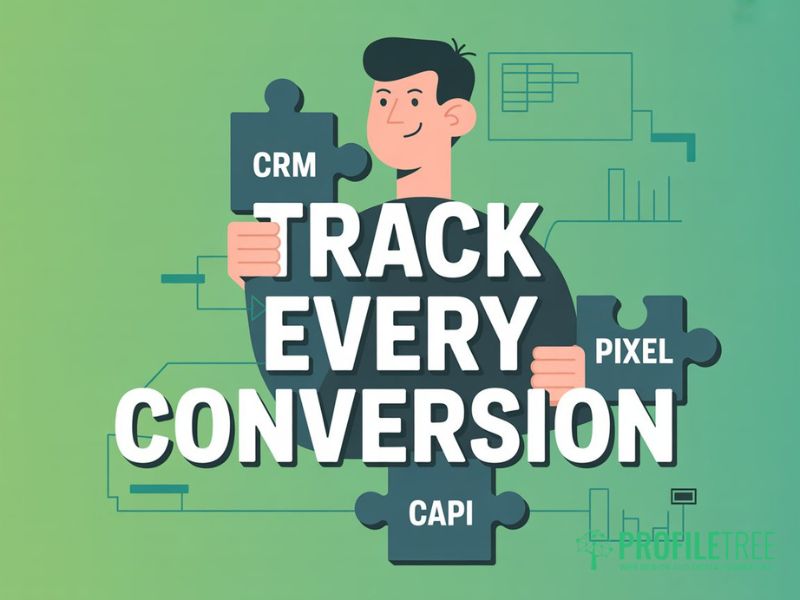
Most LinkedIn advertising guides tell you to install the Insight Tag and call it done. That approach will miss a significant share of your conversions, particularly where cookie consent rates are declining. Accurate LinkedIn marketing ROI measurement requires a layered approach from day one.
The LinkedIn Insight Tag
The Insight Tag is the starting point for any LinkedIn advertising campaign. Install it site-wide via Google Tag Manager or direct implementation, which enables website demographics, retargeting audiences, and basic conversion tracking. Without it, there’s no LinkedIn advertising ROI data at all.
The limitation is that the Insight Tag relies on third-party cookies. In the UK and Ireland, a visitor who declines the cookie banner won’t be tracked, which in 2026 means routinely missing 30 to 50 per cent of conversions, depending on the audience.
Server-Side Tracking and the Conversions API
LinkedIn’s Conversions API (CAPI) sends conversion data directly from your server to LinkedIn, bypassing browser-based cookie restrictions. This is the standard approach for accurate LinkedIn advertising ROI measurement in a post-cookie environment and requires a developer or server-side tag management platform.
Campaigns tracked via CAPI consistently report 20-40% more conversions than those relying solely on the pixel. For budget decisions, that difference can determine whether a LinkedIn advertising campaign looks profitable or not.
Passing Revenue Data from CRM to Campaign Manager
Lead generation isn’t revenue. To measure true LinkedIn advertising ROI, you need to pass deal value back from your CRM to LinkedIn Campaign Manager. Both HubSpot and Salesforce support LinkedIn’s native integration, allowing you to sync pipeline stages and closed revenue against specific LinkedIn advertising campaigns.
Set this up before running the first pound of spend. The goal is to see, for every LinkedIn advertising campaign, the exact revenue attributable to your spend net of ad costs. That’s how LinkedIn marketing ROI becomes a boardroom-ready number rather than a marketing metric.
UK and Ireland Benchmarks: What Is Good LinkedIn Advertising ROI?
Most LinkedIn benchmark reports use US dollar figures from North American markets and aren’t applicable to UK and Irish LinkedIn advertising campaigns. Below are working benchmarks for these markets as of 2026 – use them to calibrate what a good LinkedIn ads ROI looks like for your sector.
| Sector | Avg. CPC (£) | Avg. CPL (£) | Typical CTR | Avg. Deal Value (£) |
|---|---|---|---|---|
| SaaS / Tech | 7–12 | 80–200 | 0.4–0.7% | 8,000–25,000 |
| Professional Services | 5–10 | 60–150 | 0.5–0.9% | 5,000–15,000 |
| Financial Services | 8–15 | 100–250 | 0.3–0.6% | 10,000–50,000 |
| Manufacturing / Industrial | 4–8 | 50–120 | 0.6–1.1% | 20,000–100,000 |
| Healthcare / Life Sciences | 6–12 | 90–180 | 0.4–0.7% | 15,000–60,000 |
A good ROI on LinkedIn ads depends on campaign maturity. For a new LinkedIn advertising account in the first 90 days, a 2:1 pipeline return (two pounds of pipeline for every pound of spend) is a realistic target during the learning phase. For an established advertiser with tested creative and refined audiences, a 4:1 to 6:1 ROI on LinkedIn advertising is achievable in most B2B sectors.
Measure pipeline ROI first, closed revenue ROI second. B2B sales cycles in the UK typically run three to nine months. Judging a LinkedIn advertising campaign against closed deals after four weeks will always produce a misleading picture of true LinkedIn marketing ROI.
| Platform | Typical B2B CPC (£) | Lead Quality | Time to Close | Best For |
|---|---|---|---|---|
| LinkedIn Advertising | 5–15 | High (decision-makers) | 3–9 months | Enterprise B2B, ABM |
| Google Search | 2–10 | Medium–High (intent-based) | 1–3 months | Mid-funnel capture |
| Meta (Facebook/Instagram) | 0.50–3 | Low–Medium | Variable | B2C, awareness, retargeting |
5 Strategies to Improve Your LinkedIn Advertising ROI
Getting LinkedIn advertising to return a positive ROI requires deliberate execution. These five strategies, applied together, account for the largest measurable improvements in LinkedIn marketing ROI across B2B campaigns.
1. Move from Broad Targeting to Account-Based Marketing
Broad audience targeting in LinkedIn advertising is where budgets disappear. Targeting “Marketing Managers in the UK” across all industries means paying to reach people with no budget, no authority, and no interest in the offer. The result is poor LinkedIn ads ROI regardless of how strong the creative is.
Account-based marketing (ABM) flips this. Build a list of the 200 to 500 companies you actually want as clients, upload them to LinkedIn as a Matched Audience, and serve LinkedIn advertising only to the relevant job functions within those companies. ABM targeting in LinkedIn advertising typically produces CPLs 30 to 50 per cent lower than broad targeting, because every impression reaches someone who could actually buy.
2. Lead Gen Forms vs Landing Pages: Which Drives Better LinkedIn Ads ROI
LinkedIn Lead Gen Forms pre-populate a prospect’s profile data, name, email, job title, and company when they click your LinkedIn advertising. The minimal friction is why conversion rates on Lead Gen Forms typically run three to five times higher than equivalent landing pages, making them the fastest route to improving ROI on LinkedIn ads for CPL-focused campaigns.
For high-volume lead generation with quick follow-up, Lead Gen Forms win on CPL. For high-value enterprise deals where lead quality matters more than volume, landing pages with deeper qualification questions often produce better LinkedIn advertising ROI over time. In GDPR terms, LinkedIn Lead Gen Forms include a built-in consent mechanism cleaner than tracking opt-ins across a third-party landing page.
3. Creative Performance: The 70/30 Rule
LinkedIn advertising creative fatigues faster than most advertisers expect. Frequency caps are lower on LinkedIn than on Meta, so the same audience sees the same ad repeatedly, and CTR declines within two to four weeks. Creative fatigue is one of the primary reasons LinkedIn ad ROI deteriorates in months 2 and 3 of a campaign.
The 70/30 rule for LinkedIn advertising: allocate 70 per cent of your creative budget to proven formats (single image sponsored content, video ads with captions) and 30 per cent to testing new approaches. Run at least 3 ad variations per campaign and pause the lowest-performing ad every 2 weeks. Ads that lead with a specific problem consistently outperform ads that open with the brand in LinkedIn advertising.
4. Bidding Strategy: Manual vs Maximum Delivery
LinkedIn advertising offers three main bidding strategies: Maximum Delivery (automated), Target Cost, and Manual CPC. Maximum Delivery is appropriate during the learning phase (roughly the first £500 to £1,000 of spend). Once a LinkedIn advertising campaign has generated at least 50 conversions, switch to Target Cost bidding based on your benchmark CPL. This typically reduces CPC by 15 to 25 per cent without a material drop in conversion volume, and better LinkedIn marketing ROI from the same budget.
5. Retargeting the 97 Per Cent: The Layered Audience Approach
Only three per cent of your LinkedIn advertising audience is actively in-market at any given time. Retargeting the other 97 per cent keeps your LinkedIn advertising visible during the three-to-twelve-month window before they’re ready to buy, and it’s where some of the strongest LinkedIn ads ROI is generated.
Build layered retargeting audiences: website visitors (all pages, 30 days), website visitors (pricing or services pages, 90 days), video viewers (25 per cent watched, 180 days), and Lead Gen Form openers who did not submit. Each audience receives a message calibrated to their position in the decision process. Retargeting audiences in LinkedIn advertising are typically 40 to 60 per cent cheaper per click than cold audiences and convert at significantly higher rates. Not running retargeting means leaving a substantial portion of ROI on LinkedIn ads unrealised.
The Attribution Gap: Solving the “Invisible” LinkedIn Advertising ROI Problem
One of the most common reasons finance directors write off LinkedIn advertising is that it rarely appears as the last click in a conversion path. A prospect sees a LinkedIn advertising campaign, clicks away, searches your brand on Google three weeks later, and converts through organic search. Google Analytics credits organic. The LinkedIn advertising campaign gets nothing.
This is the attribution gap, and it significantly understates LinkedIn’s contribution to revenue. Research consistently shows that LinkedIn advertising assists in 30 to 40 per cent more conversions than last-click models. Multi-touch attribution, which distributes credit across all touchpoints before conversion, gives a truer picture of LinkedIn marketing ROI and typically reveals that ROI on LinkedIn ads is considerably higher than last-click reporting suggests.
To close the attribution gap: use LinkedIn’s Revenue Attribution Report in Campaign Manager, implement UTM parameters consistently across all LinkedIn ads and track them through to CRM, and ask new customers in your sales process where they first heard of you.
For businesses that want proper cross-channel visibility, ProfileTree’s digital marketing services and digital strategy work covers attribution setup as a foundational step before any LinkedIn advertising budget is committed.
Building a Sustainable LinkedIn Advertising Flywheel
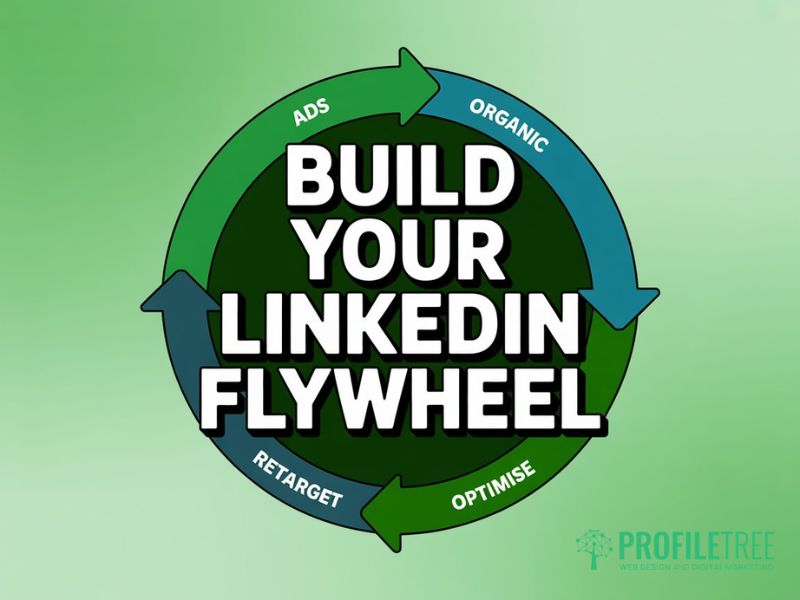
The businesses that achieve the strongest LinkedIn advertising ROI over time treat LinkedIn as a long-term acquisition channel rather than a short-term campaign platform. The difference in LinkedIn marketing ROI between these two approaches, measured over 12 months, is substantial.
Paid LinkedIn advertising builds brand familiarity in target accounts. Organic content reinforces credibility with the same audience, and the halo effect from organic activity measurably improves paid CTR by 15 to 25 per cent. Retargeting captures the audience that did not convert the first time. CRM data feeds back into audience refinement, improving targeting efficiency with each cycle of the LinkedIn advertising flywheel.
The minimum viable budget to exit LinkedIn’s learning phase is approximately £2,000 per month. Below that, LinkedIn advertising campaigns don’t generate enough data to optimise. If £2,000 per month isn’t feasible right now, consider whether the budget would deliver better returns through search engine optimisation or social media marketing, while building brand recognition that makes LinkedIn advertising more efficient.
FAQs
1. What is a good ROI for LinkedIn ads?
For new LinkedIn advertising accounts in the first 90 days, a 2:1 pipeline return is a realistic benchmark while campaigns are learning. For established LinkedIn advertising with tested creative and refined targeting, a 4:1 to 6:1 LinkedIn ads ROI is achievable in most B2B sectors. Don’t measure against closed deals too early. B2B sales cycles mean six to twelve months of data are needed before the closed-revenue LinkedIn advertising ROI is clearly visible.
2. How do I post a LinkedIn ad for the first time?
To post a LinkedIn ad, log into LinkedIn Campaign Manager, select “Create Campaign”, and choose your objective for ROI-focused LinkedIn advertising. Lead Generation or Website Conversions are the right choices. Define your audience using job title, seniority, company size, and industry filters, then select your LinkedIn advertising format, set your daily budget, and install the Insight Tag before going live. LinkedIn advertising ROI depends entirely on having conversion tracking in place from the first day.
3. Why does my LinkedIn advertising ROI look lower than Facebook?
LinkedIn’s value in LinkedIn marketing ROI is in lead quality and deal value, not lead volume. A LinkedIn advertising campaign might produce ten leads at £150 each, while a Facebook campaign produces 50 leads at £30 each. If eight of the LinkedIn advertising leads become qualified prospects and only one Facebook lead does, the ROI on LinkedIn ads is stronger despite the higher CPL. Compare platforms on lead-to-revenue rates, not cost-per-lead.
4. How long does it take to see a return on LinkedIn advertising spend?
Plan for a 90-day testing window before drawing conclusions about LinkedIn ads ROI. The learning phase covers the first 30 days (higher CPLs while the algorithm optimises); days 30 to 90 are when enough data accumulates to identify what’s working. Given typical UK B2B sales cycles of 3 to 9 months, closed-revenue ROI from LinkedIn advertising won’t be fully visible until 6 to 12 months after the initial investment.
5. What is the minimum budget for a positive LinkedIn advertising ROI?
The practical minimum to exit LinkedIn’s learning phase is £2,000 per month. Below that threshold, LinkedIn advertising campaigns don’t receive enough impressions and conversions to optimise, making LinkedIn ads’ ROI inconsistent. Start with a single, tightly targeted LinkedIn advertising campaign focused on one audience segment and one offer rather than spreading spend across multiple campaigns.