
Products: The First P in The Marketing Mix
Table of Contents
How To Create the Ideal Product?
Classification of Products
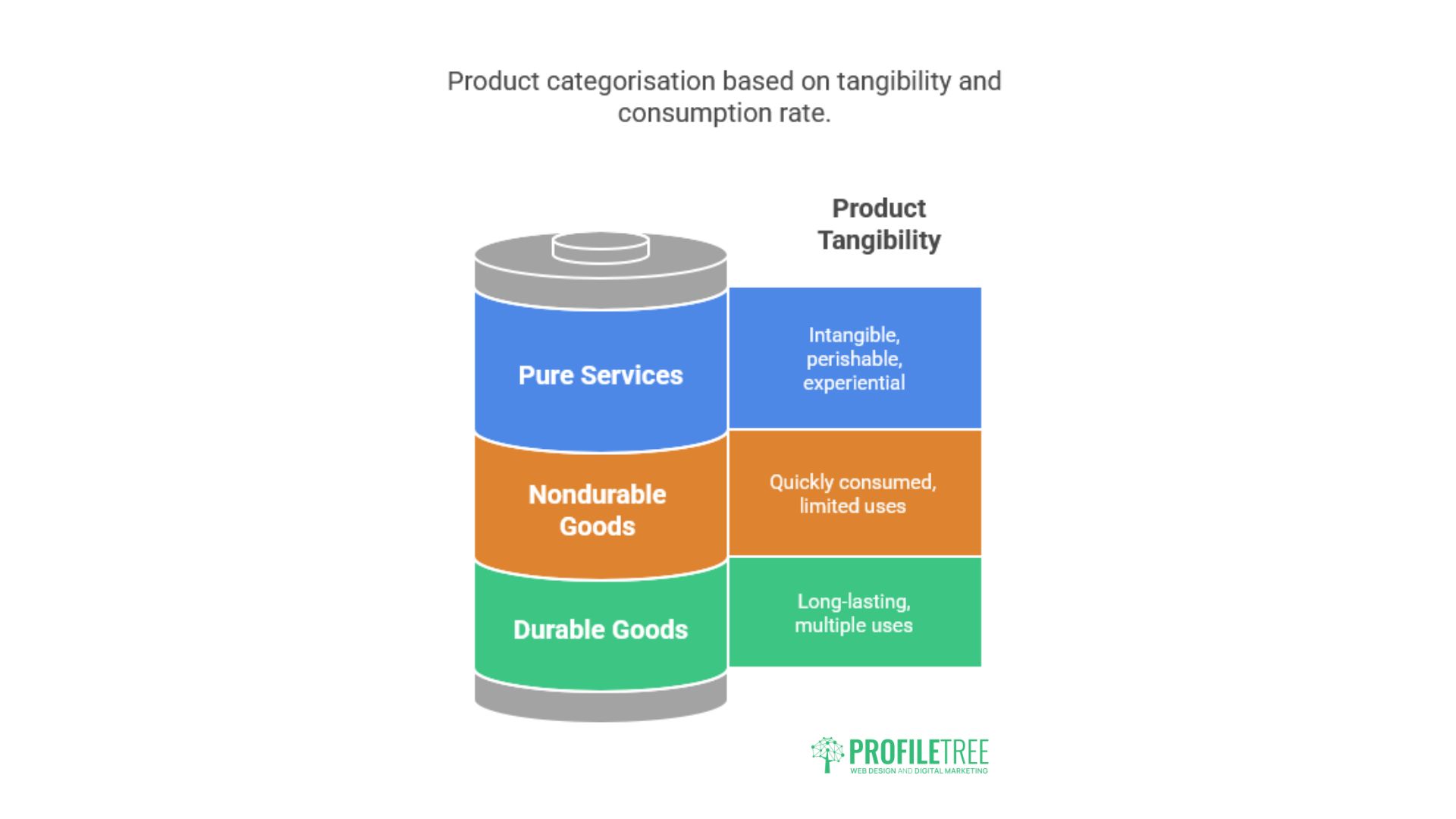
1. Consumer Products
2. Industrial Products
3. Organisations, Individuals, Locations, and Ideas
Design a Marketing Mix for Your Product Strategy
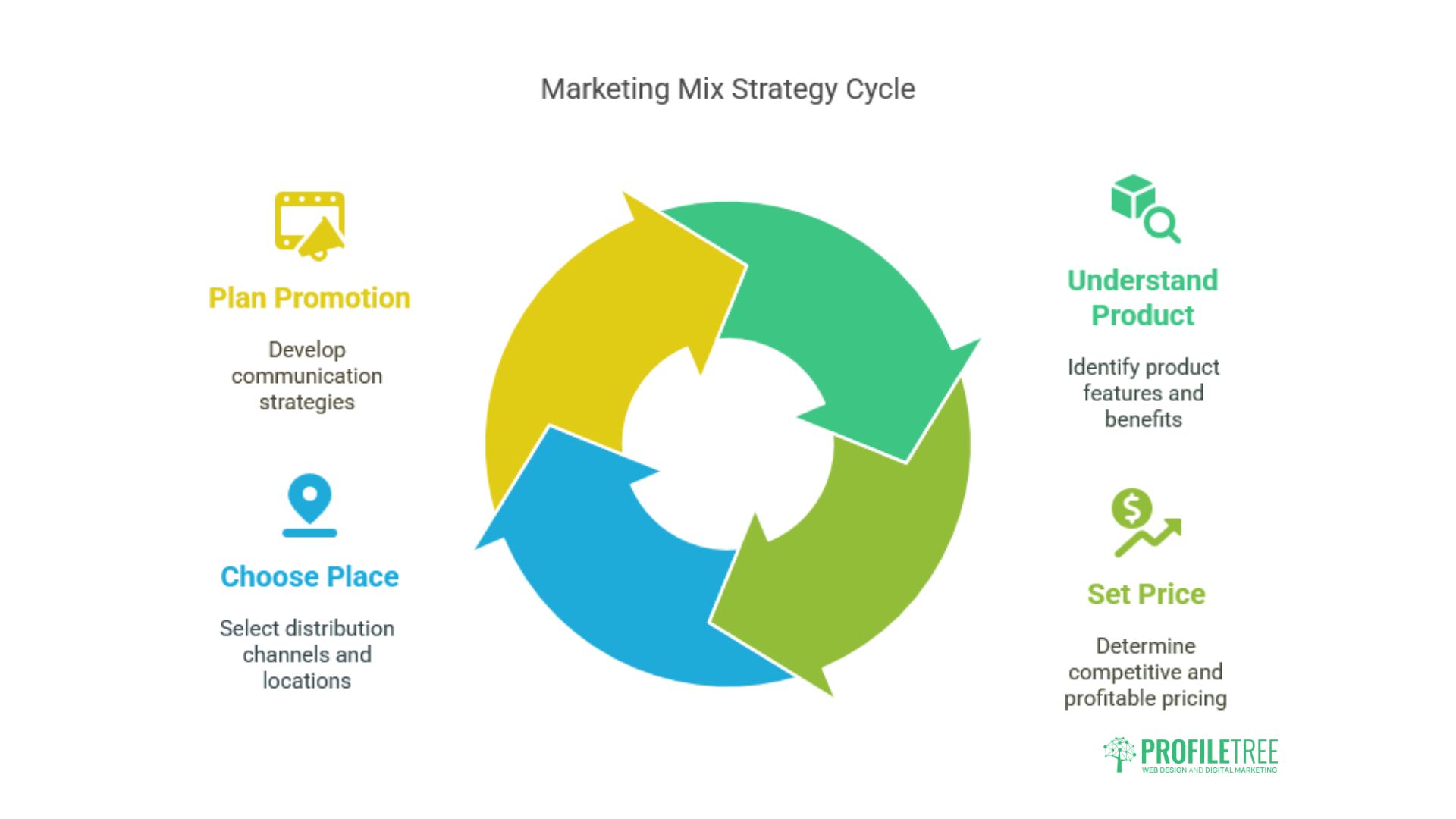
Creating effective marketing mix strategies requires understanding how products interact with price, place, and promotion elements.
Step 1: Product Positioning Analysis
Market Research identifies customer needs and the competitive landscape. Understanding what potential clients value most helps position services effectively.
Value Proposition Development articulates unique benefits clearly. Web design services might emphasise conversion optimisation, while SEO services could focus on local search dominance.
Competitive Differentiation highlights unique advantages. Specialising in AI implementation or focusing on specific industries creates distinct market positions.
Step 2: Product Portfolio Management
Service Range Planning balances comprehensive offerings with focused expertise. Agencies might offer core services like web design while adding complementary services like content marketing.
Product Line Extensions grow revenue from existing client relationships. Website clients might require ongoing SEO services, video production, or digital training.
Innovation Planning keeps service offerings current with market changes. Adding AI consulting services responds to growing business interest in artificial intelligence applications.
Step 3: Marketing Mix Integration
Pricing Strategy Alignment reflects product positioning and value delivery. Premium positioning requires pricing that reinforces quality perceptions.
Distribution Channel Selection determines how services reach target markets. Professional services often require direct sales approaches combined with digital marketing channels.
Promotional Message Development communicates product benefits effectively. Technical services require clear explanations that business owners can understand and value.
Product Development Process for Digital Services
Idea Generation and Evaluation
Market Opportunity Assessments identify unmet needs in the digital marketplace. Growing demand for AI training, improved accessibility compliance, and video marketing create service opportunities.
Resource Capability Analysis evaluates internal capacity to deliver new services effectively. Adding video production requires equipment, skills, and workflow adjustments.
Client Feedback Integration improves existing services and identifies expansion opportunities. Regular client surveys reveal service gaps and improvement areas.
Concept Testing and Development
Service Blueprint Creation maps customer journeys and internal processes. Understanding how clients experience web design projects from initial consultation through launch identifies optimisation opportunities.
Pilot Programme Implementation tests new services with selected clients before full launch. Limited AI training workshops help refine content and delivery methods.
Quality Assurance Systems maintain service standards as offerings expand. Documented processes and regular team training preserve service quality during growth.
Market Testing and Launch
Beta Client Programmes gather real-world feedback before public launch. Selected clients test new services in exchange for reduced rates and input opportunities.
Performance Monitoring tracks key success metrics from launch. Measuring client satisfaction, project completion times, and revenue impact guides future development.
Iterative Improvement refines services based on market response. Regular service reviews and client feedback sessions drive continuous improvement.
Measuring Product Success in Digital Marketing
Effective measurement systems track product performance and guide improvement decisions.
Return on Investment (ROI) Analysis for Marketing Mix Components
Understanding the financial impact of your product strategy within the marketing mix is essential for sustainable business growth. Each element of your product offering should contribute measurably to your bottom line.
Website Design ROI Metrics:
- Conversion rate improvements: A well-designed website typically increases conversions by 200-400%
- Lead generation increases: Professional web design can boost qualified leads by 150-300%
- Average order value growth:Better user experience often increases purchase values by 15-25%
- Customer lifetime value: Improved digital experiences can extend customer relationships by 40-60%
SEO Service ROI Calculations:
- Organic traffic growth: Effective SEO typically increases organic traffic by 100-300% within 12 months
- Cost per acquisition reduction:Organic leads cost 61% less than paid advertising leads
- Market share expansion: First-page rankings can capture 71% of available search traffic
- Long-term value accumulation: SEO benefits compound over time, unlike paid advertising
AI Training and Implementation ROI:
- Productivity improvements: Businesses report 25-40% efficiency gains after AI training
- Cost reduction opportunities:Automation can reduce operational costs by 20-30%
- Revenue growth potential: AI-enabled businesses often see 15% faster revenue growth
- Competitive advantage duration: Early AI adoption provides 2-3 year market advantages
Content Marketing and Video Production Returns:
- Brand awareness increases: Quality content marketing improves brand recognition by 80%
- Engagement rate improvements:Video content generates 1200% more shares than text and images
- Sales cycle acceleration: Educational content can reduce sales cycles by 25-35%
- Customer acquisition cost reduction:Content marketing costs 62% less than traditional marketing
ROI Measurement Framework
Short-term Metrics (0-6 months):
- Website traffic increases
- Search ranking improvements
- Lead generation growth
- Social media engagement rates
Medium-term Indicators (6-18 months):
- Conversion rate optimisation results
- Customer acquisition cost reductions
- Market share expansion
- Brand awareness improvements
Long-term Value Creation (18+ months):
- Customer lifetime value increases
- Recurring revenue growth
- Market position strengthening
- Competitive advantage sustainability
Key Performance Indicators
Client Satisfaction Metrics measure service quality and identify improvement opportunities. Regular surveys and feedback sessions provide qualitative insights.
Revenue Performance Tracking evaluates financial success across different service lines. Understanding which services generate the highest margins guides resource allocation.
Market Share Analysis assesses competitive position in key service areas. Tracking ranking positions for relevant search terms indicates market visibility.
Continuous Improvement Systems
Service Performance Reviews evaluate delivery efficiency and quality consistency. Regular internal assessments identify training needs and process improvements.
Client Feedback Integration incorporates user experiences into service evolution. Systematic feedback collection and analysis drive iterative improvements.
Market Trend Adaptation keeps services current with changing technology and customer needs. Regular industry research and competitor analysis inform strategic adjustments.
Product Innovation in the Digital Age
Staying competitive requires continuous innovation and adaptation to changing market conditions.
Technology Integration Opportunities
Artificial Intelligence Applications enhance service delivery and create new offering categories. AI-powered website optimisation, automated content creation, or intelligent SEO analysis represent innovation opportunities.
Automation and Efficiency improve service margins while maintaining quality. Automated reporting, streamlined project management, or efficient content production systems benefit both agencies and clients.
Data-driven insights provide additional value beyond basic service delivery. Advanced analytics, conversion optimisation recommendations, or competitive intelligence add depth to services.
Future-Proofing Product Strategies
Emerging Technology Monitoring identifies new service opportunities before they become mainstream. Early adoption of new platforms, tools, or techniques creates competitive advantages.
Skill Development Investment maintains service quality as technology evolves. Regular team training in new techniques, tools, or platforms preserves expertise advantages.
Client Education Programmes help customers adapt to changing digital landscapes. Workshops about new social media features, search algorithm updates, or accessibility requirements maintain client relationships.
“In our experience working with SMEs across Northern Ireland and the UK, the businesses that succeed online are those that view their digital presence as a complete product ecosystem – not just a website or single service. When we help clients understand that their website, content strategy, and digital training all work together as one cohesive product offering, that’s when we see real transformation in their results.” – Ciaran Connolly, Director of ProfileTree
Conclusion
Strategic planning calls for the exact definition and coordination of the complex idea of a product. A service, an event, or software as a service can all be considered a product. Products fall into the categories of consumer, industrial, and industrial goods.
Marketing includes many things, including businesses, people, places, concepts, and tangibly produced goods and services. Due to shifting consumer preferences, advancing technology, and heightened competition, businesses must constantly offer new items. Companies should acknowledge successful goods and unsuccessful research to improve the success of new products.
Developing ideas entails systematically seeking inspiration from internal sources, customers, competitors, suppliers, and other sources. R&D and engineering transform concepts into finished goods, which are then put through rigorous functional testing to assure their efficacy and safety. Test marketing aids in launching a new product. However, it can be expensive and involve buying or renting a production facility.
You can also read: Price: The Second P in The Marketing Mix | Place: The Third P in The Marketing Mix | Promotion: The Fourth P in The Marketing Mix.
FAQs
What is the first P in the marketing mix?
The first P is Product, representing the goods, services, or ideas offered to satisfy customer needs. In digital marketing, products often include websites, training programmes, consultancy services, or software solutions.
What does product mean in the marketing mix?
Product in the marketing mix encompasses any offering that provides value to customers. This includes physical goods, digital services, experiences, and solutions that address problems or fulfil particular needs.
How do you design a marketing mix for an imaginary product?
Start by defining the product’s core value proposition and target audience. Then develop pricing strategies, distribution channels, and promotional approaches that align with customer expectations and competitive positioning.
Ready to Transform Your Business with a Strategic Marketing Mix?
Don’t let your competitors dominate the digital landscape while you’re still figuring out your product strategy. At ProfileTree, we’ve helped hundreds of businesses across Northern Ireland, Ireland, and the UK transform their digital presence by getting their marketing mix right from the start.
Whether you need a conversion-focused website that generates leads, SEO services that put you ahead of local competitors, or AI training that gives your team a genuine competitive edge, we’re here to help you succeed.
Get started today with a free digital strategy consultation. We’ll analyse your current marketing mix, identify the gaps holding you back, and show you how to build a product strategy that drives real business growth.
Our Strategic Marketing Mix Services Include
- Web Design & Development – Conversion-focused websites that turn visitors into customers
- Professional Video Production – Engaging content that showcases your products and services effectively
- Content Creation & Strategy – Systematic approach to content that supports your entire marketing mix
- AI Implementation & Training – Smart technology solutions that give your team a competitive edge
- SEO & Local SEO – Dominate search results for your products and services
- Digital Training & Workshops – Empower your team with modern marketing skills and strategies
Contact ProfileTree now:
- Phone: 028 9568 0364
- Email:hello@profiletree.com
- Visit: profiletree.com