
Lead Magnet Ideas: Types That Build Your Email List
Table of Contents
Most visitors to your website won’t buy on their first visit. They’ll scan a page, decide whether you seem credible, and leave. A lead magnet changes that. By offering something genuinely useful in exchange for an email address, you give people a reason to stay connected, and you give yourself a way to follow up.
The idea sounds simple, but most lead magnets fail because they’re too generic, too long, or they ignore what the audience actually needs right now. This guide covers what makes a lead magnet work, which lead magnet types convert best, how to put together strong lead magnet ideas, and how to stay on the right side of UK GDPR email marketing rules.
ProfileTree, a Belfast-based digital marketing agency, has worked through this process across dozens of client projects. The patterns below reflect what consistently produces results for SMEs across Northern Ireland, Ireland, and the UK.
What Is a Lead Magnet?
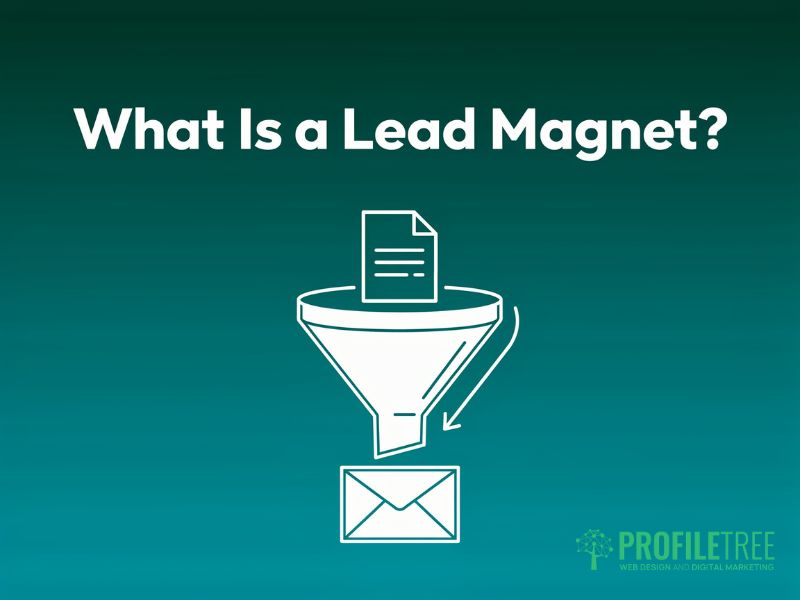
A lead magnet is a free resource or offer given to a prospective customer in exchange for their contact details, almost always an email address. It sits at the top of the marketing funnel. The person has shown interest by visiting your site or seeing your social content, but they’re not ready to buy. The lead magnet gives them a reason to stay in touch and gives you a foundation for email list building.
The core exchange is value for permission. Your visitor gets something useful immediately. You get permission to continue the conversation through email. Neither side is committed to anything further, which is exactly why the model works so well for lead generation: low risk, clear benefit, no pressure.
There are two broad categories of lead magnet types. Content-based offers include checklists, guides, templates, and short video tutorials. Offer-based magnets include discounts, free trials, and free audits. Both work, but they attract different intent levels. A 15% discount attracts someone close to a purchase decision. A planning checklist attracts someone still researching. Matching the lead magnet type to your audience’s intent stage is one of the most important decisions you’ll make when developing lead magnet ideas.
One concern worth addressing: are lead magnets still effective now that AI tools can produce a guide on almost any topic in seconds? The short answer is yes, but the format has shifted. Long, generic e-books have lost much of their perceived value because the audience knows they could generate something similar themselves.
Specific, fast-to-use resources that solve a precise problem are more valuable than ever, because they still take real expertise and first-hand experience to get right. The strongest lead magnet ideas in 2025 are the ones that deliver something a language model cannot replicate on its own: proprietary data, earned judgment, and a shortcut that only comes from doing the work.
The Seven Qualities of an Effective Lead Magnet
Not all lead magnets convert at the same rate, and the difference rarely comes down to production quality or design. It comes down to whether the offer meets a core set of criteria that matches how people actually decide to hand over their email address. These seven qualities reflect what the highest-converting lead magnet types have in common across B2B and B2C campaigns.
- Specific value proposition: solves one problem for one person at one moment. ‘A five-point checklist for writing a Google Ads headline that won’t get disapproved’ converts. ‘A complete marketing guide’ does not. Your lead magnet ideas should always start from a specific audience problem, not from what you want to promote.
- Instant delivery: the resource arrives within seconds of opting in. Delays break trust before the relationship has started. A simple automated welcome email with a direct download link handles this for any lead generation campaign.
- Tangible outcome: produces a recognisable result that the subscriber can point to. Calculators, templates, and decision frameworks do this well because the person leaves with something they can use immediately in their work.
- Relevance to your offer: Every lead magnet should qualify the audience. If your business sells web design services and your lead magnet is a recipe book, you’ll collect email addresses from people who’ll never buy from you. Lead generation only works when the resource and the service are genuinely aligned.
- Low perceived effort: a two-page checklist implies five minutes. A 200-page PDF implies hours. Lower barriers drive higher email list-building opt-in rates. Micro-magnets (under ten pages or under five minutes) consistently outperform long-form content.
- Credibility signal: a well-structured worksheet or a benchmark report based on real data demonstrates expertise better than any sales copy. A genuinely useful free resource makes the paid service much easier to sell, and it does so without a single self-promotional claim.
- Clear next step: the thank-you page and the delivery email should each point to a low-pressure next step. A link to a relevant service page, an invitation to a free consultation, or the first email in a nurture sequence. Without a next step, you’ve built an email list but not a lead generation funnel.
Lead Magnet Types and the Maturity Matrix
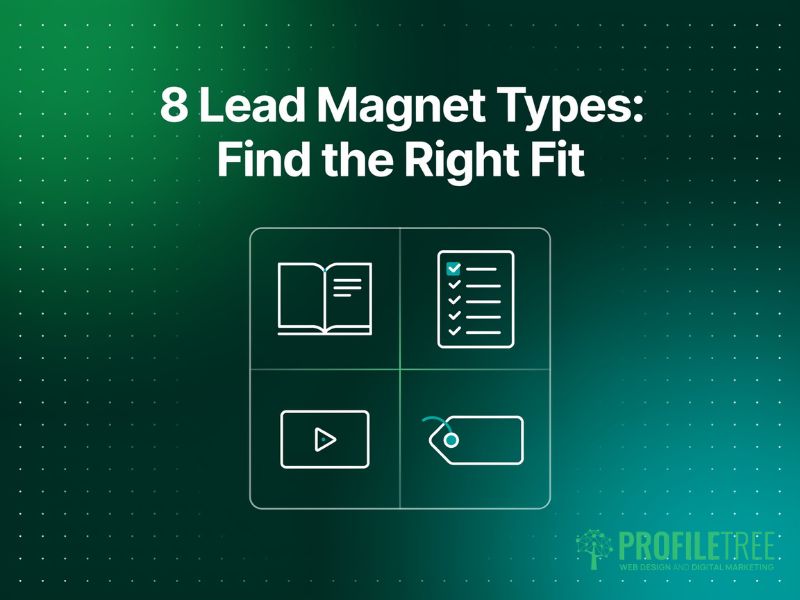
Different lead magnet types suit different business models, audiences, and intent stages. The table below compares the most common formats across three practical dimensions, so you can match your lead magnet ideas to the right approach for your goals.
| Lead Magnet Type | Ease of Creation | Value to User | Typical Conversion Rate |
|---|---|---|---|
| Checklist or one-pager | High | Medium to high | 10–20% |
| Template or worksheet | Medium | High | 8–15% |
| Short video tutorial | Medium | High | 7–12% |
| Mini e-book under 15 pages | Medium | Medium | 5–10% |
| Free audit or assessment | Low | Very high | 15–25% |
| Discount or exclusive offer | High | Medium (purchase-intent) | 5–15% |
| Webinar replay access | Low | High | 6–10% |
| Prompt library for AI tools | Medium | High | 8–16% |
B2B and Professional Services
For B2B businesses and professional service firms, lead magnet ideas need to demonstrate expertise before asking for anything. The audience is typically risk-averse and time-poor. Lead magnet types that save them genuine thinking time or reduce a real business risk convert best.
- Audit templates: a self-assessment checklist that the prospect runs against their own business, such as a website audit, a cash flow health check, or an HR policy review
- Benchmark reports: anonymised industry data showing how their sector performs on key metrics, compiled from primary research
- Decision frameworks: a one-page guide to choosing between options they are actively weighing up, such as which CRM platform suits a growing SME
- Short whitepapers under 10 pages: analytical content that addresses a specific strategic question with data and reasoning, not generic advice
E-Commerce and Retail
For e-commerce businesses, purchase intent is often already present. Lead magnet ideas here work best when they reduce friction on the first order or add genuine value to the shopping experience, supporting email list building at the point of peak interest.
- Discount codes for first orders: effective for capturing undecided buyers close to a purchase decision
- Buying guides in a how-to-choose format: combine practical value with audience qualification
- Early access to sales or new product launches: creates exclusivity and rewards the opt-in
- Size or configuration guides: solve a common pre-purchase question and reduce returns
Creative, Tech, and Agency Businesses
For agencies, SaaS companies, and creative businesses, lead generation through lead magnets that demonstrate workflow or tool expertise tends to work well. These lead magnet types attract a technically literate audience that’s already comparing providers.
- Prompt libraries for AI tools: a curated set of tested prompts for a specific use case, such as social media copywriting or SEO title generation
- Process templates: a reusable workflow document that the prospect drops straight into their own tools
- Free mini-audit: a short review of the prospect website, SEO setup, or social profiles
- Resource libraries: a private page with curated tools, links, and guides updated regularly
UK GDPR and Lead Magnets: What You Must Get Right
For businesses operating in the UK and Ireland, the legal requirements around email list building are specific and non-negotiable. UK GDPR email marketing rules (enforced by the ICO under the retained EU regulation) apply to any marketing activity where the recipient is based in the UK, and your lead magnet sign-up form is directly in scope. Getting this right from the start protects both your business and the trust of every subscriber you work hard to attract.
The most common compliance mistake is treating a form submission as implicit consent for all future email marketing. It is not. Under UK GDPR email marketing law, consent must be freely given, specific, informed, and unambiguous. That means a few things in practice.
Freely Given Consent and Unbundled Tick Boxes
The ICO’s guidance is clear: consent is not freely given if it is a condition of receiving a service. If you gate a lead magnet resource behind a form that includes a pre-ticked marketing opt-in box, the consent is invalid. The marketing opt-in must be a separate, unticked checkbox, distinct from the download action.
Your form needs two distinct elements: a field for the email address (necessary for delivery), and a separately worded checkbox asking permission to send marketing communications. Compliant wording would be: ‘I agree to receive occasional tips and updates from ProfileTree by email. You can unsubscribe at any time.’ Bundled or pre-ticked boxes are non-compliant regardless of how your lead magnet is positioned.
Privacy Notice and Right to Be Forgotten
Your opt-in form must link to your privacy policy, and that policy must clearly explain how you’ll use the data collected through your lead magnet. Under UK GDPR email marketing obligations, anyone on your list can ask to be removed at any time. Your email platform’s unsubscribe function handles the mechanical side, but you also need a process for requests made directly by phone or email.
Double opt-in (where the subscriber clicks a confirmation link before being added to your list) isn’t legally required under UK GDPR email marketing rules, but it’s strongly recommended. It reduces fake sign-ups, improves email list building quality, and provides an additional layer of documented consent. Most reputable platforms, such as Mailchimp, Kit, and ActiveCampaign, include double opt-in as a standard setting.
How to Build and Distribute Your Lead Magnet

Building a lead magnet doesn’t require a professional designer or a large budget. It requires a clear understanding of what your audience needs and a disciplined approach to delivering it. The process below works for most lead magnet types, from a simple checklist to a short guide.
Research and Choose Your Format
Before creating anything, spend time in the places your audience already goes for answers. Look at the questions asked in the comments sections of your blog posts and social content. Search your topic on industry forums and read the threads that attract the most engagement. Check the People Also Ask section on Google for your main keywords. If you have existing customers, ask them directly: what’s the one thing you wish you’d known when you first started thinking about this?
Once you know what the audience needs, match the format to the problem. A problem that requires ongoing reference suits a checklist better than a video. A process that’s hard to visualise in text suits a short walkthrough video. The goal is to require minimal effort from the user for maximum value. There are plenty of strong lead magnet ideas that fit on a single page. A two-page resource that solves one thing well will outperform a 40-page document that covers everything loosely.
Create and Set Up Delivery
Write the content as you would any professional document: clear structure, specific examples, no filler. For the design, free tools such as Canva provide professional templates for most lead magnet types. Keep the design clean and on-brand. A professional layout increases perceived value, but strong content always comes first.
The technical setup is simpler than most people expect. You need a form on your website, an automated email that sends the resource on submission, and a thank-you page that confirms the download and points to a relevant next step.
Test the full sequence on both desktop and mobile before going live. If you’re running a WordPress site and need help connecting lead generation forms to your email platform, ProfileTree’s web design and development services cover exactly this kind of integration.
Distribution
A lead magnet nobody sees generates no leads. The most effective on-site placement is a dedicated landing page: no navigation, no sidebar, no competing links. Just the value proposition, the form, and a brief description of what the person receives. A distraction-free page consistently outperforms an embedded sidebar opt-in form for email list building. It also gives you a single URL you can promote across paid ads, social posts, and email campaigns without diluting the message.
Add contextual opt-in forms on the blog posts most closely related to your lead magnet topic. A post about email subject lines should have an opt-in form for your email copywriting checklist, not a generic newsletter sign-up. Exit-intent pop-ups (which trigger as the cursor moves toward the browser close button) and timed pop-ups that appear after 60 seconds on-page both convert well when used with restraint. Keep the copy brief: a specific benefit headline, the format stated clearly, and a first name plus email field at most.
For businesses focused on lead generation through paid campaigns, a lead magnet offer can reduce the cost per contact considerably compared to driving cold traffic directly to a service page. Once someone opts in, the follow-up email sequence determines whether they ever become a customer. ProfileTree’s email marketing resources cover the nurture sequence structures that work best for different business types.
Lead magnet ideas connect naturally to your broader content marketing strategy. Every piece of content you publish is a potential entry point that funnels readers towards your opt-in offer at the moment of maximum relevance.
FAQs
1. What is a good conversion rate for a lead magnet landing page?
A conversion rate of 5–15% is typical for a general-topic lead magnet with broad-audience traffic. Highly specific lead magnet ideas promoted to a well-matched audience can reach 20–30%. If your rate sits below 5%, the most common causes are a headline that fails to communicate a specific benefit, a mismatch between the traffic source and the offer, or an offer that isn’t distinct enough from freely available content.
2. Is a lead magnet the same as a content upgrade?
A content upgrade is a type of lead magnet tied directly to a single piece of content. A downloadable checklist that appears only within a blog post about social media scheduling is a content upgrade; it’s a page-specific lead magnet. A lead magnet in the broader sense is any resource offered across your site, ads, or social channels in exchange for an email address. Content upgrades typically convert at a higher rate because the relevance between the content and the lead magnet offer is exact.
3. Do I need a dedicated landing page for my lead magnet?
For most businesses, yes. A dedicated landing page without navigation, competing links, or distracting content consistently outperforms sidebar or footer opt-ins for lead generation. If you’re running paid advertising to promote the lead magnet, a dedicated page is essential. Ad platforms factor page relevance and clarity of purpose into quality scores, and lead magnet landing pages with a single conversion goal consistently score higher.
4. How do I make my lead magnet compliant with UK GDPR?
The key requirements under UK GDPR email marketing rules are: a separate, unticked opt-in checkbox for marketing emails; clear wording explaining what the person is agreeing to; a link to your privacy policy; and a reliable unsubscribe mechanism. The ICO guidance states that consent for email marketing cannot be bundled with consent to download a resource. Double opt-in is strongly recommended as it provides documented consent and improves email list building quality.
5. Can I use AI tools to create my lead magnet?
AI writing tools are useful for generating structure, first drafts, and editing passes. The final lead magnet still needs a human review to add specific examples, remove generic filler, and reflect real expertise. A lead magnet that reads like unedited AI output signals low credibility and undermines the trust you’re trying to build through email list building. Use AI to speed up the process, not to replace the expert knowledge that makes the resource worth downloading.