
What Is Google Ranking? A Modern Business Essential
Table of Contents
When potential customers search for your products or services, Google ranking determines where your website appears. For businesses across Belfast, Northern Ireland, Ireland, and the UK, understanding this system is the difference between being found by customers or remaining invisible online. This comprehensive guide explains what Google ranking is, why it matters for your business, and how to improve your position in search results.
Why Google Ranking Matters
Your website’s position in Google search results directly affects your business’s online success. Higher rankings mean more visibility, increased traffic, and better opportunities to convert visitors into customers.
The Business Impact of Search Rankings
When your website ranks highly for relevant search terms, you gain access to customers actively looking for what you offer. This targeted visibility creates opportunities that traditional advertising often cannot match. Businesses appearing on the first page of search results receive the majority of clicks, whilst those on subsequent pages struggle to attract attention.
Google processes approximately 8.5 billion searches daily worldwide, making search visibility critical for business growth. For local businesses in Northern Ireland, appearing in relevant searches for “web design Belfast” or “digital marketing Ireland” can transform their customer acquisition.
The commercial value of search rankings extends beyond immediate sales. Strong organic visibility builds brand recognition, establishes industry authority, and creates lasting customer relationships. Unlike paid advertising that stops generating results when your budget runs out, well-earned search rankings continue delivering value over time.
Understanding Search Visibility in Northern Ireland
The digital landscape in Northern Ireland presents unique opportunities for businesses willing to invest in their online presence. Mobile search usage continues rising across the UK, with local searches showing robust growth. When Belfast residents search for services “near me” or within their area, businesses with optimised local presence capture these high-intent customers.
For ProfileTree’s clients across Northern Ireland, search rankings determine whether potential customers discover their websites when searching for digital services, web development, or marketing solutions. The difference between ranking first and tenth can mean hundreds of lost opportunities monthly.
How Google Rankings Work
Google’s ranking system evaluates websites using hundreds of factors to determine which results best answer each search query. Understanding these mechanisms helps businesses make informed decisions about their online strategy.
The Core Ranking Algorithm
Google’s algorithm assesses multiple aspects of your website to determine its relevance and quality for specific searches. The system considers your content’s relevance to search queries, the authority of your website within your industry, and the overall experience you provide to visitors.
When someone searches, Google’s systems scan through trillions of web pages, evaluating each against numerous criteria. This assessment happens in milliseconds, delivering results ranked by how well they match the searcher’s intent and meet quality standards.
The algorithm weighs numerous signals differently depending on the query type. Searches with local intent prioritise geographical relevance, whilst informational queries emphasise content depth and accuracy. Commercial searches look for clear product information and trustworthy e-commerce signals.
Key Ranking Factors Explained
Several fundamental elements consistently influence how Google ranks websites. Content quality remains paramount—your pages must provide genuine value, answering questions comprehensively whilst maintaining readability and accuracy.
Content Signals
Your website’s content tells Google what your pages are about and whether they deserve to rank for specific queries. Well-researched, original content that addresses user needs thoroughly performs better than thin, generic material. Content should include relevant keywords naturally, whilst maintaining readability and providing genuine insights.
Technical Foundation
Your website’s Technical aspects affect how Google assesses it and how users experience it. Site speed influences rankings because slow-loading pages frustrate users and increase bounce rates. Mobile friendliness has become non-negotiable, as Google prioritises sites that work seamlessly on smartphones and tablets.
Your site’s structure and crawlability determine how effectively Google can access and understand your content. Clean code, proper use of heading tags, and logical site architecture contribute to better rankings.
Authority and Trust Signals
Backlinks from other reputable websites act as votes of confidence in your content. When established industry sites or local organisations link to your pages, Google interprets this as validating your expertise and trustworthiness. However, quality matters far more than quantity—a single link from a highly respected source carries more weight than dozens from low-quality sites.
On-Page Ranking Elements
Elements within your direct control on each webpage significantly influence rankings. Your title tags and meta descriptions tell both Google and potential visitors what your page contains. These should include relevant keywords whilst remaining compelling and accurate.
Header tags (H1, H2, H3) create content hierarchy, helping readers and search engines understand your page structure. Strategic keyword placement within headers improves relevance signals without compromising readability.
Content length matters when it provides additional value. Comprehensive articles typically rank better than brief ones, but only if the extra length adds useful information rather than filler content. For ProfileTree’s content strategy, we focus on creating in-depth resources to help business owners understand complex digital topics.
Internal linking between your pages helps Google understand your site’s structure, while keeping visitors engaged longer. Strategic internal links guide users to related content and distribute ranking power throughout your site.
Off-Page Ranking Factors
Elements beyond your website also influence your search rankings. The quality and quantity of websites linking to yours remain one of Google’s strongest ranking signals. Building genuine relationships with other businesses, contributing valuable insights to industry discussions, and creating shareable content all help earn quality backlinks naturally.
Social signals, whilst not direct ranking factors, influence your visibility indirectly. Content shared widely on social platforms gains exposure, potentially earning backlinks and demonstrating value to your audience.
Even without links, brand mentions across the web help establish your business’s prominence within your industry. When people discuss your brand, products, or services online, Google recognises this as a trust signal.
Local SEO Ranking Factors for Belfast Businesses
Local ranking factors become particularly important for businesses serving specific geographical areas. Your Google Business Profile acts as a critical local ranking signal, especially for searches with local intent.
Ensuring your business name, address, and phone number (NAP) remain consistent across all online directories and citations helps Google verify your business’s legitimacy and location. Inconsistencies confuse the algorithm and can harm local rankings.
Customer reviews on Google and other platforms influence both rankings and click-through rates. Businesses with numerous positive reviews typically rank higher in local searches and attract more customers. Responding to reviews professionally demonstrates engagement and builds trust.
For Belfast-based businesses, local content referencing specific neighbourhoods, landmarks, or regional topics can strengthen local relevance signals. ProfileTree incorporates Northern Ireland-specific insights into content strategies to help clients connect with their local audience.
Improving Your Rankings
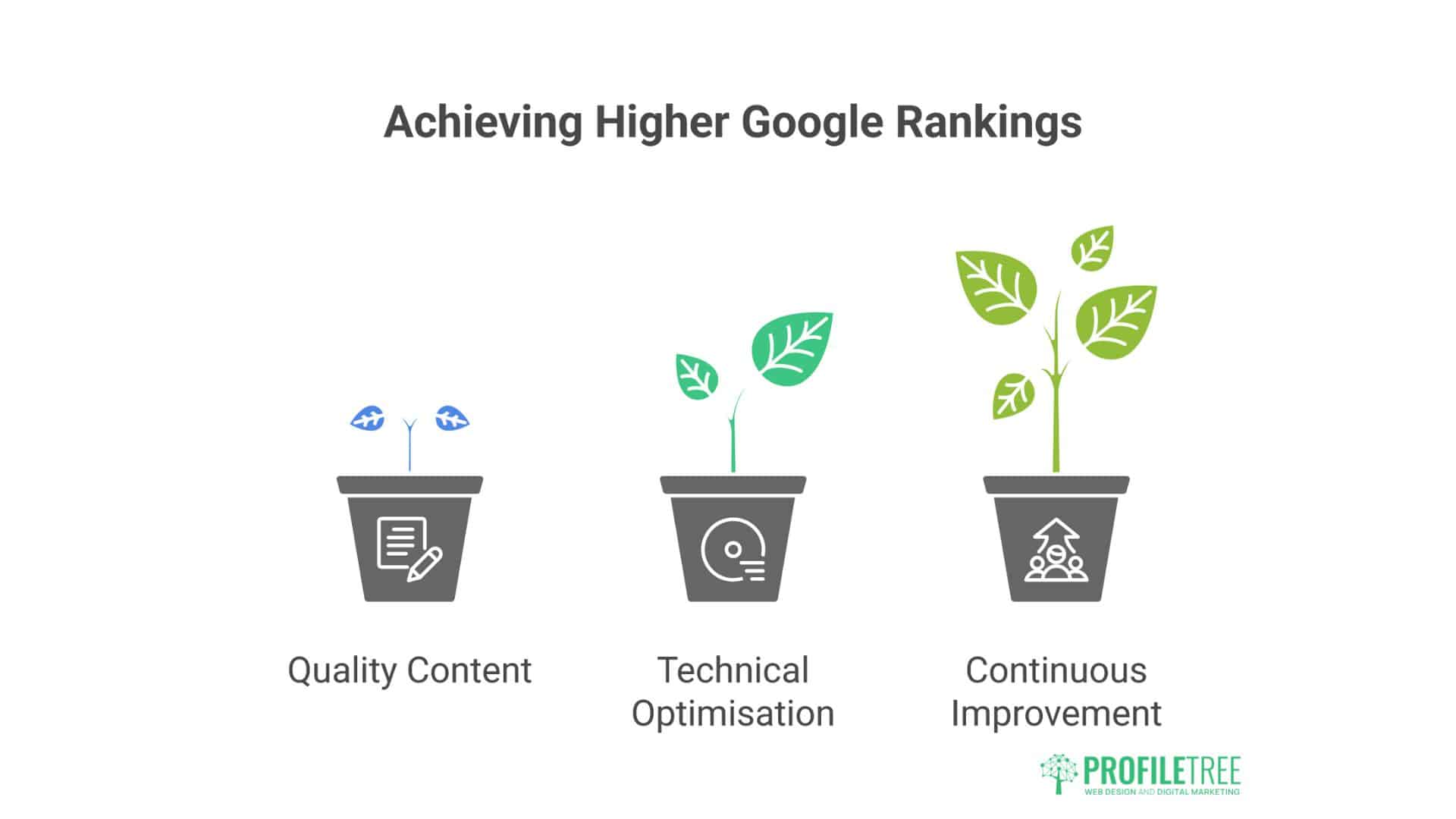
Moving up in search results requires a strategic approach combining quality content, technical optimisation, and continuous improvement. These actionable steps help businesses strengthen their Google rankings over time.
Conducting Effective Keyword Research
Understanding what your potential customers search for forms the foundation of any successful SEO strategy. Keyword research reveals the terms and phrases people use when looking for businesses like yours.
Start by identifying your core services or products, then explore variations people might use when searching. Someone looking for web development might search “website builder Belfast,” “web design Northern Ireland,” or “custom website developer.” Each variation represents a potential opportunity to connect with customers.
Consider search intent behind keywords. Informational searches (“what is SEO”) require educational content, whilst commercial searches (“SEO services Belfast”) indicate buying intent and need clear service information. Matching your content to search intent improves both rankings and conversion rates.
Long-tail keywords—longer, more specific phrases—often provide better opportunities for new websites to rank. Instead of competing for broad terms like “digital marketing,” targeting “digital marketing training for SMEs Belfast” offers more realistic ranking potential while attracting highly qualified visitors.
Creating High-Quality Content
Content quality determines whether your pages deserve to rank highly. Google’s algorithms have become sophisticated at distinguishing genuinely helpful content from material created solely to manipulate rankings.
Comprehensive coverage of your topic signals expertise and authority. When creating content about web design, for example, addressing technical considerations, user experience principles, accessibility requirements, and business objectives provides more value than surface-level information.
Original insights and perspectives differentiate your content from competitors. Rather than repeating commonly available information, incorporate your team’s expertise, case study learnings, and industry observations. ProfileTree’s approach emphasises sharing practical knowledge gained through years of delivering digital services to UK businesses.
Structure content for readability using short paragraphs, descriptive subheadings, and bulleted lists where appropriate. Breaking complex topics into digestible sections helps readers find information quickly, while improving engagement metrics that influence rankings.
Update content regularly to maintain accuracy and relevance. Search algorithms favour fresh, current information, particularly for topics that evolve quickly, such as digital marketing and technology.
“Businesses often underestimate the importance of creating genuinely useful content,” notes Ciaran Connolly, Director of ProfileTree. “The websites that rank consistently well focus on answering their customers’ questions thoroughly rather than trying to game the system with outdated SEO tricks.”
Technical SEO Optimisation
Technical foundation supports all other SEO efforts. Even excellent content struggles to rank if technical issues prevent Google from accessing and understanding your pages.
Site Speed Optimisation
Page loading speed affects both user experience and rankings. Slow sites frustrate visitors and receive lower rankings. Optimise images by compressing file sizes without sacrificing quality, implement browser caching, and minimise unnecessary code. Consider upgrading your hosting if server response times consistently exceed acceptable levels.
Mobile Optimisation
Google uses mobile-first indexing, which primarily evaluates your site’s mobile version when determining rankings. Your website must function flawlessly on smartphones and tablets. Responsive design ensures content adapts appropriately to different screen sizes, while touch-friendly navigation makes mobile browsing effortless.
Site Architecture
Logical site structure helps both users and search engines navigate your content. Organise pages into clear categories, implement breadcrumb navigation, and ensure essential pages are accessible within three clicks from your homepage.
Schema Markup
Structured data helps Google understand your content’s context and purpose. Implementing appropriate schema markup for your business type, services, articles, and FAQs can improve how your pages appear in search results, potentially earning rich snippets that increase click-through rates.
Building Quality Backlinks
Earning links from reputable websites remains one of the most effective ways to improve rankings. However, link building must focus on quality and relevance rather than quantity.
Create content worth linking to—comprehensive guides, original research, valuable tools, or unique insights that others naturally want to reference. When ProfileTree produces detailed articles about digital marketing trends or creates helpful resources for SMEs, industry sites, and local organisations, it finds value in linking to these materials.
Develop relationships with complementary businesses, industry associations, and local organisations. Genuine partnerships often lead to natural link opportunities. Contributing expert commentary to industry publications or local media can earn authoritative backlinks while raising your profile.
Guest posting on relevant, reputable sites allows you to share expertise while earning links. Focus on sites your target audience reads rather than accepting any guest posting opportunity—the relevance and authority of linking sites matter more than the volume of links.
Local SEO for Northern Ireland Businesses
Businesses serving specific geographical areas must optimise for local search to capture nearby customers. Local SEO requires dedicated attention to location-specific signals.
Google Business Profile Optimisation
Claim and verify your Google Business Profile if you haven’t already. Complete every section thoroughly, including business category, services, hours, and attributes. Add high-quality photos of your premises, team, and work. Regular posts keep your profile active and engaging.
Local Citations
List your business on relevant local directories and industry-specific platforms. Maintain consistency in your business information across all listings—variations in your name, address, or phone number confuse search engines and weaken local rankings.
Location-Specific Content
Create content that demonstrates local expertise and relevance. Articles discussing Belfast business challenges, Northern Ireland market conditions, or regional success stories strengthen local authority. Reference local landmarks, events, or partnerships where genuinely relevant.
Review Generation
Encourage satisfied customers to leave reviews on Google and other relevant platforms. Respond professionally to all reviews, both positive and negative. High review volume and ratings improve local rankings whilst building trust with potential customers.
Measuring and Monitoring Progress
Tracking your rankings and website performance reveals what’s working and where improvements are needed. Regular monitoring enables data-driven optimisation decisions.
Google Search Console
This free tool provides direct insight into how Google views your site. Monitor which queries drive traffic, identify pages with ranking opportunities, and spot technical issues requiring attention. The performance report shows your average position for different keywords, helping you track ranking changes over time.
Analytics Platforms
Google Analytics or similar tools reveal how visitors interact with your site. Monitor traffic sources, user behaviour, conversion rates, and engagement metrics. Understanding which pages perform well and which lose visitors helps prioritise improvements.
Ranking Tracking Tools
Various tools monitor your rankings for specific keywords over time. Tracking position changes helps you understand the impact of optimisation efforts and identify new opportunities or threats from competitors.
Traffic Quality Assessment
Rankings matter, but traffic quality matters more. Analyse whether visitors from organic search engage meaningfully with your content, contact you, or convert into customers. High rankings for irrelevant keywords that don’t attract your target audience waste effort without delivering business value.
Content Marketing Integration
Sustainable ranking improvements require consistent content creation that addresses customer needs while targeting relevant keywords. A strategic content marketing approach integrates SEO naturally into your broader marketing efforts.
Regular publishing signals to Google that your site remains active and relevant. Whether through blog posts, case studies, guides, or resources, fresh content provides more opportunities to rank for varied keywords while engaging your audience.
ProfileTree’s content marketing services help businesses develop sustainable publishing strategies aligned with their capabilities and goals. Rather than sporadic, ad-hoc content creation, systematic planning ensures consistent output that builds authority over time.
Video content offers particular value, combining engagement power with ranking opportunities. YouTube videos can rank in both YouTube and Google search results, whilst video content on your site increases time-on-page metrics that influence rankings.
AI and Automation in SEO
Modern SEO benefits from AI-powered tools that streamline research, analysis, and optimisation. However, automated tools should augment human expertise rather than replace strategic thinking.
AI can accelerate keyword research by identifying related terms and questions people ask. Content analysis tools suggest improvements based on top-ranking competitors. Technical SEO audits powered by AI quickly identify issues across large sites.
For ProfileTree’s AI training services, we help businesses understand which AI tools genuinely enhance their marketing efforts and which create more work than value. The goal is to make teams more effective rather than completely automate processes that benefit from human insight.
Understanding Major Algorithm Updates
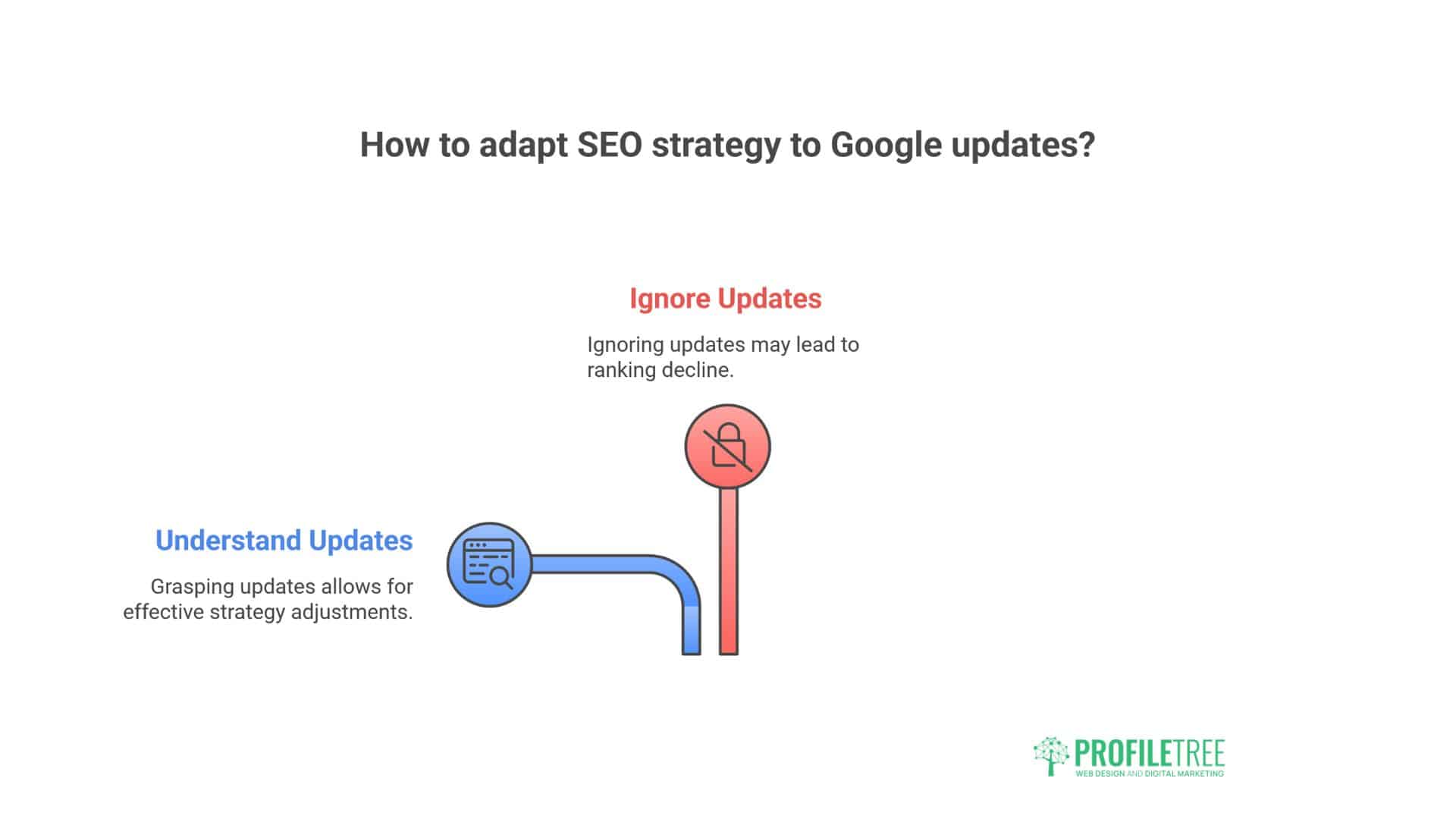
Google continuously refines its ranking systems, occasionally making substantial updates that significantly affect rankings across many websites. Understanding these updates helps businesses adapt their strategies appropriately.
Core Updates and Their Impact
Google releases several broad core updates annually, adjusting how the algorithm evaluates content quality and relevance. These updates can cause ranking fluctuations, sometimes significantly, as Google’s assessment of your site’s value changes relative to competitors.
Core updates typically reward comprehensive, well-researched content from authoritative sources whilst reducing visibility for thin, low-quality pages. Sites focused on genuinely helping users usually fare well, whilst those relying on outdated optimisation tactics often lose rankings.
Recovery from core update impacts requires an honest assessment of content quality. Simply tweaking technical elements rarely resolves ranking losses if content falls short of user needs. Instead, focus on enhancing expertise, improving comprehensiveness, and better addressing search intent.
Product Review Updates
If your business creates product reviews, update specifically to target this content type. Google wants reviews based on genuine experience and expertise rather than generic descriptions pulled from manufacturer specifications.
Quality product reviews should include original photos, detailed testing information, comparisons with alternatives, and a discussion of strengths and limitations. The goal is to help potential buyers make informed decisions rather than simply pushing affiliate links.
Helpful Content Updates
Recent updates specifically target content created primarily to rank in search rather than to help users. Google’s systems better identify material written for search engines rather than people.
This shift emphasises creating content that genuinely serves your audience’s needs. Before creating new content, ask whether it provides unique value or repeats information readily available elsewhere. Content that demonstrates direct experience and expertise naturally aligns with these updates.
Page Experience Signals
Google considers how users experience your pages when determining rankings. Factors like loading speed, visual stability during loading, and interactivity responsiveness all contribute to page experience scores.
Whilst not the dominant ranking factors, page experience signals can differentiate between otherwise similarly qualified pages. Investing in technical performance improvements benefits both rankings and user satisfaction.
Common Ranking Challenges
Businesses frequently encounter specific obstacles when working to improve their search rankings. Understanding common challenges and their solutions prevents wasted effort and frustration.
Ranking Fluctuations
Rankings naturally fluctuate as Google continually refines its assessment of pages relative to competitors. Minor position changes don’t necessarily indicate problems. However, significant drops warrant investigation.
Check whether algorithm updates coincided with ranking changes. Review your content against top-ranking competitors to identify quality gaps. Look for technical issues that might have emerged. Sometimes ranking fluctuations correct themselves as Google’s systems stabilise after updates.
Slow Progress
SEO delivers results over months rather than weeks. New websites particularly need patience, as building authority takes time. Consistent effort following best practices eventually produces results, but expecting immediate ranking jumps leads to disappointment.
Focus on gradual progress rather than overnight success. Track incremental improvements in rankings, traffic, and engagement. Celebrate small wins whilst maintaining strategic focus on long-term objectives.
Plateau After Initial Success
Many businesses experience initial ranking improvements followed by a plateau. This typically indicates you’ve captured the easier opportunities and now face stiffer competition for more valuable keywords.
Breaking through plateaus requires elevating content quality, building stronger backlinks, and strategically targeting more competitive terms. Sometimes, expanding into adjacent topics opens new traffic sources while strengthening authority for core topics.
Local Competition
Multiple businesses target identical local keywords in competitive local markets like Belfast city centre. Differentiating yourself requires clearer specialisation, stronger review profiles, and more comprehensive content demonstrating local expertise.
Consider targeting neighbourhood-specific terms or specialised service categories where competition may be less intense. “Web design for Belfast solicitors” faces less competition than generic “web design Belfast”, attracting more qualified leads.
Taking Action on Your Rankings
Understanding Google rankings provides the foundation, but improving your position requires consistent action. The businesses that succeed in search take systematic approaches rather than sporadic efforts.
Start by auditing your current position. Use Google Search Console to identify which queries already drive traffic and where opportunities exist. Check your website’s technical health to prioritise fixes, and research competitors ranking above you to understand what they offer that you don’t.
Create a realistic content calendar suited to your resources. Consistency matters more than volume—one quality article monthly beats irregular bursts of mediocre content. Plan topics that address customer questions while targeting relevant keywords.
Successful SEO combines multiple elements working together over time. Invest in understanding your audience deeply. What questions do they ask before buying? What concerns prevent them from contacting you? Content addressing real customer needs naturally attracts engagement and earns links.
Track progress monthly rather than obsessing over daily fluctuations. Use data to guide decisions, celebrating incremental improvements whilst maintaining strategic focus on long-term objectives.
Consider professional SEO services when you lack time for consistent optimisation, face technical issues beyond your expertise, or when competitive markets require advanced strategies. ProfileTree’s SEO services range from strategic consulting to comprehensive managed services, helping Belfast and UK businesses achieve sustainable search visibility and growth.
FAQs
What exactly is Google ranking?
When users search for relevant terms, Google ranking refers to the position your website occupies in search engine results pages. Rankings result from Google’s algorithm evaluating your site against hundreds of factors to determine its relevance and quality for specific queries. Higher rankings (positions 1-3) receive significantly more clicks than lower positions, making ranking position critical for visibility and traffic.
How long does improving rankings take?
Timeline varies considerably based on your starting position, competition level, and the scope of changes implemented. New websites typically need 4-6 months before seeing meaningful ranking improvements, as Google requires time to assess your site’s value and authority. Established sites making optimisation improvements often see initial changes within 2-3 months, though competitive keywords may take longer. Consistent, quality-focused efforts compound over time, delivering better results in months 6-12 than in the initial period.
Can I rank without technical SEO knowledge?
Whilst technical SEO knowledge helps, you can achieve decent rankings by focusing on fundamentals: creating genuinely helpful content, earning quality backlinks naturally, and maintaining basic site hygiene. Many successful websites rank well without advanced technical optimisation. However, technical factors become increasingly important for maintaining and improving rankings as competition increases. ProfileTree’s technical SEO services handle complex optimisation for businesses lacking internal expertise.
Why do my rankings fluctuate daily?
Minor ranking fluctuations are normal as Google continuously refines its assessment of pages and tests variations in search results. Your position might vary slightly depending on personalised results, location, search history, and which of Google’s data centres serves your query. Focus on long-term trends rather than daily variations. Significant, sustained ranking drops warrant investigation, but small movements up or down don’t necessarily indicate problems.
wow! Nice explanation with informative content. Thanks for sharing.